
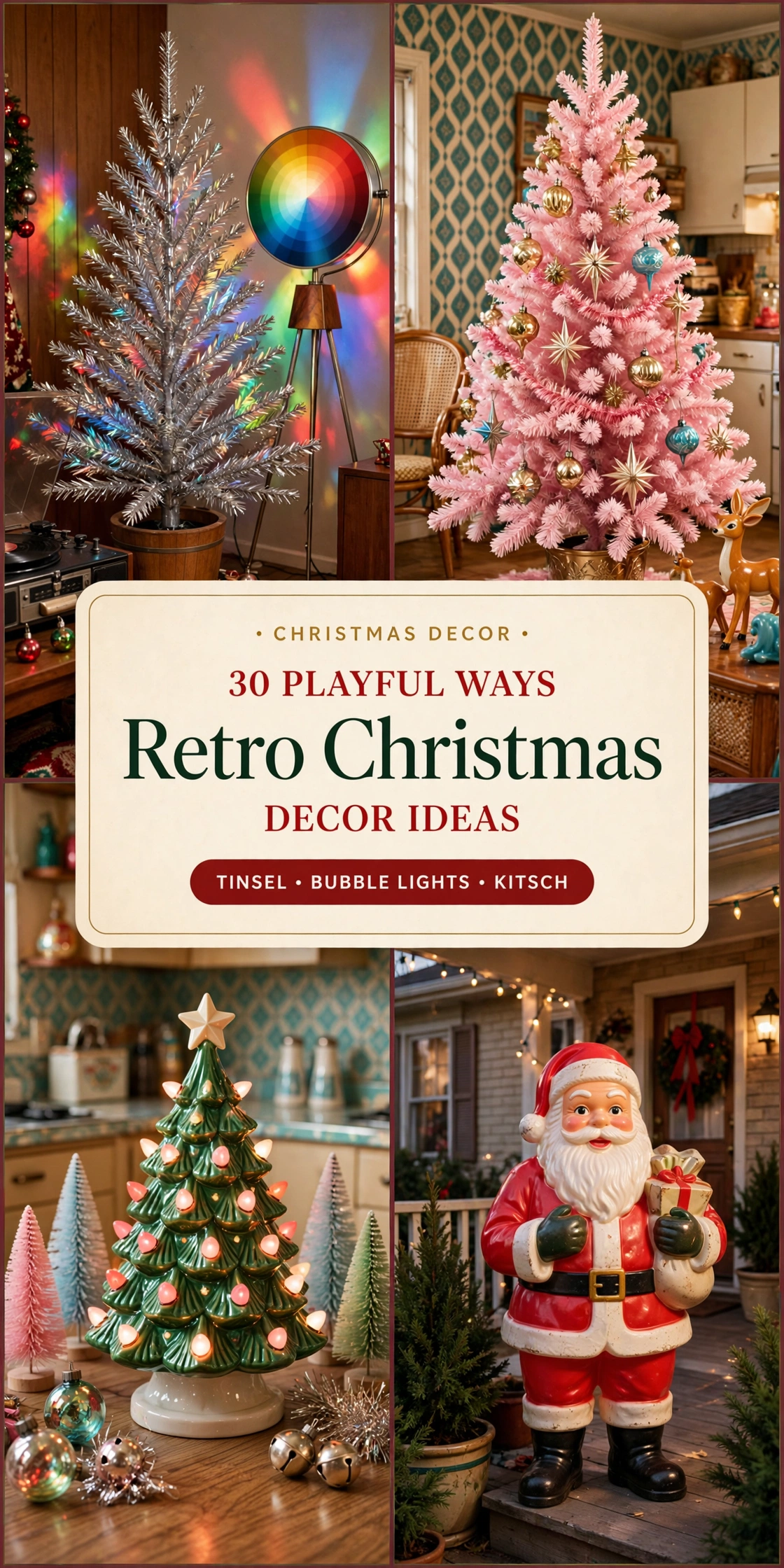
If your favorite Christmas memories glow in color, sparkle, and a little bit of tinsel, retro is your season. These retro christmas decor ideas bring back the best of the 1950s, 60s, and 70s: aluminum trees under rotating color wheels, Shiny Brite glass ornaments, glowing ceramic trees, and blow mold Santas on the porch. Most of it can be thrifted, bought as faithful reproductions, or rescued from a family attic box, so the look costs less than a modern matching set. Follow this guide and your home will feel like the holiday special everyone grew up watching, cheerful, a little kitschy, and impossible not to smile at.
Quick Idea Summary
- The key takeaway: Retro works as a system, not a souvenir pile. One hero piece per room (the aluminum tree, the ceramic tree, the blow mold Santa) plus repeating pastel or metallic accents makes the whole house read 1962 instead of “random old stuff.”
- The detail most people miss: Vintage electrics are display pieces, not workhorses. Original bubble lights and C7 strands get hot and their cords can be 60 years old; modern LED reproductions give the same bubbling, glowing look safely and can stay on all evening.
- What it costs or how long it takes: Thrifted and reproduction pieces run $5 to $50 each. A full retro living room comes together for $150 to $300 over a few weekends of hunting.
At a glance
| Zone | Ideas | Budget |
|---|---|---|
| The retro tree | 01–07 | $40–$250 |
| Lights and glow | 08–12 | $15–$60 |
| Tabletop and mantel kitsch | 13–19 | $5–$80 |
| Walls, cards, and paper | 20–24 | $5–$40 |
| Outdoor and entry | 25–27 | $30–$150 |
| The retro party and finishing touches | 28–30 | $10–$50 |
The retro christmas decor ideas
01
The Aluminum Tree With a Color Wheel
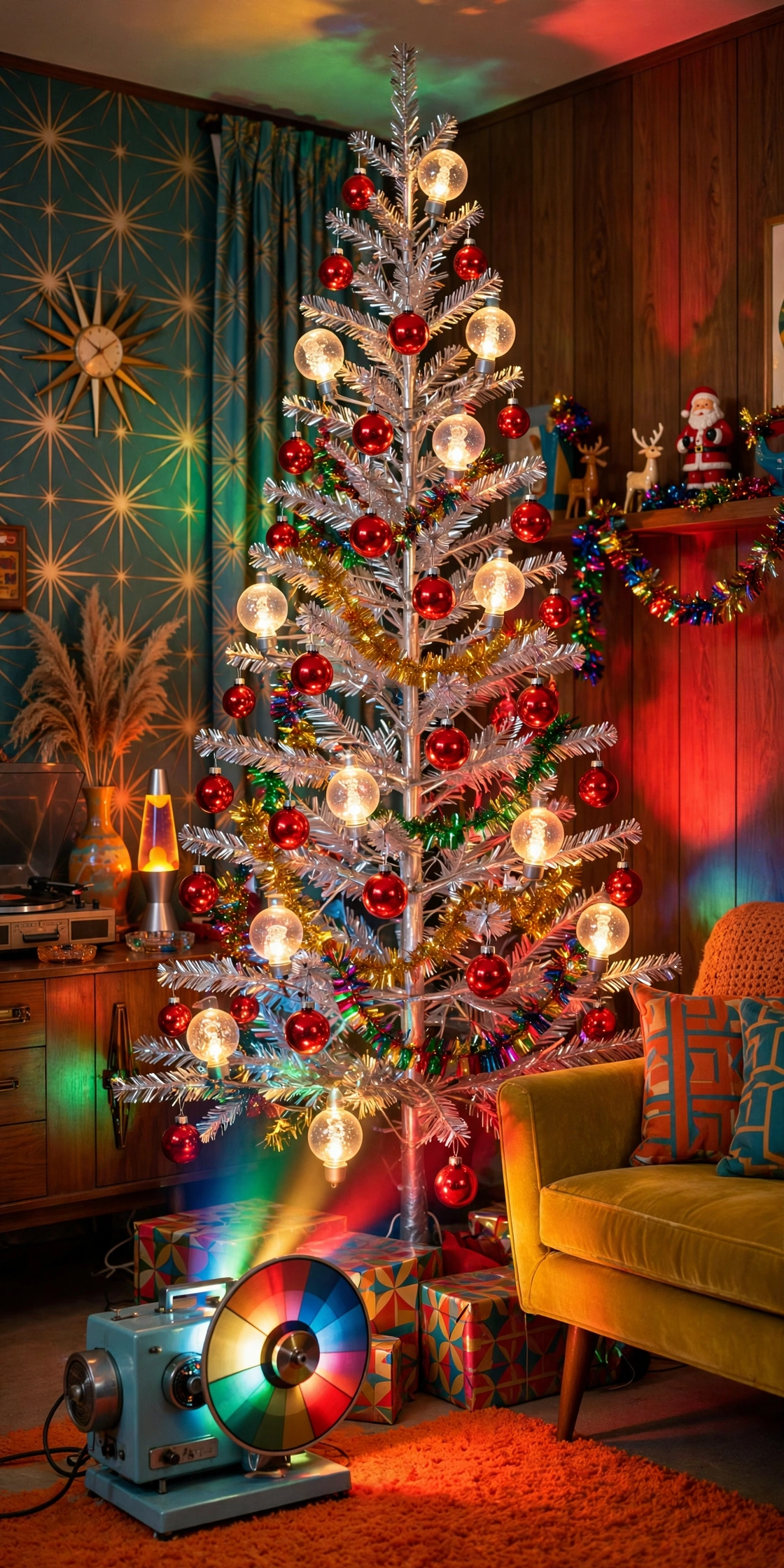
The aluminum tree is the undisputed star of retro Christmas: silver foil branches, zero needles, and a rotating color wheel on the floor washing it in red, green, blue, and gold. Evergleam trees first sold in 1959, and originals in good condition now fetch $200 to $900, while faithful reproductions run $150 to $250. Never hang string lights on an aluminum tree; the metal conducts, and the color wheel was always the light source.
Try it: Decorate with one color of glass ball only, all red or all blue. The single-color rule is what made the original displays look so sharp, and it keeps the tree from fighting the color wheel.
02
Shiny Brite Ornaments in One Color Family
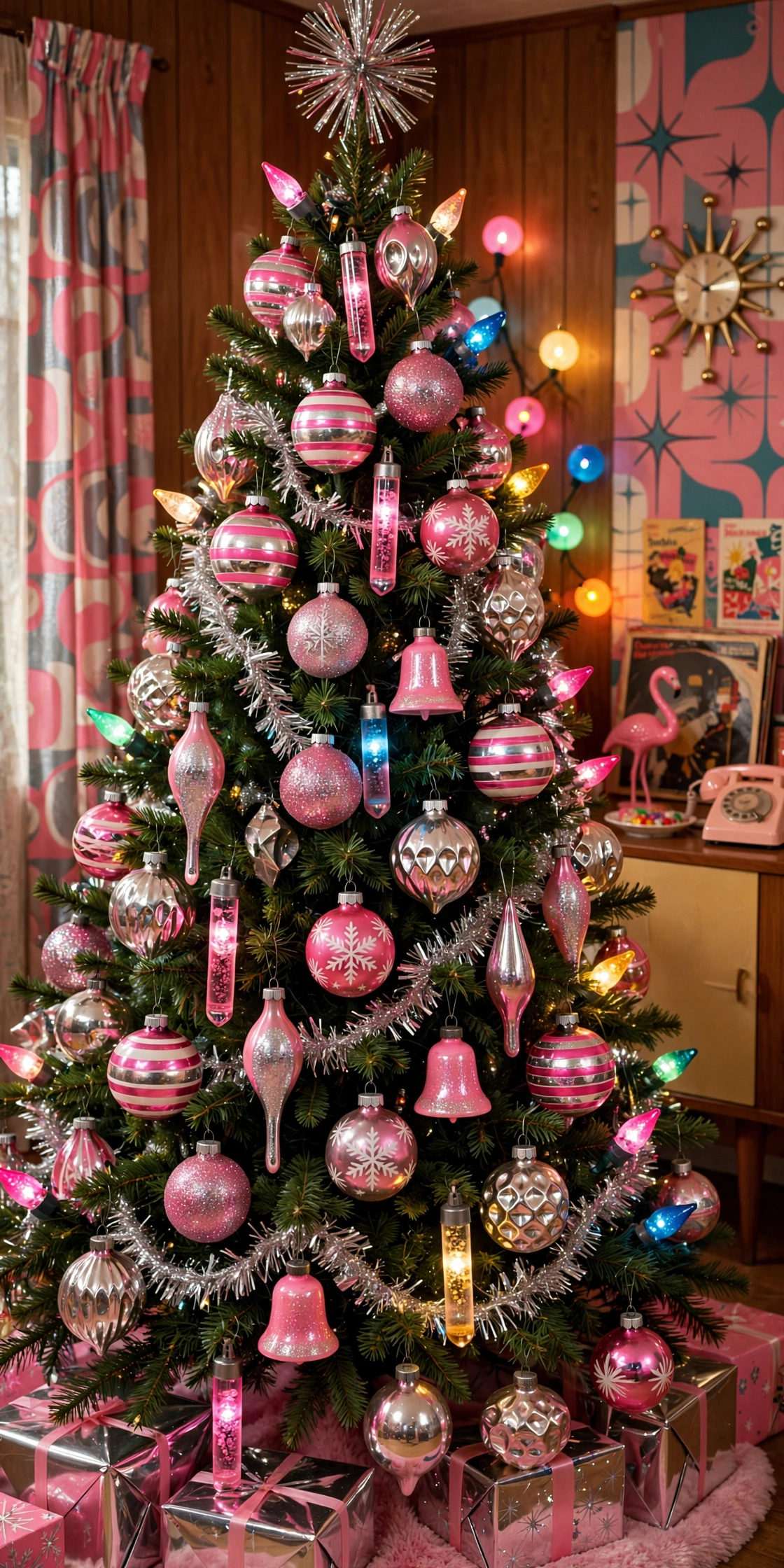
Shiny Brite ornaments were the glass balls of the postwar decades: striped, stenciled, glittered, and sold by the dozen in divided cardboard boxes. Originals in the box cost $30 to $80 a set at antique shops; reproductions are $15 to $25 a dozen and nearly indistinguishable on the tree. Commit to one color family, pink and silver or turquoise and silver, and repeat it everywhere.
Try it: Mix the shapes, not the colors. Balls, bells, teardrops, and reflector indents in one palette look collected; four palettes look like a yard sale.
03
A Pink Flocked Tree
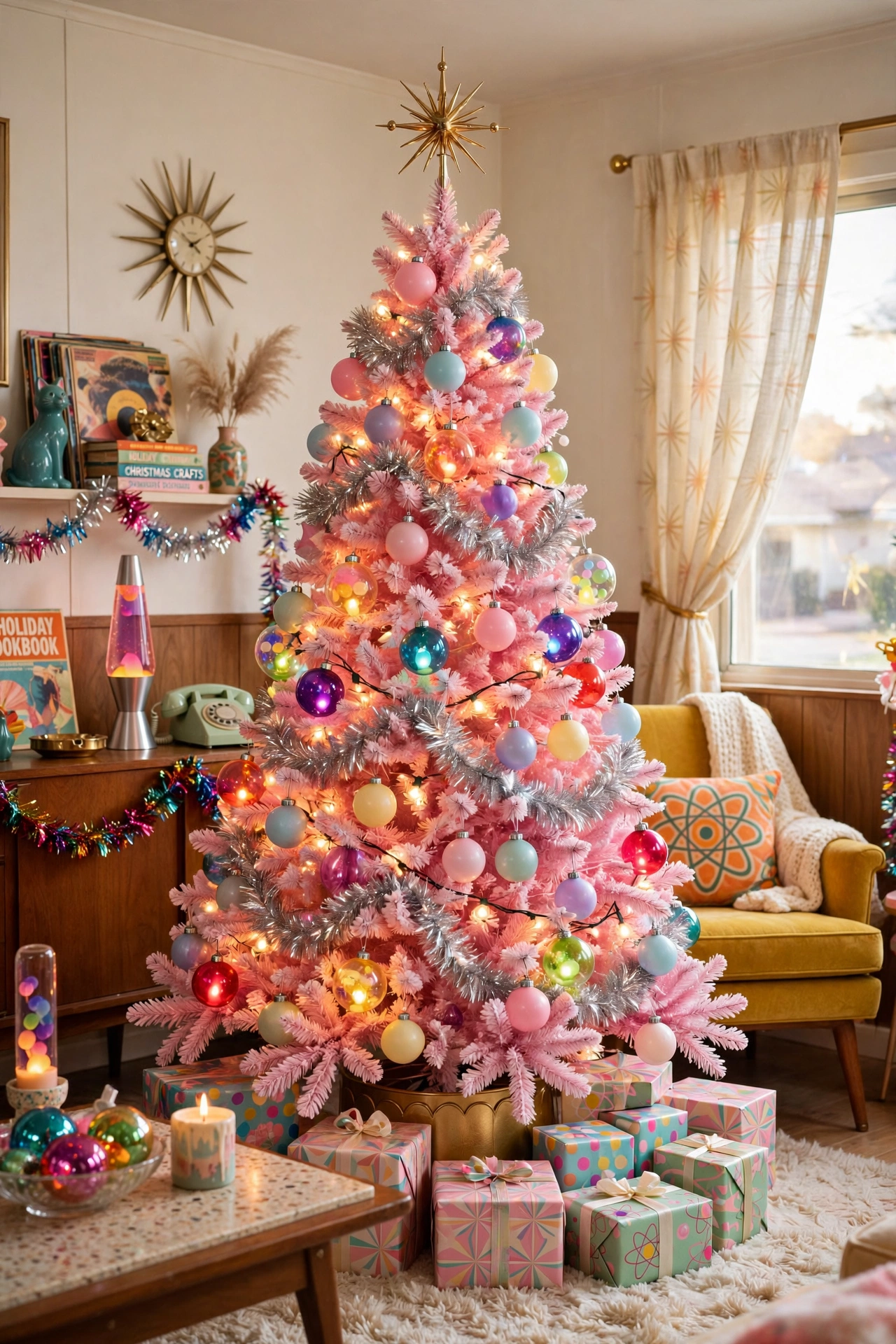
Nothing says 1950s Christmas like a pink tree. Department stores sold dyed and flocked trees in pink, mint, and baby blue, and modern flocked trees in those shades run $60 to $150 for a 6-foot. Dress it with pastel balls, silver tinsel garland, and white lights; the pink does the talking. A pink tree in a white or cream room reads sweet, not loud.
Try it: Keep every ornament pastel or silver. One box of cherry-red balls will drag the whole tree back to traditional, so save those for a green tree in another room.
04
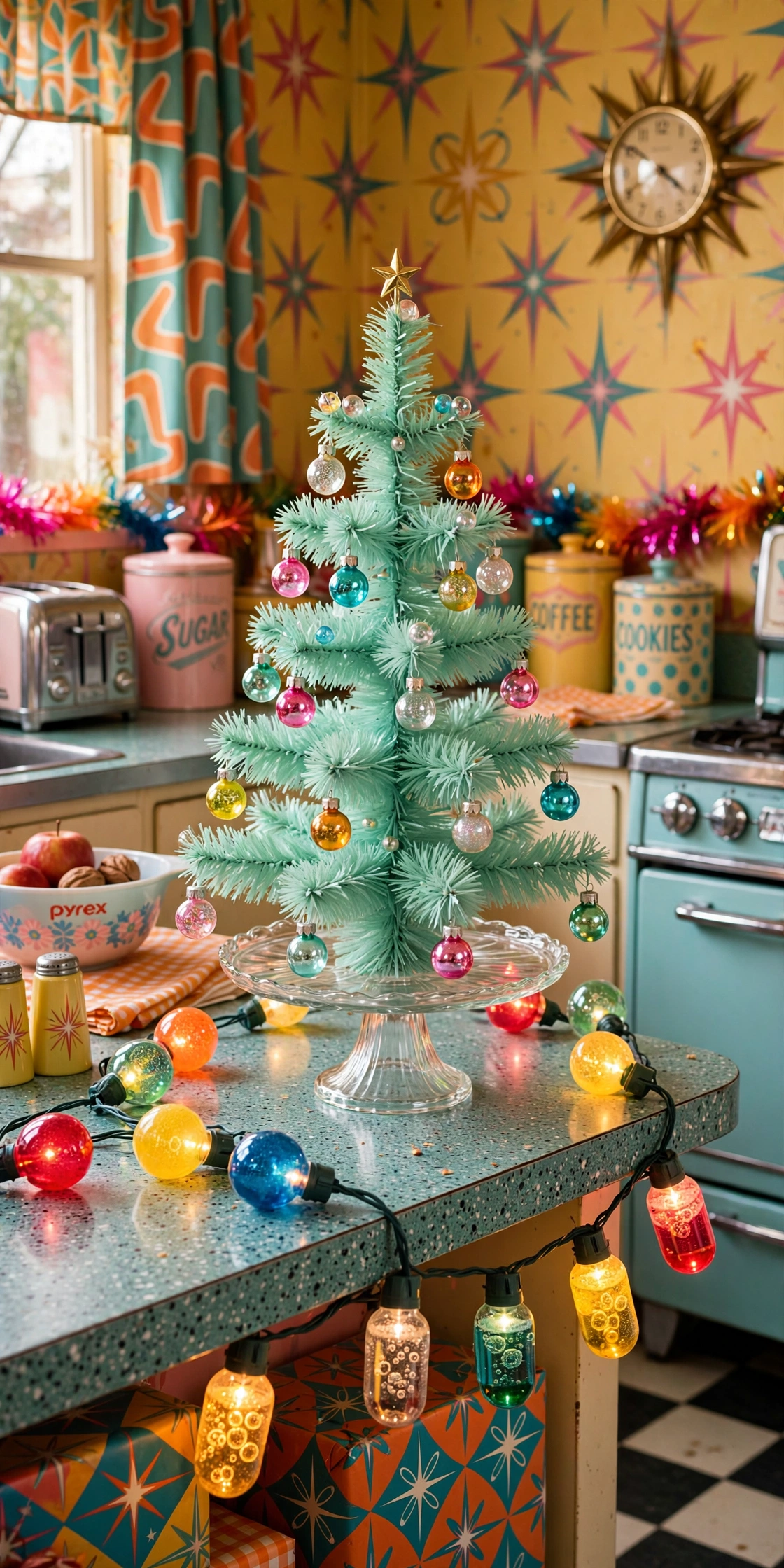
A Mint Tinsel Tabletop Tree
A small tinsel tree in mint green gives you the retro hit in rooms where a full tree will not fit: a kitchen counter, a desk, a child’s bedroom. Tabletop tinsel trees run $15 to $35 and come in mint, pink, silver, and turquoise. Hang miniature glass balls at the branch tips only, about 12 to 18 for a 2-foot tree, and top it with a tiny star.
Try it: Set the little tree on a cake stand or a stack of vintage Christmas books. The extra 6 inches of height makes a tabletop tree look styled instead of parked.
05
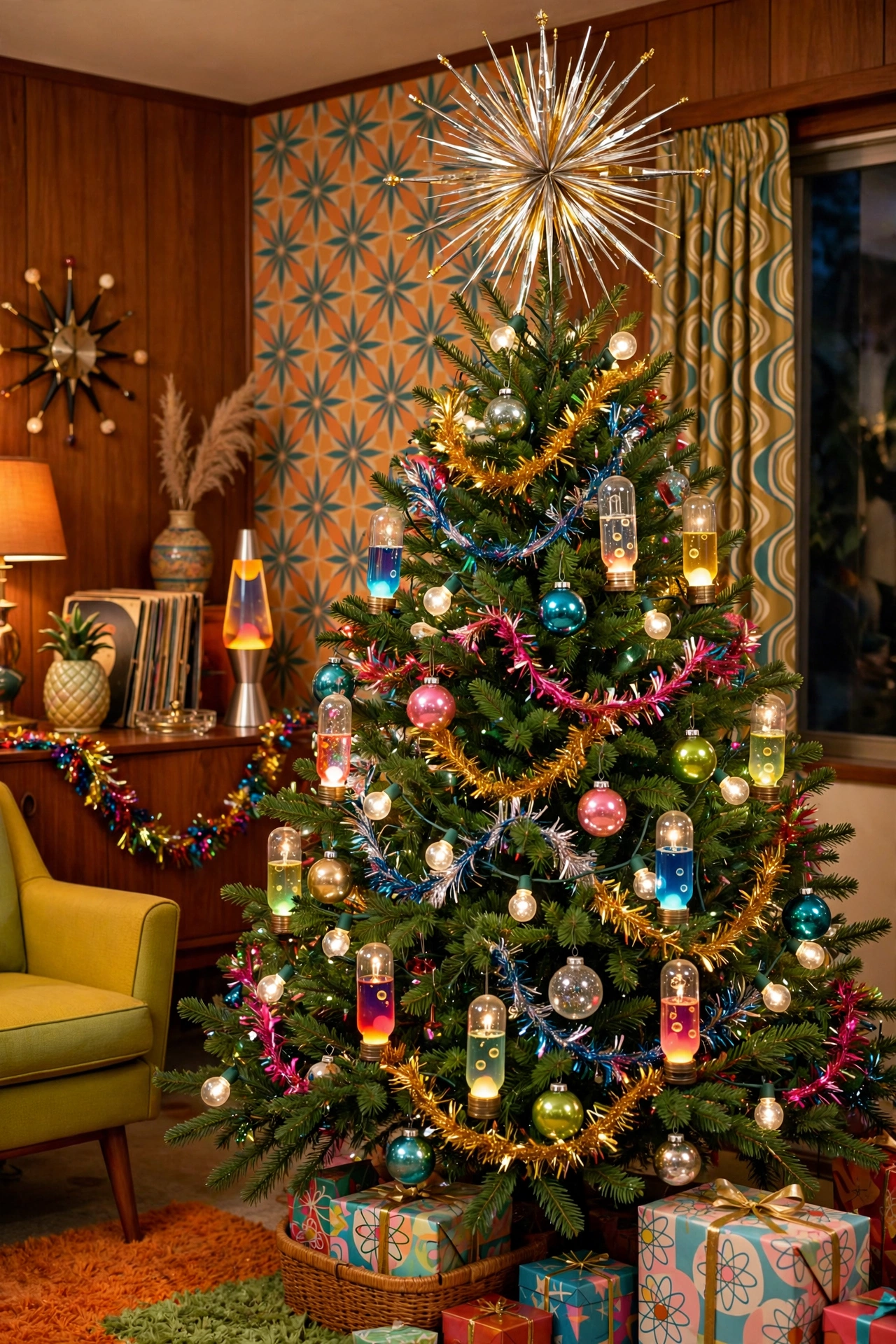
The Atomic Starburst Topper
Mid-century trees were crowned with starbursts: spiky, sputnik-style bursts of silver, gold, or colored foil rays. A starburst topper should span about 10 to 12 inches on a full-size tree, big enough to read from the doorway. Vintage ones turn up for $20 to $50; reproductions are widely sold for under $20. It is the fastest single swap for making a modern tree read retro.
Try it: Echo the topper once in the room, a starburst wall clock or a starburst mirror. Two starbursts make a theme; ten make a theme park.
06
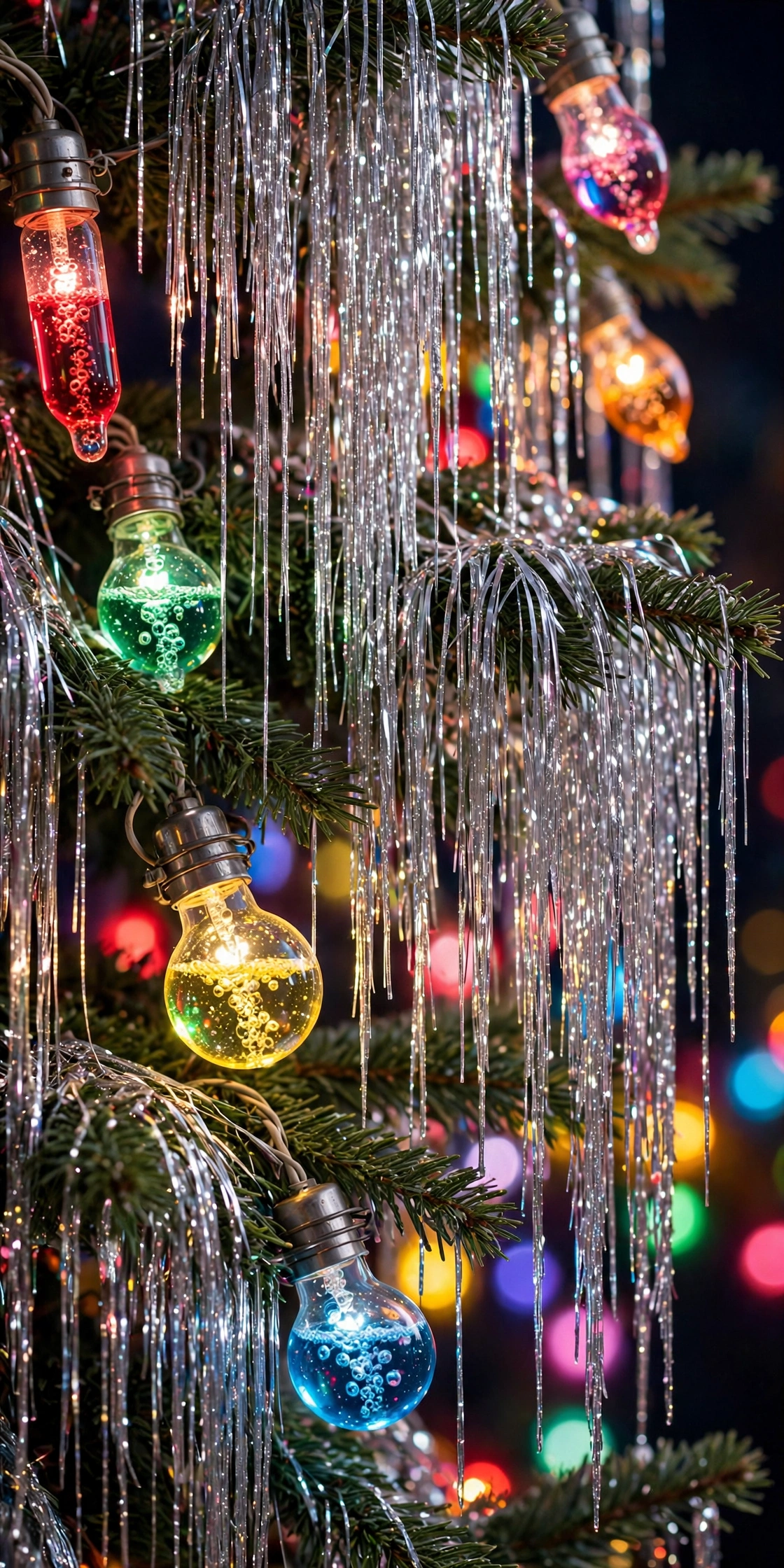
Tinsel Icicles, Strand by Strand
In the 50s and 60s, tinsel was not sprinkled, it was draped, one strand at a time, until the tree shimmered like a waterfall. A well-dressed 6-foot tree can take 500 to 1,000 strands, and a box of modern icicles costs about $3. It takes an hour and a podcast, and nothing else catches tree light the same way. Keep strands off the floor and away from pets, who should never eat tinsel.
Try it: Drape strands over the outer third of each branch, two or three at a time from your fingertips. Clumps are the only way tinsel looks cheap.
07
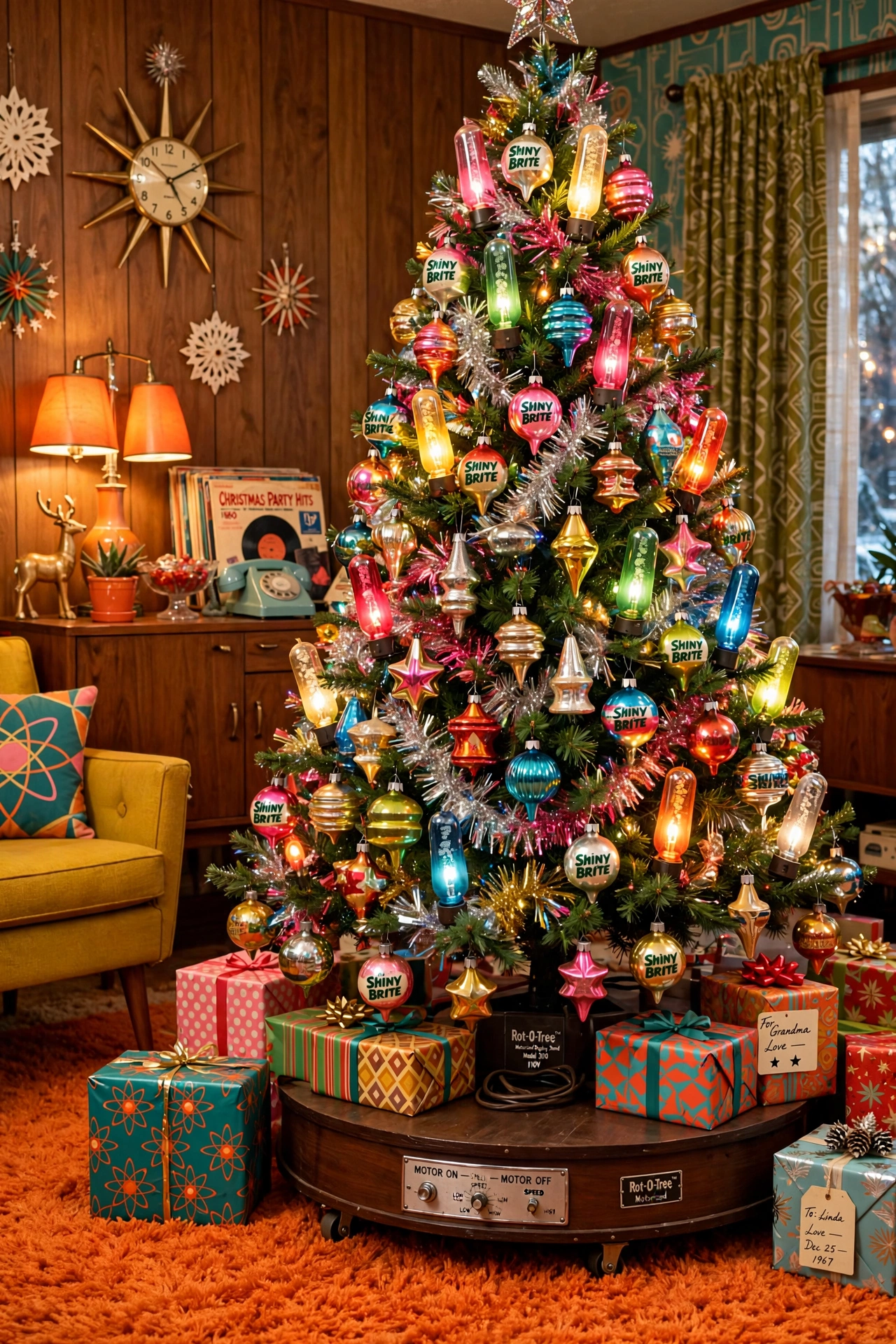
A Rotating Tree Stand
Motorized rotating stands were a mid-century party trick: the tree turns slowly, showing off every ornament and every color of the lights. Modern rotating stands hold trees up to 9 feet and cost $50 to $90. They shine with heavily decorated trees, especially Shiny Brite collections where the back of the tree is as good as the front. One slow revolution should take about a minute.
Try it: Route the light cord through the stand’s built-in outlet if it has one. A cord dragging in circles around a rotating tree tangles within the hour.
08
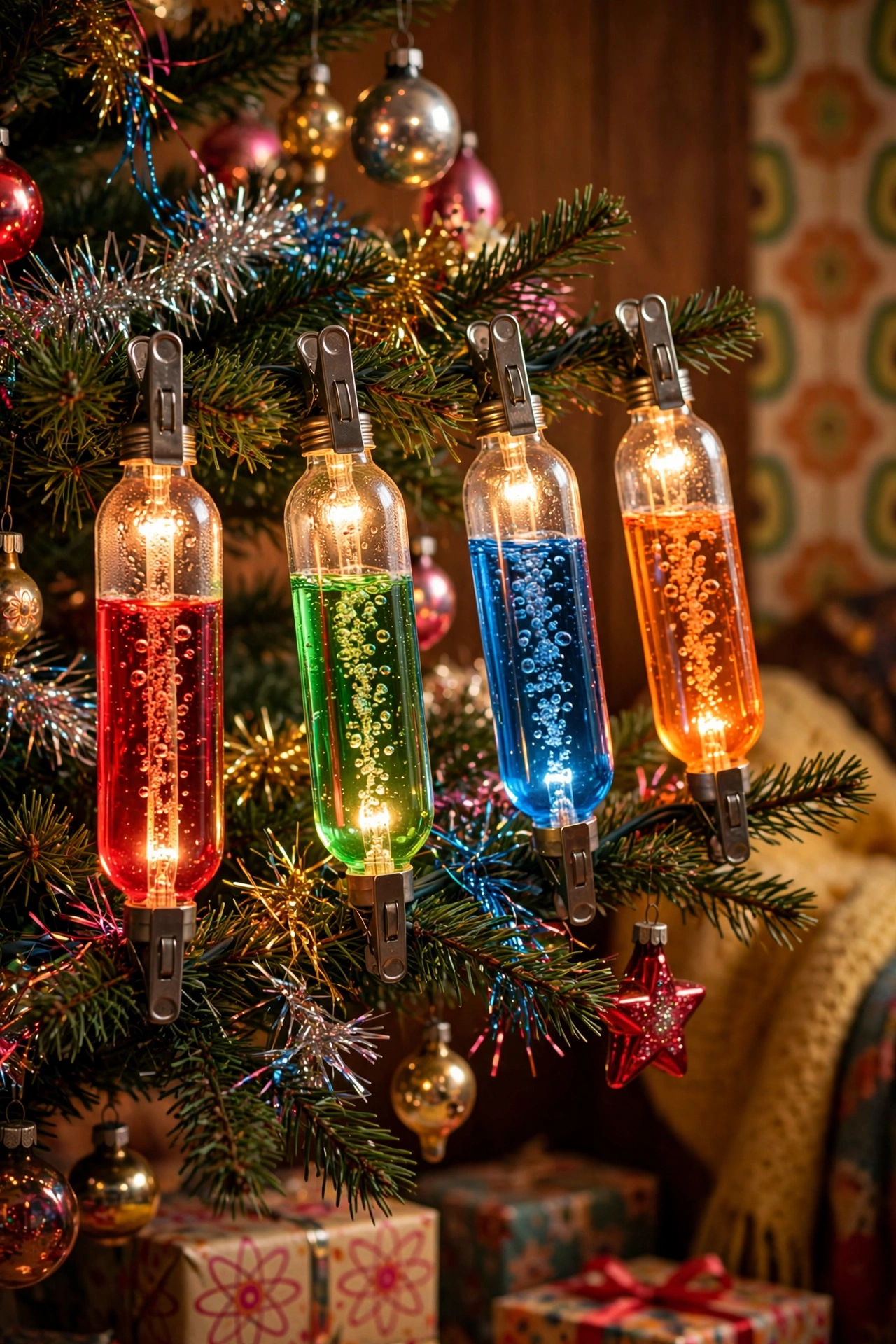
Bubble Lights That Actually Bubble
Bubble lights are the hypnotic tubes of colored liquid that start bubbling once the bulb warms up, a 1940s invention that peaked in the 50s and 60s. The tubes must sit upright to bubble, so clip them to firm outer branches where they stand straight. Vintage NOMA sets are collectibles now; LED and modern reproduction strands run $15 to $30 and stay cool. Give them 3 to 5 minutes to warm up before judging the effect.
Try it: Space bubble lights evenly, one every 12 to 18 inches, instead of clustering them. The scattered rising bubbles read as movement across the whole tree.
09
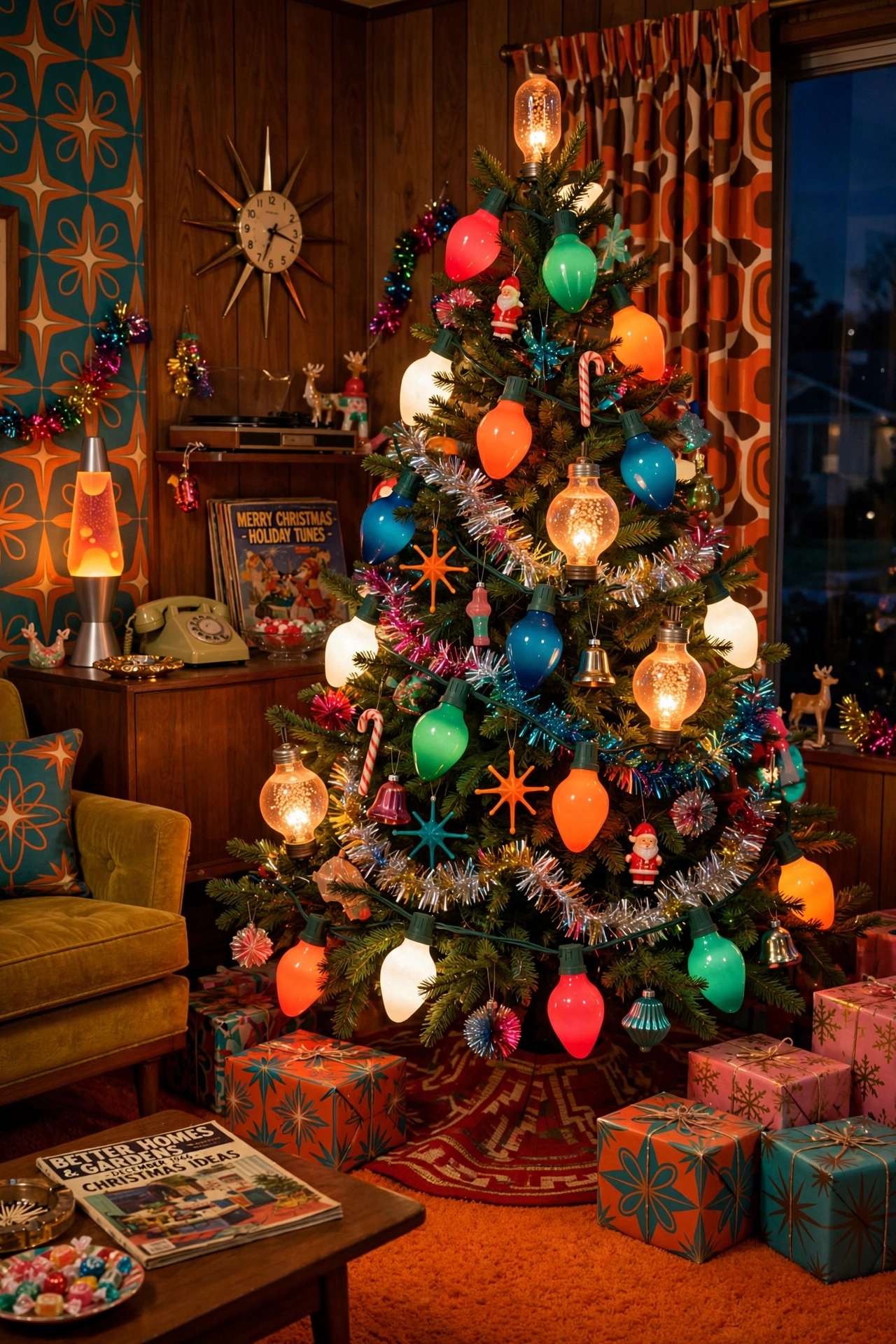
Big C7 Bulbs for a Warm Glow
Before mini lights took over, trees glowed with C7 bulbs: thumb-size, ceramic-coated, and warm in a way tiny LEDs never quite copy. Modern C7 strands with opaque bulbs in red, green, orange, blue, and white run about $15 for 25 lights and give that soft candy glow instantly. Use them on the tree, along the mantel, or around a doorway. Mix opaque bulbs only; clear ones break the vintage spell.
Try it: Screw one bulb out of every five and replace it with a different color than its neighbors. The slightly random pattern is exactly how the old strands looked.
10
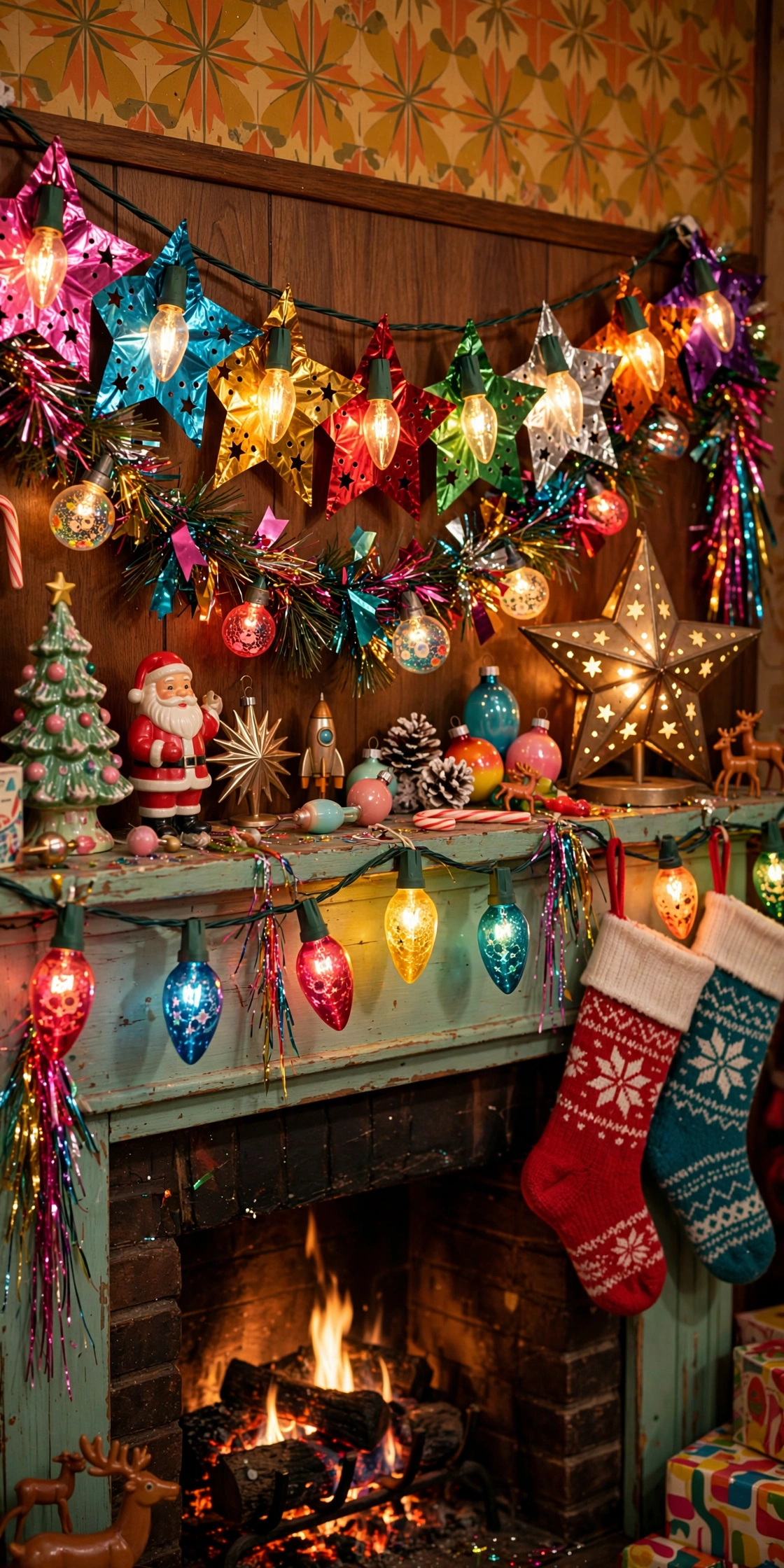
Foil Reflectors Behind the Bulbs
Retro light sets often came with foil reflectors: little star or flower shapes of colored foil that sat behind each bulb and bounced its glow outward. Reproductions sell for about $10 a pack and slip over any C7 or C9 socket. They double the apparent brightness and add the punched-tin sparkle that defines the era’s lighting. Silver reflectors suit any palette; colored ones commit you, happily.
Try it: Use reflectors on the mantel strand even if the tree goes without. The mantel is at eye level, so the doubled glow lands where guests actually look.
11
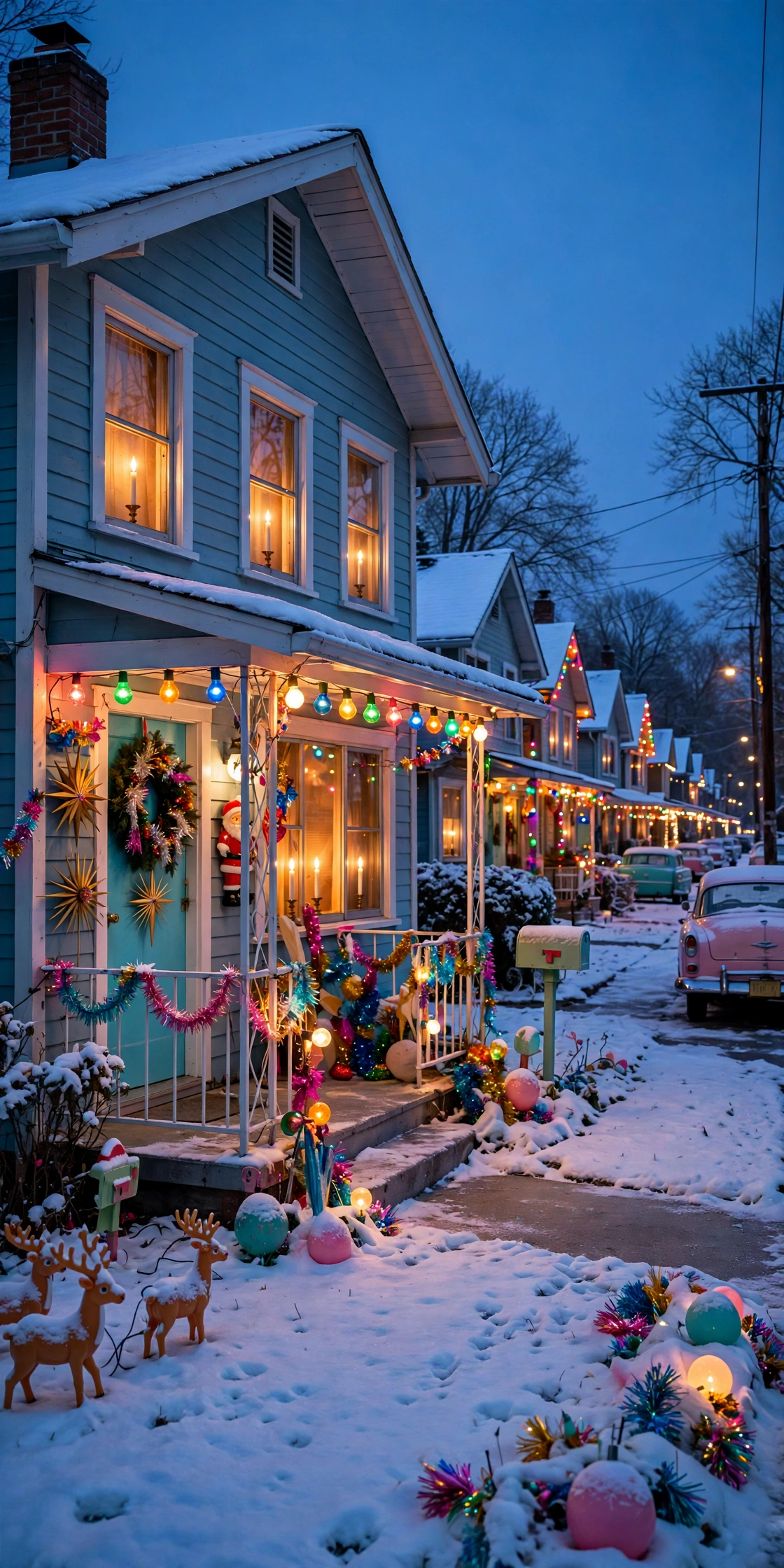
A Candle in Every Window
A single electric candle glowing in each front window was the 1950s welcome sign, visible down the whole street. Modern versions are LED, often with a dusk sensor and timer, and cost $5 to $10 each. Line up one per window, centered on the sill, all the same height if you can manage it. From the street, the even row reads calm and classic against the maximalism inside.
Try it: Put the window candles on the same timer as the tree lights. One switch, or one schedule, and the whole house lights up at dusk together.
12
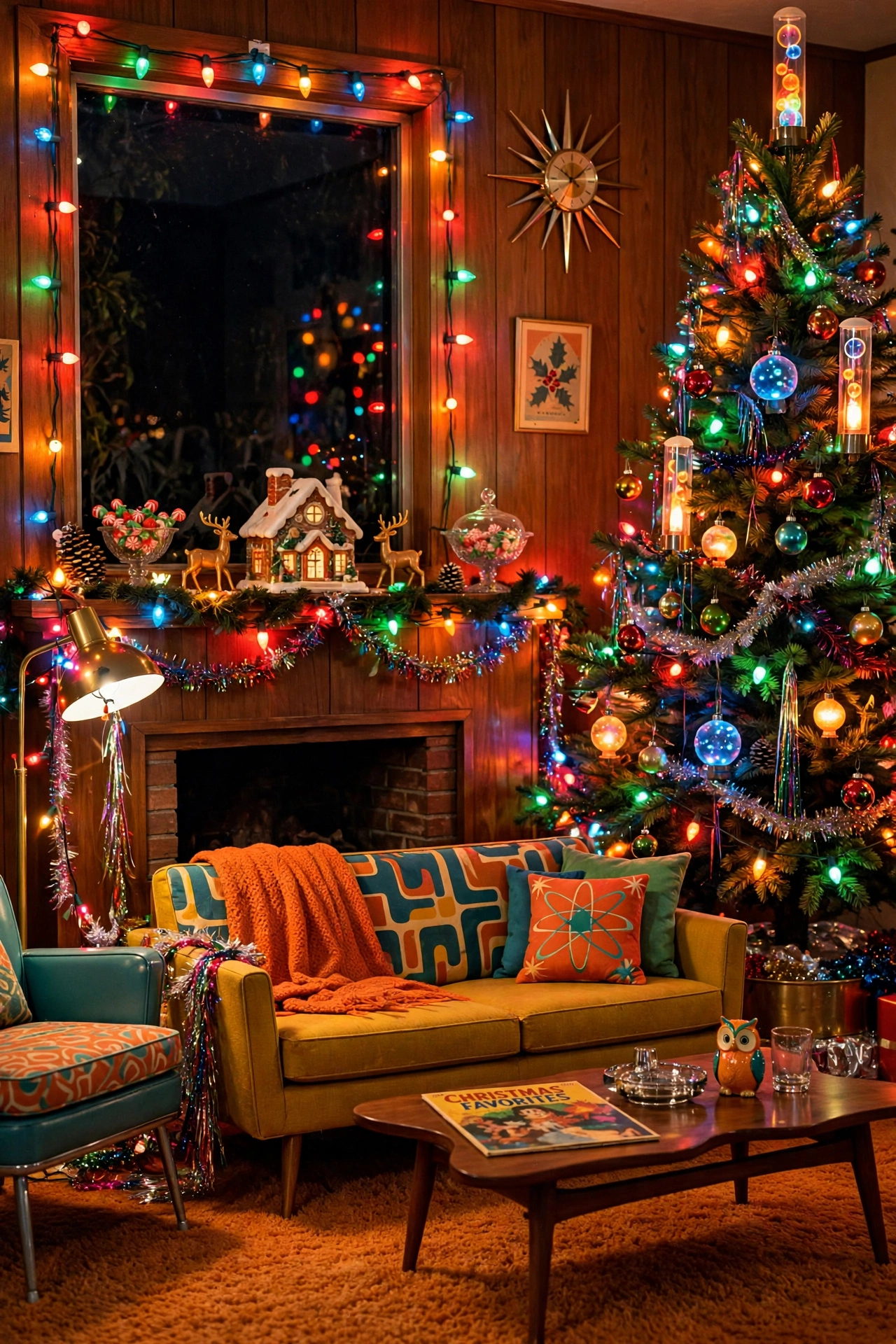
Commit to Multicolor Everywhere
Warm white is modern; retro light is multicolor. The rule that makes a retro house feel unified is choosing colored strands for everything, tree, mantel, windows, and roofline, and letting the red-green-blue-orange repeats tie the rooms together. It feels risky for exactly one evening, then it feels like Christmas from a 1962 magazine. If you want one calm note, let it be the window candles in warm white.
Try it: Photograph the room at night before buying more lights. Multicolor strands photograph brighter than they look in person, so one strand often does the work of two.
13
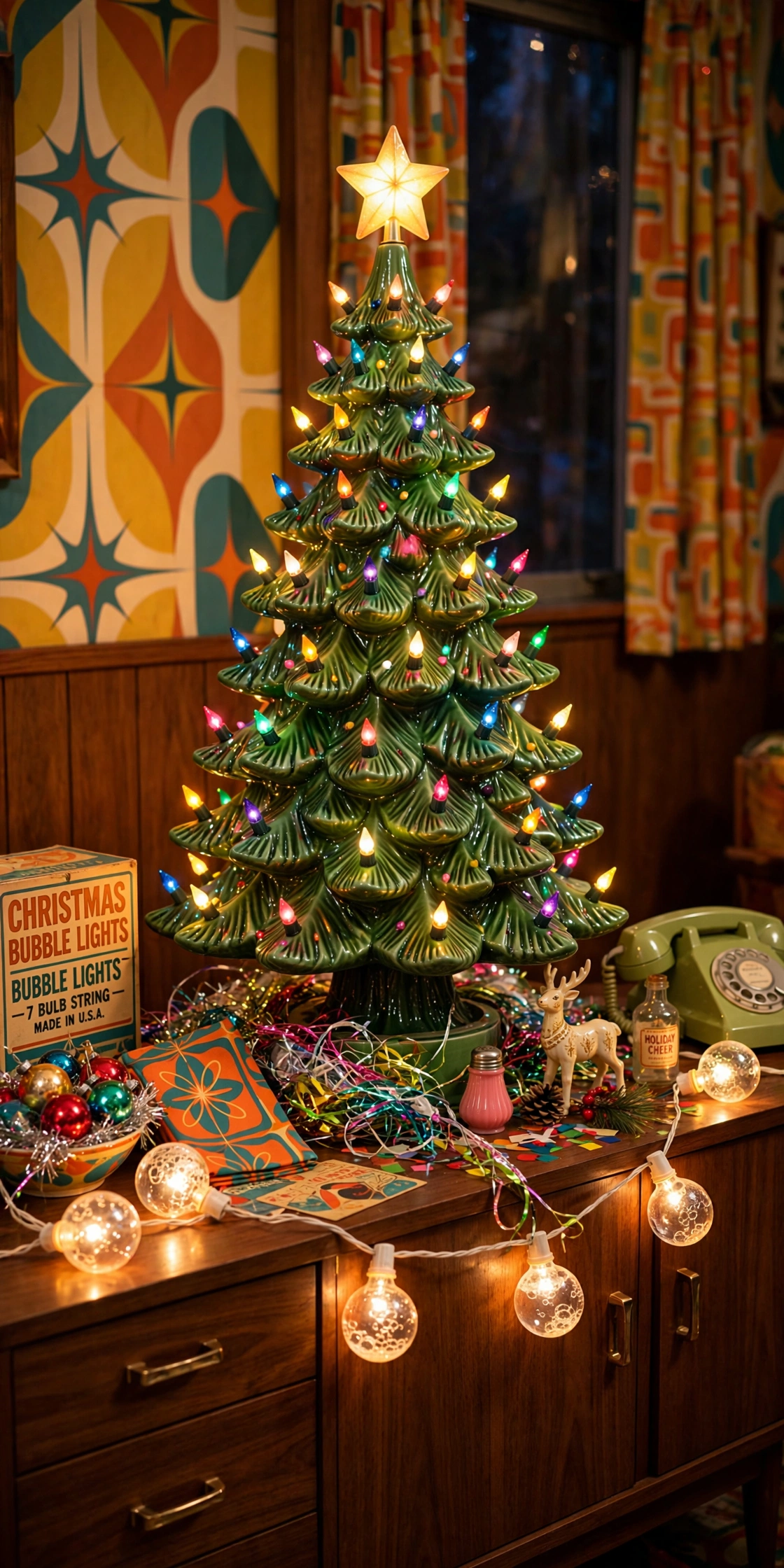
The Lighted Ceramic Christmas Tree
The ceramic tree is the retro icon your grandmother probably painted at a ceramics class: a foot or so of glazed green branches dotted with tiny colored peg lights and a star on top. Original 1960s and 70s trees sell for $75 to $300 depending on size; faithful new versions start around $20. Put the biggest one on the sideboard or entry table, where its glow lands at eye level. The classic size is 12 to 18 inches.
Try it: Group three sizes together, a tall one flanked by two small ones, on a white doily or a strip of faux snow. Odd-numbered groups of glowing trees look like a little lit forest.
14
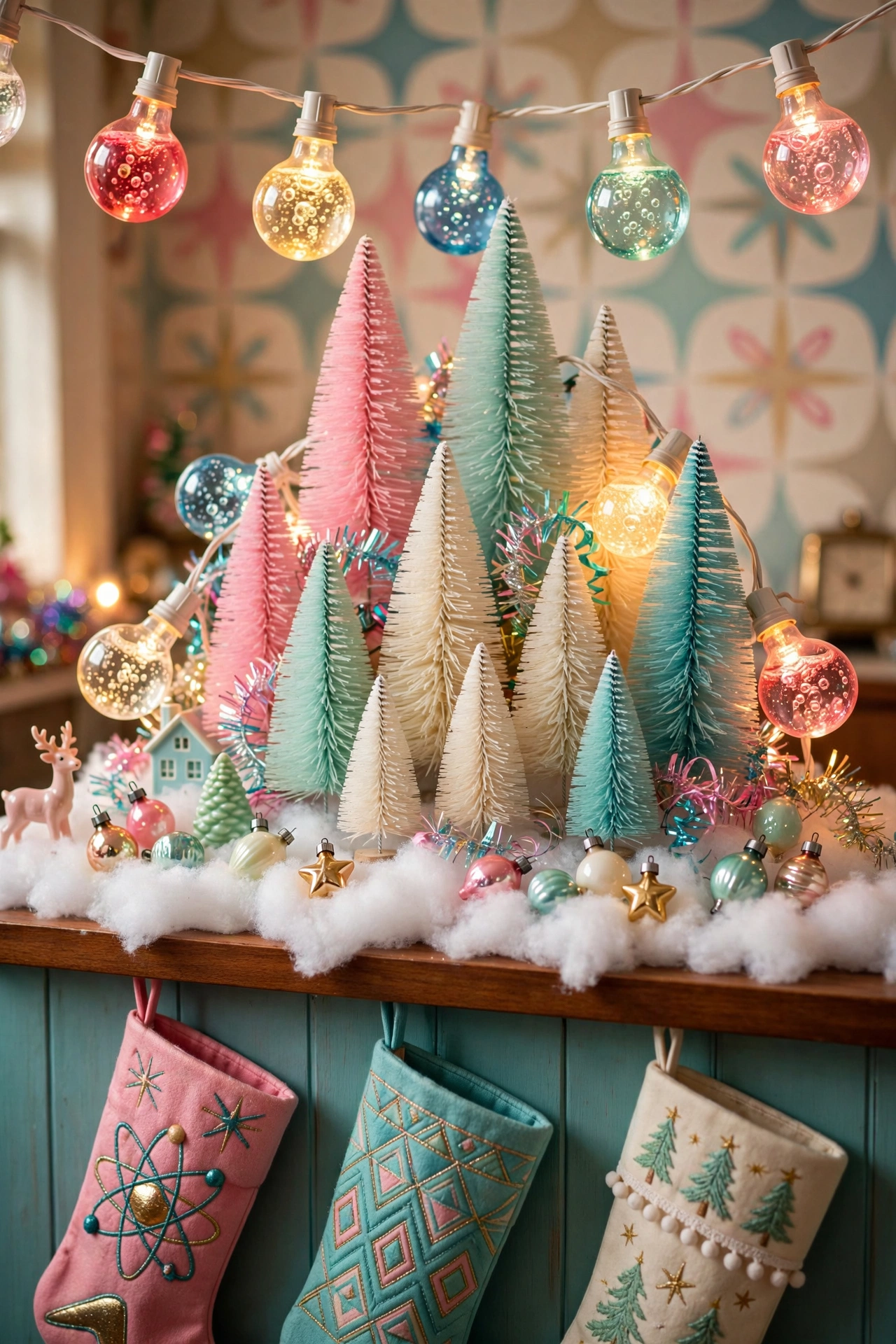
A Pastel Bottle Brush Forest
Bottle brush trees in pink, mint, cream, and aqua are the cheapest retro material there is: $1 to $5 each at craft stores, sold in bags of mixed sizes. Stand them in clusters on cotton batting “snow” across the mantel, a shelf, or a windowsill, tallest in the middle. A dozen trees in three heights make a forest; three trees make a garnish. Bleached and dyed brushes give the soft pastel palette the era loved.
Try it: Set a few trees on tiny mirrors or silver trays. The reflection doubles the forest and adds the watery sparkle of a frozen pond.
15
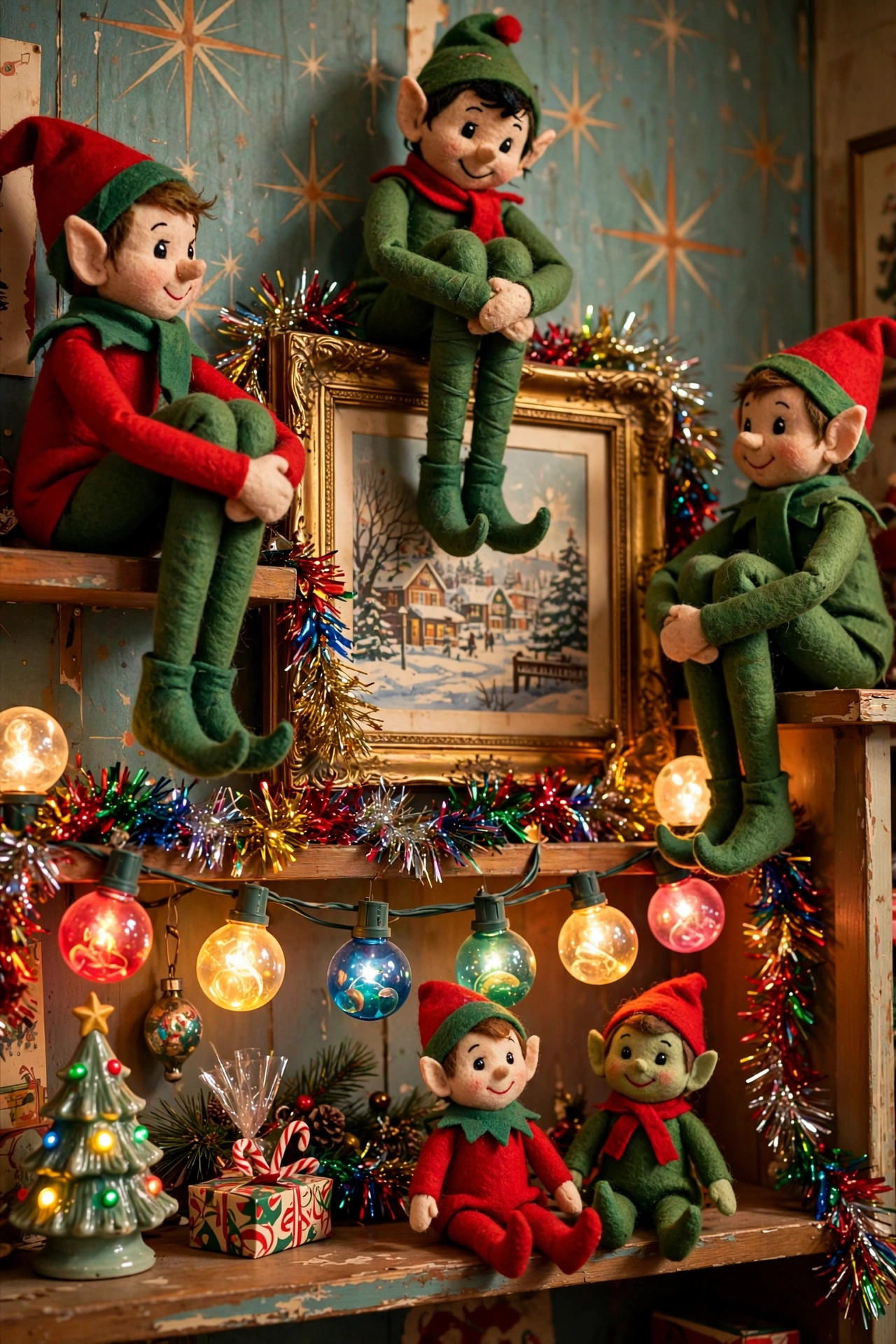
Knee-Hugger Elves Sitting Everywhere
The knee-hugger elf, a small felt elf with long arms and legs that wrap around anything, was the 50s and 60s shelf sitter. Originals in good felt cost $15 to $40 each; reproductions are a few dollars. Perch them on shelf edges, curtain rods, picture frames, and the tops of bookcases, knees hugged, watching the room. Two or three read as a joke the house is in on.
Try it: Move one elf every night in December. It becomes a household game by the end of the first week, no app required.
16
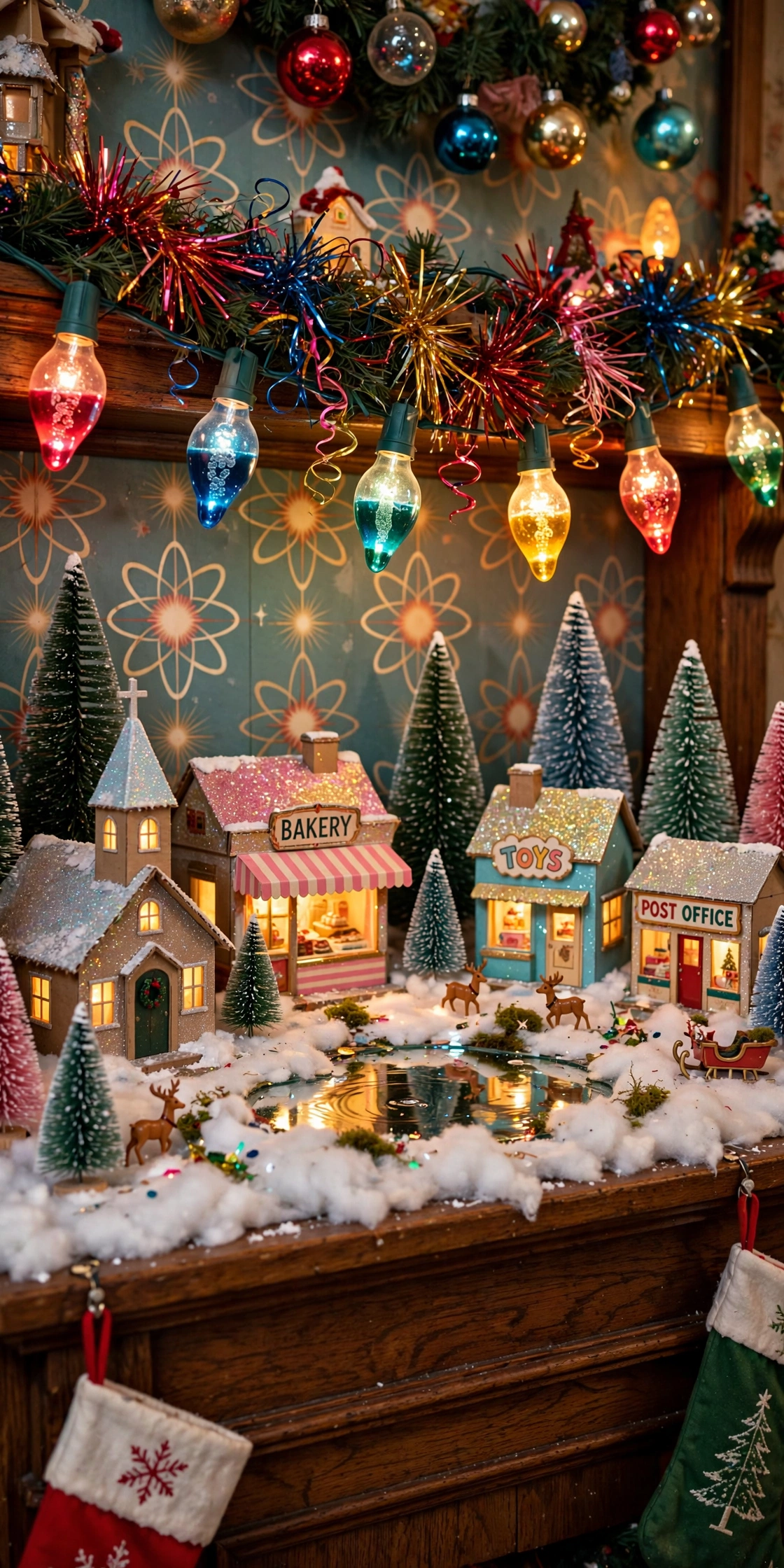
A Glittering Putz House Village
Putz houses are the little cardboard houses, churches, and shops dusted with glitter snow that filled mid-century mantels and window displays. Vintage sets sell for $30 to $100; craft stores sell bare cardboard houses for $2 to $4 each to paint and glitter yourself. Arrange them on batting with bottle brush trees and a tiny mirror pond, and backlight the windows with a strand of lights tucked behind. A village needs at least five buildings to read as a village.
Try it: Put battery tealights inside the houses instead of a strand behind them. Each window glows on its own and there are no cords to hide.
17
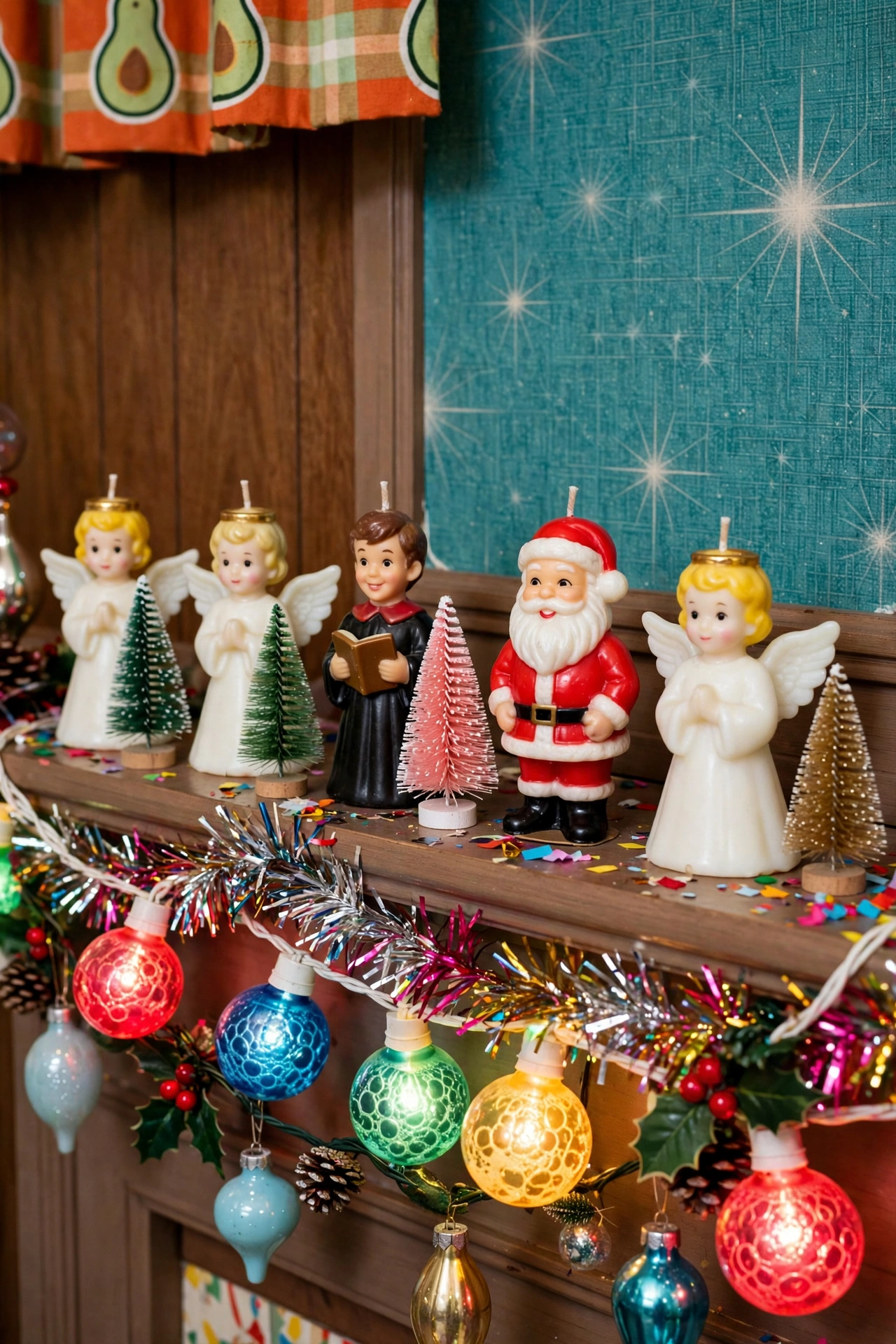
Gurley Candles and Choir Figures
Gurley candles were figural wax candles, Santas, carolers, angels, and snowmen, sold from the 1940s through the 70s and almost never burned; they were decor from day one. Unburned originals cost $10 to $35 each depending on size and condition. Line three carolers on the mantel or group Santas on a tray with bottle brush trees. Never light a vintage Gurley; the value and the charm are both in the unmelted wax.
Try it: Display them under a glass cloche or in a curio cabinet if you have cats. Wax figures and cat curiosity are a bad December combination.
18
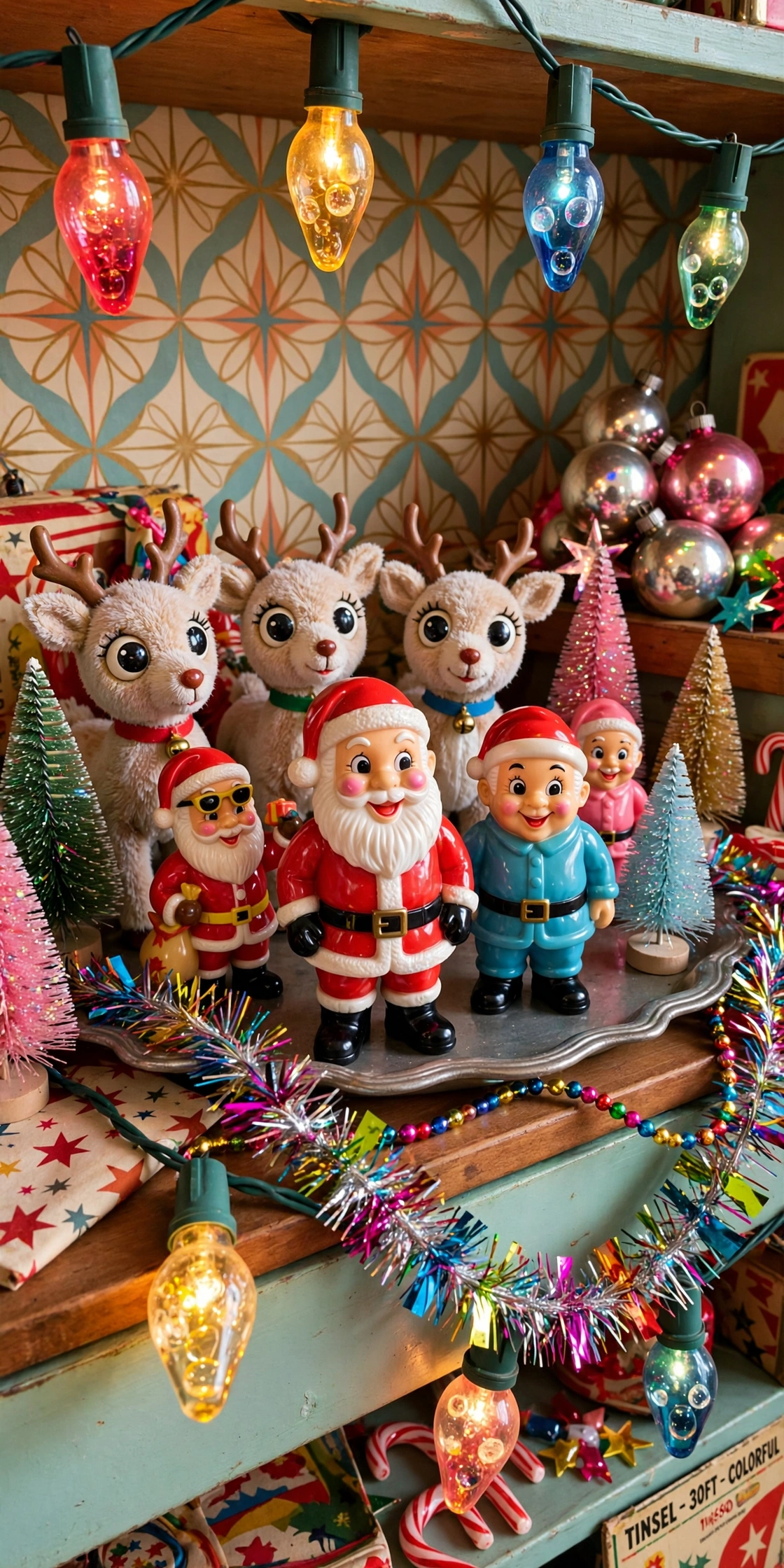
Kitschy Plastic Santas and Flocked Reindeer
Plastic figurines were the cheerful mass-market face of mid-century Christmas: rosy Santas, glittered reindeer, flocked deer with big eyes. They cost $5 to $25 at thrift stores and flea markets, less than almost anything else in this guide. The trick is grouping: one Santa alone is a knickknack, but a shelf of five with trees and tinsel is a collection. Keep the group on one surface so the kitsch stays deliberate.
Try it: Give the group a base, a tray, a doily, or a strip of tinsel garland. A defined base is the whole difference between “collection” and “clutter.”
19
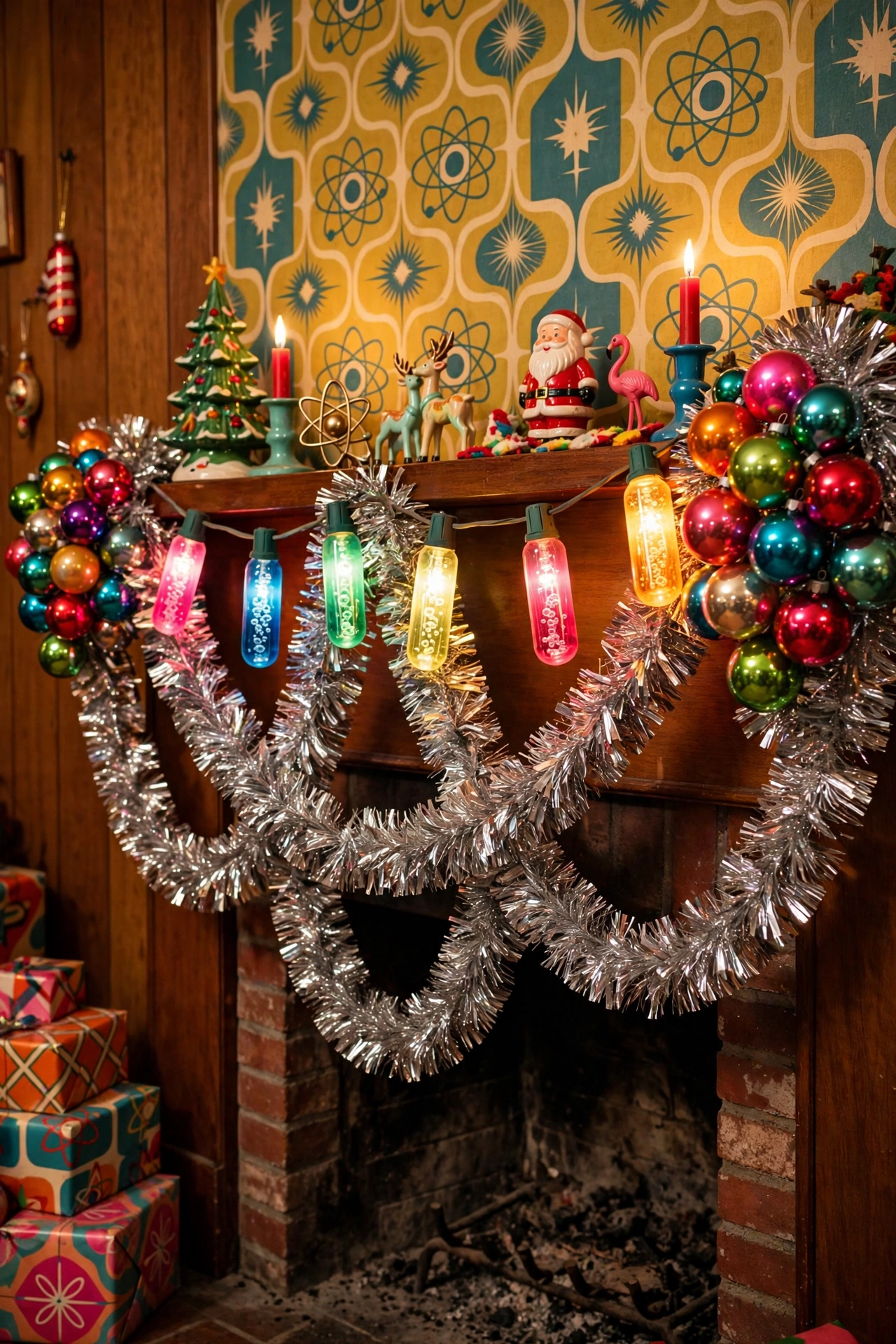
Foil Garland Swagged on the Mantel
Foil and tinsel garlands were draped in deep swags across mantels, stair rails, and door frames, always fuller than modern taste allows. A 12-foot foil garland costs about $6, and two of them swagged in three loops will dress a standard mantel. Let the swags dip 8 to 10 inches at the center; shallow drapes look apologetic. Add a cluster of glass balls at each end where the garland is gathered.
Try it: Swag the garland first, then tuck ornaments and figurines into the loops. Decorating in that order keeps the swags even instead of lopsided with weight.
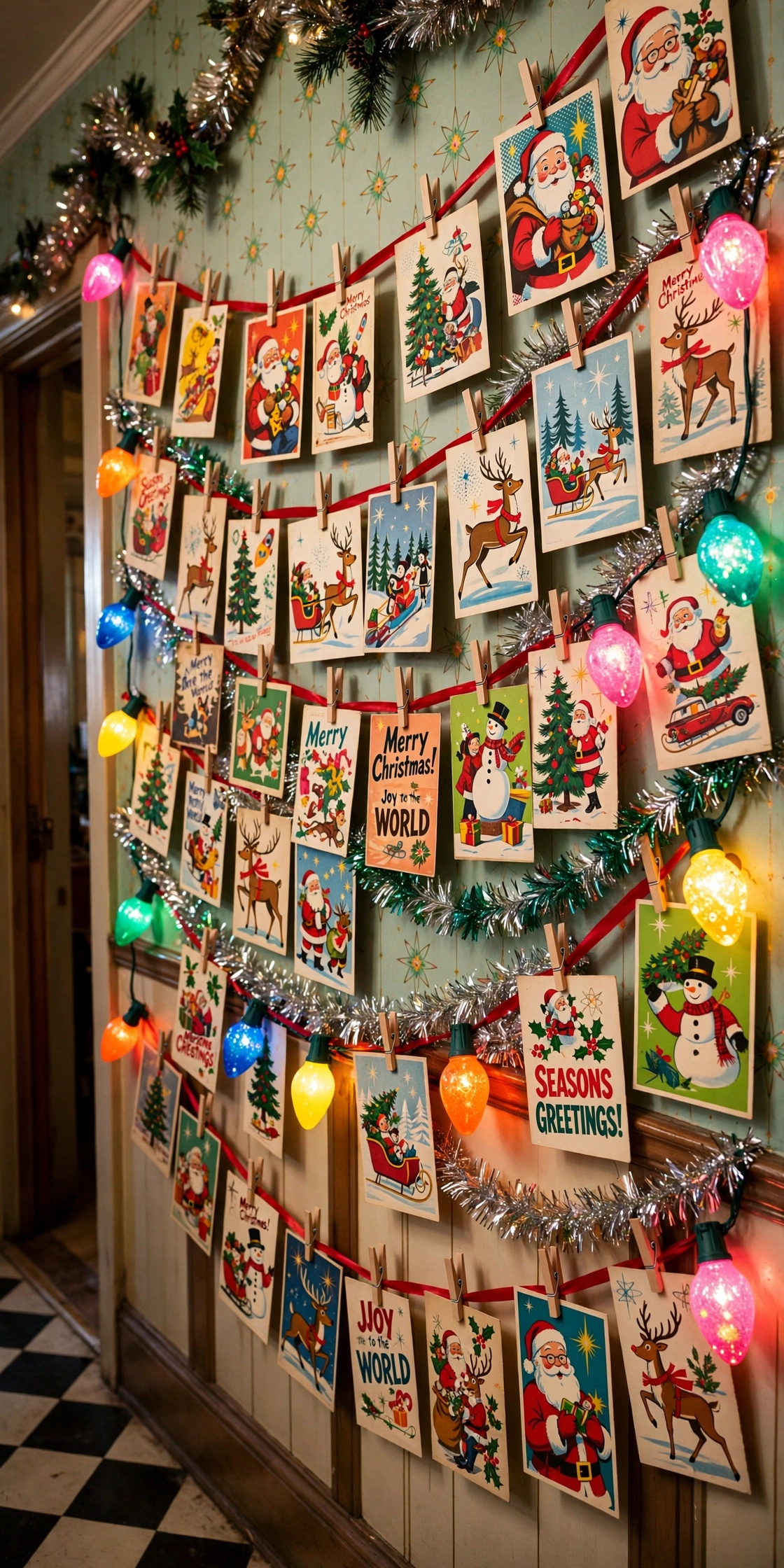
20
Christmas Cards Strung on a Ribbon
Before social media, the mantel and the door frame wore the season’s greeting cards, dozens of them, strung on ribbon or yarn across a wall or around a doorway. Two yards of ribbon and a handful of mini clothespins recreate it for under $5. Cards from the 50s and 60s had the best art, so reproductions of vintage card designs are worth mixing in if your mailbox runs thin. Fill gaps with a few framed favorites from years past.
Try it: Run the ribbon diagonally across a hallway wall in a zigzag. Three short rows look tidier than one long sagging line.
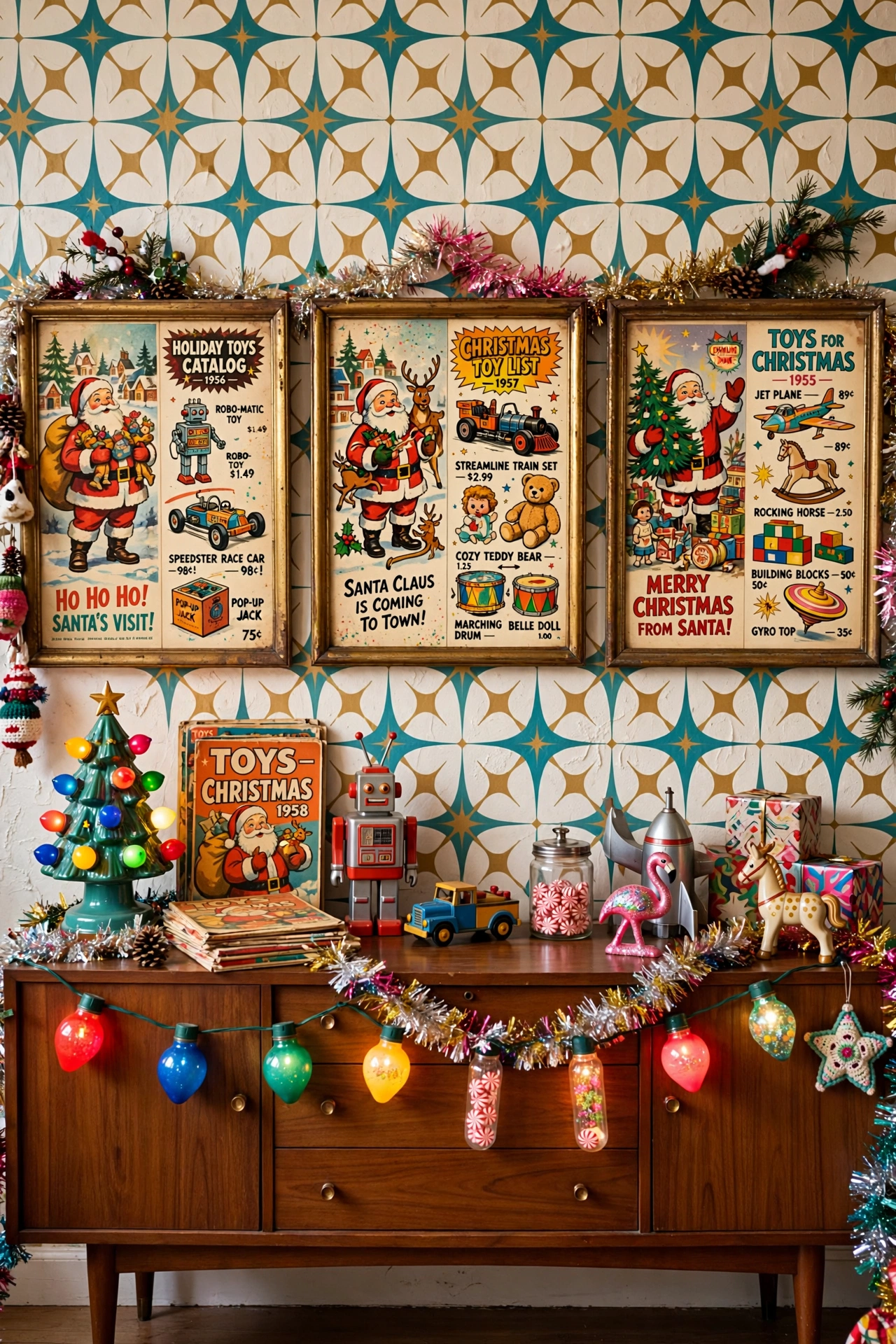
21
Framed Retro Prints and Card Art
Frame the era instead of just decorating in it: 1950s Santa illustrations, toy catalog pages, and sheet music covers make instant retro wall art. Prints cost a few dollars to download or buy, and thrift-store frames run $2 to $5. A set of three matching frames over a sofa or sideboard anchors the theme more firmly than any single figurine. Swap them into frames you already own and the art change is free next year.
Try it: Keep all three frames the same color and finish. Matching frames make mixed vintage art look like a gallery set instead of leftovers.
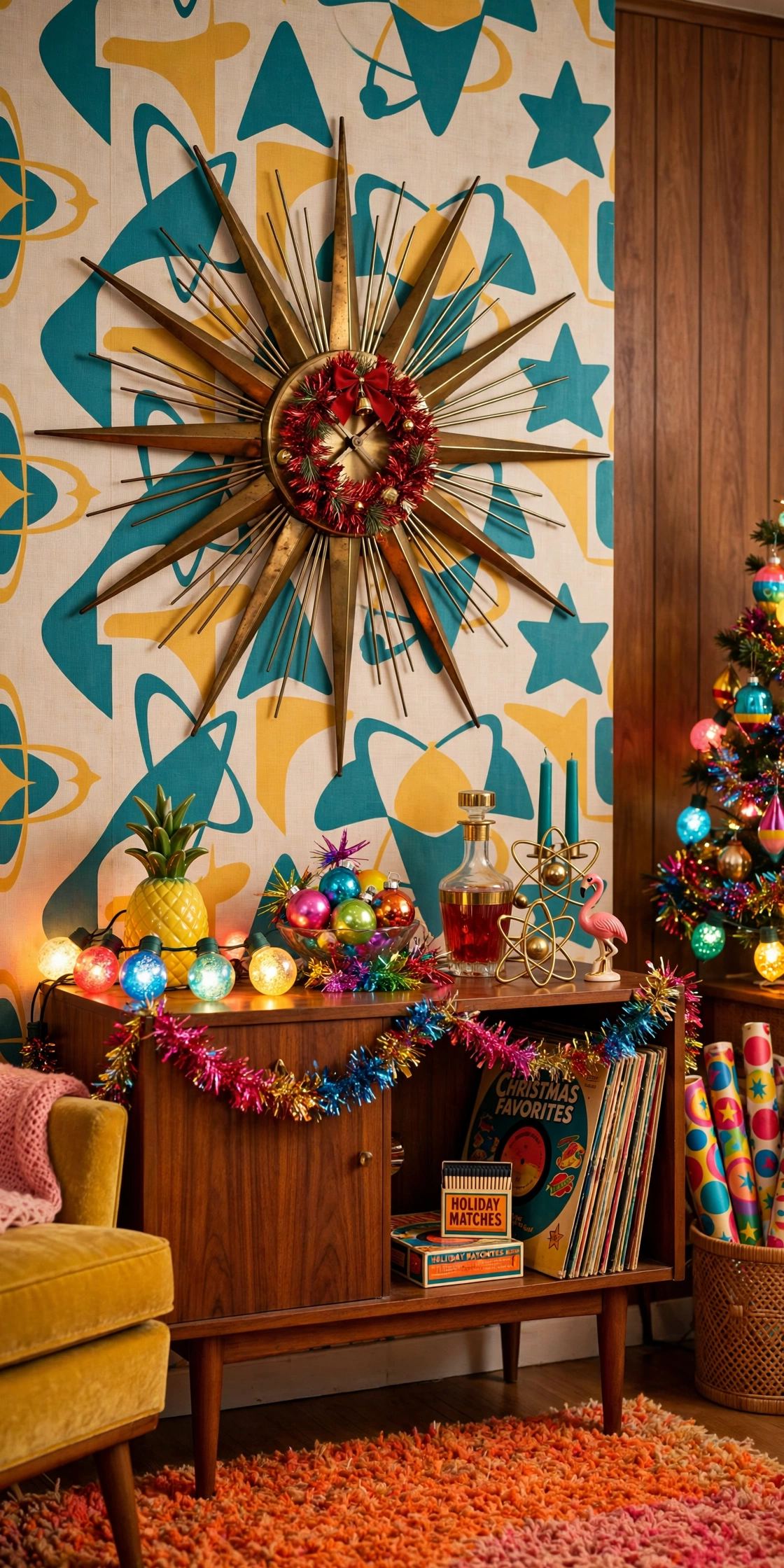
22
A Starburst on the Wall
The starburst was the mid-century wall signature, on clocks, mirrors, and sunburst sculptures in brass and teak. A starburst clock or mirror above the mantel or sideboard carries the retro theme even where no tree stands. Vintage starburst clocks sell for $50 to $150; modern versions are $30 and up. Hang one ornament or a small tinsel wreath at its center for December and take it down in January.
Try it: Choose the wall piece in the same metal as your tree topper. Matching metals across the room make two objects feel like a designed set.
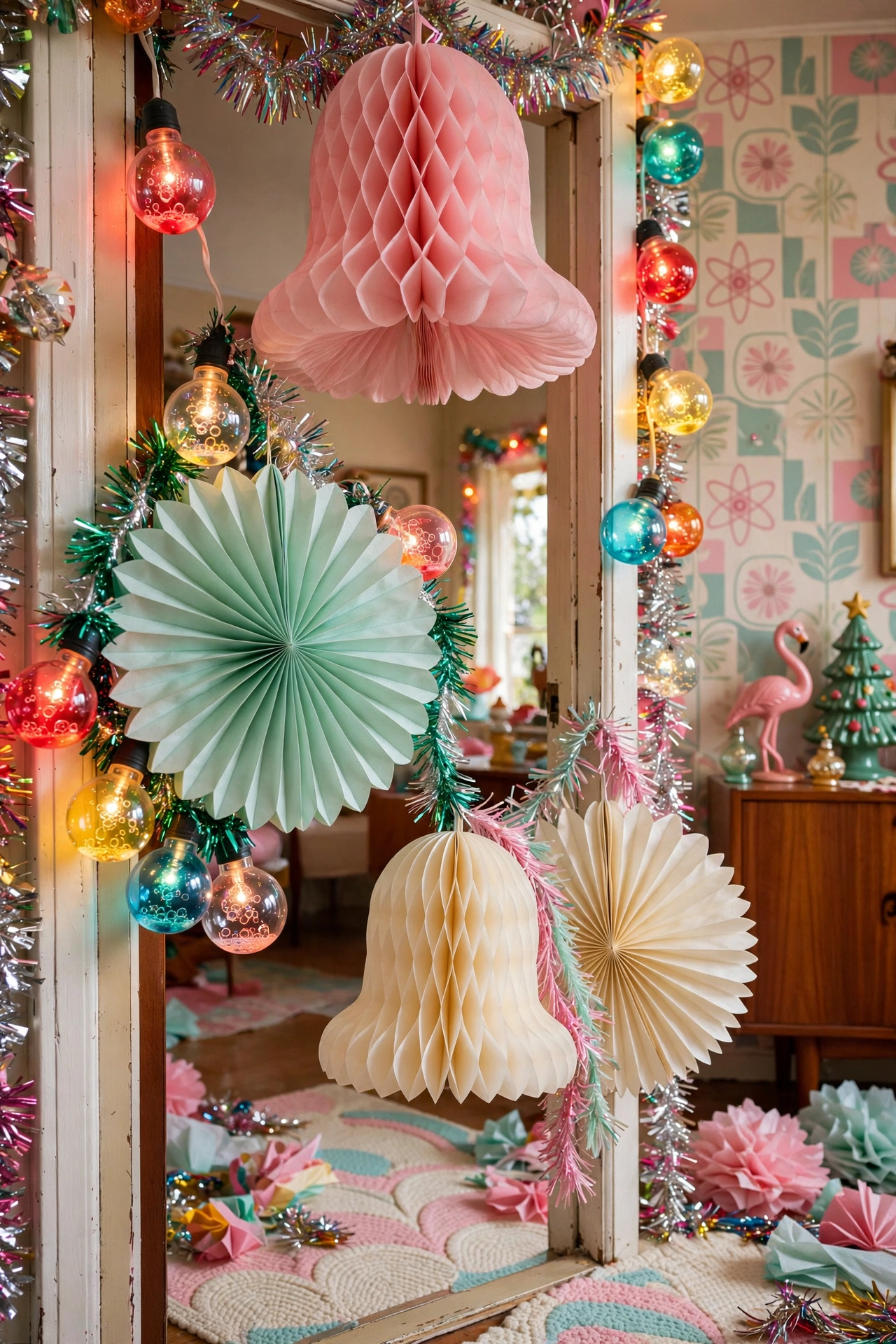
23
Honeycomb Paper Bells and Fans
Honeycomb tissue bells, balls, and fans were the party-store staples of the era, opening into pastel paper sculptures for a few cents each. Modern sets of six run about $10 and fold flat for storage. Hang bells in a doorway or cluster fans over a sideboard in pink, mint, and cream. They are featherlight, so a loop of thread and a small adhesive hook is all the hardware they need.
Try it: Hang honeycomb pieces at three heights in a group, not in a row. Varied heights read as a display; one height reads as bunting.
24
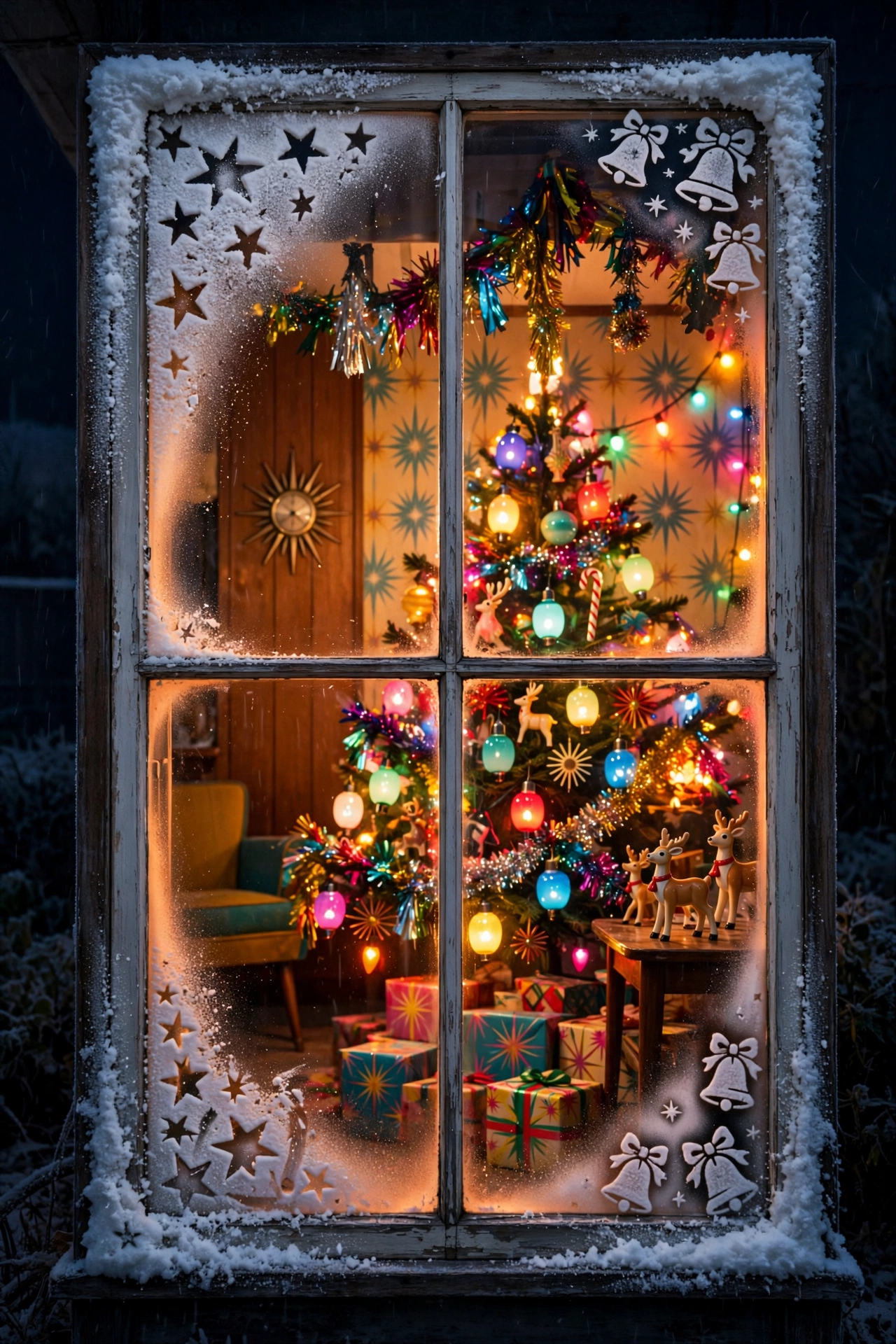
Faux Snow and Window Stencils
Spray snow in the window corners, sold since the 1940s in aerosol cans, framed every retro storefront and plenty of living rooms. A can costs about $4 and does every window in the house; wipe it off with a damp cloth in January. Stencils, stars, bells, and “Merry Christmas” script, give the spray clean edges, and the look from outside at night, snow framing warm colored light, is pure 1958. Keep spray off curtains and wood trim.
Try it: Spray only the bottom corners and one top corner of each window. Partial framing looks like frost; a fully white window just looks painted.
25
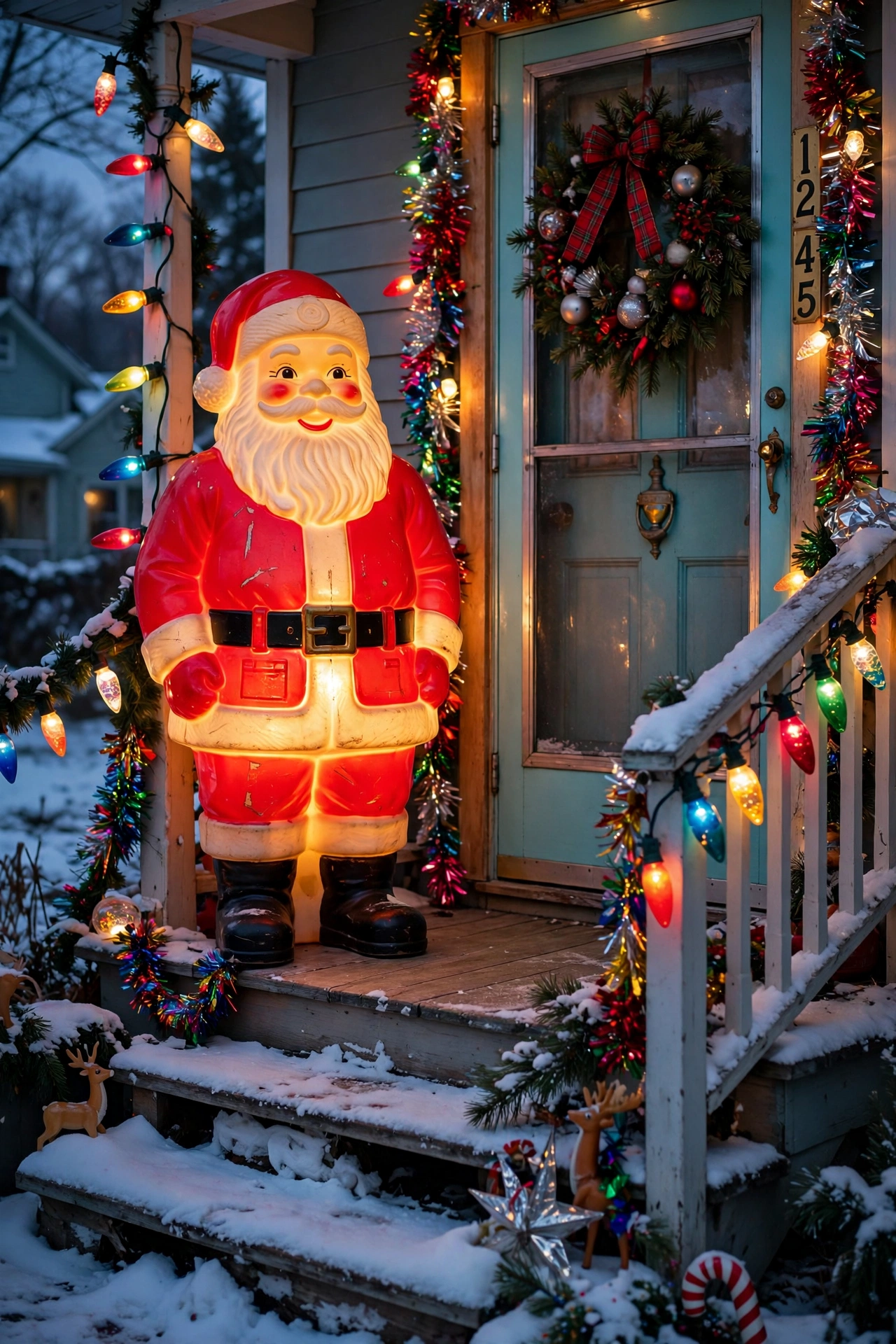
A Blow Mold Santa on the Porch
Blow molds are the hollow, light-from-within plastic figures that guarded mid-century porches: Santas, snowmen, toy soldiers, and candles, mostly 30 to 40 inches tall. General Foam and Empire originals sell for $50 to $300 depending on rarity; new reproductions at big-box stores run $30 to $80. One figure by the front door is classic; a matched pair flanking the steps is the full drive-by effect. They weigh almost nothing, so anchor them against winter wind.
Try it: Put the blow mold on a timer set for dusk to 11 p.m. A glowing Santa that switches itself on is the whole neighborhood’s landmark by mid-December.
26
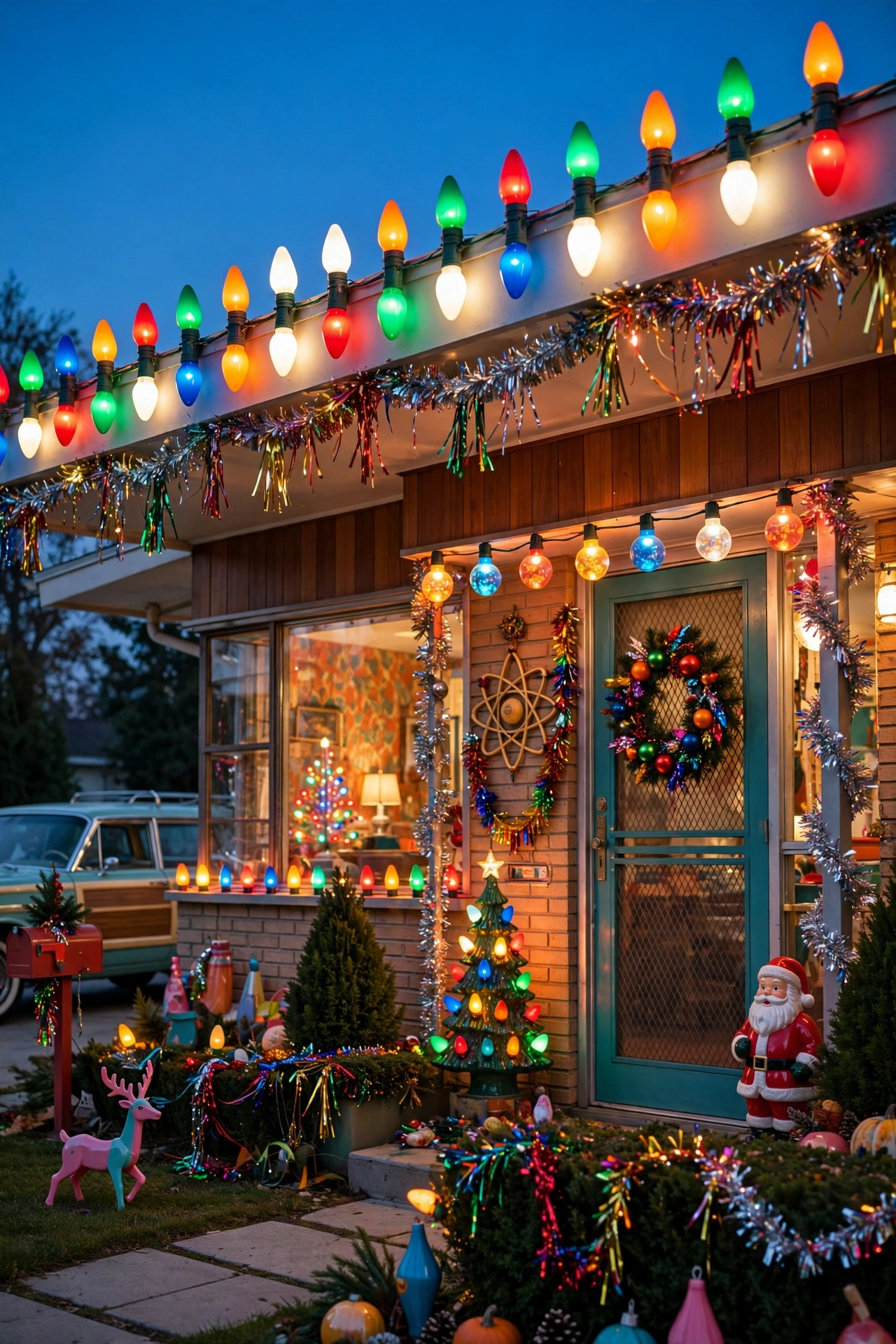
Big-Bulb Lights Along the Roofline
The mid-century roofline was a straight, proud row of C9 bulbs in repeating colors, no icicles, no net lights, just big glowing bulbs marching along the eaves. C9 strands with opaque bulbs run about $20 for 25 feet, and the repeating pattern, red, green, blue, orange, white, is the detail that reads authentic. Space clips evenly and keep the line taut. Big bulbs use more power than LEDs, so modern LED C9s are the sensible buy at the same look.
Try it: Outline only the front-facing roofline and the porch. A partial outline done neatly beats a whole house done crookedly, every time.
27
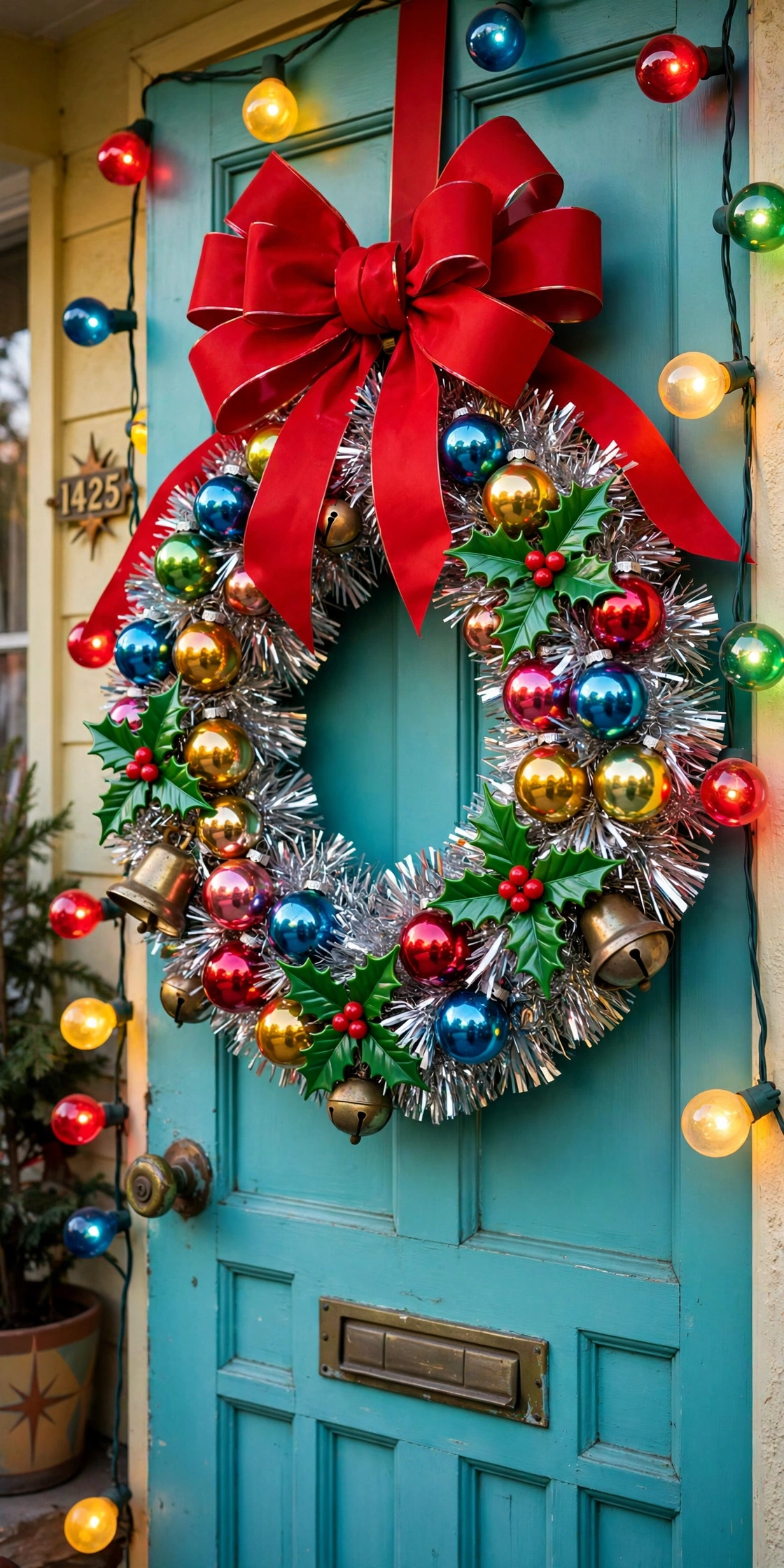
A Door Wreath With Bells and a Big Bow
The retro door wreath was evergreen or silver tinsel, loaded with glass balls, plastic holly, a pair of bells, and an oversized bow. Build one on a 24-inch base: wreaths should span about two-thirds of the door’s width, and 24 inches suits a standard 36-inch door. Add three glass balls and two bells and stop; the bow is the exclamation point and it needs room. A tinsel wreath on a painted door is the boldest 5-minute upgrade in this guide.
Try it: Match the bow to your blow mold or your roofline colors. The door, porch, and roofline in one palette is what makes drivers slow down.
28
A Fondue and Punch Bowl Party Table
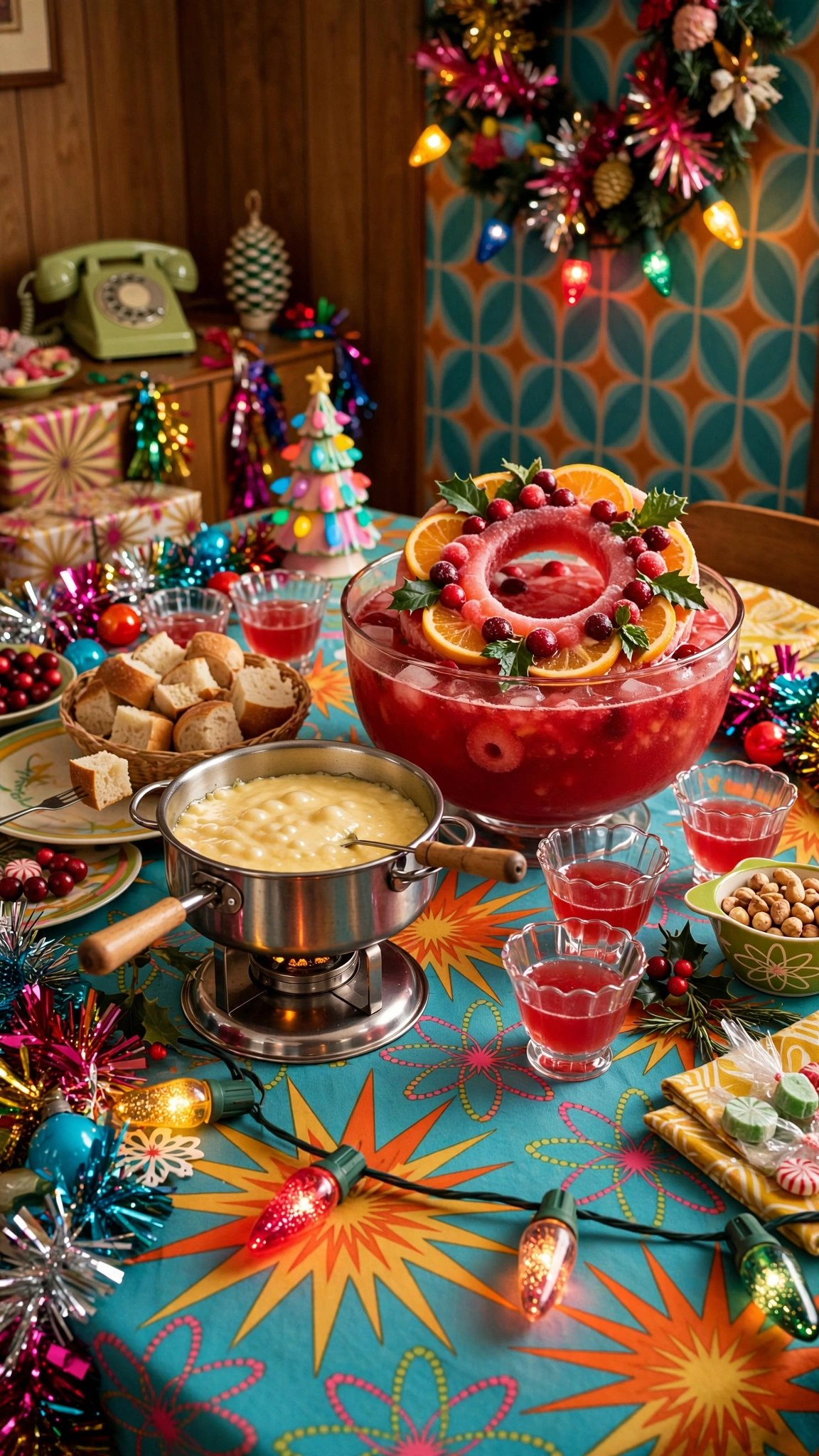
Retro Christmas entertaining had a uniform: a fondue pot in the middle, a punch bowl beside it, and Christmas records on the turntable. A vintage-style fondue set runs $25 to $40, and a glass punch bowl with cups turns up at thrift stores for under $15. Fill the bowl with cranberry-ginger punch and a ring of frozen fruit, set out cheese fondue with bread cubes, and dress the table with a starburst-pattern cloth. The spread takes an hour to assemble and looks like a magazine page from 1963.
Try it: Freeze the punch ring in a bundt pan with cranberries and orange slices inside. It chills the bowl for hours without watering the punch down.
29
Retro Wrapping Paper and Ribbon Candy
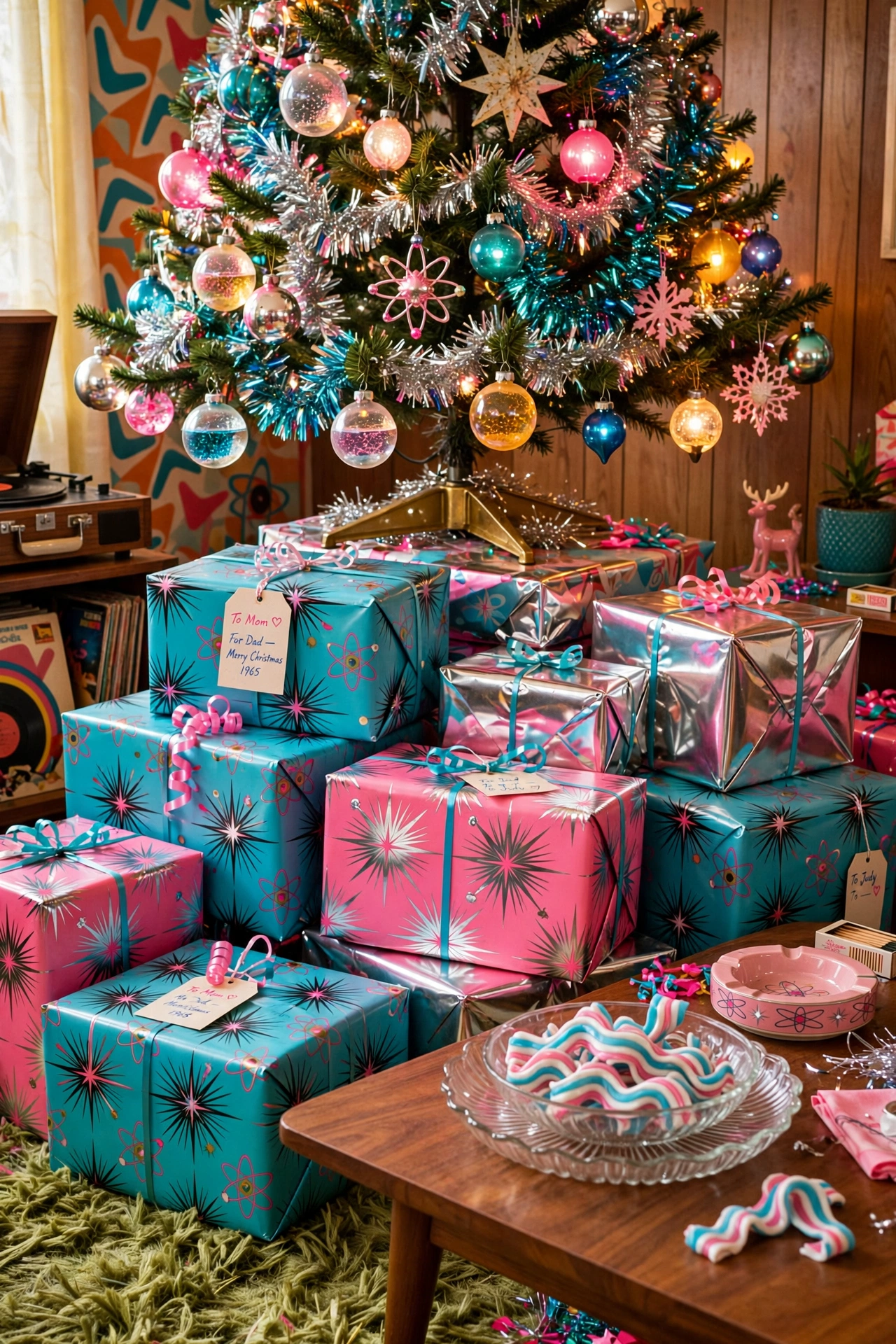
Wrap the gifts to match the era: atomic starbursts, pink Santas, and foil papers in turquoise and silver, all widely sold as reproduction rolls for $6 to $10. Wrapped presents are decor for three weeks, and retro paper under a retro tree doubles the theme for the price of paper. Finish the scene with a glass dish of ribbon candy, the wavy hard candy every mid-century coffee table held, about $5 a bag. Keep the candy dish where guests can actually take a piece.
Try it: Wrap three empty boxes early and keep them under the tree all season. The tree looks finished from day one, and real gifts join a display that is already styled.
30
One Hero Per Room, Modern Calm Around It
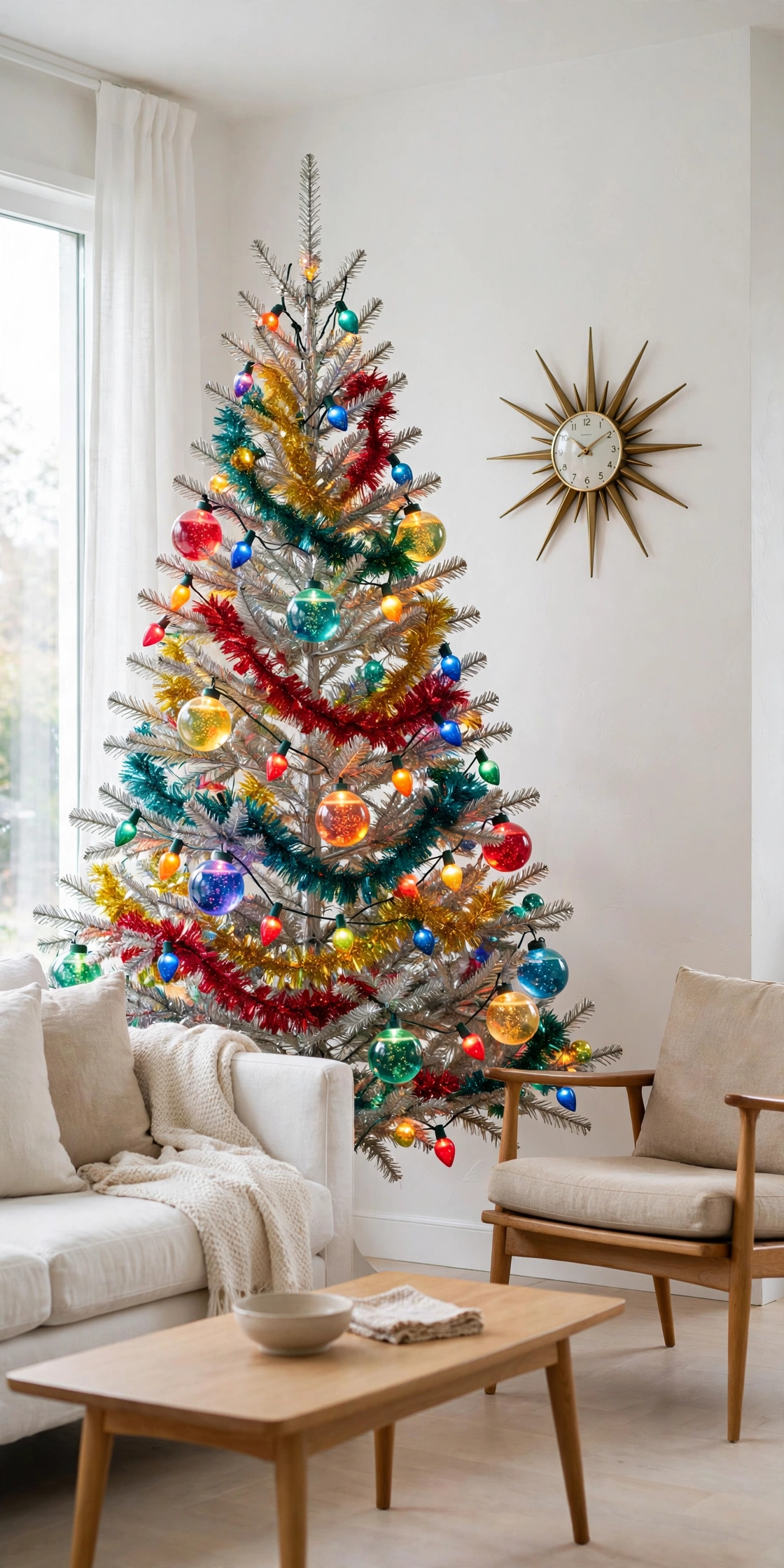
The way to keep retro curated instead of cluttered is rationing: one hero piece per room, the aluminum tree, the ceramic tree, or the blow mold, and simple modern neutrals everywhere else. A pink tree in a white room with one starburst clock looks designed; the same tree plus elves, villages, and honeycomb in every corner looks like a storage unit exploded. Choose the hero first, then let everything else in the room be supporting cast. This is the idea that makes all the other 29 work together.
Try it: Stand in the doorway and name the hero out loud. If you cannot pick one thing your eye lands on, the room has two heroes and one of them moves to another room.
Pro tip: Shop for retro in January and at estate sales, not in November at antique malls. Prices on original Shiny Brites, ceramic trees, and blow molds drop 30 to 50 percent after Christmas, and estate sales price to move, often $5 to $20 for boxed ornaments that a dealer would tag at $60. Build the collection in the off-season and December becomes pure decorating.
Three rules for retro Christmas
One era can carry the house, but the details have to stay honest. These three rules keep the look playful instead of chaotic.
- Pair decades, never pile them: Let one decade lead (50s pastel, 60s space age, or 70s warm) and borrow supporting pieces from one neighbor decade at most. A pink 50s tree with 70s orange bulbs fights itself; a pink tree with 60s silver tinsel sings.
- Old cords are for looking, new cords are for lighting: Vintage bubble lights, color wheels, and C7 strands get displayed, not plugged in unattended. Use LED reproductions for anything that stays on for hours, and have an electrician rewire any original you truly want to run. Before the season starts, it is worth reviewing the NFPA guidance on christmas tree fire safety for any live tree in the house.
- Calm surfaces make kitsch look expensive: Keep one plain element in every vignette, a white doily, a bare shelf edge, a solid tablecloth. The empty space around retro pieces is what separates a curated collection from a crowded one.
After Christmas: storing the retro collection
Retro pieces are only cheap to replace until they are not. Originals get rarer every year, so storage is where the collection survives.
- Ornaments go back in divided boxes: Shiny Brites and glass balls belong in compartment boxes with tissue, never loose in a bin. Label each box with its color family so next year’s single-color tree rule takes minutes, not an afternoon of sorting.
- Tinsel comes off strand by strand: Pulling tinsel off in handfuls tangles next year’s supply and sheds strands into the carpet until March. Ten patient minutes per tree keeps the same icicles usable for years.
- Ceramics, candles, and blow molds store cool and upright: Wrap ceramic trees and Gurley candles in tissue, stand blow molds upright so they do not crease, and keep all three out of hot attics, where wax slumps and old plastic turns brittle.
More ideas you’ll love: vintage christmas decor ideas, old-fashioned christmas decor ideas, victorian christmas decor ideas, christmas decor ideas, and more in Christmas Decor.
Questions readers ask
What exactly counts as retro Christmas decor?
Retro Christmas decor means decorations in the style of the 1940s through the 1970s, whether original or reproduction. Think aluminum trees with color wheels, Shiny Brite glass ornaments, bubble lights, lighted ceramic trees, bottle brush trees, tinsel icicles, and blow mold Santas. If it glows, sparkles, or comes in pastel, it is probably retro.
Where is the best place to buy authentic retro Christmas decorations?
Estate sales and thrift stores give the best prices, often $5 to $20 for boxed ornaments and figurines that dealers list at three times that. Antique malls have the widest selection but charge collector prices, and online marketplaces are best for specific pieces like a starburst topper. January is the cheapest month everywhere, when sellers discount 30 to 50 percent.
Are vintage Christmas lights safe to plug in?
Only with caution. Inspect every cord for cracks or fraying, never leave vintage strands on unattended, and keep them away from anything flammable. For daily use, modern LED reproductions of bubble lights and C7 bulbs are the safer choice: same look, cool to the touch, and no 60-year-old insulation. Many collectors display originals unplugged and light the reproductions. Before plugging anything in, it helps to review ESFI’s holiday lighting safety basics.
How do you decorate an aluminum Christmas tree?
Keep it simple: one color of glass ball ornament, or none at all. Aluminum trees were never strung with lights, because the metal branches can conduct electricity; a rotating color wheel on the floor provided the color and the show. Add tinsel garland sparingly if you like, and let the silver branches be the decoration.
What colors make a Christmas look retro?
Pastels lead the 1950s palette: baby pink, mint green, turquoise, and cream with silver tinsel. The 1960s went bolder with jewel tones and metallics, and the 1970s warmed up to orange, avocado, and gold. Pick one decade’s palette and repeat it in ornaments, paper, and textiles rather than mixing all three eras of color at once.
How much does it cost to decorate a retro Christmas?
A focused retro room costs $150 to $300 if you mix thrifted originals with reproductions. The big pieces set the budget: a reproduction aluminum tree is $150 to $250, a ceramic tree starts around $20, and blow molds run $30 to $80 new. Ornaments, bottle brush trees, and honeycomb paper are the cheap layers, often $1 to $10 each.
Can retro Christmas decor work in a modern home?
Yes, if you ration it. Give each room one hero piece, an aluminum tree, a ceramic tree, or a starburst clock, and keep the surrounding furniture and textiles simple and modern. The contrast is what makes retro pieces read as design choices instead of leftovers. Start with the tree or the mantel and add one piece per year.
Why are ceramic Christmas trees so popular again?
Because they deliver instant nostalgia for almost no effort: plug one in and a whole corner glows like a childhood memory. The originals from the 1960s and 70s became collectible, with nice examples selling for $75 to $300, which pushed makers to release faithful new versions starting around $20. They also suit small spaces, since the tree, lights, and ornaments are one object.
People Also Ask
What is the difference between retro and vintage Christmas decor?
Vintage means the piece is actually from the era, typically at least 30 to 40 years old. Retro means the style of the era, including brand-new reproductions of aluminum trees, bubble lights, and Shiny Brite-style ornaments. Most homes mix both: a thrifted ceramic tree beside a new tinsel tree is retro styling with one vintage star.
Why did aluminum Christmas trees fall out of fashion?
A few forces hit at once: a famous 1965 television special mocked the aluminum tree in favor of a small real one, tastes swung back to natural trees, and the trees were never cheap or easy to store. By the early 1970s most makers had stopped production. The same trees became collectible decades later, with boxed originals now selling for $200 to $900.
How do I keep vintage glass ornaments from breaking in storage?
Store each ornament in its own compartment, wrapped in acid-free tissue, in a divided box rather than a shared bin. Keep the box in a climate-controlled room, not an attic or garage, since heat and cold swings weaken old glass and fade paint. Handle ornaments by their caps, not the glass, and never stack boxes of glass on the bottom of a pile.
loved these ideas? ✿
Save this guide for later
Pin it to your board so it’s there when you’re ready to recreate it.

Curated by
Hey! I'm Sanaullah — visual curator and content creator. I search, curate, and test the best aesthetic ideas across Pinterest so you can easily transform your living space, style daily outfits, and try simple creative DIYs without the overwhelm.