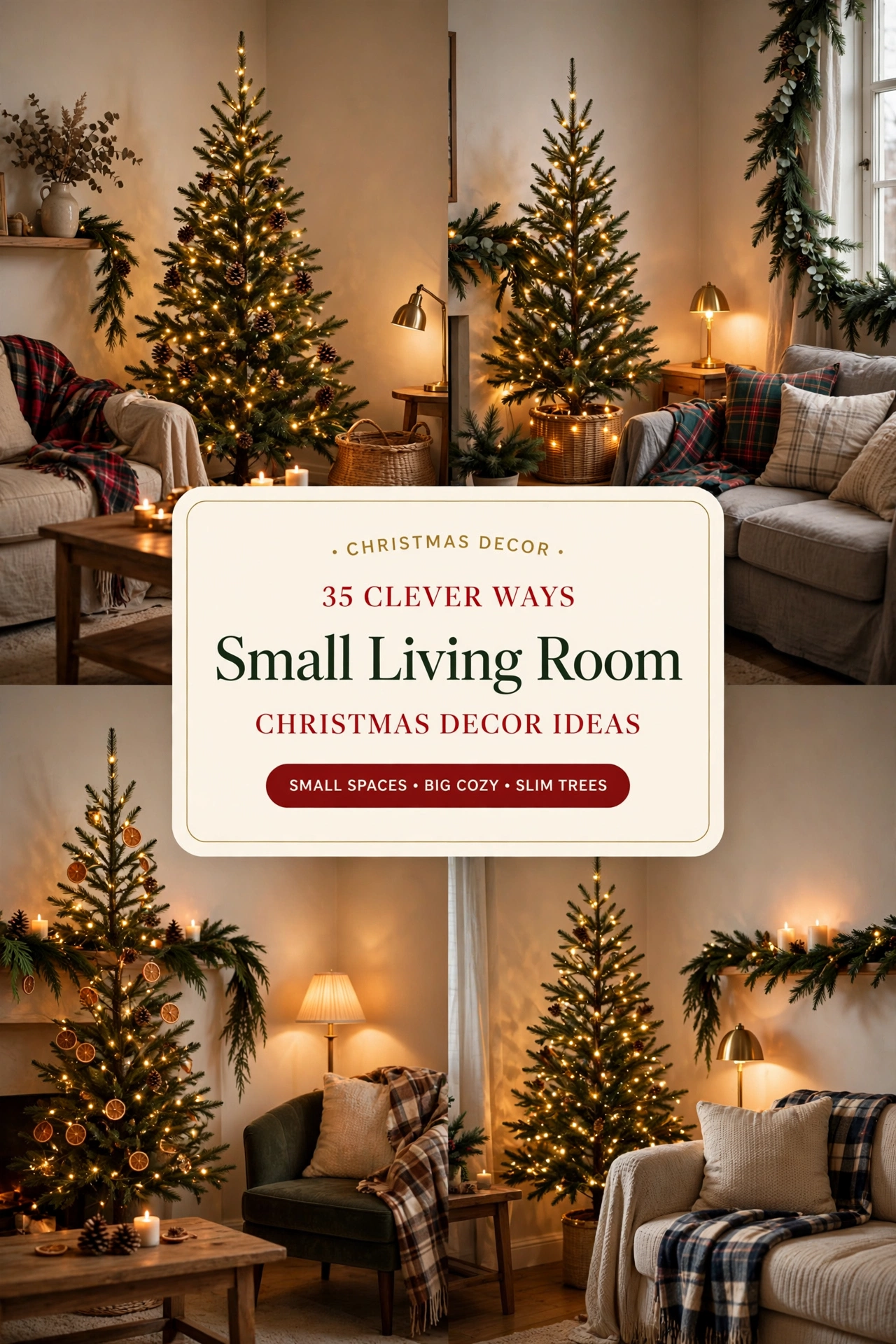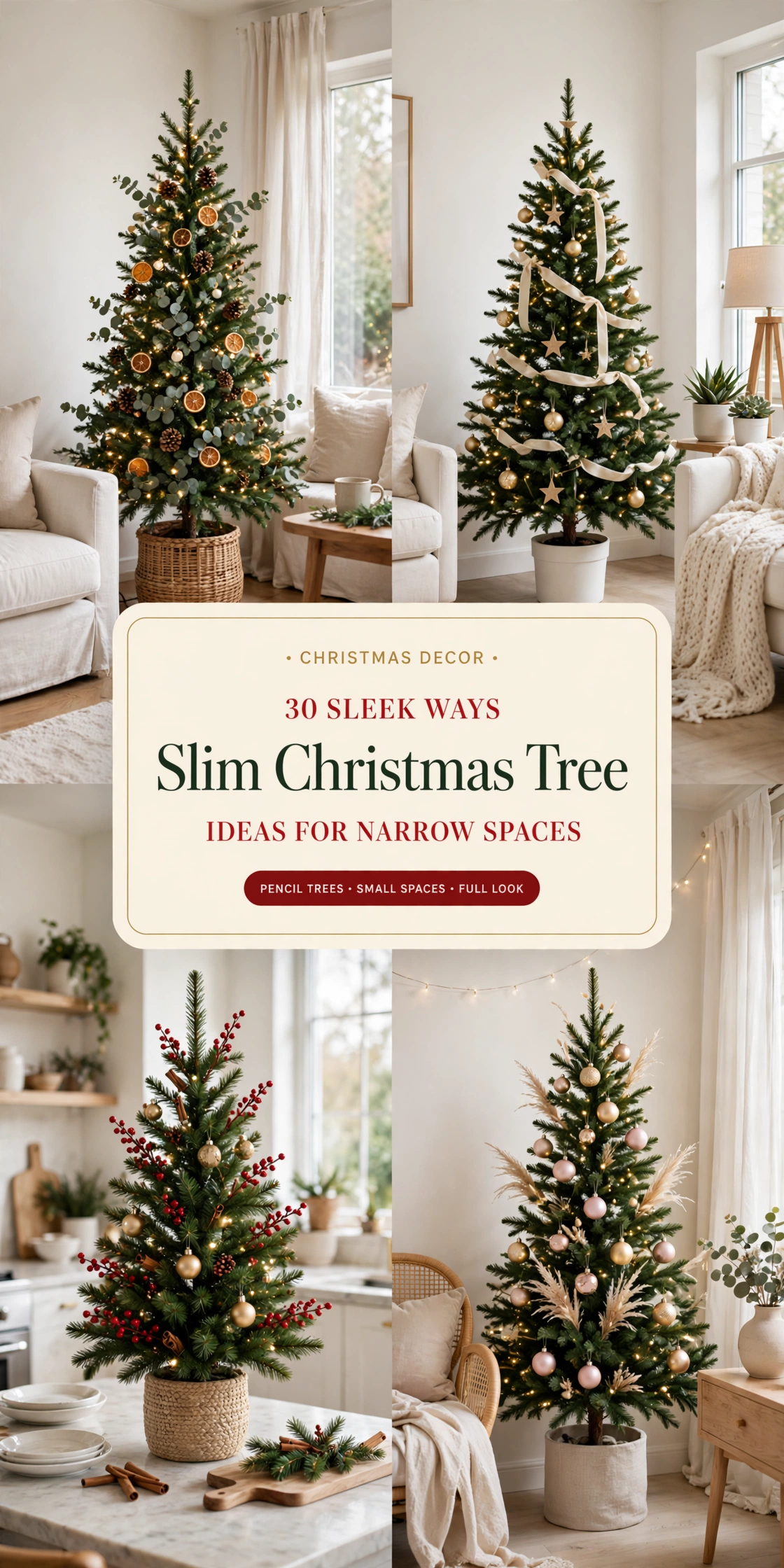

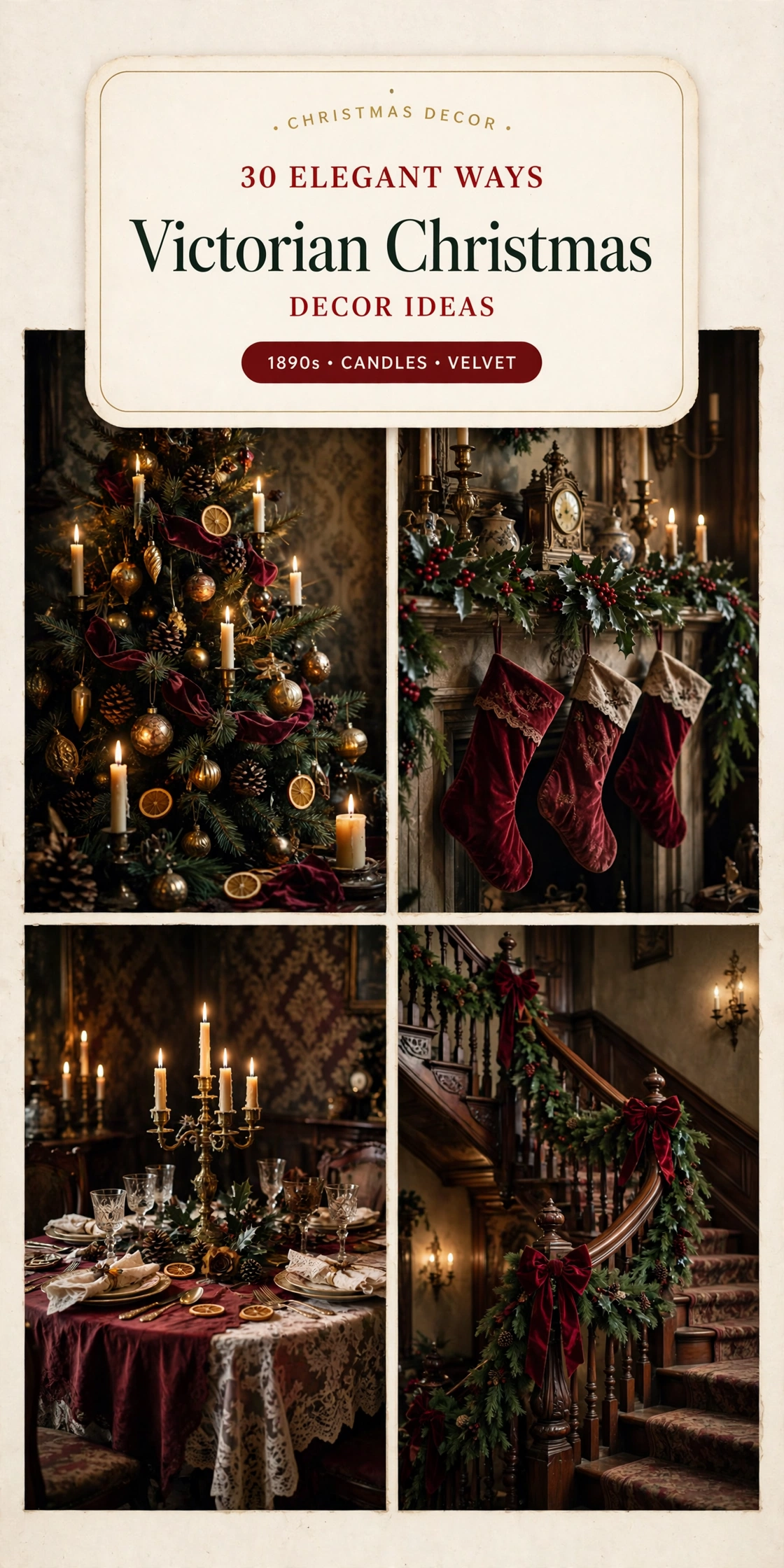
Your grandmother’s Christmas had a glow that modern decor rarely matches: real greenery on every surface, candlelight instead of glare, and ornaments that looked handmade because they were. These victorian christmas decor ideas rebuild that world in a modern home, using the same materials Victorian families used, from clip-on tree candles and feather trees to dried oranges, lace, and velvet. Work through the zones below and your rooms will feel less decorated and more transported, as if Christmas Eve in 1890 just walked through your front door.
Quick Idea Summary
- The key takeaway: Victorian Christmas is a materials list, not a shopping list. Candlelight, fresh greenery, paper, glass, dried fruit, lace, and velvet in burgundy, forest green, and antique gold will get you 90 percent of the look in any room.
- The detail most people miss: The Victorians decorated in layers over days, and nothing matched exactly. Mixed glass ornaments, handmade paper pieces, and real fruit sat side by side, and that cheerful clutter is the whole point.
- What it costs or how long it takes: Most ideas below cost $8 to $60, and the handmade ones cost almost nothing beyond an evening. A full Victorian parlor comes together over one weekend plus a few evenings of simple crafts.
At a glance
| Zone | Ideas | Budget |
|---|---|---|
| The tree | 01–08 | $20–$95 |
| Mantel and hearth | 09–13 | $15–$60 |
| Greenery, doors and stairs | 14–18 | $10–$55 |
| The Christmas table | 19–23 | $15–$70 |
| Walls, windows and light | 24–27 | $10–$50 |
| Textiles and finishing touches | 28–30 | $8–$45 |
The ideas
01
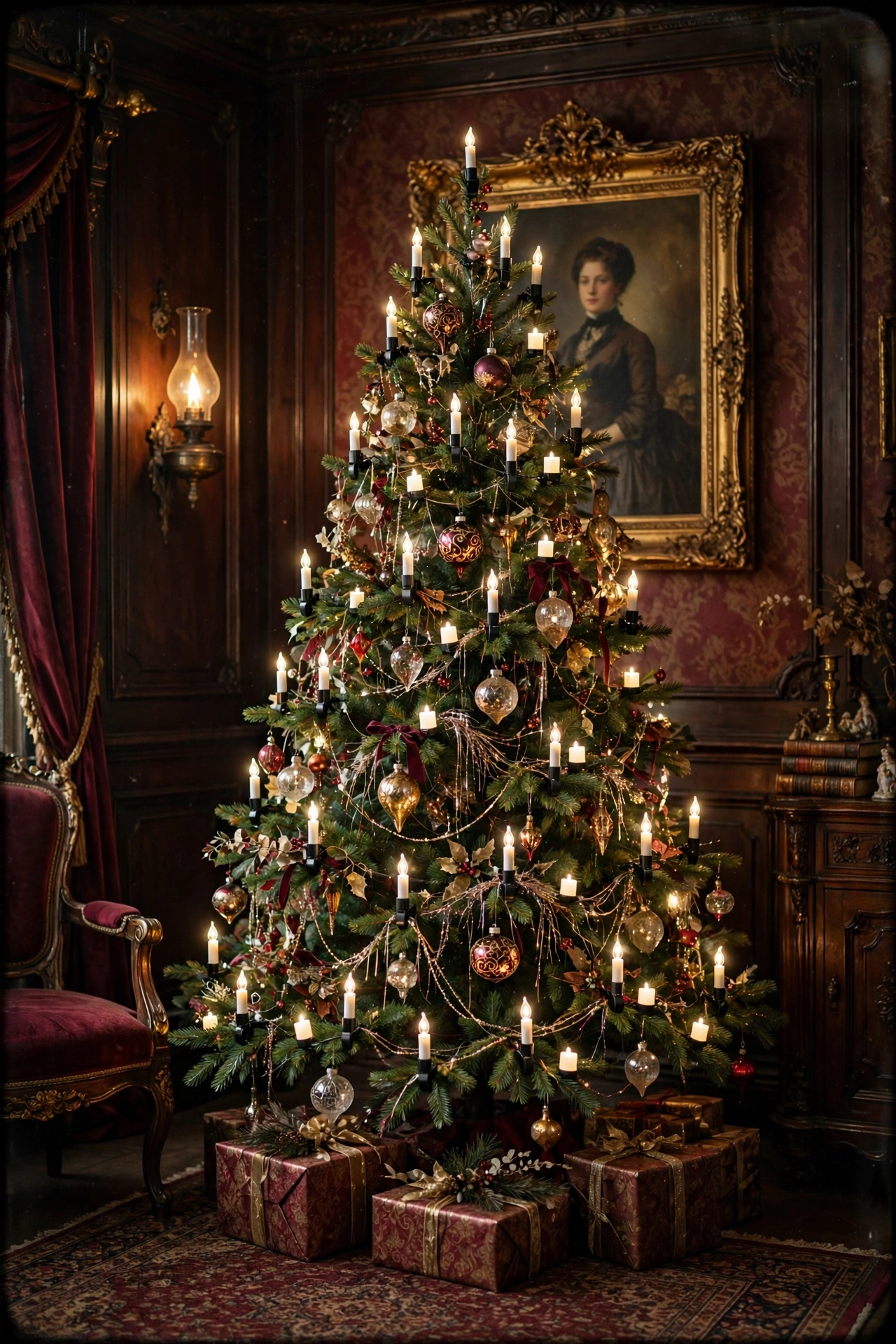
Clip Candles Onto the Tree
Nothing says Victorian like candles on the branches. Families clipped real tapers to the tree with tin holders and lit them only on Christmas Eve, with a bucket of sand nearby. Modern clip-on LED candles copy the look exactly: use 20 to 30 clips on a 7-foot tree, spaced on the outer third of the branches where real flames once flickered.
Try it: Choose warm white LED candles with a slight flicker setting. Steady, cool white light reads as modern; a soft flicker reads as 1890.
02
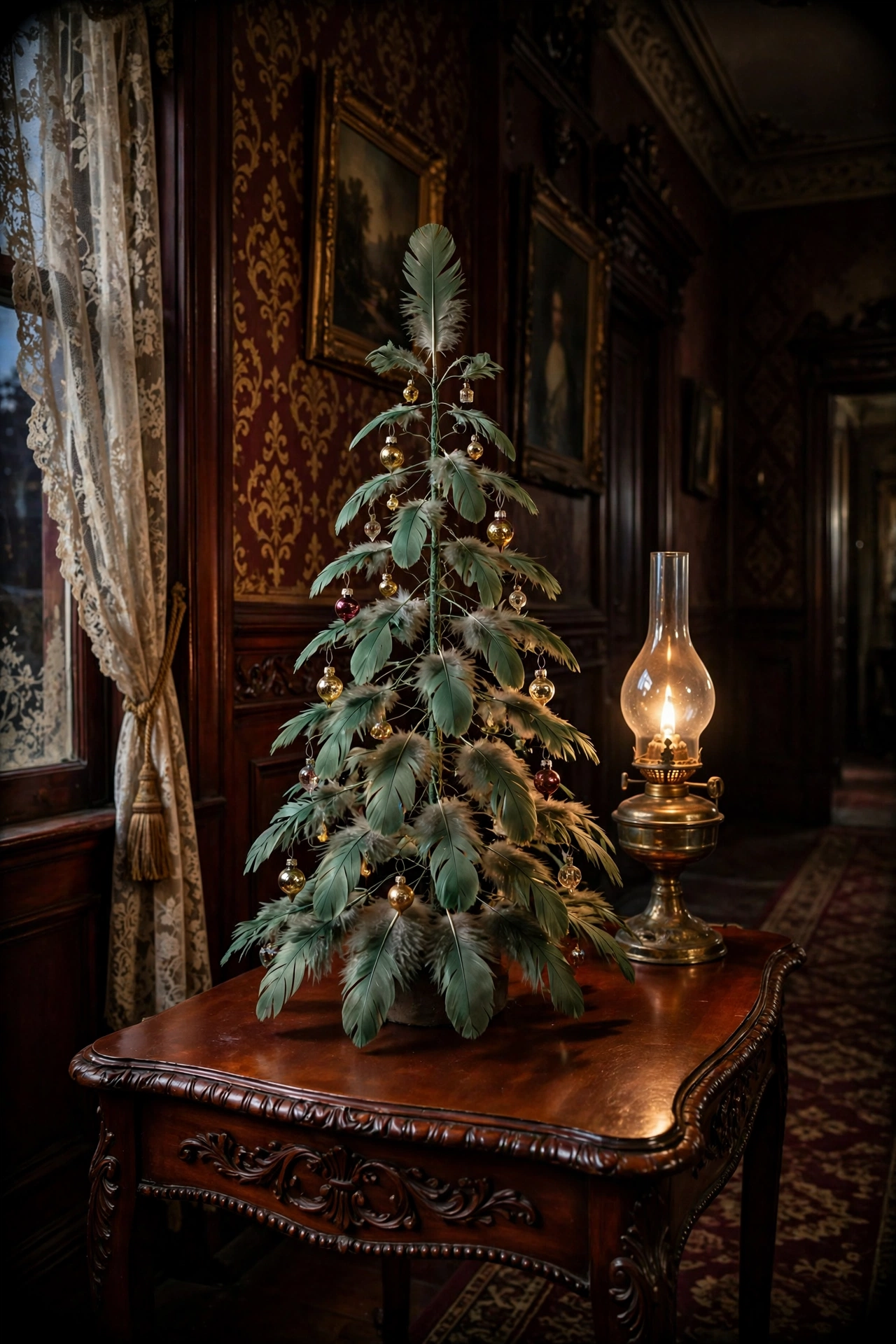
Set a Feather Tree on a Table
Feather trees came from Germany in the 1840s, made from dyed goose feathers wrapped around wire branches, and they were the first artificial Christmas trees. Their sparse, wide-spaced branches show off ornaments instead of hiding them. A 24 to 36 inch feather tree on a side table or hall console gives you a second, historically perfect tree for under $60.
Try it: Keep feather tree ornaments under 2 inches and lightweight. The wire branches bend under heavy modern baubles and stay bent.

03
Hang Glass Kugels in Jewel Tones
Kugels were the first mass-produced glass ornaments, blown in Lauscha, Germany, and silvered inside so they shone like polished metal. Their heavy, jewel-toned spheres in burgundy, emerald, sapphire, and gold are the backbone of a Victorian tree. Mix them with your lighter ornaments, using 8 to 12 kugels on an average tree as the rich, deep notes among the sparkle.
Try it: Hang kugels deeper inside the tree, not on the tips. Their weight sits better on stronger inner branches, and the glow through the needles looks like candlelight on metal.

04
Fill Paper Cornucopias With Sweets
Victorian trees carried edible treasure: paper cornucopias, little cones of decorated paper filled with sugared almonds, chocolates, and candied fruit for children to find. Make your own from 6-inch squares of patterned cardstock rolled into cones, trimmed with lace or gold ribbon. Fill with wrapped sweets and hang 10 to 15 across the tree for about $10 in materials.
Try it: Tie each cornucopia with a name tag and let guests hunt for theirs on Christmas morning. It turns an ornament into a small event.
05
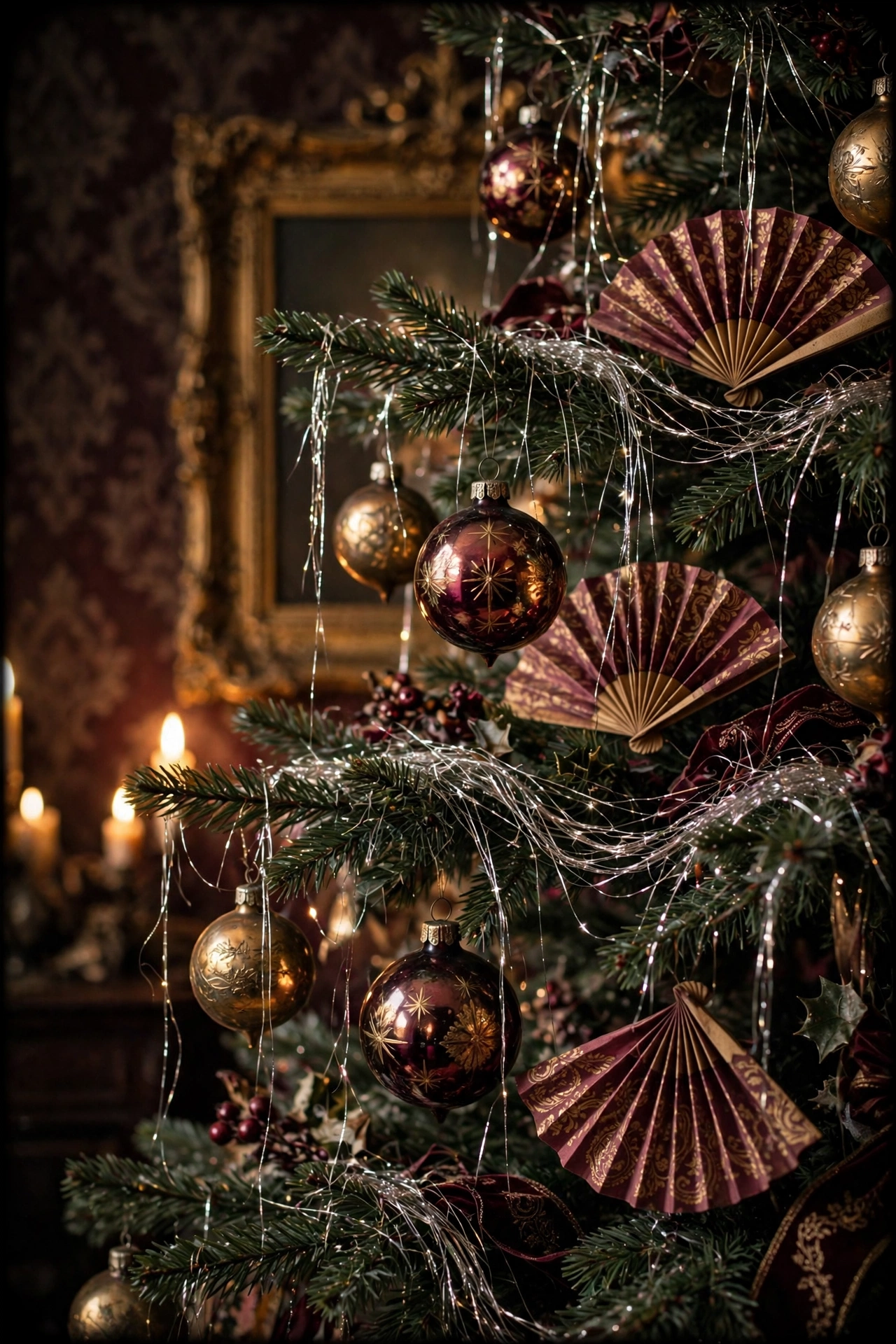
Drape Tinsel Strand by Strand
Victorian tinsel was real metal, originally shredded silver, and it was draped strand by strand so the tree shimmered as candlelight moved. The modern shortcut, tossing on tinsel garland, looks nothing like it. Buy fine strand tinsel and spend 20 minutes laying individual strands over the outer branches; the slow shimmer is unmistakably period.
Try it: Put tinsel on last, after every ornament. It is the finishing frost, and adding ornaments afterward knocks half of it to the floor.
06
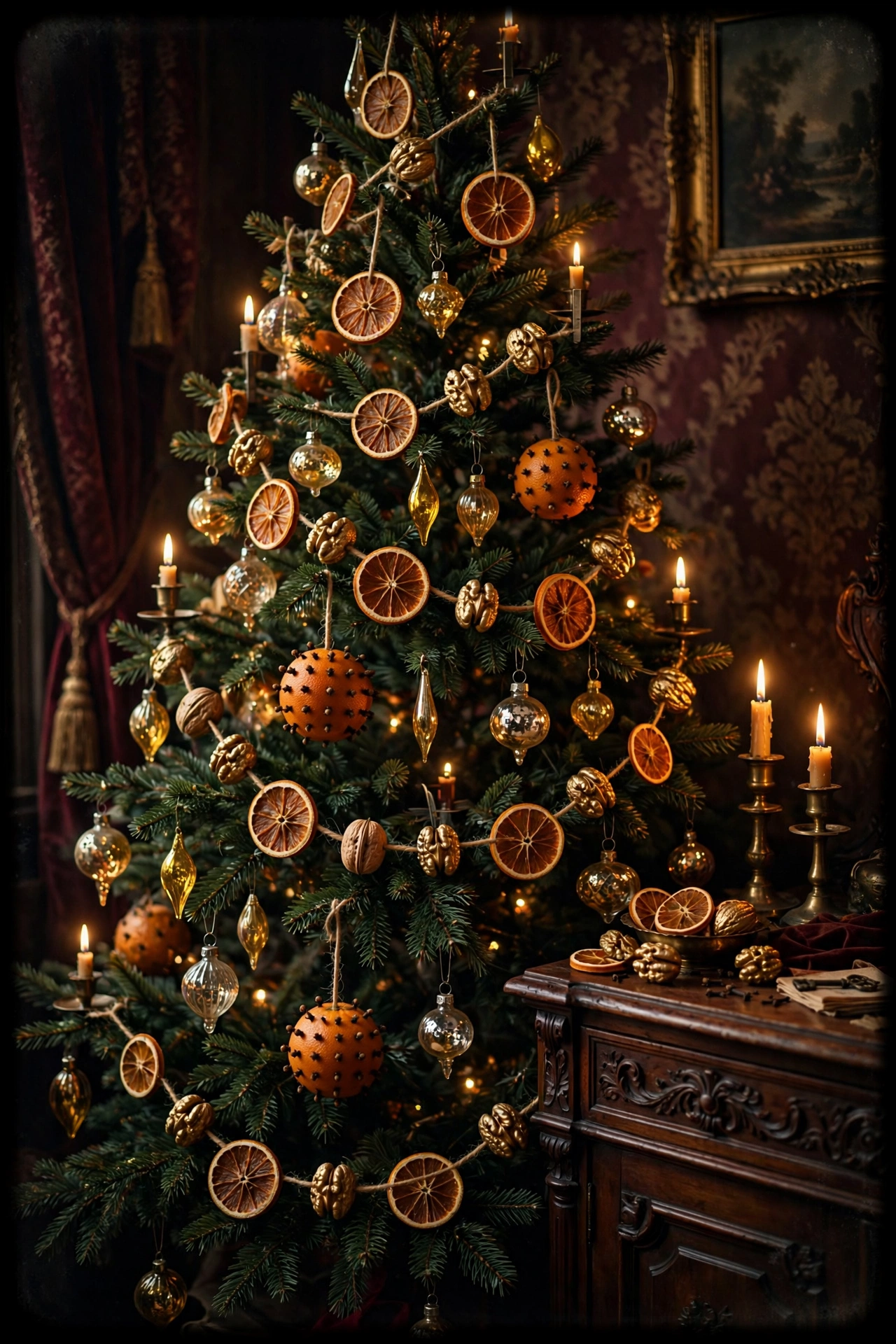
String Dried Oranges and Gilded Walnuts
Fresh fruit was a winter luxury, so Victorians showed it off: gilded walnuts, polished apples, and oranges studded with cloves hung on the tree and scented the room. Dry orange slices in a 200°F oven for 3 to 4 hours, thread them on twine, and alternate with walnuts brushed in gold paint. A dozen of each costs under $8 and perfumes the whole tree corner.
Try it: Dry extra orange slices and save them for the mantel garland in idea 14. One oven session should supply the tree, the mantel, and the table.
07
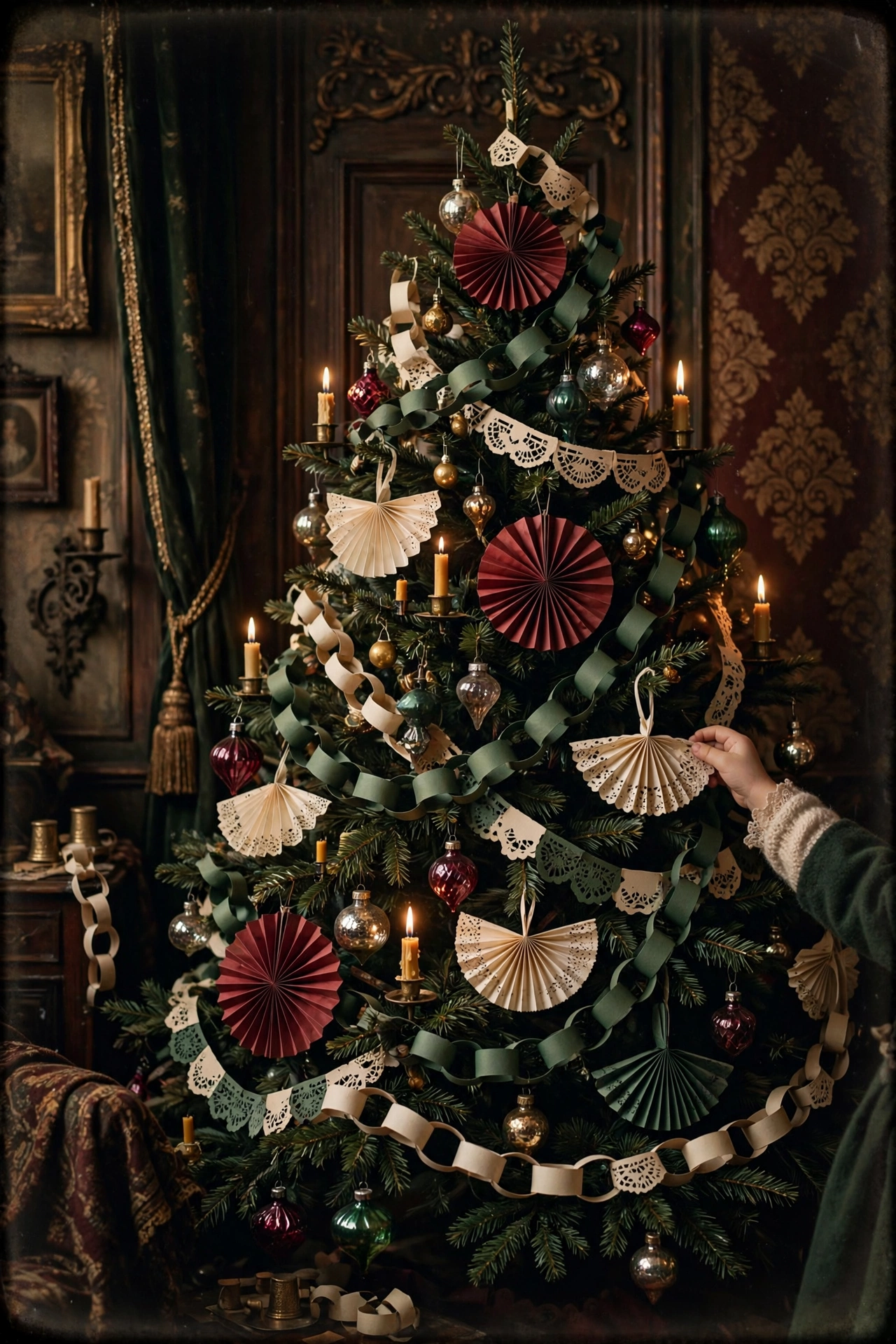
Make Paper Chains and Paper Fans
The most authentic Victorian ornaments cost pennies: paper chains looped along the branches and pleated paper fans cut with lacy notches. Children made them from scraps of colored paper, and no two were alike. Cut strips 1 inch wide and 8 inches long for chains, and fold fans from 6 by 11 inch paper, snipping triangle notches along the folds for the lace effect.
Try it: Use deep red, cream, and forest green paper instead of bright modern colors. The muted palette is what separates Victorian handmade from classroom craft.
08
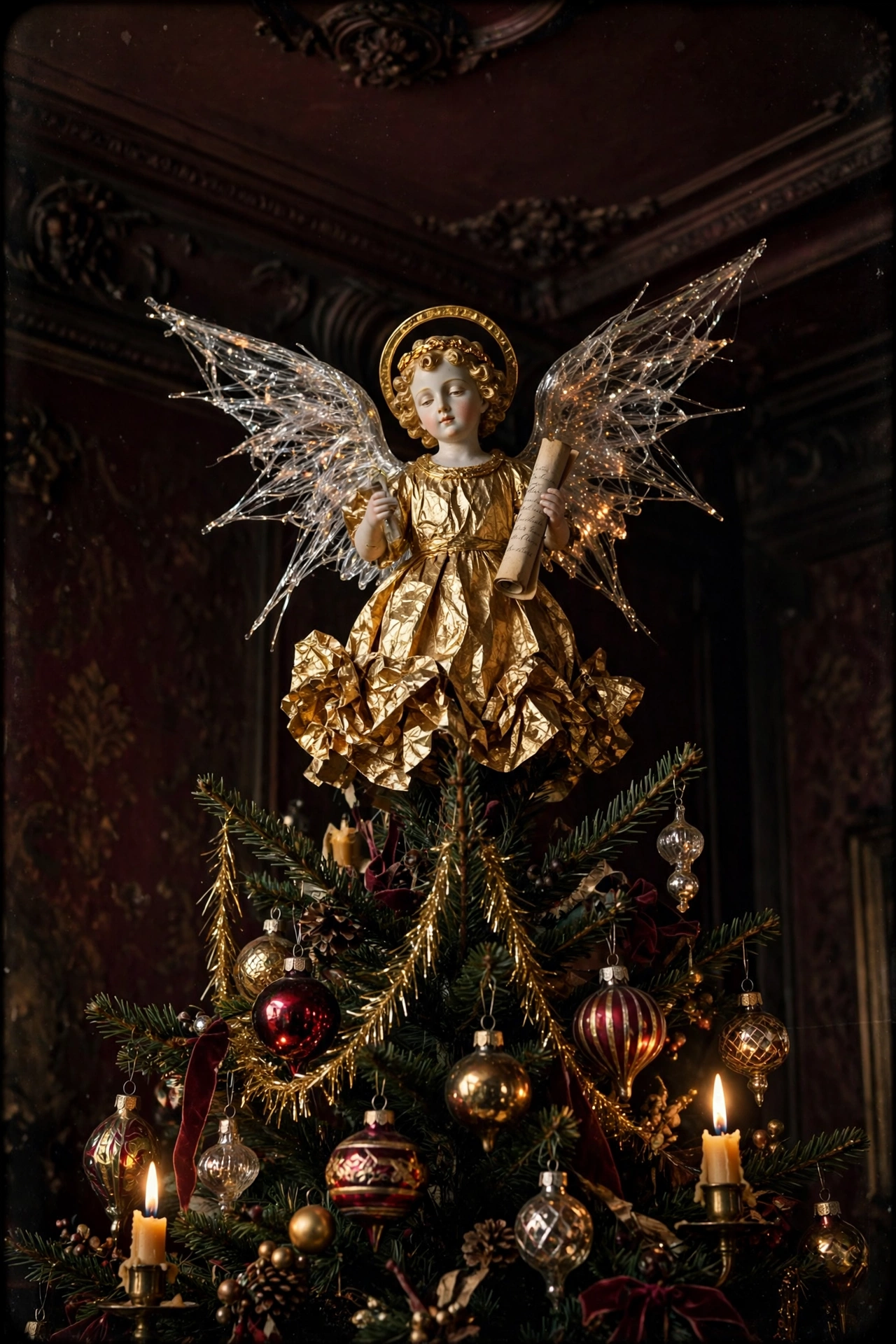
Crown the Tree With an Angel
The classic Victorian topper was a Nuremberg angel: a wax or composition face, a crinkled gold foil skirt, and wings of spun glass that caught the light like frost. She often carried a scroll reading “Peace on Earth.” Vintage-style angel toppers with gold dresses and delicate wings are widely reproduced for $25 to $45 and finish a Victorian tree better than any star.
Try it: Size the angel to the tree, roughly 1 inch of topper height for every foot of tree. A small angel on a tall tree disappears; an oversized one topples.
09
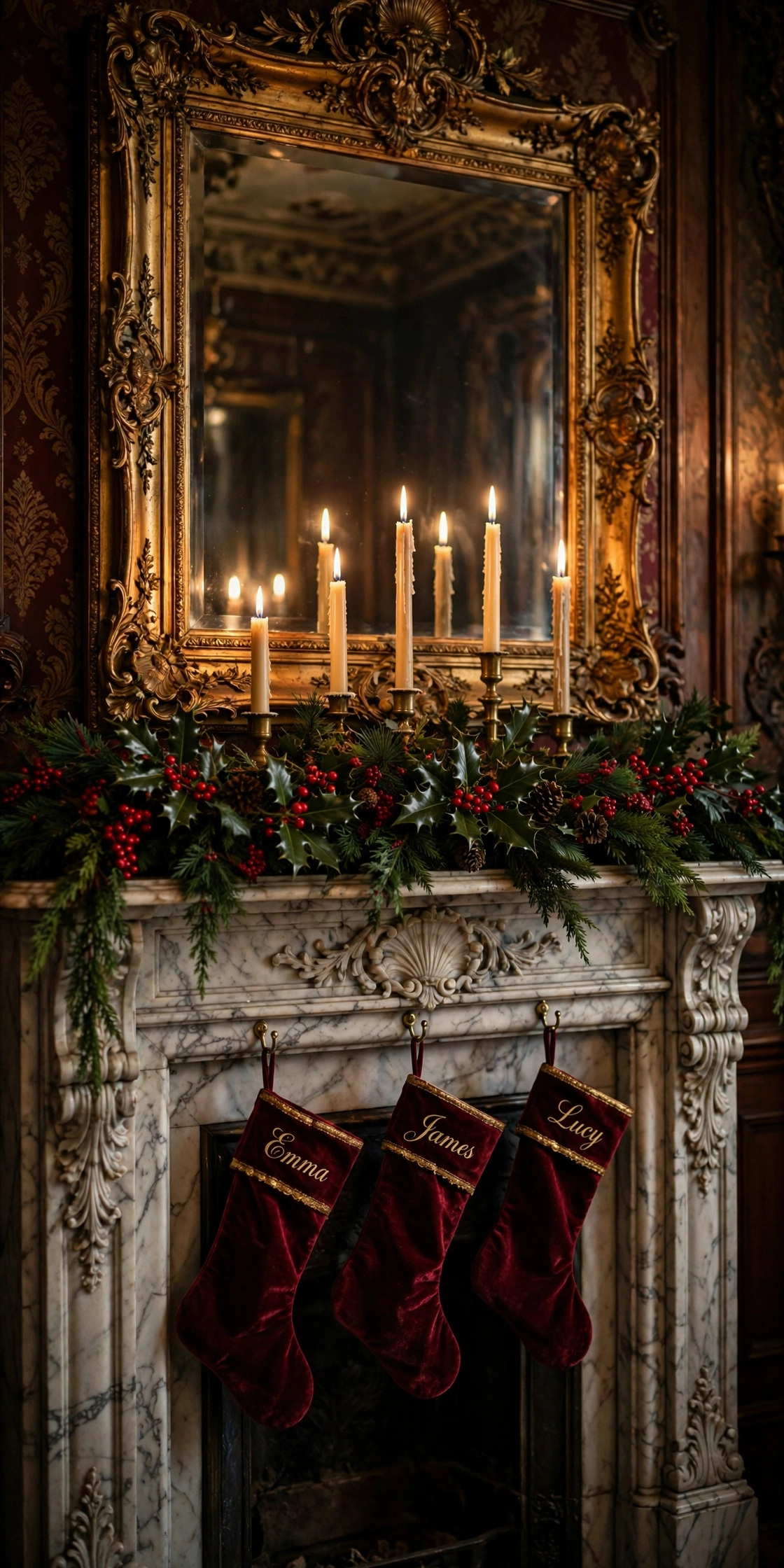
Swag the Mantel With Holly and Candles
The Victorian mantel carried a swag of berry-heavy holly and evergreen, with candles standing among the leaves and the children’s stockings hung below. Build yours on a 6-foot garland base, wire in holly sprigs and red berries, and set 5 to 7 tapers in holders at varied heights behind it. Real holly stays fresh about two weeks indoors if the stems sit in damp floral foam.
Try it: Place a long mirror or gilt-framed picture above the mantel. Victorian rooms were full of reflective surfaces because every candle flame doubled in them.

10
Hang Velvet Stockings With Lace Cuffs
Victorian stockings were often the children’s own long wool socks, but the decorated versions in illustrations were velvet with lace or fur cuffs, rich enough to be decor in their own right. Choose deep burgundy or forest green velvet stockings, one per family member, and hang them at staggered heights from weighted holders. A set of four runs about $30 to $45 and outlasts a decade of Decembers.
Try it: Embroider or stitch each name on the cuff. Victorian families treasured personalized stockings, and a named cuff turns a $10 stocking into an heirloom.
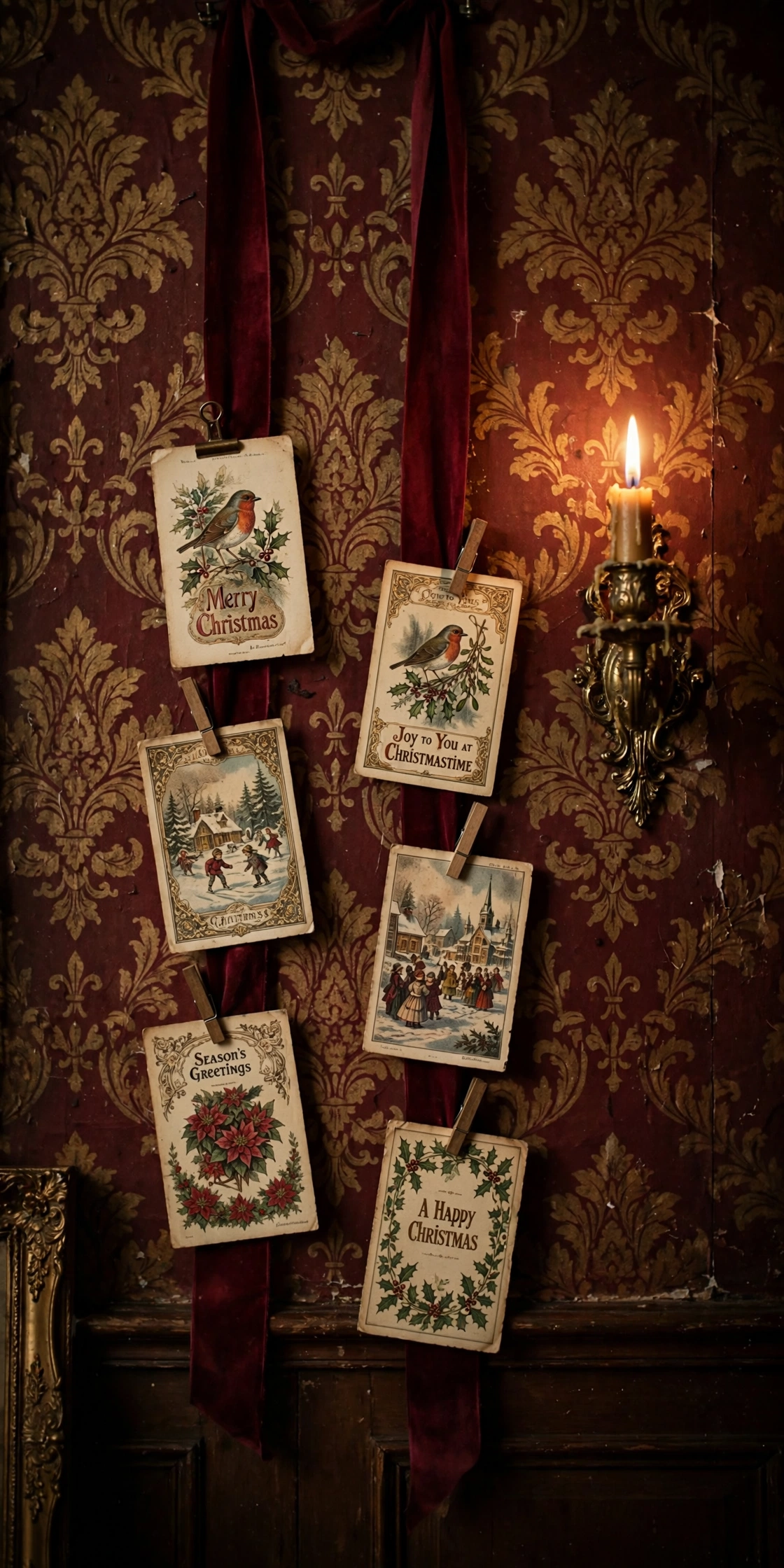
11
Display Christmas Cards on Ribbon
The Christmas card itself is a Victorian invention: the first one was printed in 1843, and by the 1880s families received dozens. They displayed them proudly, strung on ribbon hung from the picture rail or draped across the mantel. Copy them exactly: run two lengths of burgundy ribbon down a wall or across the mantel and clip each card along them as it arrives.
Try it: Start the ribbons in early December with last year’s favorite cards. An empty ribbon looks forgotten; a half-full one looks like a tradition in progress.
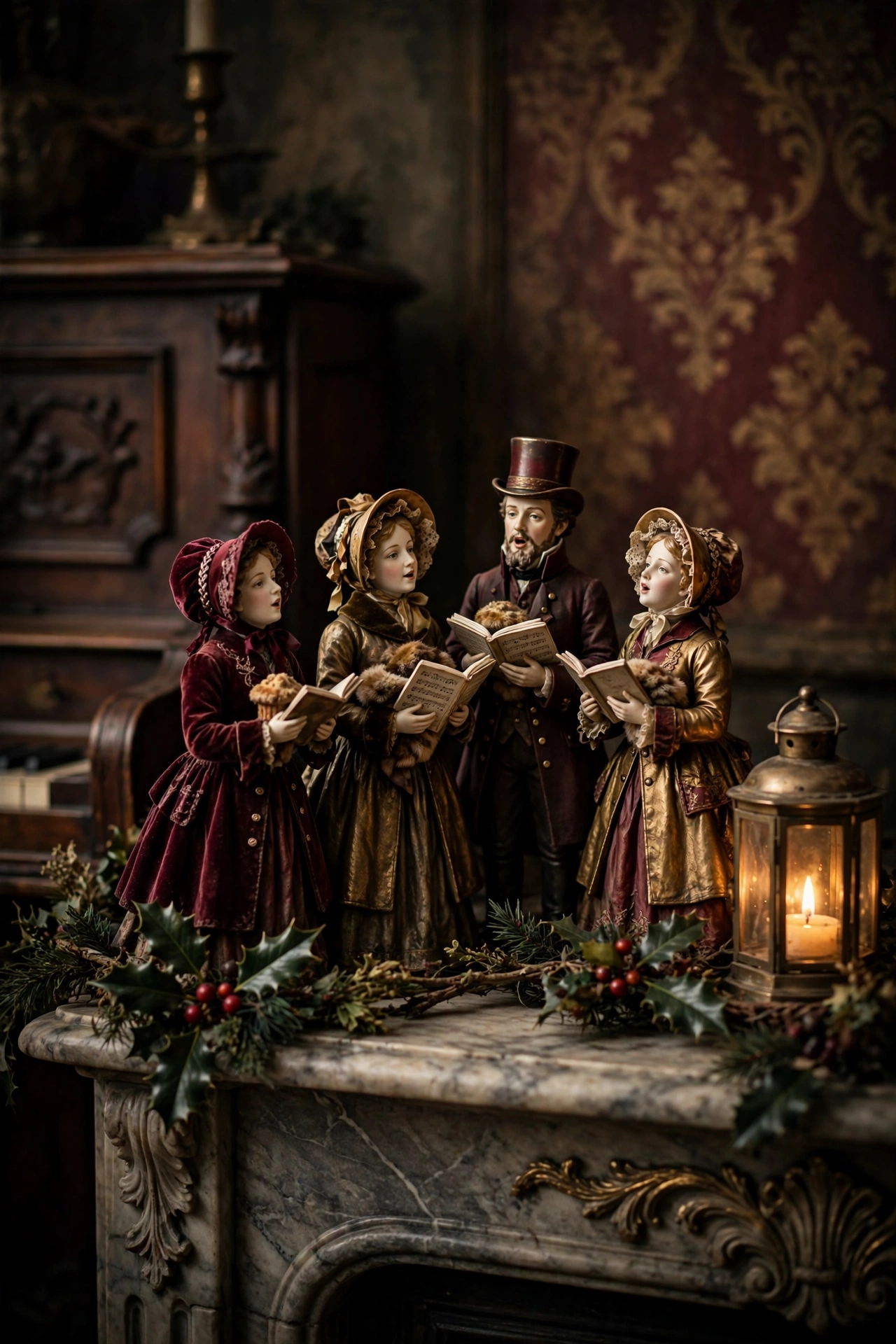
12
Stand Carolers on the Mantel
Groups of carolers were beloved Victorian figures, and the dressed figurines in long coats, bonnets, muffs, and songbooks still read instantly as 19th century. A set of 4 carolers, 10 to 13 inches tall, costs $35 to $60 and anchors a mantel, sideboard, or the top of a piano. Cluster them close together, mid-song, rather than spacing them in a stiff row.
Try it: Add a tiny lantern or a miniature songbook to the group if your set lacks one. One small prop turns figurines into a scene.

13
Fill a Bowl With Clove Pomanders
Before scented candles, the Victorian Christmas smelled of pomanders: oranges pushed full of whole cloves until the skin turned into a fragrant, studded ball. Make 6 to 8 in one sitting, roll them in a mix of cinnamon and orris root powder, and pile them in a cut-glass or silver bowl on the hearth or sideboard. They scent the room for weeks and keep for years once dried.
Try it: Push the cloves in with a thimble on your thumb. Your thumbnail alone will give up around pomander number three.
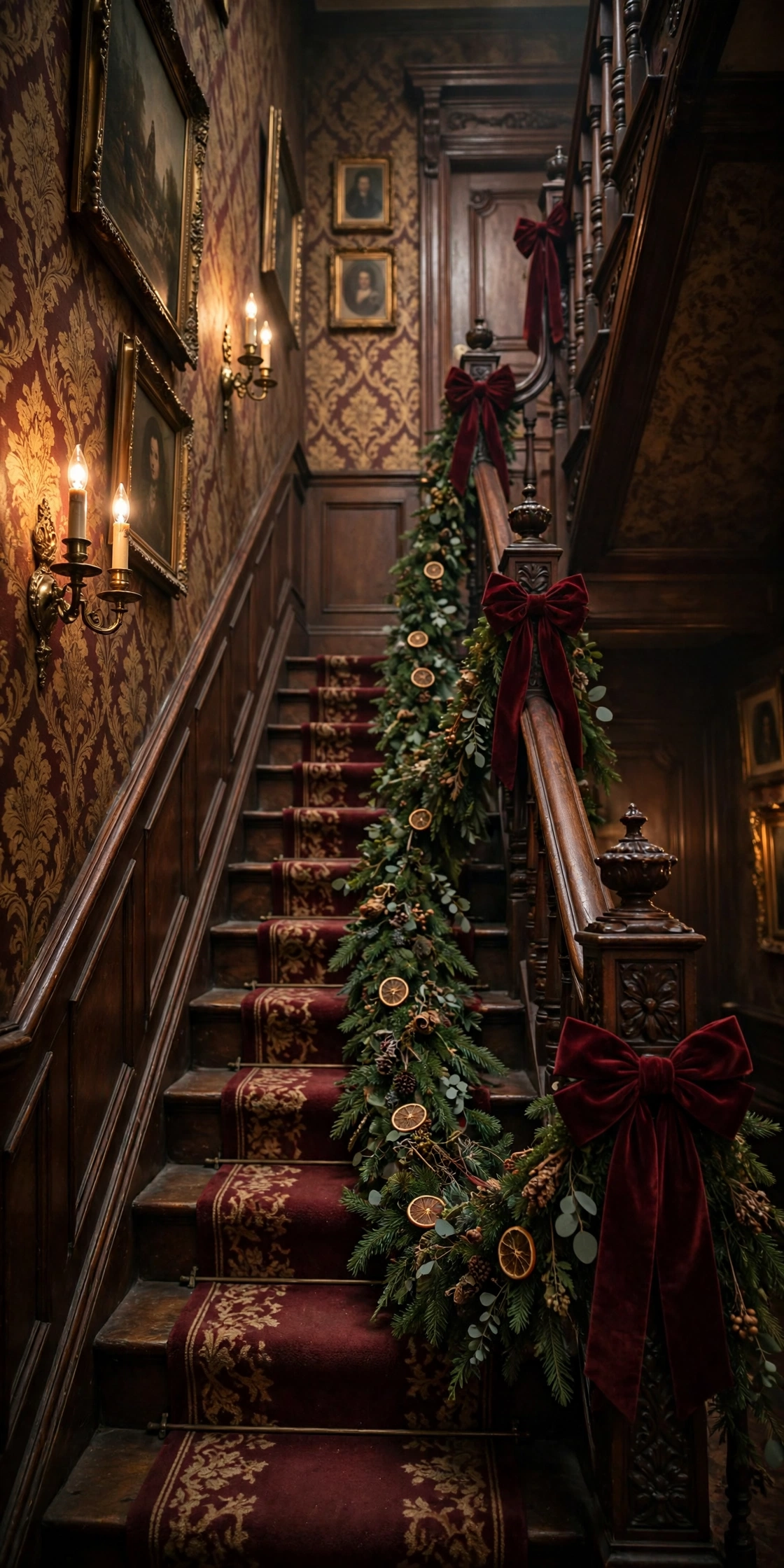
14
Wrap the Banister in Garland and Bows
Victorian staircases wore their greenery in public: boughs of spruce, balsam, and laurel twisted around the banister in thick ropes, tied at every newel post with a full bow. Measure your rail and buy garland at 1.5 times its length so it swags instead of hugging the wood. Finish each post with a wired velvet bow, 8 to 10 inches wide, in burgundy or gold.
Try it: Wire in the dried orange slices from idea 6 and a few pinecones every 2 feet. The banister becomes a garland the whole house walks past daily.
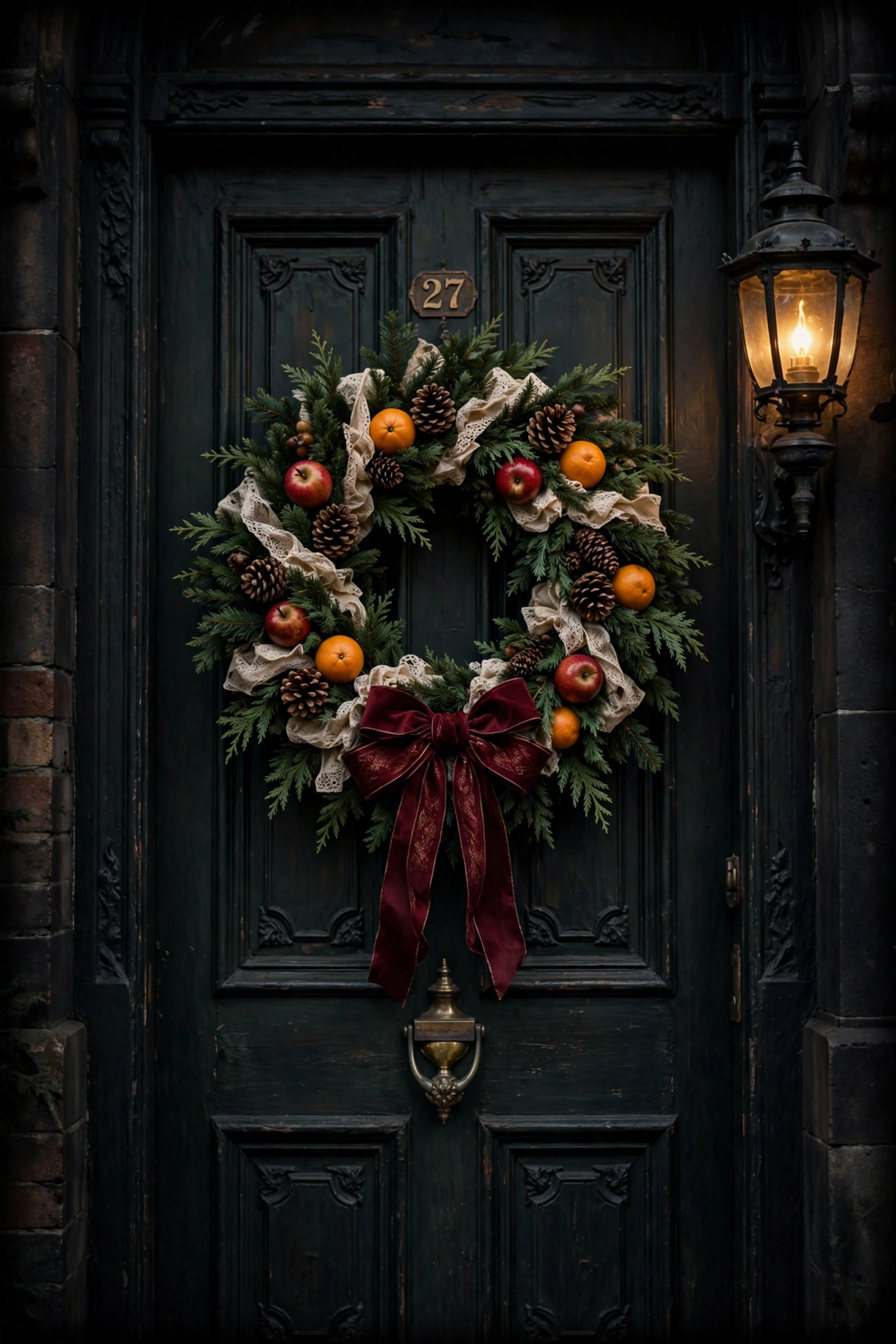
15
Hang a Fruit and Ribbon Wreath on the Door
The wreath announced the season to the street, and Victorian doors carried generous ones: evergreen loaded with fruit, ribbon, and sometimes lace. Build on an 18 to 24 inch base with faux apples, oranges, and pinecones wired among the greens, then tie one large wired bow at the bottom. Real fruit was used for short displays; good faux fruit survives the whole season outdoors.
Try it: Add one element that catches light, like gilded pinecones or a few kugels. A front door wreath is seen most in flat daylight, and a little shine keeps it lively.
16
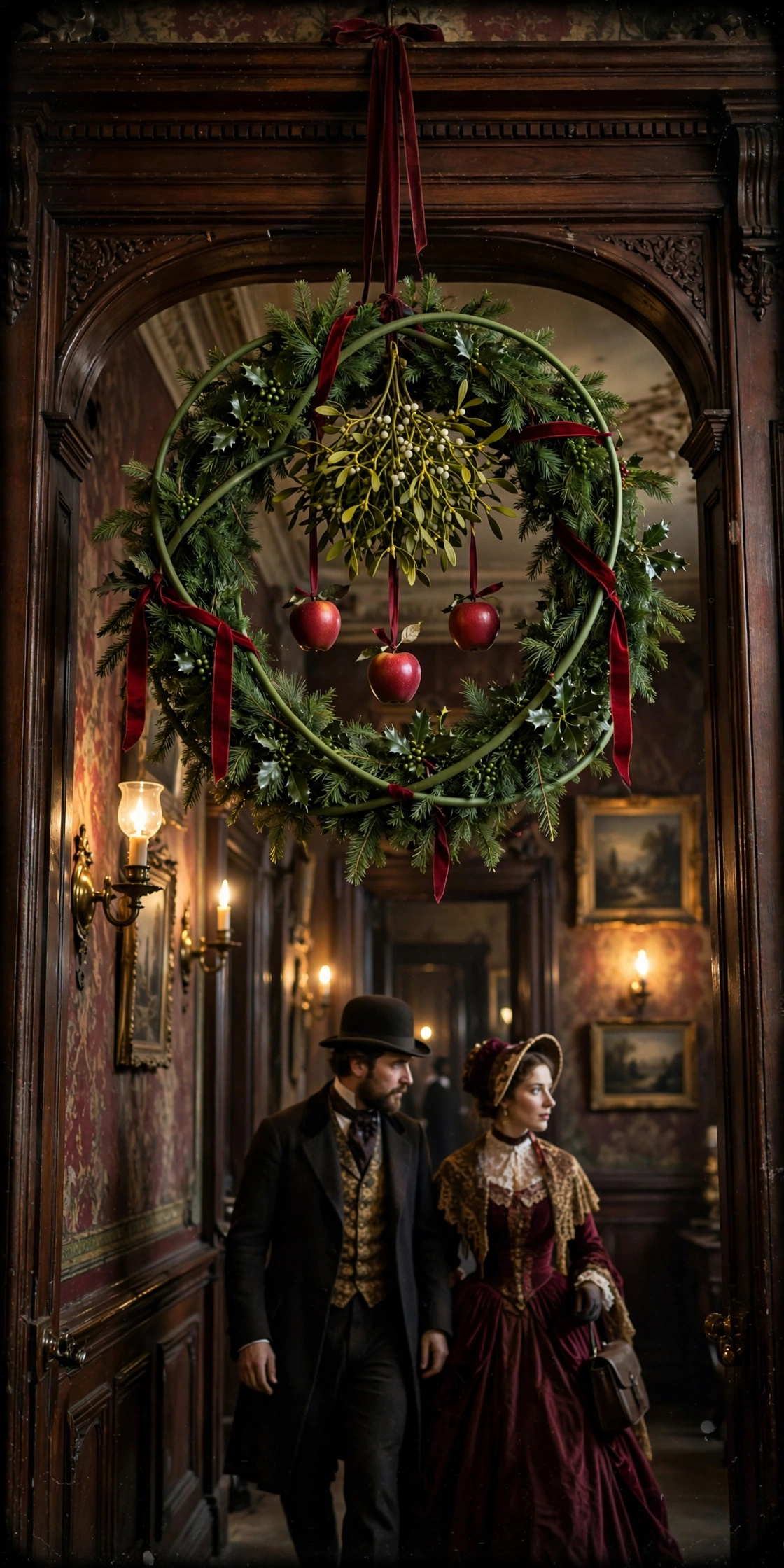
Hang a Kissing Bough in the Doorway
Before the single sprig, there was the kissing bough: a double hoop of evergreen, holly, and ribbon hung from the ceiling or doorway, with mistletoe at its center and apples or oranges dangling inside. Reproduction hoops run 12 to 18 inches across and cost little to make from two embroidery hoops wired together. Hang it where guests pass under, and let the old custom explain itself.
Try it: Hang red apples from short ribbons inside the bough, as the originals did. The fruit gives the hoop its rounded, generous shape.
17
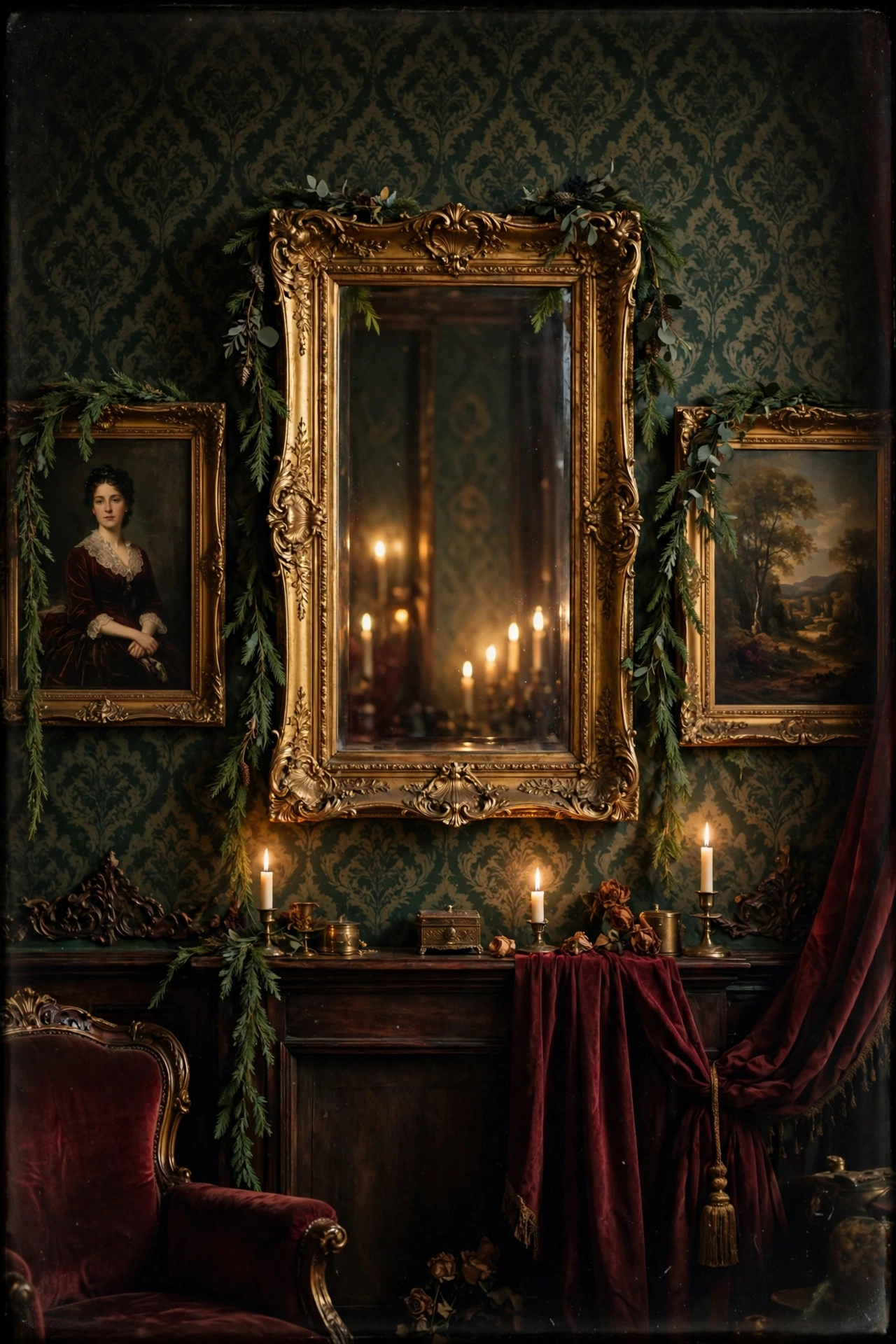
Dress the Picture Frames and Mirrors
Victorians wasted no frame: evergreen boughs were twisted around sideboards, picture frames, and mirrors until the whole room wore green. Drape a slim 4-foot garland or a few wired sprigs over the top corners of your largest frames and mirrors, letting the ends trail 12 inches down each side. It takes 10 minutes per frame and transforms walls you cannot otherwise decorate.
Try it: Use fresh or high-quality faux greenery here, never tinsel garland. Against gilt frames and glass, real foliage texture is what reads as period.
18
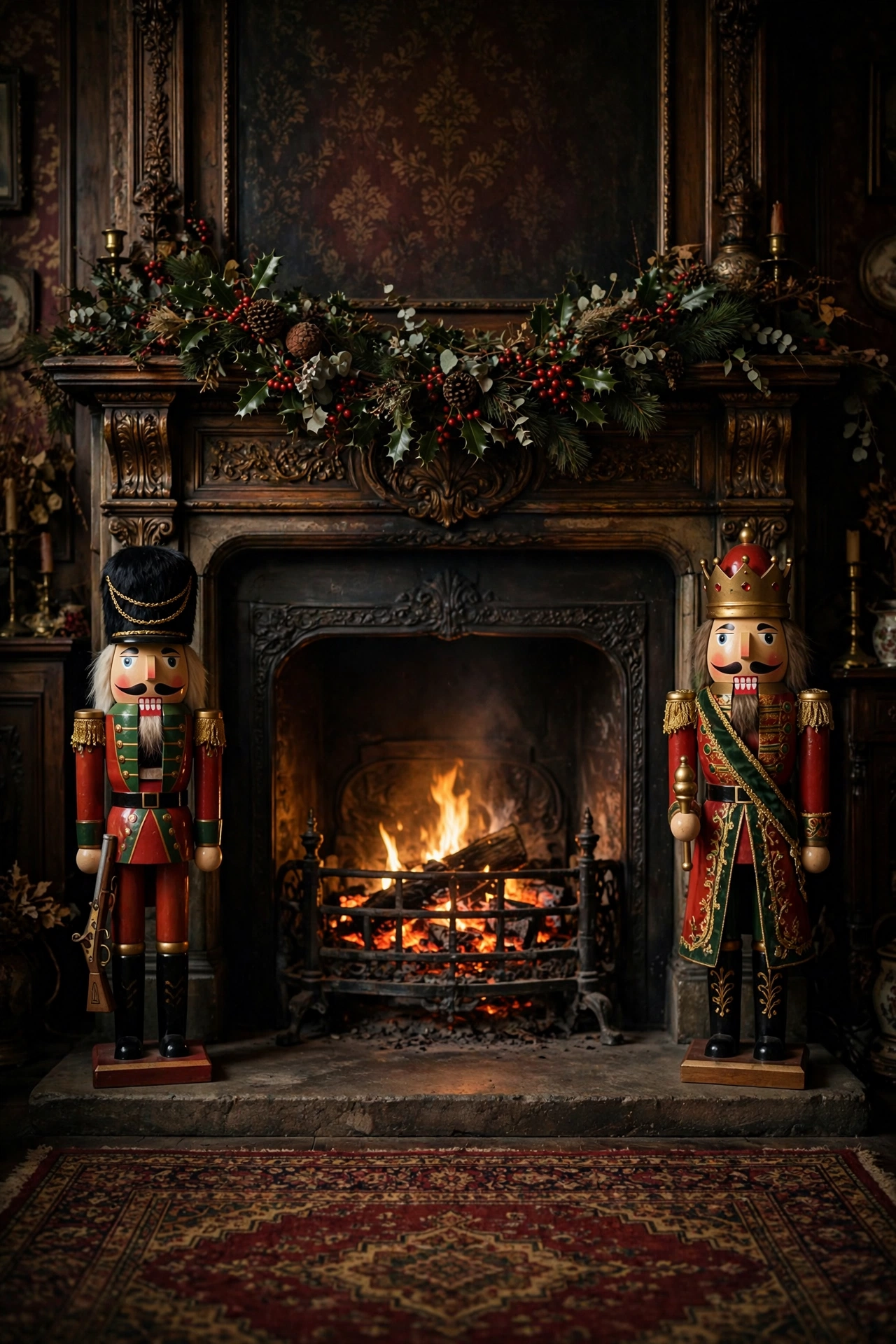
Post Nutcrackers by the Fire
Nutcrackers arrived from Germany’s Erzgebirge region in the late 1800s and became Victorian parlor fixtures, soldiers and kings standing guard over the hearth. A pair of 15-inch wooden nutcrackers flanking the fireplace or front door costs $30 to $50 and gives the room its storybook sentries. Traditional red, green, and gold uniforms fit the Victorian palette without trying.
Try it: Vary the pair slightly, one soldier and one king, for example. Identical twins look like a store display; a mismatched pair looks collected over years.
19
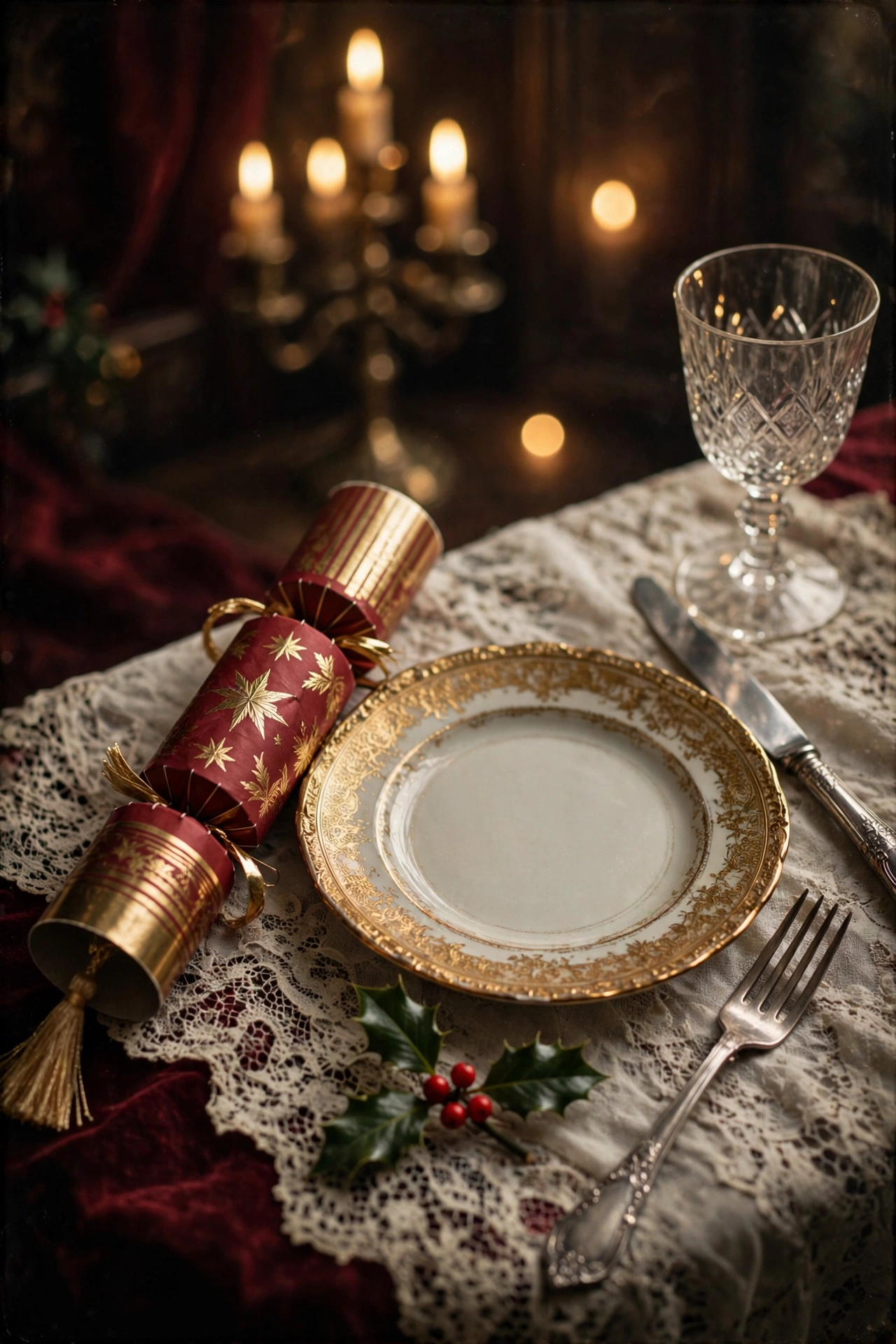
Put a Cracker at Every Place
No Victorian Christmas dinner was complete without crackers. Tom Smith invented them in 1847 after watching sugared almonds sold in twists of paper, and by 1891 his factory made nearly 11 million in one season. Set one crimson-and-gold or cream-and-silver cracker at every place setting; the table looks finished before a single dish arrives, and the paper crowns carry the party.
Try it: Pull the crackers before dessert, not after dinner. The crowns and small gifts get an hour of wear instead of five minutes.
20
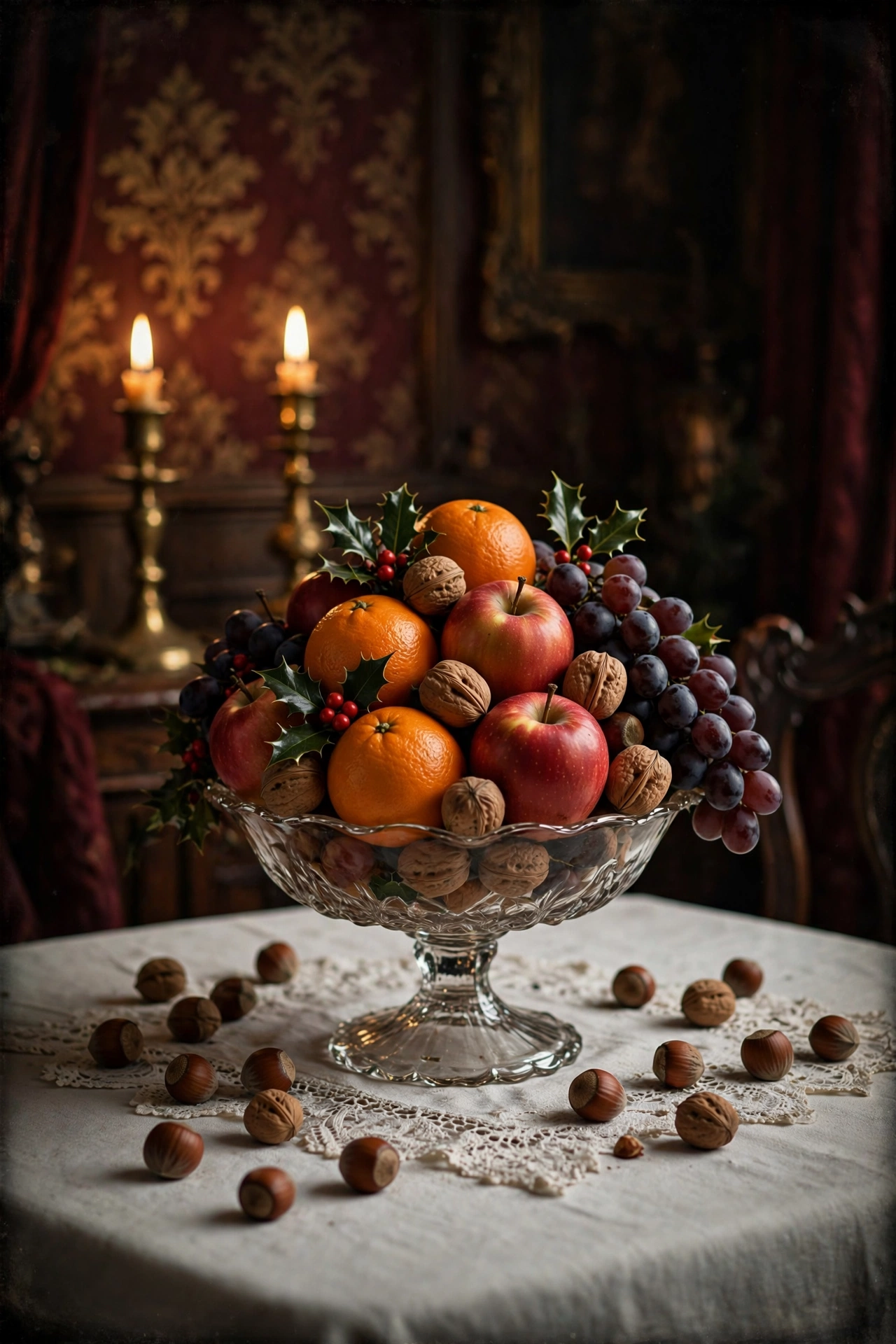
Build a Fruit and Nut Centerpiece
The Victorian table centerpiece was abundance itself: a glass compote or silver stand heaped with oranges, red apples, grapes, and nuts in their shells, ringed with holly. It needed no florist and no skill, just height and generosity. Pile fruit in a footed bowl, tuck holly and evergreen sprigs between the pieces, and scatter loose walnuts and hazelnuts across the cloth around the base.
Try it: Keep the centerpiece under 12 inches tall at the center so guests can talk across it. Move the drama to the ends with candelabra, as in idea 21.
21
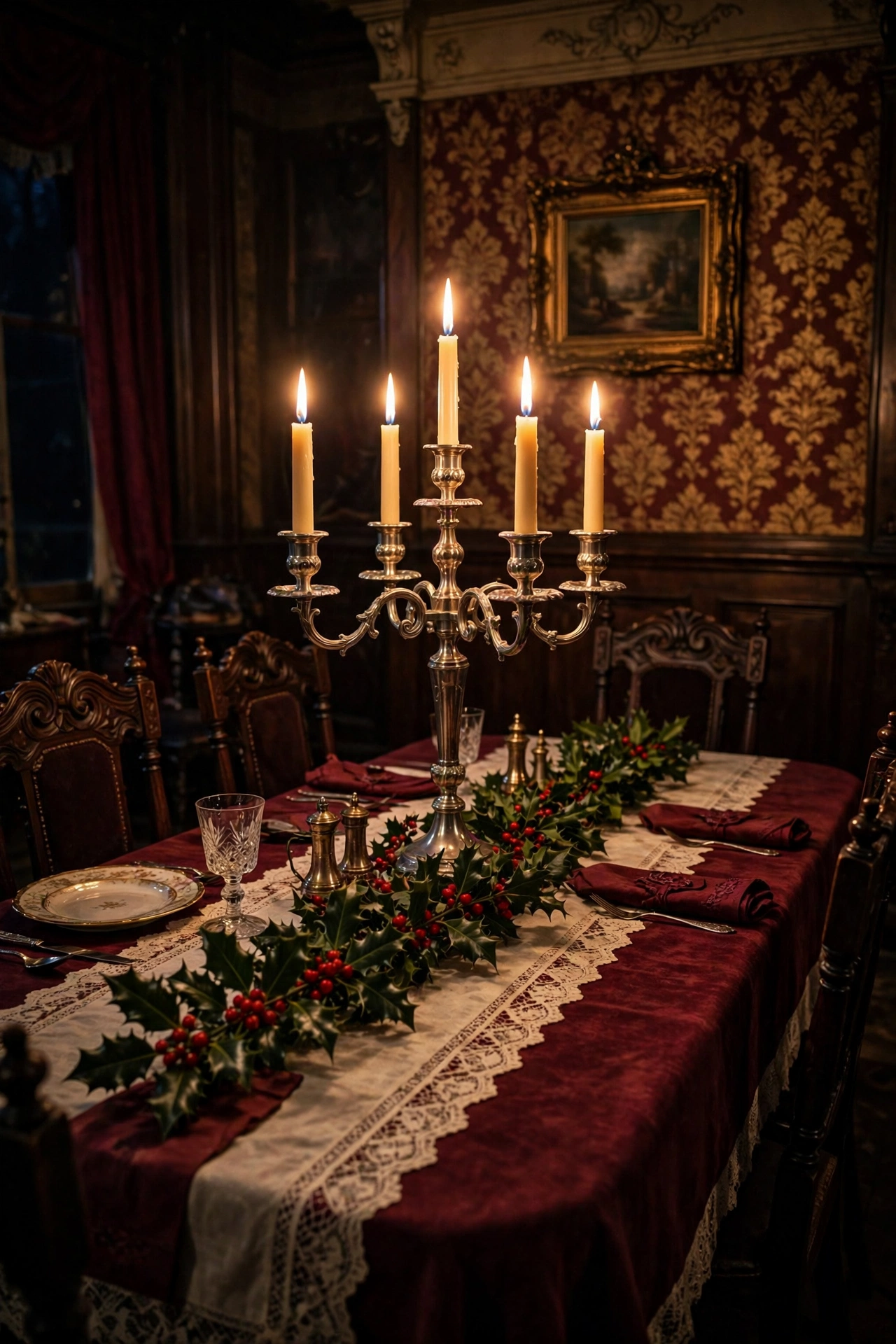
Light the Table With a Candelabra
Victorian dinners glowed at face height from candelabra and tapers grouped among the greens. A 3 or 5 arm candelabrum in silver, brass, or mercury glass, loaded with cream tapers, turns an ordinary dining table ceremonial. Use drip-free tapers, keep flames 6 inches clear of greenery, and light them just as guests sit down for the full effect.
Try it: Mix heights across the table: one tall candelabrum at the center, single tapers in holders toward the ends. Uniform height looks like a showroom; varied height looks like a feast.
22
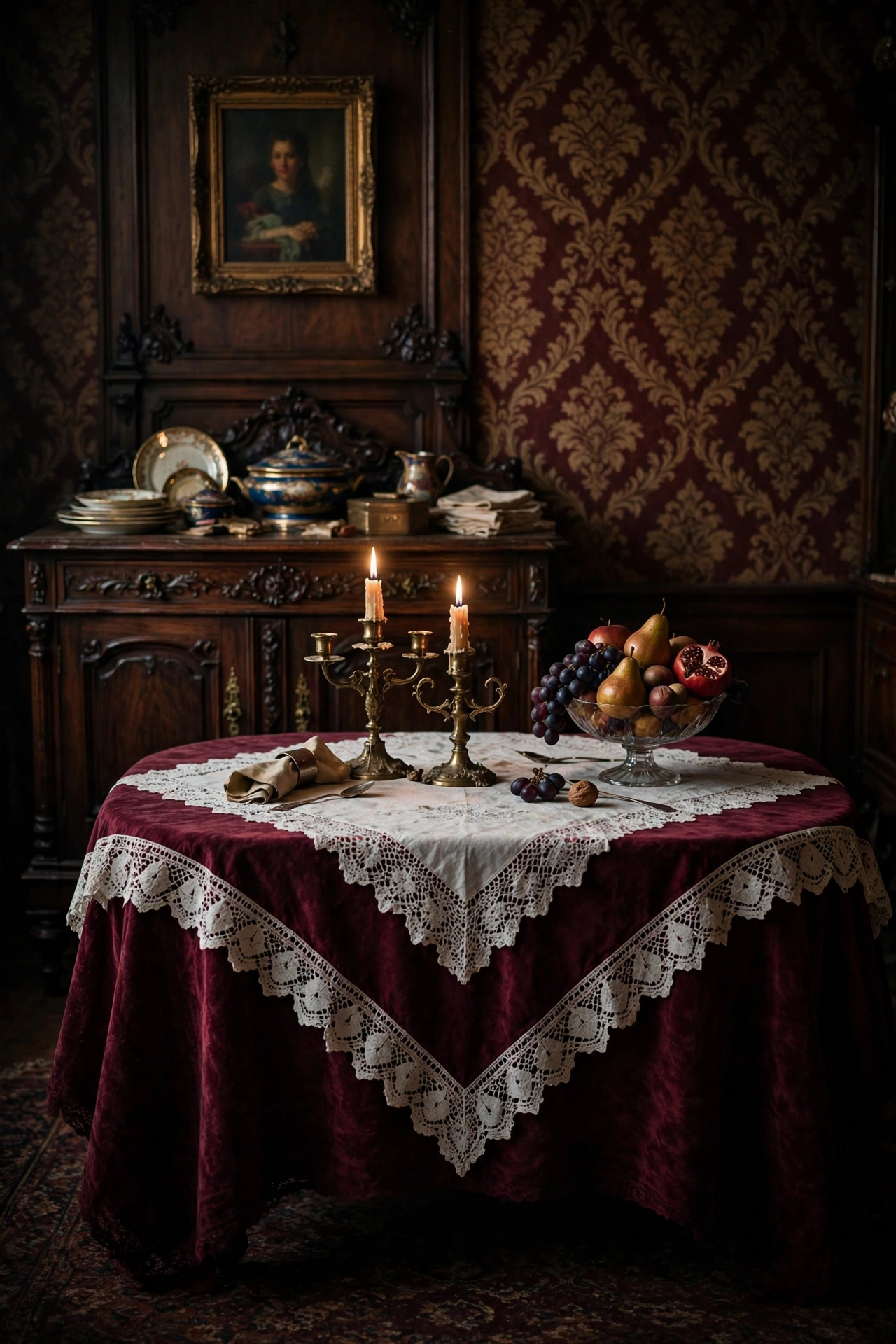
Layer Lace Over a Deep Colored Cloth
Victorian tables were layered, never bare: a lace cloth over a colored one, so the deep burgundy, forest green, or gold beneath showed through the pattern. Spread your darkest tablecloth first, then a lace or crochet-look cloth on top, slightly smaller so the color frames the edge. The combination costs under $35 if you buy the lace cloth alone and use a plain dark cloth you own.
Try it: Let the lace cloth hang straight while the colored cloth pools slightly at the corners. The contrast between crisp lace and soft folds is the prettiest part.

23
Display Sweets in Glass Jars
Victorians decorated with candy the way we decorate with baubles: ribbon candy in glass jars, sugared almonds in dishes, and glazed cherries gleaming on the sideboard. Fill 3 apothecary jars with ribbon candy, red and white sweets, and mixed nuts, and group them where guests pass. The jars cost $15 to $25 and the contents are the decoration and the dessert in one.
Try it: Tie each jar with a thin velvet ribbon and a sprig of holly. Bare jars look like storage; dressed jars look like a Victorian sweetshop window.

24
Set Candles in the Windows
A candle in every window was the Victorian welcome, visible down a dark street long before electric lights. Place one flameless taper or a slim candle lamp in each front window, on timers set to light at dusk. From inside, the candles frame the room’s edges in warm points of light; from outside, the house looks inhabited and glad.
Try it: Match the candle height to the window: the flame should sit just below the middle rail. A row of flames at one level across all windows looks deliberate and calm.
25
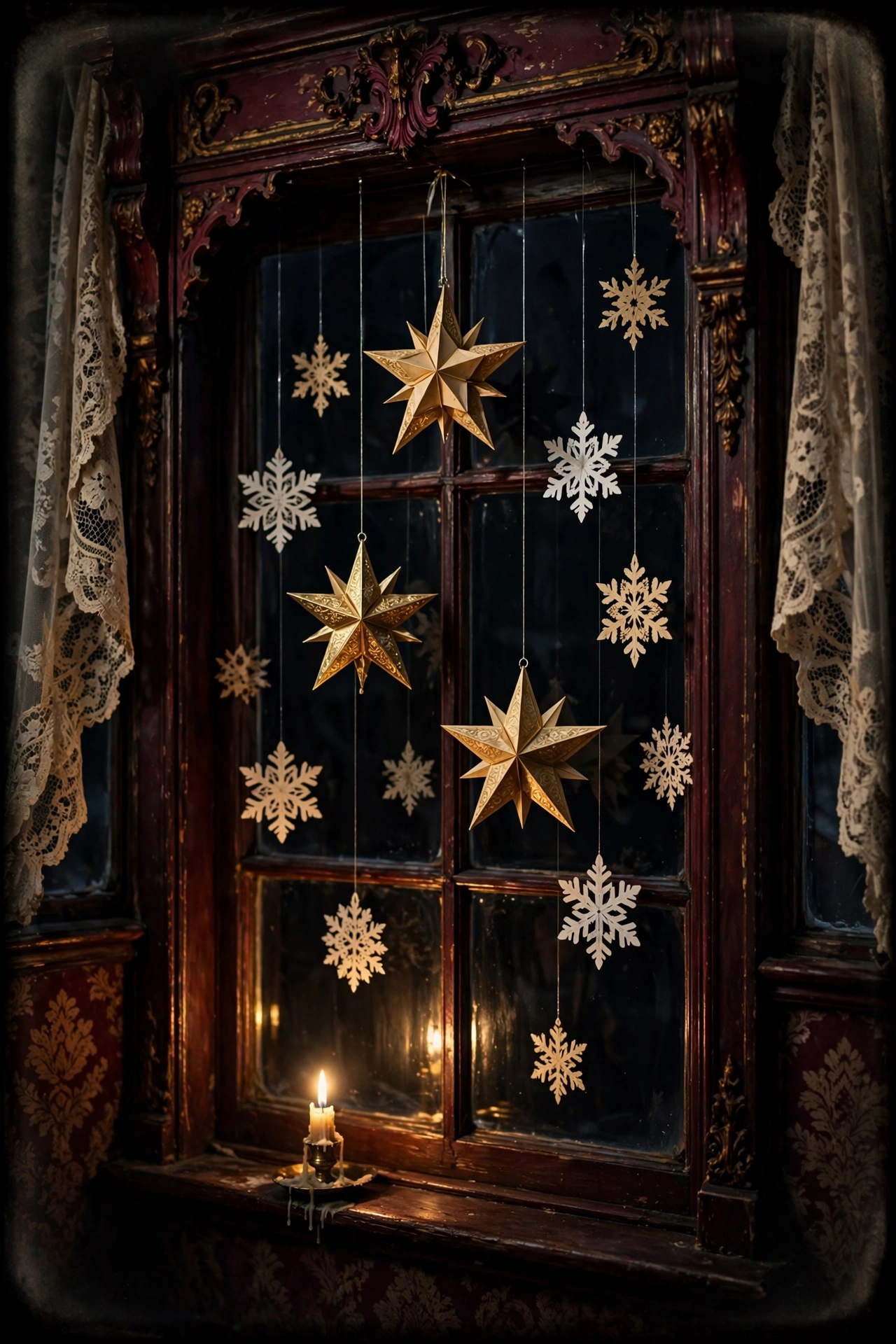
Hang Paper Stars and Snowflakes in the Glass
Victorian windows carried handmade paper: folded snowflakes, pleated fans, and Dresden stars made from embossed gold and silver paper. Cut snowflakes from cream and white paper in 6 to 10 inch sizes, press them flat overnight, and hang them at varied heights on clear thread. Against dark glass at night, they look like frost that chose to be beautiful.
Try it: Add two or three gold paper stars among the white snowflakes. The Victorians mixed humble paper with metallic paper freely, and the glint keeps the window from reading plain.

26
Garland the Room With Sheet Music and Cards
Music was the parlor’s entertainment, and sheet music of carols was everywhere in a Victorian December. String a garland of copied carol pages, folded into fans or clipped along twine, across a bookshelf or mantel edge for about $5 in printing. Frame two or three favorite received cards in gilt frames for the wall, and the room gains art that costs nothing and means something.
Try it: Age new printouts with a quick brush of weak tea, dried flat. Fresh white paper shouts modern; tea-toned paper whispers 1890.
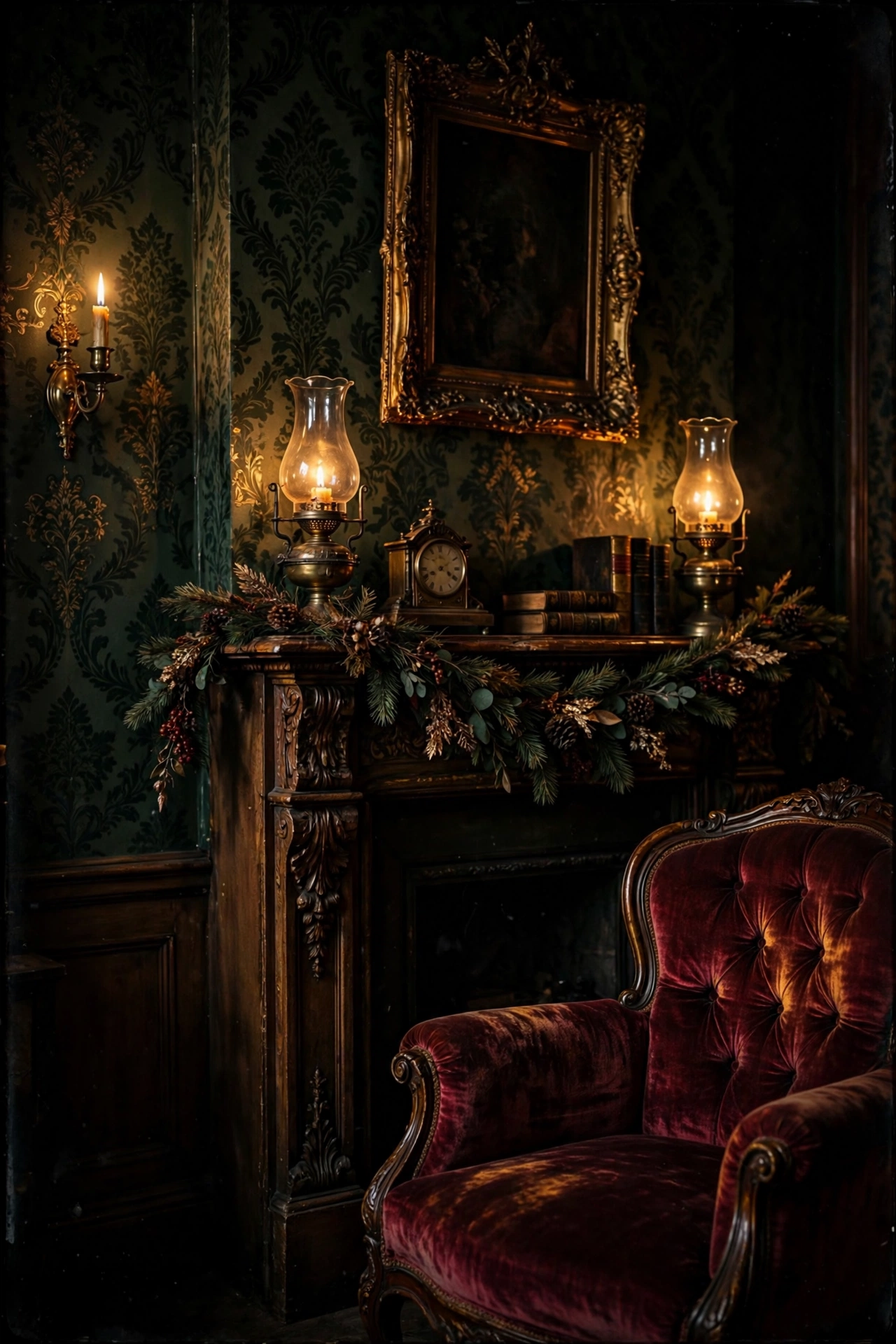
27
Dim Everything to Gaslight Warmth
Victorian rooms after dark were dim and golden, lit by gas jets, oil lamps, and candles rather than overhead glare. Recreate the level, not the fixtures: turn off overhead lights, switch lamps to warm 2200K to 2700K bulbs, and let hurricane lamps and candle sconces do the work. A room lit to gaslight warmth makes every other idea on this list look twice as rich.
Try it: Put the tree lights and two lamps on timers for 5 p.m. The house should already be glowing when the evening starts, not switched on like an office.
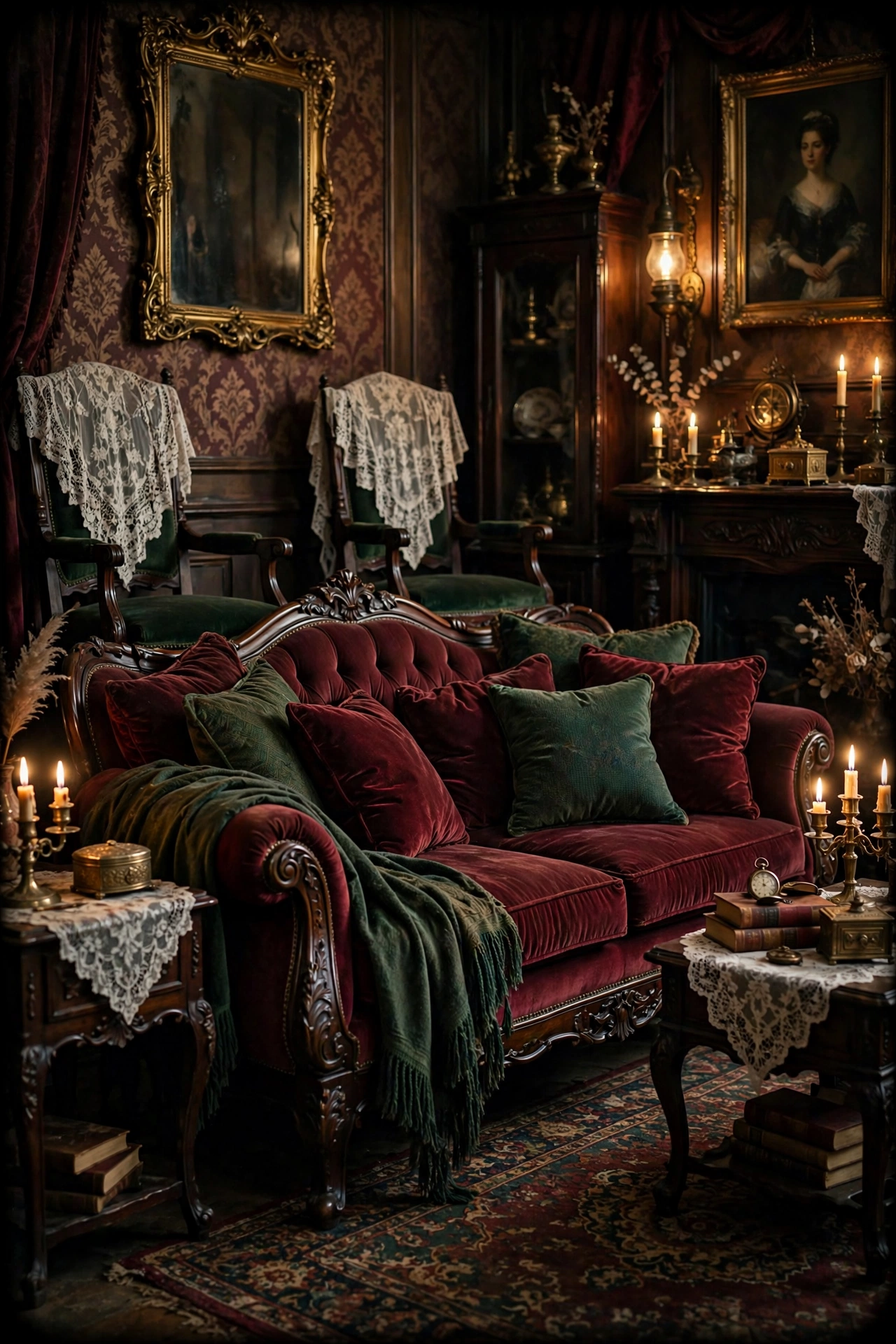
28
Pile On Velvet and Lace Textiles
The Victorian parlor was soft on every surface: velvet cushions, lace antimacassars on chair backs, fringed throws, and a tree skirt of deep cloth rather than felt. Swap in two velvet pillow covers in burgundy and forest green, drape one fringed throw over the sofa arm, and lay lace runners on the side tables. Pillow covers run $12 to $20 each and store flat in January.
Try it: Add fringe or tassel trim where you can. Victorian textiles were trimmed on every edge, and one fringed throw does more for the era than three plain ones.
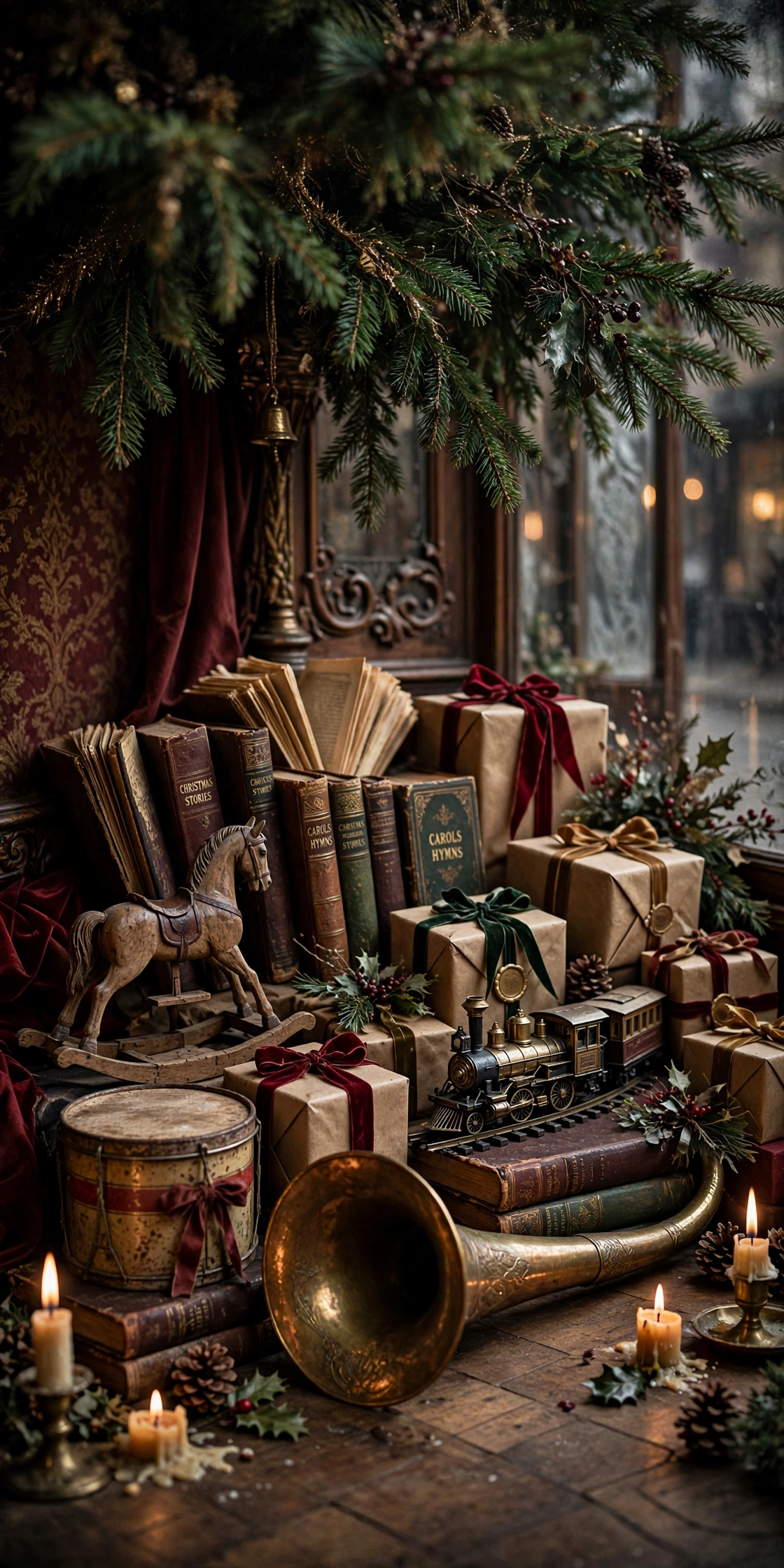
29
Display Gifts and Toys Under the Tree
Victorian trees stood over a small world: wrapped parcels, tin soldiers, wooden toys, dolls, and wind-up trinkets arranged at the base like a shop window. Wrap gifts in brown paper, deep colors, and real ribbon, then nestle two or three vintage-style toys among them, a tin drum, a wooden horse, a small train. Even decoy wrapped boxes keep the base looking abundant from December 1.
Try it: Add one beautiful, unwrapped object at the very front, like a brass horn or a stack of clothbound books. It anchors the display the way a centerpiece anchors a table.
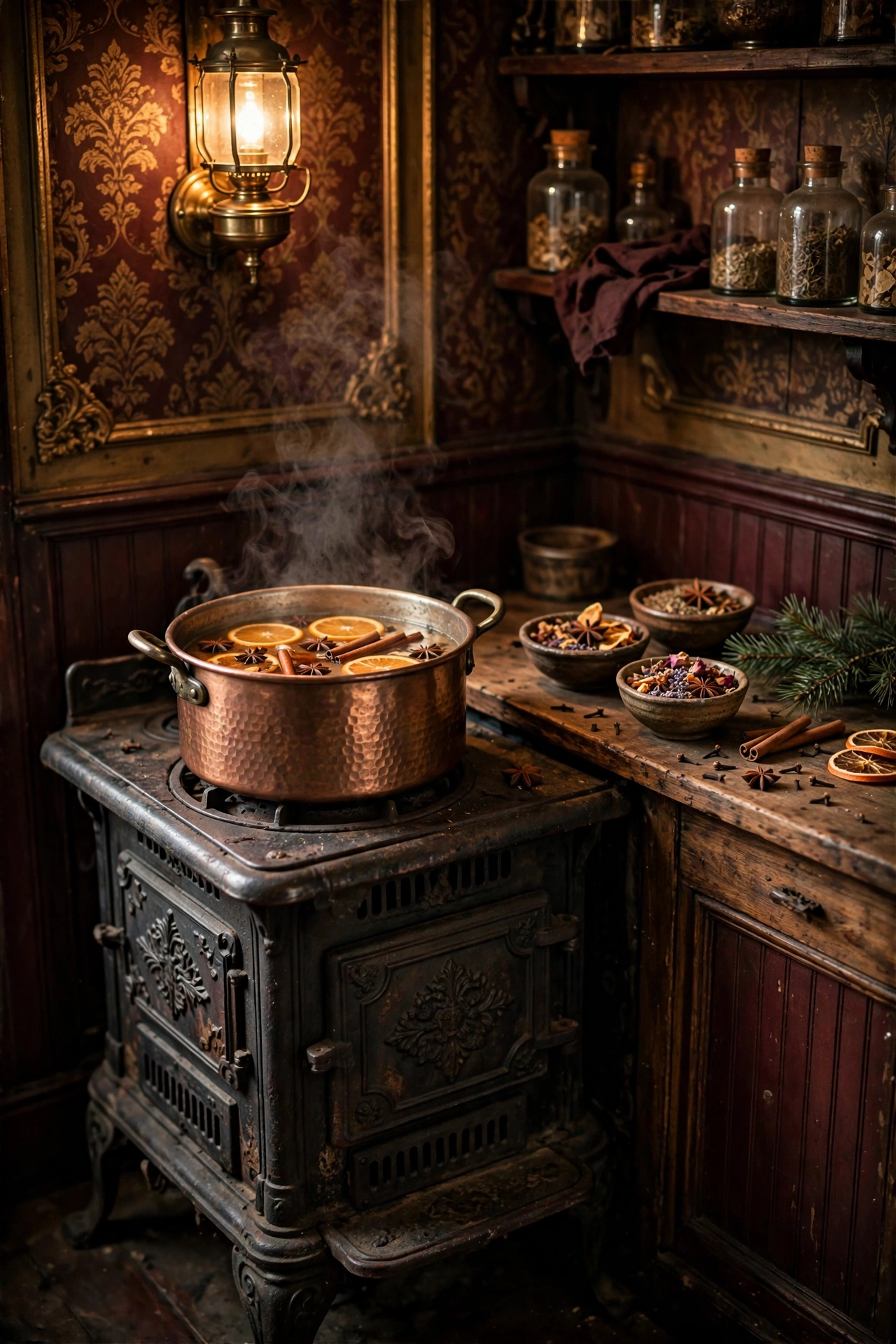
30
Make the Whole House Smell Like 1890
Victorian Christmas had a scent: orange peel, clove, cinnamon, pine resin, and woodsmoke. Simmer a pot of water with orange slices, 2 cinnamon sticks, a tablespoon of whole cloves, and a sprig of pine for 20 minutes, then let it idle on the lowest heat. Or fill small bowls with dried potpourri of orange peel, cinnamon, and star anise at the door, the mantel, and the table.
Try it: Start the simmer pot 30 minutes before guests arrive and whenever you light the candles. Scent laid down early reads as the house itself, not as something switched on for visitors.
Pro tip: Do not try to make everything match a single red or a single green. Real Victorian rooms mixed burgundy with crimson, bottle green with emerald, and three kinds of gold, and the slight mismatches are exactly what makes the look feel inherited instead of purchased. If a room feels too coordinated, add one handmade or edible piece from this list; the imperfection is the authenticity.
Three rules for a Victorian Christmas
- Candlelight leads, electric light follows: Every room should have more points of warm, low light than bright overhead light. If a space feels flat, it is almost always the lighting, not the decorations.
- Nature and luxury together: For every rich element (velvet, glass, gold), add a natural one (greenery, fruit, nuts, paper). Victorian decor lives in that pairing; luxury alone turns theatrical, and nature alone turns rustic.
- Abundance in clusters, calm between them: Group decorations generously in their zones (a loaded mantel, a full tree, a heaped centerpiece) and leave the surfaces between them clear. Clustered abundance reads as Victorian; the same pieces spread thin read as clutter.
After Twelfth Night: packing away a Victorian Christmas
Victorians kept decorations up until Twelfth Night, January 5 or 6, and some households left greenery until Candlemas on February 2. Whenever you take yours down, pack like a museum, because most of these pieces are fragile, natural, or meant to become heirlooms.
- Glass wrapped, never loose: Wrap each kugel and glass ornament in acid-free tissue and store upright in a divided box. Glass that survives storage unbroken for five seasons becomes the family antique it is pretending to be.
- Paper flat and dry: Store paper fans, chains, stars, and sheet music garlands flat between sheets of card, in a dry place. Damp is the only real enemy; a single silica packet in the box handles a year of storage.
- Textiles clean and cedar-kept: Wash lace, fold velvet loosely rather than creasing it, and store both with cedar blocks or lavender bags. Pomanders keep for years in the same box and will scent next December’s storage day for free.
More ideas you’ll love: Christmas decor ideas, vintage Christmas decor ideas, traditional Christmas decor ideas, Christmas living room decor ideas, and more Christmas Decor.
Questions readers ask
What colors did Victorians use for Christmas?
Burgundy, crimson, forest green, and antique gold, softened with cream and ivory. Those jewel tones came from the era’s dyes, fabrics, and candlelit rooms, and they still define the look: if you limit your palette to deep red, deep green, gold, and cream, almost anything you add will read as Victorian.
How do I make my Christmas tree look Victorian?
Layer it the way Victorian families did: clip-on candles first, then tinsel draped strand by strand, then a mix of glass ornaments, paper fans and cornucopias, and edible pieces like dried oranges and gilded walnuts. Crown it with an angel rather than a modern topper, and do not aim for matching sets. A Victorian tree looks collected, not coordinated.
Did Victorians really put real candles on their trees?
Yes, real candles were standard on Victorian trees, clipped to the branches in tin holders and lit only briefly, usually on Christmas Eve and Christmas Day, with sand or water kept nearby. House fires were a genuine and feared risk. Today, clip-on LED candles reproduce the exact look and spacing with none of the danger, and they are what historic houses themselves use.
What is a feather tree?
A feather tree is an early artificial Christmas tree from Germany, made from dyed green goose feathers wrapped around wire branches attached to a central pole. They became popular in the 1840s and stayed in parlors for a century. Their branches are sparse and widely spaced, which makes them perfect for showing off small ornaments, and reproduction feather trees are sold today in sizes from 12 inches to 6 feet.
Can I decorate in Victorian style on a small budget?
Yes, easily, because so much of the style is handmade or edible. Paper chains, paper fans, dried orange slices, gilded walnuts, and clove pomanders together cost under $25 in materials and cover the tree, mantel, and table. Spend what you save on two or three quality pieces, like good velvet stockings or a candelabrum, that you will keep for decades.
When did Victorians decorate for Christmas, and when did they take it down?
Greenery went up from mid-December, but the tree itself traditionally came indoors on Christmas Eve. Decorations stayed until Twelfth Night, January 5 or 6, and some greenery remained until Candlemas on February 2. Taking everything down before Twelfth Night was considered unlucky, which is a fine excuse to enjoy the room a little longer.
What is a kissing bough?
A kissing bough is a ball or double hoop of evergreen and holly hung from the ceiling or a doorway, with mistletoe fixed at its center and often apples or oranges hanging inside it. It predates the single sprig of mistletoe and served the same cheerful purpose: anyone standing under it could be kissed. A homemade version from two embroidery hoops and greenery takes about an hour.
Where can I find authentic Victorian ornaments today?
Antique shops and estate sales still turn up German glass, kugels, and candle clips, though fragile pieces and anything with old paint should be handled with care. For everyday decorating, reproduction Victorian ornaments from heritage and museum shops are the practical choice: they copy the original shapes, weights, and finishes, and you will not grieve when one breaks.
People Also Ask
What is the difference between Victorian and vintage Christmas decor?
Victorian decor means the specific style of 1837 to 1901: candlelight, natural greenery, jewel tones, handmade paper and glass, and edible decorations. Vintage is a wider net covering any older style, including 1950s tinsel trees and 1970s baubles. Victorian is one chapter of vintage, and the most candlelit one.
What did Victorians hang on their trees besides ornaments?
Almost anything festive: small wrapped gifts and wind-up toys, sweets in paper cornucopias, sugared almonds, glazed cherries and sugar plums, gilded apples and walnuts, gingerbread figures, and real candles. The tree was part decoration, part pantry, and part present display, which is why it looked so abundantly full.
Why are Christmas crackers a Victorian tradition?
Because a Victorian invented them. Tom Smith, a London confectioner, created the cracker in 1847 after seeing sugared almonds sold in paper twists, and added the snap after hearing a log crackle in his fire. His design, a paper tube with a small gift, a motto or joke, and later a paper crown, became so standard that his factory produced nearly 11 million crackers in a single season by 1891.
loved these ideas? ✿
Save this guide for later
Pin it to your board so it’s there when you’re ready to recreate it.

Curated by
Hey! I'm Sanaullah — visual curator and content creator. I search, curate, and test the best aesthetic ideas across Pinterest so you can easily transform your living space, style daily outfits, and try simple creative DIYs without the overwhelm.