
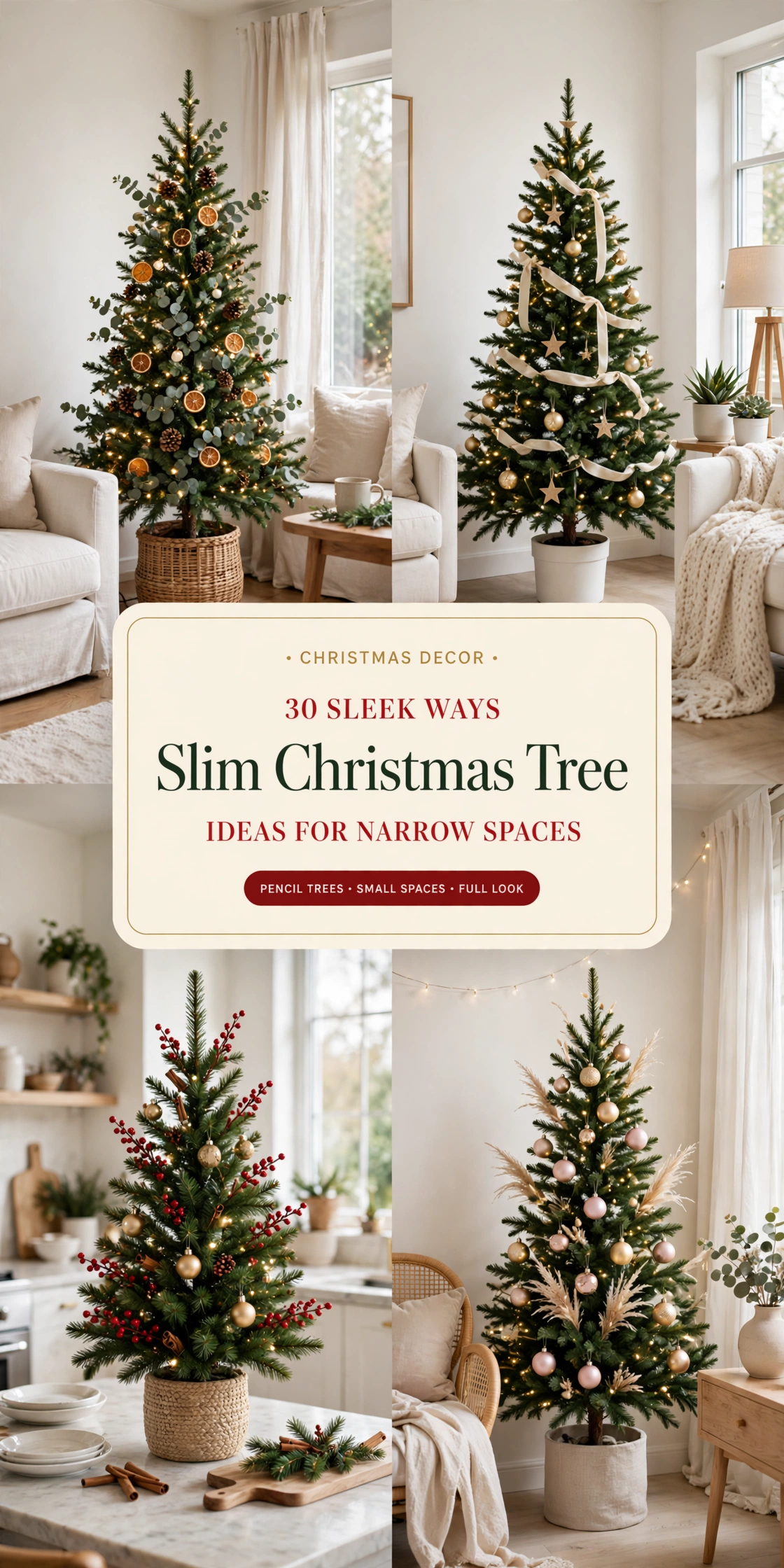
A full tree is lovely until it eats half your living room. A slim christmas tree gives you the same 6 to 7 feet of height in a footprint as narrow as 24 inches, which is why narrow trees have taken over apartments, hallways, and cozy corners. The trick is decorating for the silhouette: vertical lines, scaled-down ornaments, and lights tucked deep so the tree glows instead of looking sparse. Follow these 30 ideas and your narrow tree will look intentional and elegant, never like a compromise.
QUICK IDEA SUMMARY
- The key takeaway: Decorate vertically, not horizontally. Cascading ribbon, vertical garland, and clustered ornaments flatter a slim profile; wrapping decor around and around only makes a narrow tree look thinner.
- The detail most people miss: Stability matters more with slim trees. A narrow base wobbles, so a weighted collar or sandbag at the bottom keeps the tree upright through the whole season.
- What it costs or how long it takes: Most ideas below cost $10 to $40 and take under an hour. A pre-lit pencil tree goes from box to finished in about 15 minutes.
At a glance
| Zone | Ideas | Budget |
|---|---|---|
| Picking the right slim tree | 01–05 | $40–$180 |
| Placement that saves space | 06–10 | $0–$35 |
| Decorating the narrow silhouette | 11–16 | $10–$45 |
| Theme looks for slim trees | 17–23 | $15–$60 |
| Second trees and special spots | 24–27 | $20–$70 |
| Stability and finishing touches | 28–30 | $10–$30 |
The ideas

01
Know Your Widths Before You Buy
Slim and pencil are not the same thing. A slim tree runs 30 to 40 inches wide at the base, while a true pencil tree is only 20 to 30 inches across. Half trees go further: flat at the back, full at the front, with barely 18 inches of depth. Buying the wrong width is the most expensive slim-tree mistake.
Try it: Tape the tree’s footprint on the floor with painter’s tape before you order. Live with the outline for a day and check every walkway.
02
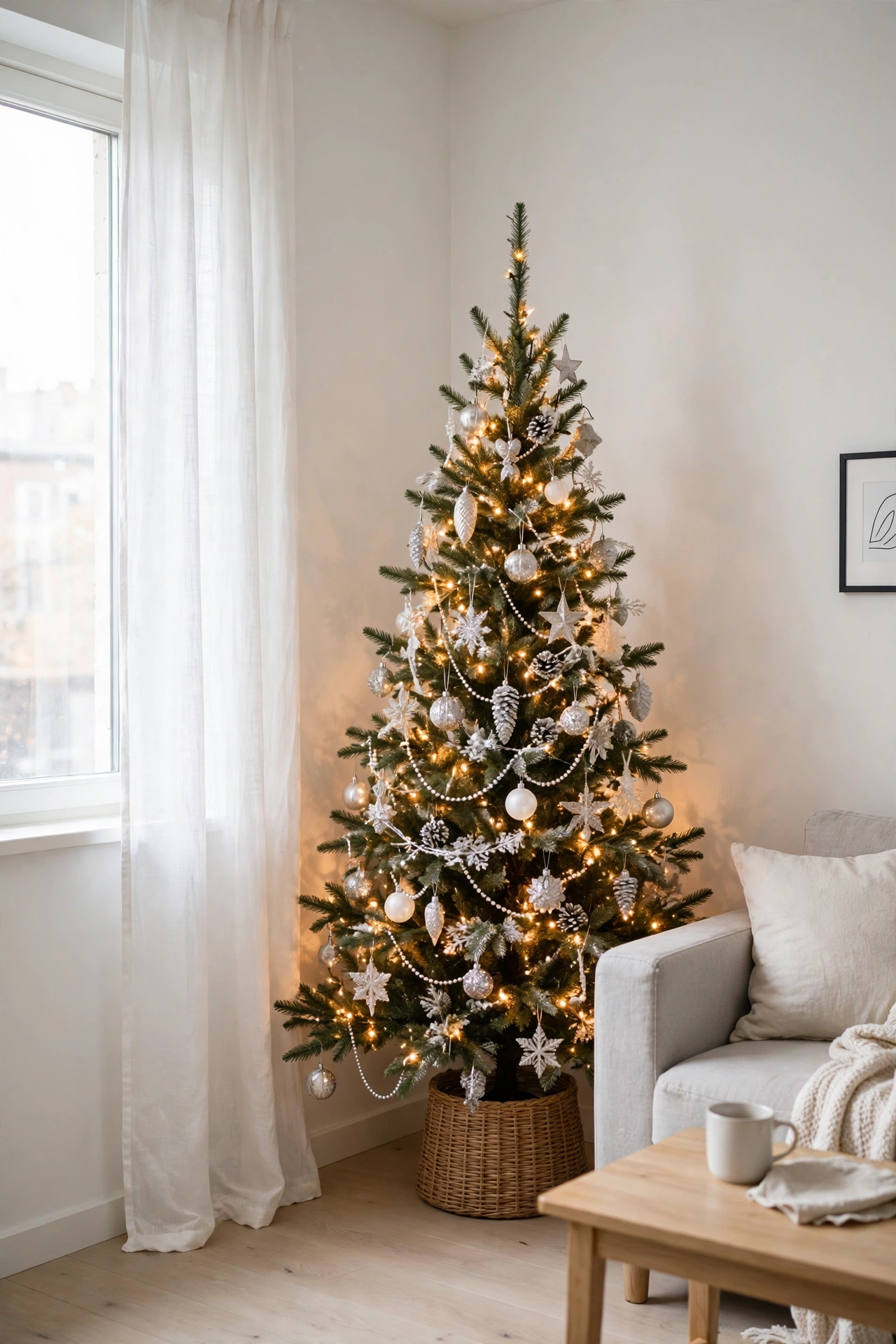
Claim the Dead Corner
Every room has a corner that holds nothing but dust. A slim tree turns that dead space into the room’s focal point, pulled about 6 inches from each wall so lights glow behind it. Corners give a narrow tree a full 270-degree audience while it touches no traffic.
Try it: Angle the tree 45 degrees so its fullest face points into the room. A tree facing flat into a corner shows its worst side.
03
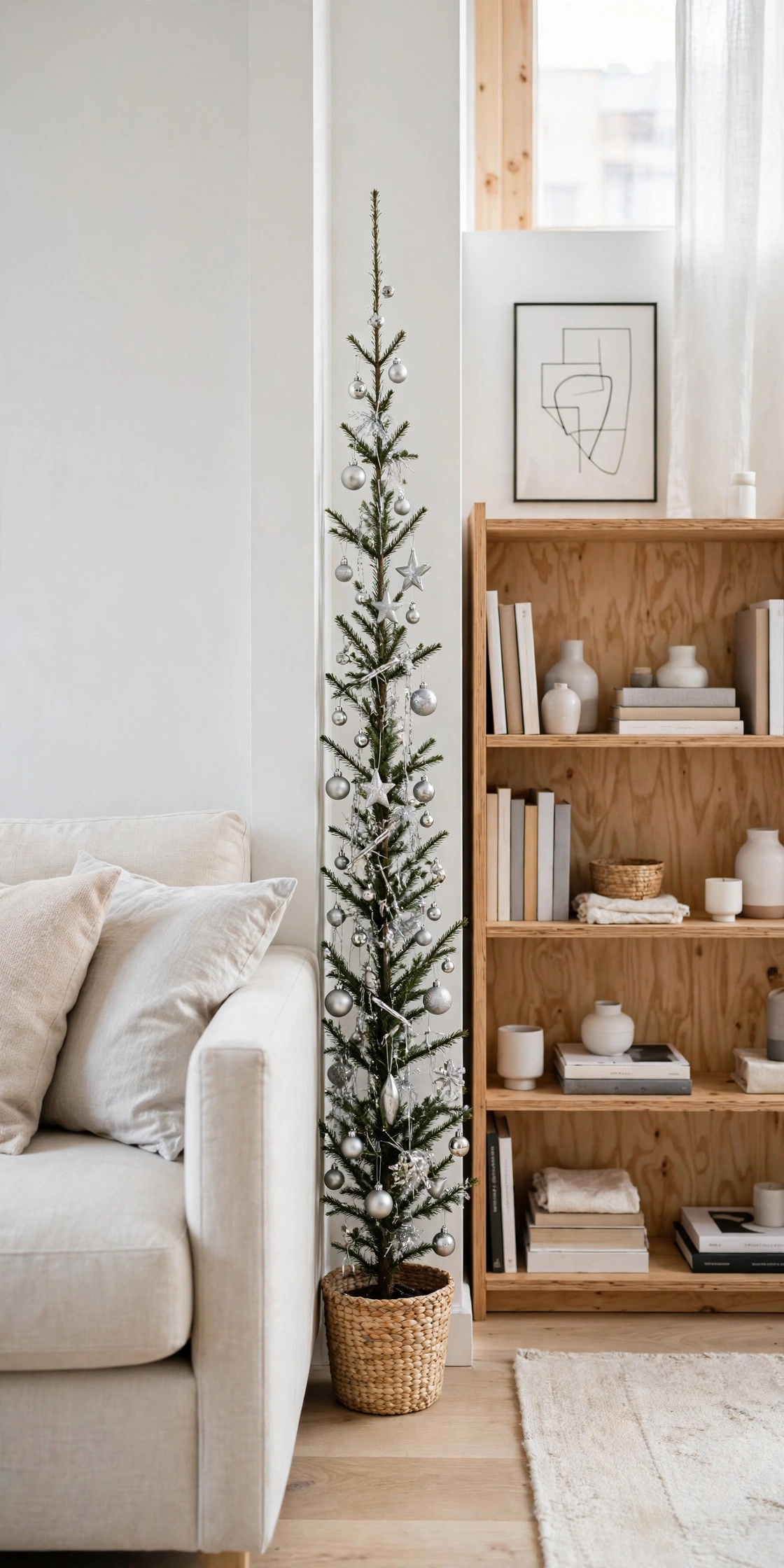
Squeeze Between Furniture
Pencil trees slide into gaps full trees could never touch: between the sofa and the media unit, beside a bookshelf, at the end of a hallway console. If you have a 24-inch gap, you have room for a tree. Measure the gap at branch height, not floor height, since branches are wider than the stand.
Try it: Fluff the branches on the hidden side flat against the tree. No one sees that side, so save the fullness for the front.
04
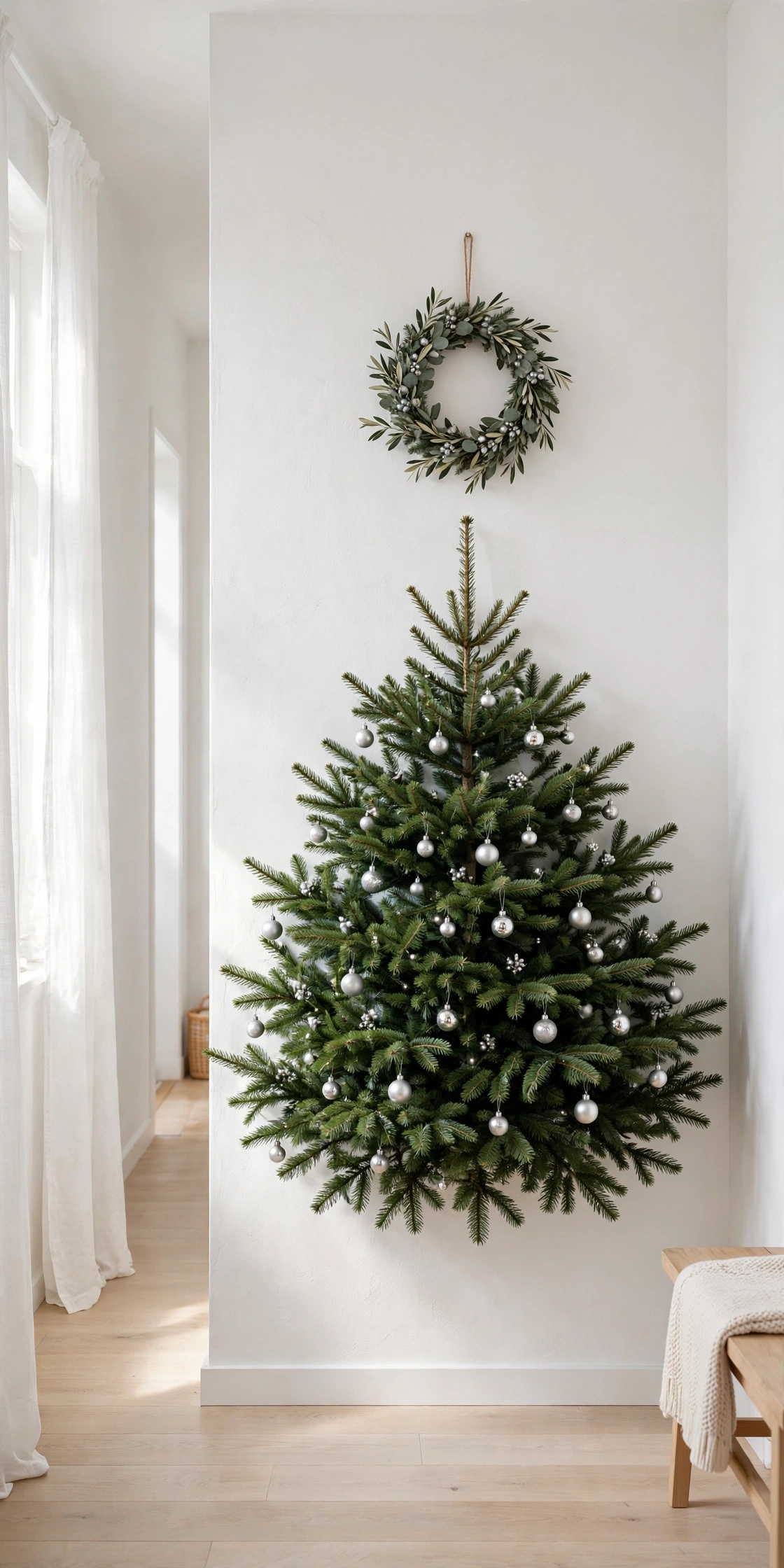
Try a Half Tree for Tight Walls
A half tree is exactly what it sounds like: a full front with a flat back that sits flush against the wall. You get the look of a complete tree in half the depth, perfect for hallways under 40 inches wide or behind a dining table. Guests see a tree; the wall sees nothing.
Try it: Hang a wreath or a row of stockings on the wall just above the flat side. It completes the silhouette the tree cannot show.
05
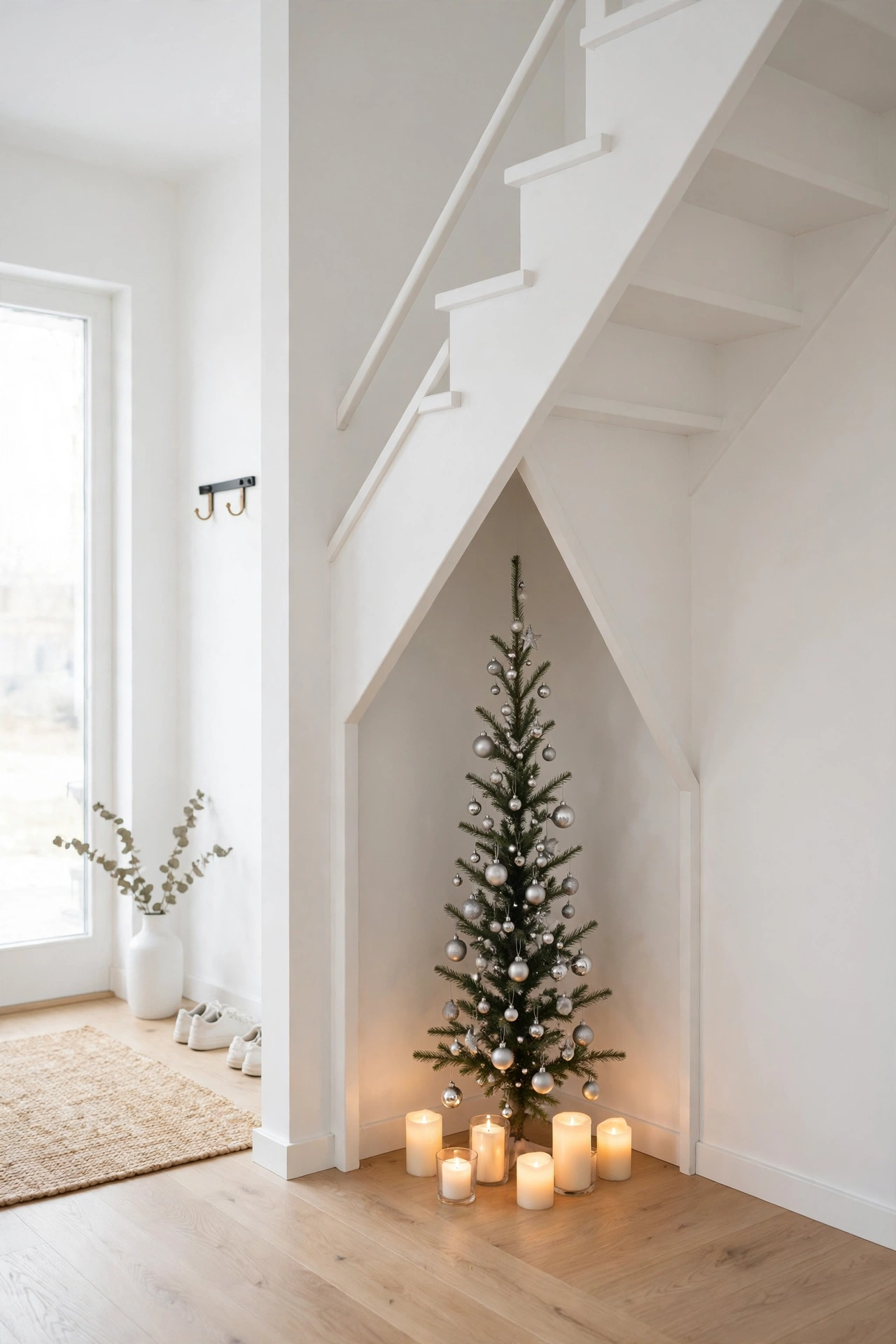
Tuck One Under the Stairs
The triangular nook under a staircase is wasted space in most homes, and a pencil tree fits it like it was designed for it. A 5 to 6 foot tree slides under the slope with room to spare. It turns a dark corner into the prettiest spot in the entry.
Try it: Cluster battery candles at the base on a timer. The glow at floor level makes the nook feel like a chapel.

06
A Slim Tree as the Entryway Greeter
Put a 4 to 5 foot slim tree right inside the front door in a woven basket. It is the first thing guests see and the last thing they remember, and it takes up less floor than a coat rack. Keep one clear 30-inch walkway past it so no one brushes the branches.
Try it: Scent the entry with a simmer pot or cinnamon pine cones nearby. Guests register Christmas before they even see the tree.

07
The Bedroom Corner Tree
A slim tree in the bedroom corner gives you a private Christmas without moving a single piece of furniture. A 4-foot tree on the floor or a 3-foot tree on a dresser both work. Keep the palette quieter than the living room: whites, silvers, soft golds.
Try it: Put the lights on a battery timer that clicks on at bedtime. Falling asleep to a glowing tree is the whole point of a bedroom tree.
08
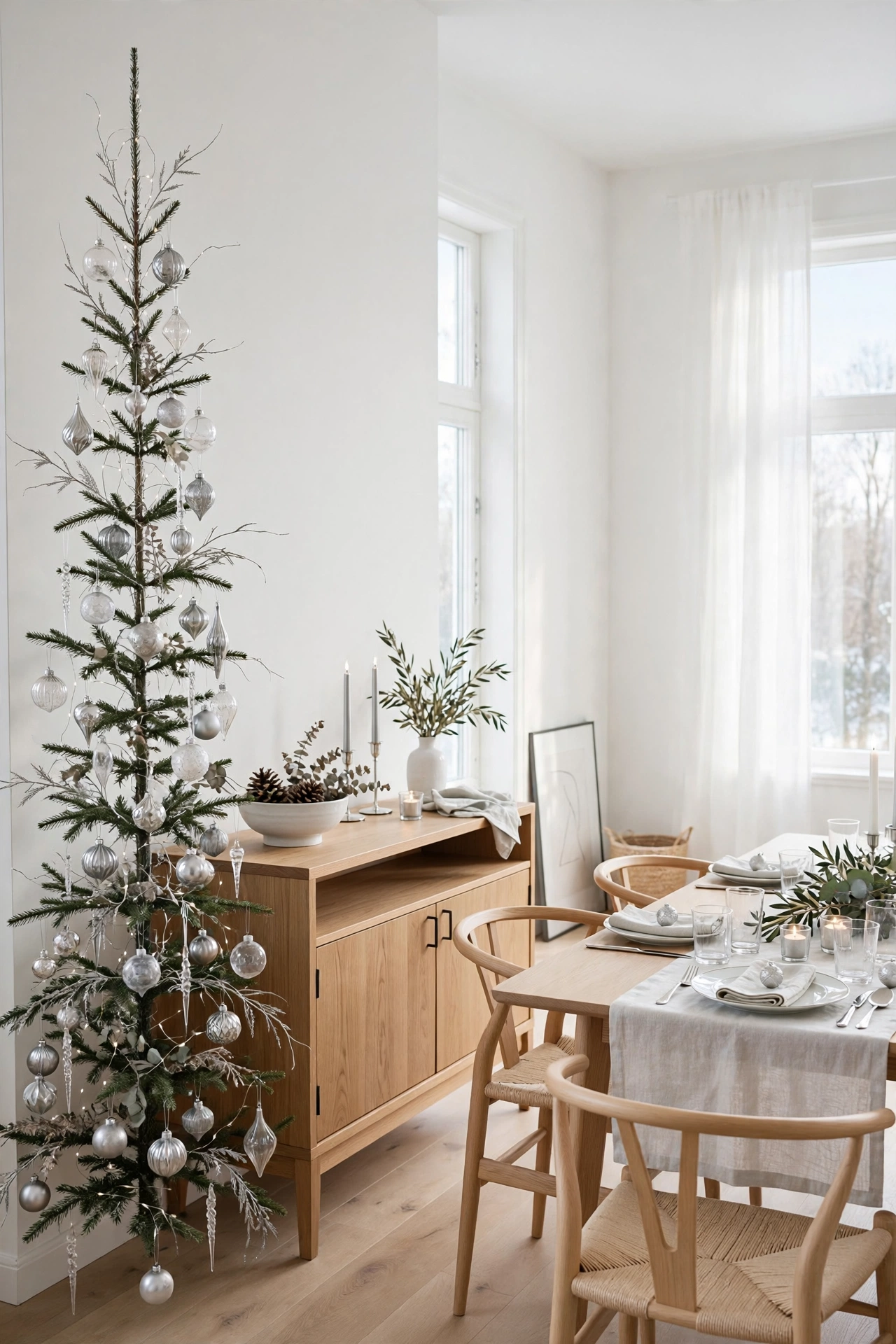
A Dining Room Slim Tree
The dining room deserves its own tree, and a slim one fits beside the sideboard without crowding the table. Style it grown-up: glass ornaments, metallics, candlelight colors. Keep decorations to the top two-thirds so nothing snags chair backs or sleeves.
Try it: Match the tree’s ribbon to your table runner. The room reads as one designed moment instead of a tree plus a table.
09
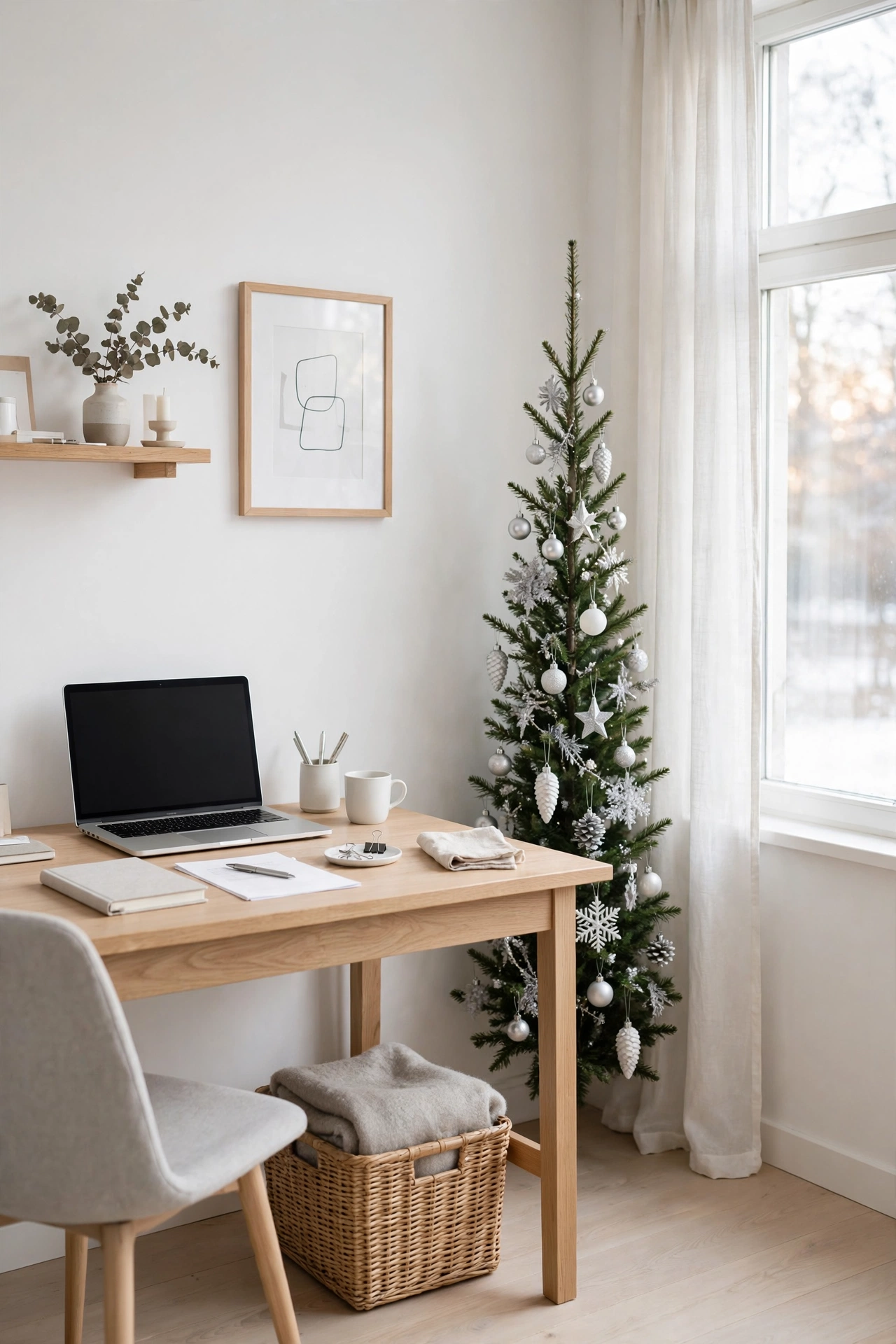
The Home Office Tree
A 3 to 4 foot slim tree in the office corner makes December workdays noticeably better. Stick to one ornament color so it stays calm on video calls. Silver and white reads professional; multicolor reads like a party behind you.
Try it: Position it out of your camera frame’s direct center. Slightly off to one side looks styled; dead center looks like a backdrop.
10
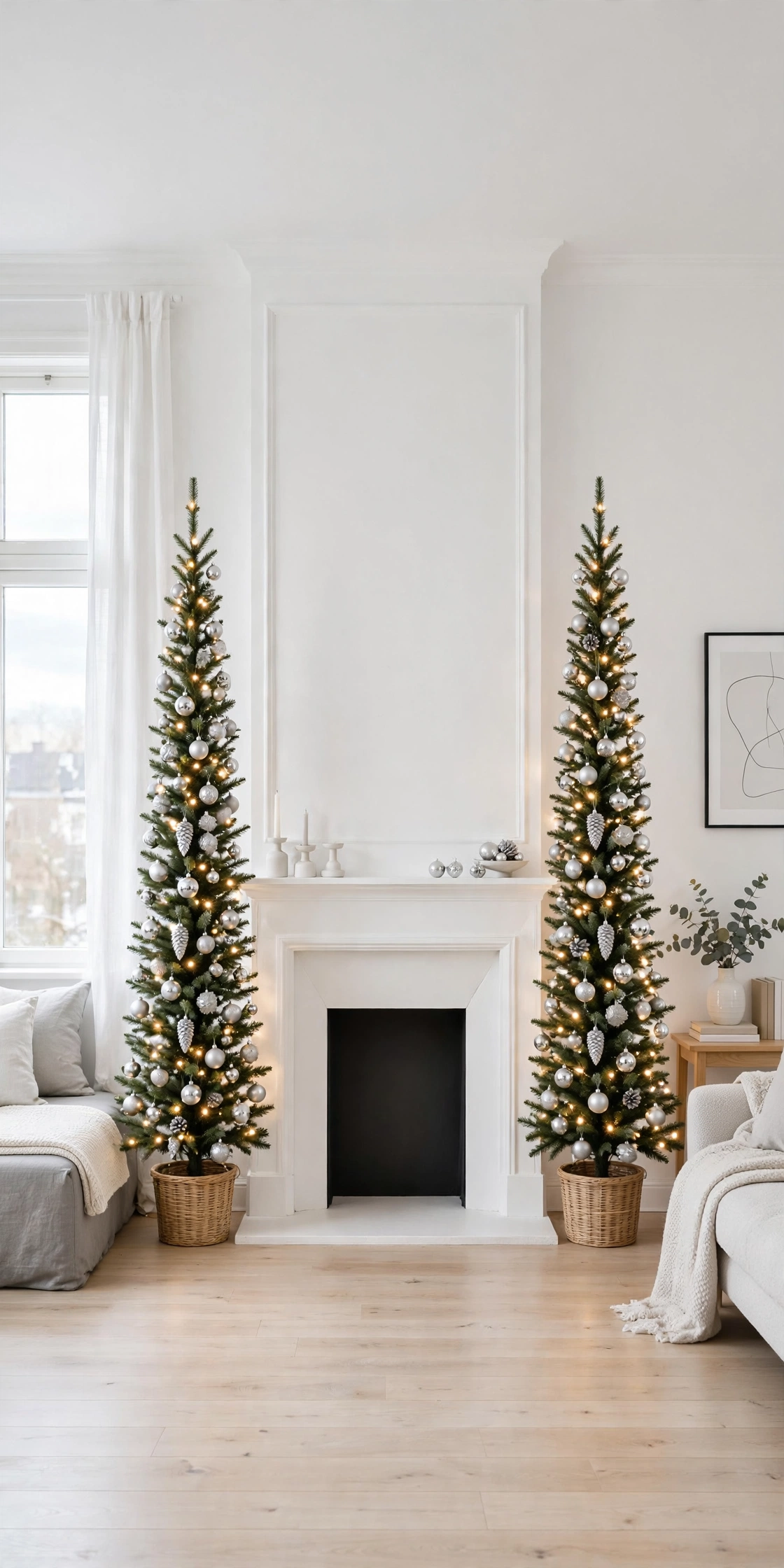
Flank the Fireplace or Doorway With Two
Two matching slim trees flanking a fireplace, doorway, or window is the highest-impact move on this list. The symmetry reads as high-end hotel styling, and two pencil trees often cost about the same as one premium full tree. Keep both decorated identically for the mirror effect.
Try it: Buy the trees as a pair from the same listing so the heights and branch styles match exactly.

11
Start With Lights: 100 Per Foot
The rule holds for slim trees: about 100 lights per foot of height. Weave them from the trunk outward, not just draped on the tips, so light comes from inside the branches. On a narrow tree this inner glow matters even more because there is less branch depth to hide bare spots. Before you plug anything in, skim the Electrical Safety Foundation’s guidance on preventing holiday fires so your lights go up safely.
Try it: Do lights in two passes: one deep inside near the pole, one on the outer branch tips. The double layer is what makes slim trees look lit from within.
12
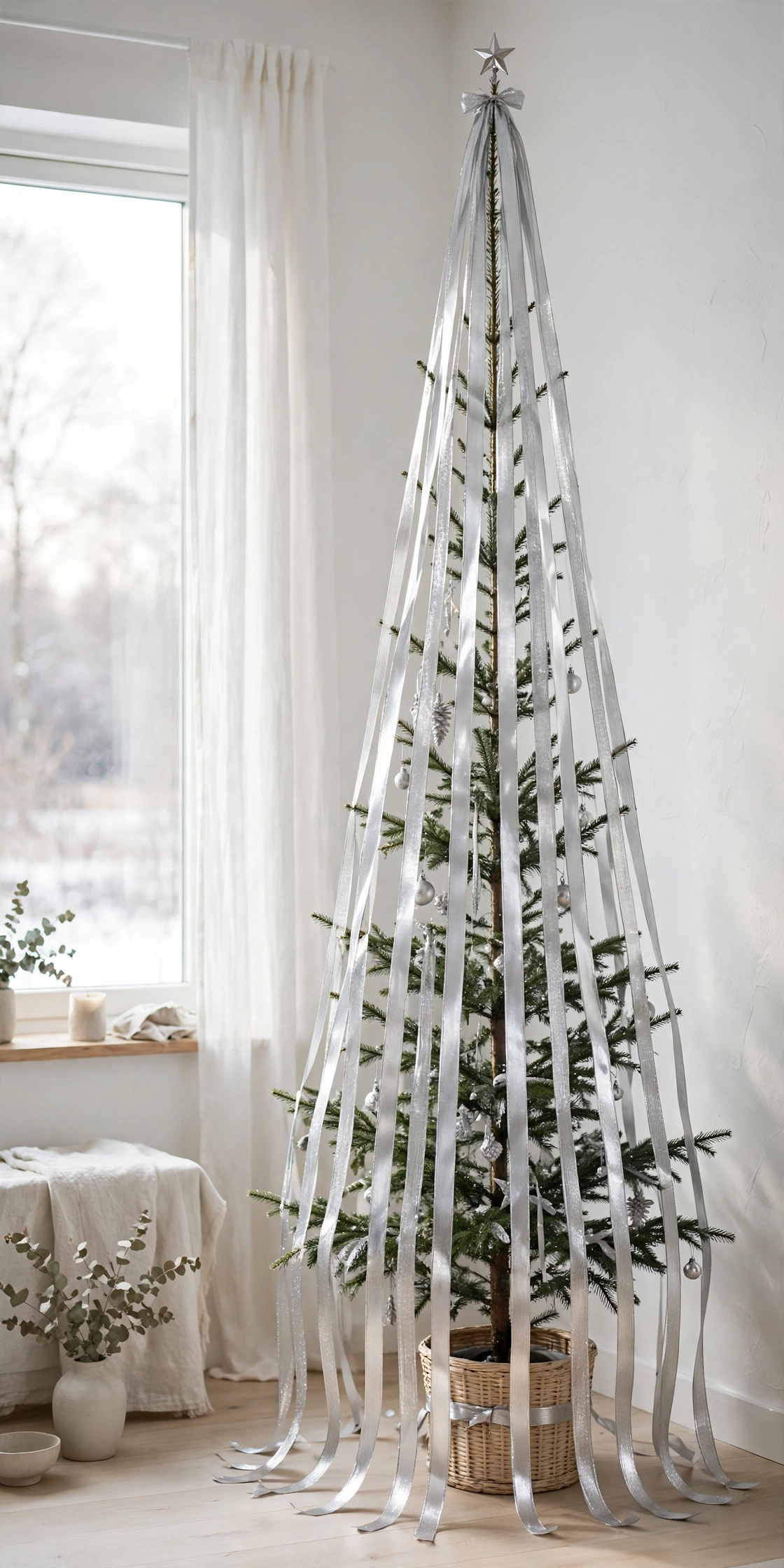
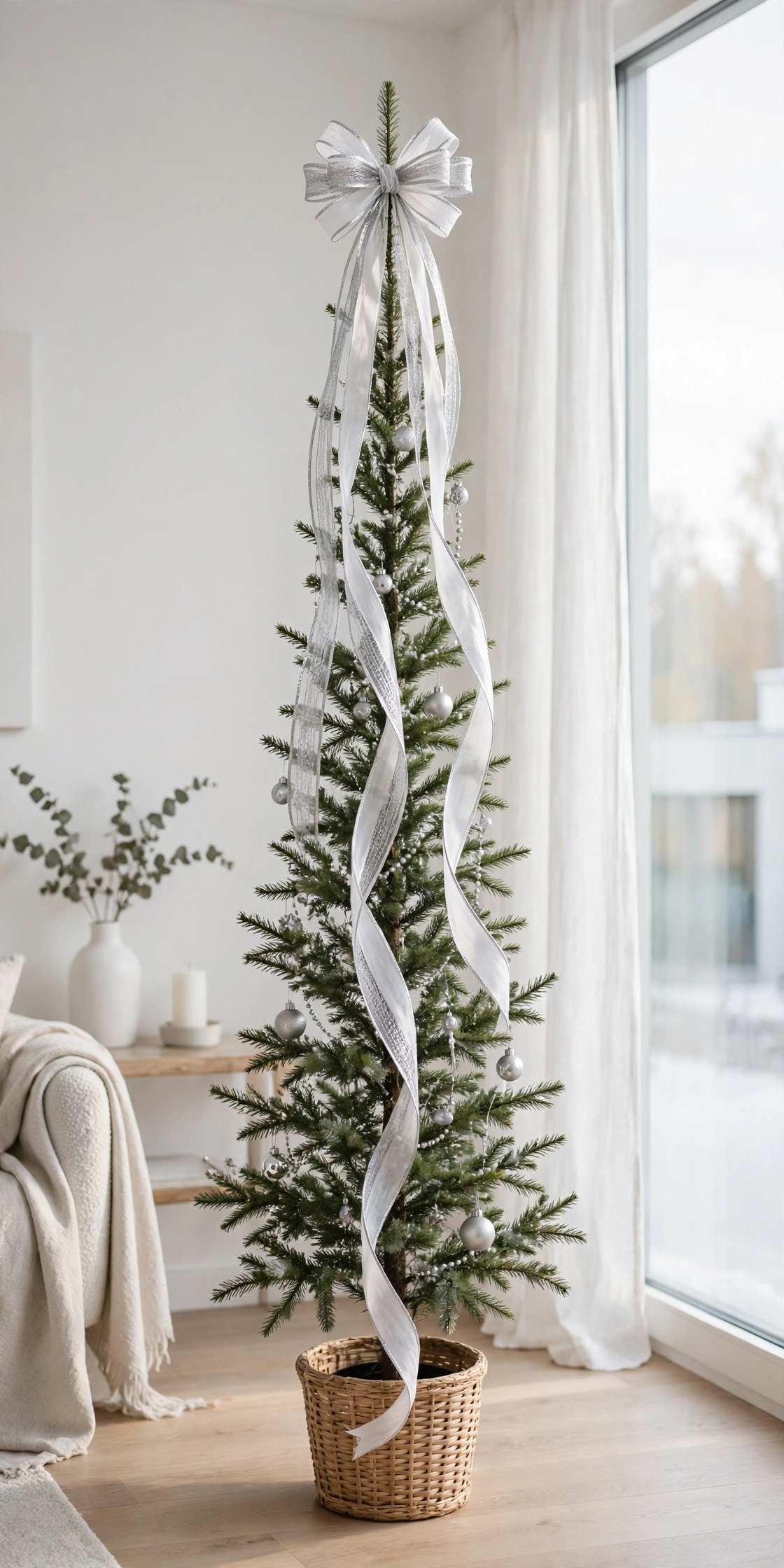
Cascade Ribbon Vertically
Ribbon is a slim tree’s best friend when it falls straight down instead of spiraling around. Plan on 3 yards of wired ribbon per foot of tree height, cut into long streamers tucked near the top and left to cascade. Vertical ribbon elongates the tree and adds texture without adding bulk. And if your tree is a fresh real one, the National Christmas Tree Association’s care tips will help you keep it fresh and safe all season.
Try it: Fold the ribbon in half for the top 2 feet where branches are narrowest, then let it open to full width lower down. It matches the tree’s taper.
13
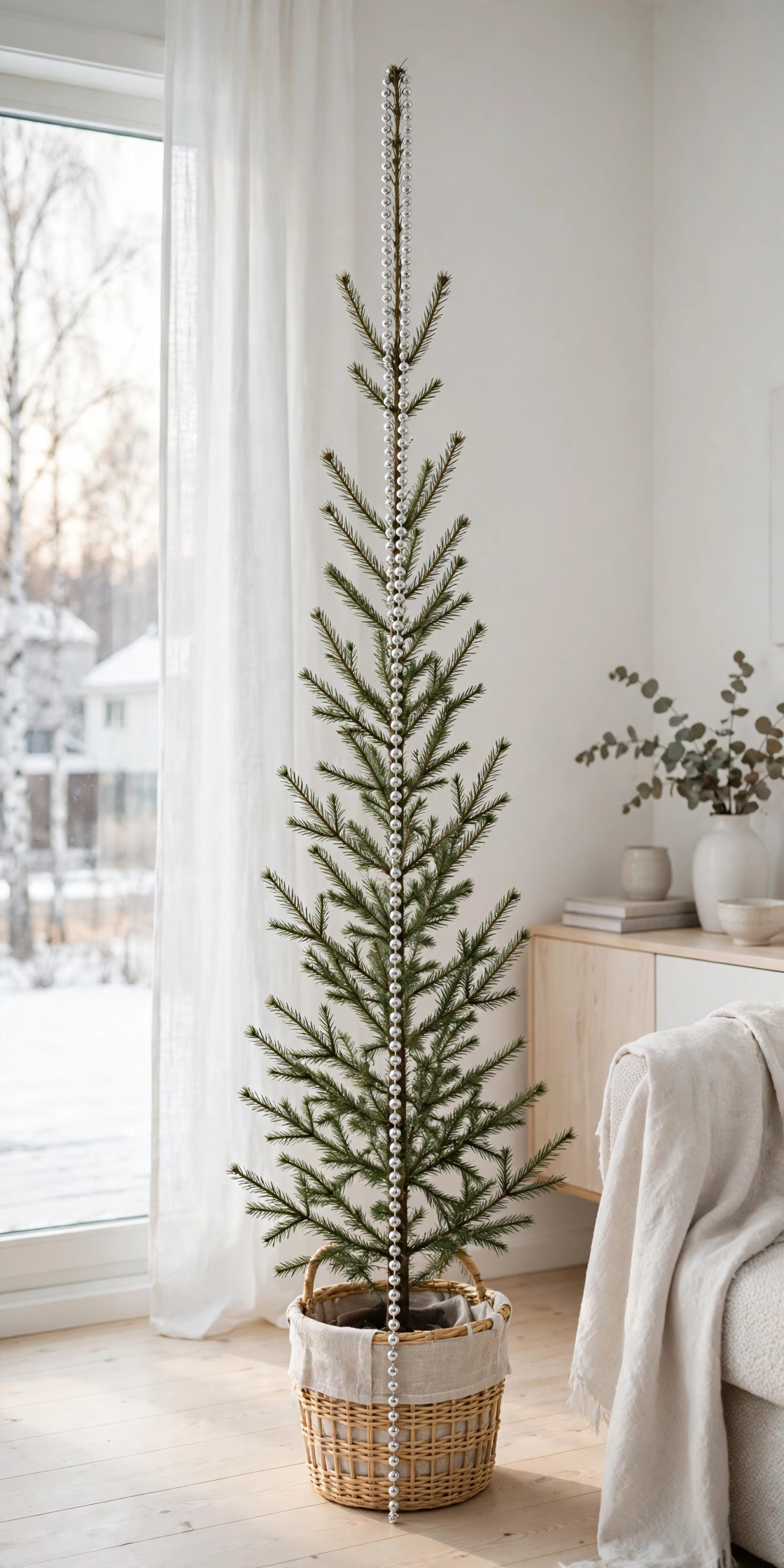
One Vertical Garland Strand
Instead of wrapping garland horizontally around the tree, run a single strand from top to bottom like a waterfall. Bead garlands, wooden bead strands, and thin tinsel all work. One vertical line draws the eye up the full height and never fights the slim silhouette.
Try it: Secure the strand with small ornament hooks every 12 inches so it stays put when the tree gets bumped.

14
Small Ornaments in Clusters of Three
Oversized baubles overwhelm a narrow tree, so cap ornaments at 2 to 3 inches and hang them in clusters of three tucked deep into the branches. A cluster reads as one generous decoration from across the room while fitting the scale up close. Mix one shiny, one matte, and one textured ball per cluster.
Try it: Use reflective silver or mercury glass in at least half the clusters. They bounce the lights around and double the glow.

15
Graduate Sizes Bottom to Top
Hang your largest ornaments at the bottom and shrink them as you go up. This graduation anchors the tree visually and pulls the eye upward, which makes the whole tree read taller. It also keeps the narrow top from looking top-heavy.
Try it: Reserve the bottom 12 inches for the biggest pieces. That low band grounds the tree the way a good base grounds a lamp.
16
Choose a Lightweight Topper
A heavy star or angel can make a pencil tree’s narrow top wobble, so go light: a wired ribbon bow, a slim finial, or a small star under 6 inches. Wire the topper to the top branches with floral wire instead of just balancing it. A ribbon streamer topper that cascades a foot down the tree doubles as decoration.
Try it: Skip the topper entirely on very minimal trees and let the top branch curl naturally. Sometimes the silhouette is enough.

17
The White and Silver Scandinavian Look
This is the slim tree’s signature style: white lights, silver baubles, white paper stars, and maybe a whisper of frosted branches. The palette suits narrow silhouettes because it keeps everything light and airy. Add texture with knit ornaments and wooden beads so it does not feel cold.
Try it: Use all warm-white lights, never cool white. Cool white on silver reads as icy office; warm white reads as candlelight.

18
Go Flocked for Instant Snow
A flocked slim tree looks fully decorated with half the ornaments. The snowy branches provide the visual interest, so you need about 30 percent fewer decorations than on a green tree. It is the fastest route to a designer look: flocked tree, white lights, silver balls, done.
Try it: Shake the tree outside or in the garage after setup. Flocking sheds most in the first hour, then settles.

19
Blue and White Winter Theme
Navy ribbon, frosted blue baubles, and silver snowflakes turn a slim tree into a winter evening. The cool palette looks especially good in bright rooms with white walls, where the tree becomes a calm blue column. Add one warm element, like gold fairy lights, so it glows instead of chilling.
Try it: Use three blues: navy, ice blue, and silver-blue. One blue looks flat; three look like a palette.
20
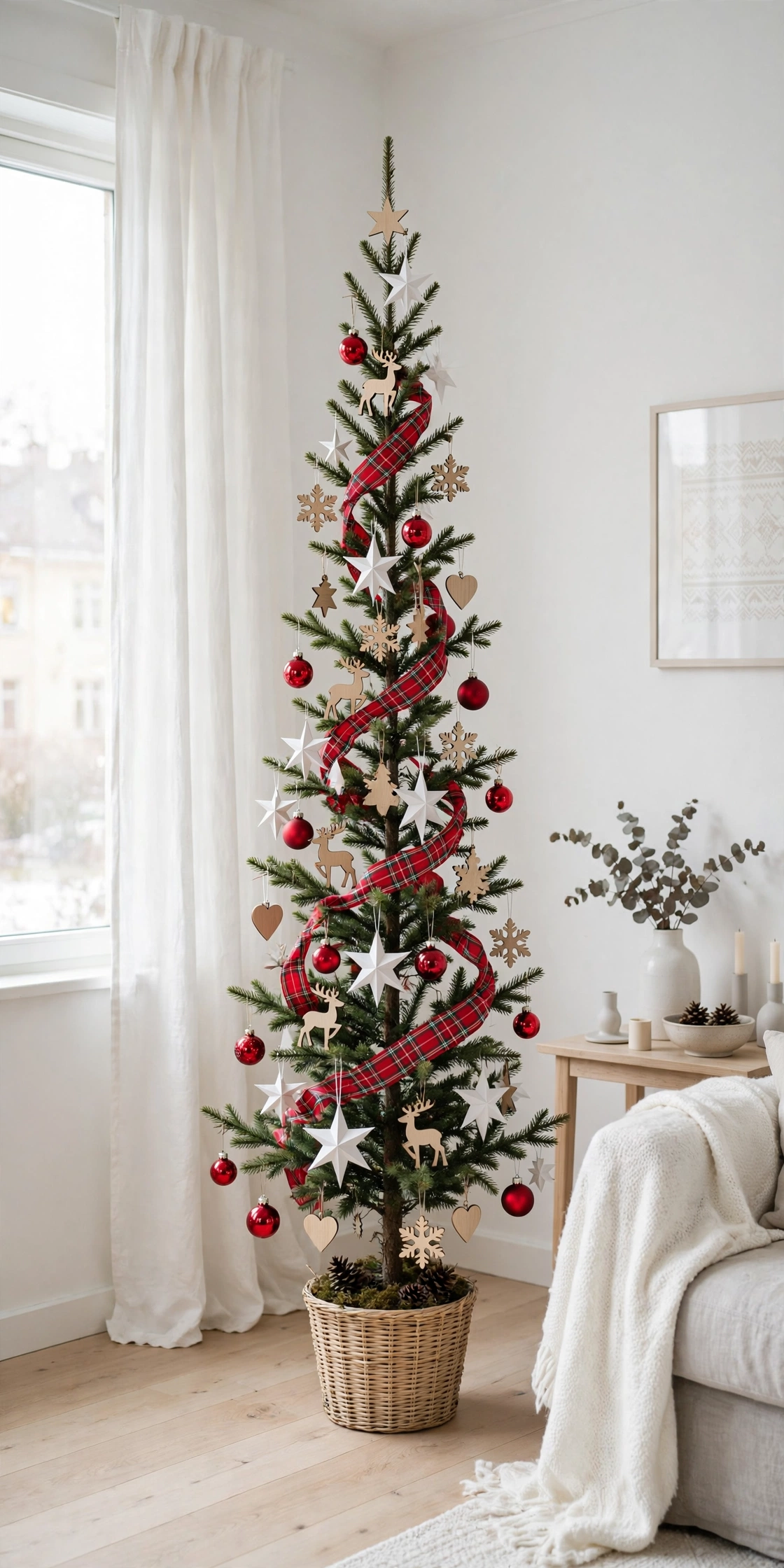
Red and White Nordic Theme
Red and white is the classic Scandinavian Christmas pairing and it loves a slim tree. Wooden ornaments, red glass balls, white paper stars, and a red plaid ribbon keep it folk and warm. The high contrast makes even a sparsely decorated tree look intentional.
Try it: Add dried orange slices and cinnamon sticks. They are cheap, smell like December, and fill gaps better than more ornaments.
21
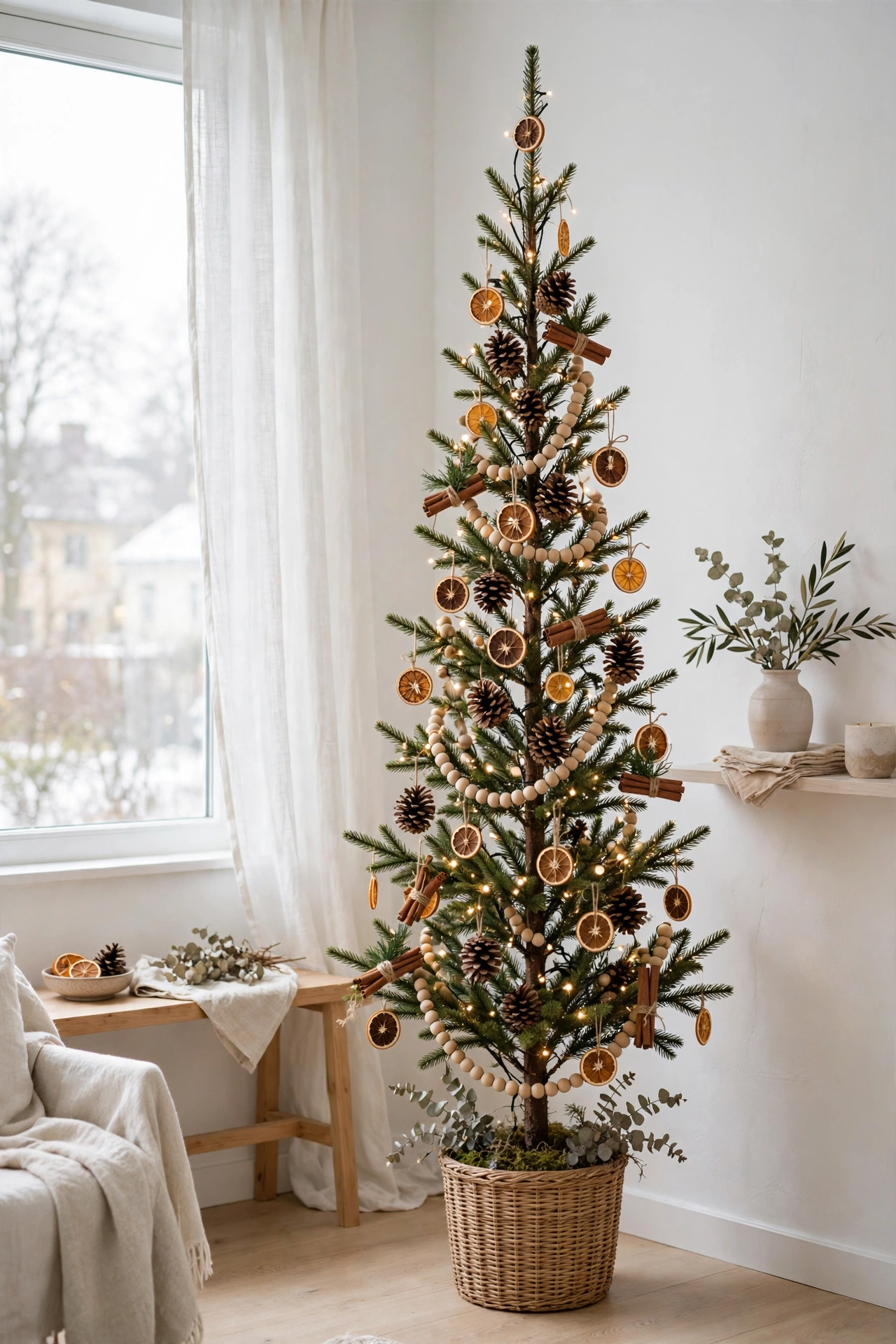
The All-Natural Tree
Decorate with nothing manufactured: pine cones, dried orange slices, wooden beads, cinnamon bundles, and simple string lights. The natural textures suit a slim profile because they add interest without visual weight. This is also the cheapest theme on the list, often under $20 if you forage the pine cones.
Try it: Wire a small bundle of cinnamon sticks with twine and hang as ornaments. They scent the whole corner for weeks.

22
Monochrome Gold
Pick one metallic and commit completely: gold baubles in three finishes (shiny, matte, glitter), gold ribbon, gold star. A single-metal tree on a slim silhouette looks expensive and deliberate. Keep the lights warm white; anything cooler fights the gold.
Try it: Add gold picks, those glittery branch sprays, tucked vertically between branches. They add fullness without ornaments.
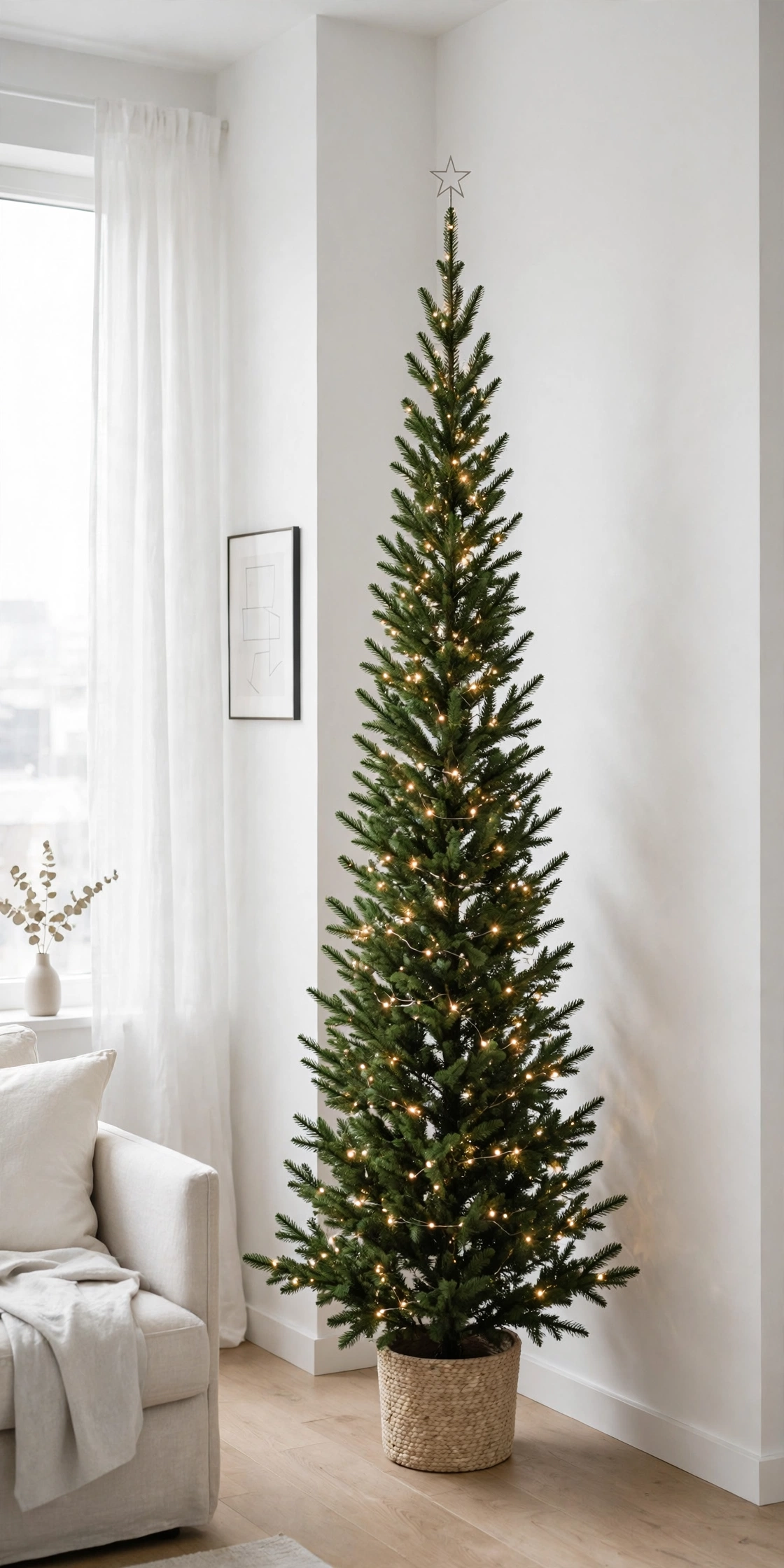
23
The Minimal Tree: Lights Plus Topper
Sometimes the bravest choice is restraint. A good pre-lit slim tree with dense branches needs nothing but a simple topper, or nothing at all. This works best when the tree itself is high quality; sparse branches cannot carry minimalism. It is also the 10-minute option for busy Decembers.
Try it: If the tree looks bare in daylight, add a single strand of wooden beads. It is the smallest possible step up from nothing.
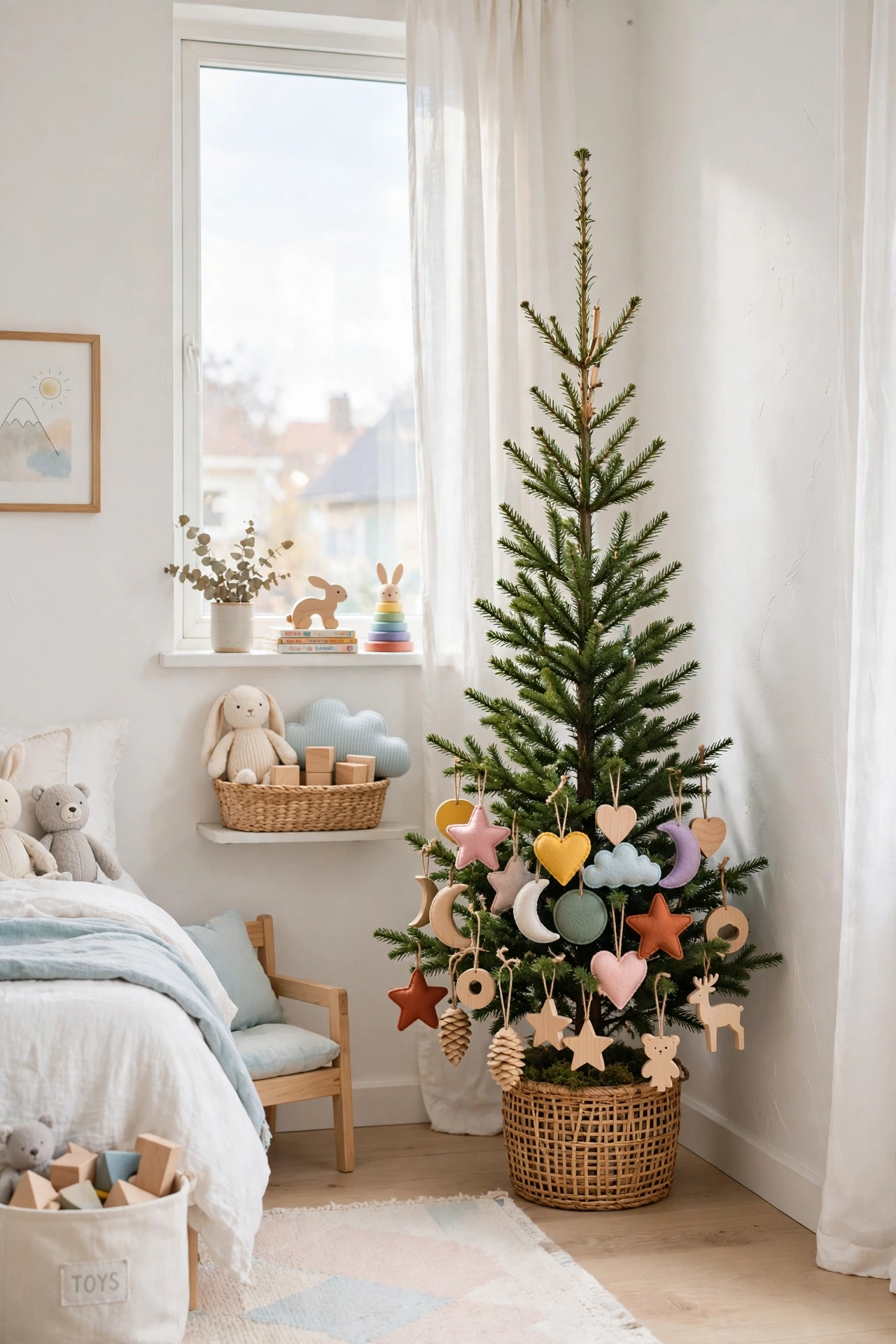
24
A Slim Tree for the Kids’ Room
Kids love having their own tree, and a slim 4-foot tree fits any bedroom corner. Use only shatterproof ornaments and let them hang everything at their own height; the bottom-heavy look is charming, not wrong. Felt and wooden ornaments survive being loved hard.
Try it: Give them one special ornament to place at the top each year. The ritual matters more than the symmetry.
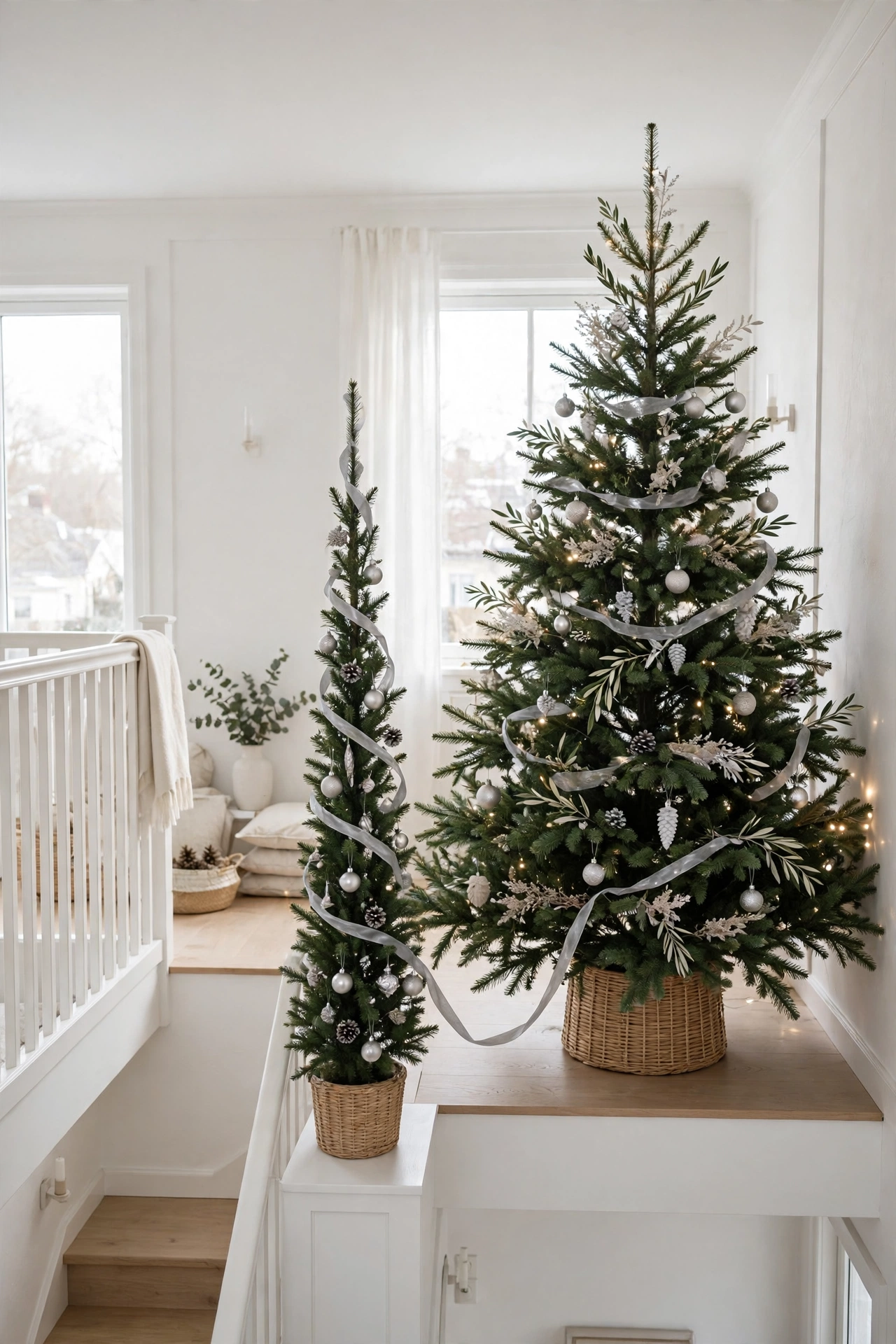
25
The Companion Tree
Keep your full tree in the living room and add a slim tree somewhere unexpected: the dining room, the landing, the home office. Use one shared color across both trees so they feel related instead of random. The slim tree becomes the elegant echo of the main event.
Try it: Decorate the companion tree in a simpler version of the main tree’s theme. Same ribbon, fewer ornaments, done in 20 minutes.
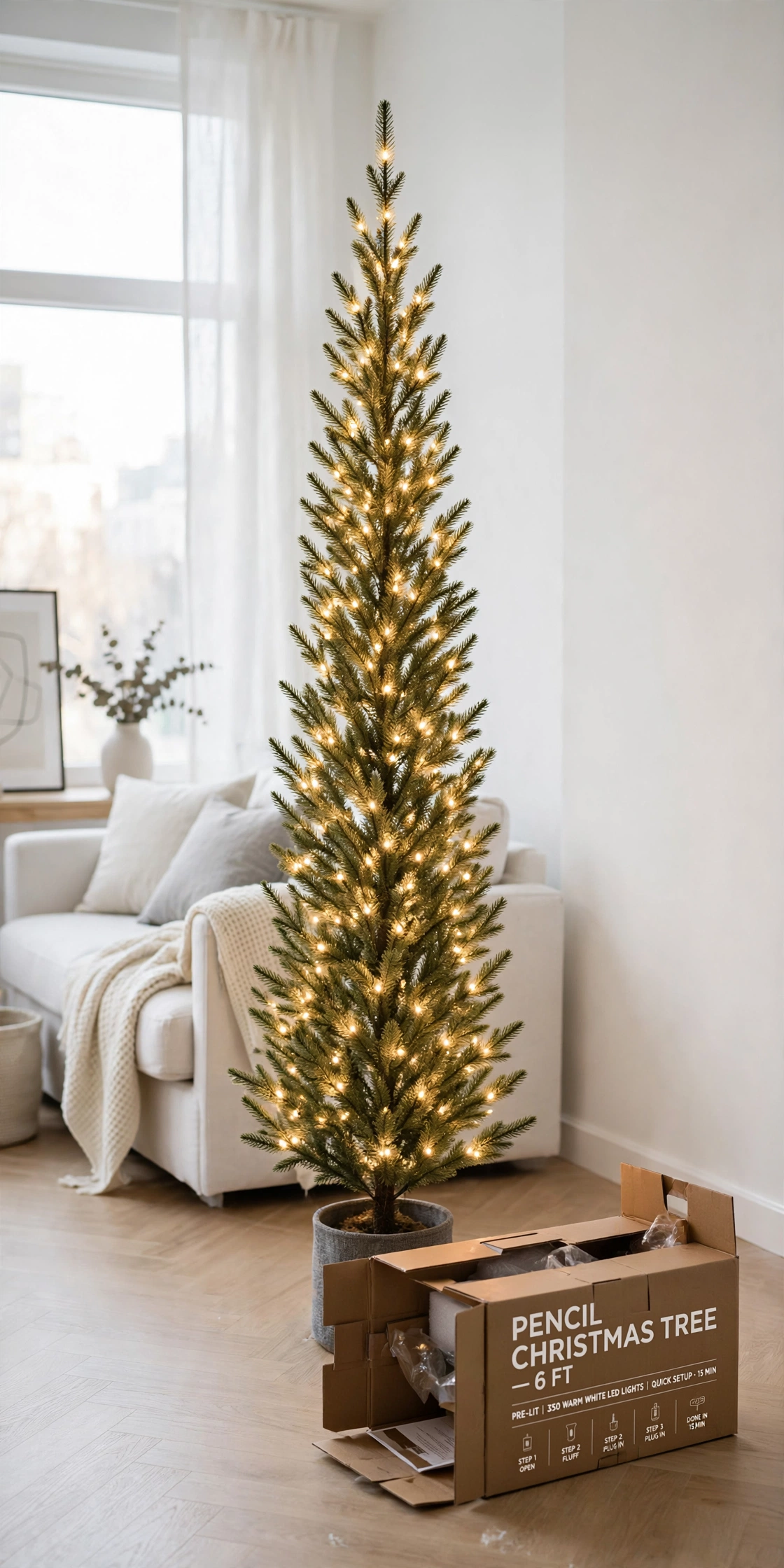
26
Go Pre-Lit and Save an Hour
Pre-lit pencil trees are the ultimate shortcut: unbox, fluff, plug in, done in about 15 minutes. Look for at least 300 warm-white lights on a 7-foot tree and hinged branches, which fluff faster than hook-on ones. Check that every light section works before you add a single ornament.
Try it: Buy from a listing with a spare-bulb and spare-fuse kit included. One dead section in week two is fixable in minutes if you have the parts.
27
Weight the Base
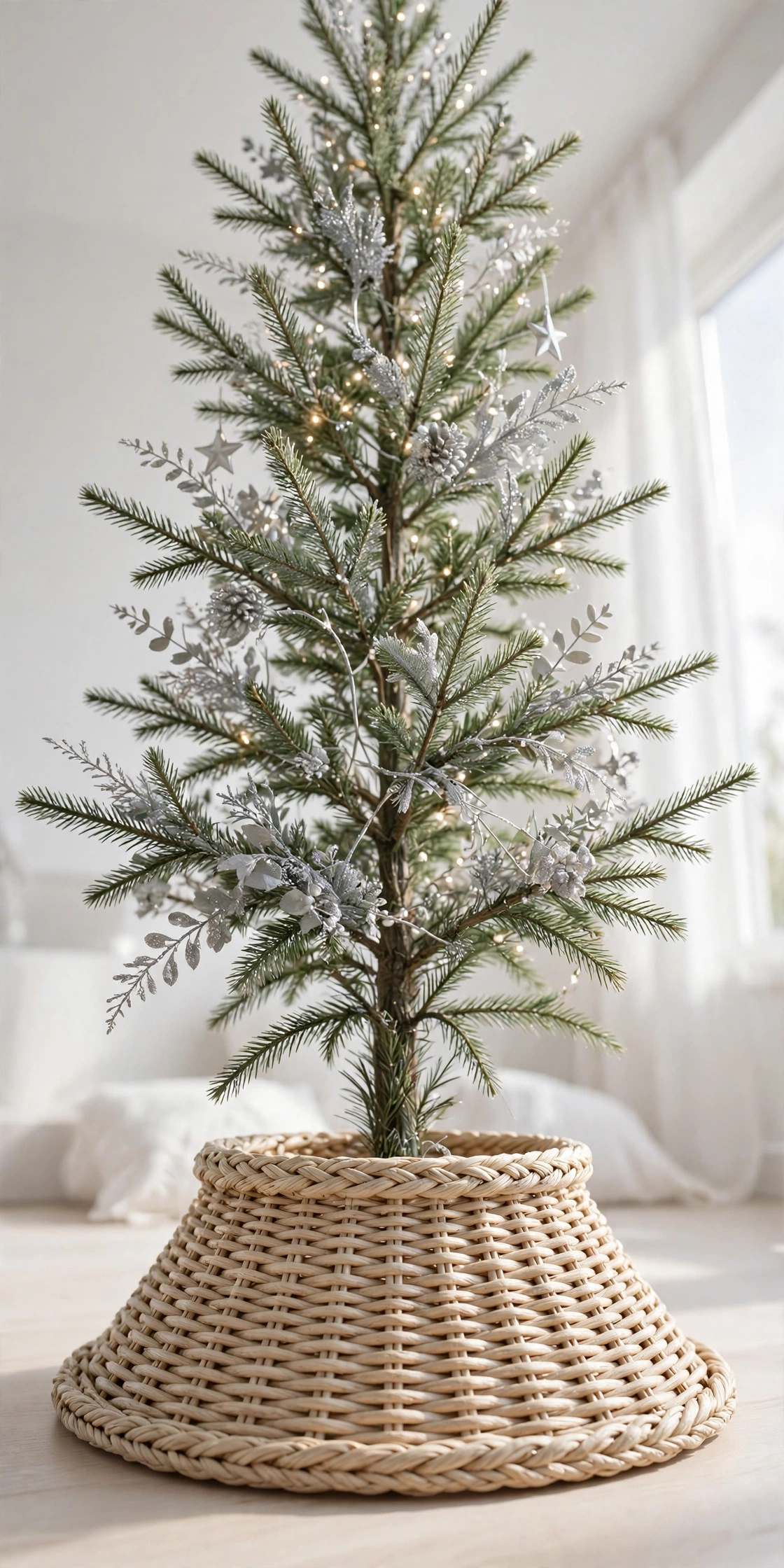
Slim trees have small footprints, which means they can wobble, especially with pets or toddlers. Set a 10-pound sandbag inside a decorative tree collar around the base. The collar hides the mechanics and looks intentional while the weight does the real work.
Try it: If you use a tree skirt instead, hide flat barbell plates under it. Ugly, invisible, and completely effective.

28
Collar Over Skirt in Tight Spaces
In a narrow spot, a tree collar beats a skirt every time. Collars sit upright, hide the stand completely, and never get stepped on or chewed. Measure your stand first; the collar must clear it by 2 inches. Woven, metal, and galvanized collars all suit slim trees.
Try it: Tuck a small faux-fur throw inside the collar’s top edge. It softens the look and hides any gap between collar and branches.
29
Anchor It Against Cats and Toddlers
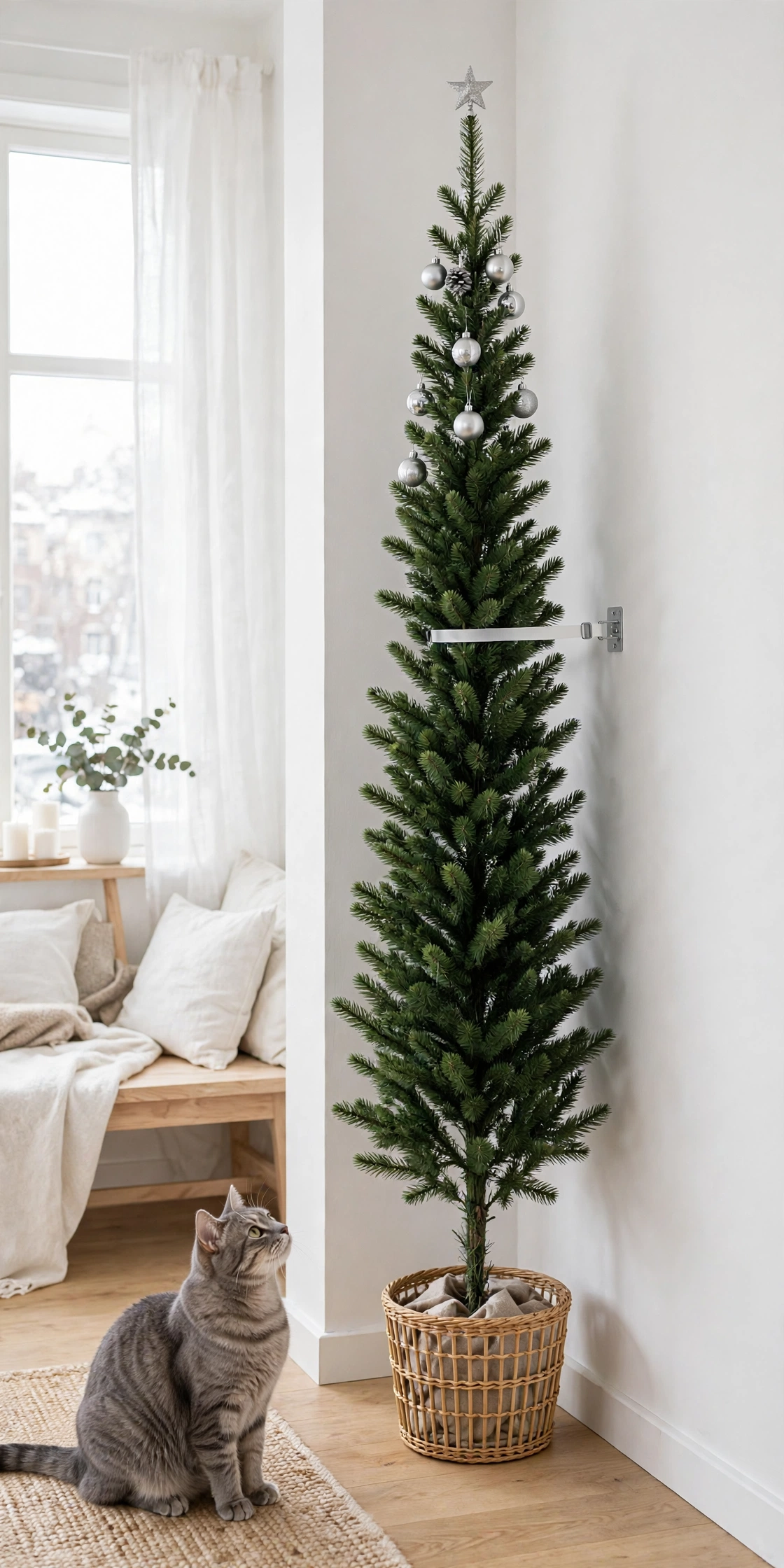
A slim tree is a climbing invitation. Loop clear fishing line around the trunk two-thirds of the way up and tie it to a small wall hook behind the tree. It is invisible from the front and stops the slow-motion tip-over. Keep glass ornaments off the bottom 2 feet as well.
Try it: Spray the lower branches with a citrus-scented deterrent for the first week. Most cats lose interest once the novelty fades.

30
Fluff Like You Mean It
Twenty minutes of proper fluffing can double how full a slim tree looks. Work branch by branch from the bottom up, bending each tip upward and outward into a slight V. Spread the branches to cover the pole; the pole showing through is what makes slim trees look sparse.
Try it: Step back every 10 minutes and look at the silhouette. Fluffing is done when the outline is even, not when every branch is perfect.
Pro tip: Stand 10 feet back and squint at your tree. What you see in blur is the silhouette, and the silhouette is what the room actually registers. If it reads as one clean vertical line with warm light inside it, you are done. All the fiddling you do up close is invisible from the sofa, so stop there.
Three rules for slim tree decorating
- Scale everything down: Ornaments, ribbon width, topper size, and garland thickness all shrink with the tree. A 4-inch bauble that looks perfect on a full tree looks like a wrecking ball on a pencil tree.
- Think vertical, not horizontal: Every decoration should emphasize height. Cascades, vertical strands, and graduated sizing all say tall; horizontal wrapping says thin.
- One hero detail per tree: A great ribbon cascade, a stunning topper, or a perfect color palette. One strong choice beats five competing ones on a narrow canvas.
After Christmas: the slim tree reset
- Compress and bag: Collapse hinged branches upward against the pole and slide the tree into its storage bag. A 7-foot pencil tree packs down to a 12-inch-wide bundle that slides under a bed or behind a wardrobe.
- Sort ornaments by size: Pack the small slim-tree ornaments separately from your full-size ones in a labeled box. Next year you will not waste an evening discovering which baubles fit.
- Keep the collar with the stand: Store the tree collar, sandbag, and stand hardware together in one bag. The number one January frustration is a collar with no stand and a stand with no screws.
More ideas you’ll love: Christmas bedroom decor ideas, small Christmas tree ideas, Christmas living room decor ideas, Christmas decor ideas, and more in our Christmas Decor collection.
Questions readers ask
What is the difference between a slim and a pencil Christmas tree?
A slim tree is 30 to 40 inches wide at the base, while a pencil tree is narrower at 20 to 30 inches. Pencil trees suit the tightest spots like hallways and between furniture; slim trees suit small living rooms that still want some presence. Both are much narrower than a standard tree, which runs 50 inches wide or more.
How wide is a slim Christmas tree?
Most slim artificial trees measure 30 to 40 inches across at their widest point. Pencil trees run 20 to 30 inches, and half trees need only about 18 inches of depth against a wall. Always check the listed width, not just the height, and tape the footprint on your floor before buying.
How many ornaments do I need for a slim tree?
Plan on 5 to 7 ornaments per foot of height, roughly half what a full tree needs. A 7-foot slim tree looks complete with 35 to 50 small ornaments hung in clusters. Fill remaining gaps with ribbon, picks, or garland rather than buying more ornaments.
How do I make my slim tree look fuller?
Fluff every branch tip upward and outward, which alone can double the fullness. Then tuck ornament clusters deep near the pole, weave lights inside the branches, and add vertical ribbon or glittery picks to fill gaps. A flocked tree also hides sparseness because the snowy coating adds visual volume.
Where should I put a slim Christmas tree?
Anywhere a full tree cannot go: room corners, entryways, hallways, bedrooms, dining rooms, home offices, and under stairs. Keep 30 inches of walkway clear and 6 inches from walls so lights glow behind the branches. Flanking a fireplace or doorway with two matching slim trees is a classic high-impact placement.
Can a slim tree hold heavy ornaments?
No, and you should not try. Slim branches bend under weight that a full tree would carry easily. Stick to lightweight ornaments under 2 to 3 inches, use plastic or shatterproof instead of heavy glass, and save heirloom pieces for a sturdier tree. If a branch droops, move that ornament up where branches are shorter and stronger.
How do I keep a slim Christmas tree from tipping over?
Weight the base with a 10-pound sandbag hidden inside a decorative collar, and anchor the trunk to the wall with clear fishing line tied two-thirds of the way up. Keep the heaviest decorations low, skip the heavy topper, and place the tree where pets cannot get a running start at it.
Are slim Christmas trees cheaper than full trees?
Yes, usually 30 to 50 percent cheaper than a comparable full tree. A decent 7-foot pre-lit slim tree runs $80 to $150, while pencil trees start around $40. You also save on decorations, since a slim tree needs roughly half the ornaments and lights of a full one.
People Also Ask
Do slim Christmas trees look cheap?
Only when they are under-decorated or badly fluffed. A well-fluffed slim tree with scaled ornaments, vertical ribbon, and lights woven deep into the branches looks elegant and intentional. The cheap look comes from full-size ornaments on narrow branches and a visible center pole, both easy to fix.
How tall should a slim tree be for an apartment?
Six to 7 feet is the sweet spot for most apartments with 8-foot ceilings. Leave 6 to 12 inches between the topper and the ceiling. In a studio, a 4 to 5 foot tree on the floor or a 3-foot tree on a table gives the holiday feeling without dominating the room.
Can you put a slim Christmas tree in a basket?
Yes, and it is one of the best bases for a slim tree. Choose a sturdy woven basket 2 to 3 inches wider than the tree stand, and set a weight inside for stability. Baskets suit farmhouse, Scandinavian, and natural themes perfectly and hide the stand completely.
loved these ideas? ✿
Save this guide for later
Pin it to your board so it’s there when you’re ready to recreate it.

Curated by
Hey! I'm Sanaullah — visual curator and content creator. I search, curate, and test the best aesthetic ideas across Pinterest so you can easily transform your living space, style daily outfits, and try simple creative DIYs without the overwhelm.