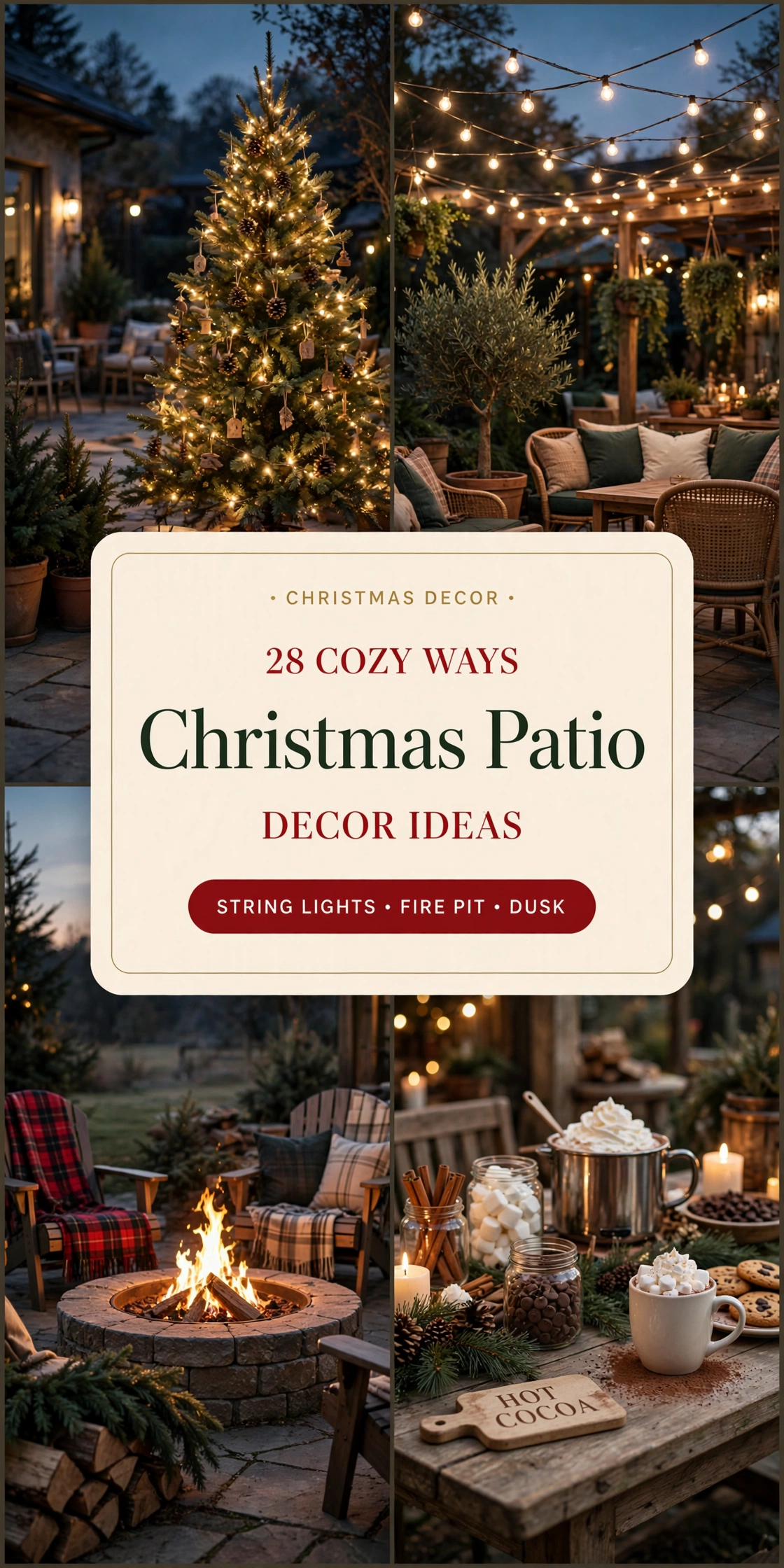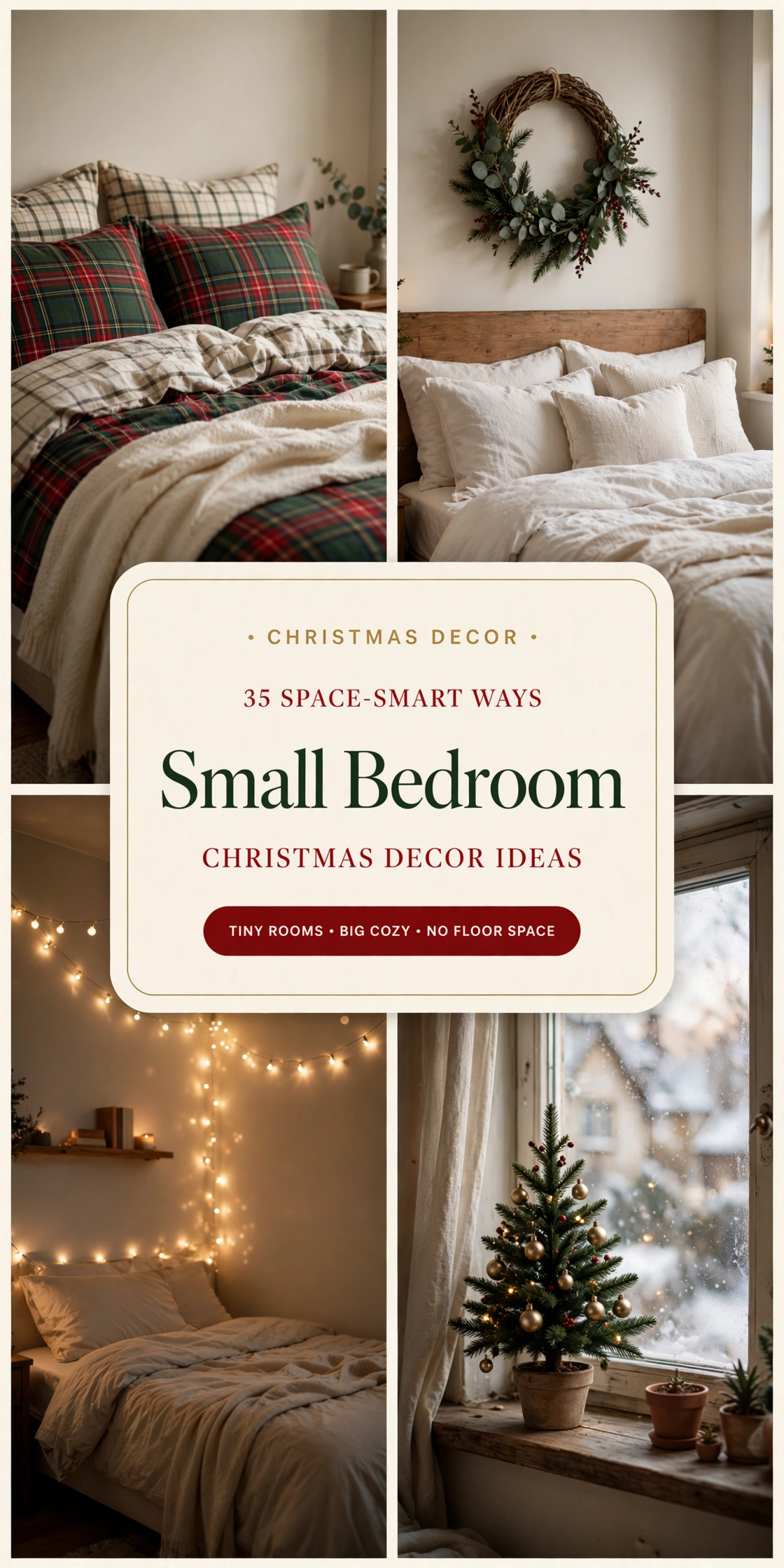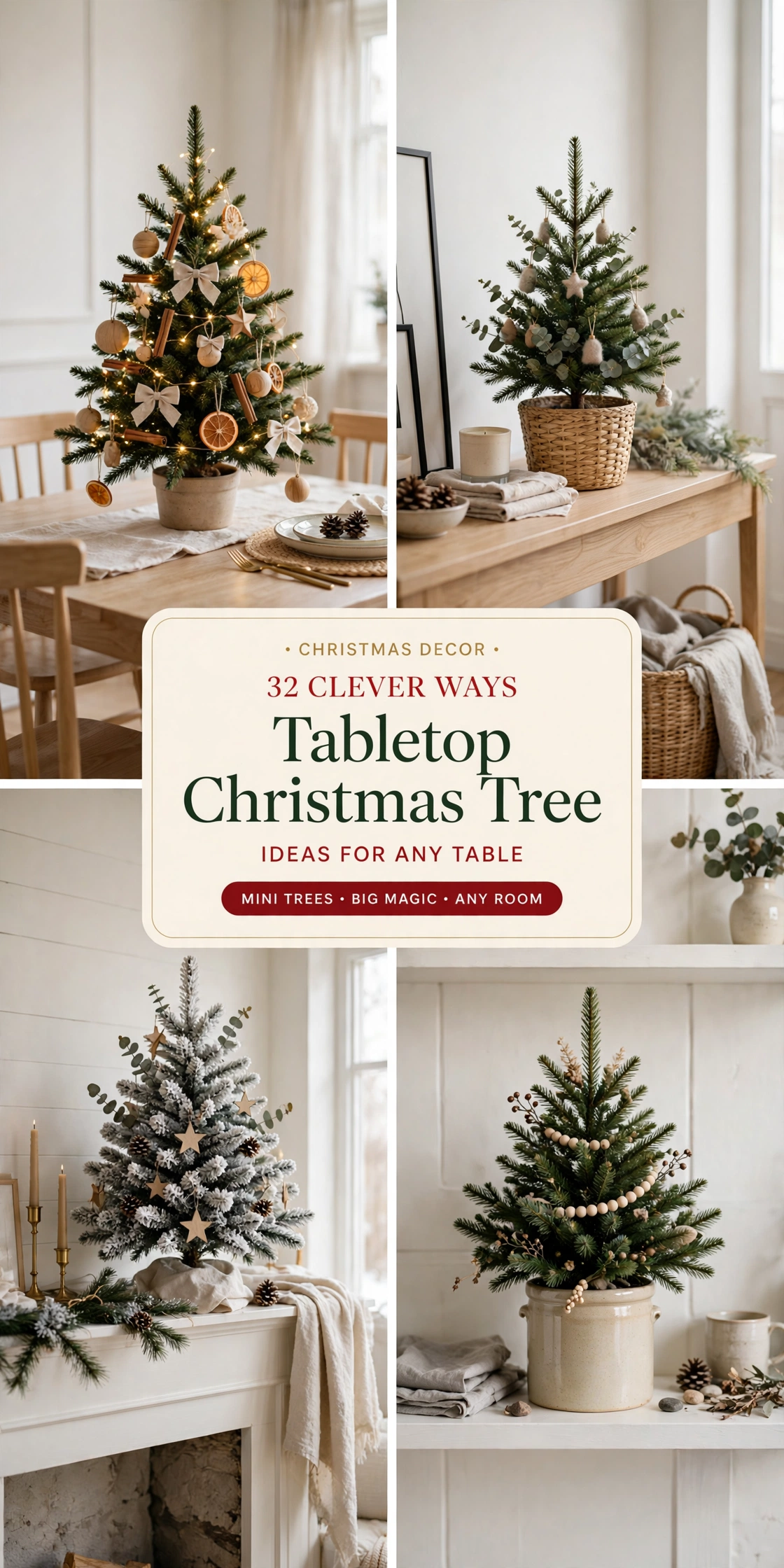

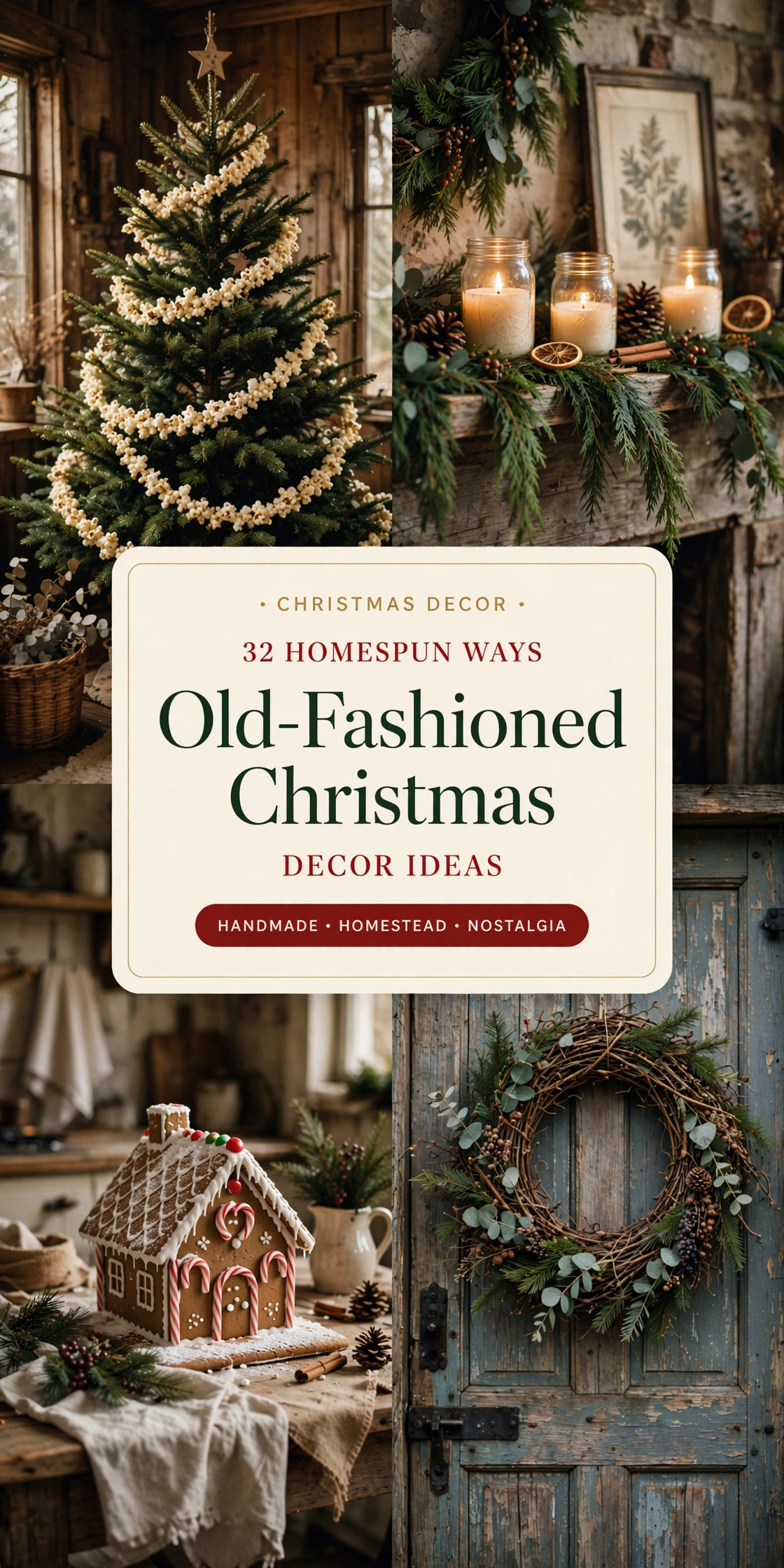
You do not need a matching set of anything to make Christmas feel the way it did at your grandmother’s house. These old-fashioned christmas decor ideas lean on what farm families always used: popcorn, paper, oranges, fresh greens, and things made by hand at the kitchen table. Most of them cost under $10, and half of them you can burn, compost, or eat in January. Follow along and your home will smell like cloves, glow like candlelight, and feel like the Christmases you still talk about.
Quick Idea Summary
- The key takeaway: Old-fashioned charm comes from materials, not money. Popcorn, paper, citrus, fresh greens, and handwork in muted red, cream, and deep green will always read more nostalgic than a cart of shiny new ornaments.
- The detail most people miss: Order matters on the tree. Lights first, then garlands, then ornaments, then tinsel one strand at a time. That sequence is why old trees seem to glow from the inside out.
- What it costs or how long it takes: Most ideas below cost $0 to $10 and take under an hour. A full old-fashioned decorating day, garlands and ornaments included, fits in one Saturday with the family helping.
At a glance
| Zone | Ideas | Budget |
|---|---|---|
| The tree | 01–09 | $0–$30 |
| Mantel and hearth | 10–14 | $5–$35 |
| Kitchen and table | 15–20 | $8–$40 |
| Walls, windows, and doors | 21–25 | $5–$30 |
| Textiles and finishing touches | 26–32 | $5–$45 |
The old-fashioned christmas decor ideas

01
String a Popcorn and Cranberry Garland
This is the garland grandmothers actually made, and it still beats anything plastic. Pop a big batch of plain popcorn and let it sit out 24 hours; day-old popcorn is less brittle and strings without shattering. Thread a long needle with waxed dental floss or heavy thread, and work a simple pattern of 3 popcorn to 1 fresh cranberry. You need about 10 to 12 feet of finished garland for a 7-foot tree, which takes one unhurried evening.
Try it: String in arm-length sections of about 3 feet and knot them together on the tree. One endless strand tangles, and untangling popcorn is nobody’s Christmas memory.
02
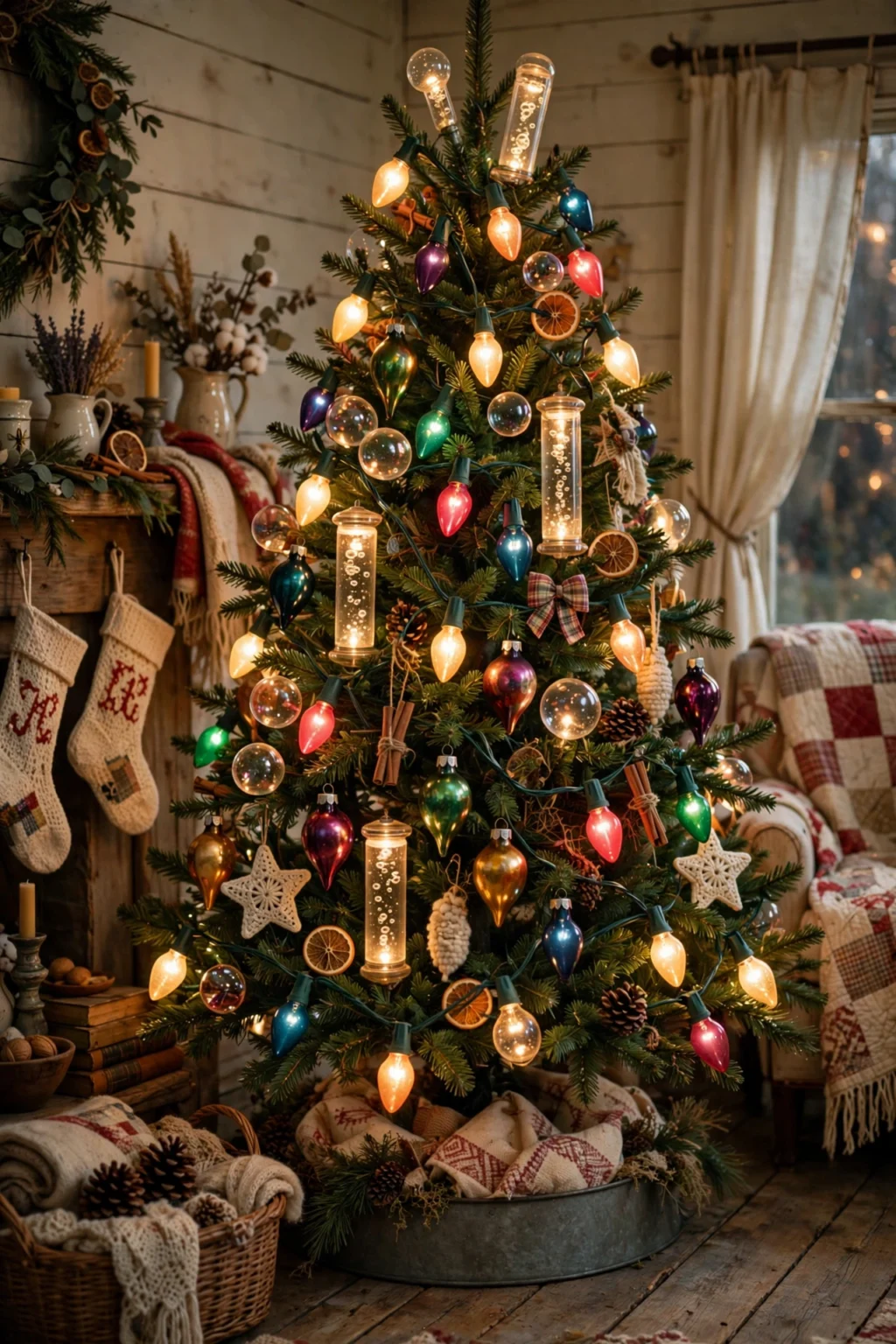
Use Big-Bulb Lights and Bubble Lights
Modern mini lights are too small and too bright for the old look. Reproduction C7 and C9 bulbs, the big painted bulbs from mid-century trees, cast a softer, warmer pool of light, and reproduction bubble lights bubble away in their tubes just like the 1940s originals. Mix one strand of big bulbs into the tree’s interior and keep modern strands for the porch. A 25-bulb C7 strand runs about $15 to $20.
Try it: Choose warm white or mixed jewel colors, never cool white. Cool white reads as an office, and it flattens every handmade ornament near it.

03
Add Tinsel Icicles One Strand at a Time
Tinsel got its bad name from people throwing it at the tree in clumps. The old way was slower: drape single strands over individual branch tips, 2 to 3 strands per tip, so each one catches light separately and moves when air stirs. One standard 1,000-strand pack covers a 6-foot tree if you resist clumping. Budget a full hour; it is a sit-down job with cocoa, not a chore.
Try it: Start at the top and work down, and step back every few minutes. Tinsel density should fade slightly toward the trunk, exactly the way real icicles thin out.
04
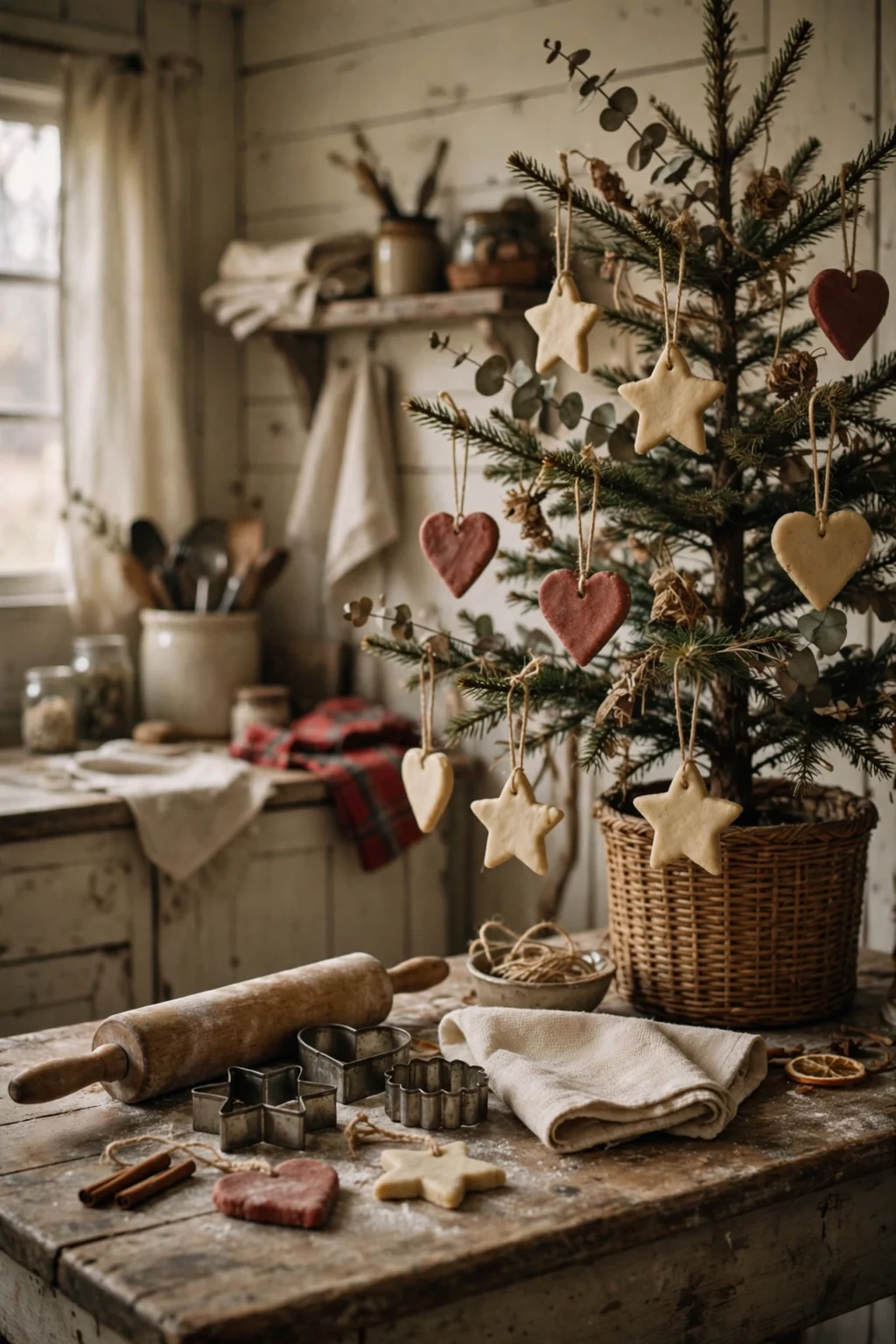
Bake Salt Dough Ornaments
Salt dough is the farmhouse ornament that costs almost nothing and outlasts trends. Mix 2 cups flour, 1 cup table salt, and 1 cup warm water, roll the dough 1/4 inch thick, and cut shapes with cookie cutters. Poke a hole with a straw before baking, then bake at 250°F for 2 to 3 hours until rock hard. A single batch makes 25 to 30 ornaments for under $3.
Try it: Leave them plain cream or paint them in muted red and sage only. A restrained palette is what separates heirloom-looking dough ornaments from a kindergarten craft table.

05
Dry Orange Slices Into Ornaments
Dried orange slices glow like stained glass when tree lights sit behind them, and they cost one bag of oranges. Slice oranges 1/4 inch thick, pat them dry, and bake on a rack at 200°F for 3 to 4 hours, flipping every hour, until the flesh turns translucent and leathery. Thread each slice with twine or red ribbon and hang where a bulb sits close behind it. Ten oranges make about 60 slices.
Try it: Do a full oven load at once, 3 racks if you have them. The oven runs for hours either way, so one big batch beats three small ones.
06
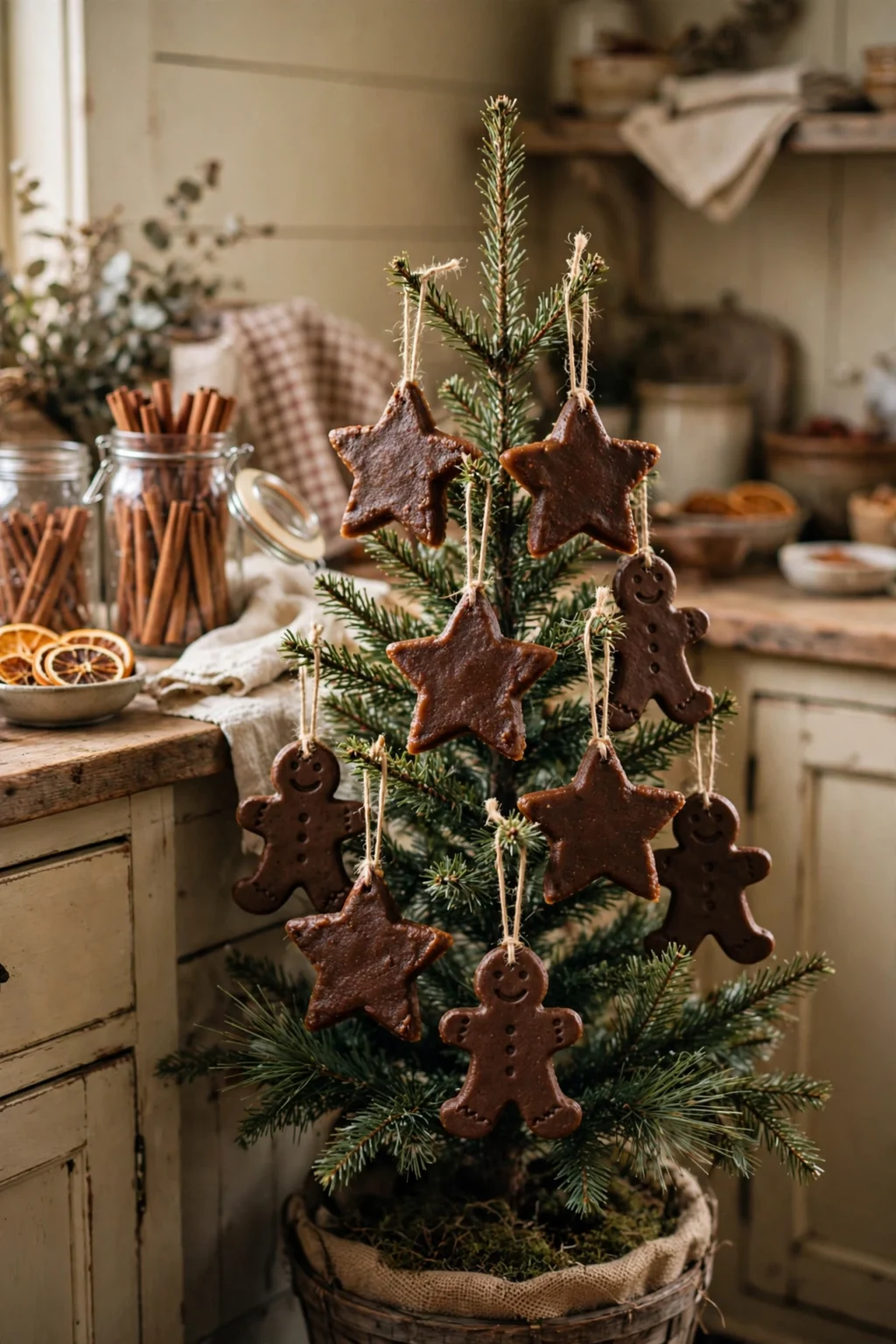
Roll Cinnamon Applesauce Ornaments
Two ingredients, no baking, and the whole house smells like a farmhouse kitchen. Stir 1 cup cinnamon into 3/4 cup applesauce until a stiff dough forms, roll it 1/4 inch thick between parchment sheets, and cut stars, hearts, and gingerbread shapes. Poke a hanging hole with a straw and let them air-dry 3 to 4 days, turning daily. A batch makes about 15 ornaments for roughly $4.
Try it: These are not edible, so hang them high and tell the grandkids once. The cinnamon scent lasts a full season and refreshes next year with one drop of cinnamon oil.
07
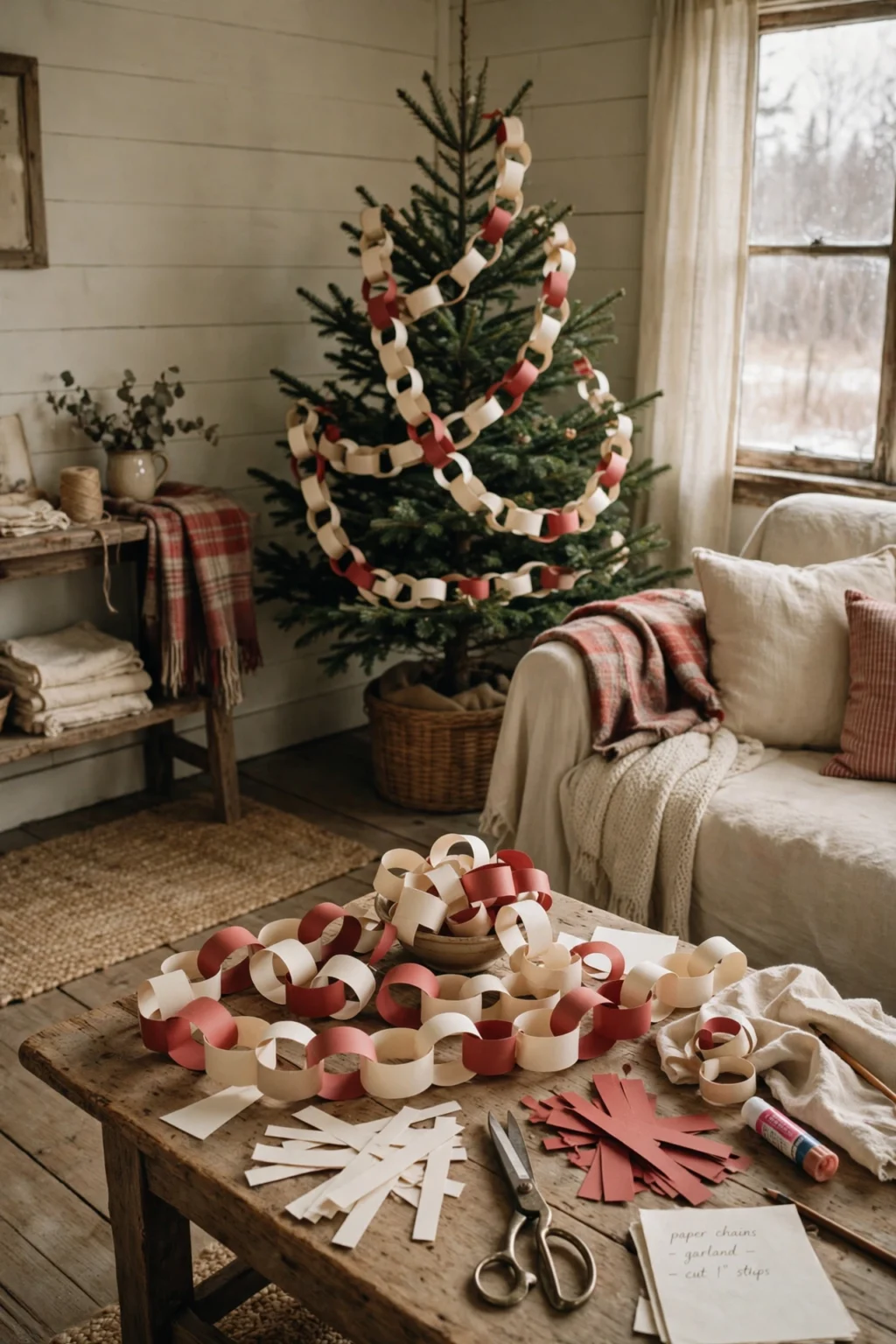
Loop Paper Chains the Way Kids Always Did
Paper chains were the first decoration most farm children ever made, and they still fill a tree with color for pennies. Cut construction paper, old Christmas cards, or even brown grocery bags into strips 1 inch wide and 8 inches long, then loop and glue or staple them into chains. A 7-foot tree drinks up about 100 links, and a table of kids can chain that in under an hour.
Try it: Alternate two colors only, cream and barn red or green and gold. Two-color chains look intentional; rainbow chains look like a school hallway.
08
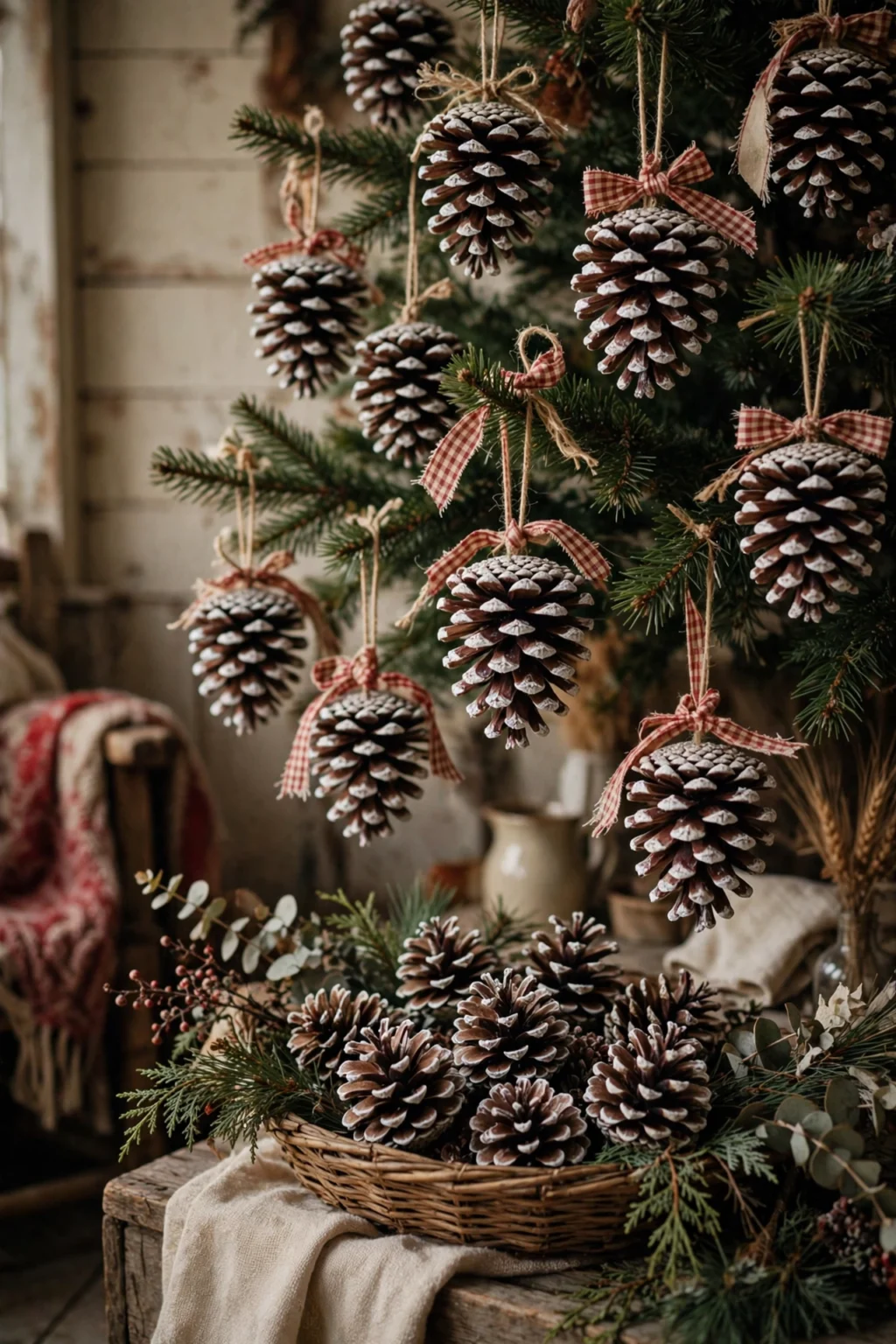
Turn Yard Pinecones Into Ornaments
If a pine tree stands anywhere near your house, this idea is free. Gather 20 to 30 clean cones, bake them at 200°F for 30 minutes to open them and drive out any bugs, then screw a tiny eye hook into each top. Tie on a loop of twine or a scrap of gingham ribbon and hang them deep in the branches where their texture contrasts with smooth ornaments.
Try it: Brush the cone edges with a fingertip of white paint for a frosted look. It takes 10 seconds a cone and reads as snow from across the room.
09
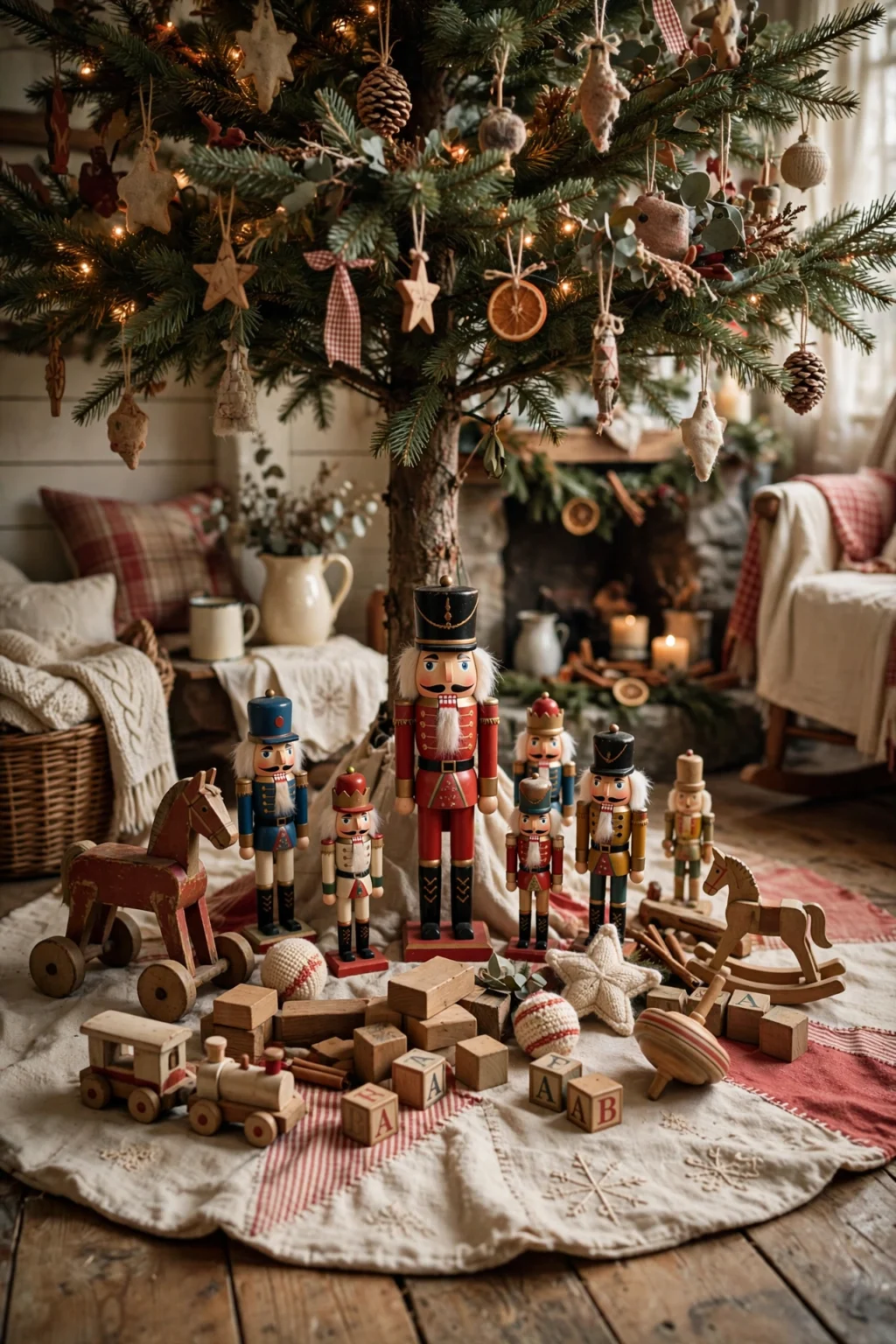
Set Wooden Toys and Nutcrackers at the Tree Base
Old trees were ringed with the toys themselves: wooden trains, pull-along animals, and nutcrackers standing guard. Line 3 to 5 wooden figures along the tree skirt, tallest in the middle, and hang only the smallest wooden ornaments on low branches. Thrift stores sell wooden nutcrackers for $3 to $8 in November; the slightly chipped ones look the most authentic.
Try it: Keep the group in one spot instead of scattering figures through the house. One collected scene under the tree reads as tradition; scattered figures read as clutter.

10
Lay Fresh Greenery Loose on the Mantel
Skip the wired, shaped garland. Farm mantels wore loose swags of whatever grew nearby: pine, cedar, juniper, or boxwood cut the same week. Lay branches across the mantel overlapping by thirds, let the ends trail unevenly, and tuck in a few pinecones and a cluster of red berries every 18 inches or so. Fresh greens last about 2 weeks indoors before they crisp, so cut them after December 10th for a fresh Christmas Day.
Try it: Mist the greenery with water every second day and keep it out of direct fireplace heat. A $2 spray bottle doubles the life of a free garland.

11
Fill a Bowl With Orange Clove Pomanders
Pomanders scented whole farmhouses before scented candles existed. Push whole cloves into a fresh orange in rows or simple patterns; a grapefruit-sized orange takes 40 to 60 cloves and about 20 minutes. Roll finished pomanders in a spoonful of cinnamon or orris root powder so they dry instead of molding, then pile 5 to 7 in a wooden bowl on the mantel or table. Made in early December, they perfume the room for 4 to 6 weeks and dry into keepsakes.
Try it: Push a thumbtack or skewer in first to start each hole. Cloves pushed straight into tough rind snap, and broken cloves are the only frustrating part of this craft.
12
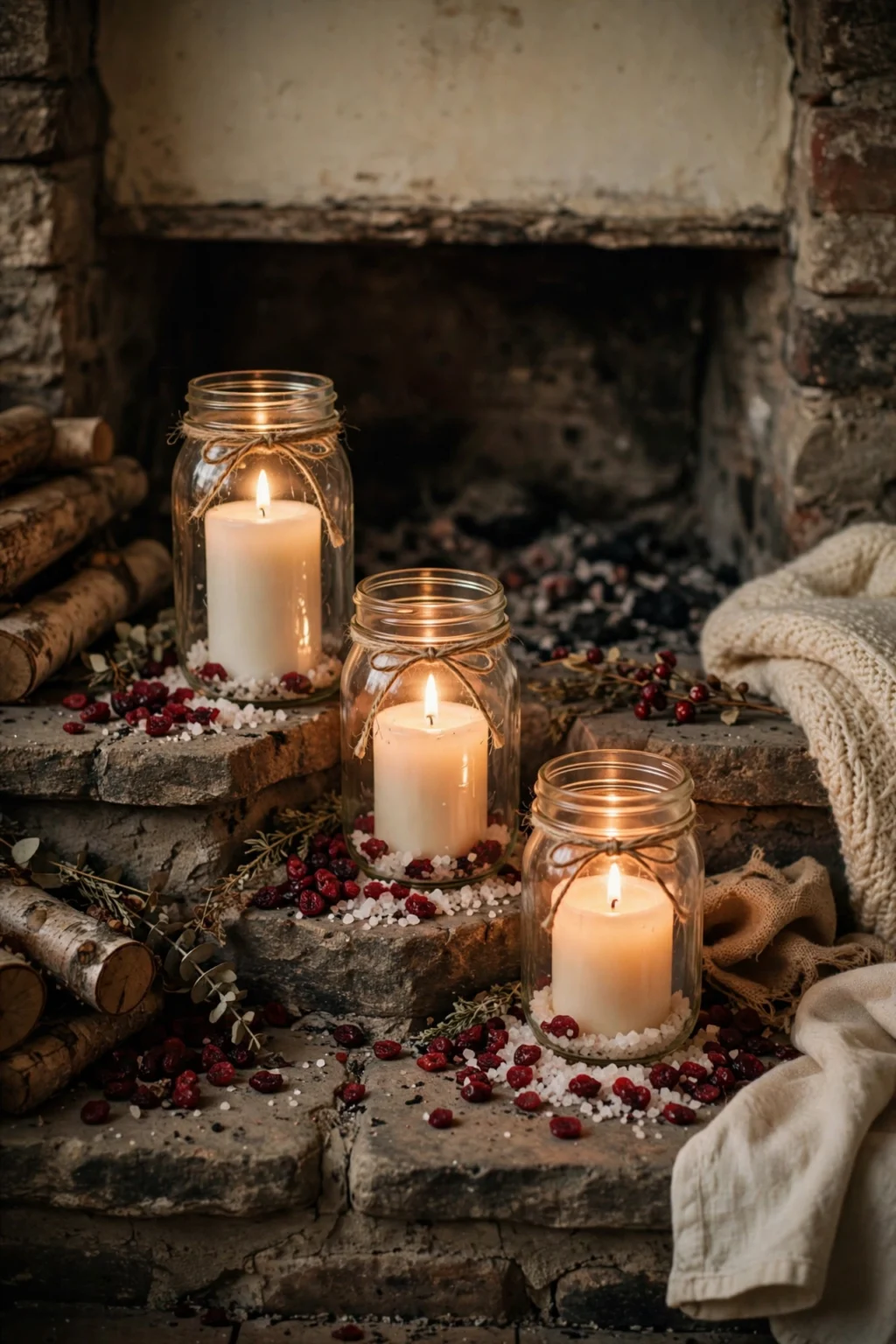
Set Candles in Mason Jars on the Hearth
Before fairy lights, there were candles in jars, and the jar was the safety feature. Set a pillar candle or a modern LED candle inside a quart mason jar, add a spoonful of coarse salt or dried cranberries around the base, and tie twine around the neck. Group jars in threes at different heights on the hearth or mantel. The glass softens the flame and shields it from December drafts.
Try it: If you use real flames, keep jars at least 12 inches from greenery and stockings, and blow them out before bed. LED candles in jars give the same glow with none of the watching.

13
String Christmas Cards on Twine
Cards used to be the mantel decoration, not a pile on the counter. Run a length of kitchen twine across the mantel or along a wall, sag it slightly in the middle, and clothespin each card as it arrives. By Christmas Eve the line holds 20 to 30 cards and becomes the room’s most-read display. Vintage-look cards with sleighs, barns, and robins suit the old-fashioned palette best.
Try it: Save this year’s cards in a shoebox and restring them next December before new cards arrive. The mantel starts full instead of empty.
14
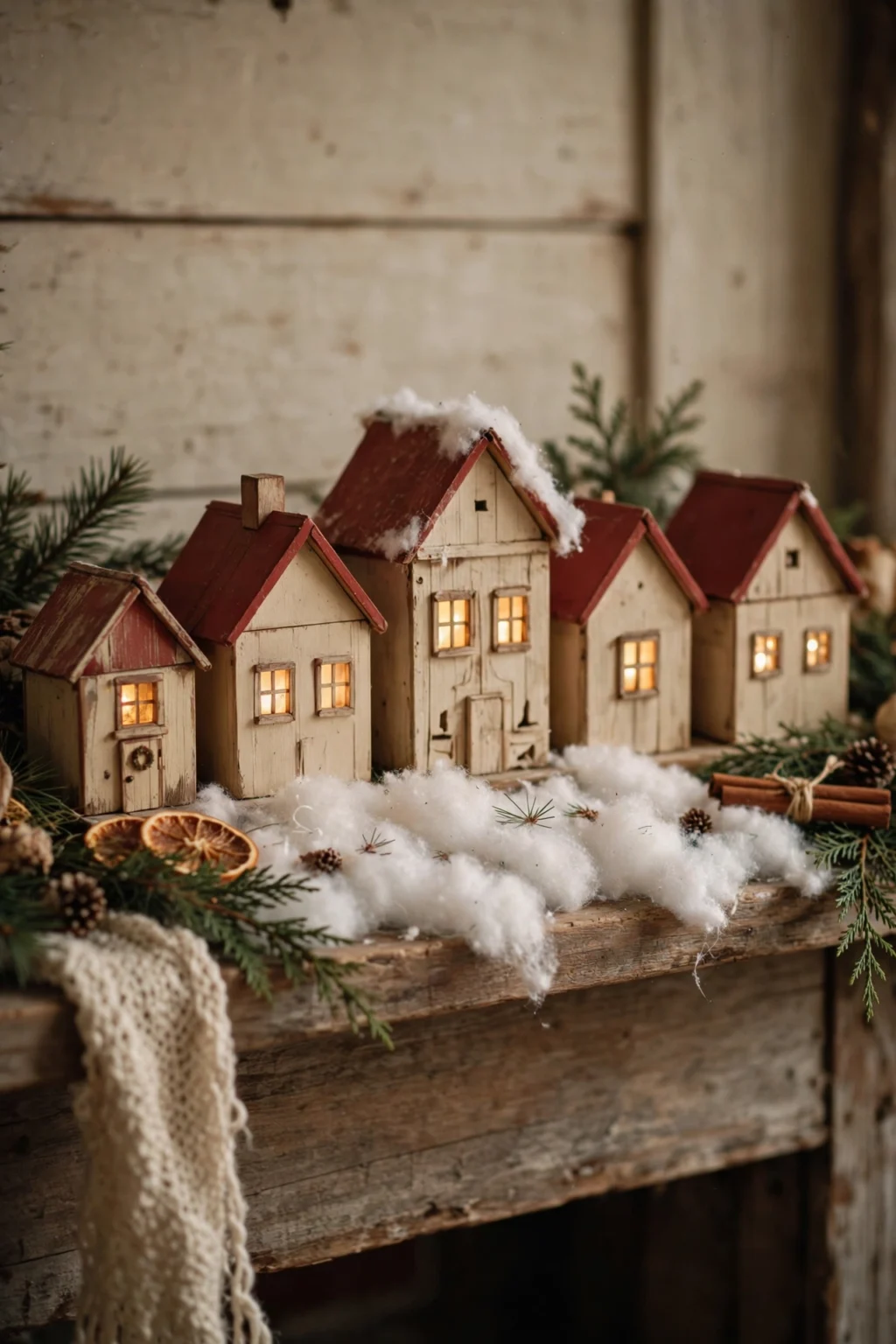
Build a Village From Simple Wooden Houses
A row of plain wooden houses is the homestead version of a Christmas village. Craft stores sell unfinished wooden houses for $1 to $4 each; leave them raw or paint them cream with barn-red roofs, and line up 5 to 9 along the mantel or a windowsill. A cotton-batting strip under them reads as snow, and one LED tea light behind a window or two makes the whole street glow.
Try it: Add one house a year and write the year on the bottom. In a decade the village is a family record, not a decoration you bought.
15
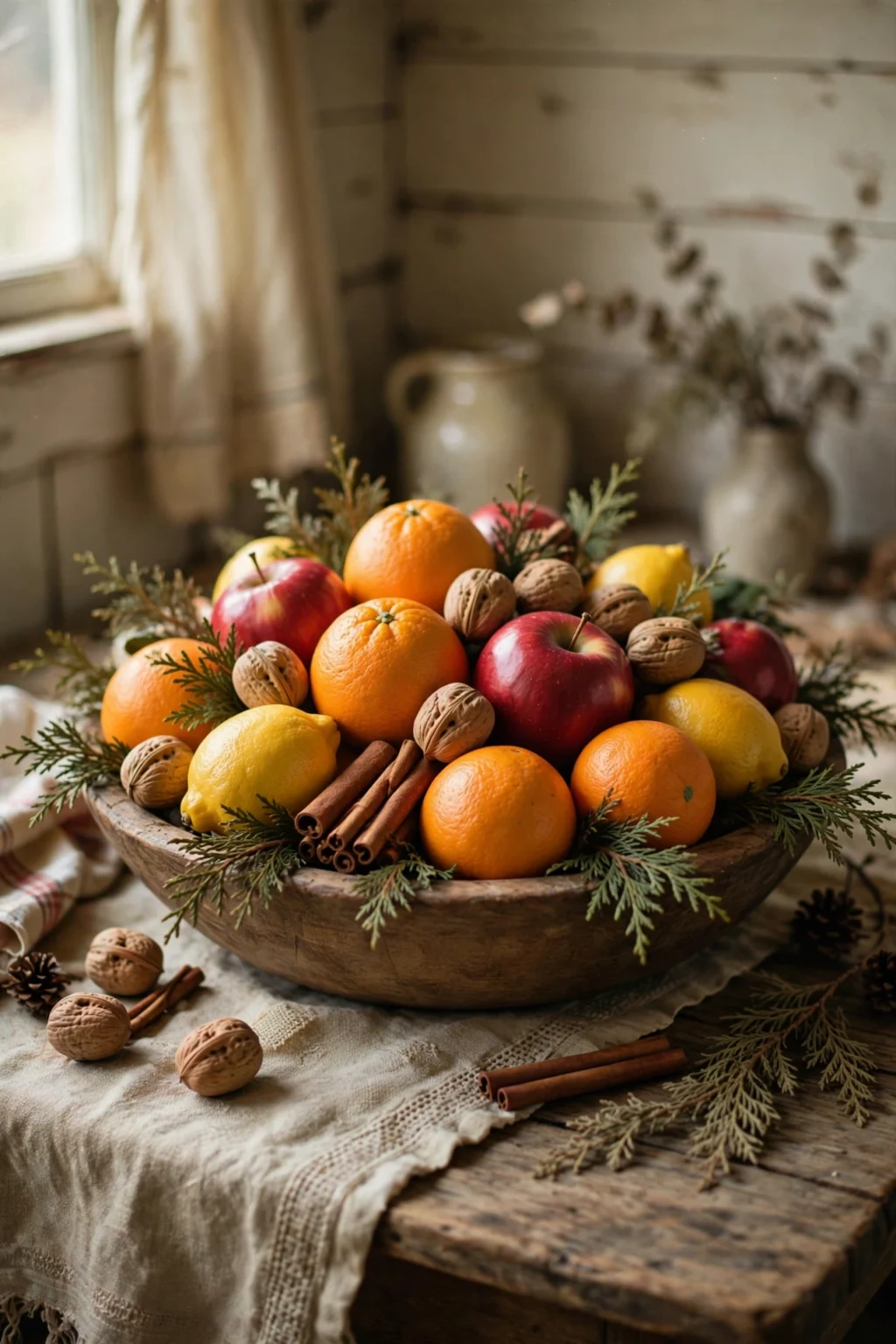
Pile a Fruit and Nut Centerpiece
The oldest centerpiece in the country kitchen is a bowl of food. Heap oranges, red apples, and lemons in your biggest wooden or crockery bowl, scatter whole walnuts and a few cinnamon sticks between them, and tuck in short cedar sprigs. It costs what the fruit costs, about $10 to $15, it looks generous for 2 weeks, and it turns into snacks and pie filling when the holiday ends.
Try it: Stud just 3 of the oranges with a few cloves each. The whole table gains that pomander scent without a second craft project.
16
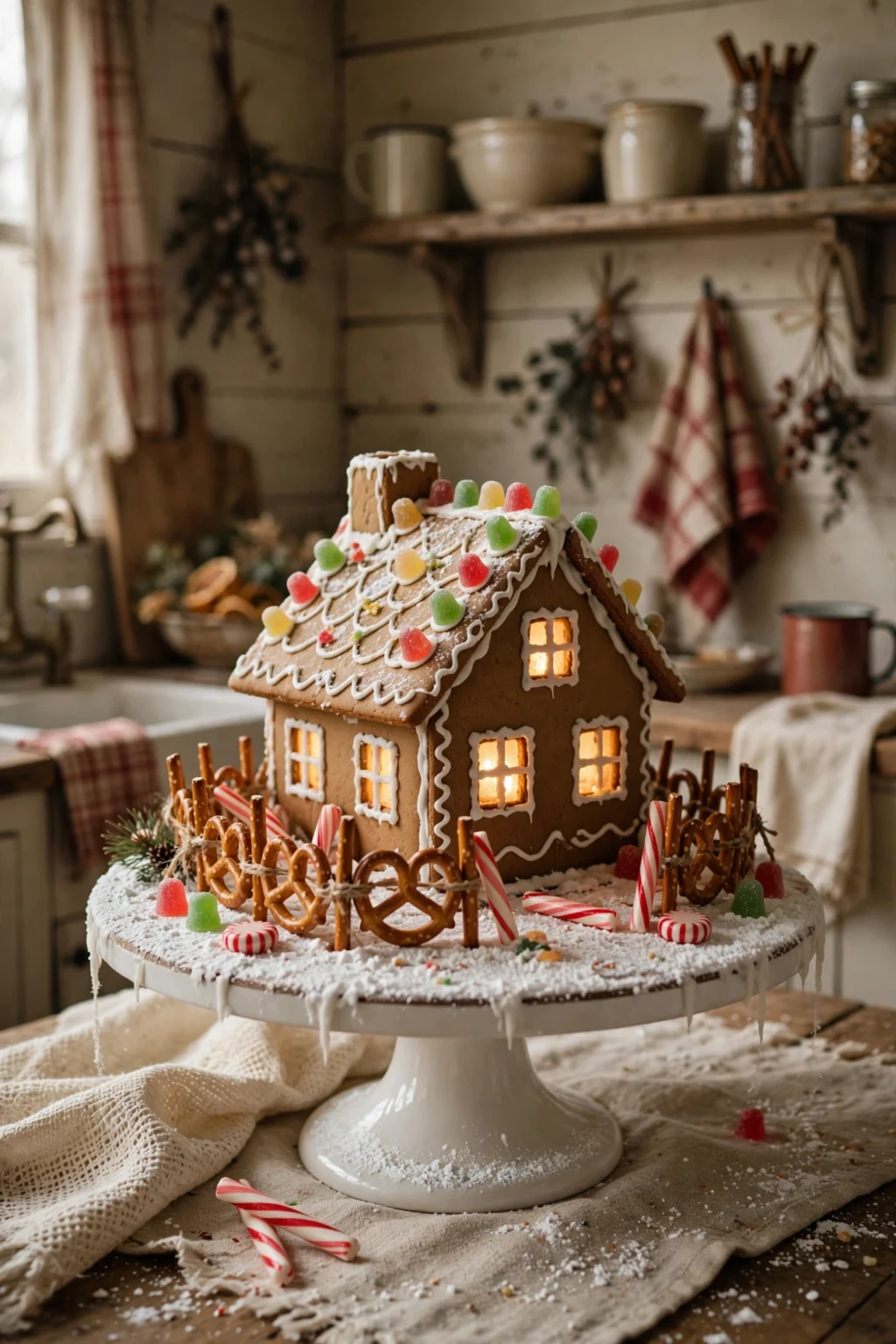
Decorate With Gingerbread You Baked
A gingerbread house used to be the table’s crown, and it was built at home, not bought as a kit. Bake or buy one sturdy house, pipe simple white royal icing, and keep the candy plain: gumdrops, peppermint sticks, and pretzel fences. Set it on a cake stand or a cutting board dusted with powdered sugar snow. A homemade house holds its looks for 3 to 4 weeks in a cool room.
Try it: Put battery tea lights inside the house before you attach the roof. Icing windows that glow at dusk are the detail everyone remembers.
17
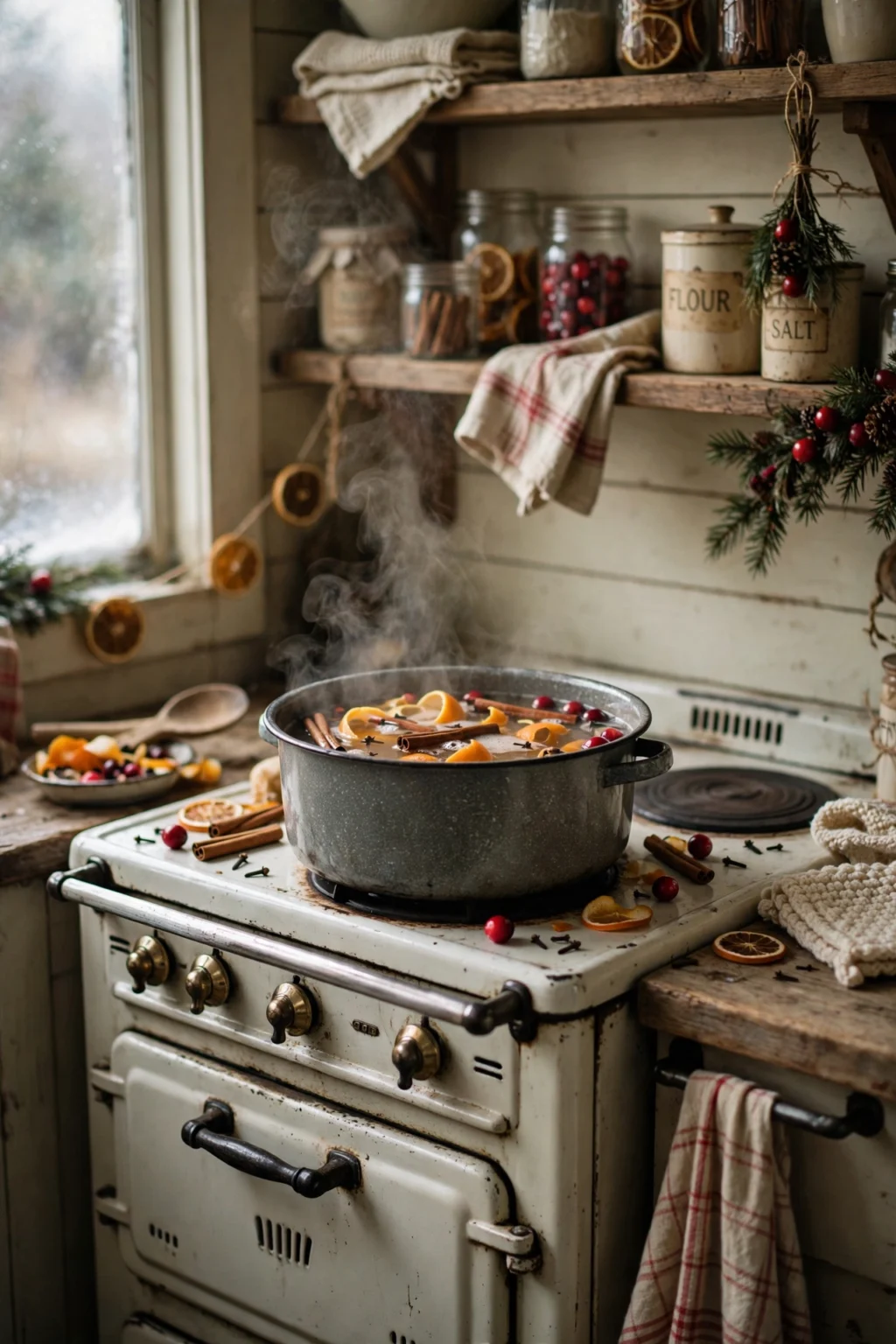
Keep a Simmer Pot Going on the Stove
Scent is half the old-fashioned effect, and farm kitchens made it on the stove. Simmer a small pot of water with orange peels, 2 cinnamon sticks, a teaspoon of whole cloves, and a cranberry handful on the lowest heat. Refill the water as it drops and the pot perfumes the house for a full day of visitors. Dried in a jar with a handwritten label, the same mix becomes a $3 neighbor gift.
Try it: Start the pot 30 minutes before guests arrive, not after. The scent should greet them at the door, the way it did at every farmhouse you visited as a kid.
18
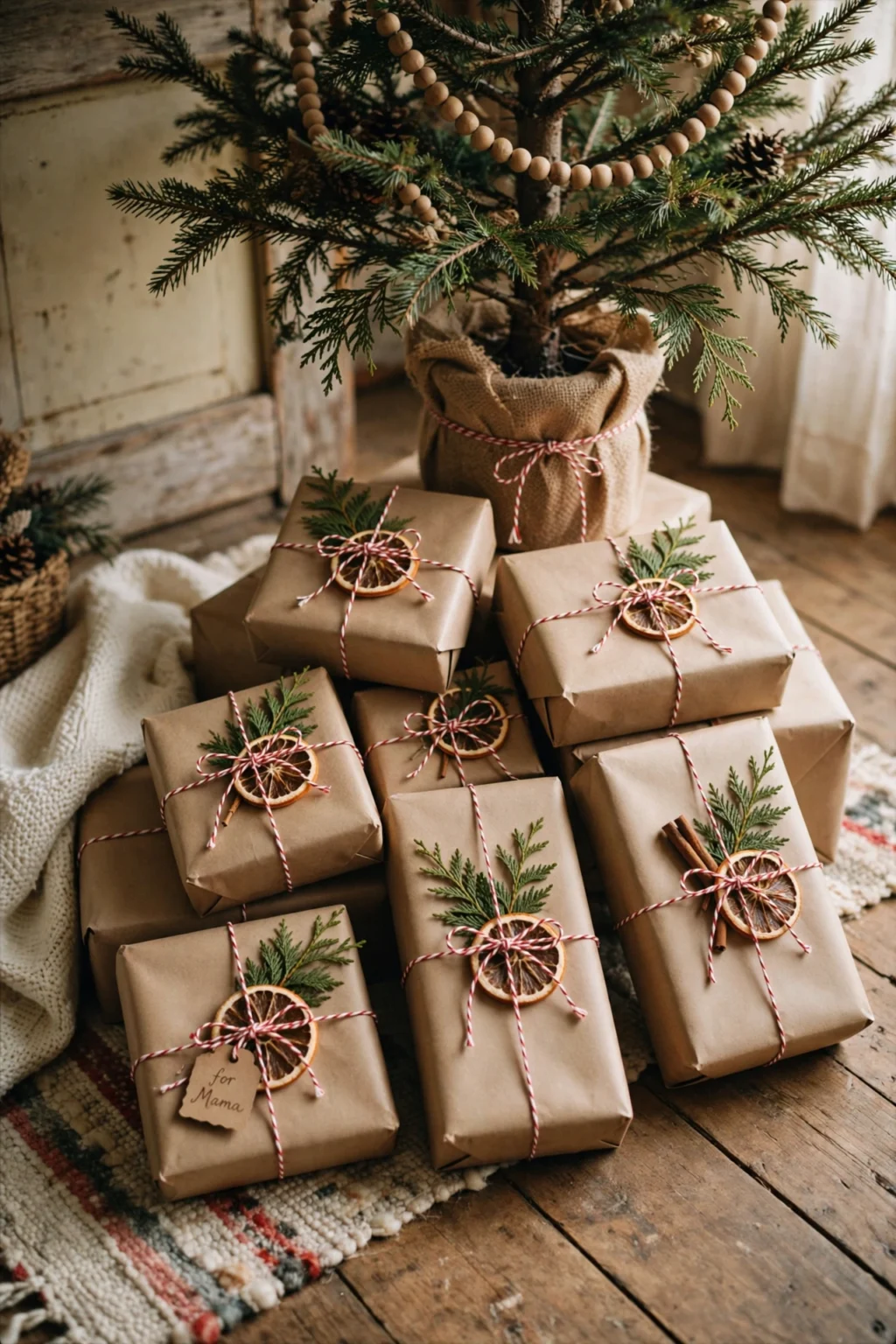
Wrap Gifts in Brown Paper and Twine
Grocery-bag brown paper, butcher paper, or plain kraft was the wrapping before printed rolls existed. Wrap every gift in brown paper, tie it with red-and-white baker’s twine or plain jute, and tuck a cedar sprig or a dried orange slice under the knot. The pile under the tree looks calm and country, and a 100-foot roll of kraft paper costs about $8.
Try it: Stamp names instead of using tags; a $5 alphabet stamp set and a red ink pad turn the paper itself into the label.
19
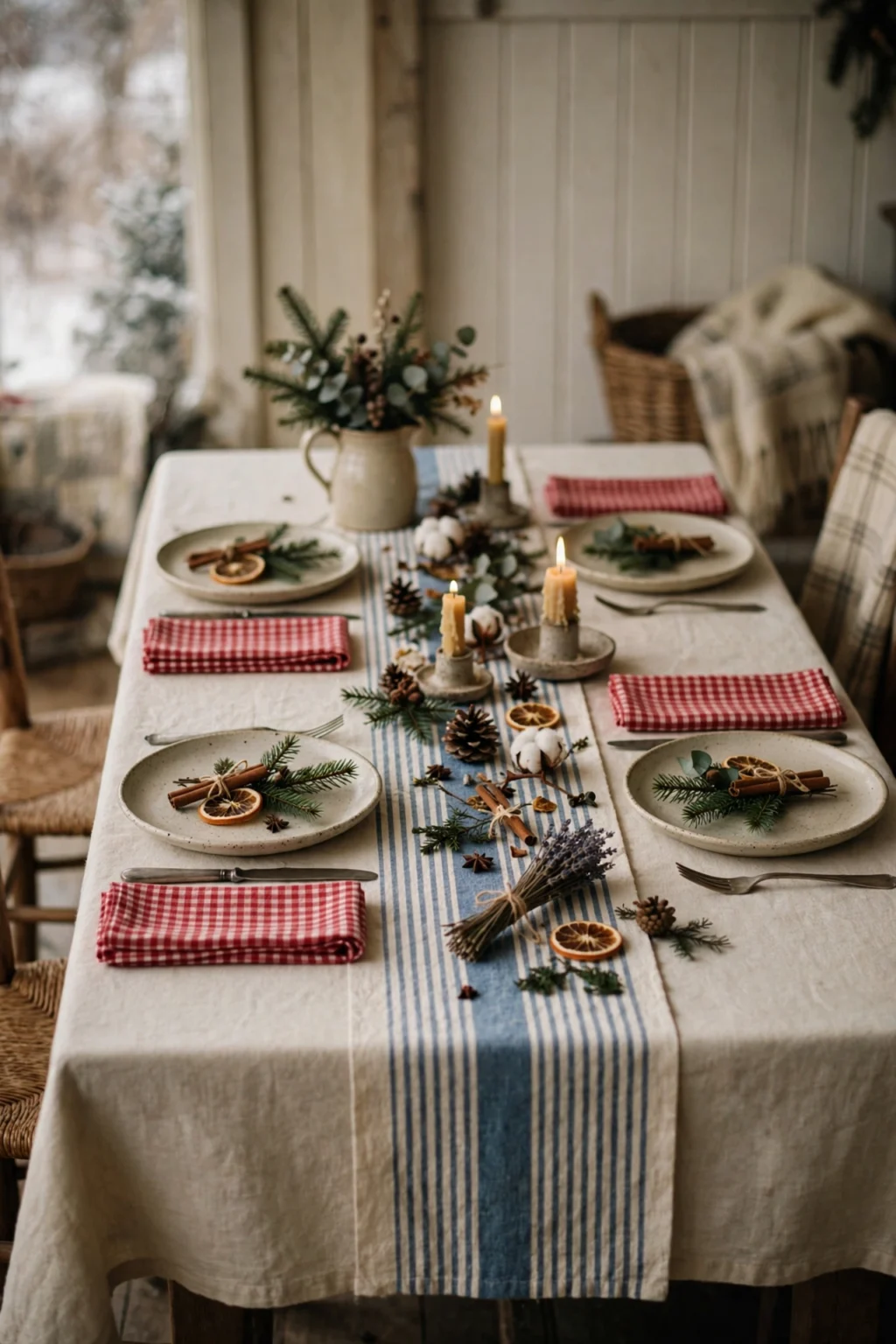
Lay Ticking Stripe and Gingham on the Table
Printed Christmas tablecloths are a modern invention; farm tables wore everyday ticking stripe, red gingham, and plain linen with one festive layer on top. Spread a ticking stripe runner down the table’s center, fold red gingham napkins at each place, and let the fruit bowl or gingerbread house do the decorating. A cotton runner runs $12 to $18 and washes clean after every spill.
Try it: If you sew at all, 2 yards of $6 gingham and a 10-minute hem make napkins for eight. Imperfect hems are invisible once the table is set.
20
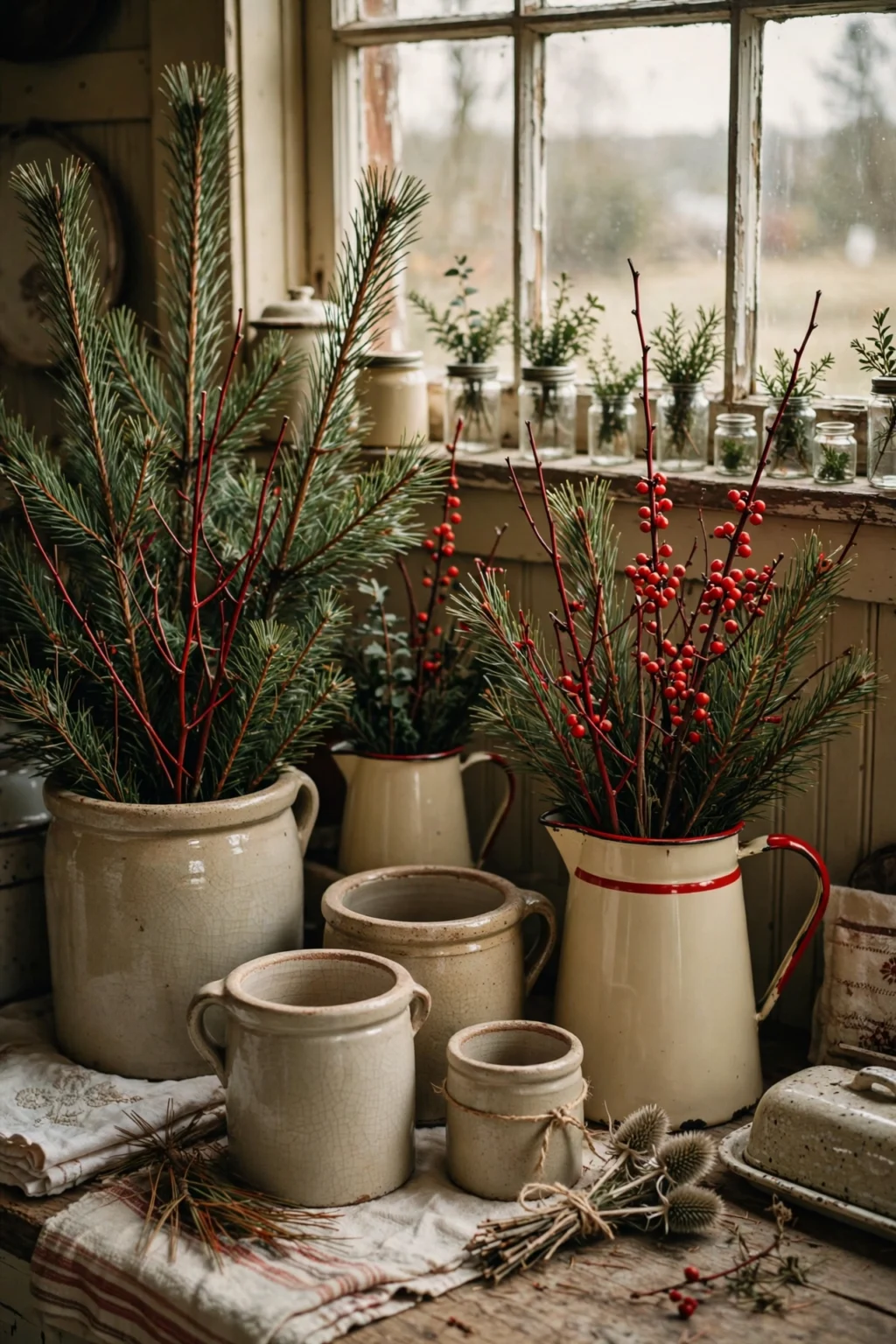
Fill Crocks and Enamelware With Greens
Stoneware crocks, enamel pitchers, and galvanized buckets were the farmhouse vase. Fill your largest crock with tall pine branches and red dogwood stems, set an enamel pitcher of cedar beside the sink, and drop short sprigs into a row of small jars on the windowsill. Old crocks go for $10 to $25 at thrift stores, and the slightly crazed glaze is a feature, not a flaw.
Try it: Put a brick or a jar of water inside tall crocks to weight them. Top-heavy greenery in a lightweight crock tips, usually during dinner.
21
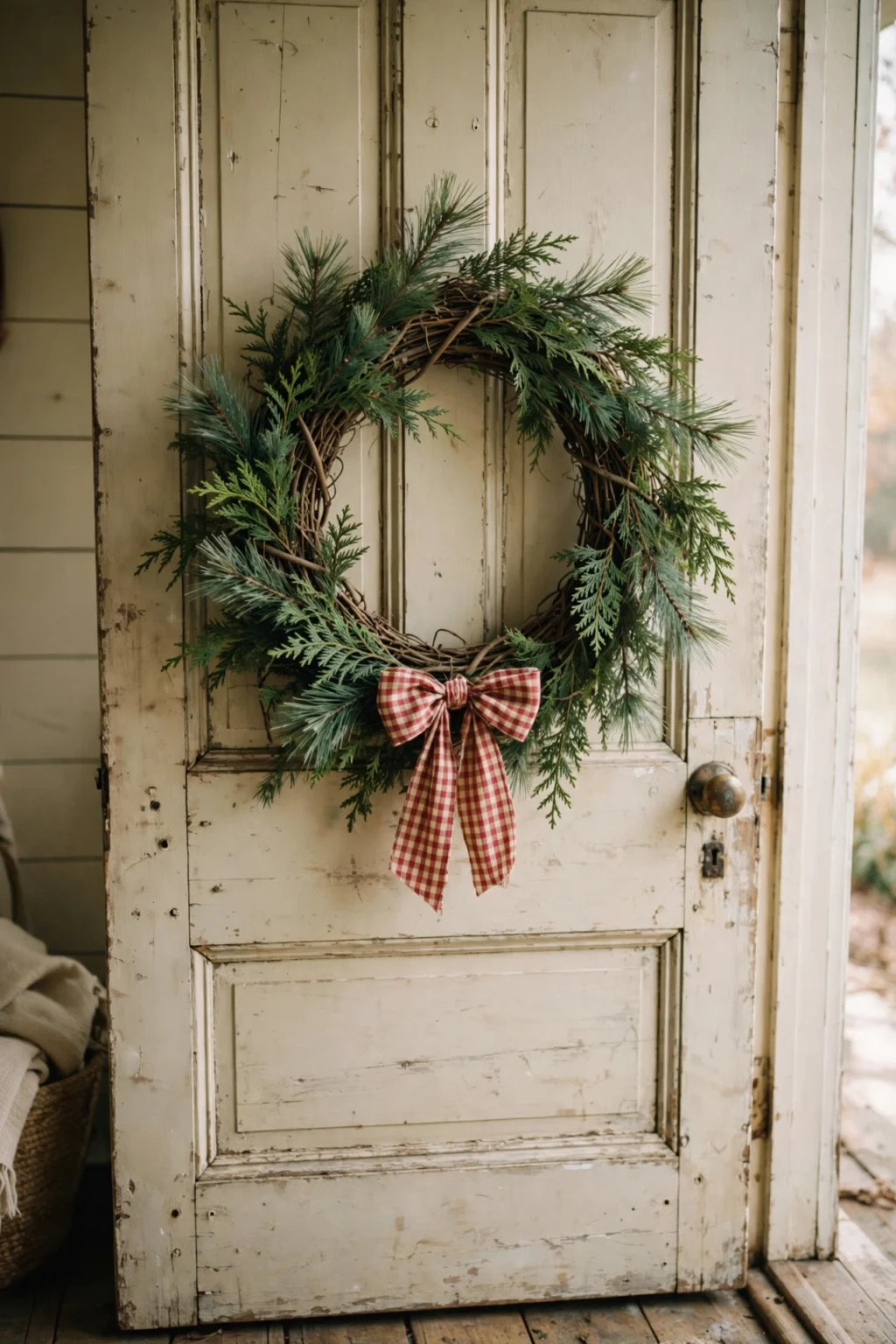
Hang a Grapevine Wreath With Fresh Greens
A grapevine wreath base costs about $5, lasts for years, and takes greens better than foam ever will. Weave in 8 to 10 short pine and cedar cuttings, clockwise, tucking each stem end into the vines, then finish with one plain bow of red gingham or burlap. Skip the ornaments and berries glued in rows; the charm here is that it looks gathered, not manufactured.
Try it: Build the wreath the day you hang it and hang it outdoors or on a cool porch. Fresh greens on a wreath last 3 to 4 weeks outside but barely 2 in a heated entry.
22
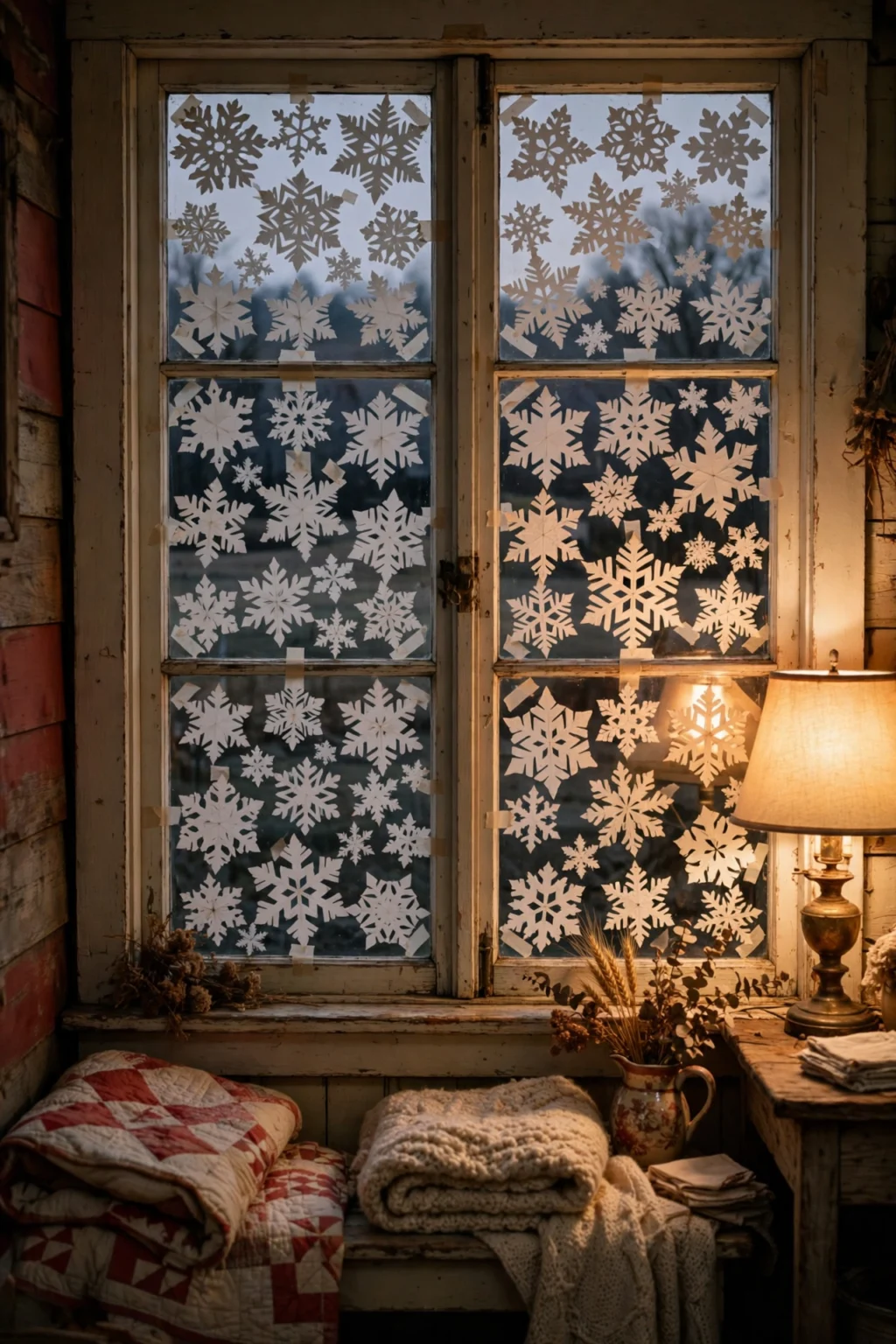
Cover the Windows With Paper Snowflakes
Coffee filters and plain white paper fold into snowflakes that fill a window for almost nothing. Fold each sheet into sixths, cut notches and points, and tape 15 to 25 flakes of different sizes across the glass. From outside at dusk, with lamplight behind them, a snowflake window looks like frost doing artwork. Kids can cut a window’s worth in one afternoon.
Try it: Use coffee filters for the big display flakes. They are already round, they fold cleaner than printer paper, and they glow slightly against the light.
23
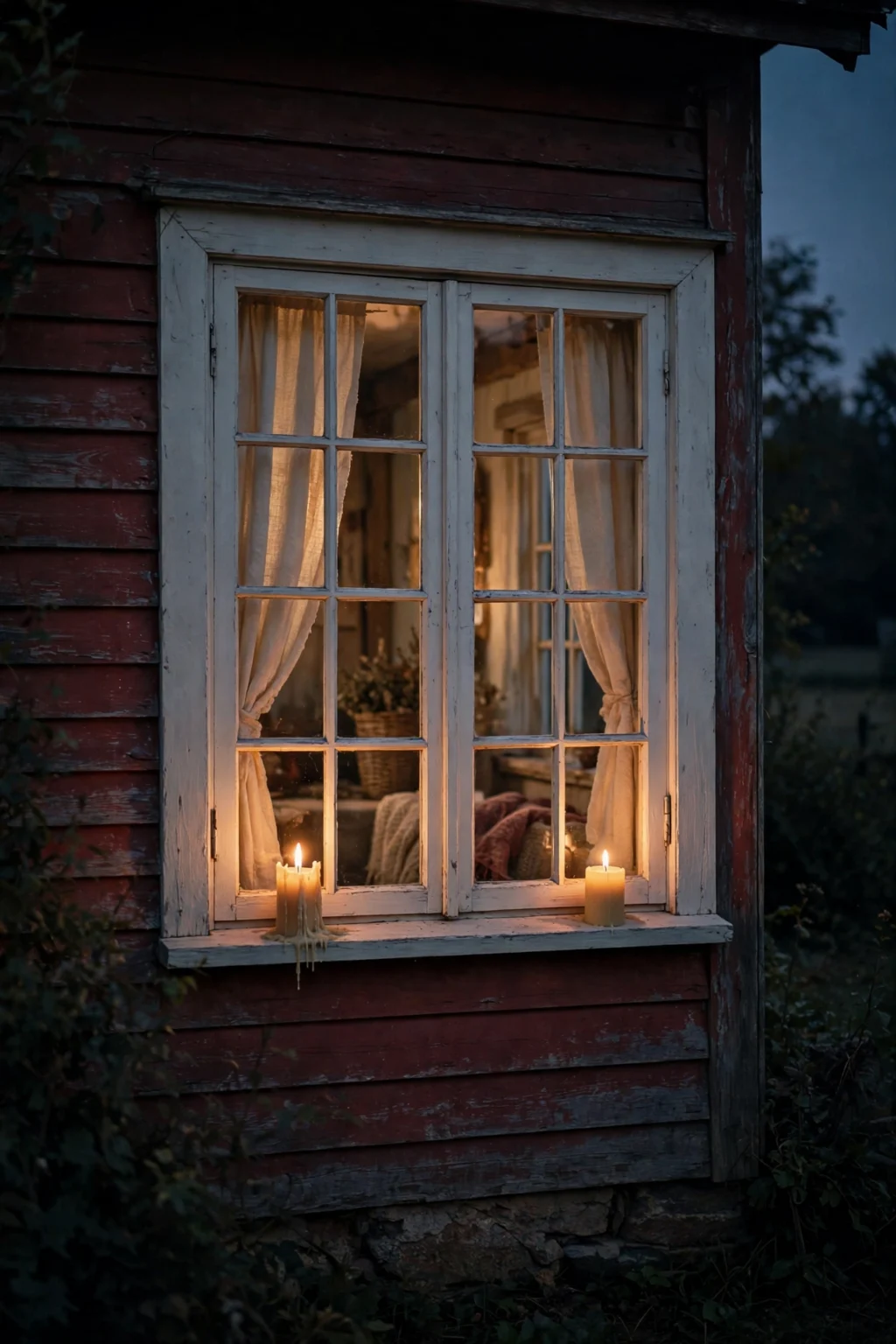
Put a Candle in Every Front Window
A single candle in each window was the farmhouse welcome sign, visible down a dark country road. Use electric window candles with warm white bulbs and built-in timers, about $6 to $10 each, and set them on the sill behind the glass. Photocell models switch on at dusk and off at dawn, so a row of 4 to 6 windows lights itself all season.
Try it: Stay with one candle per window, centered. Pairs and clusters look like a display; a single steady light looks like a home.
24
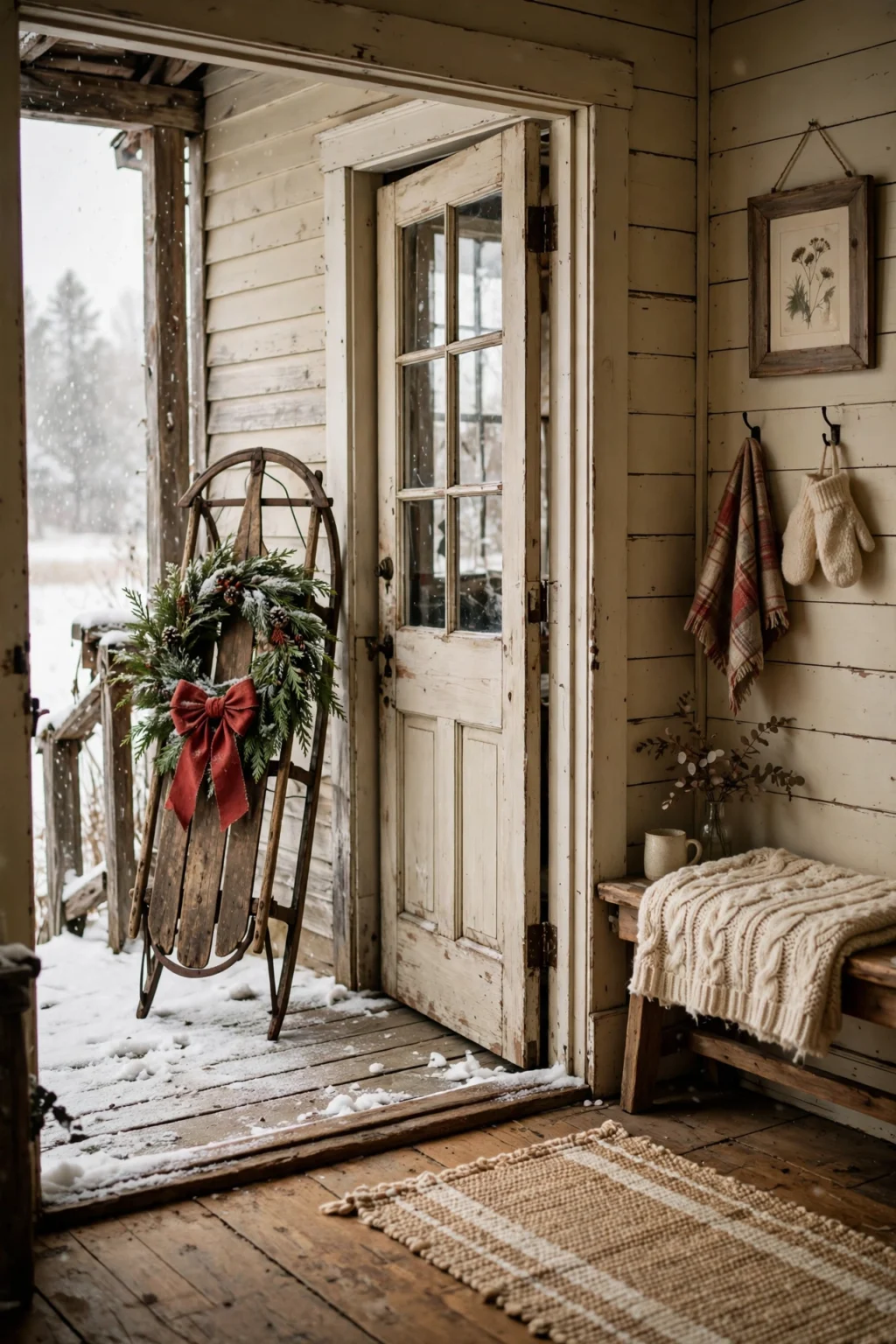
Lean a Thrifted Sled by the Front Door
Old wooden sleds, worn ice skates, and snowshoes lean against farmhouse porches all December. Hunt one wooden sled for $15 to $40 at thrift stores and estate sales, prop it beside the front door, and dress it with a cedar swag and one red bow. Nothing about it matches the store displays, which is exactly the point.
Try it: Weatherproof nothing. A sled that actually looks used by three generations is worth two that look staged, and January it goes back to the barn or garage wall.

25
Hang Sleigh Bells on the Door
A strap of real sleigh bells on the front door announces every arrival the way it did when visitors came by horse. Mount 3 to 5 large bells on a leather or webbing strap over the door handle, or hang a single bell cluster from the wreath. Quality bell straps cost $20 to $35 and ring with a deep tone that cheap jingle bells cannot copy.
Try it: Choose bells at least 1.5 inches across. Small bells tinkle; farm bells chime, and the sound is half the decoration.
26
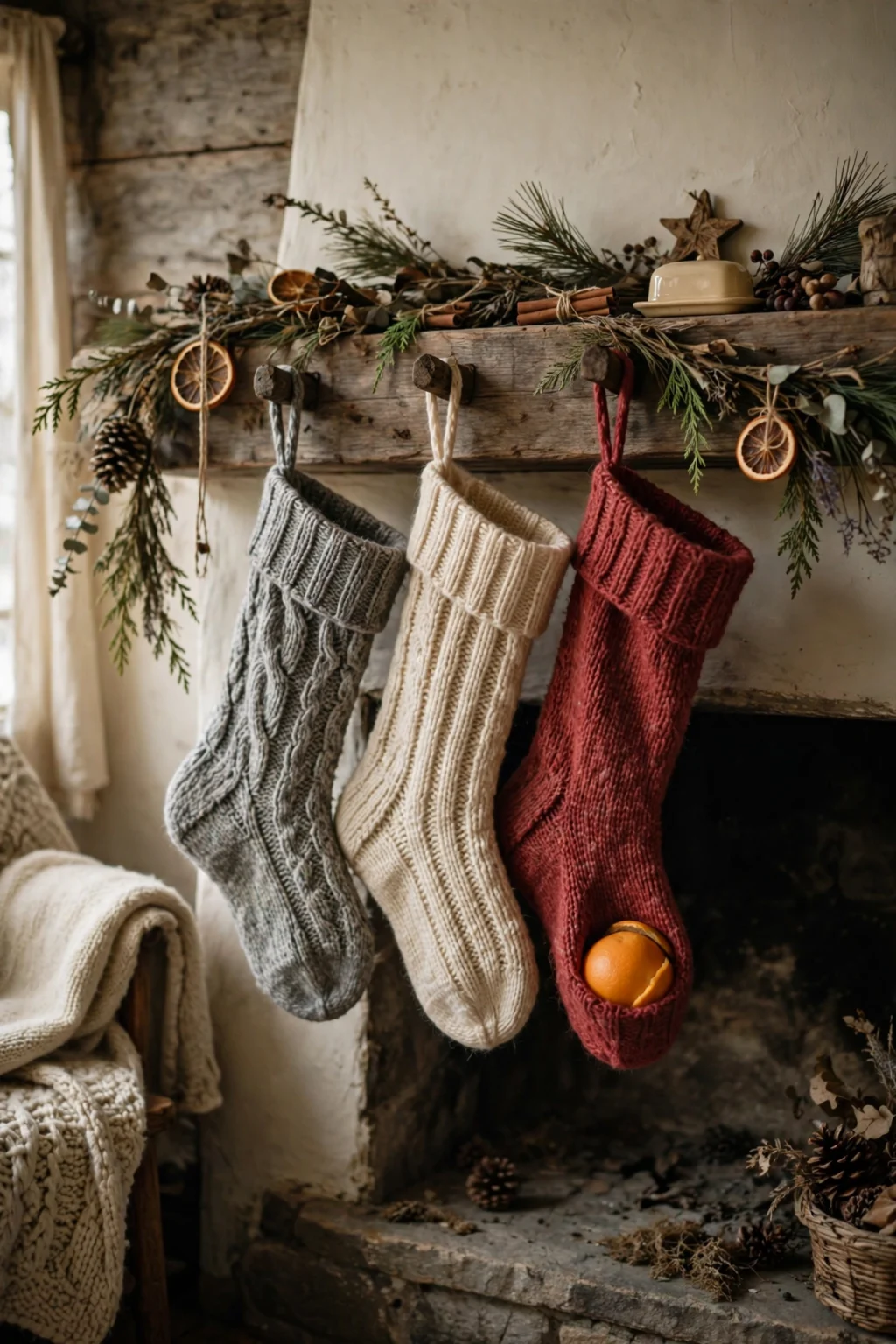
Hang Knit Stockings or Long Wool Socks
Before matching stocking sets, families hung what feet actually wore: long wool socks and hand-knit stockings. Knit or buy stockings in cream, red, and heather gray, mismatched on purpose, and hang them close enough to touch. Hand-knit stockings cost $15 to $30 each from local makers, and each one stretches to hold an orange in the toe, the way stockings always did.
Try it: Always put the orange in the toe first, before any gifts. It is the oldest stocking tradition on the mantel, and kids who learn it repeat it.
27
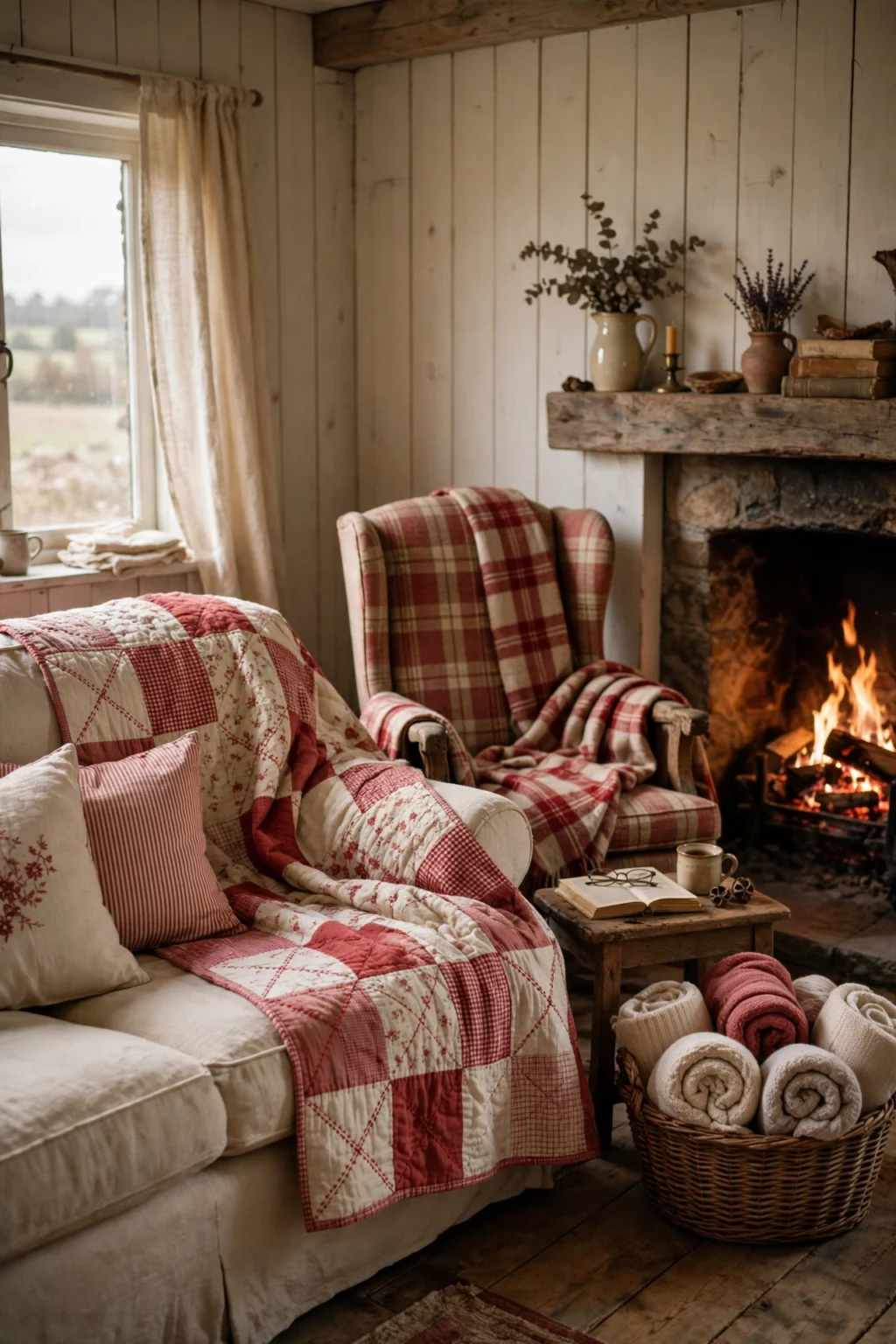
Drape Quilts and Plaid Throws Over Every Chair
Quilts did the decorating in farm living rooms because quilts were what the house owned. Fold a red-and-cream quilt over the sofa back, drape a plaid wool throw across the reading chair, and roll a spare blanket in a basket by the fire. A handmade quilt shows its stitching, and stitching is the decoration. Even new throws in ticking, plaid, or plain wool for $20 to $35 carry the look.
Try it: Keep patterns to family: all plaids, or all solids with one plaid. Three unrelated patterns in one room is where cozy turns to clutter.
28
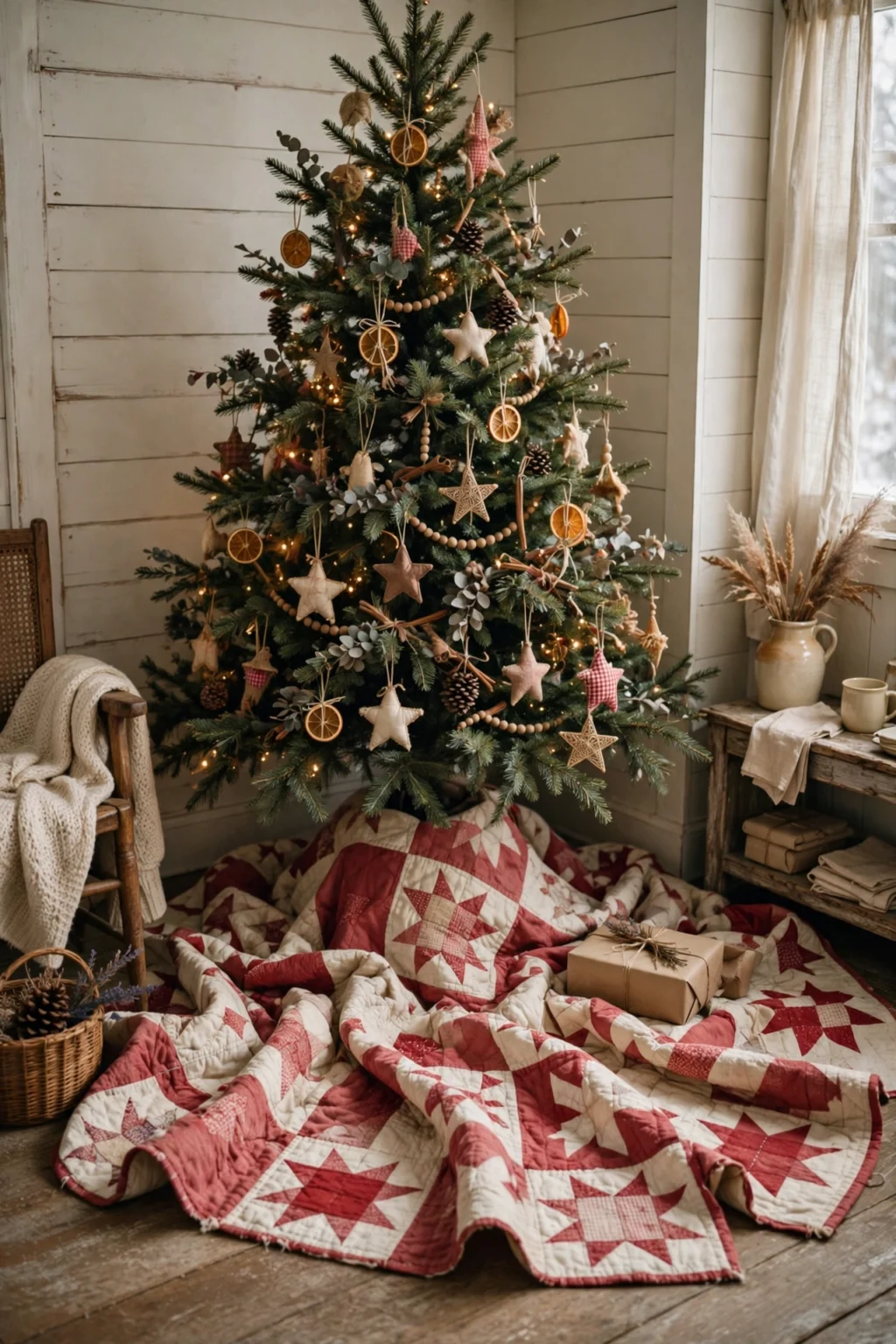
Use a Quilt or Feed Sack as the Tree Skirt
Skip the sequined tree skirt. A folded vintage quilt, a worn tablecloth, or two stitched feed sacks spread around the tree base look like the farmhouse because they are the farmhouse. Drape the fabric in loose folds to hide the stand, and let the edges puddle slightly. If the quilt is a real heirloom, lay a plain sheet under it first to catch sap and needles.
Try it: A red-and-white quilt doubles as the tree’s color story, so you can keep the ornaments mostly natural and the tree still reads festive.

29
Fill Glass Jars With Old-Fashioned Hard Candy
Ribbon candy, peppermint sticks, horehound drops, and gumdrops in clear glass jars were decoration you could eat. Fill 3 jars of different heights and set them on a sideboard or kitchen counter where the light catches the colors. Old-fashioned candy assortments run about $8 to $12 a pound online and at country stores, and the jars empty at exactly the right speed all December.
Try it: Keep one small jar by the front door for visitors heading out. Grandmothers called it a pocket sweet, and guests remember it longer than the wreath.
30
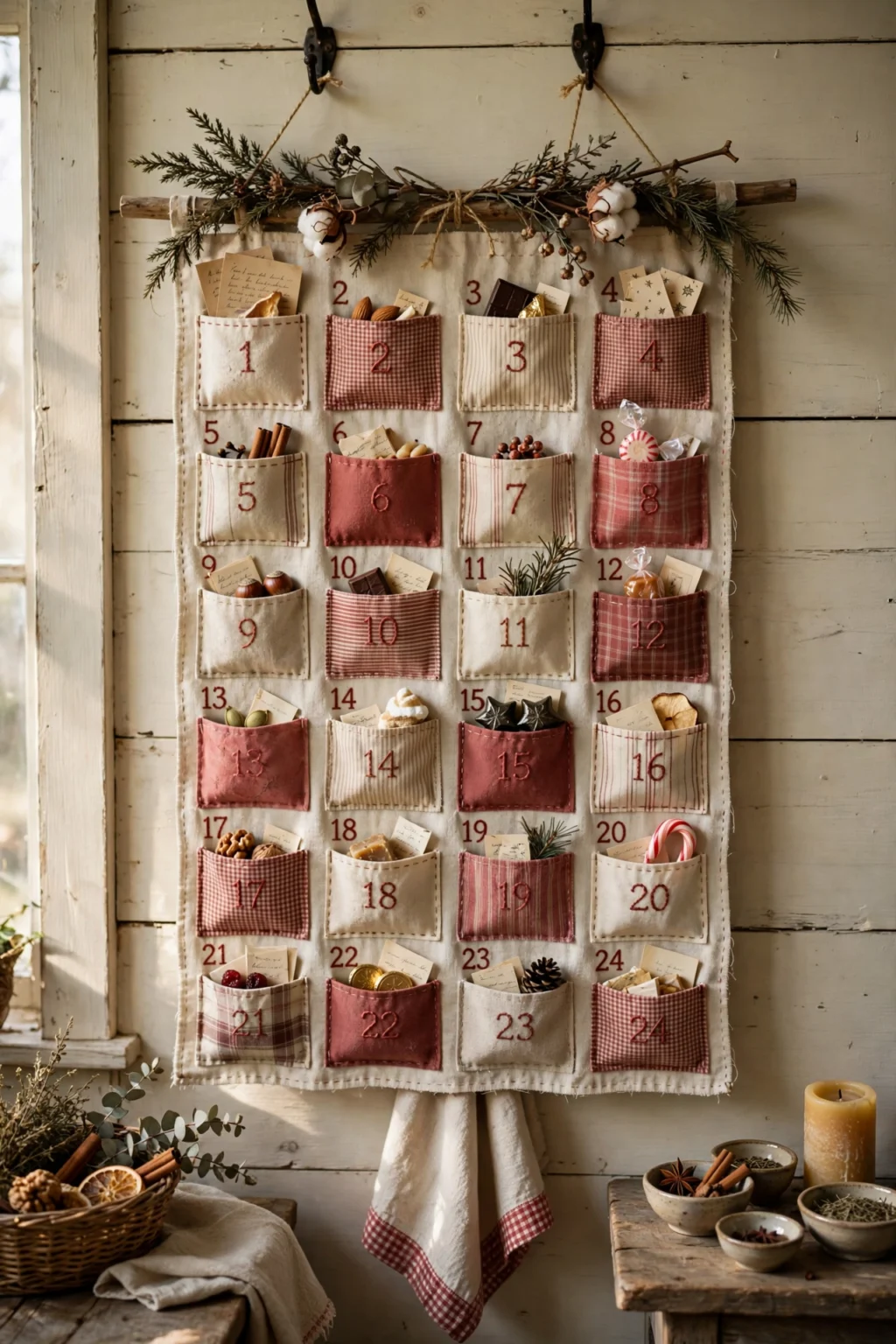
Sew or String an Advent Calendar You Fill Yourself
Printed chocolate calendars came later; farm families counted down with a cloth calendar of small pockets, or 25 tiny bags strung on a line. Fill each pocket with one thing: a verse, a joke, a small candy, or an activity like “bake day” written on a slip of paper. A stitched pocket calendar costs $20 to $40 to buy and lasts decades, or you can clip 25 small paper bags to twine for under $5.
Try it: Mix treat days with do-something days, about half and half. A calendar of pure candy runs out of magic by day ten; activities keep it interesting.

31
Light Beeswax Candles and Lanterns at Dusk
Beeswax candles burn with a honey color and a faint real scent that paraffin never copies. Set tapers in wooden or tin holders on the table, pillars on the mantel, and one lantern by the reading chair, and light them at the same time every evening so the house shifts into Christmas at dusk. Pure beeswax tapers cost about $3 to $5 each and burn roughly an hour per inch.
Try it: Keep one lantern as the porch light substitute. A lantern on the step tells visitors they have found the right house before they knock.

32
Make a Corner for Carols and Stories
Old Christmases sounded like something: carols on the radio, a record player, someone reading aloud. Give one corner a chair, a small table, and your music source, whether that is a turntable, a speaker, or an actual radio, with a stack of Christmas storybooks or sheet music beside it. It becomes the room’s evening anchor, the seat everyone wants after dinner.
Try it: Play the old recordings, choirs, crooners, and country gospel, at conversation volume, not background whisper. Music people can actually hear changes the room more than another garland.
Pro tip: Decorate the tree in the old order, lights first, then the popcorn garland, then ornaments with the biggest deepest in the branches, then dried oranges where bulbs sit behind them, and tinsel dead last, strand by strand. That order is not nostalgia theater. It is the sequence that makes a tree glow from the inside, and it is the single cheapest upgrade in this whole list because it costs nothing but patience.
Three rules for old-fashioned christmas decorating
Farm families decorated with rules learned from scarcity, and the rules still work in a house with a credit card. Follow these three and the look holds together no matter what you add.
- Handmade beats store-bought: If hands can make it, hands should make it. A lopsided paper chain has more old-fashioned in it than a flawless plastic garland, because the style is really about time spent, not money spent.
- Use what nature and the kitchen give you: Greens, cones, citrus, cranberries, flour, salt, and cinnamon are the palette and the supply list. When a decoration could go back outside or into the compost in January, it belongs in this style; when it could not, think twice.
- Imperfect is the point: Nothing matches, nothing is level, and the popcorn garland sags a little in the middle. Correct one flaw if it bothers you, then stop. Chasing a perfect finish is how an old-fashioned room quietly turns into a showroom.
After Christmas: putting the homestead away
Old-fashioned decor packs away faster than store-bought, because half of it was never meant to be stored at all. Work in this order and the whole house resets in one January morning.
- Compost, burn, or eat the naturals: Popcorn garlands go out for the birds, tired greens go to the compost, and leftover hard candy has its own obvious fate. Only pomanders, dried oranges, and salt dough earn a second season, and only if they dried hard and smell sweet, not musty.
- Press the paper flat: Paper chains and snowflakes keep beautifully pressed between the pages of a heavy book or under a stack of quilts for a week, then filed in a labeled envelope. Stored crumpled, they are next year’s recycling.
- One crate per room, quilts on top: Pack each room’s keepers in a single wooden crate or sturdy box, textiles folded on top as padding. The crate goes where January hands can reach it, because next December you will want the salt dough ornaments first and the lights last.
More ideas you’ll love: vintage christmas decor ideas, traditional christmas decor ideas, christmas decor ideas, christmas living room decor ideas, and the Christmas Decor archive.
Questions readers ask
What makes christmas decor look old-fashioned instead of just traditional?
Materials and handwork. Old-fashioned means decorations made from popcorn, paper, citrus, flour, fresh greens, and cloth, in muted red, cream, and deep green, with nothing glossy or glittered. Traditional store decor uses the same colors in manufactured form. If your hands made it or nature grew it, you are in old-fashioned territory.
How do I make a popcorn and cranberry garland that actually lasts?
Pop plain popcorn and let it sit out 24 hours so it turns slightly stale and stops shattering, then string 3 popcorn to 1 fresh cranberry on waxed dental floss. Hung indoors, it looks good for 3 to 4 weeks. A light coat of clear shellac stretches that to a second season, but shellacked garland is decoration only, never food, and most families simply restring fresh each year.
How long do dried orange slices and pomanders keep?
Dried orange slices keep 1 to 2 years stored dry in a tin or sealed jar, though their color deepens from bright orange to amber. Pomanders rolled in cinnamon or orris root and dried for 2 to 3 weeks keep their scent for years; grandmothers kept them in drawers for a decade. Discard any that feel soft or smell musty instead of spicy.
Are salt dough ornaments really durable enough to reuse?
Yes, for years, if they are baked fully hard and stored dry. The standard mix is 2 cups flour, 1 cup salt, and 1 cup water, baked at 250°F for 2 to 3 hours, and a coat of clear sealer after painting doubles their life. The salt itself discourages pests. Their only enemies are attic humidity and being packed under something heavy.
How can I get the old-fashioned look on a very small budget?
Start with the free and nearly free ideas: popcorn garlands, paper chains, paper snowflakes, pinecone ornaments, and fresh greens cut from your own yard or a tree lot’s free trimmings bin. A bag of oranges, a bag of cranberries, and a cinnamon shaker cover pomanders, dried slices, and applesauce ornaments. The full look in this guide can be done for $25 to $40 total.
What colors should I use for old-fashioned christmas decor?
Muted barn red, cream, deep pine green, and natural wood, with small touches of cranberry and orange. Avoid bright true red, pure white, and metallics used heavily; they read modern. If you love gold, keep it to candlelight and brass, the two places it appeared in farmhouses naturally.
Can I use LED lights and still keep the old-fashioned feel?
Yes, if you choose warm white (2700K) and larger bulb shapes. Reproduction C7 and C9 LED strands and warm LED window candles give the glow without the heat or the electric bill of originals, and LED candles in mason jars are safer than flames near stockings. Skip cool white and fast color-changing settings; those two choices break the spell instantly.
How do I mix old-fashioned decor with modern furniture?
Let textiles and the tree carry the theme and leave the furniture alone. A quilt over a modern sofa back, ticking stripe on the table, and a hand-strung garland on the tree will read as old-fashioned Christmas in almost any room. Add scent with a simmer pot and you convince the nose even where the eyes see a new couch.
People Also Ask
What did people use for christmas decorations in the 1800s and early 1900s?
Mostly what they had: strings of popcorn, cranberries, and nuts, paper chains and cut snowflakes, fresh evergreen boughs, candles, homemade dough and wax ornaments, fruit, and nuts. Glass ornaments arrived from Germany later in the 1800s and were treasured in small numbers, and electric lights only spread after 1900. The look we call old-fashioned is really the handmade era before manufactured decor took over.
Where can I find real old-fashioned christmas decorations to buy?
Thrift stores, estate sales, and church bazaars are the best sources, especially for wooden nutcrackers, old sleds, crocks, quilts, and mercury glass ornaments. Shop in October and November before the seasonal rush. Many country stores and small makers also sell faithful reproductions of bubble lights, big-bulb strands, and hand-knit stockings if you prefer new.
How do I store homemade christmas ornaments so they last for years?
Keep them dry, padded, and out of the attic’s summer heat. Wrap salt dough, dried oranges, and pomanders in tissue, store them in a tin or a box with a tight lid, and add a bay leaf or two, which old households used to discourage pantry pests. Photograph the tree before you strip it, and next year you can rebuild the exact arrangement from the photo.
loved these ideas? ✿
Save this guide for later
Pin it to your board so it’s there when you’re ready to recreate it.

Curated by
Hey! I'm Sanaullah — visual curator and content creator. I search, curate, and test the best aesthetic ideas across Pinterest so you can easily transform your living space, style daily outfits, and try simple creative DIYs without the overwhelm.