
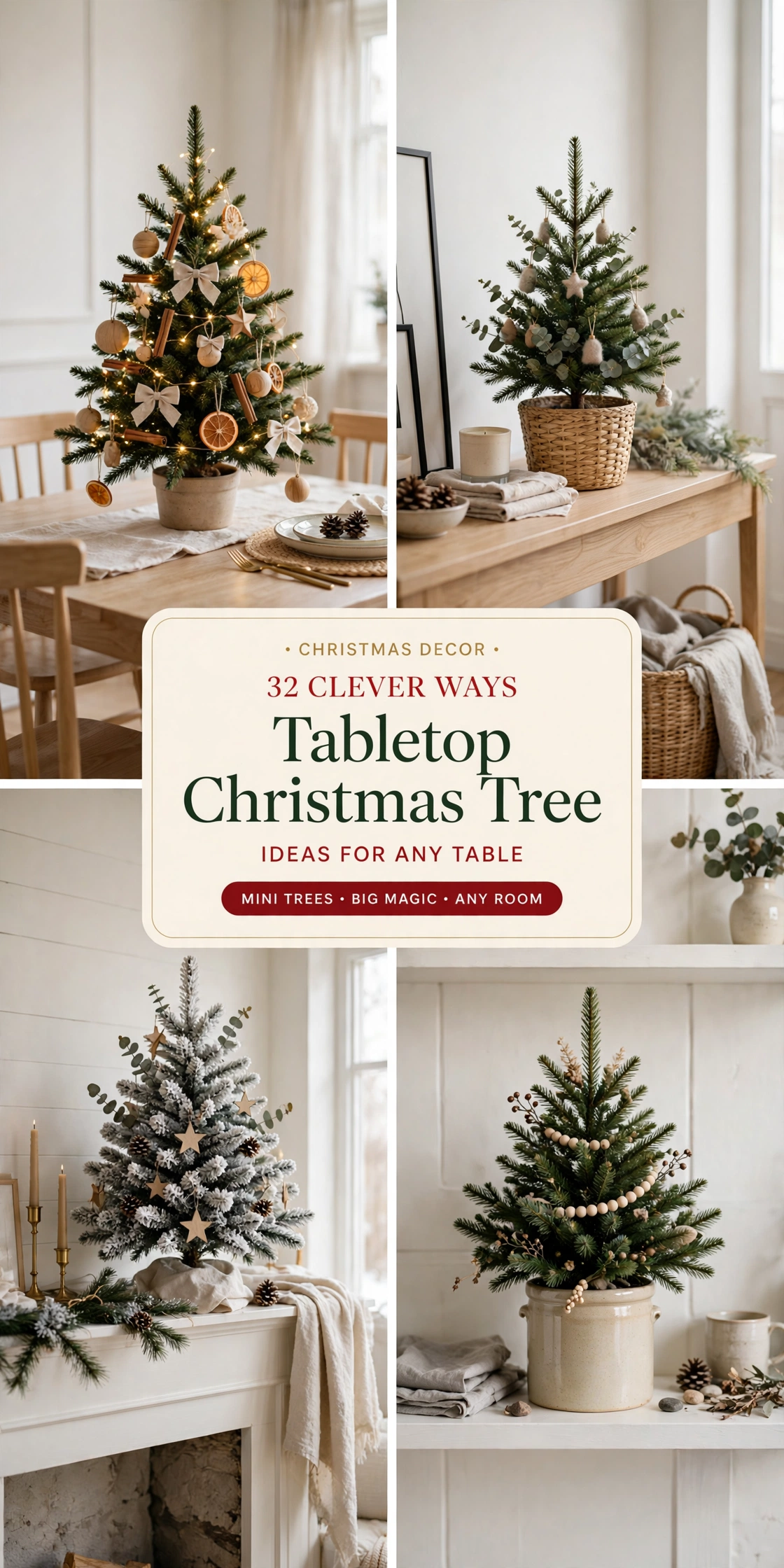
A full-size tree is wonderful, but it is not the only place Christmas can live in your home. A tabletop christmas tree gives you the same lights, ornaments, and glow on a dining table, a mantel, or a desk, in a fraction of the space and for a fraction of the price. The secret is scale: the right height for the surface, ornaments sized to the branches, and a base that looks chosen rather than leftover. Follow this guide and every flat surface in your home becomes a place where a tree can shine.
Quick Idea Summary
- The key takeaway: A tabletop tree succeeds or fails on proportion. Match the tree height to the table, keep ornaments between 1 and 2 inches, and give it a real base, and a $20 tree reads like a designer piece.
- The detail most people miss: The base is half the look. The plastic stand a small tree ships with is why it looks cheap; a bucket, basket, or crock fixes it in two minutes and costs under $15.
- What it costs or how long it takes: Most ideas below cost $8 to $35 and take under 20 minutes. A fully decorated 3-foot tabletop tree, base included, lands between $25 and $60.
At a glance
| ZONE | IDEAS | BUDGET |
|---|---|---|
| Choosing the tree | 01–05 | $10–$60 |
| Bases, pots, and risers | 06–11 | $5–$40 |
| Decorating at mini scale | 12–17 | $8–$35 |
| Themed tabletop trees | 18–23 | $10–$45 |
| Placement, room by room | 24–29 | $0–$30 |
| Displays, live trees, finishing touches | 30–32 | $8–$30 |
The tabletop christmas tree ideas
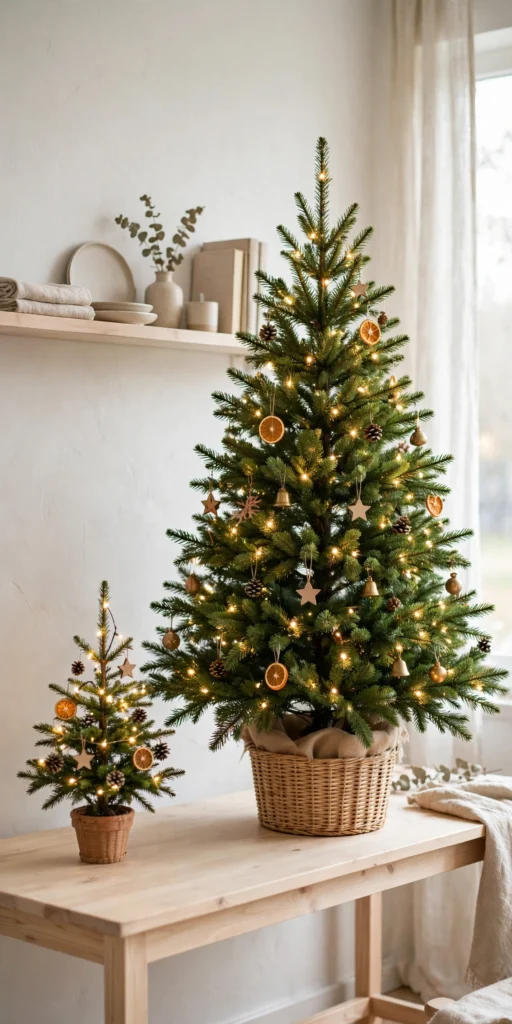
01
Know the Difference: Mini vs Tabletop
Mini and tabletop are not the same tree. Minis run 12 to 18 inches and belong on desks, nightstands, and shelves; true tabletop trees run 2 to 4 feet and anchor consoles, sideboards, and dining tables. Buy by the surface first: measure the tabletop’s depth, then choose a tree whose widest branch spread stays 2 inches inside that depth on every side.
Try it: Write the surface depth on a sticky note before you shop. A 4-foot tree with a 30-inch spread will swallow a 24-inch console no matter how pretty it is.
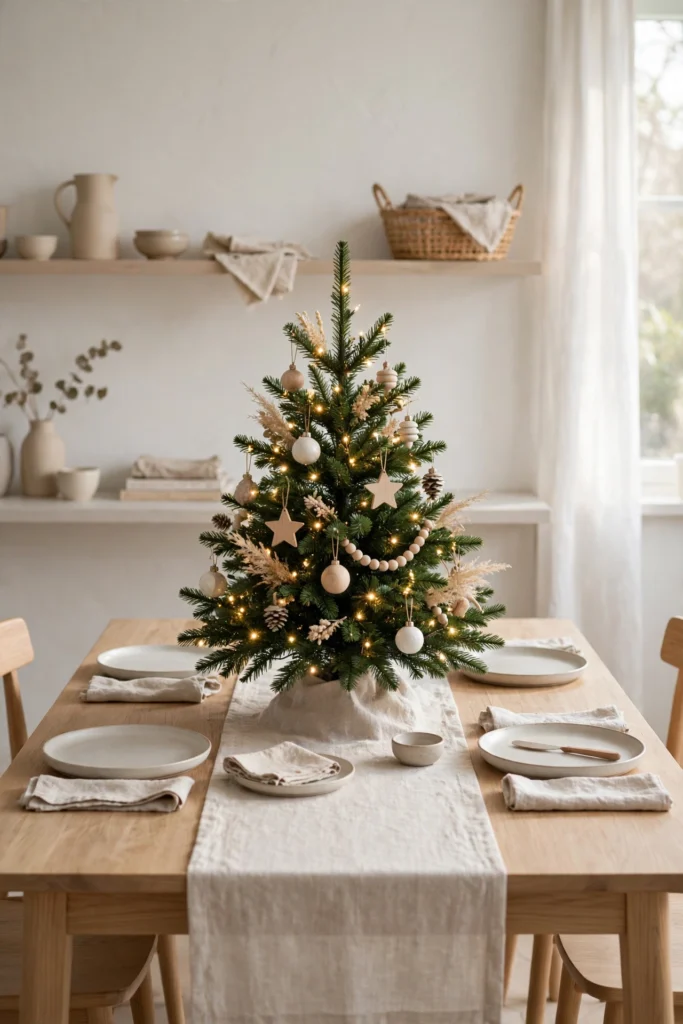
02
Match the Tree Height to the Table
The height that matters is table plus tree, not tree alone. On a 30-inch dining table, keep the tree at 24 to 30 inches so seated guests can see each other over it. On a console or sideboard against a wall, you can go taller, 3 to 4 feet, because nobody needs a sightline through it.
Try it: Sit in the lowest chair at the table and have someone hold the tree in place. If you cannot see their eyes over the top, the tree is too tall for that table.
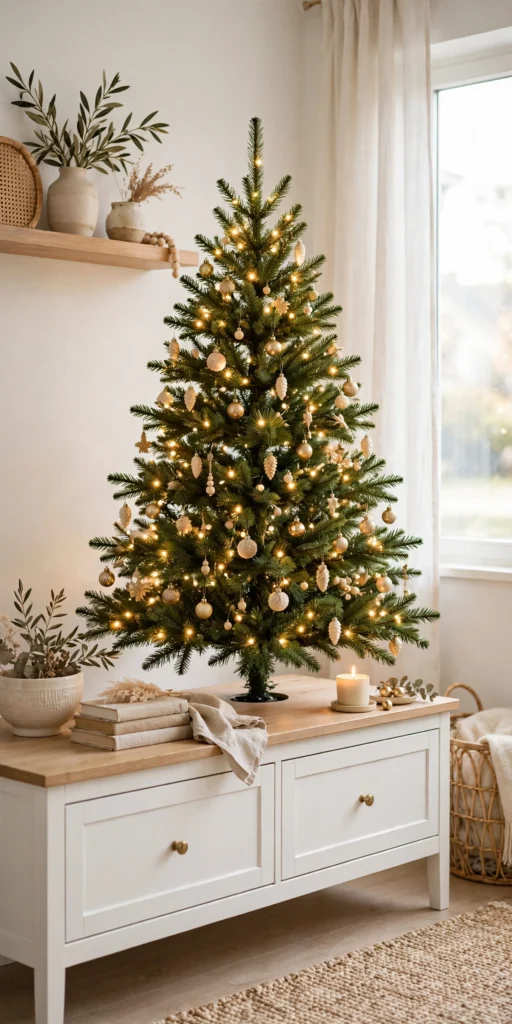
03
Go Pre-Lit and Battery-Powered
A tabletop tree sits far from outlets, so plug-in lights leave cords draping off every table edge. Pre-lit battery trees solve it: a 3-foot pre-lit tree with 50 to 100 warm LEDs runs about $30, and a set of AA batteries lasts the season at 6 hours a night on a timer. No cord also means you can move the tree from table to mantel in seconds.
Try it: Choose a model with a built-in 6-hours-on, 18-hours-off timer. You set it once in November and never touch it again.
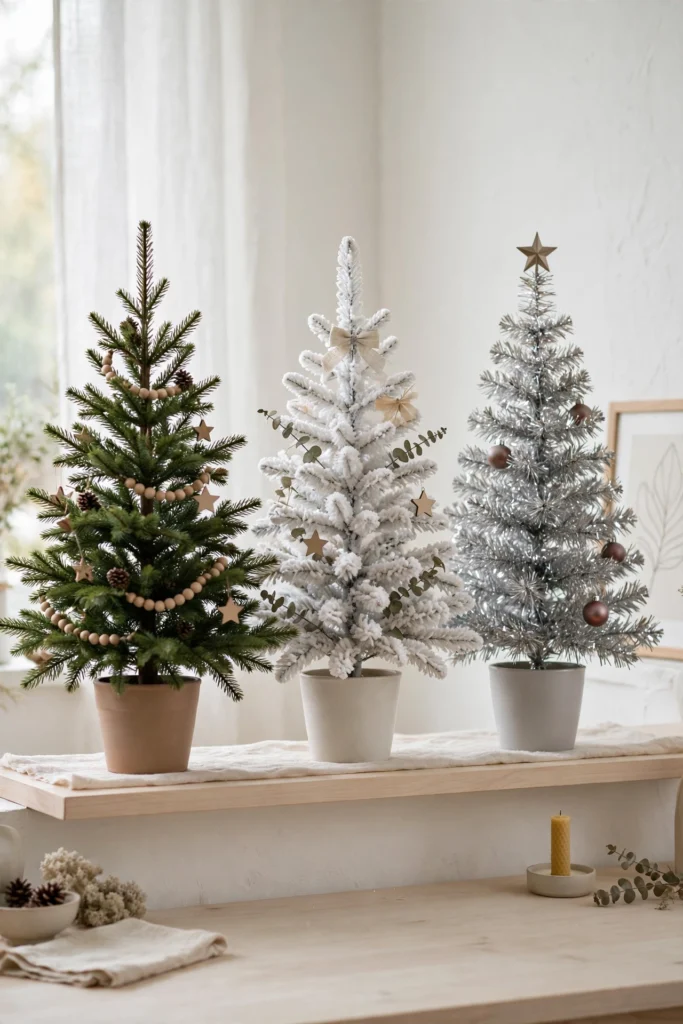
04
Pick the Finish: Green, Flocked, or Tinsel
The finish sets the whole mood before a single ornament goes on. Classic green reads traditional and hides gaps best. Flocked white looks like fresh snow and suits neutral rooms, but it sheds white dust on dark tables for the first week. Silver or gold tinsel trees are pure retro and need almost no ornaments, which makes them the fastest tree you will ever decorate.
Try it: Put a tray or a square of linen under a flocked tree for the first week. It catches the shed and looks like part of the styling.
05
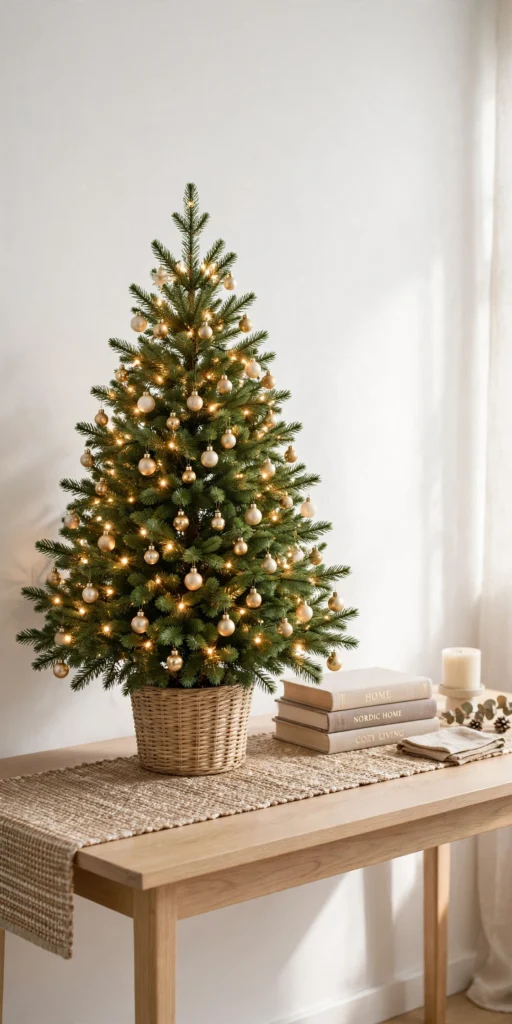
The 3-Foot Console Sweet Spot
If you buy only one tabletop tree, make it 3 feet tall. It is tall enough to hold 25 to 35 ornaments and read as a real tree, yet short enough for a console, a kitchen counter, or the middle of a sideboard. It is also the most common size, so it is the easiest to find on sale for $20 to $40 from October onward.
Try it: Fluff a 3-foot tree properly before judging it. Ten minutes of pulling each branch tip outward can double its apparent fullness.
06
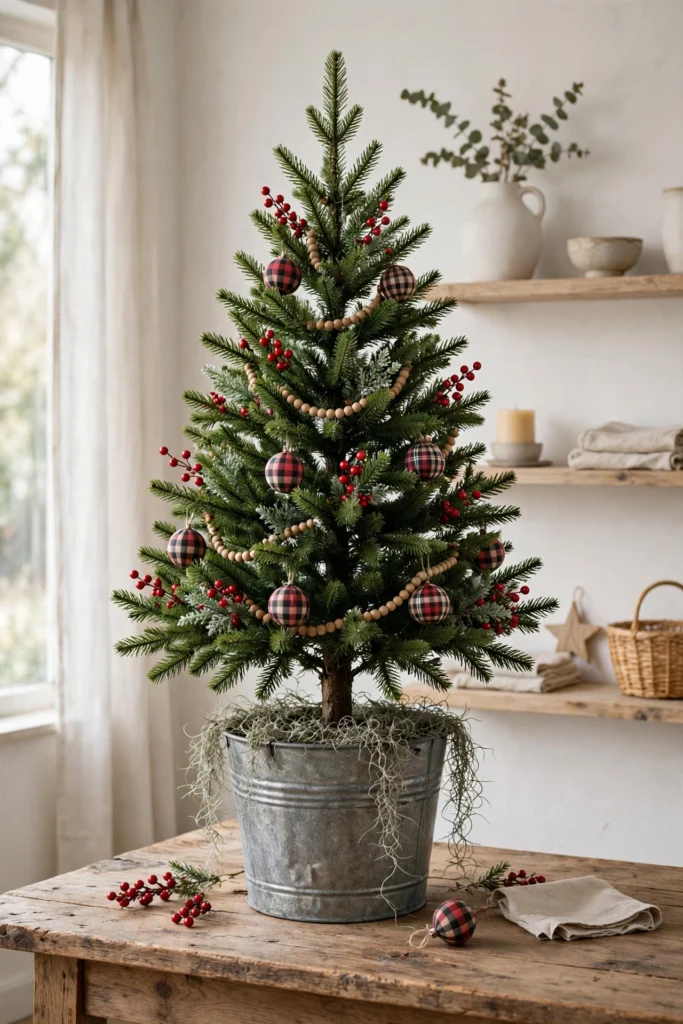
The Galvanized Bucket Base
A galvanized bucket is the farmhouse base that never fails: it hides the stand, suits any tree color, and costs $8 to $15 at a hardware store. Drop the tree in, then wedge it straight with a brick or a layer of gravel in the bottom third. The metal’s weight keeps a 3 to 4-foot tree from tipping when a cat or a toddler tests it.
Try it: Fill the gap around the trunk with Spanish moss or crumpled kraft paper. It looks like soil from above and stops the tree rocking.
07
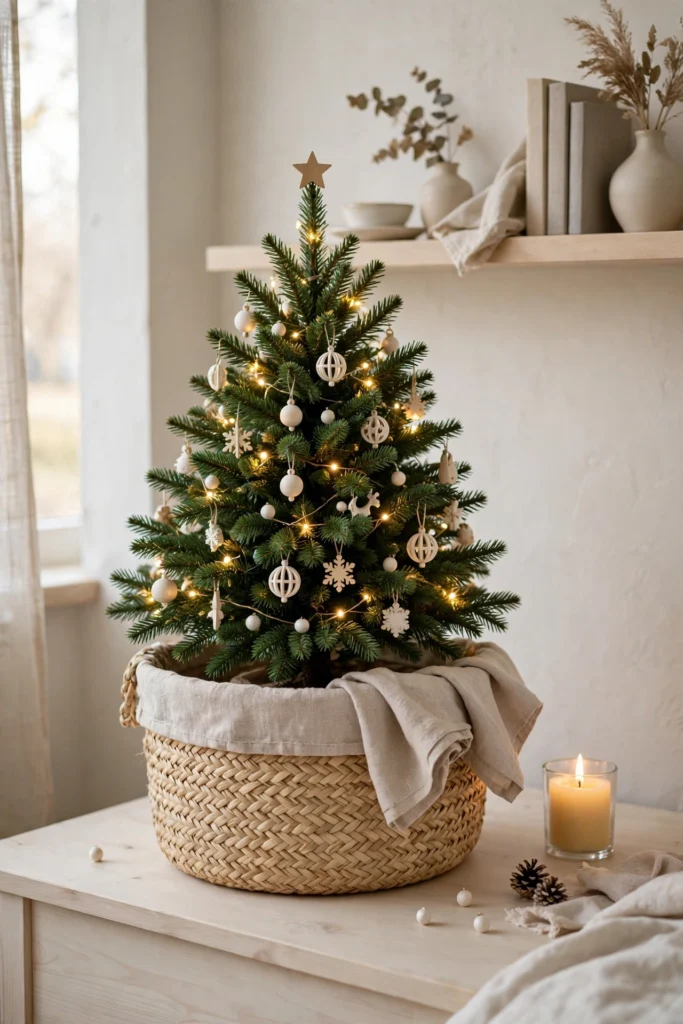
The Woven Basket Base
A basket softens a mini tree instantly and suits the bright, neutral rooms a metal bucket can fight with. Choose a basket 2 inches wider than the tree’s stand, line it with a linen napkin so the weave does not scratch the table, and let the rim sit just below the lowest branches. Seagrass and water hyacinth baskets in the 8 to 10-inch size run $10 to $18.
Try it: Roll the napkin’s edge over the basket rim. The little fabric cuff looks tailored and hides the stand completely.
08
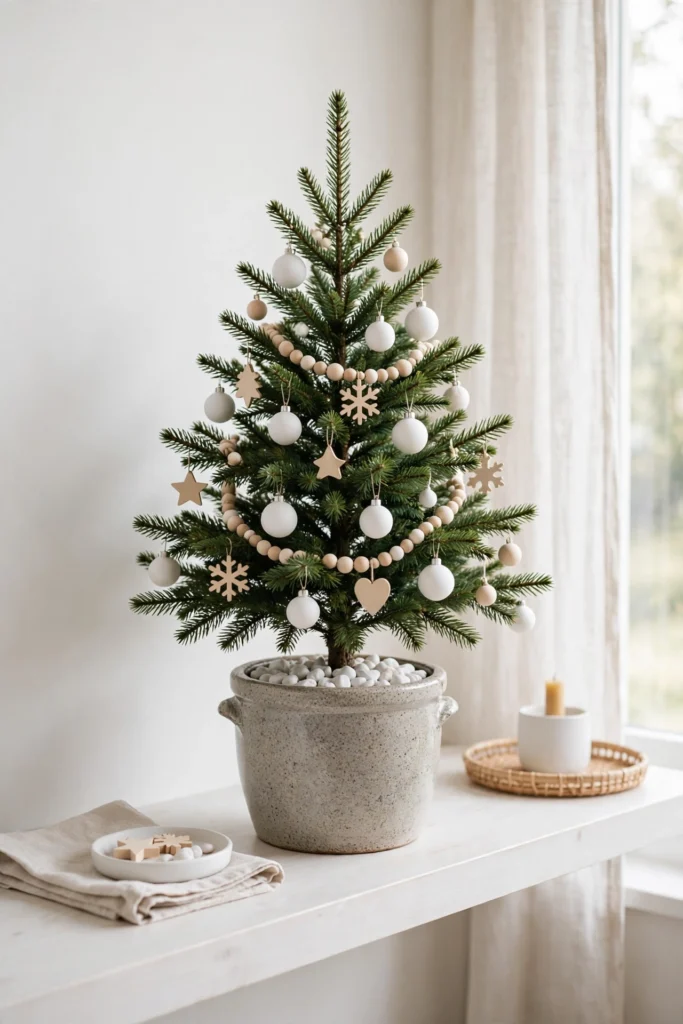
The Ceramic Crock Base
A stoneware crock gives a small tree the weight and polish of a piece of pottery, which is exactly what a Scandinavian or minimalist surface wants. Push a block of floral foam into the crock, press the trunk or stand into it, and cover the foam with moss or white pebbles. A 1-gallon crock handles trees up to 3 feet and costs $12 to $25.
Try it: Check thrift stores first. Crocks are heavy, common, and usually under $8 secondhand.
09
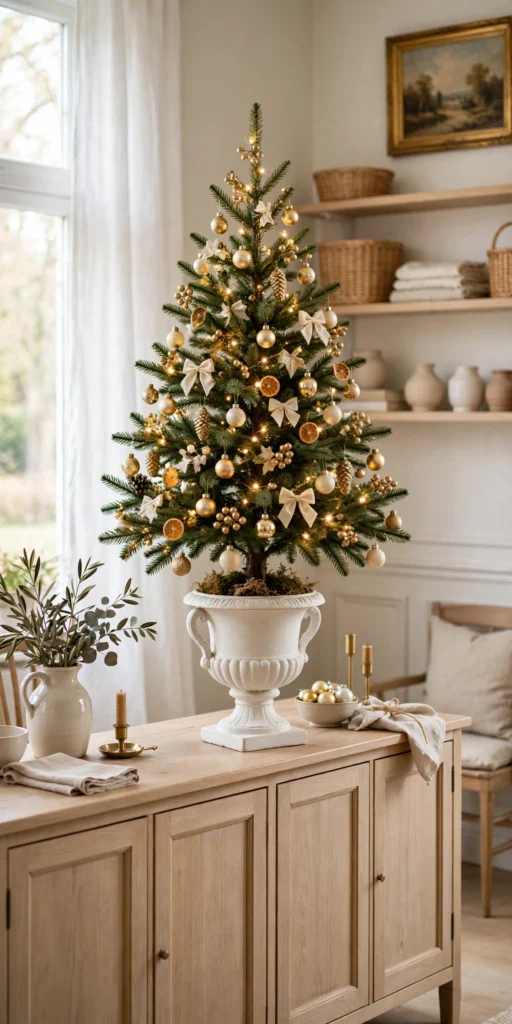
The Classic Urn Base
An urn is the formal option: it lifts a tabletop tree like a garden topiary and suits dining rooms and entryways with traditional furniture. Garden urns in cast stone or resin run $20 to $40 and hold trees up to 4 feet. The height the urn adds, usually 8 to 12 inches, means you can buy one tree size down and still get the presence you want.
Try it: Count the urn’s height in your total. A 3-foot tree in a 10-inch urn is a 46-inch display, so check it against the see-over rule on dining tables.
10
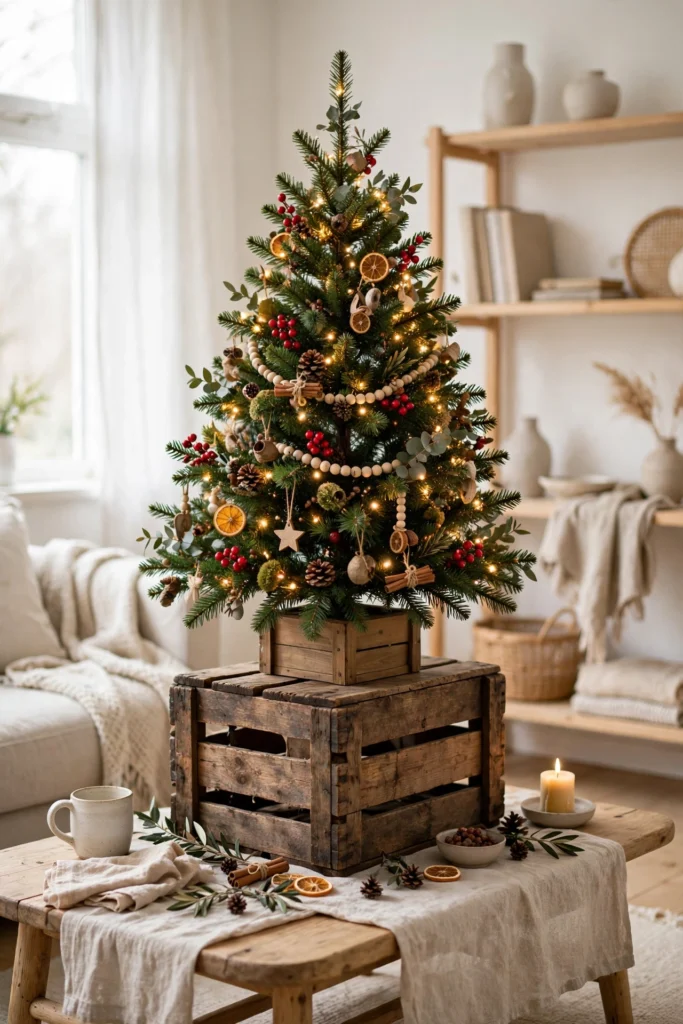
The Wooden Crate Riser
A small tree on a low table can disappear behind everything else on the surface. Set it on a wooden crate or wine box and it gains 10 to 12 inches of height plus a rustic plinth that reads as intentional styling. Crates cost $8 to $15, and the space inside doubles as storage for the tree’s ornament box.
Try it: Turn the crate so its open side faces the wall. You get a clean wood face in front and hidden storage behind.
11
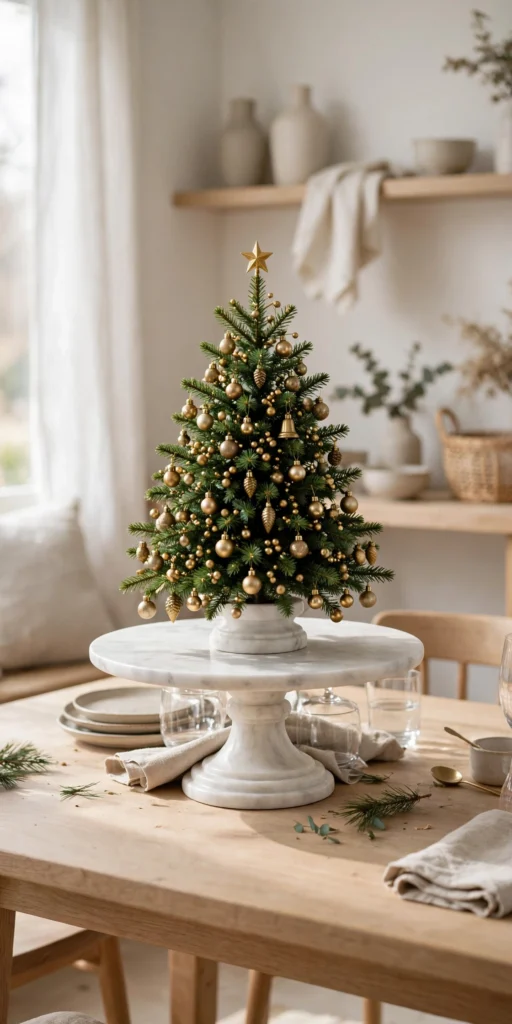
The Cake Stand Lift for Minis
A mini tree under 18 inches gets lost on a big surface, but the same tree on a cake stand or pedestal plate becomes a centerpiece. The stand adds 4 to 6 inches and a finished edge, and the tree’s branches clear the table so you can slide plates and glasses underneath. Glass, marble, and wood stands all work; match the stand to the room, not the tree.
Try it: This is the best seat in the house for a special mini: the ceramic tree, the bottle brush set, the one your kids painted.

12
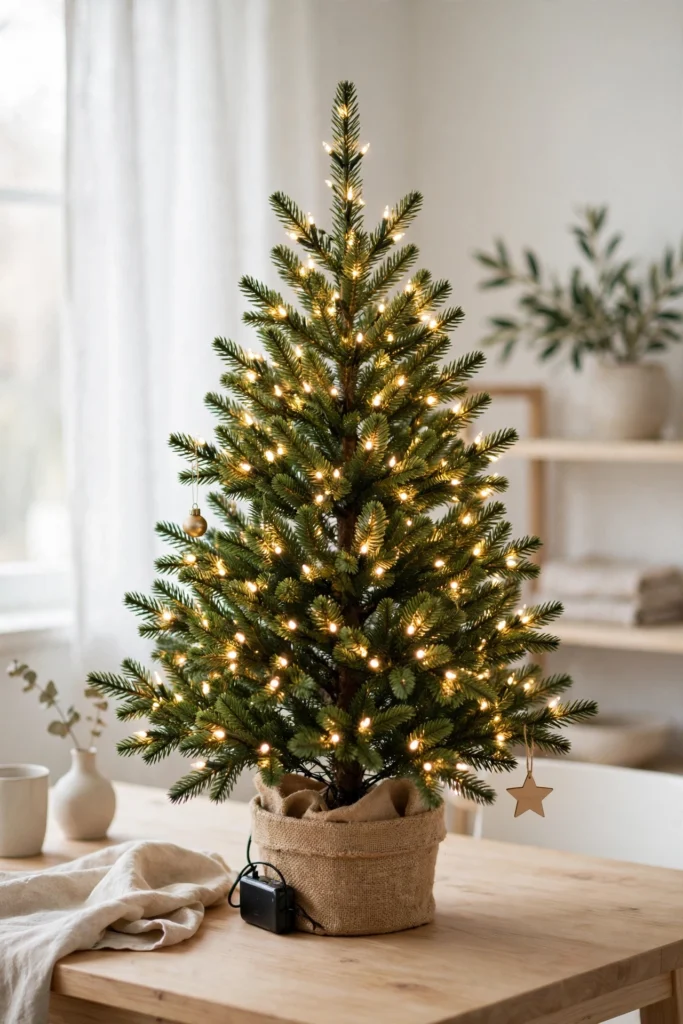
The Ornament Scale Rule
Full-size ornaments are the number one reason small trees look wrong. Keep tabletop ornaments between 1 and 2 inches: a 3-foot tree takes 25 to 35 of them, a 2-foot tree takes 15 to 20, and an 18-inch mini needs only 10 to 12. Mini ornament sets of 24 to 48 pieces cost $8 to $15 and are sold everywhere trees are.
Try it: Hang the largest ornaments in the bottom third and the smallest at the top. The gradient makes any small tree look professionally decorated.
13
Lights: 50 Per Foot, Battery Hidden
Use 50 mini LED lights per foot of tree: 150 for a 3-foot tree, 100 for a 2-foot tree. Warm white at 2700K matches candlelight; multicolor suits kids’ rooms and retro themes. Weave the strand in and out along each branch instead of wrapping the outside, and tuck the battery pack into the base or tape it behind the trunk where nobody sees it.
Try it: Lights go on before ornaments, always. Lighting a decorated tree means crushed baubles and regrets.
14
Ribbon, Scaled Down
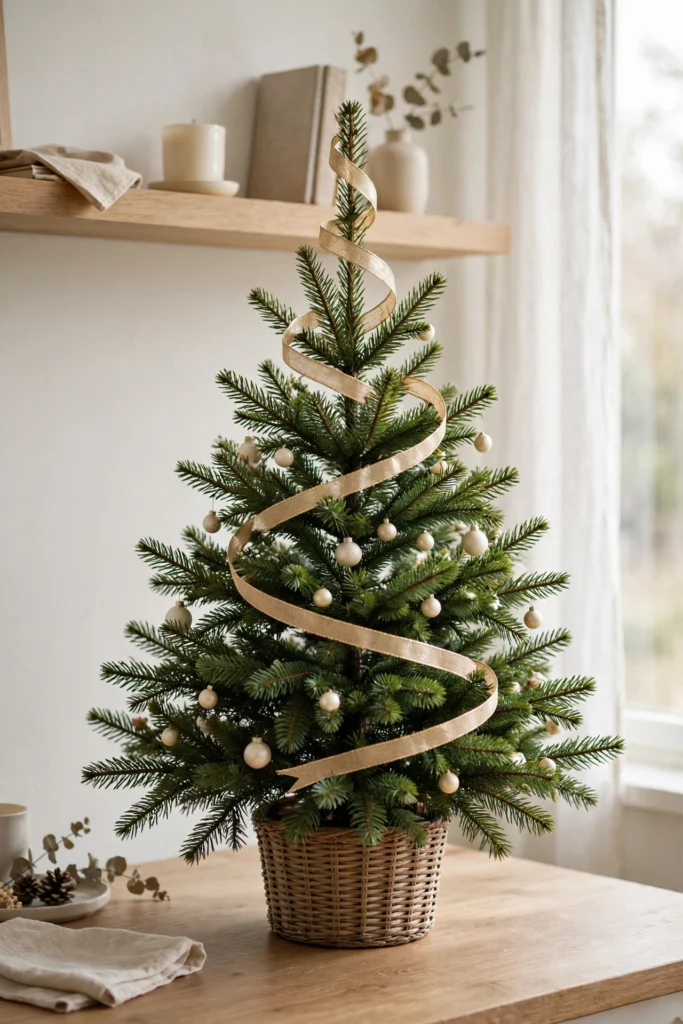
Ribbon that suits a 7-foot tree overwhelms a tabletop one. Use wired ribbon 1.5 to 2.5 inches wide, about 3 yards for a 3-foot tree, worked in a loose spiral from top to bottom and tucked deep every few inches. One ribbon, one pattern: on a small tree, a second ribbon reads as clutter instead of layering.
Try it: Cut the ribbon ends into a V notch. It takes ten seconds and makes the ribbon look finished instead of chopped.

15
Swap Chunky Garland for Beads
Standard garland is built for big branches and swallows a small tree whole. Bead garland, thin tinsel strands, or a string of mini cranberries scale correctly: they add shine and color without hiding the tree’s shape. A 9-foot bead strand is plenty for a 3-foot tree and costs about $5.
Try it: Drape garland in gentle swags between branches rather than wrapping it tight. Swags read as decoration; tight wraps read as rope.
16
Topper Proportions and the Big Bow Trick
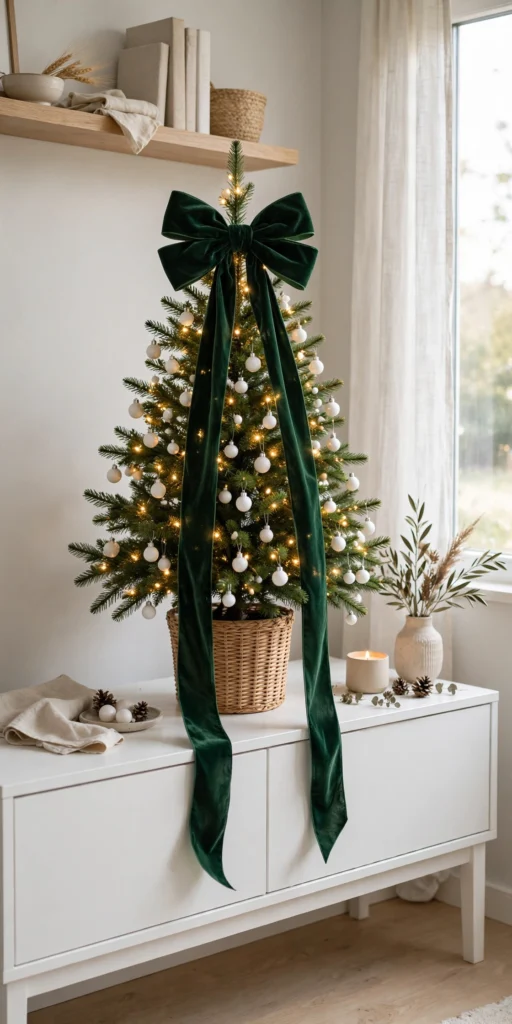
Scale the topper to the tree: a 3-foot tree wants a 4 to 6-inch star or angel, and anything bigger will lean or snap the top leader. The exception is a bow. An oversized wired bow, 8 to 10 inches wide with long tails, looks deliberate rather than wrong, weighs almost nothing, and costs under $5 in ribbon.
Try it: Wire the topper to the trunk, not just balanced on the top branch. Small trees get bumped, and a wired topper survives it.
17
Fill the Gaps With Picks and Sprays
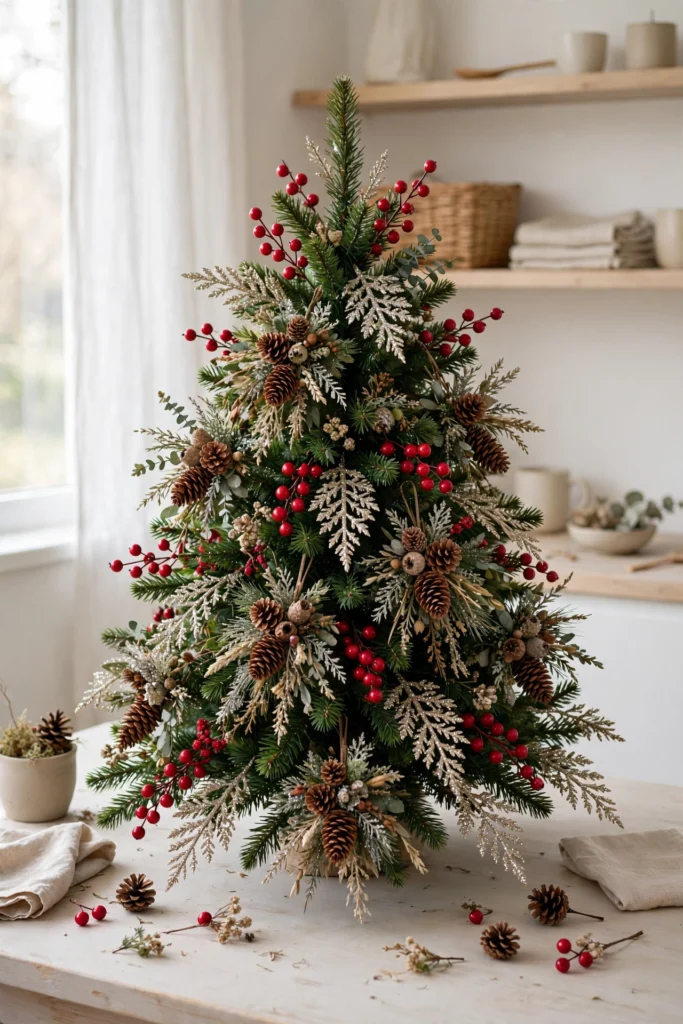
Every inexpensive small tree has thin spots. Three to five floral picks, berry sprays, pinecone clusters, or glitter branches pushed into the gaps fix them in minutes and add the texture cheap trees lack. Picks run $1 to $3 each at craft stores, and they come back out in January to use again next year.
Try it: Push picks in at a slight downward angle, following the branches. Straight-in picks stick out like antennae.
18
The Woodland Theme
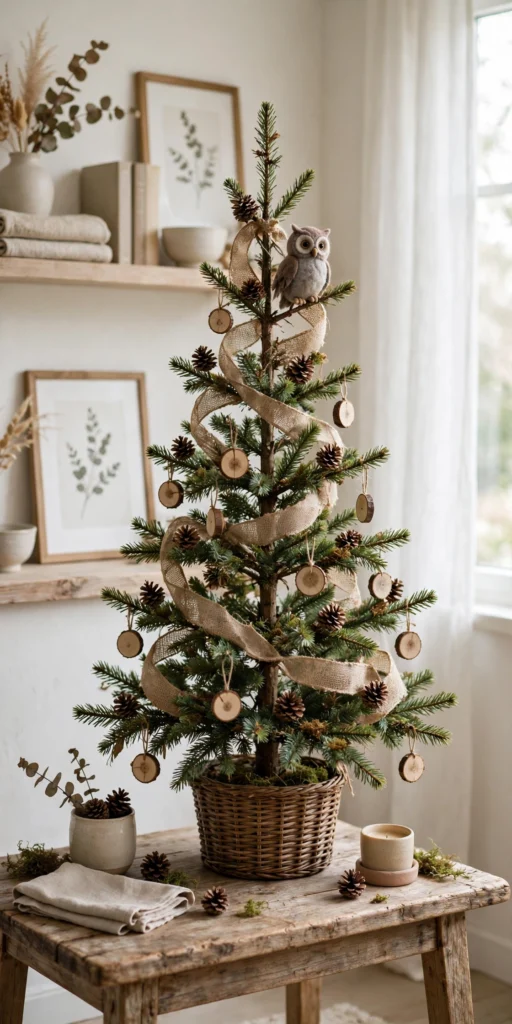
Woodland is the most forgiving theme for a tabletop tree: mini pinecones, tiny wood slice ornaments, burlap ribbon, and a few felt or carved animals. Nothing needs to match, the palette is just browns and greens, and most of it can be gathered on a walk. A 2 to 3-foot green tree in a basket carries this theme best.
Try it: Add one small bird or owl near the top. A single woodland creature gives the whole tree a story.
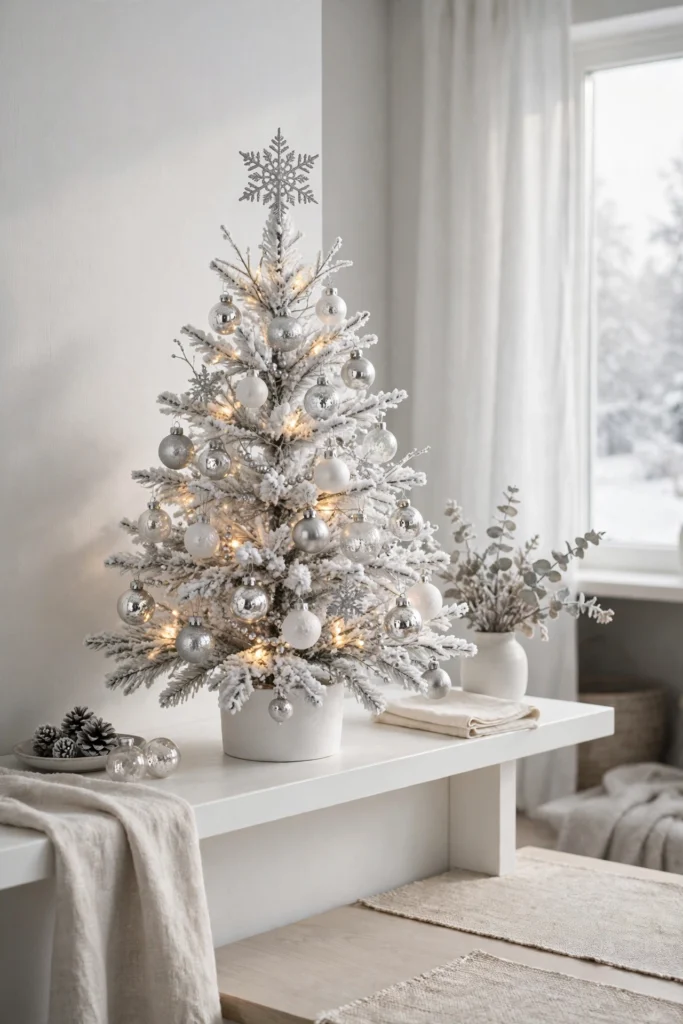
19
The White and Silver Snow Theme
A flocked tree with silver and white mini ornaments, mercury glass balls, and a snowflake topper is the neutral-room showpiece. Keep every ornament in the white, silver, and clear family; on a small tree, one stray red bauble breaks the spell. This theme glows under warm lights and suits the Scandinavian styling the rest of this guide leans on.
Try it: Mix matte, shiny, and glitter finishes in the same two colors. Finish variety is what keeps a monochrome tree from looking flat.
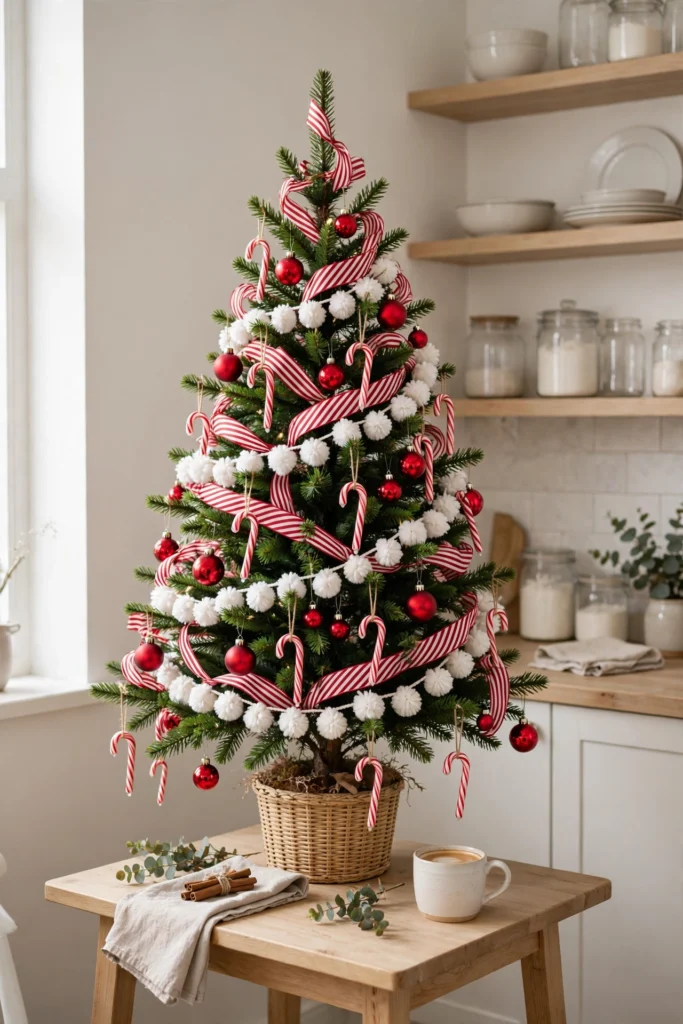
20
The Candy Cane Theme
Red and white on a green tree is the happiest small-tree theme there is: red and white striped ribbon, mini candy canes, red baubles, and white pom-pom garland. It suits kitchens, kids’ spaces, and anywhere the decor can afford to be cheerful. Budget $15 to $25 for the full trim on a 3-foot tree, most of it reusable.
Try it: Real candy canes work and cost almost nothing, but swap them for plastic ones if the tree sits near a heat vent; real ones get sticky by week two.
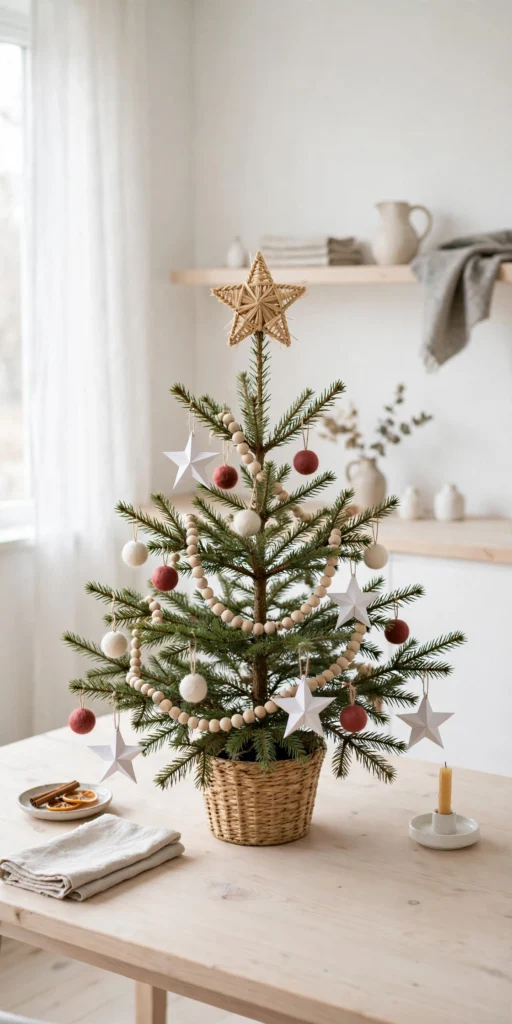
21
The Scandinavian Theme
Scandinavian styling pairs a plain green or lightly flocked tree with red and white felt ornaments, wood bead garland, paper stars, and a straw or wooden topper. The look is bright, flat-lit, and unfussy, and it needs very few pieces: 15 to 20 ornaments is plenty on a 2 to 3-foot tree. This is the theme to choose if your rooms are already pale wood and white walls.
Try it: Leave real gaps between ornaments. Scandinavian trees breathe; a crowded tree in this palette reads as cluttered, not cozy.
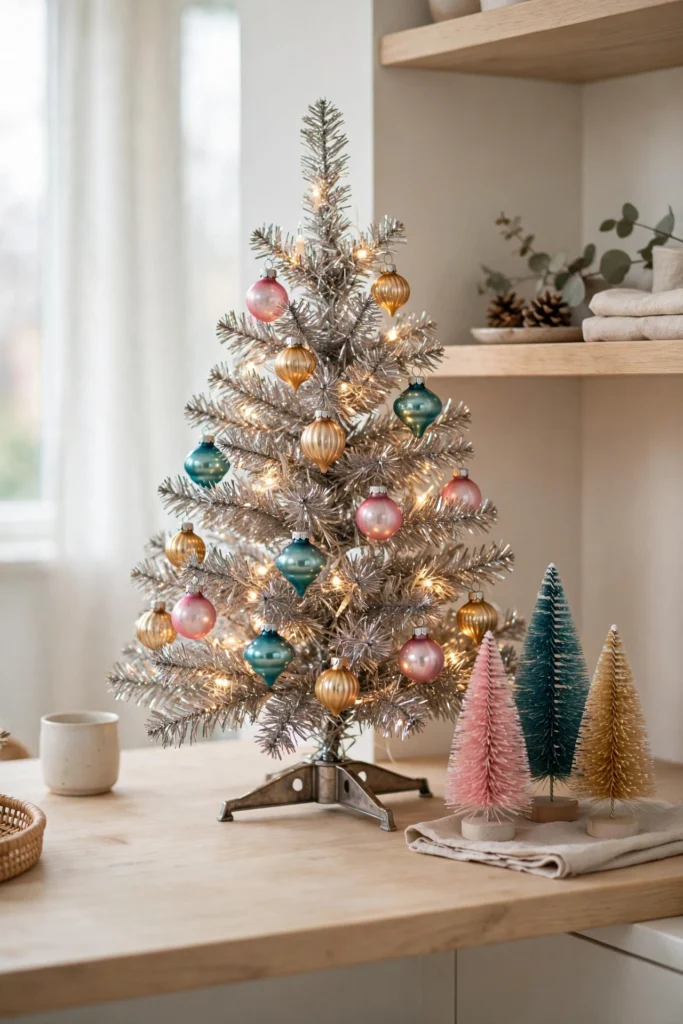
22
The Vintage Tinsel Theme
A silver tinsel tree with retro baubles in pink, teal, and gold is a complete theme in a box: the tree is the decoration, so 12 to 15 ornaments finish it. Bottle brush trees in the same colors extend the look across a mantel or shelf. Tinsel trees run $20 to $35 at 3 feet and fold flat enough to store in a drawer.
Try it: Use warm white lights, not multicolor, on a tinsel tree. The branches already supply the color; the lights just need to sparkle.
23
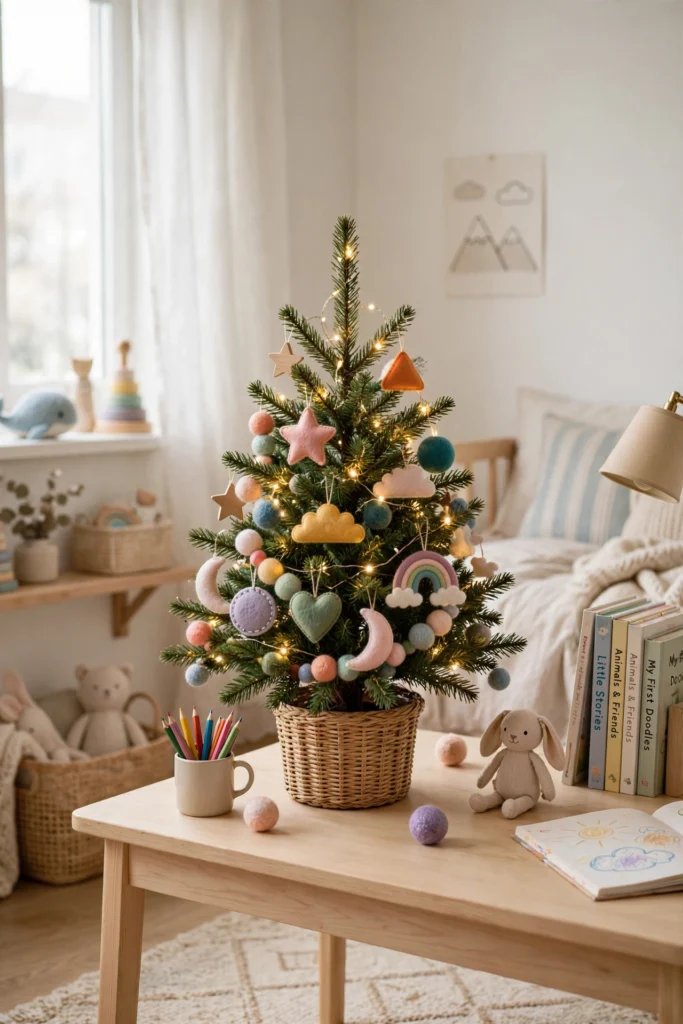
The Kids’ Own Tree
Give kids a mini tree that is entirely theirs: 18 to 24 inches, shatterproof or felt ornaments, battery lights, and no rules about placement. A child who decorates their own tree stops redecorating yours, and the tree becomes a nightlight-level glow in their room on a timer. Total cost is $15 to $25, and the ornaments survive being dropped, sat on, and loved.
Try it: Let them re-decorate it weekly if they want. A small tree takes five minutes to strip and redo, and the redoing is the fun.
24
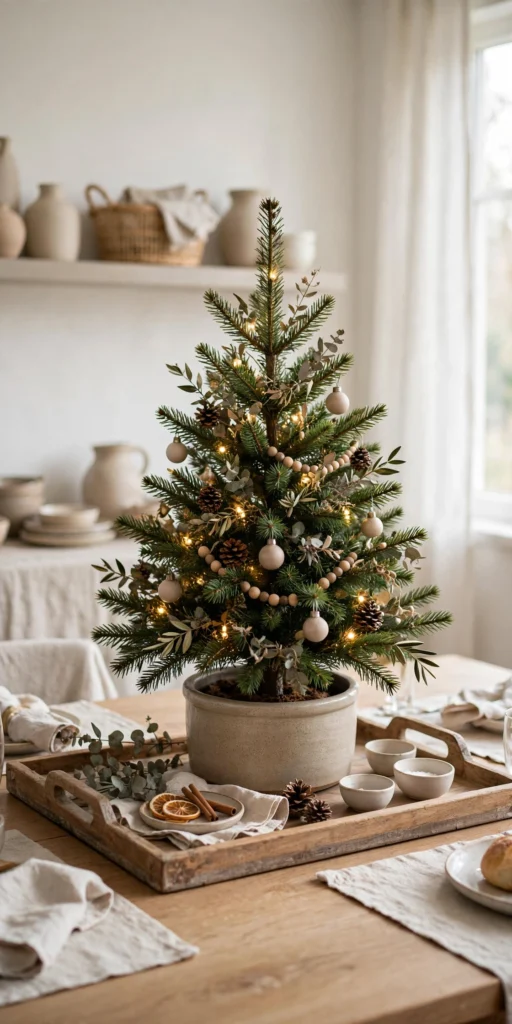
The Dining Table Centerpiece Tree
A tabletop tree makes a centerpiece with height that candles and garlands cannot match, but it must obey the see-over rule: tree plus container under 30 inches total, so a 2-foot tree in a low crock or on a tray is the right build. Keep scented ornaments and real greenery off the dining tree, since both compete with the food. Battery lights only; nobody wants a cord in the gravy.
Try it: Build the centerpiece on a tray. You can lift the whole display off in one move when the table needs to become a table again.
25
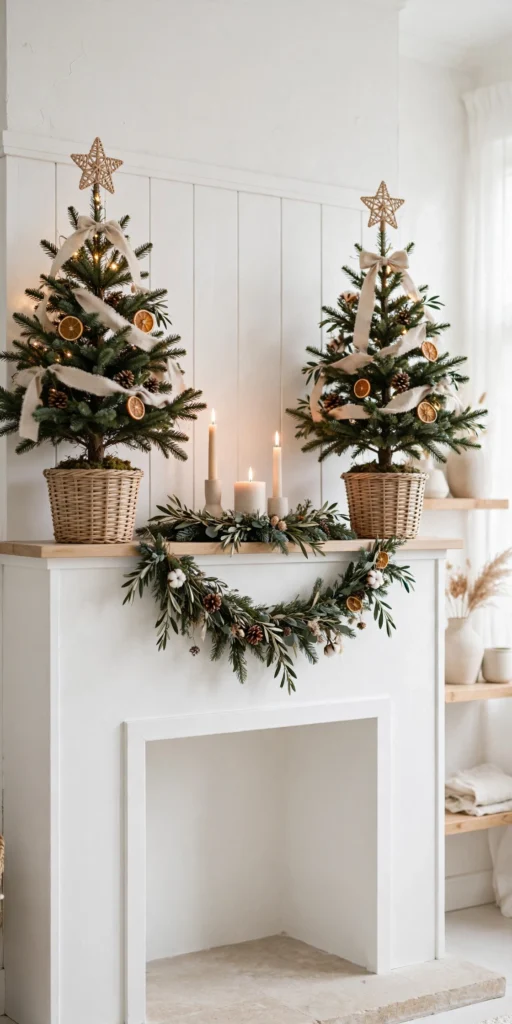
The Mantel Pair
Two matching tabletop trees flanking the mantel is the fastest formal look in this guide: identical 2-foot trees, identical bases, identical trim, one at each end. Symmetry does the styling work, so the decorating can stay simple: lights, one ribbon each, and a topper. Buy the trees as a pair in the same box when you can; dye lots and branch shapes vary between production runs.
Try it: Keep the center of the mantel lower than the trees: a garland swag or a row of candles. Tall center plus tall ends flattens the whole display.
26
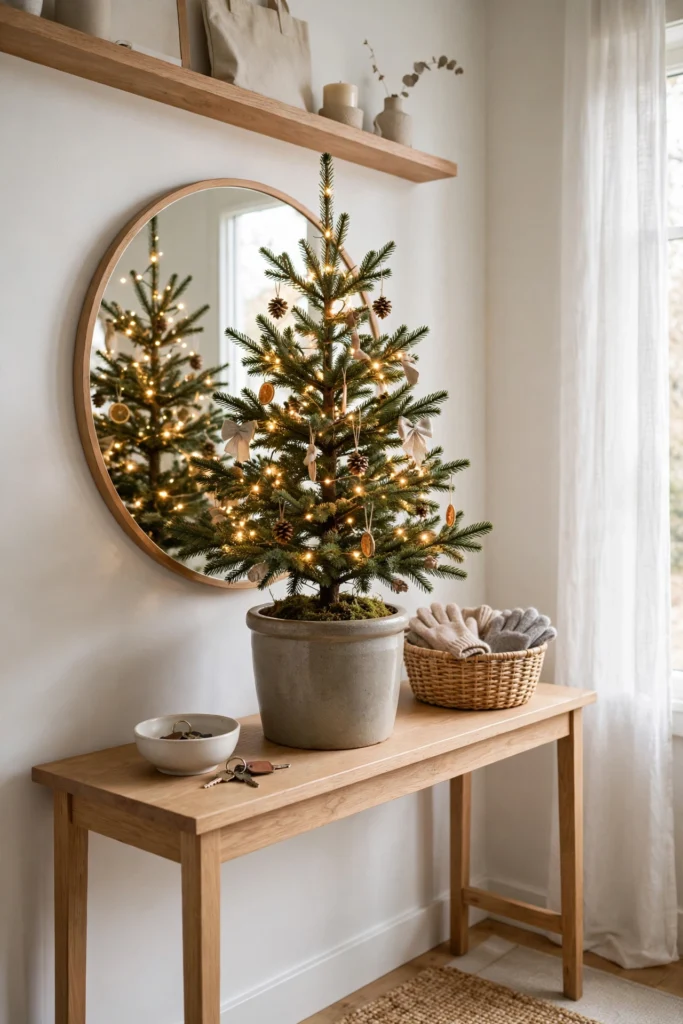
The Entryway Console Tree
The entryway tree is the first Christmas thing guests see, so it earns your best small tree: 2 to 3 feet on the console, in your heaviest base, because entry tables get bumped by coats and bags. Keep its branches inside the table’s footprint; a console is usually 12 to 16 inches deep, which rules out wide 4-foot trees. A mirror behind it doubles the lights for free.
Try it: Put the entry tree on a timer set to light 30 minutes before you usually get home. Coming home to a lit tree never gets old.

27
The Office Desk Mini
A desk mini should stay in the 12 to 18-inch class so it cheers without stealing workspace: beside the monitor, on a shelf, or in the corner of the desk you never use. USB-powered light strands plug straight into the computer, and scent-free, ornament-light styling keeps it professional on video calls. A ceramic or bottle brush mini needs no decorating at all and still counts.
Try it: Match the mini to your desk palette, not your home palette. A white ceramic tree on a dark desk reads as design; a red-and-green one reads as clutter.
28
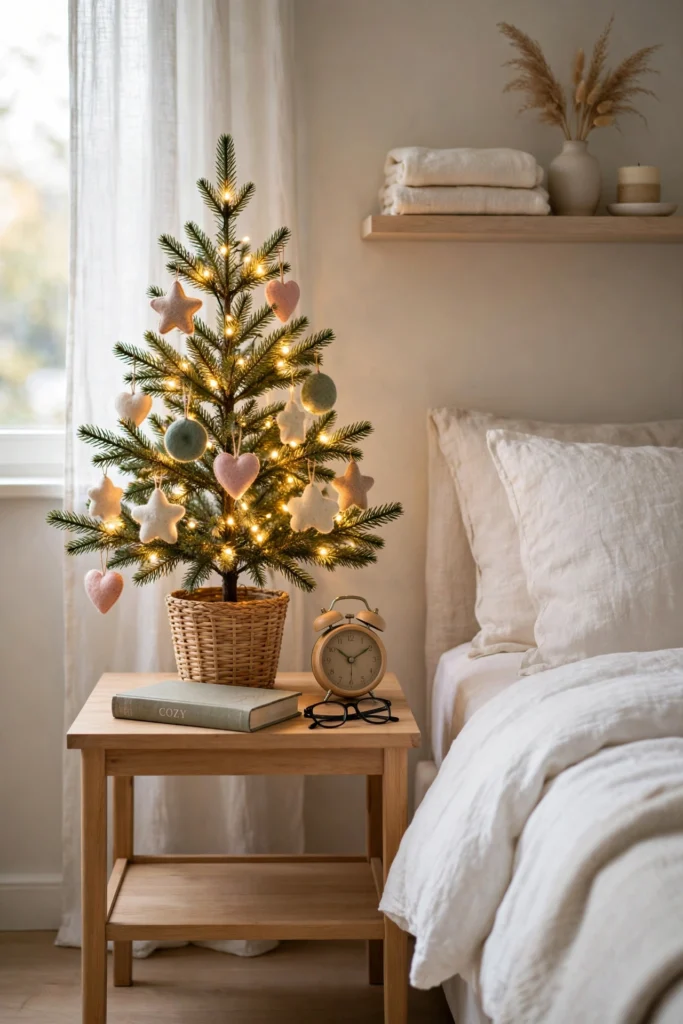
The Nightstand Tree
A small tree on the nightstand turns the bedroom festive without a full-size tree in the room: 18 to 24 inches, warm lights on a timer, and soft ornaments only, nothing that rattles when the table gets knocked at 2 a.m. Set the timer to switch off an hour after your usual bedtime. The glow as you wind down is the whole point.
Try it: Choose a tree with a fabric or weighted base for the nightstand. Hard plastic stands tick and slide on wood when the table moves.
29
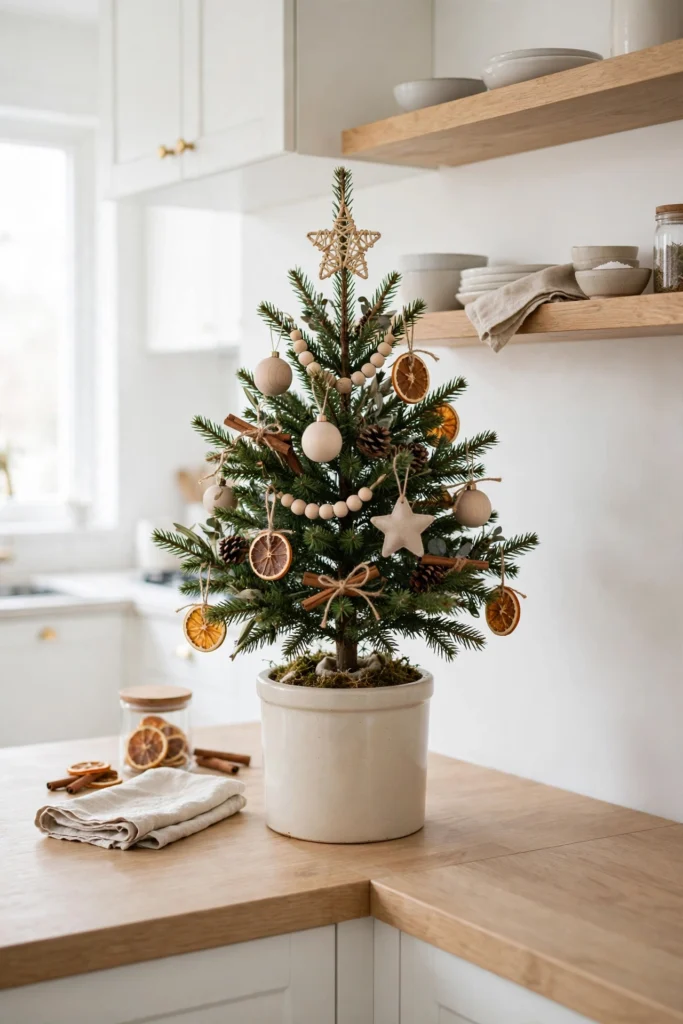
The Kitchen Counter Tree
The kitchen takes more decorating abuse than any room: heat, steam, splashes. Give it a 2-foot tree on the counter corner farthest from the stove, in a crock or bucket that can be wiped down, trimmed with unbreakable ornaments and dried orange slices or cinnamon sticks that can handle the warmth. Skip flocking here; it sheds into food prep zones.
Try it: Keep the tree at least 18 inches from the stove edge and off the main prep counter. A tree you have to move to cook is a tree that ends up in a cupboard.
30
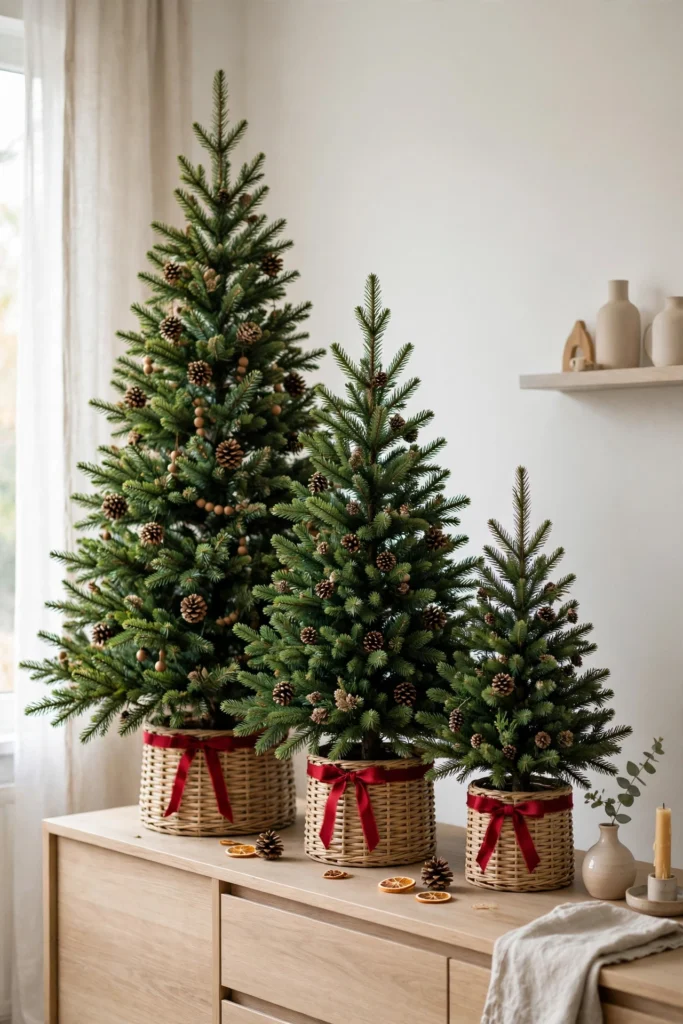
The Rule of Three: A Tabletop Forest
One small tree is an accent; three are a display. Group tabletop trees in odd numbers at staggered heights, say 3 feet, 2 feet, and 18 inches, on a sideboard, a wide mantel, or the center of a big table. Keep one element constant across all three, the same base material, the same ribbon, or the same ornament color, so the group reads as a set instead of a yard sale.
Try it: Vary the heights by at least 6 inches between trees. Trees too close in height look like a mistake; clear steps look like a skyline.
31
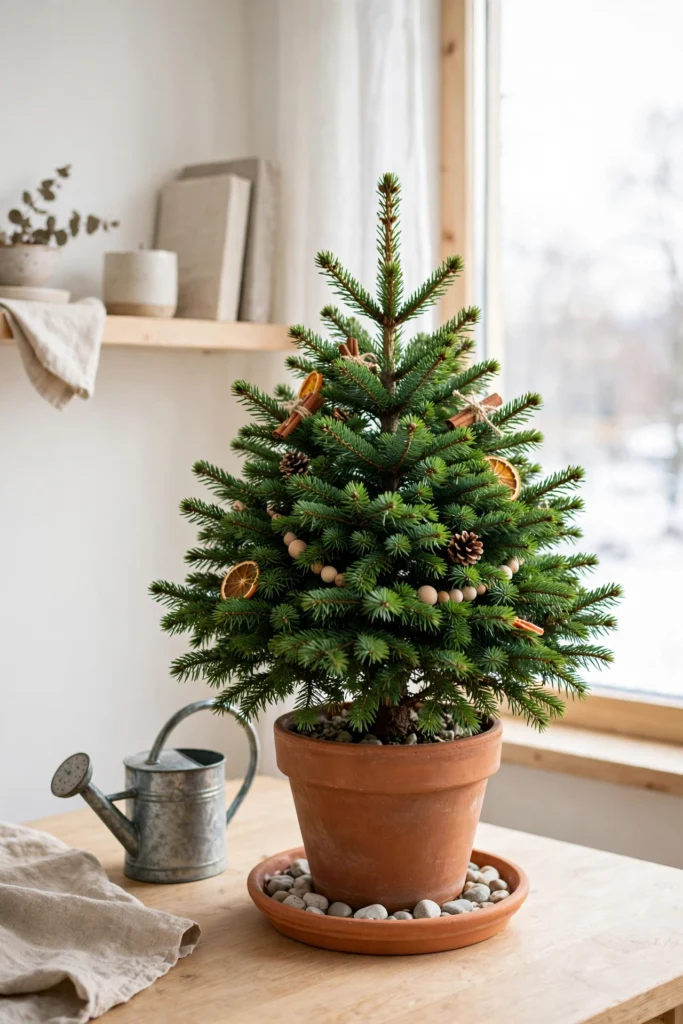
A Live Mini Tree, Kept Alive
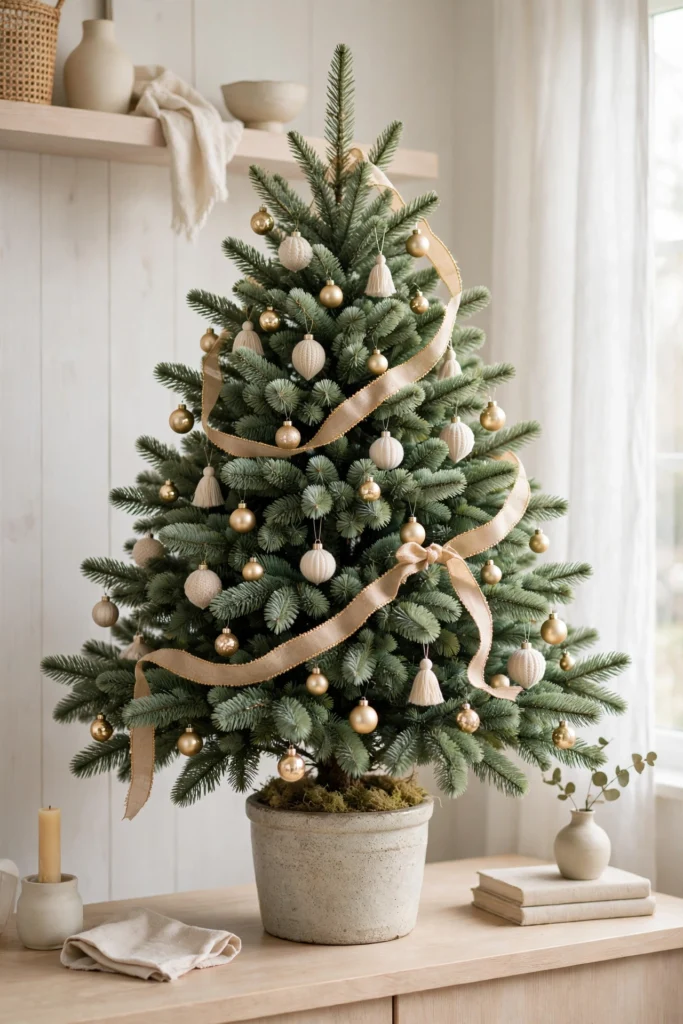
A living tabletop tree, a dwarf Alberta spruce, a Norfolk Island pine, or a rosemary trimmed to a cone, gives you real scent and a plant that survives Christmas. Indoors it needs bright light, soil kept evenly moist, and distance from heat vents, which dry conifers out in days. Expect 3 to 4 good weeks indoors; then move it to a cool bright spot, and plant hardy spruces outside after the last frost. For live trees indoors, follow christmas tree fire safety basics: keep the tree watered and away from heat sources.
Try it: Set the pot on a saucer of pebbles with water below the pot’s base. The evaporating water raises humidity around the needles without soaking the roots.
32
Make a $15 Tree Look Expensive
The difference between a cheap tabletop tree and an expensive-looking one is rarely the tree. Fluff every branch for ten minutes, upgrade the base to a crock or basket, commit to one ornament palette of 20 to 30 mini pieces, and add one wired ribbon. Those four moves, about $15 on top of the tree, are the entire gap between dollar-store and design-magazine.
Try it: Photograph your tree and look at the photo, not the tree. Thin spots, lean, and stray ornaments all announce themselves on camera first.
Pro tip: Judge every tabletop tree from seated eye level, not standing. These trees are seen from chairs, sofas, and beds, a full foot lower than you stand, and a tree styled from above often has a bald crown from the seat. Sit down, look, then adjust.
Three rules for tabletop trees
- Scale everything to the tree: Ornaments 1 to 2 inches, ribbon under 2.5 inches wide, toppers a tenth of the tree’s height. Big-tree decorations on a small tree is the one mistake that makes every tabletop tree look like a toy.
- Height is table plus tree: Always measure the display, not the tree. Dining displays stay under 30 inches total, console displays can reach 4 feet, and desk minis stay under 18 inches.
- Anchor and weight the base: A tabletop tree is top-heavy and lives where it gets bumped. Weight the base with gravel, a brick, or a heavy crock, and wire the topper on. A tree that survives December upright is a decorated tree.
After Christmas: storing small trees
- Store it decorated: A tabletop tree is small enough to store with its ornaments on. Slip a large plastic bag or a pillowcase over it, stand it in a bin, and next year it goes from box to table in two minutes.
- One bin per tree: Keep each tree with its own ornaments, lights, and base in one labeled bin. Mixing three trees’ trim in one box is how next December starts with an hour of untangling.
- Photograph the themes: Take one photo of each finished tree before you store it. Next year you rebuild the woodland, the candy cane, and the white-and-silver exactly, from the picture, without rethinking a thing.
More ideas you’ll love: small christmas tree ideas, slim christmas tree ideas, christmas kitchen decor ideas, christmas living room decor ideas, and more in Christmas Decor.
Questions readers ask
What size is a tabletop Christmas tree?
Tabletop trees run 2 to 4 feet tall; anything under 18 inches is classed as a mini. The most useful size is 3 feet: big enough for 25 to 35 ornaments, small enough for a console, counter, or sideboard. Always measure table plus tree together before buying.
How many ornaments do I need for a 3-foot tabletop tree?
About 25 to 35 mini ornaments, sized 1 to 2 inches. Use the largest in the bottom third and the smallest at the top, and fill any remaining gaps with three to five floral picks or berry sprays. A 24 to 48-piece mini ornament set covers one tree with spares.
How many lights does a tabletop tree need?
Fifty mini LED lights per foot of height: 150 for a 3-foot tree, 100 for a 2-foot tree, 50 to 75 for a mini. Battery-powered strands with a timer are the practical choice on tables, because there is no cord to hide and the tree can move anywhere. Whichever lights you pick, follow basic holiday lighting safety: check strands for frayed wires before hanging them, and turn the lights off when you leave the house.
What can I use as a base for a tabletop Christmas tree?
Almost any sturdy container wider than the tree’s stand: a galvanized bucket, a woven basket, a ceramic crock, a garden urn, or a wooden crate. Weight it with gravel or a brick for stability, and cover the mechanics with moss, fabric, or crumpled kraft paper.
Can a tabletop tree be a dining table centerpiece?
Yes, if the whole display stays under about 30 inches so guests can see each other. A 2-foot tree in a low crock or on a tray is ideal. Build it on the tray so the centerpiece lifts away in one move when the table is needed for serving.
Are live tabletop trees hard to keep alive?
No, but they need bright light, evenly moist soil, and distance from heat vents. Dwarf Alberta spruce and Norfolk Island pine both manage 3 to 4 weeks indoors in a cool bright spot. Water when the top inch of soil feels dry, and never let the pot sit in standing water.
How do I make a cheap tabletop tree look expensive?
Fluff every branch, replace the plastic stand with a crock, basket, or bucket, stick to one ornament palette, and add one wired ribbon. Those four moves cost about $15 total and account for nearly all the visible difference between a budget tree and a styled one.
Where is the best place to put a tabletop tree?
Any stable surface with a little breathing room: a console, sideboard, mantel, desk, nightstand, or kitchen counter away from the stove. Keep branches inside the surface’s footprint, keep live trees away from heat vents, and put the best tree where people arrive, the entryway.
People Also Ask
What is the difference between a mini tree and a tabletop tree?
Height and presence. Minis are 12 to 18 inches and sit on desks, shelves, and nightstands as accents. Tabletop trees are 2 to 4 feet, hold full sets of ornaments and lights, and anchor a surface the way a floor tree anchors a room.
Do tabletop trees need a tree skirt?
No. A container base replaces the skirt entirely, which is the point of the bucket, basket, and crock ideas above. If your tree has a plain stand you want to keep, a 24-inch mini skirt or a folded square of linen under it does the same job at small scale.
Can I put a tabletop tree in the bathroom?
Yes, a 12 to 18-inch mini on the vanity or a shelf is a cheerful touch, and battery lights mean no cord near water. Use unbreakable ornaments only, skip anything scented that will fight with the room, and set the tree on a small tray to protect the counter from moisture.
loved these ideas? ✿
Save this guide for later
Pin it to your board so it’s there when you’re ready to recreate it.

Curated by
Hey! I'm Sanaullah — visual curator and content creator. I search, curate, and test the best aesthetic ideas across Pinterest so you can easily transform your living space, style daily outfits, and try simple creative DIYs without the overwhelm.