
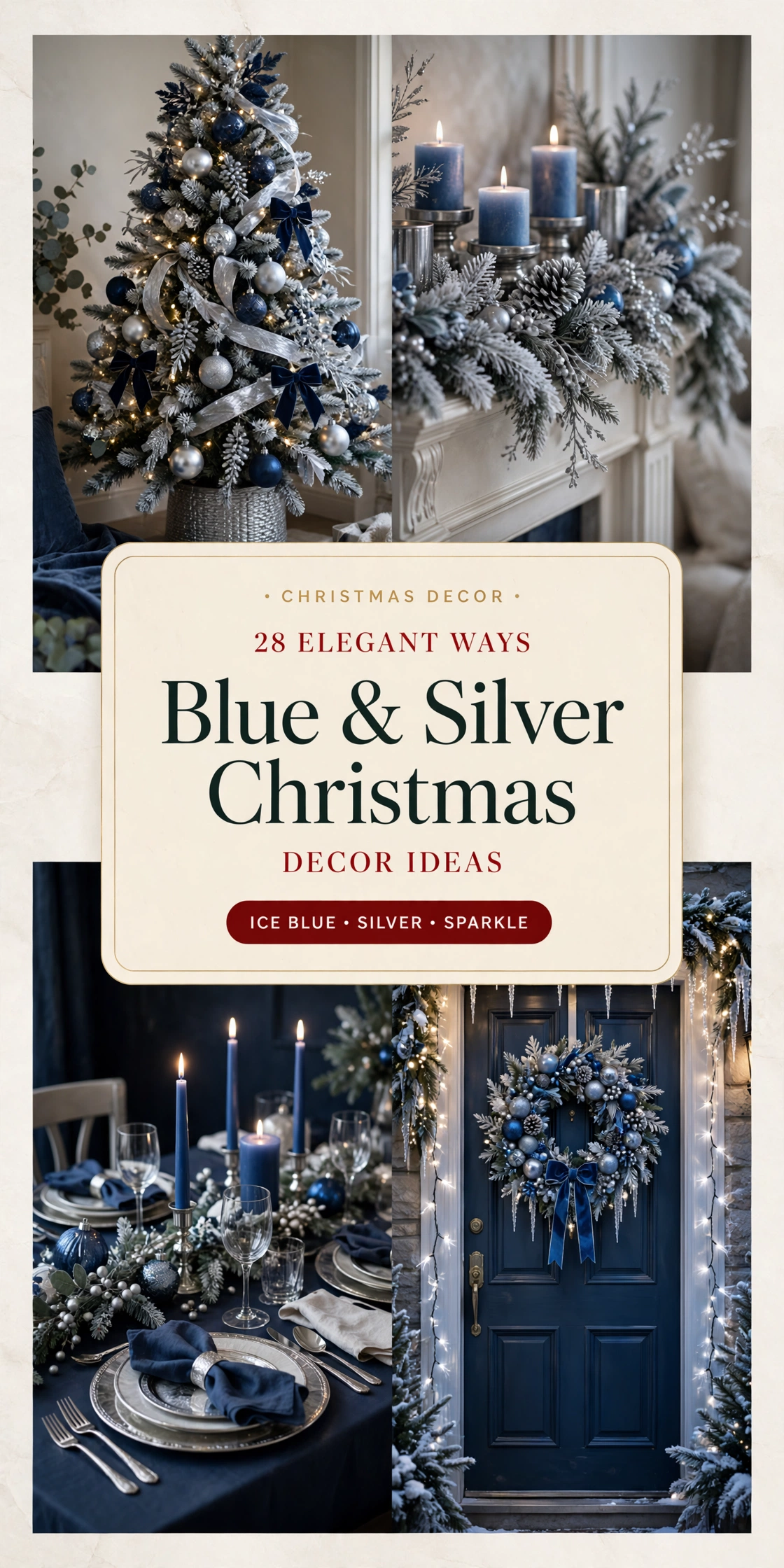
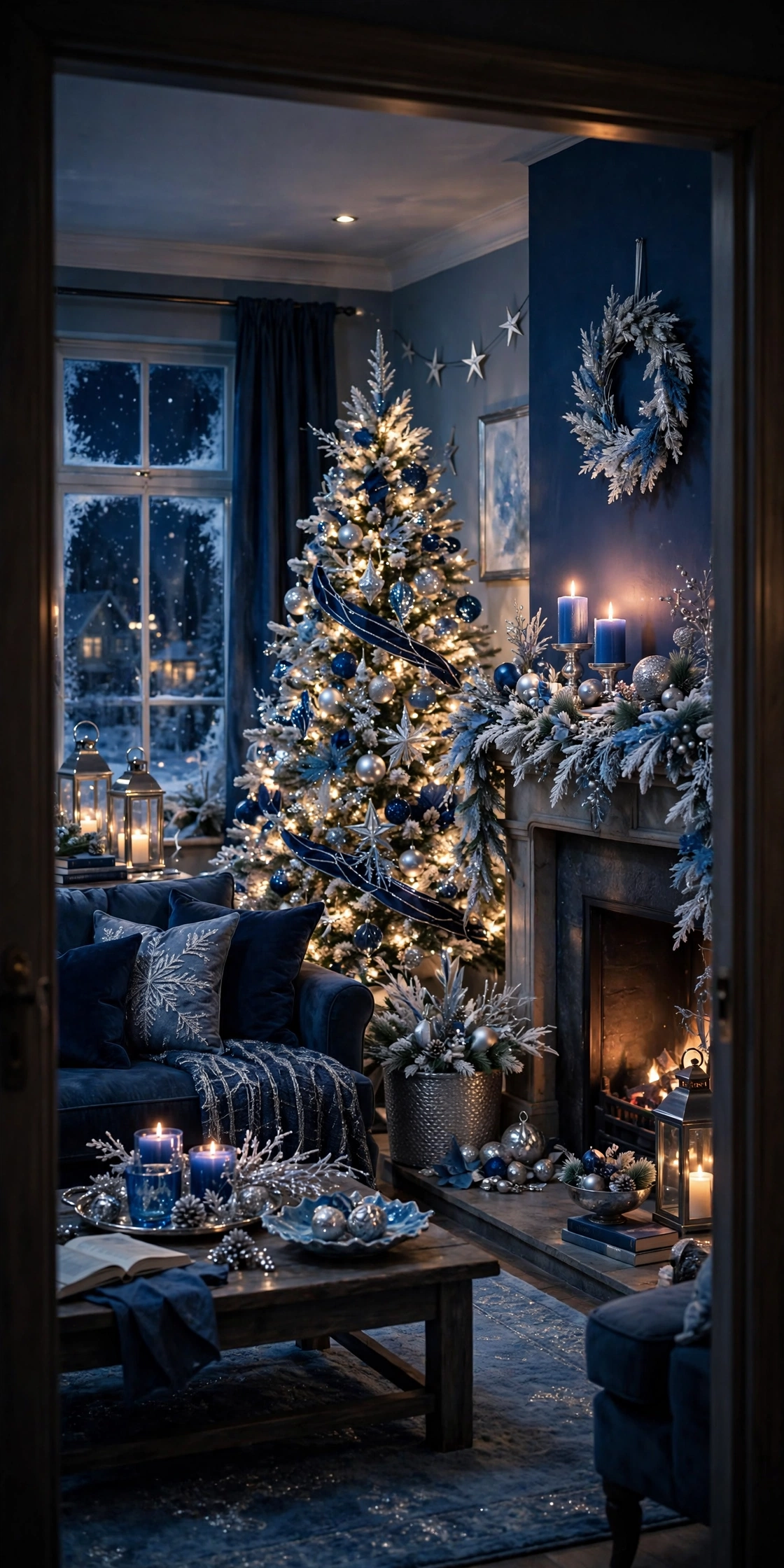
Red and green is lovely, but some homes were made for a quieter kind of magic: deep navy, icy blue, and silver that catches every light in the room. These blue and silver christmas decor ideas give you a winter-night palette that feels elegant without ever feeling stark, with exact ratios, sizes, and prices so you can copy the looks without guesswork. Start with the tree, work outward through the mantel and table, and finish with the small details that make guests stop in the doorway. Follow the plan below and your home will look like the first clear night after snowfall.
Quick Idea Summary
- The key takeaway: Lock the palette to three blues and one silver. Navy for weight, a mid blue for the middle, ice blue for sparkle, and silver as the only metal; that discipline is what makes the scheme look designed instead of decorated.
- The detail most people miss: Lighting decides whether silver looks rich or gray. Warm white 2700K lights make silver glow like candlelight on water, while cool white over 4000K turns navy flat and makes ice blue read as plastic.
- What it costs or how long it takes: Most ideas here cost $12 to $45 and take under an hour. A full living room transformation runs about $150 to $220 if you shop your existing ornament stash first.
At a glance
| Zone | Ideas | Budget |
|---|---|---|
| The tree | 01–07 | $30–$110 |
| Mantel and hearth | 08–11 | $20–$65 |
| Table and dining | 12–16 | $25–$85 |
| Textiles and surfaces | 17–20 | $20–$60 |
| Bedroom, entry, and porch | 21–25 | $15–$70 |
| Details and finishing touches | 26–28 | $10–$40 |
The ideas
01
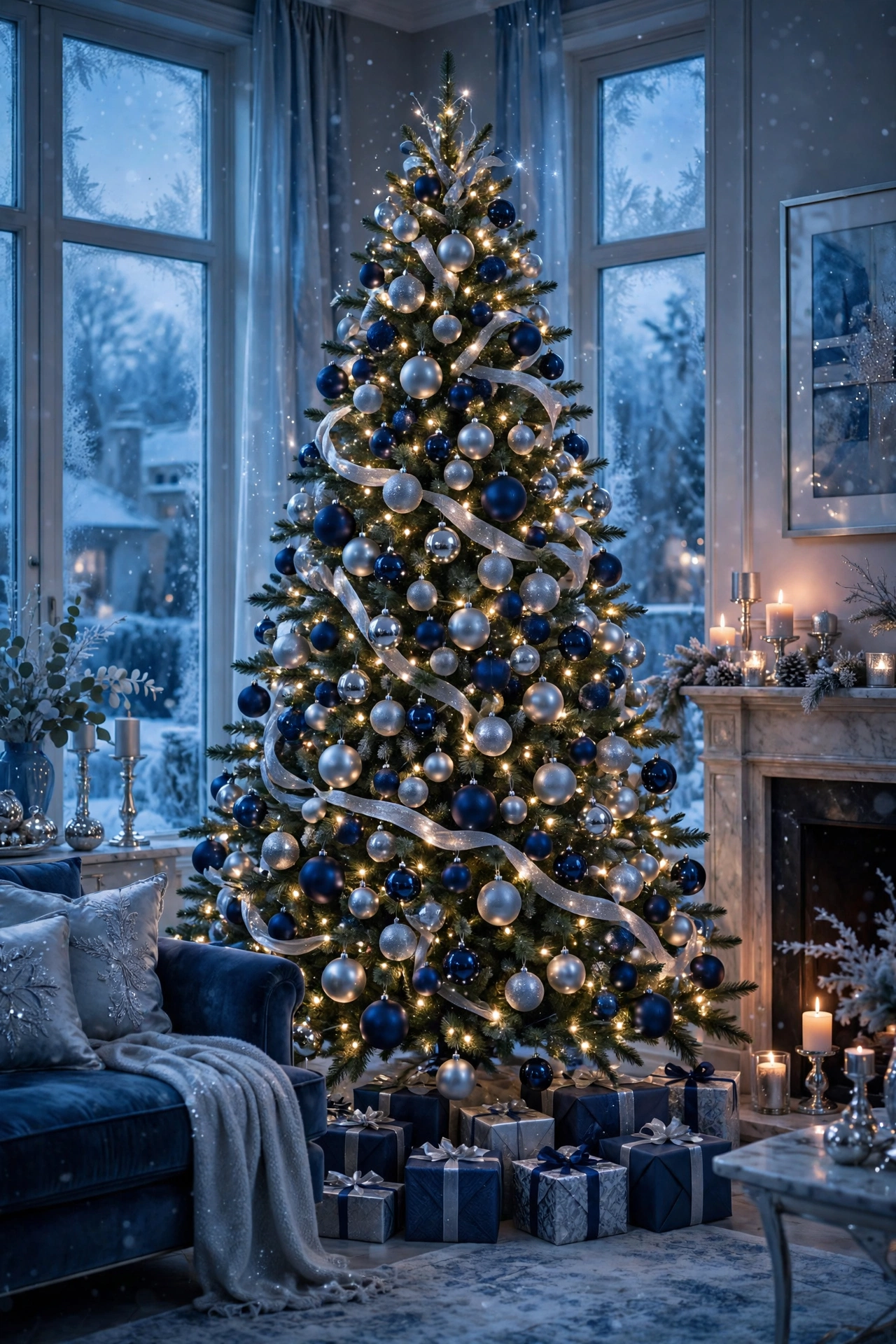
The Classic Navy and Silver Tree
Build your main tree on a 60/40 split: 60 percent blue ornaments, 40 percent silver. On a 7.5-foot tree that means roughly 55 to 65 blue baubles in two sizes (3-inch and 2.4-inch) and about 40 silver ones mixed across shiny, matte, and glitter finishes. The ratio keeps the tree reading blue first and silver second, which is the balance that looks expensive.
Try it: Hang the largest navy ornaments deepest, near the trunk. Big dark ornaments at the back create shadow and depth, so the silver on the outer tips sparkles against it.

02
The Ombre Gradient Tree
An ombre tree fades from deep navy at the bottom through mid blue in the middle to silver and white at the top, like a snowy mountain at dusk. It works best on a heavily flocked tree, where the white flocking does half the gradient work for you. Sort ornaments into three piles before you hang a single one; mixing as you go ruins the fade.
Try it: Put the three largest, darkest ornaments at the very base. Heavy color at the bottom anchors the tree visually and makes the light top feel like it is rising.
03
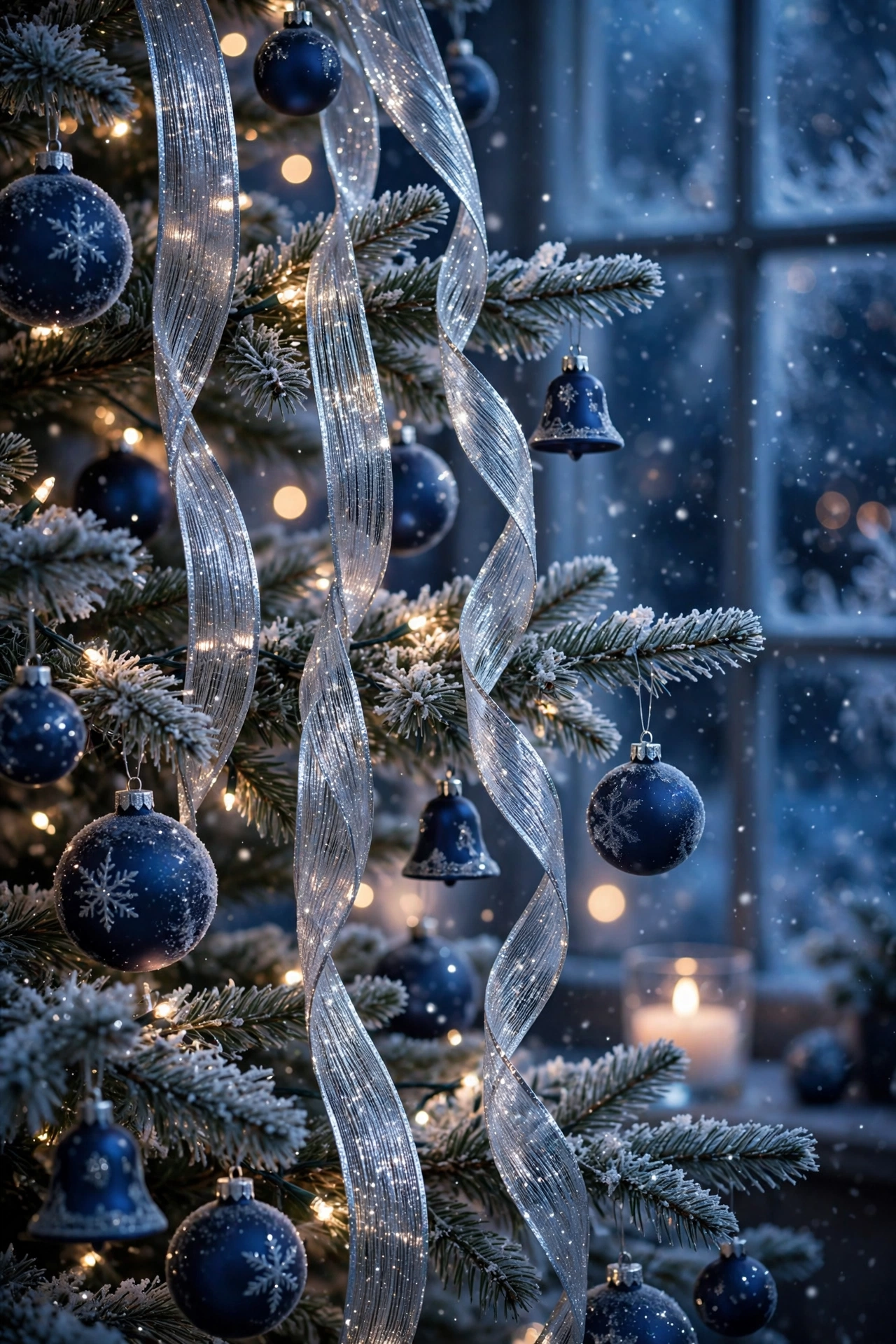
Cascading Silver Ribbon
Skip the spiral wrap and let silver ribbon fall vertically instead: cut a 10-yard roll of 2.5-inch wired ribbon into 6 to 8 streamers, tuck each top into the crown, and let them cascade down the branches. Vertical lines make any tree look taller and more formal, and silver ribbon catches light along its whole length. One roll costs about $9 and covers a 7-foot tree.
Try it: Twist each streamer once, halfway down. The single twist shows both the shiny face and the matte back of the ribbon, doubling the light play for free.

04
Mercury Glass for Vintage Sparkle
Mercury glass ornaments, with their mottled antique silver finish, reflect blue tones twice: once in the room and once in their own surface. Mix 8 to 12 mercury glass pieces in silver and pale blue through a standard tree, spacing them at eye level where guests actually see them. A set of six runs $18 to $30, and the vintage finish keeps the palette from looking too new or too cold.
Try it: Place one mercury glass ornament directly in front of a tree light. The mottled glass scatters the bulb’s glow into a soft halo instead of a harsh point.
05
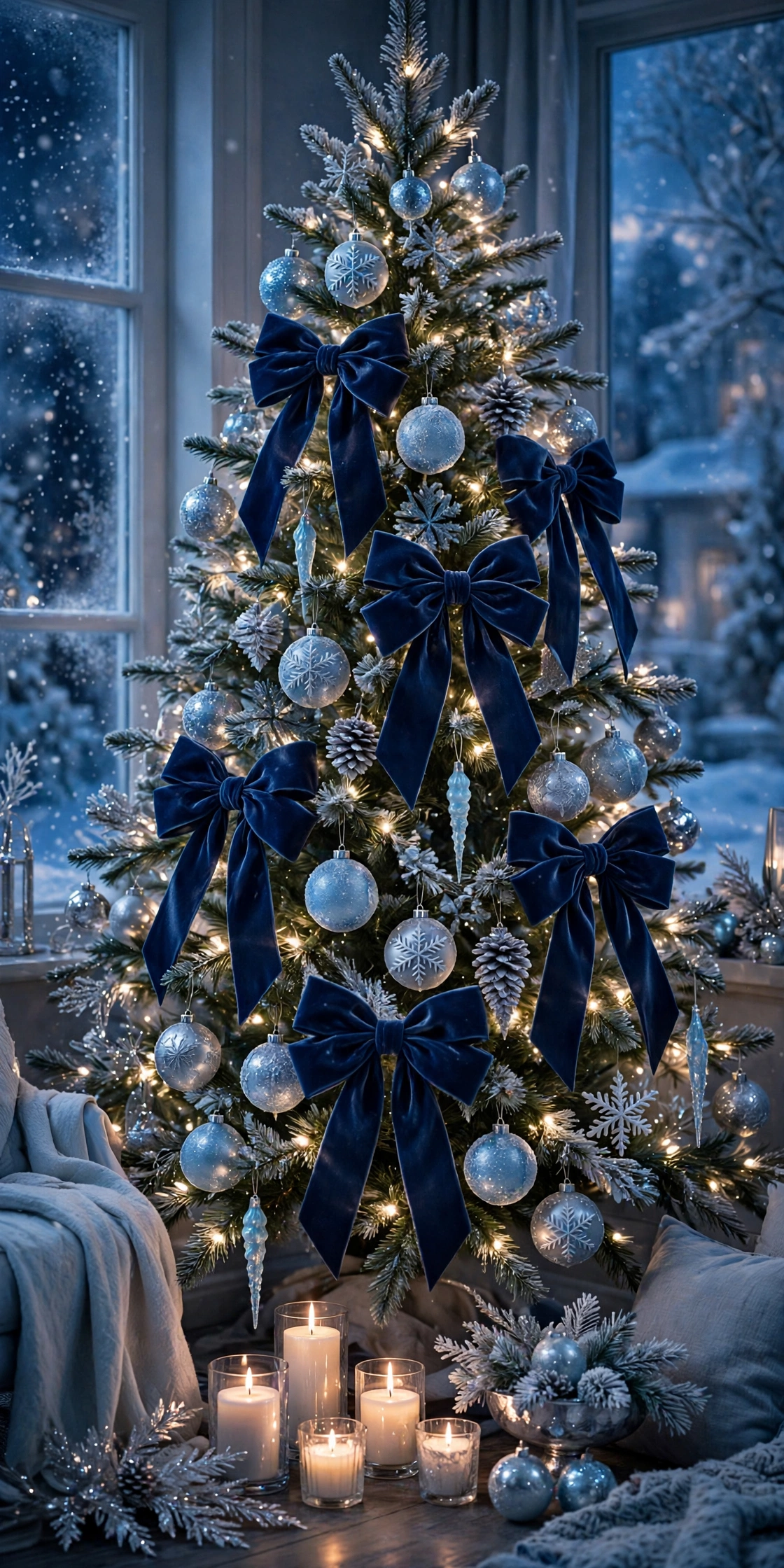
Navy Velvet Bow Clusters
Velvet is the texture that saves this palette from sterility, and bows are the easiest way to add it. Tie 10 to 14 bows from 2-inch navy velvet ribbon and cluster them in threes on the tree, the mantel, and the wreath, rather than scattering singles everywhere. Clusters read as intentional design; single scattered bows read as leftovers.
Try it: Cut ribbon tails at a sharp diagonal, not a V notch. On velvet, the clean diagonal drapes better and frays less over the season.
06
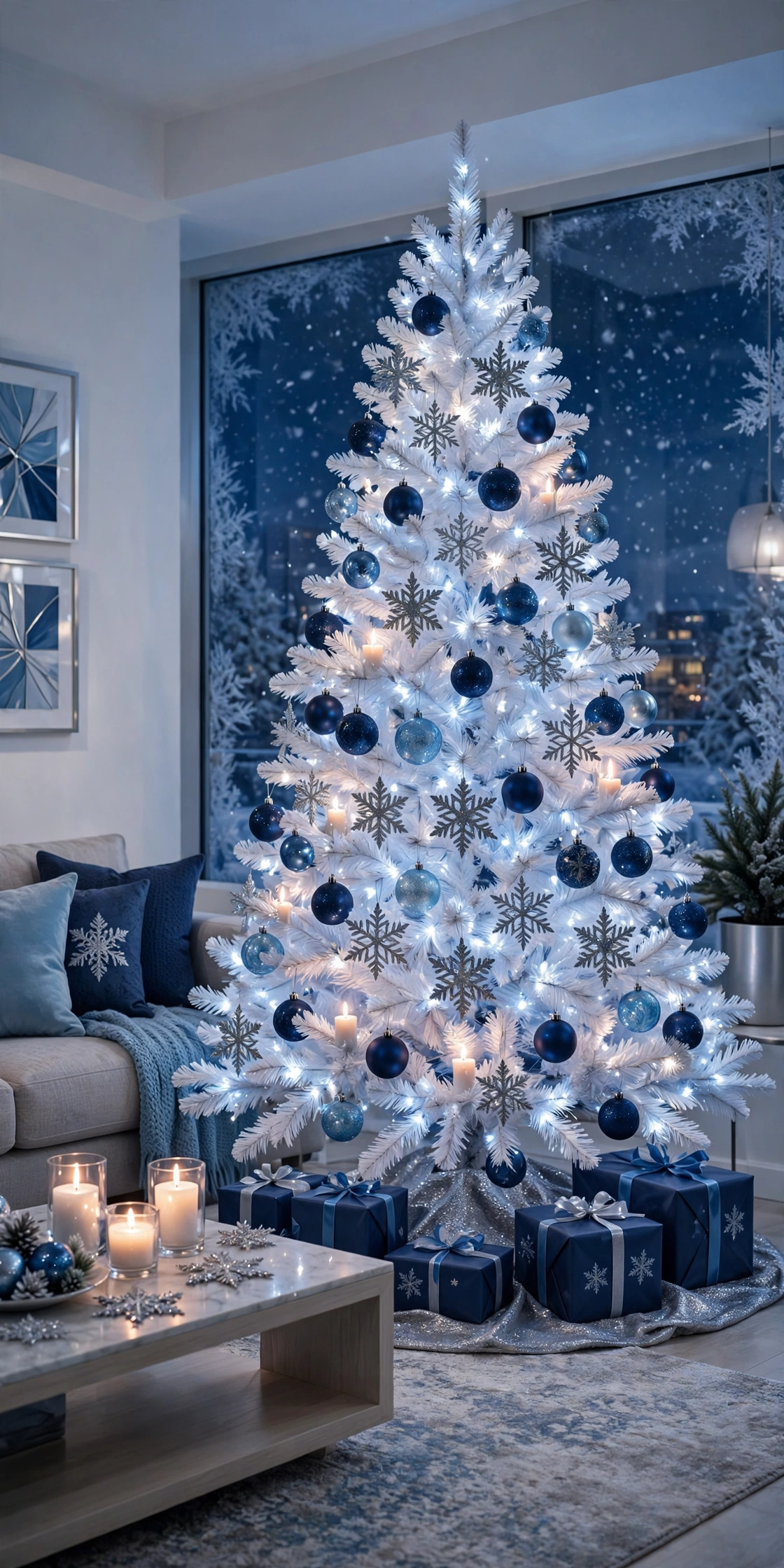
A White Tree with Blue Ornaments
A white or silver artificial tree is the highest-contrast base you can give this palette: navy ornaments look almost black against it, and ice blue glows. A 6-foot white tree costs $60 to $90 and folds the “snowy” part of the theme into the tree itself, so you can decorate lighter everywhere else. Keep ornaments to two blues only, navy and ice, so the white stays the third color.
Try it: Use cool white lights on a white tree, the one exception to the warm-light rule. Cool light on white branches reads as fresh snow; warm light can yellow them.

07
A Snowflake Top Layer
Finish the tree with 15 to 20 snowflake ornaments and picks, silver glitter and white acrylic mixed, hung on the outermost branch tips as the final layer. Snowflakes are flat, so they catch light from every angle and move slightly with air currents, which makes the whole tree feel alive. A pack of 24 costs about $12 and covers the tree plus the wreath.
Try it: Hang snowflakes on clear fishing line at staggered lengths. Invisible line makes them float in front of the branches instead of sitting on them.
08
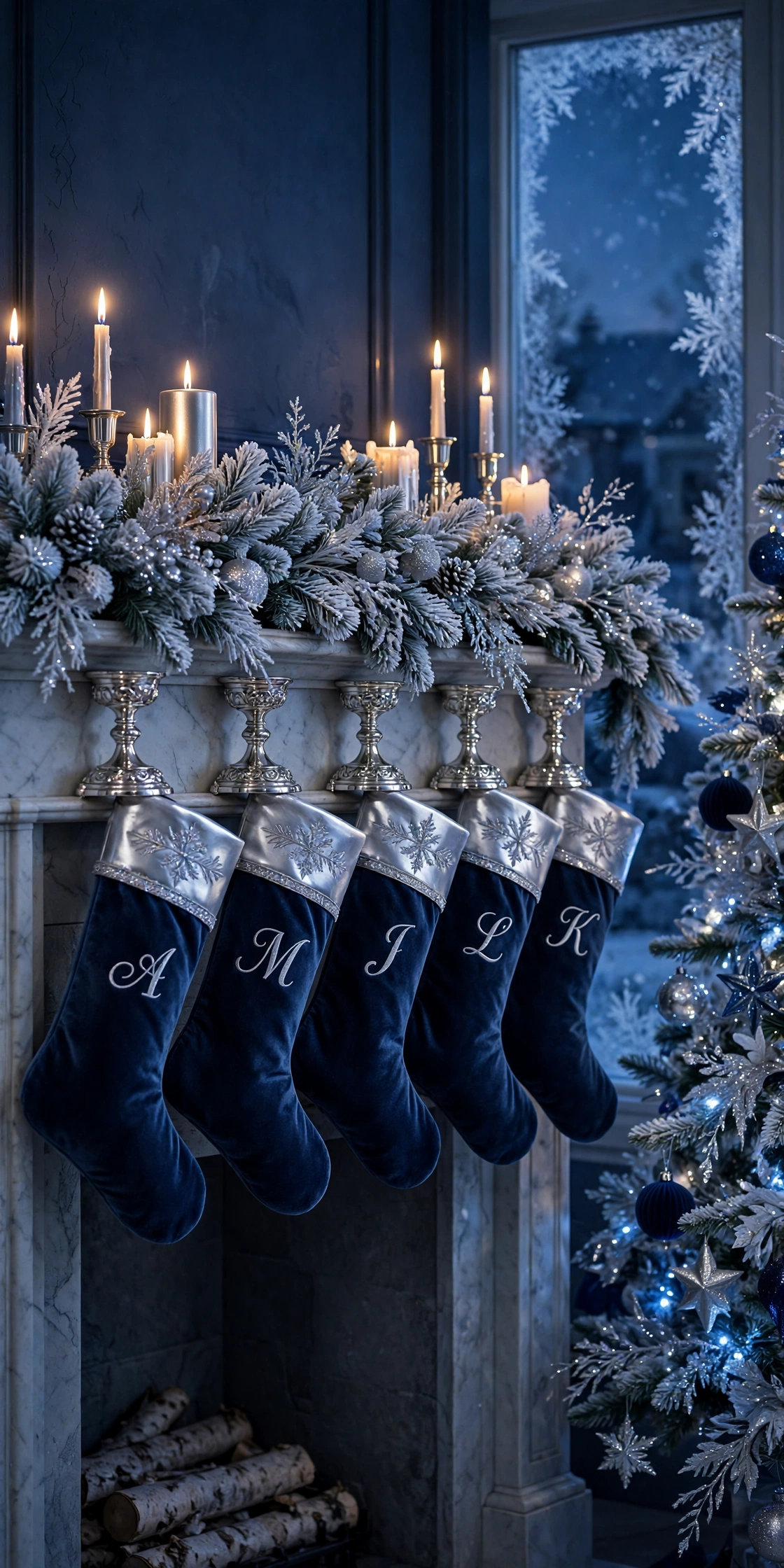
Navy Velvet Stockings
Hang stockings in navy velvet with silver embroidered initials or a silver cuff, and the mantel instantly matches the tree. Velvet stockings run $12 to $20 each, and weighted silver stocking holders (at least 2 pounds each) keep them safe when filled. Keep the row to odd numbers, 3 or 5, spaced evenly across the mantel.
Try it: Order stockings in two sizes, full size for adults and 2 inches shorter for kids. The subtle step-down looks tailored and photographs beautifully.

09
Frosted Silver Garland on the Mantel
Drape a 9-foot garland of frosted greenery, silver berries, and metallic leaves across the mantel with a deep center swag. The frosted finish bridges green garland and the blue palette, so the mantel connects to the room instead of fighting it. Weave in 6 to 8 navy ornaments at the swag points to tie it to the tree across the room.
Try it: Let the garland ends fall 12 inches past each mantel corner. Ends that stop exactly at the corner look cut off; the overhang looks generous.
10
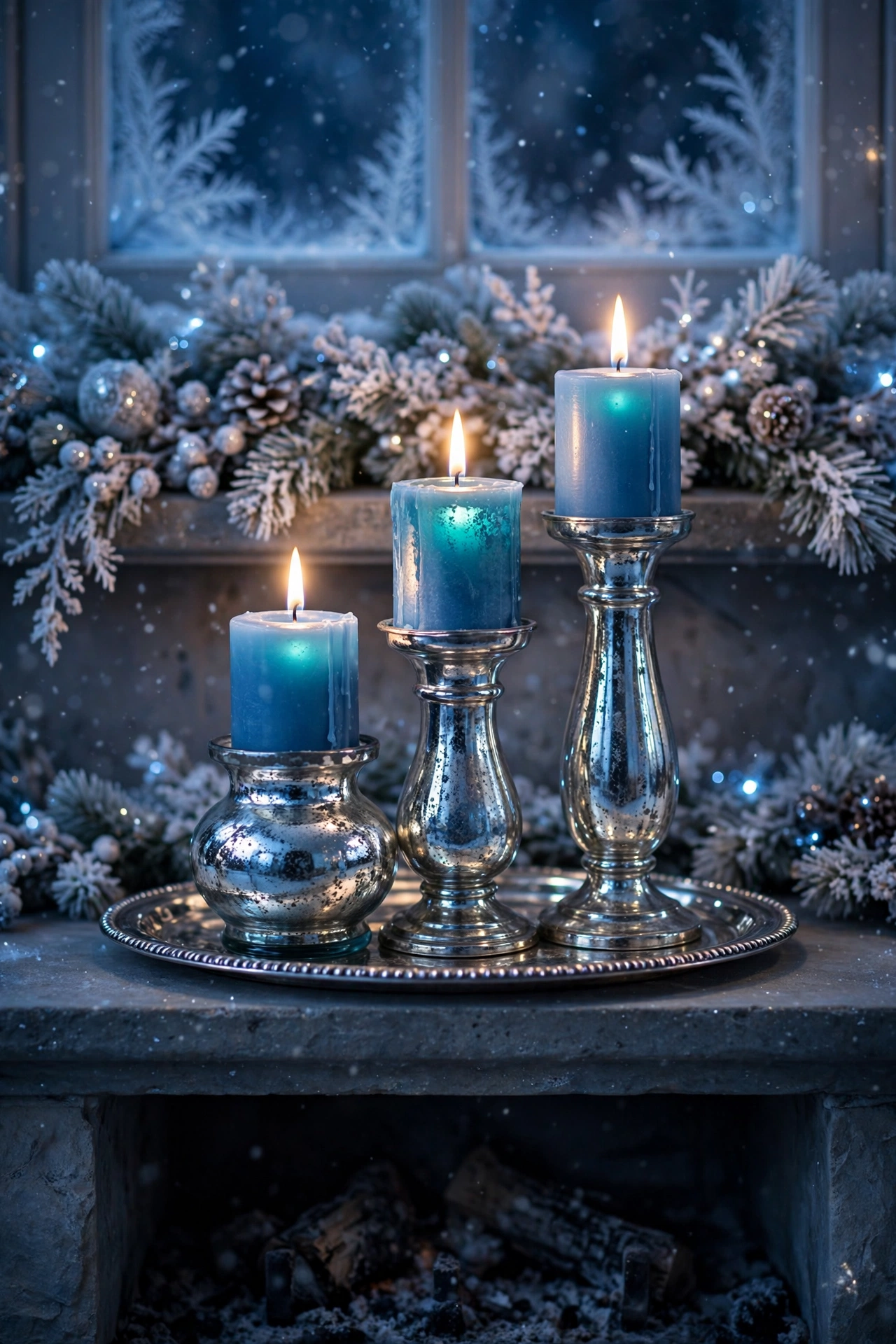
Blue Candles in Mercury Glass Holders
Line the mantel or hearth with blue pillar candles in mercury glass holders, three heights from 4 to 8 inches, grouped in threes. Blue candles are the fastest warm-up trick in this palette: the flame turns the blue glass teal at the center, adding a living color no ornament can match. Flameless versions with a 6-hour timer cost about $20 for a set of three and are the safe choice near garland.
Try it: Cluster the candles on a silver tray, not directly on the mantel. The tray corrals the group and doubles the reflection underneath.
11
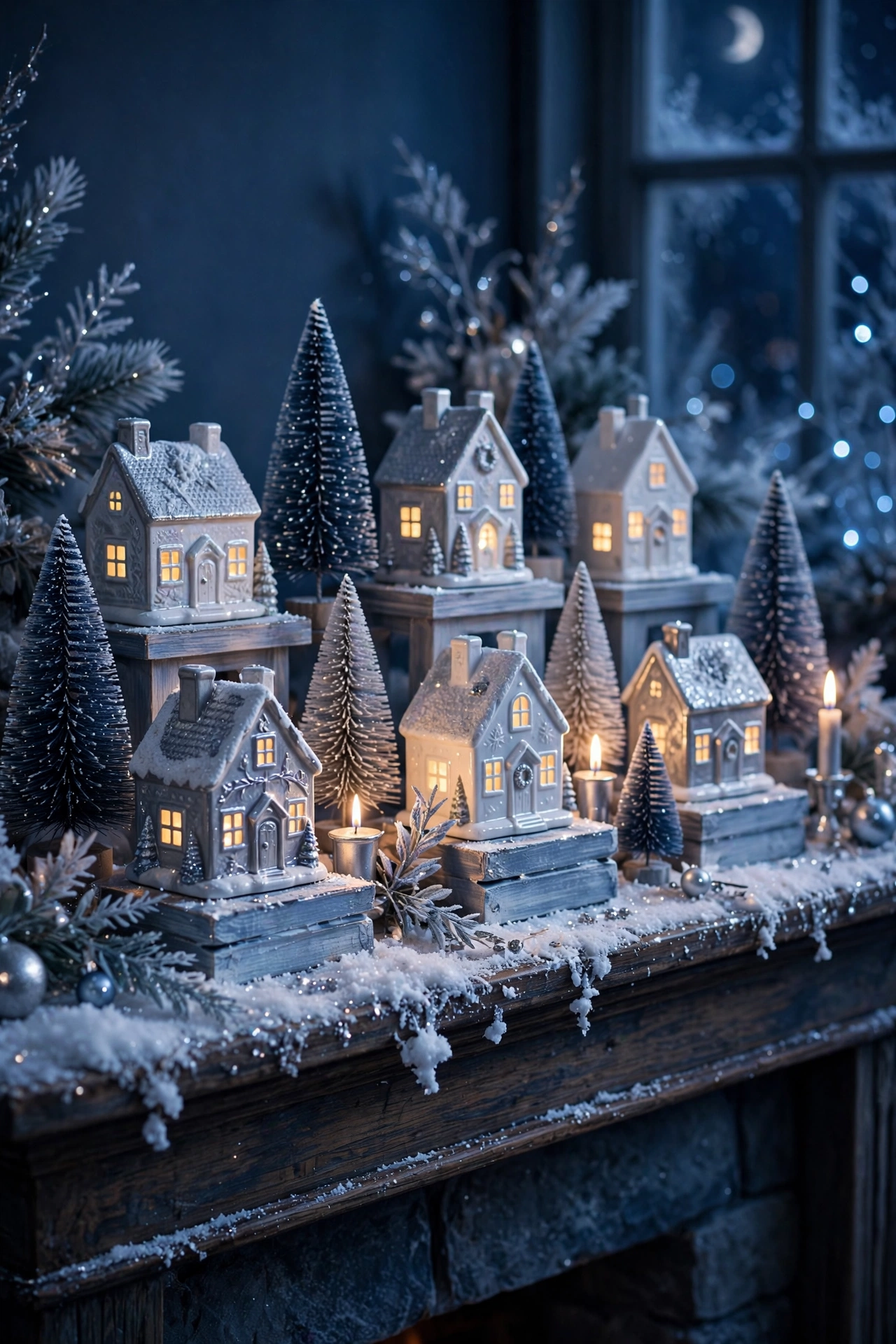
A Silver Village on the Mantel
A row of silver and white ceramic or metal village houses along the mantel, lit from within by warm LEDs, turns the hearth into a tiny moonlit town. Start with 5 houses ($8 to $15 each) and add one per year; a village is a collection, not a purchase. Sprinkle faux snow along the mantel edge and tuck bottle-brush trees in navy and silver between the houses.
Try it: Raise the back row of houses on upside-down books or small boxes. Two staggered heights look like a real street; one flat row looks like a shelf in a shop.
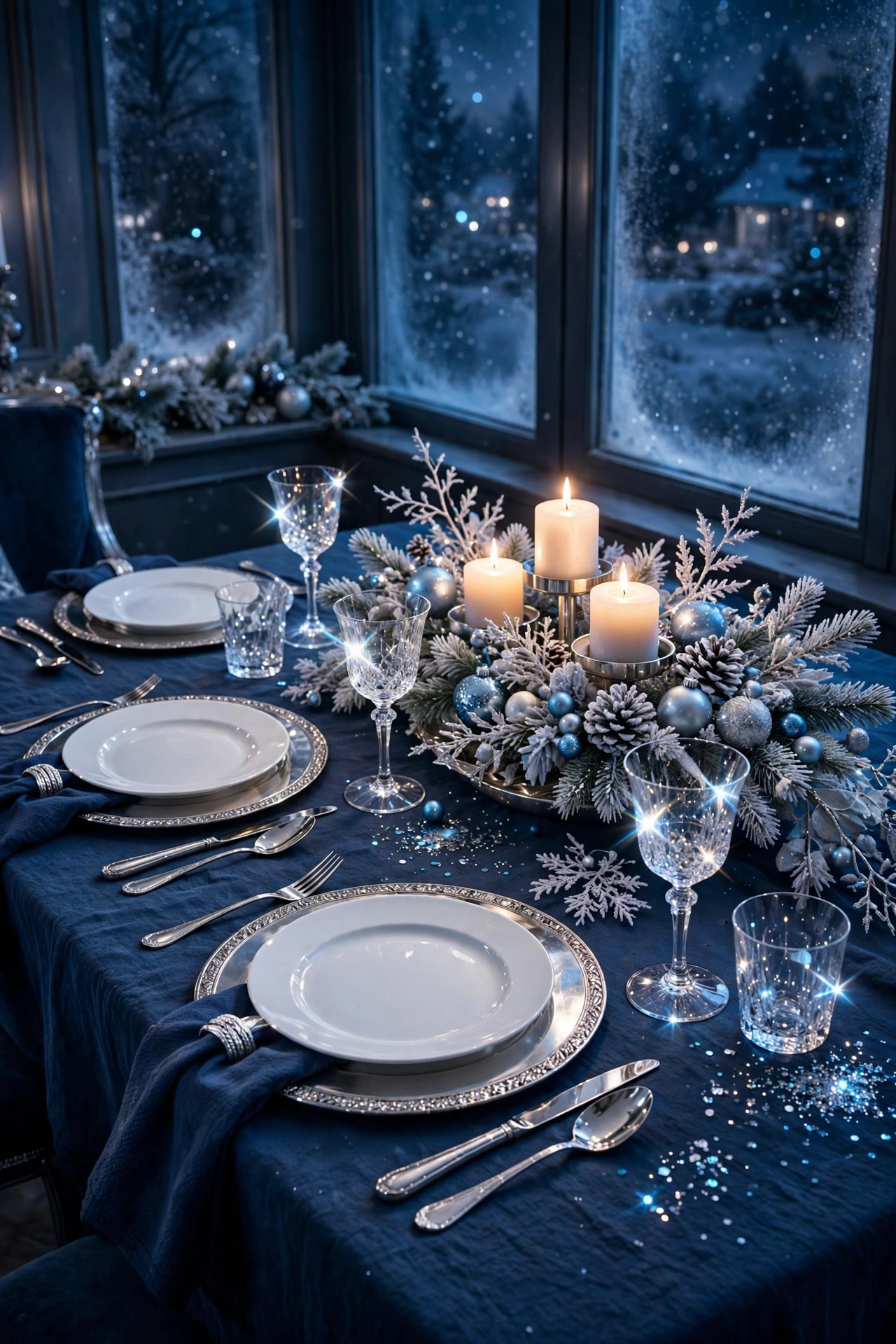
12
Navy Tablecloth, Silver Chargers
Set the dining table on a deep navy cloth with silver chargers under plain white plates. The chargers do the decorating: a set of six costs $15 to $25, never needs washing beyond a wipe, and makes everyday white dinnerware look like a formal service. Navy underfoot of the setting also makes silverware and glassware sparkle by contrast.
Try it: Roll out the tablecloth the night before and mist it lightly with water. Creases relax overnight, and you skip ironing on the day.
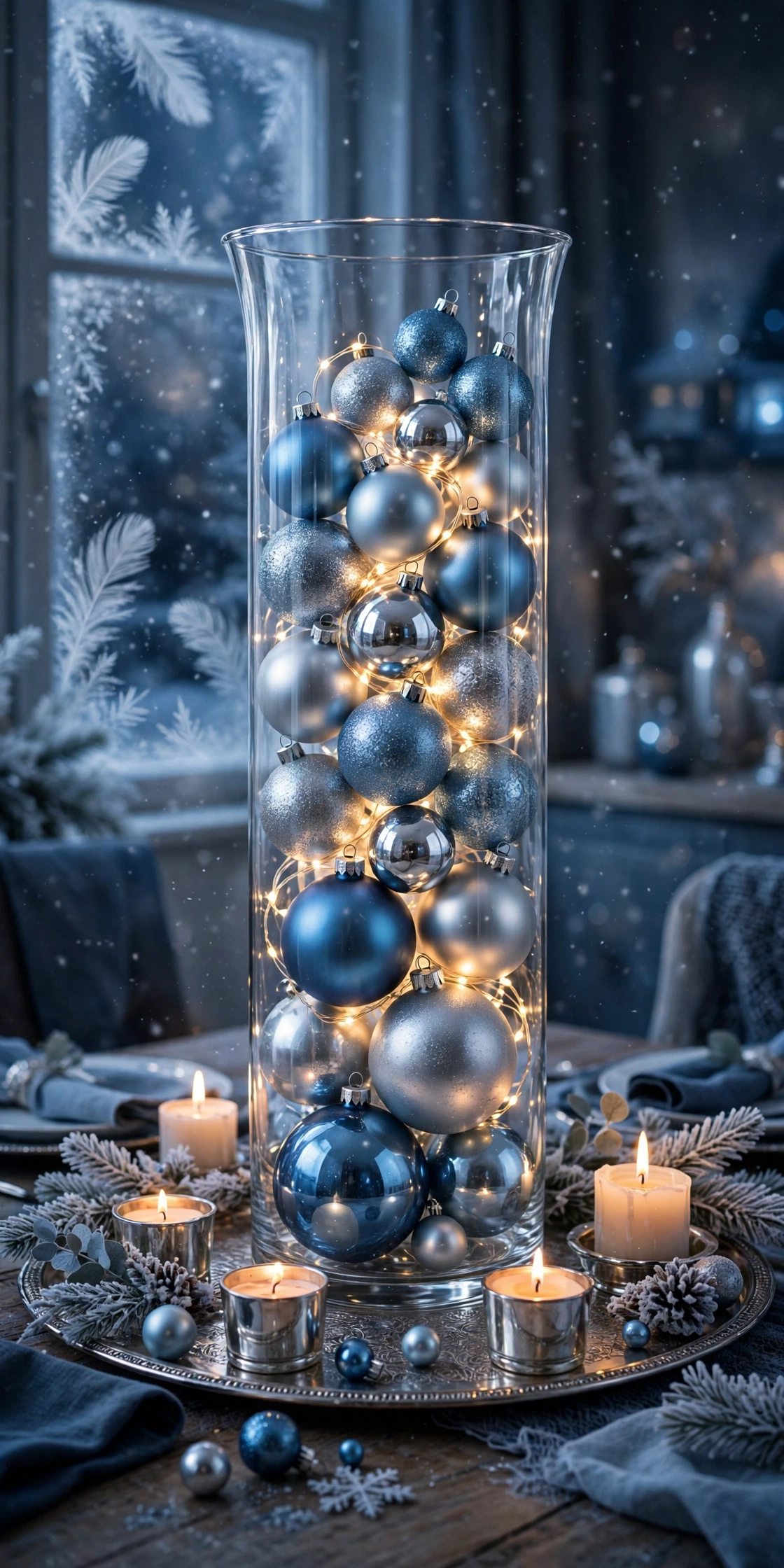
13
An Ornament-Filled Vase Centerpiece
Fill a tall clear glass vase or hurricane with blue and silver ornaments in mixed sizes, set it on a silver tray, and your centerpiece is done in five minutes for under $20. Keep the arrangement under 12 inches tall (or over 24, on a tall vase) so guests can see each other across it. A strand of battery fairy lights coiled inside the vase turns the whole thing into a lamp after dark.
Try it: Put the largest ornaments at the bottom and the smallest on top. It settles naturally, looks fuller, and nothing rolls when the table gets bumped.
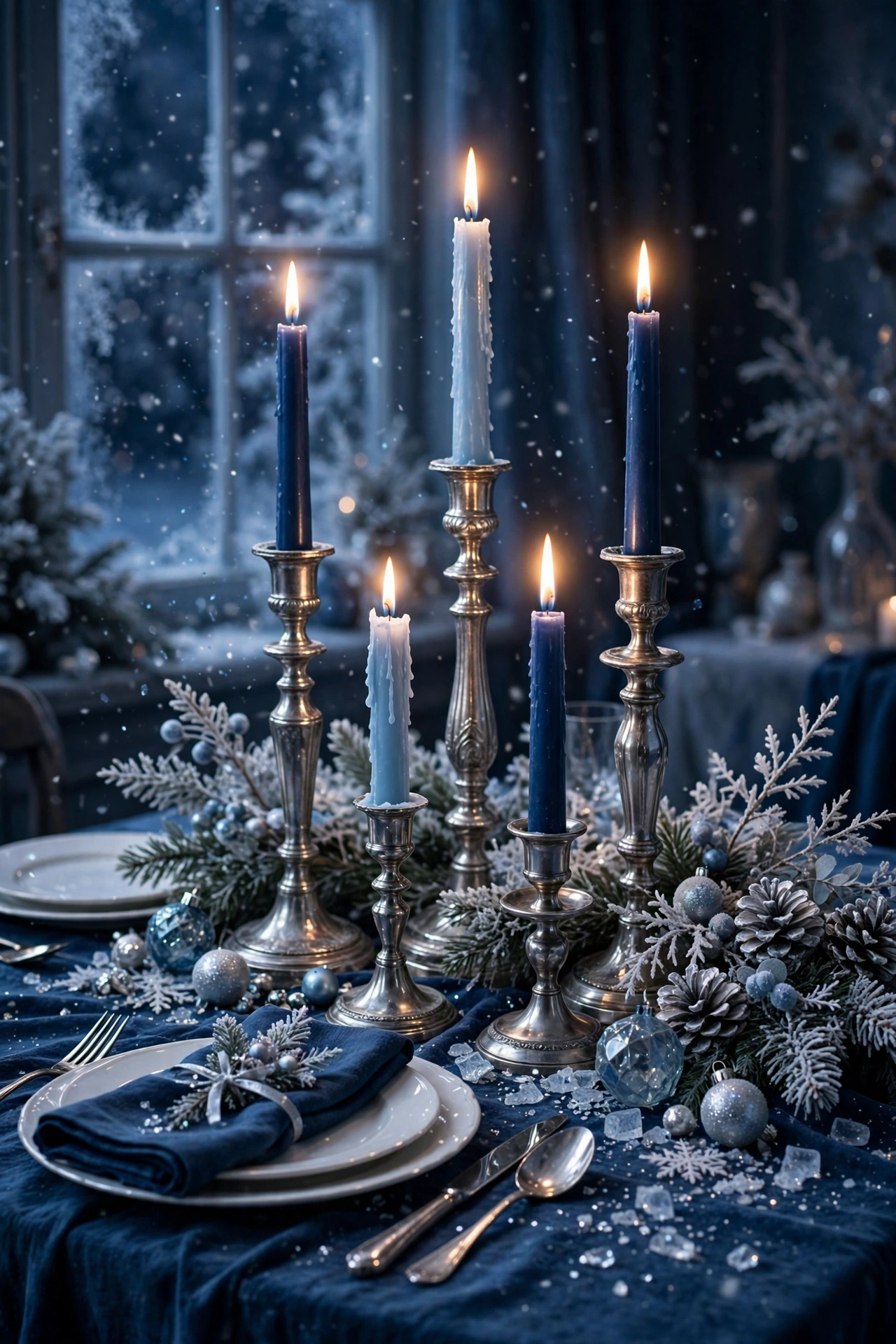
14
Silver Candlesticks with Blue Tapers
Tall silver candlesticks with navy or ice blue taper candles give the table vertical drama that flat centerpieces cannot. Use 10-inch tapers in holders of two heights, and keep flames at least 12 inches below any hanging greenery or pendant shade. A pair of vintage-style silver candlesticks costs $20 to $35 and works with the blue candles now and white candles the rest of the year. For placement and burning basics, see the NFPA’s candle safety guidance.
Try it: Chill taper candles in the fridge for two hours before the meal. Cold tapers drip far less and burn about 20 percent longer.
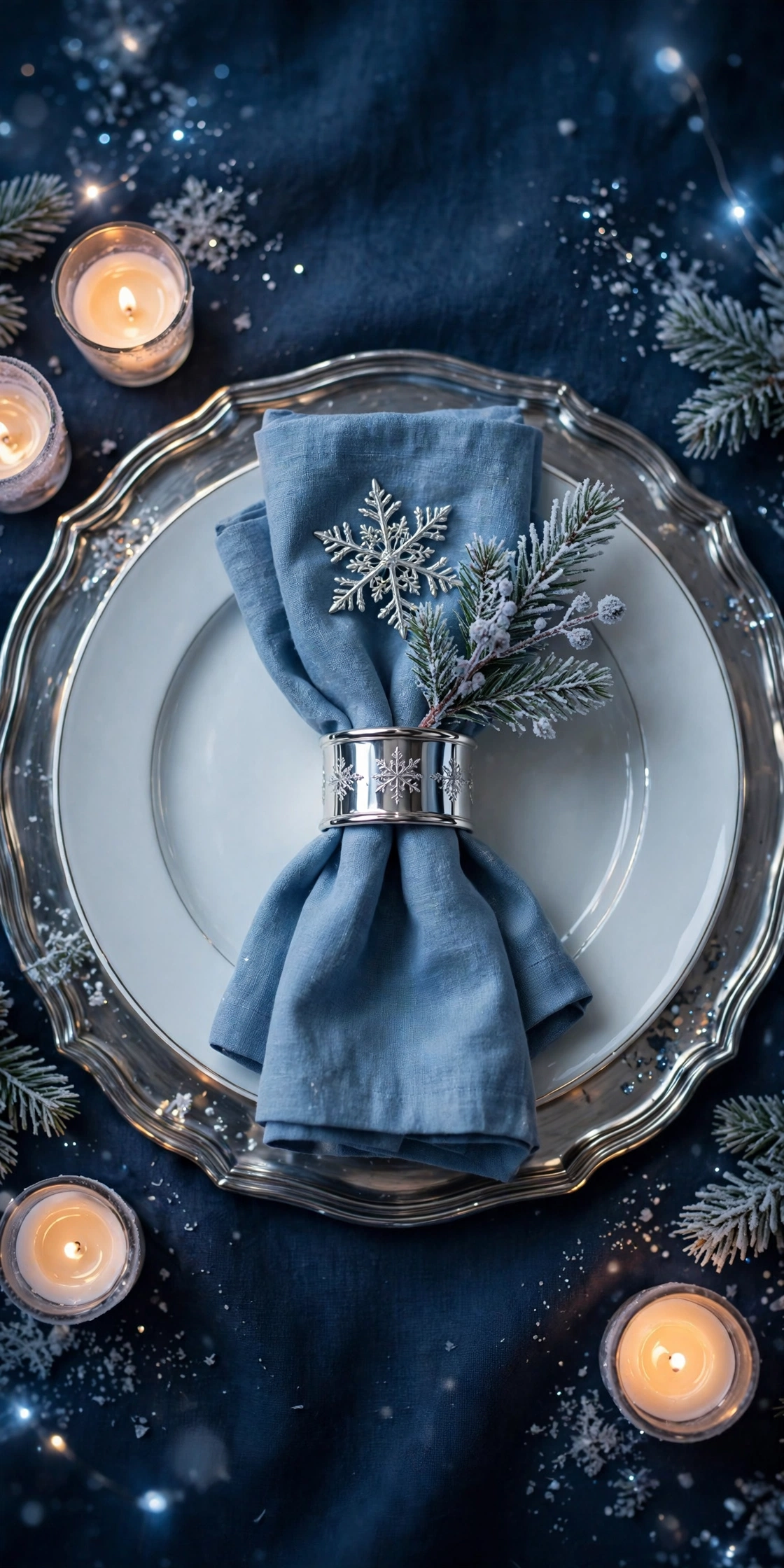
15
Blue Napkins, Silver Rings
Fold ice blue or navy linen napkins through silver napkin rings and lay one on each plate: it is the cheapest place-setting upgrade there is, about $2 per seat if you buy rings in a set of twelve. The napkin is where each guest meets the palette up close, so this small touch carries more weight than anything on the sideboard. Add a single silver snowflake or a sprig of frosted greenery on top of each napkin.
Try it: If your blues are mostly navy elsewhere, go ice blue at the napkins. One lighter accent per setting keeps a dark table from feeling heavy.
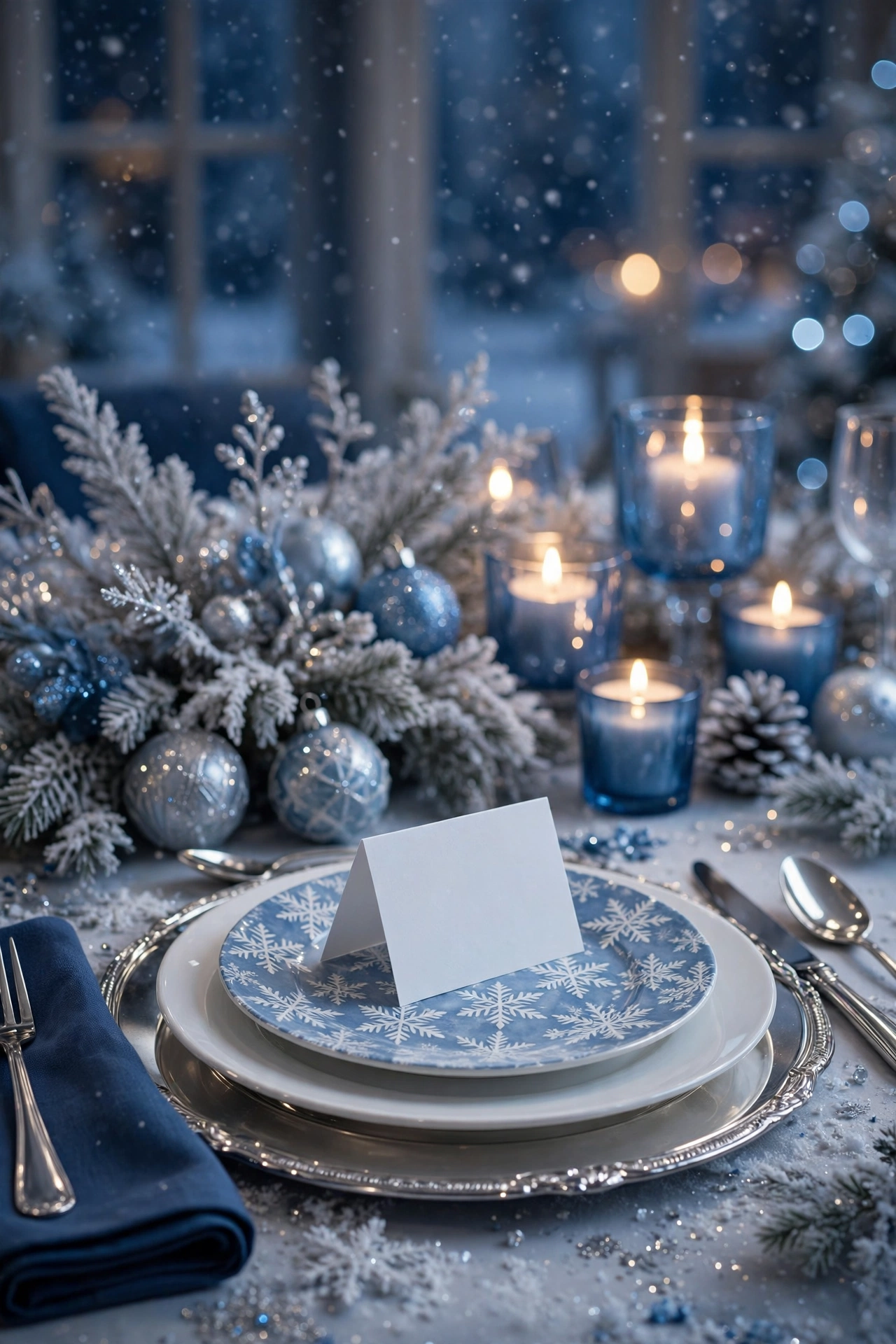
16
Snowflake Dinnerware Accents
You do not need a whole new dinner service: add one blue and white snowflake salad plate or mug per setting on top of the white plates you own. A set of four snowflake accent plates costs $16 to $24 and layers in pattern exactly where the table needs it. Pattern at one layer only keeps the table elegant; pattern at every layer turns it into a theme park.
Try it: Write each guest’s name on a small white card and rest it against the snowflake plate. Place cards end the seating shuffle and double as a keepsake.
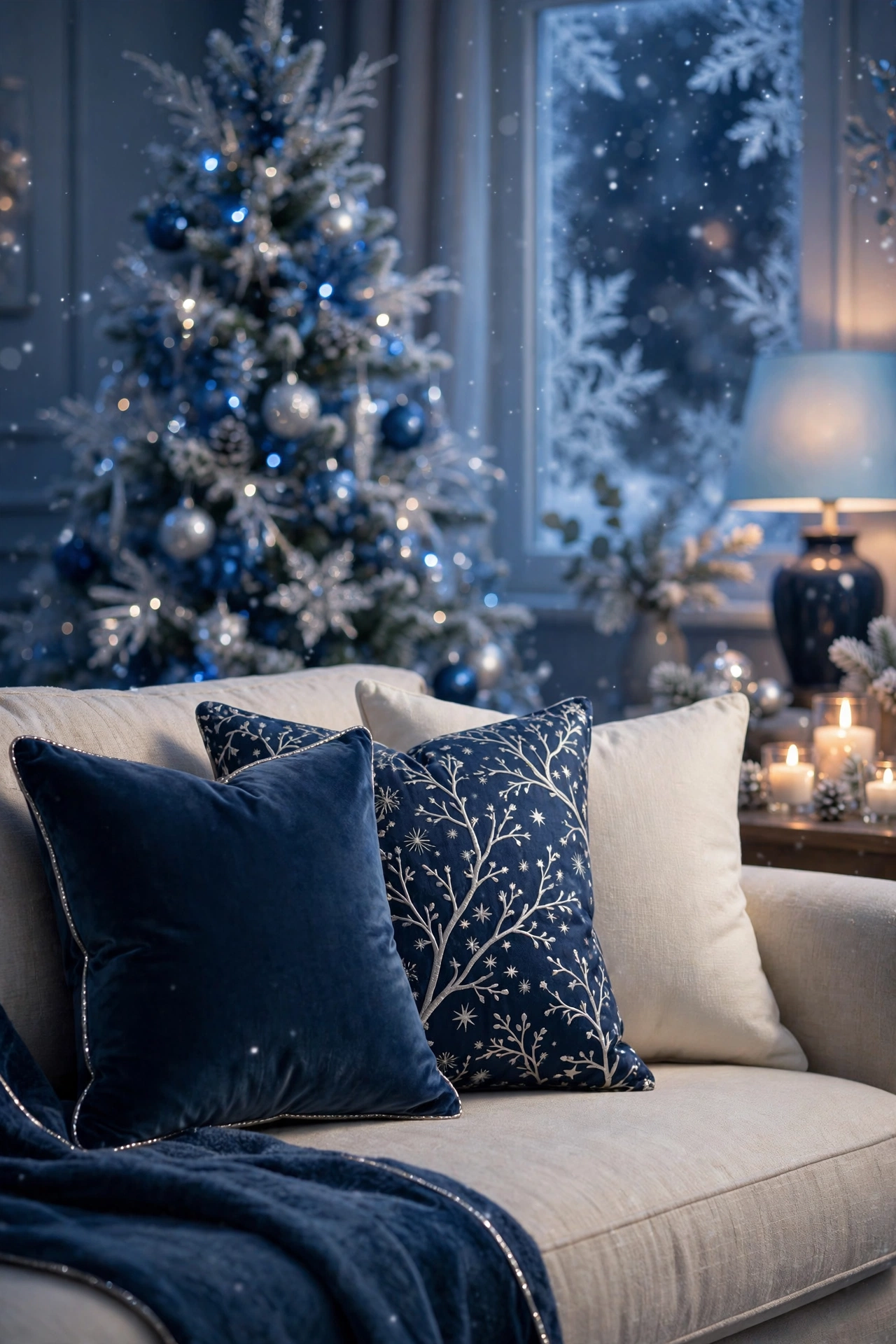
17
Navy Pillows with Silver Detail
Swap the sofa’s pillow covers for navy velvet with silver piping, zips, or a single silver snowflake motif, and the living room joins the palette without touching the tree budget. Two 20-inch covers cost about $25 and reuse the inserts you already own. Mix one patterned cover (silver branches or stars on navy) with two solids so the sofa looks styled, not themed.
Try it: Keep one everyday neutral pillow in the arrangement. A single cream pillow among the navy keeps the sofa from looking like a showroom set.
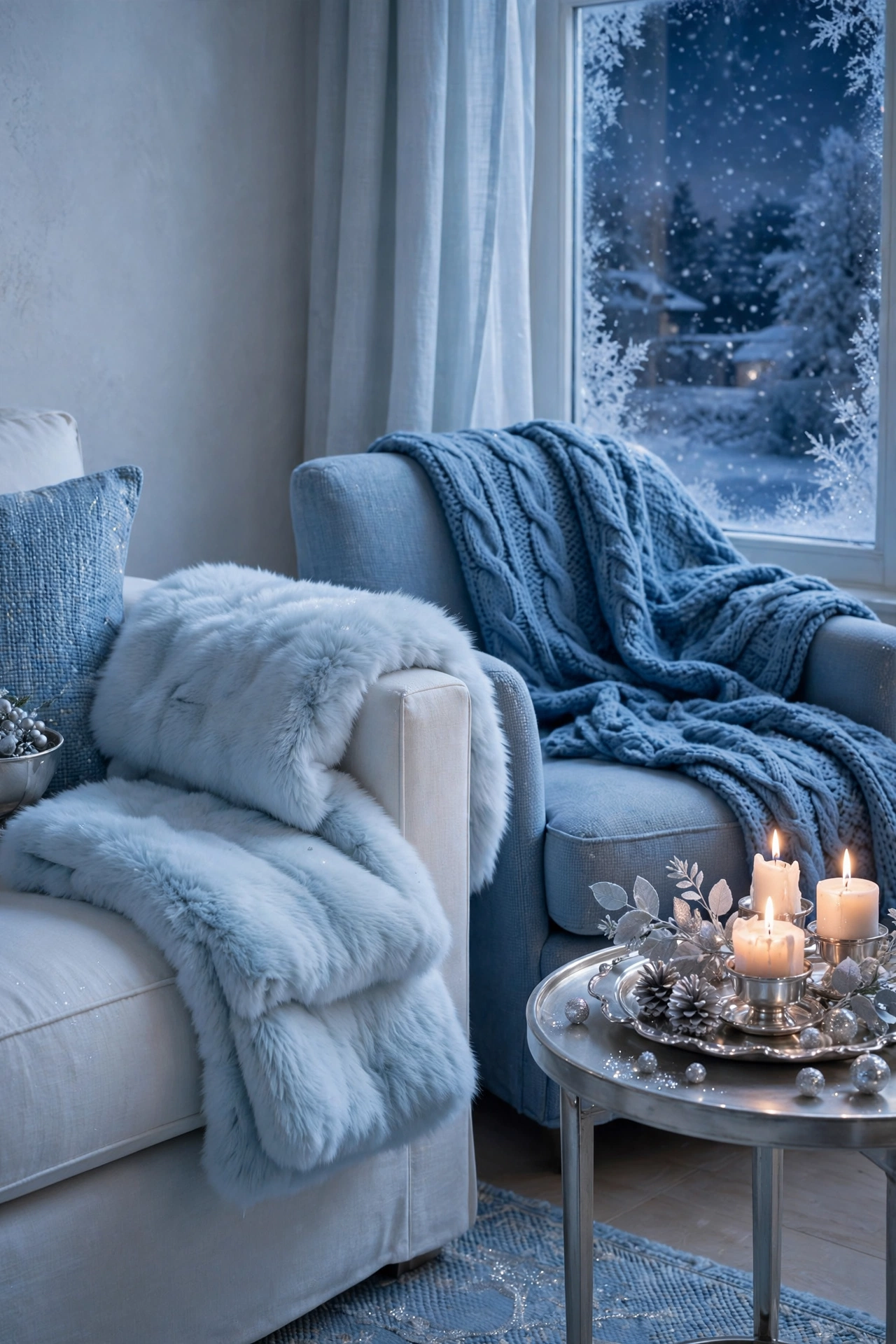
18
Ice Blue Throws and Faux Fur
Drape an ice blue or white faux fur throw over the sofa arm and a chunky knit in a mid blue across the armchair. Soft, matte textiles are what stop a metallic palette from feeling like a jewelry store, and throws earn their place by actually being used on cold nights. Fold throws in thirds lengthwise before draping; the narrow fold looks tailored instead of bunched.
Try it: Choose the throw in the lightest blue in your scheme. Dark throws pull a sofa down visually; the pale layer keeps the seating bright and inviting.
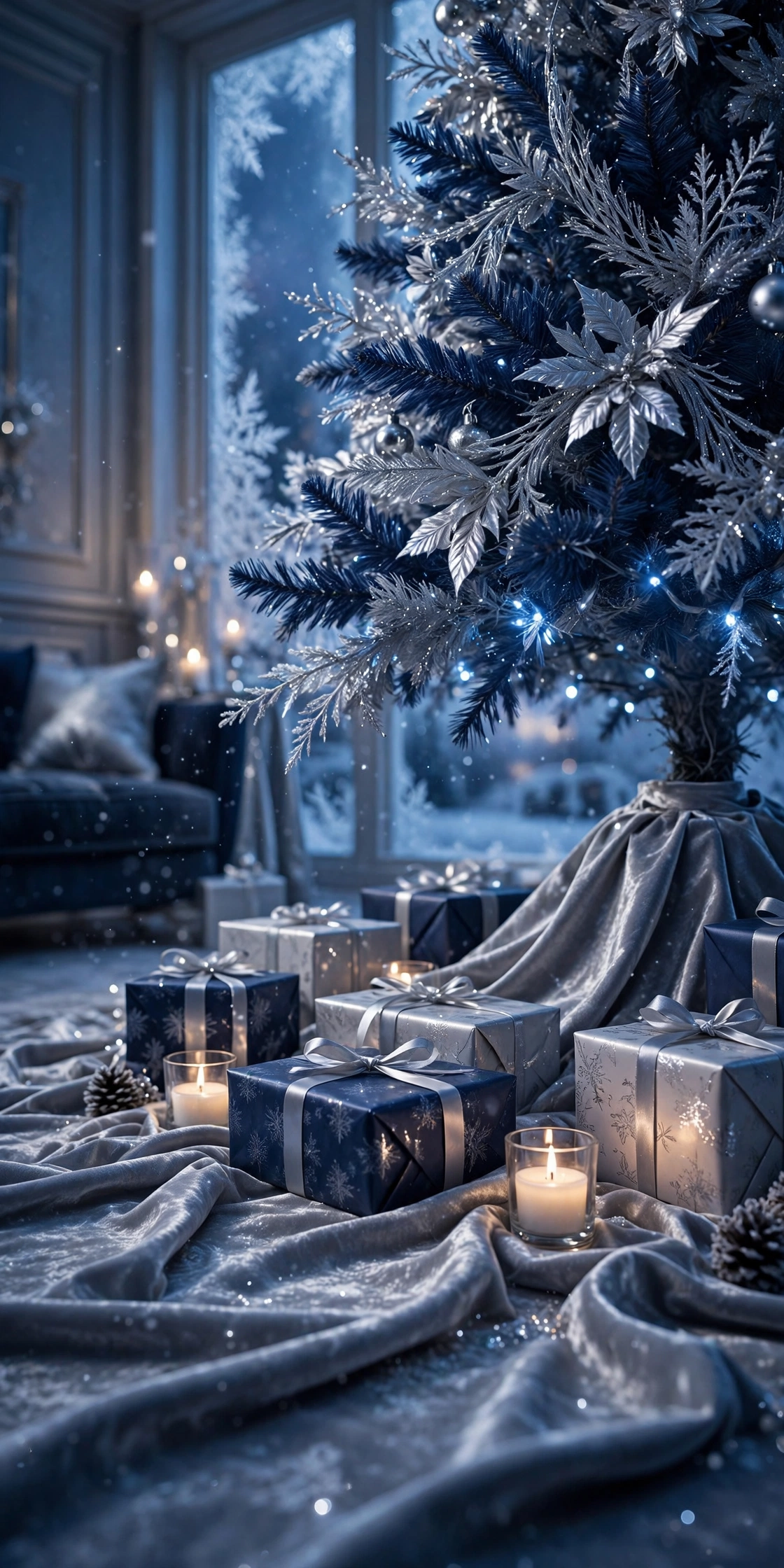
19
A Silver Tree Skirt or Mirrored Collar
Ground the tree with a silver velvet skirt, a sequined silver skirt, or a mirrored tree collar: the base is the most-seen and least-decorated part of most trees. Measure your stand first and buy a skirt at least 48 inches across for a 7.5-foot tree, so wrapped gifts sit on the skirt instead of half off it. Mirrored collars double the tree lights at floor level and suit modern rooms best.
Try it: Wrap early gifts in navy and silver paper only. Coordinated wrapping under the tree is free decor for the three weeks before Christmas.
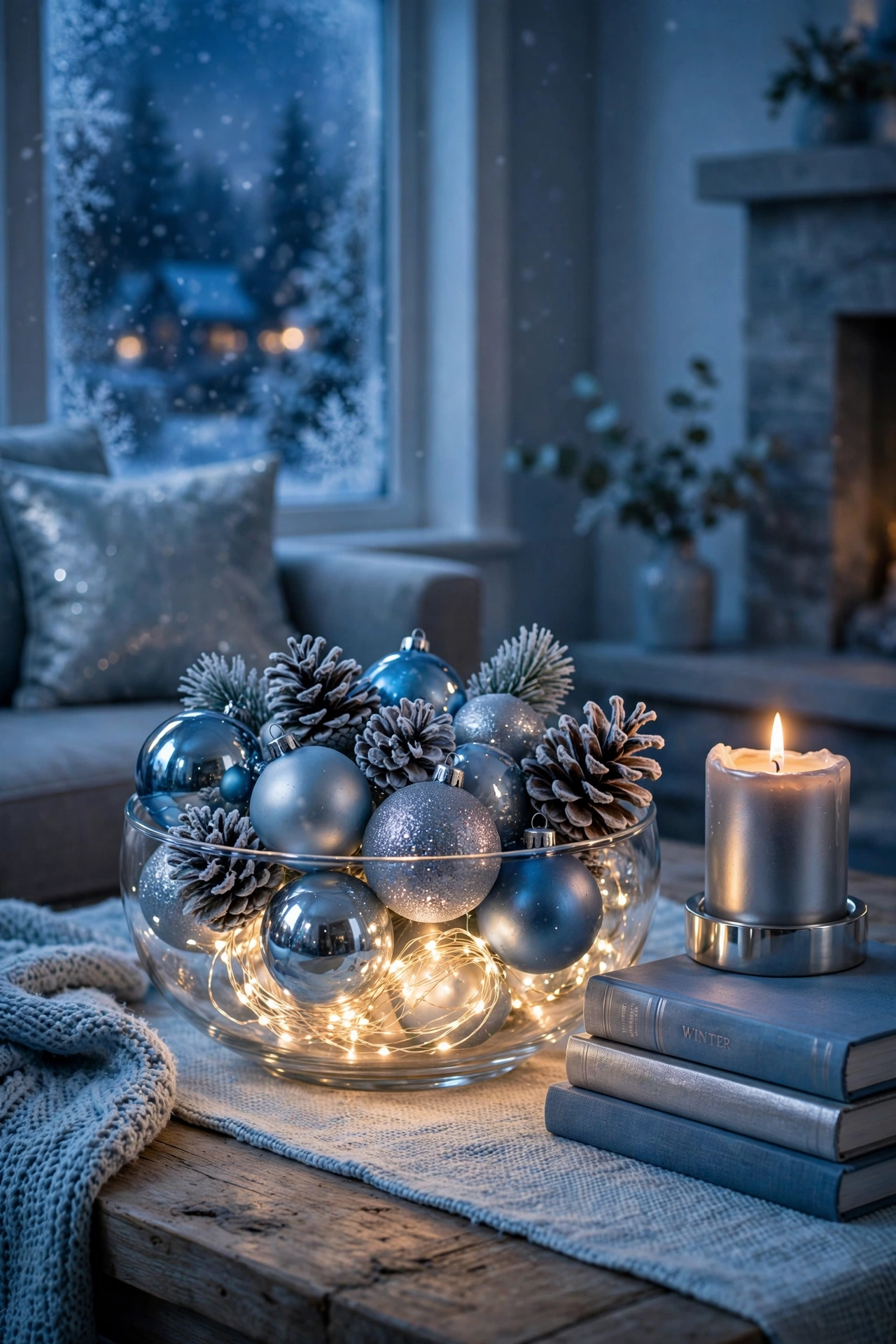
20
An Ornament Bowl on the Coffee Table
Fill a silver or clear glass bowl with the leftover blue and silver ornaments, a few frosted pinecones, and one strand of fairy lights, and set it where a centerpiece belongs. It takes four minutes, costs nothing if you shop your own stash, and gives the room a second sparkle point at sitting height. Bowls of ornaments are also the safest decor in the house: nothing to knock off a branch, nothing for the cat to hunt.
Try it: Mix three finishes in the bowl, shiny, matte, and glitter, in roughly equal thirds. One finish alone looks like a shop bin; three finishes look curated.
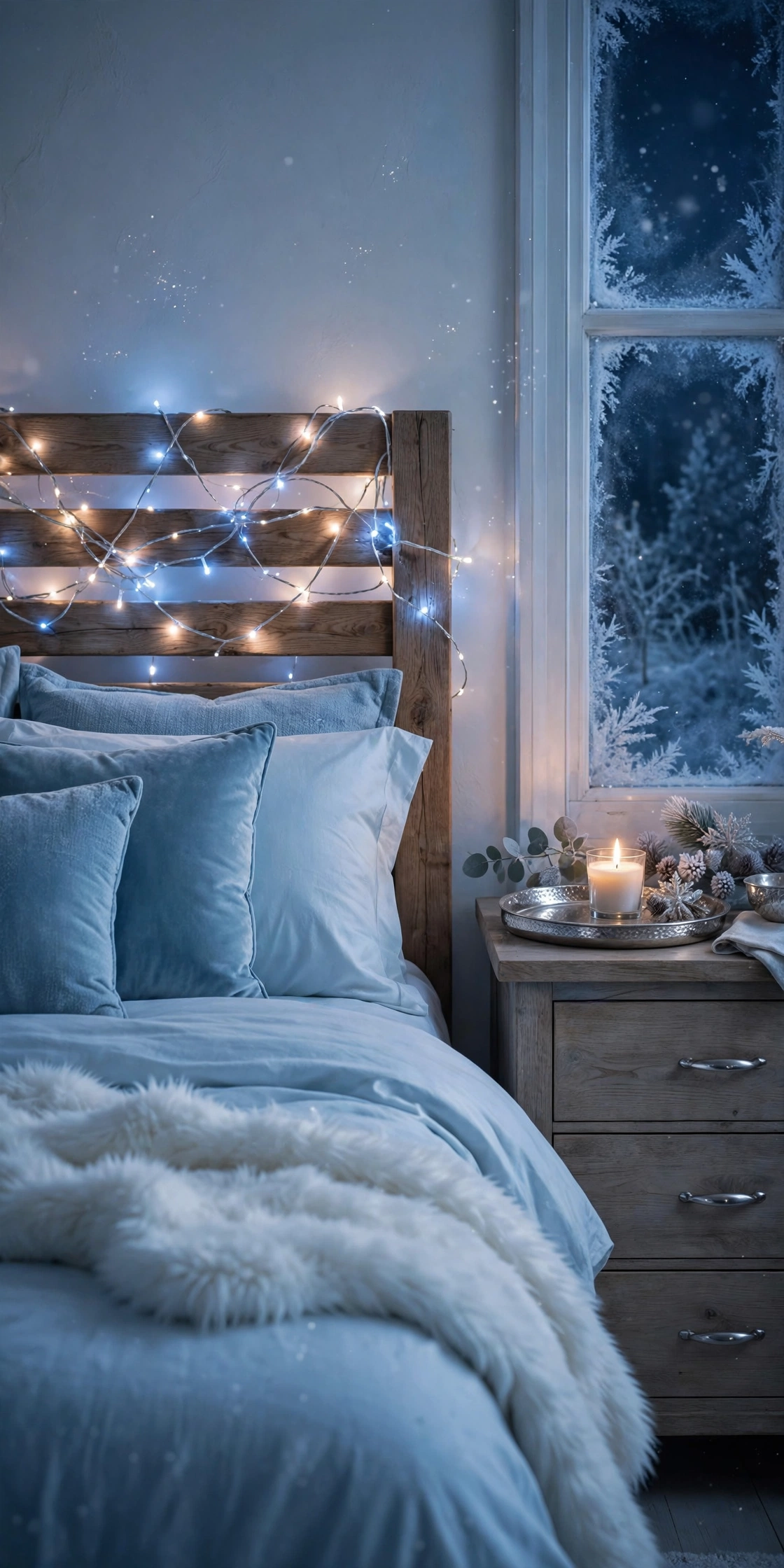
21
Blue Fairy Lights in the Bedroom
Carry the palette into the bedroom with one strand of blue or warm white fairy lights woven through the headboard or around the window frame. The bedroom version of this palette should be softer than the living room’s: ice blue textiles, one silver tray on the dresser, and nothing glitter-heavy where you sleep. Battery strands with timers cost about $10 and switch themselves off after you drift off.
Try it: Choose warm white lights here even if the living room tree uses blue ones. Warm light at bedtime keeps the room restful, and the blue textiles still read blue under it.
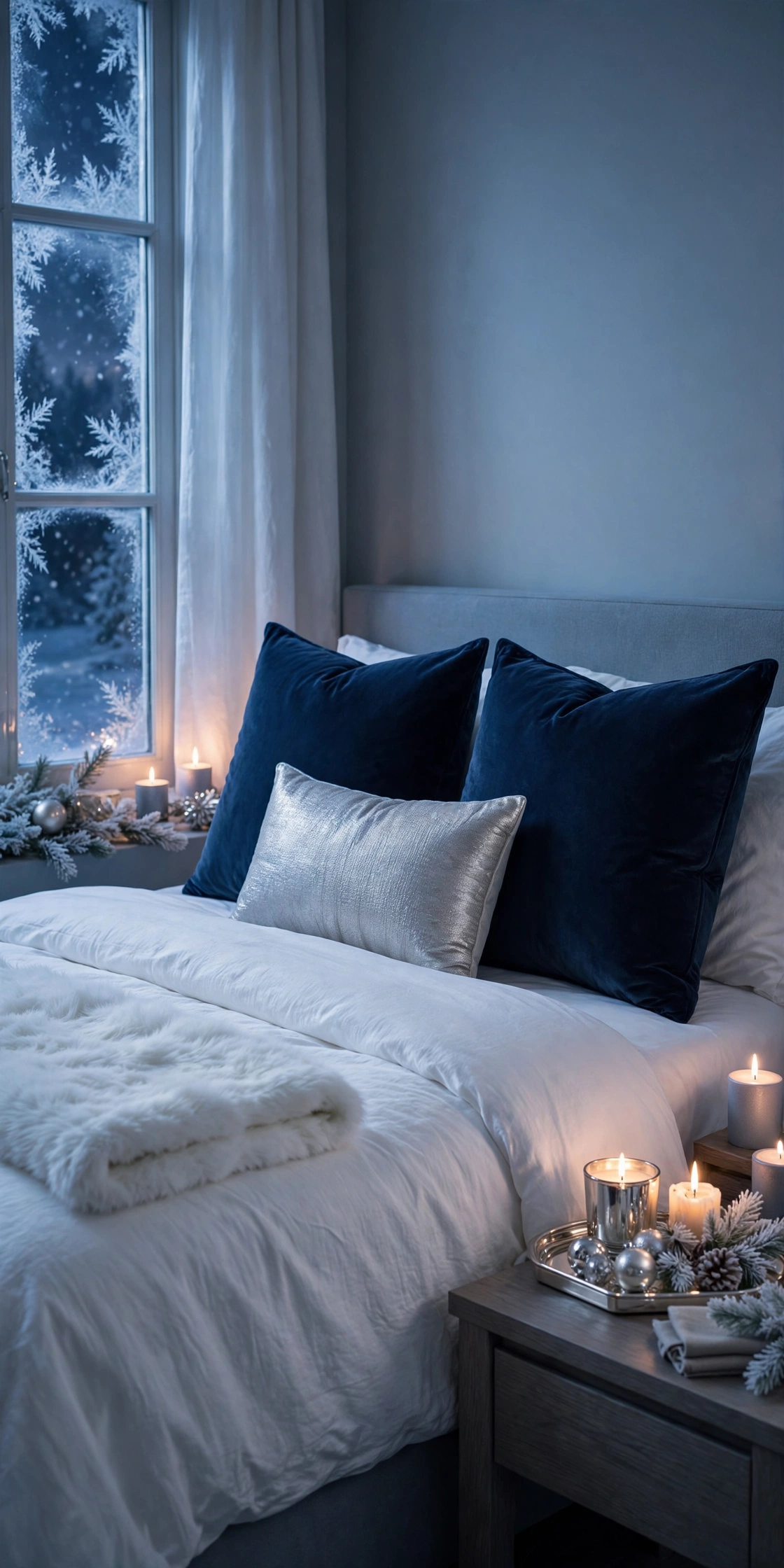
22
The Five-Minute Bedroom Pillow Swap
You do not need Christmas bedding to give the bedroom the palette: swap two pillow shams for navy velvet, add one silver or ice blue lumbar pillow, and fold a white faux fur throw at the foot of the bed. It takes five minutes, costs about $30, and the whole room reads intentional. Everything stores flat in January, which matters in bedrooms with one small closet.
Try it: If your everyday duvet is white or gray, you are already two-thirds done, since both are perfect bases for this palette. Only the accents need to change.
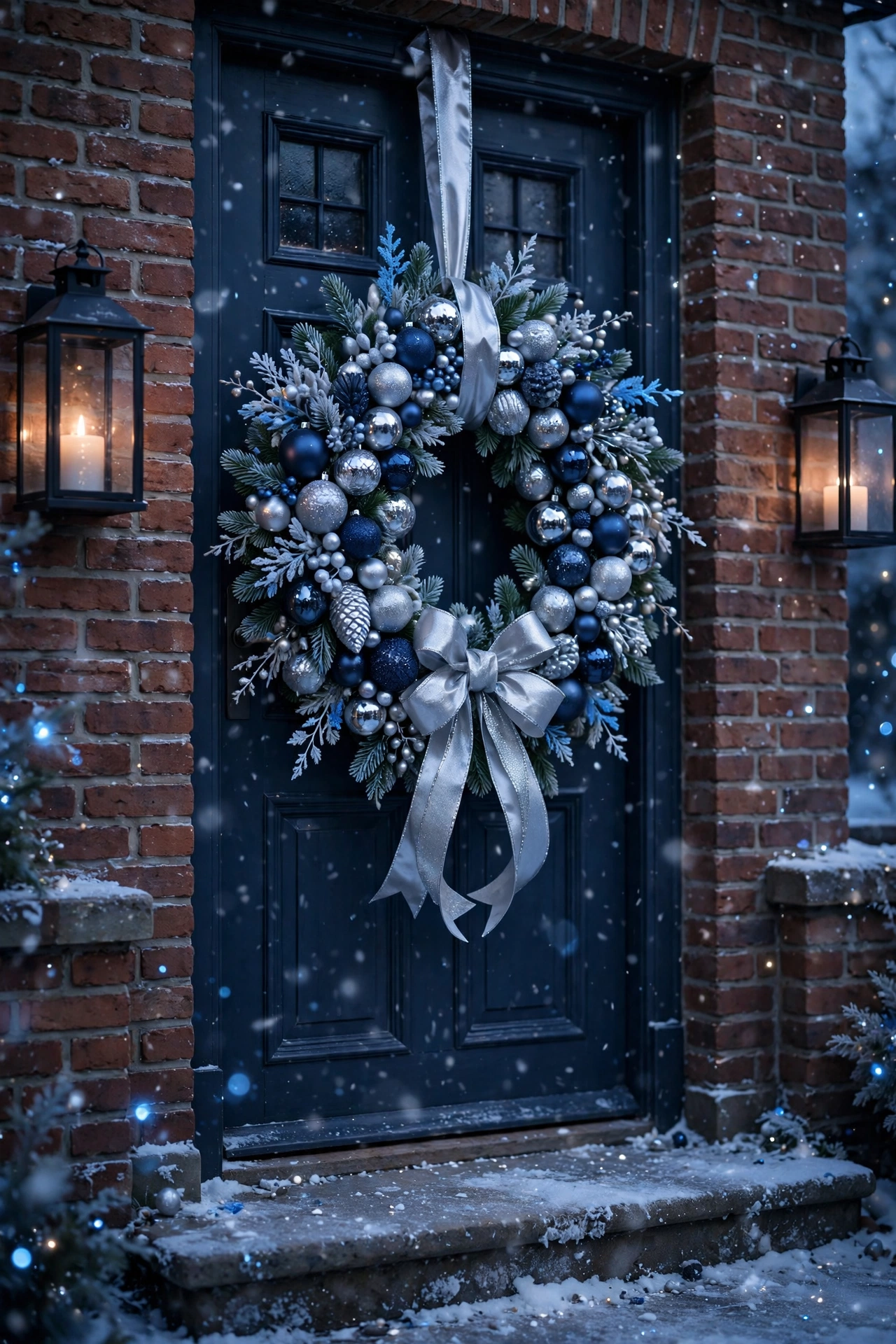
23
A Blue and Silver Wreath on the Door
Hang a wreath loaded with navy and silver ornaments, frosted greenery, and a silver bow on the front door, sized to about one-third of the door’s width (24 to 30 inches for a standard door). The wreath is your palette’s announcement to the street, and blue reads beautifully against red brick, white siding, and dark doors alike. Use shatterproof ornaments outdoors; glass and freezing wind do not mix.
Try it: Hang the wreath from a wide silver ribbon over the door top instead of a hook on the glass. The ribbon becomes part of the design and holds better in wind.
24
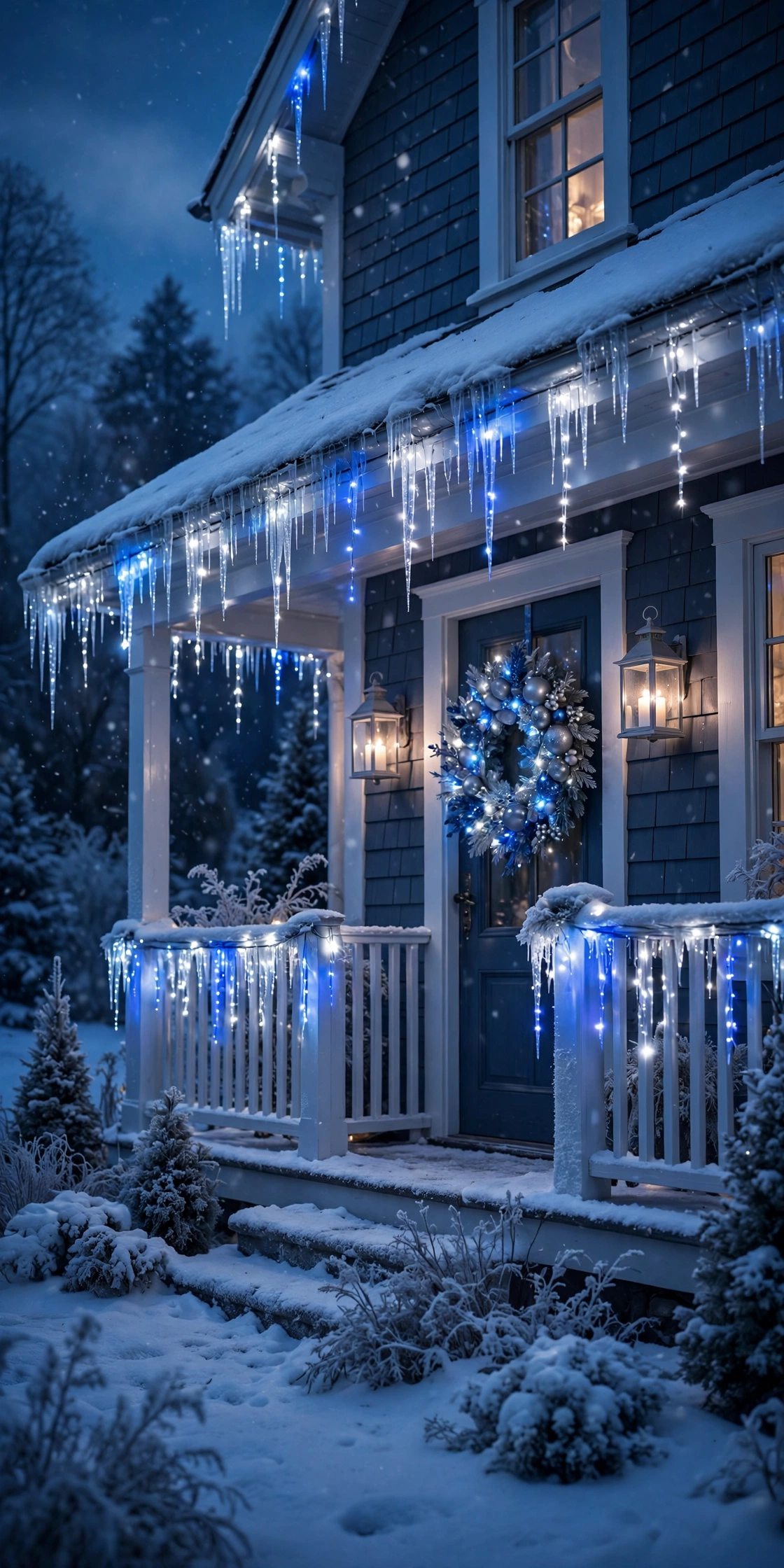
Blue Icicle Lights Outside
Run blue or blue-and-white icicle lights along the roofline or porch rail for the outdoor version of the theme: the dripping-light effect is literally ice, which is why this palette works outside better than any other color scheme. A 33-foot strand covers most porch fronts for about $18. Keep outdoor strands on a timer set for dusk to 11 p.m. so the street gets the show and you get the sleep.
Try it: Mix one strand of pure white icicles for every two blue ones. All-blue rooflines can look like a nightclub; the white strands keep it wintry and residential.
25
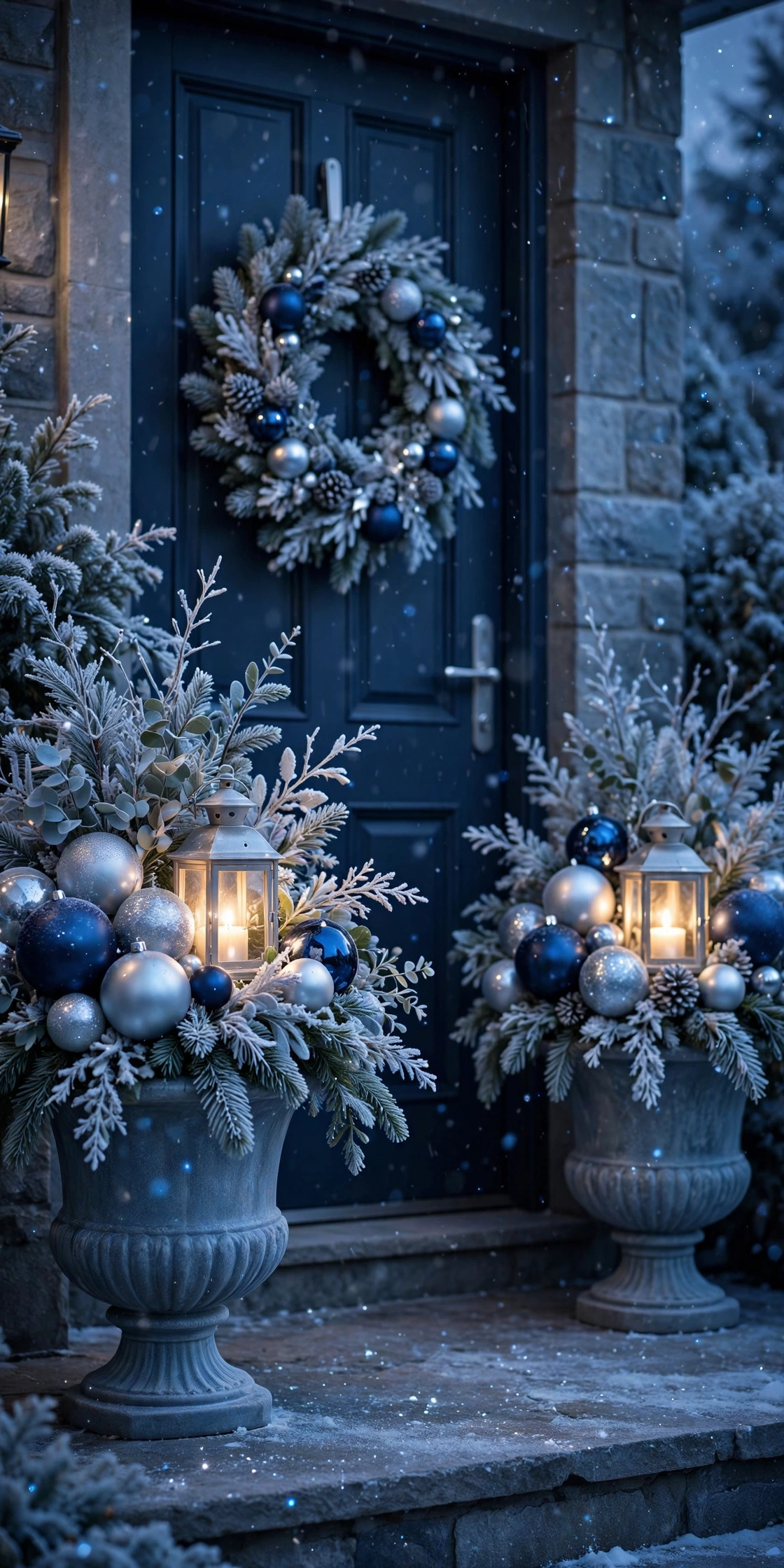
Ornament Planters Flanking the Door
Fill two porch planters or urns with greenery, frosted branches, and oversized navy and silver shatterproof ornaments for a matched pair flanking the door. Oversized ornaments (6 to 8 inches) cost about $6 each and read from the street, where standard 2.4-inch baubles disappear. Weight each planter with a brick or sand at the base so December wind does not redecorate your yard.
Try it: Add one battery lantern with a warm bulb to each planter. The warm pools of light at ground level balance the cool roofline lights above.
26
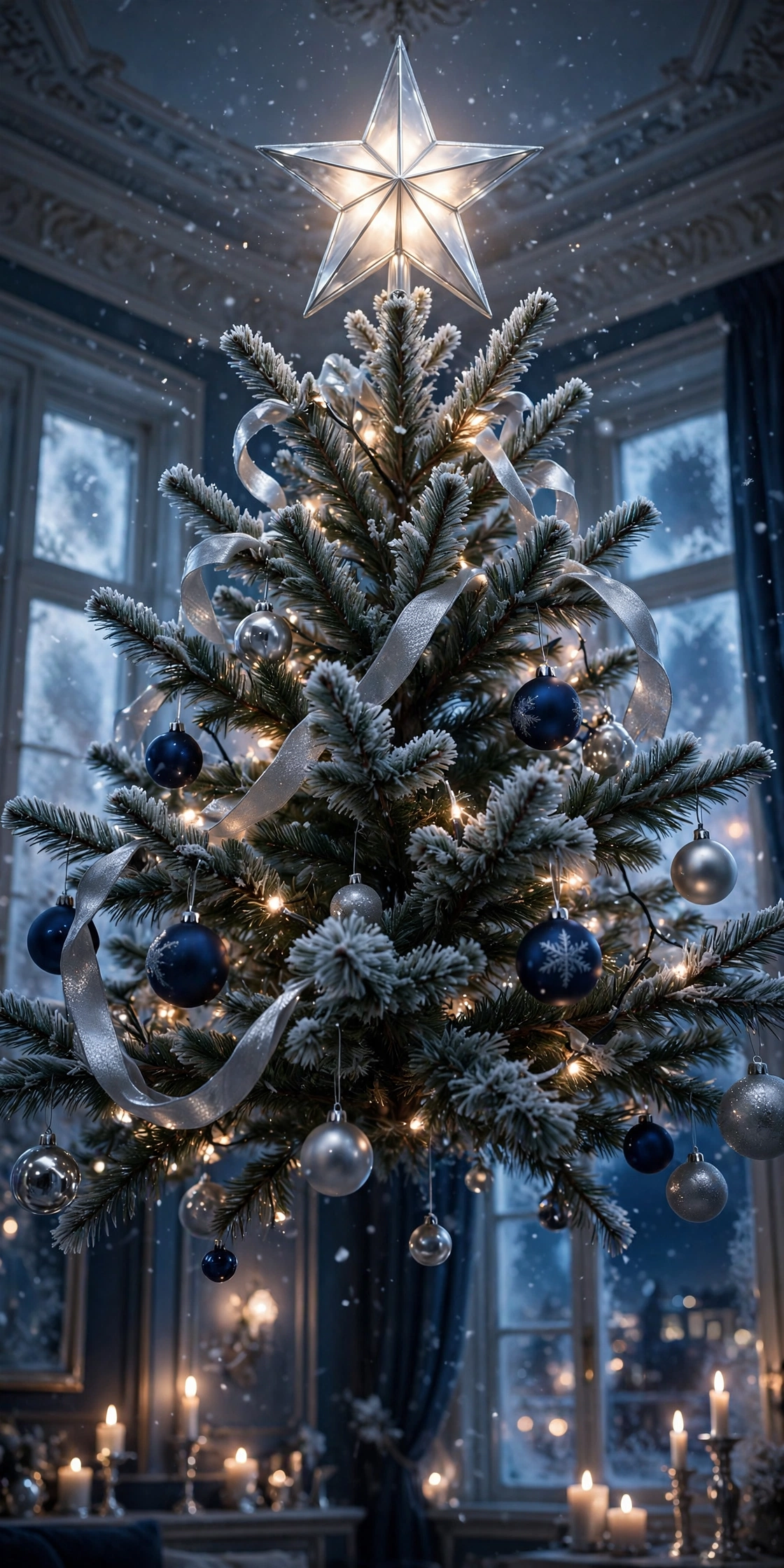
The Silver Star Topper, Sized Right
Top the tree with a silver star, snowflake, or finial sized to about one-tenth of the tree’s height, so an 8 to 9-inch topper on a 7.5-foot tree. A too-small topper is the most common finishing mistake in this palette because silver is visually light; go one size up from what looks right in the store. Lighted silver toppers (about $15) add a final glow point at the crown.
Try it: Wire the topper to the top branch with silver floral wire, not just balanced. December doors slamming and curious cats are topper-seeking missiles.
27
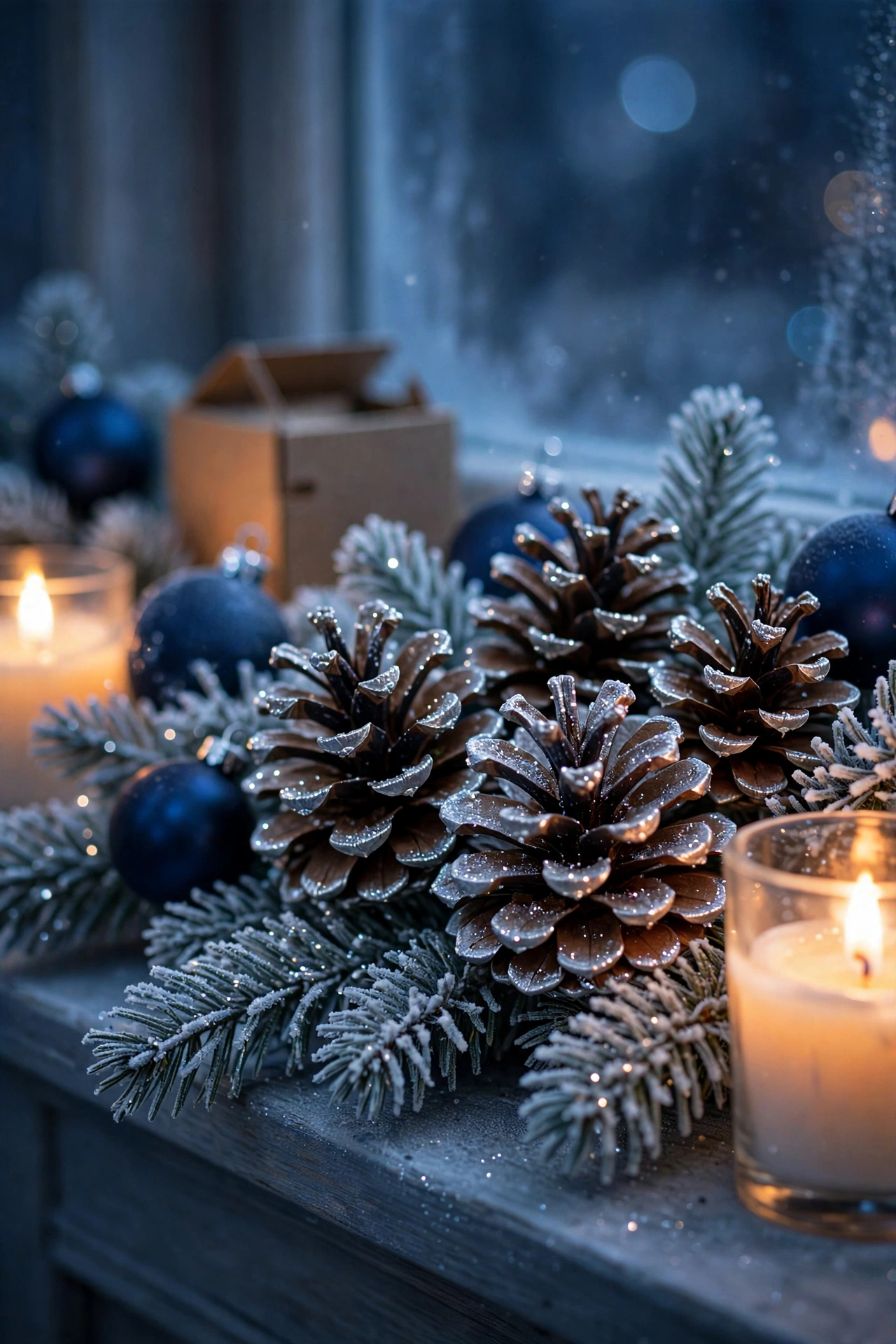
Frosted Pinecones, the Free Filler
Collect pinecones, wash and bake them at 200°F for 30 minutes to clean them, then dry-brush the edges with silver craft paint or a dusting of white and silver glitter. Frosted pinecones fill every gap this palette leaves: between ornaments on the tree, along the garland, in the ornament bowl, and down the center of the table. They cost almost nothing and add the natural texture that keeps blue and silver from feeling synthetic.
Try it: Do the messy step in a cardboard box. Spray or brush the cones inside the box and the overspray stays contained instead of silvering your worktop.
28
The Warm Light Rule, Applied Room by Room
Finish by auditing your light: swap any cool white bulbs over 4000K in decorated rooms for warm white 2700K, and put the tree and mantel lights on timers. Silver is a mirror, so it shows whatever color your light is; warm light makes silver look like candlelit pewter, and cool light makes it look like tin. This $10 bulb swap is the single change readers of this palette skip, and the one that decides whether the room feels like a winter evening or an office in December.
Try it: Test one lamp first and live with it for an evening. If the room feels warmer, and it will, swap the rest of the bulbs in one go.
Pro tip: Step into the doorway of the finished room and take a photo with the overhead light off. Whatever reads as a dark hole in the photo, usually the tree base or the far corner of the mantel, is where your next ornament or candle belongs. Blue and silver decor is judged by its reflections, so decorate for the camera’s eye and the room will work from every seat.
Three rules for blue and silver decorating
- One metal only: Silver is the metal of this palette, in every finish from mirror-bright to antique mercury glass, and nothing else joins it. A second metal splits the scheme into two half-themes; hold the line and the room reads as one confident idea.
- Three blues, no more: Navy, one mid blue, and ice blue are the whole blue story. A fourth blue (teal, royal, sky, and denim all at once) turns a palette into a sample book. If a piece does not match one of your three, it does not come home.
- Texture before quantity: Every surface needs at least one soft finish, velvet, knit, faux fur, or frosted greenery, before it gets a second shiny one. Shine without softness is what makes blue rooms feel cold; the ratio matters more than the budget.
After Christmas: storing blue and silver
- Ornaments sorted by shade: Pack navy, mid blue, and ice blue in separate labeled trays or zip bags inside one bin. The ombre and ratio ideas in this list depend on knowing exactly what you own, and mixed bins guarantee a mismatched tree next year.
- Silver stored dry and dark: Wrap mercury glass and polished silver pieces in acid-free tissue and store them in a cool, dry closet, never a damp basement or hot attic. Silver finishes tarnish and cloud with humidity and heat, and one bad summer undoes three good Decembers.
- Velvet and flocking face up: Store velvet stockings, bows, and pillows flat with tissue between layers, and bag flocked pieces separately so loose flocking does not dust the silver. Flat and separated storage means everything comes out in January condition, ready to reuse.
More ideas you’ll love: red and white christmas decor ideas, victorian christmas decor ideas, christmas decor ideas, christmas living room decor ideas, and more in the Christmas Decor category.
Questions readers ask
What colors go with blue and silver Christmas decor?
White is the main partner: it brightens the palette and gives your eye a rest between the blues. After white, stay inside the scheme with frosted greenery and clear glass. Avoid adding a warm metal or a warm color like red as an accent; one warm note splits the palette, and if you want warmth, get it from texture (velvet, knits, candlelight) instead of color.
How do I decorate a blue and silver Christmas tree?
Work in layers: lights first (warm white 2700K for a green tree), then silver ribbon woven deep, then ornaments in a 60/40 blue-to-silver split with the largest navy pieces near the trunk, then a snowflake top layer on the outer tips, then a silver topper sized to about one-tenth of the tree’s height. A 7.5-foot tree takes roughly 100 ornaments total for a full look.
Should I use warm or cool white lights with blue and silver?
Warm white, about 2700K, for almost everything: it makes silver glow and keeps navy rich. The one exception is a white or silver artificial tree, where cool white reads as fresh snow and warm white can look yellow. Blue LED strands are a third option for outdoor rooflines and kids’ rooms, but keep the main tree warm. For picking and placing strands safely, follow ESFI’s holiday lighting safety advice.
How do I keep blue Christmas decor from feeling cold?
Add soft texture at every surface: velvet bows and stockings, chunky knits, faux fur throws, frosted greenery, and real or flameless candlelight. The chill in this palette comes from shine without softness, so fix the ratio before you change any colors. Warm 2700K lighting does the rest; a blue room lit warm never feels cold.
Can I mix blue and silver with the red decor I already own?
Not in the same room, and that is a rule worth keeping. Blue and silver is a cool, calm scheme and red pulls it toward a patriotic summer look in most homes. If you love both, give each palette its own room: red and green in the family room, blue and silver in the living room or dining room. Split by room, never mixed within one.
Is blue and silver a passing trend or a classic?
It is one of the oldest Christmas palettes there is: silver tinsel, glass ornaments, and winter blue tones have been used since the Victorian era, and the combination returns every decade because it copies winter itself. Buy good pieces in navy and silver and they will outlast several trend cycles; the specific accessories change, the palette does not.
Which tree looks best with blue and silver ornaments: green, white, or flocked?
Each gives a different result. A classic green tree gives the richest contrast and suits navy best. A white tree gives the highest sparkle and suits ice blue best. A flocked tree sits between them and is the most forgiving, since the white flocking softens every blue. If you can only buy one, choose flocked for versatility.
How do I decorate a small room in blue and silver?
Concentrate instead of spreading: one slim or tabletop tree fully decorated in the palette, a dressed mantel or shelf, and textiles (two pillow covers, one throw) doing the rest. Cool colors recede visually, so blue and silver actually make small rooms feel calmer and larger than warm palettes do, as long as you keep surfaces uncluttered.
People Also Ask
What shade of blue works best for Christmas?
Navy is the workhorse: it reads as a neutral at night, hides dust, and pairs with every silver finish. Ice blue is the sparkle shade for accents and small pieces. If you are choosing just one blue to start, buy navy in the big pieces (stockings, ribbon, tablecloth) and ice blue in the small shiny ones.
Can I use blue and silver decor outside?
Yes, and it is one of the best outdoor palettes because blue icicle lights mimic real ice. Use outdoor-rated, shatterproof ornaments, weight planters against wind, and put lights on a timer. Silver finishes hold up outdoors for a season, but store them dry in January or the finish will cloud by next year.
How do I get the look on a small budget?
Start with light and textiles: warm white bulbs, two navy pillow covers, and one ice blue throw transform a room for about $40. Then spray-thrift: silver craft paint on old ornaments and pinecones updates pieces you already own for a few dollars. Buy ornaments in the January sales in your exact three blues, and the palette builds itself year by year.
loved these ideas? ✿
Save this guide for later
Pin it to your board so it’s there when you’re ready to recreate it.

Curated by
Hey! I'm Sanaullah — visual curator and content creator. I search, curate, and test the best aesthetic ideas across Pinterest so you can easily transform your living space, style daily outfits, and try simple creative DIYs without the overwhelm.