
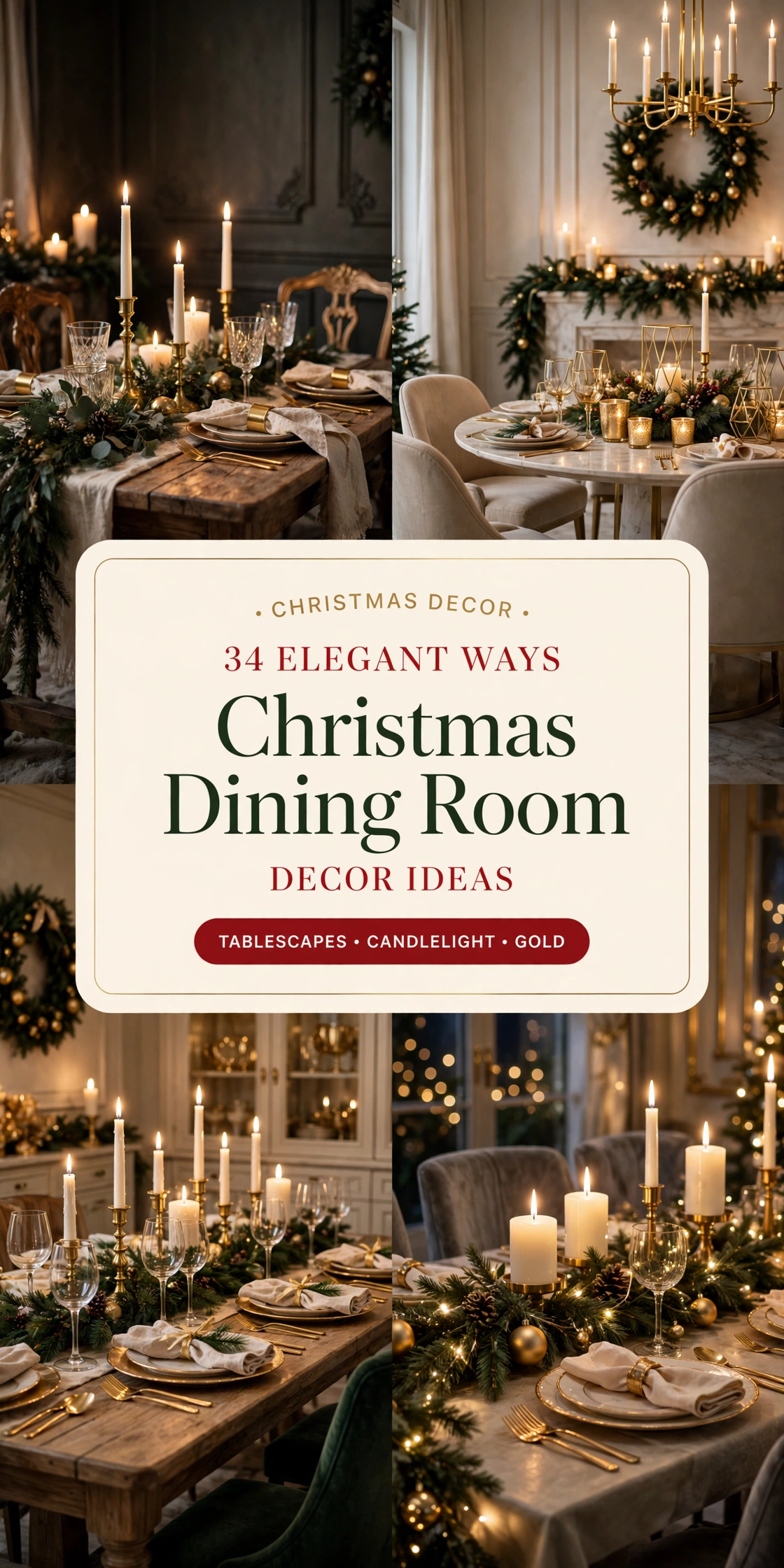
The dining room hosts the meals everyone remembers, yet it is usually decorated last, with whatever is left over from the tree. These christmas dining room decor ideas work from the centerpiece outward, table, settings, light, and the room around them, so the space feels designed instead of decorated as an afterthought. Most take under an hour and use pieces you already own in new combinations. Follow this guide and your dining room will be the room your guests talk about on the drive home.
Quick Idea Summary
- The key takeaway: Decorate in layers, in this order: centerpiece, place settings, candlelight, then the room around the table. Each layer builds on the last, and the table always stays usable for an actual meal.
- The detail most people miss: Candlelight does more than any centerpiece. Unscented tapers at the right height flatter every face and every dish; one bright overhead light makes a beautiful table look like a cafeteria.
- What it costs or how long it takes: Most ideas below cost $10 to $50 and take under 30 minutes. The full feast-day table, from bare wood to candlelit, takes about 2 hours.
At a glance
| Zone | Ideas | Budget |
|---|---|---|
| The centerpiece | 01–06 | $20–$75 |
| Place settings, layer by layer | 07–13 | $15–$90 |
| Linens and texture | 14–16 | $15–$60 |
| Candlelight and lighting | 17–21 | $10–$60 |
| The room around the table | 22–26 | $20–$85 |
| Chairs, kids, and real life | 27–34 | $10–$50 |
The christmas dining room decor ideas
01
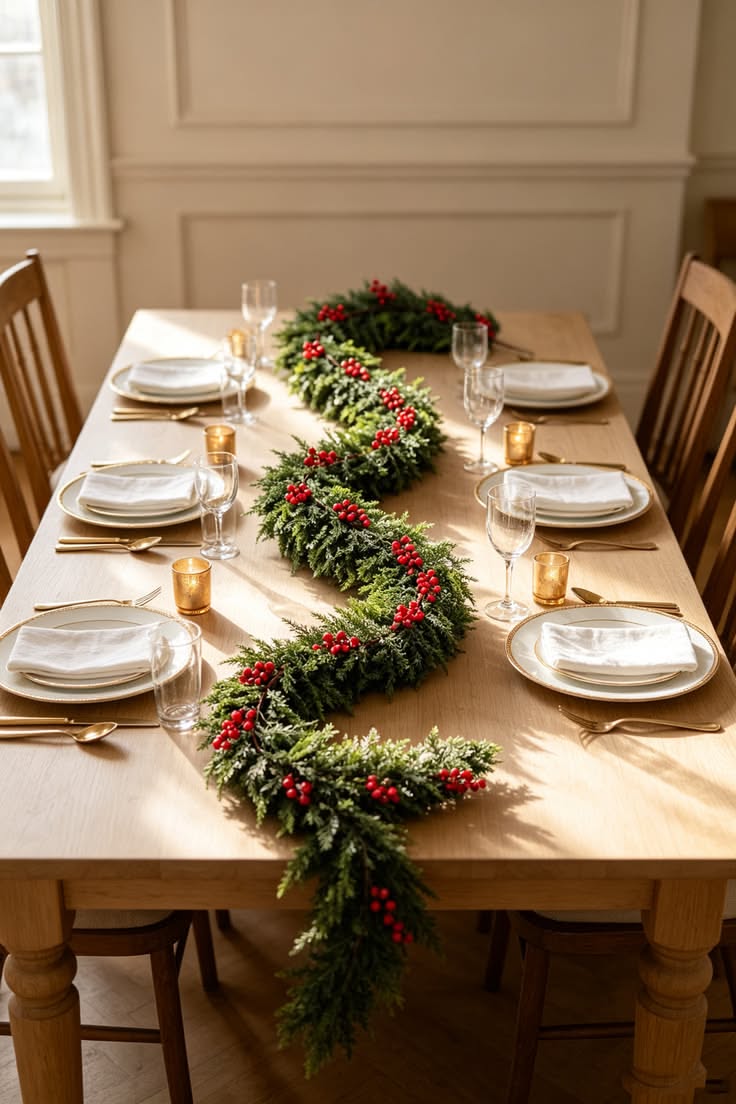
The Low Garland Runner That Never Blocks a Face
Run a garland down the center of the table and keep every part of it under 12 inches tall, so guests see each other, not a hedge. A 9-foot garland suits a 6-foot table, with the ends trailing slightly over the edges. Tuck in pinecones, ornaments, and candle holders as you lay it; the garland is the base, not the whole show.
Try it: Lay the garland in a gentle S-curve instead of a straight line. The curve reads as styled and leaves natural pockets for serving dishes.
02
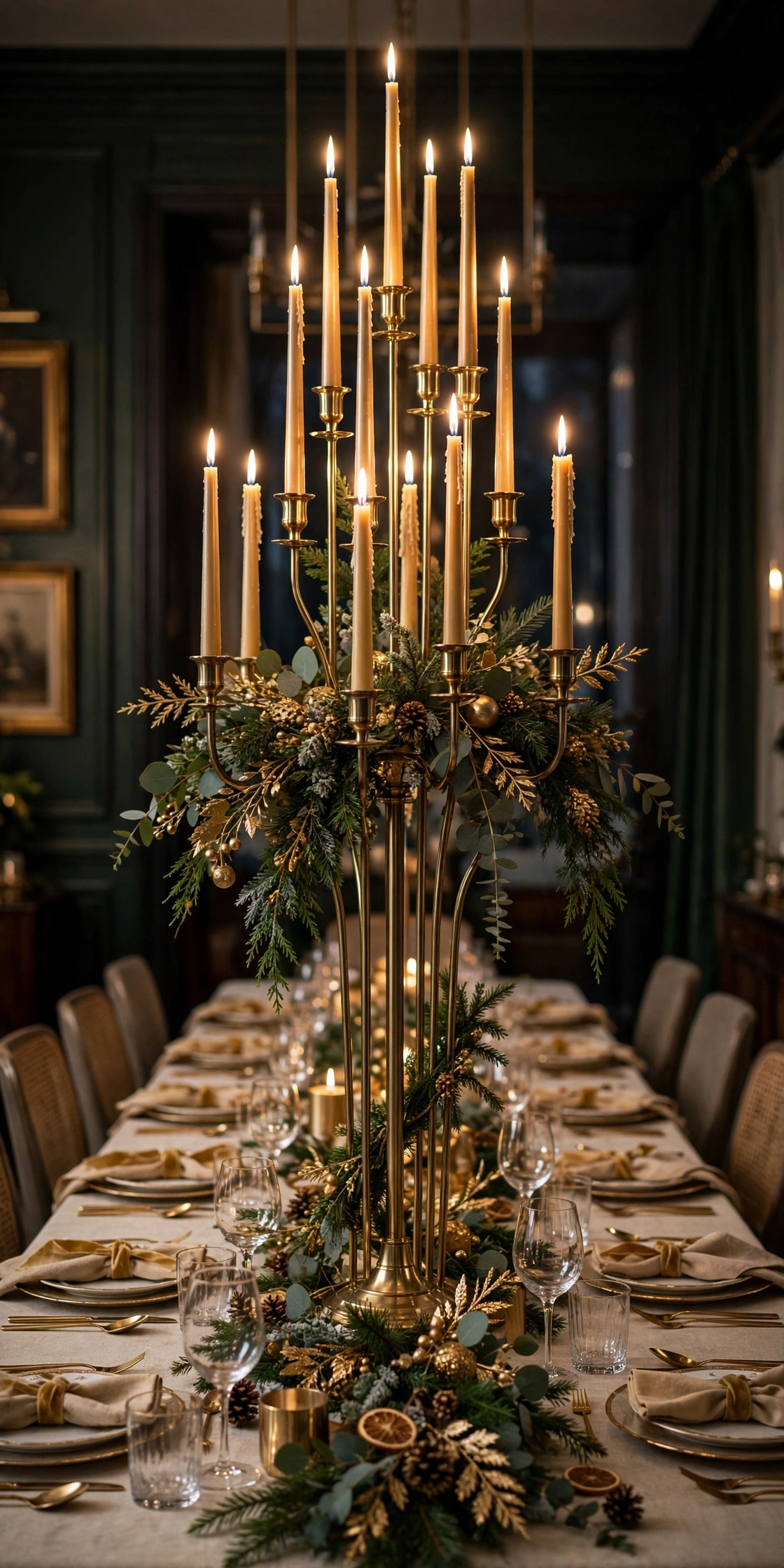
Tall Drama, Done the Right Way
If you love height, go properly tall: candelabra or branches that rise above 24 inches, with all the visual weight up high and a slim stem at eye level. The forbidden zone is 12 to 24 inches, exactly where faces are. Tall pieces belong at the center of long tables or at both ends, never scattered where people talk across them.
Try it: Test the sightline before the meal. Sit in two opposite chairs and check you can see eyes, not just foreheads, over the centerpiece.
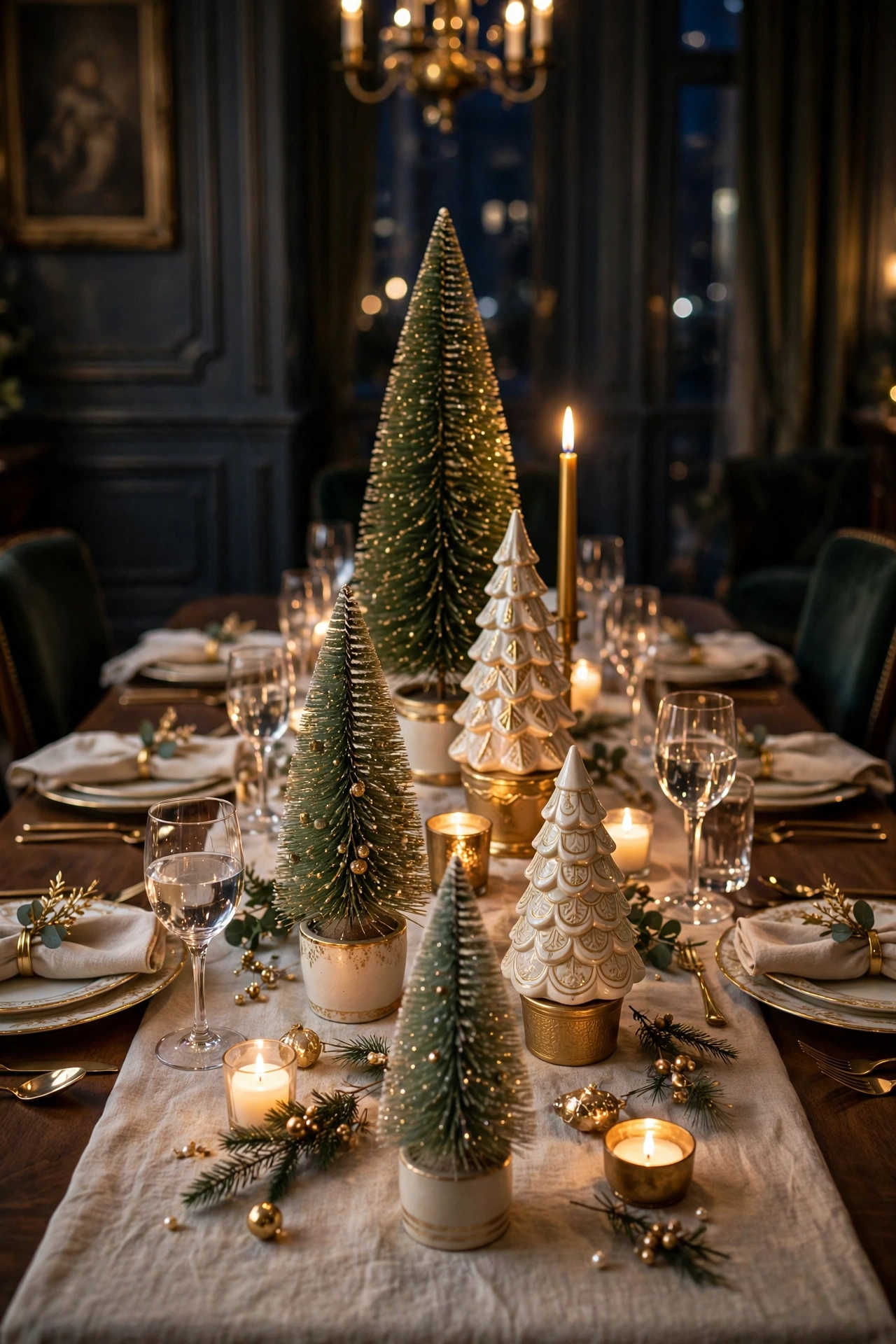
03
A Row of Mini Trees Down the Middle
Line up three or five mini trees, 12 to 18 inches tall, down the center of the table in mixed heights. Bottle brush trees cost $3 to $8 each; small potted spruces cost more but can be planted out in January. A row of small trees gives you the forest feeling with none of the branch-in-the-face problems of a real arrangement.
Try it: Mix two materials only, like bristle and ceramic. Three different mini tree styles in one row looks like a shelf you forgot to tidy.
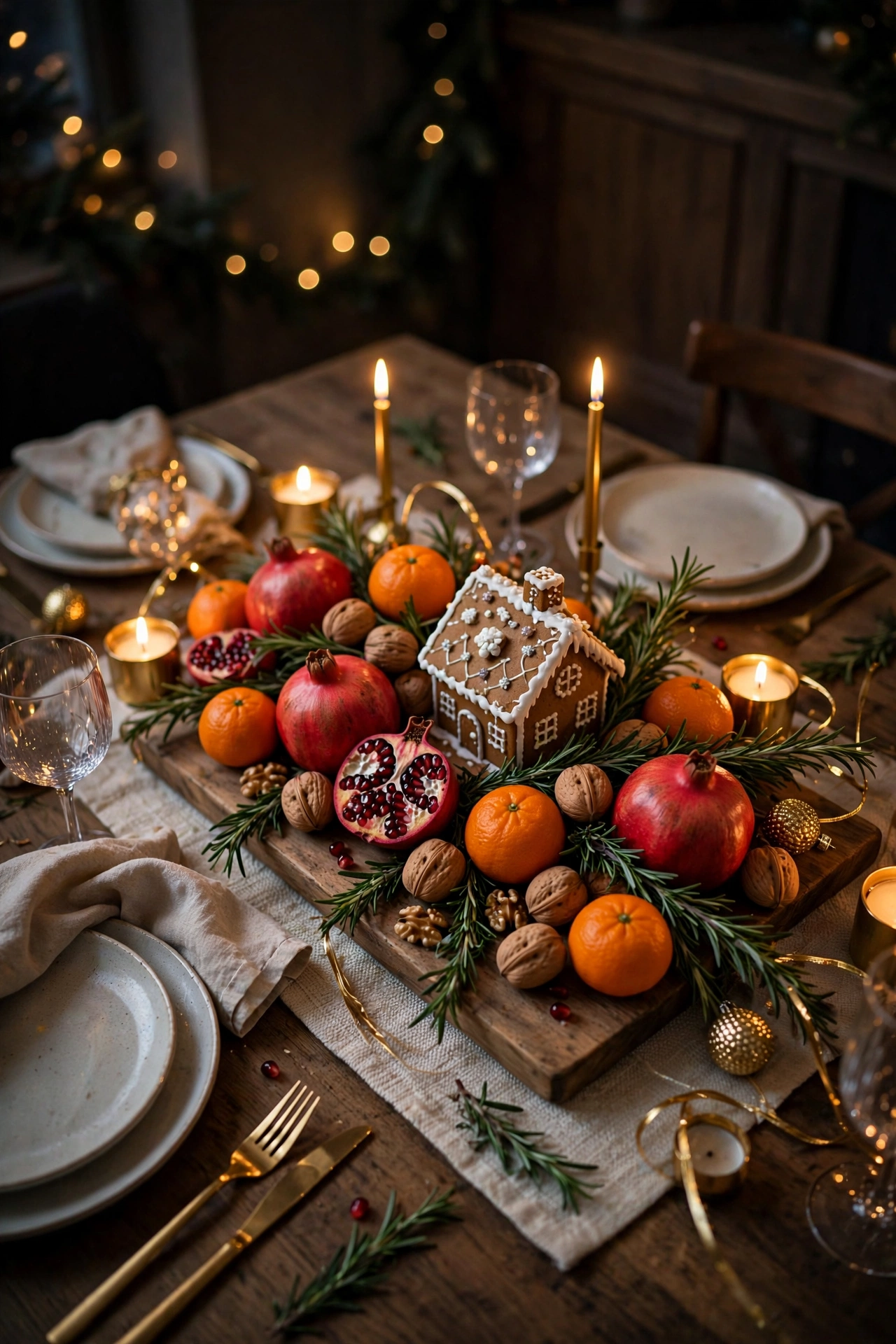
04
The Edible Centerpiece
Build the centerpiece from food: a low bowl or wooden board of clementines, pomegranates, walnuts in the shell, and rosemary sprigs, with a gingerbread house at the center for big meals. It costs about $25 in groceries, smells wonderful, and needs zero storage in January because guests eat it. Edible decor also solves the small-table problem, since it can shrink as the meal goes on.
Try it: Stud a few oranges with cloves the day before. Pomanders take 10 minutes each and scent the whole table without a single candle.
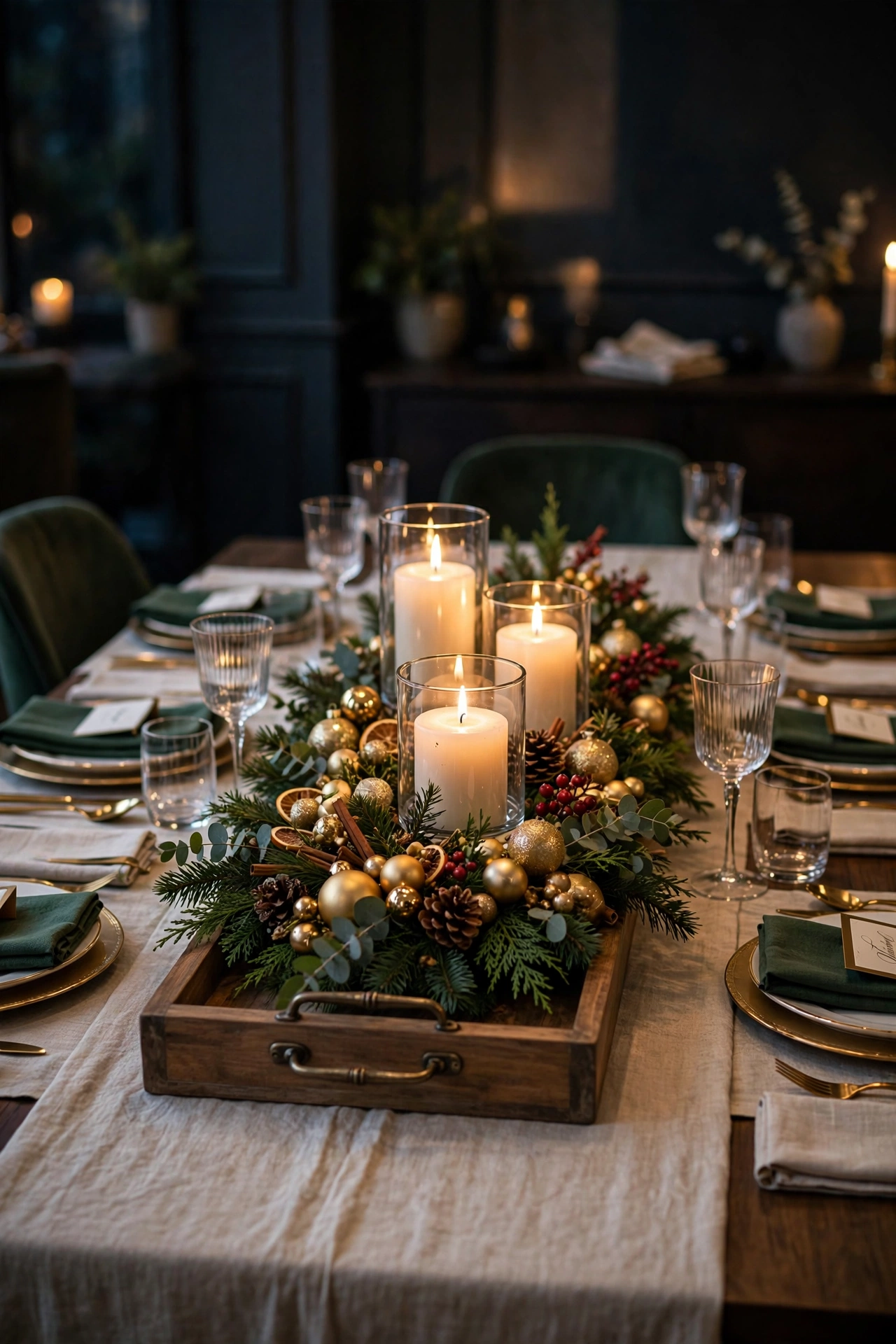
05
Build the Centerpiece on a Tray
Assemble your candles, greenery, and ornaments on a tray or a flat wooden board, 24 to 36 inches long, instead of directly on the table. When the turkey or the big serving platters need the center, the whole display lifts away in one move and comes back for dessert. This is the professional caterer’s trick, and it ends the mid-meal shuffle of decorations.
Try it: Choose a tray with handles and test the lift while it is loaded. A centerpiece you cannot actually move is just furniture.
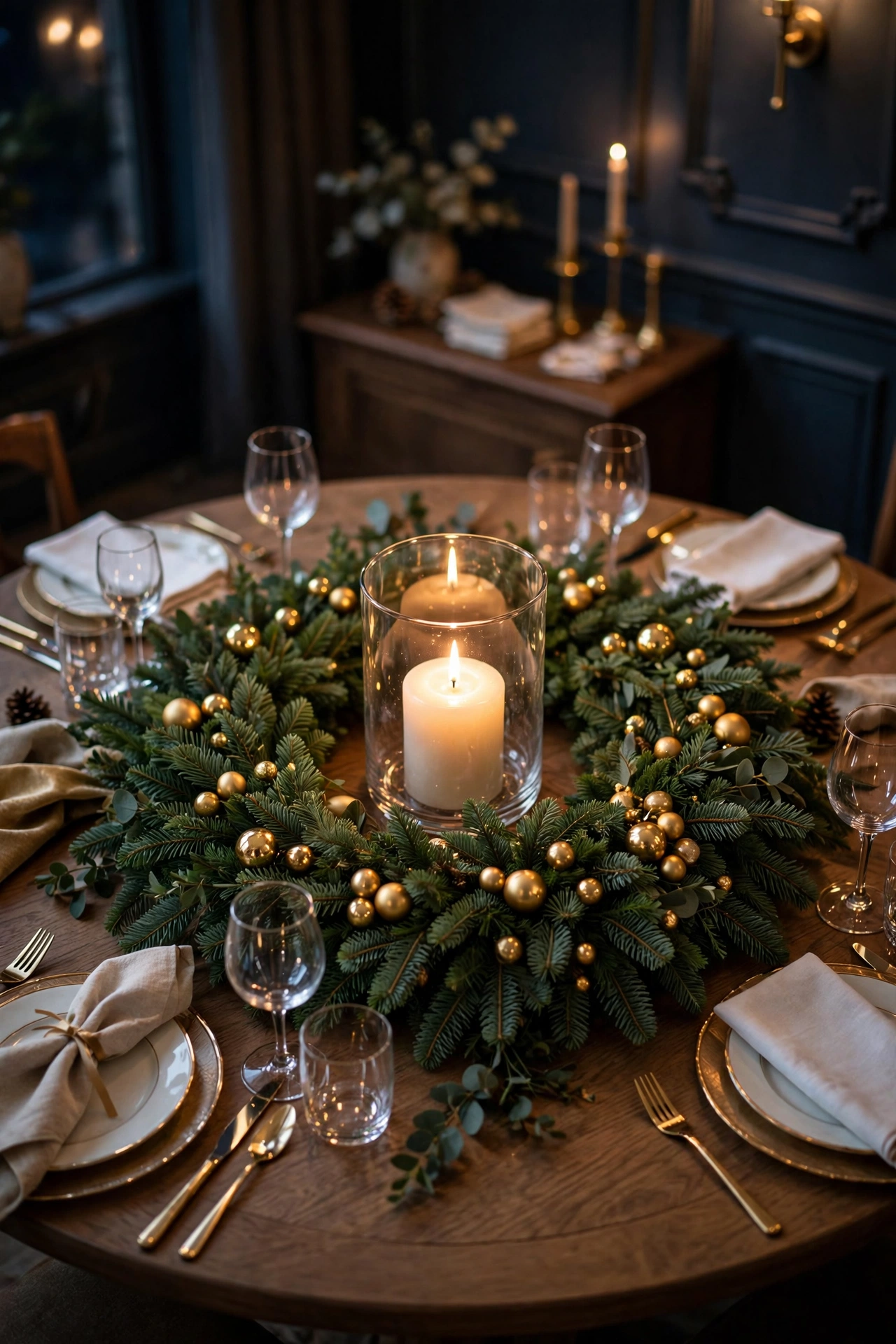
06
A Wreath Laid Flat as a Candle Ring
Round tables defeat runners, so lay a 24-inch wreath flat at the center and set a wide pillar candle or a glass hurricane inside it. The wreath becomes a ready-made ring of greenery that takes 2 minutes to place and always looks symmetrical. Add small ornaments tucked into the branches to tie it to your tree colors.
Try it: Use a wreath with a wire frame, not foam. Wire frames sit flat and stay flat; foam wreaths rock on their price stickers.
07
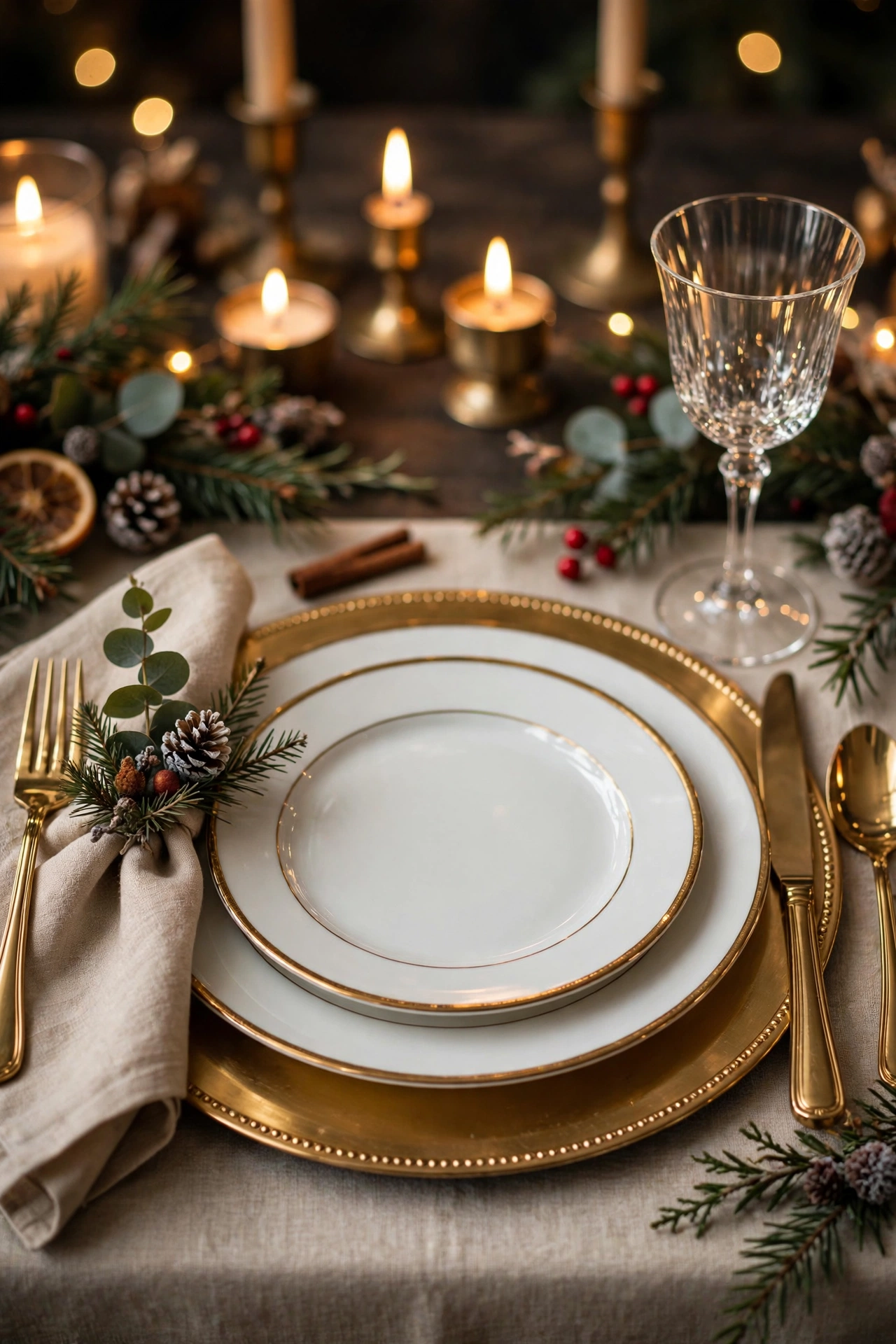
Chargers: The Layer That Makes Every Plate Look Expensive
Slide a 13-inch charger under each 10 to 11 inch dinner plate and leave it in place from the first course to dessert. The 1 to 2 inches of rim showing around the plate is what makes a setting read as formal, and chargers cost $1 to $4 each in gold, silver, or woven rattan. They also protect the tablecloth and catch the spills that happen at every real meal.
Try it: Buy one set of chargers in a metal finish and use them all season. Metal reads formal in December and works for every other holiday you host.
08
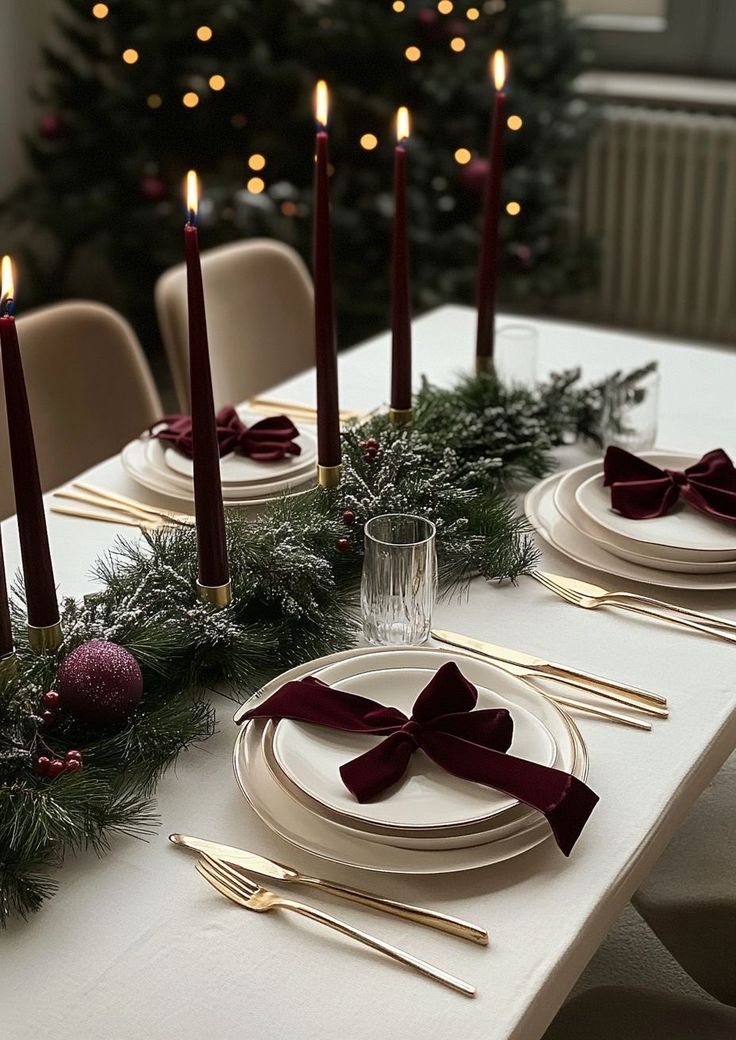
The Formal Setting, Layer by Layer
For the big meal, build each setting in a fixed stack: charger, dinner plate, salad plate, napkin folded on top, two glasses at the upper right, and flatware in course order. The stack takes about 3 minutes per setting once you have done the first one, and a six-person table is set in under 20 minutes. Deep red napkins with gold chargers give you the classic candlelit look that never dates.
Try it: Set one perfect setting and photograph it before doing the rest. Copying your own photo is faster than re-deciding at every chair.
09
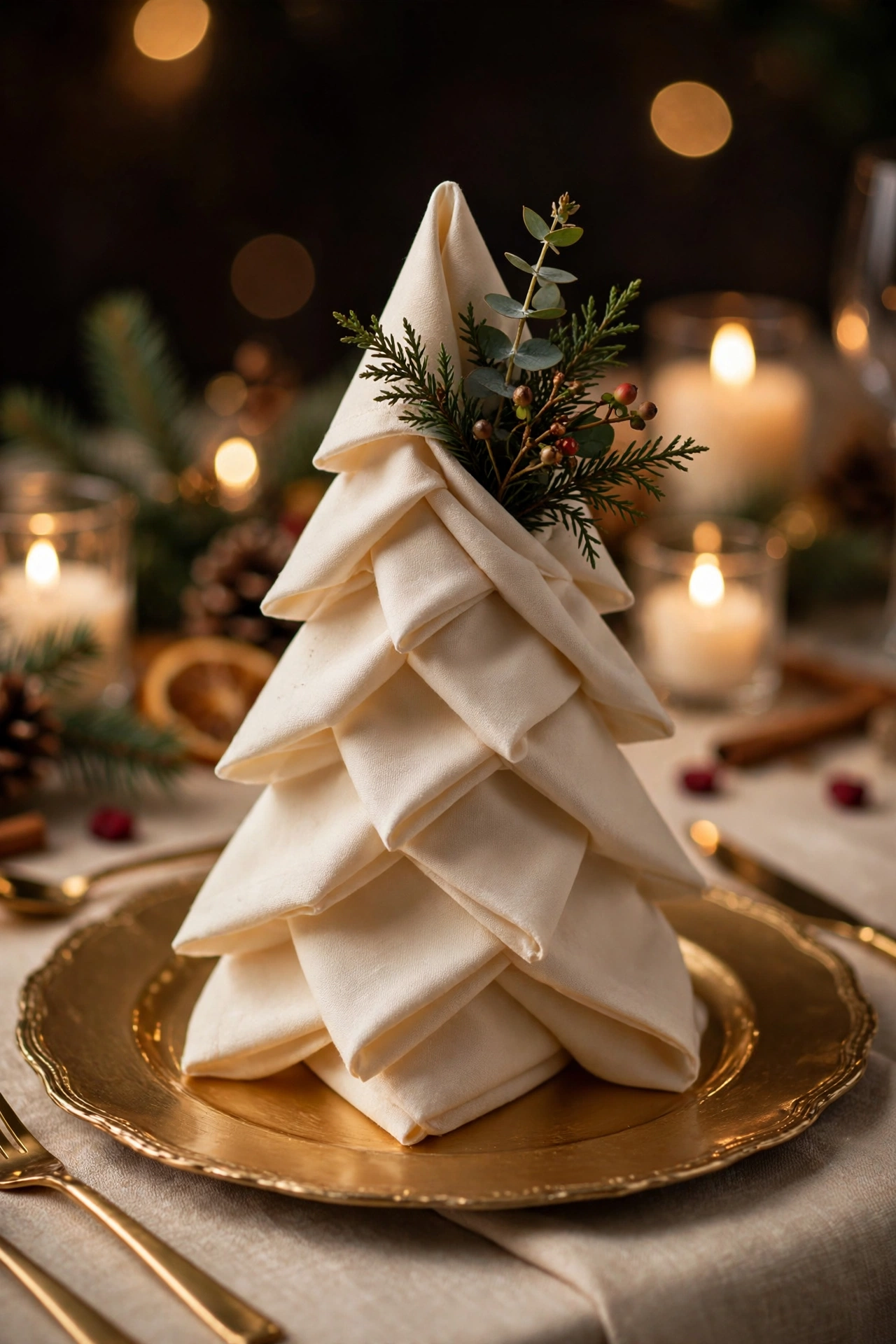
Napkin Folds That Take 30 Seconds
You need exactly one fold you can do without thinking. The knot (tie a loose knot in a soft linen napkin and lay it on the plate) takes 10 seconds; the standing tree fold takes 30 and suits stiff cotton napkins. Use 20-inch napkins for both; smaller napkins cannot hold a fold and look mean on the plate.
Try it: Iron napkins before folding, even roughly. A crisp fold in a wrinkled napkin still reads as wrinkled.
10
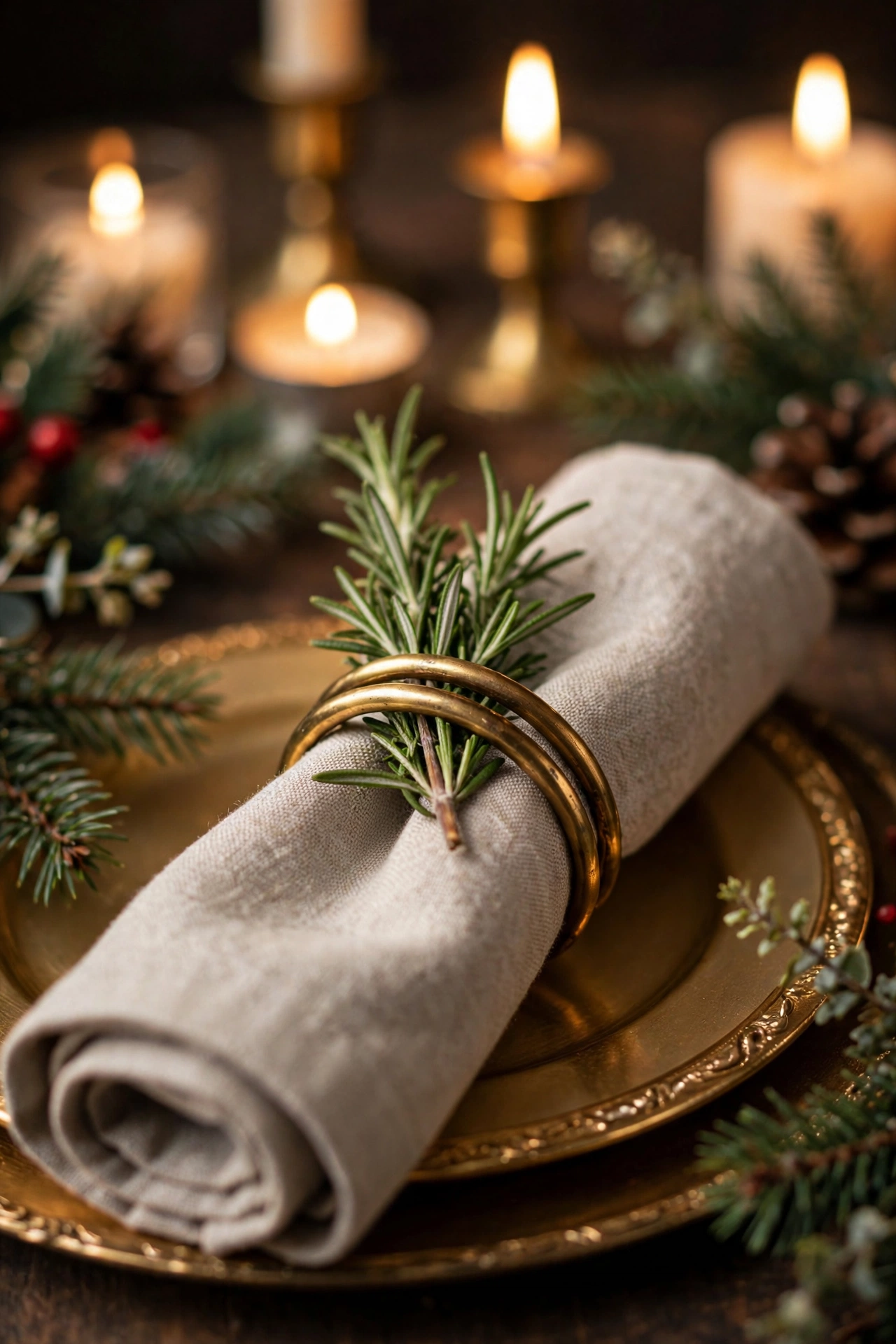
Napkin Rings With a Greenery Tuck
A plain napkin ring looks finished the moment you tuck a 3-inch sprig of rosemary or cedar behind it. Rings cost $1 to $2 each in sets, and the greenery is free from the garland offcuts you already have. The tuck adds scent at each place, which is exactly where scent belongs at a table, in tiny doses under the nose.
Try it: Tie rings with ribbon instead if your napkins are slippery. A ribbon loop with a sprig through it holds silk and satin napkins that slide out of metal rings.
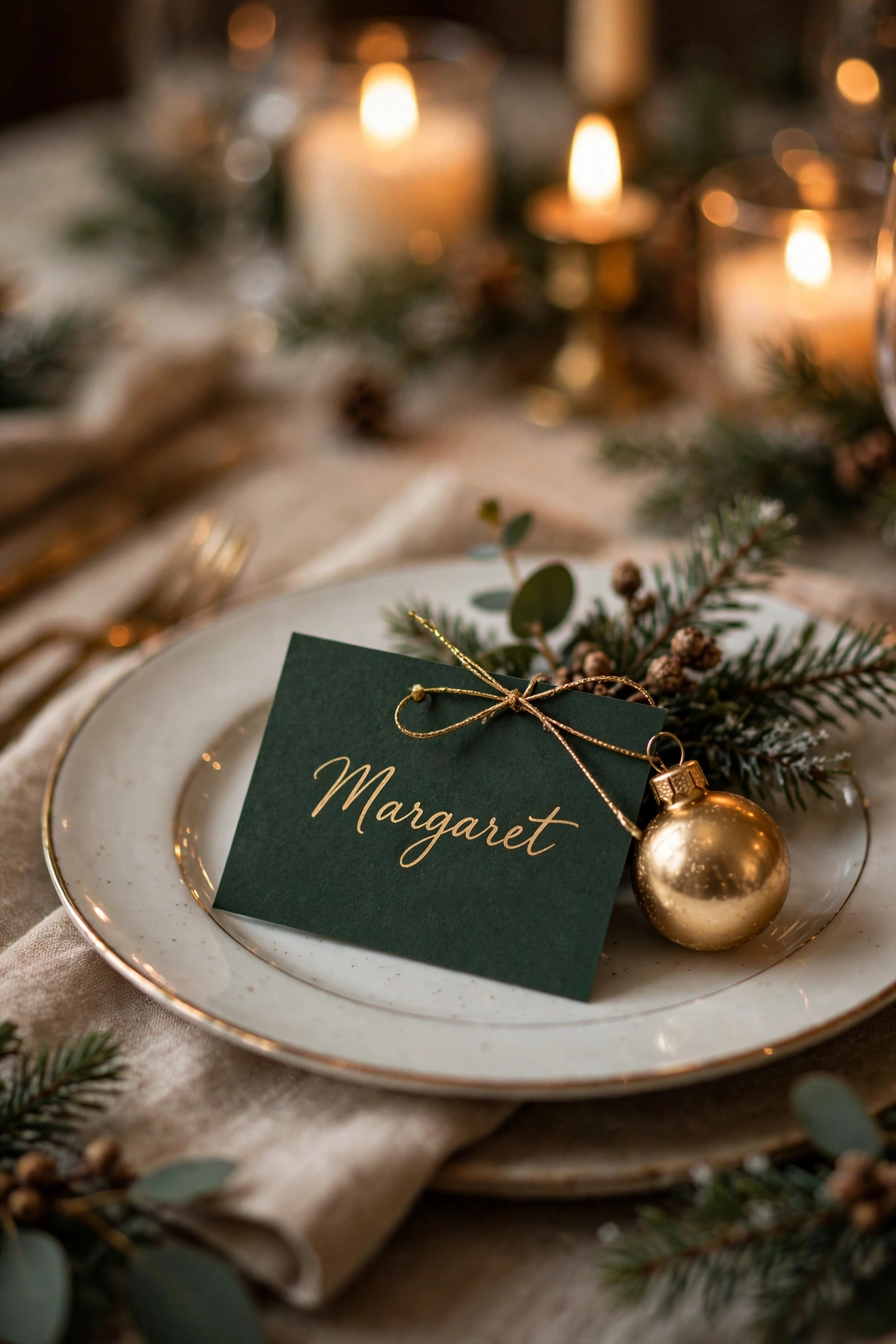
11
Place Cards That Double as Favors
Write each name on a small tag and tie it to a mini ornament, a cinnamon stick bundle, or a wrapped chocolate, then set it on the plate. Guests get assigned seats (which ends the where-do-I-sit shuffle) and a keepsake to take home. Gold pen on dark green or burgundy card stock looks luxurious and costs about $5 for the whole table.
Try it: Seat talkative guests between quiet ones, and put the host nearest the kitchen door. Place cards are social engineering, not just decoration.
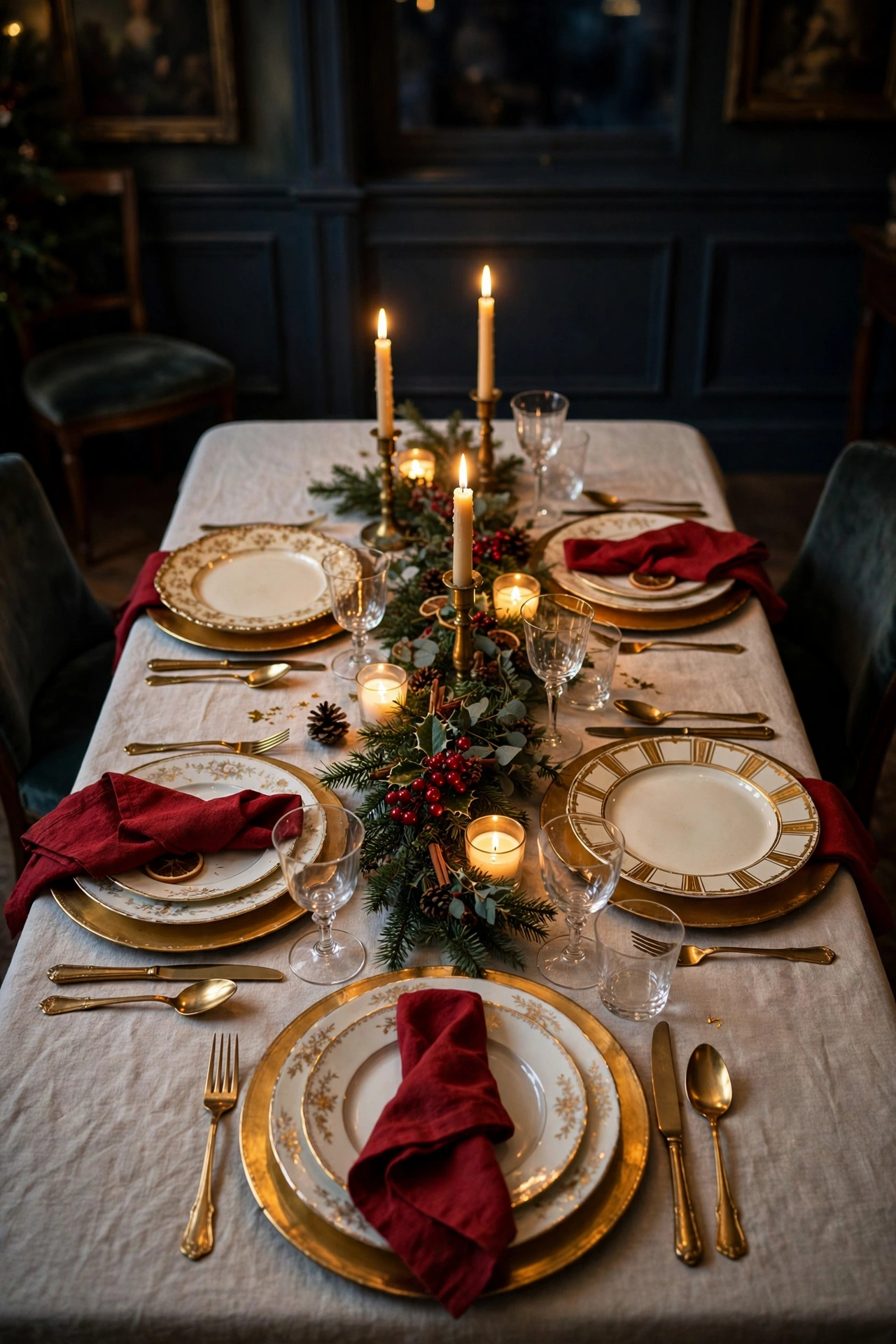
12
Mismatched China, Done on Purpose
Different plates at every setting look collected and warm, but only if one element repeats everywhere: the same charger, the same napkin color, or the same glass. Pick up odd vintage plates for $2 to $5 each at thrift stores through the year. Without the repeating element, the table looks like the dishwasher broke; with it, it looks inherited.
Try it: Keep all the mismatched plates in one color family, like cream and white with different rims. Pattern mixing works when the palette does not fight.

13
One Statement Glass at Every Setting
Swap one everyday glass per setting for a colored or cut-glass goblet: ruby, green, or gold-rimmed. One statement glass costs $3 to $6 each and catches candlelight like jewelry. Keep the second glass plain so the table sparkles without tipping into glitter.
Try it: Wash colored goblets by hand and store them upright. Dishwasher film is what makes pretty glassware look dull by its second Christmas.
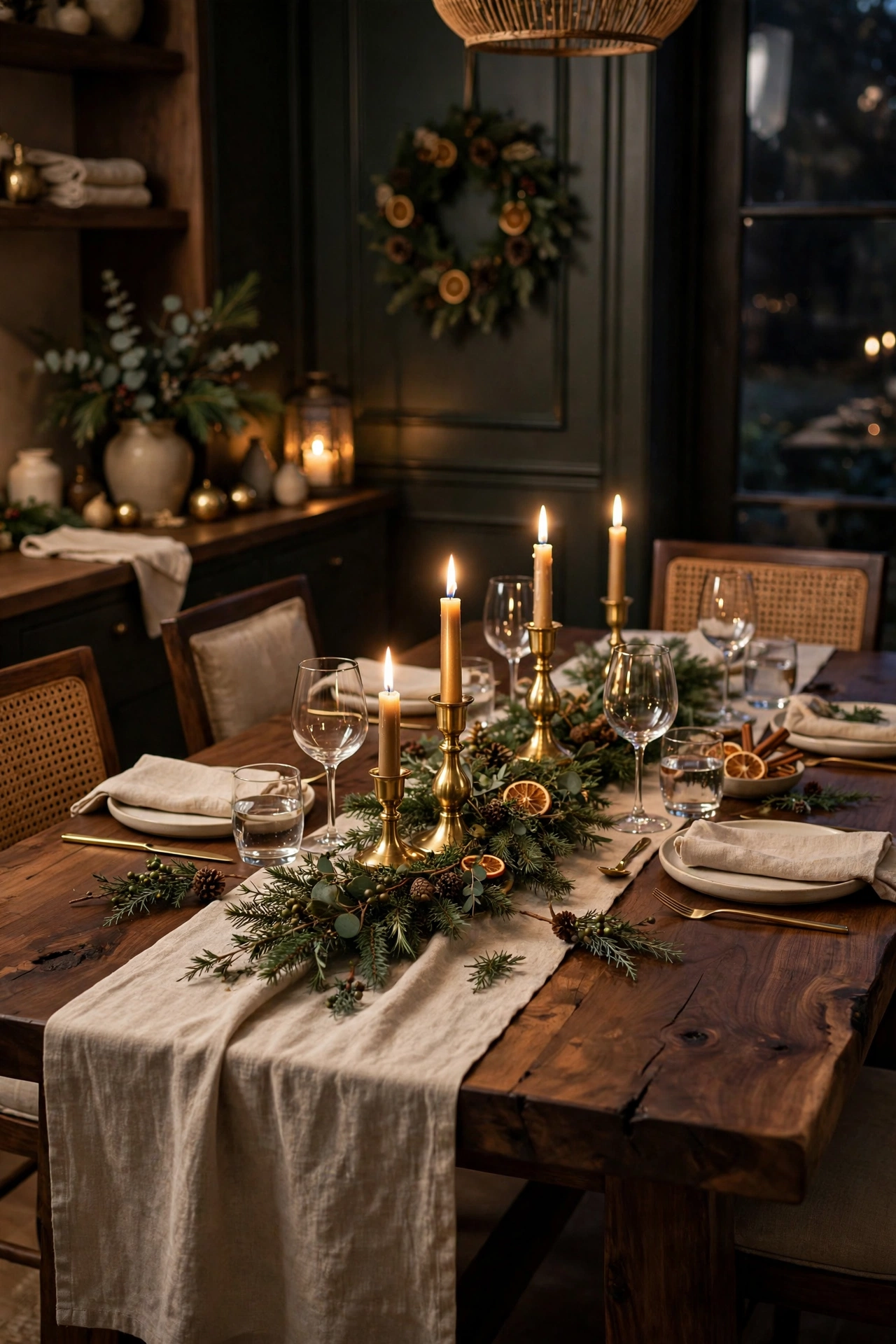
14
Bare Wood or Tablecloth: Decide by the Meal
A tablecloth is for feast days: it hides the table, formalizes everything, and should hang 8 to 12 inches on every side, never to the floor. Everyday December meals look better on bare wood with a runner, which shows the table you actually own and wipes clean in seconds. Owning both options is the whole system; choosing wrong is the only mistake.
Try it: Put a quiet waterproof liner under the feast-day cloth. Gravy happens, and a liner turns a disaster into a napkin dab.
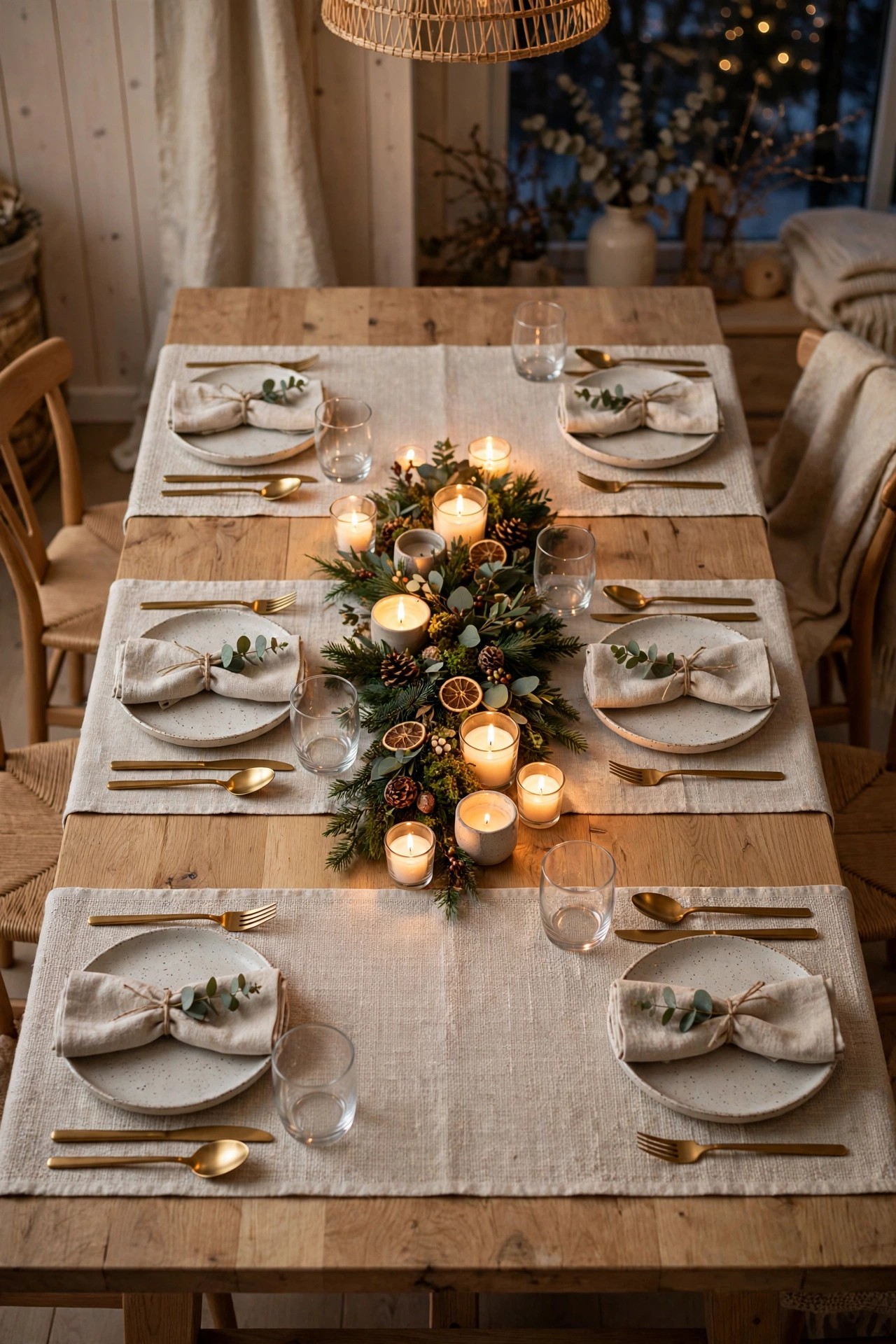
15
Runners Across the Table, Not Down It
Lay two or three short runners across the width of the table, one under each pair of facing settings, instead of one long runner down the middle. Each across-runner works as a shared placemat, links the two guests facing each other, and leaves the center free for a low garland or candles. It is the Scandinavian trick that makes long tables feel intimate instead of banquet-like.
Try it: Use runners in the same fabric as your napkins for a matched set look, or natural linen against a dark table for contrast.
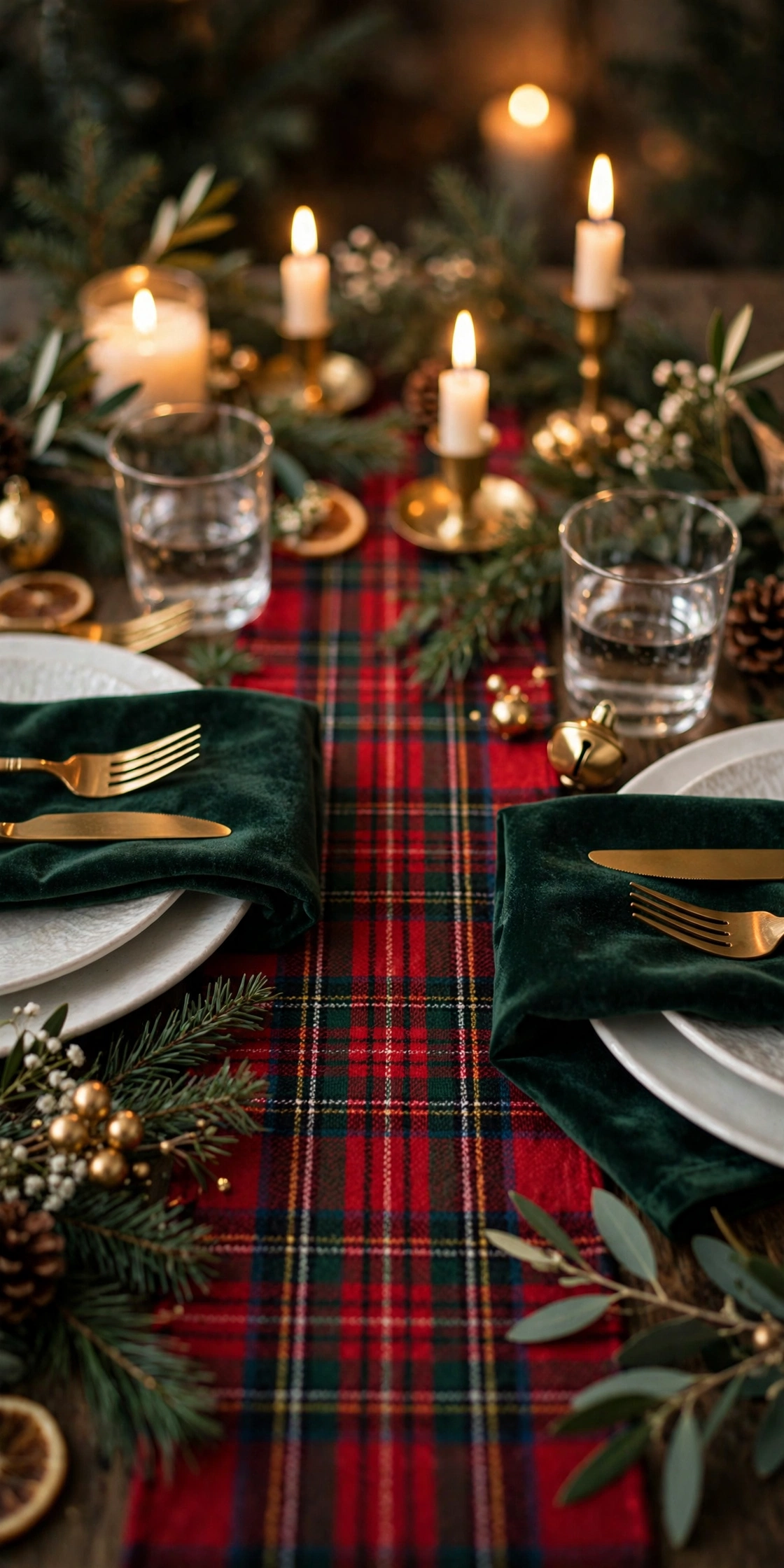
16
Plaid and Velvet: The Two Texture Upgrades
If your table feels flat, the fix is texture, not more objects. A tartan runner (about $20) plus velvet napkins in a deep solid adds pattern and softness in one layer each. Keep everything else quiet, white plates, plain glass, simple greenery, so the two textures carry the whole table.
Try it: Rule of one pattern: plaid on the runner means solid napkins, plaid napkins mean a solid runner. Two plaids at one table is a fight.
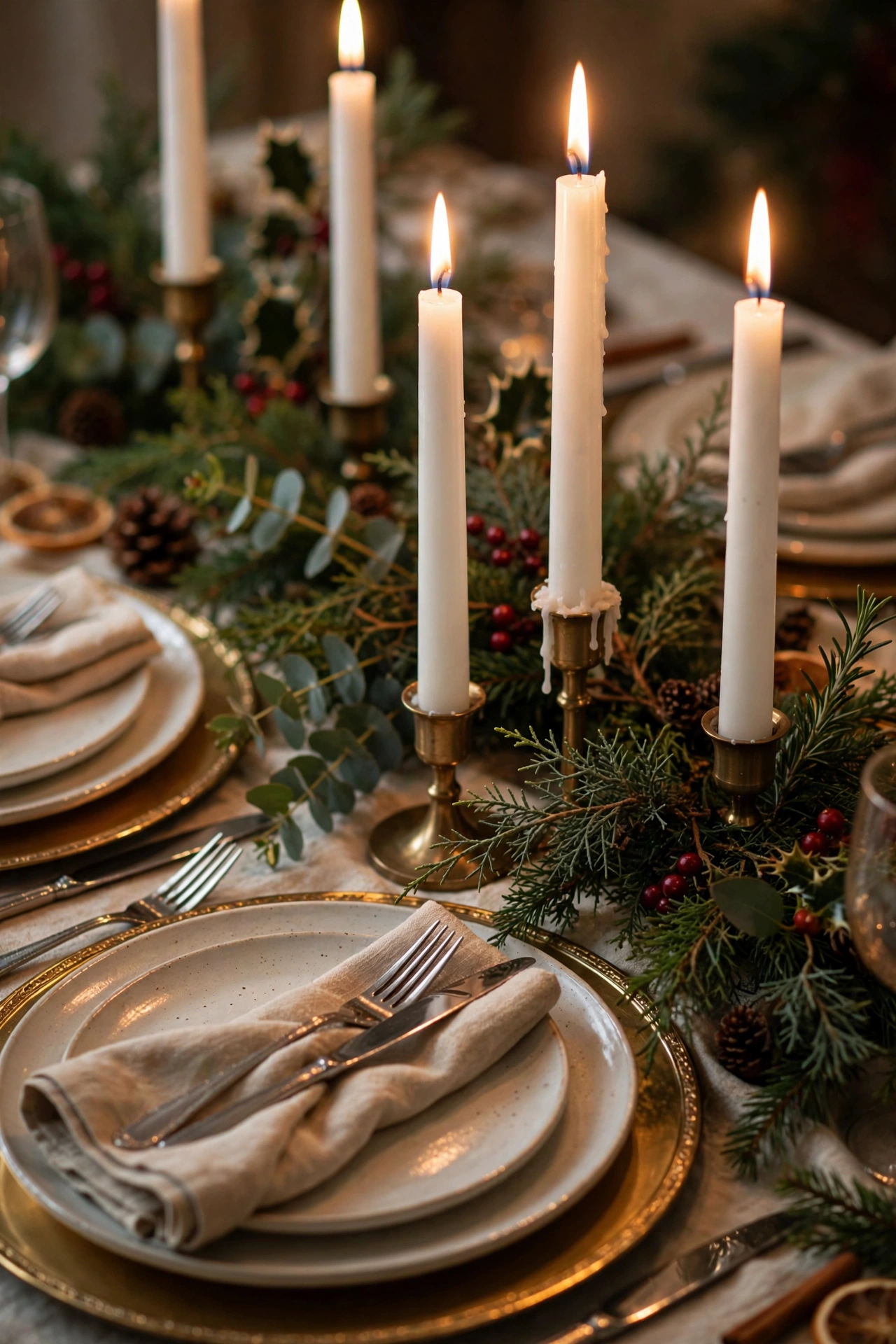
17
The Unscented Candle Rule
Never put scented candles on a dining table. Scent competes directly with food, and a vanilla-pumpkin candle can flatten the flavor of everything served near it. Burn only unscented tapers and pillars at the table, and move your scented candles to the entryway and bathroom, where they greet guests without seasoning the meal.
Try it: Keep the scent in the centerpiece itself: fresh cedar, rosemary tucks, and clove-studded oranges give you aroma that belongs with food.
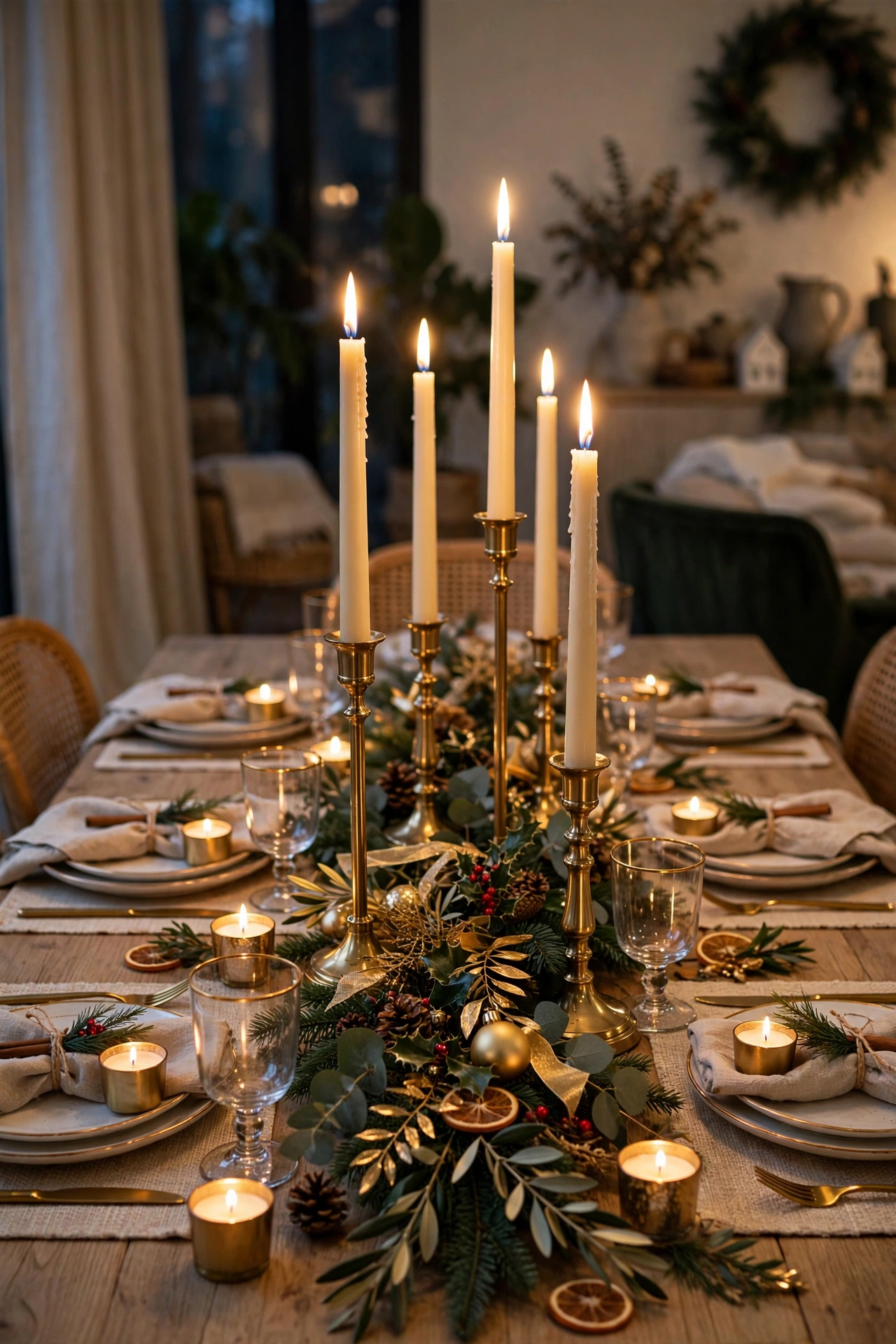
18
Tapers in Brass Holders, at Two Heights
Use 10 to 12 inch tapers in weighted brass or glass holders, and mix two heights, tall tapers on the centerpiece line and short votives near the settings. Good candle safety is simple: keep every flame at least 12 inches from garland and greenery, and use drip-resistant candles so wax stays off the cloth. A set of six thrifted brass holders costs about $15 and outlasts every trend.
Try it: Chill tapers in the fridge for an hour before the meal. Cold candles drip less and burn slower, which matters at a three-hour dinner.
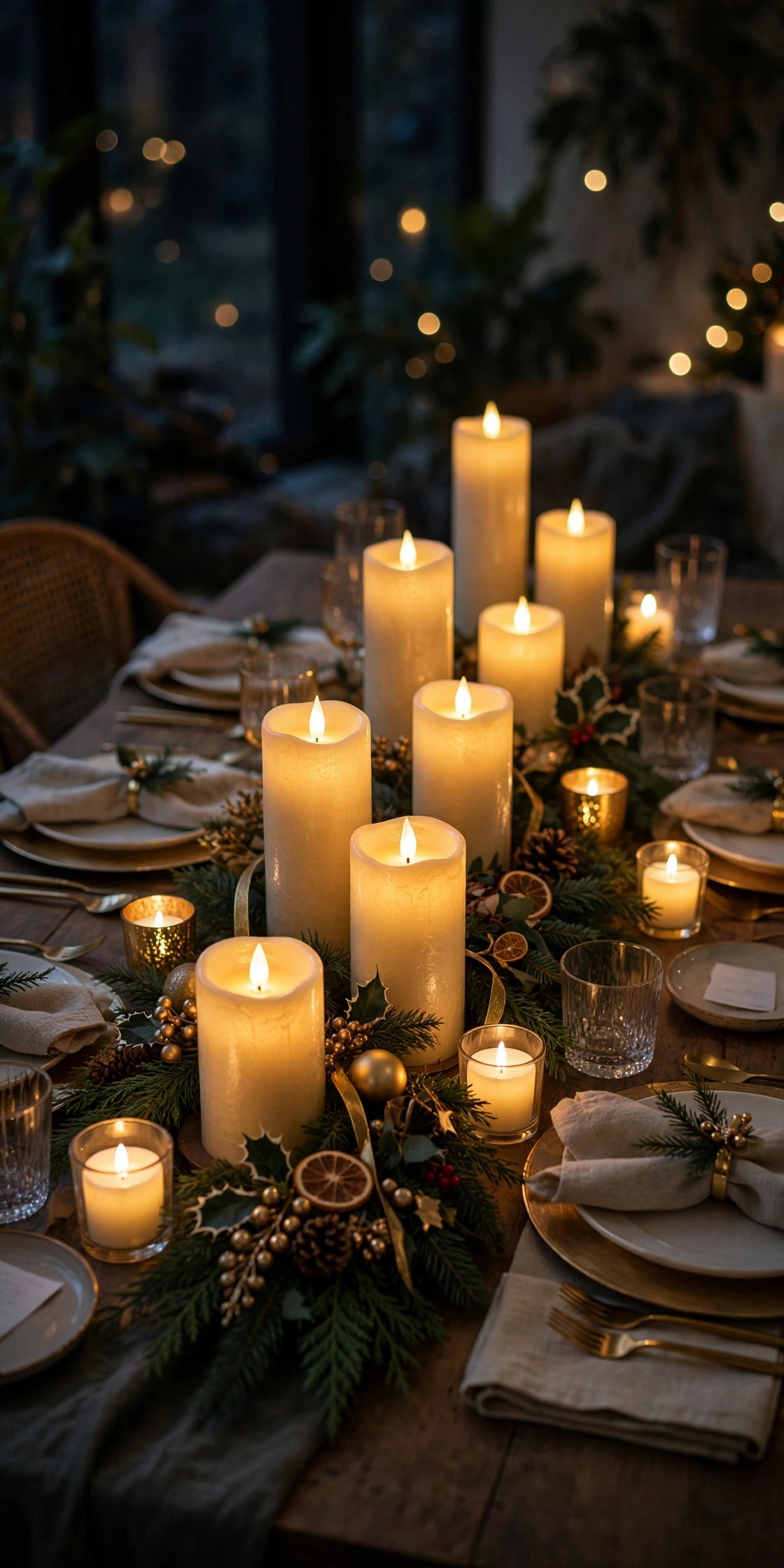
19
Flameless Candles for Real Life
If you have small children, curious cats, or dinners that run four hours, use good flicker-style LED candles on the table and save real flame for the mantel. Quality flameless pillars cost $4 to $8 each, run on timers, and look convincing once the room is dim. Nobody has ever remembered a dinner fondly because the candles were real; they remember nobody knocked one into the gravy.
Try it: Mix one real taper pair at the center (where adults can guard them) with flameless votives down the line. You get real flame and a safe table.
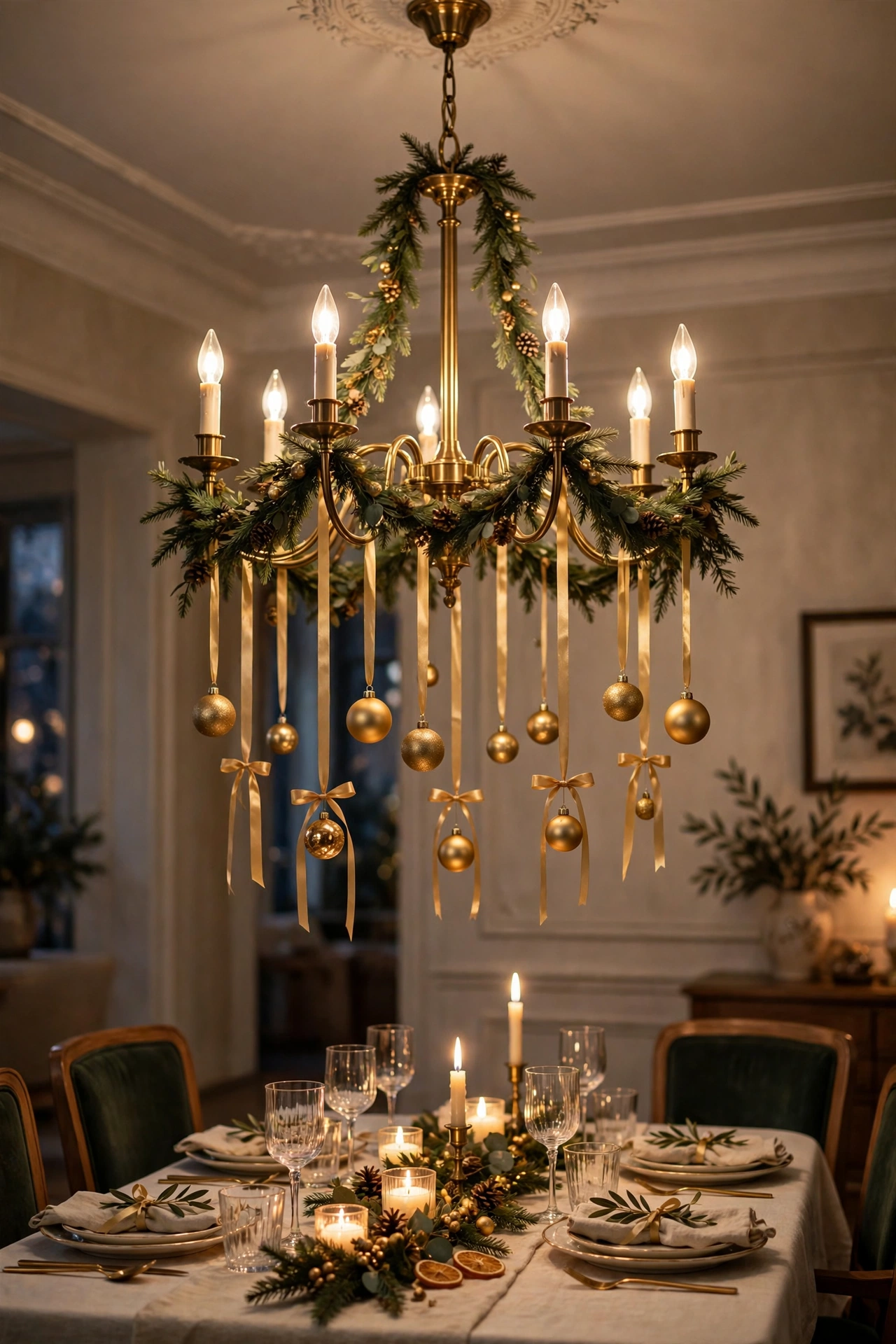
20
Dress the Chandelier
The chandelier is the dining room’s forgotten decoration. Swag a slim garland through its arms, or hang six to nine ornaments from it on ribbons at staggered lengths. Keep the lowest ornament at least 24 inches above the tabletop, so it floats in view without entering anyone’s personal space or the serving zone. Before you hang anything near bulbs or wiring, check the holiday lighting safety basics.
Try it: Hang ornaments with ribbon loops you can adjust at the table, then trim the tails last. Eyeballing lengths from a ladder guarantees one ornament at forehead height.

21
Dim the Room, Light the Table
Set the overhead light to about a third of full brightness, switch off bright side lamps, and let candles and the tree’s spill do the work. Low ambient light is what makes faces look rested and food look rich; it is also free. If your chandelier has no dimmer, unscrew all but two bulbs or swap in 2700K warm bulbs for the season.
Try it: Do a lighting test at the actual dinner hour the night before. A table that glows at noon can look flat at 7 p.m., and candle counts are easy to fix in advance.
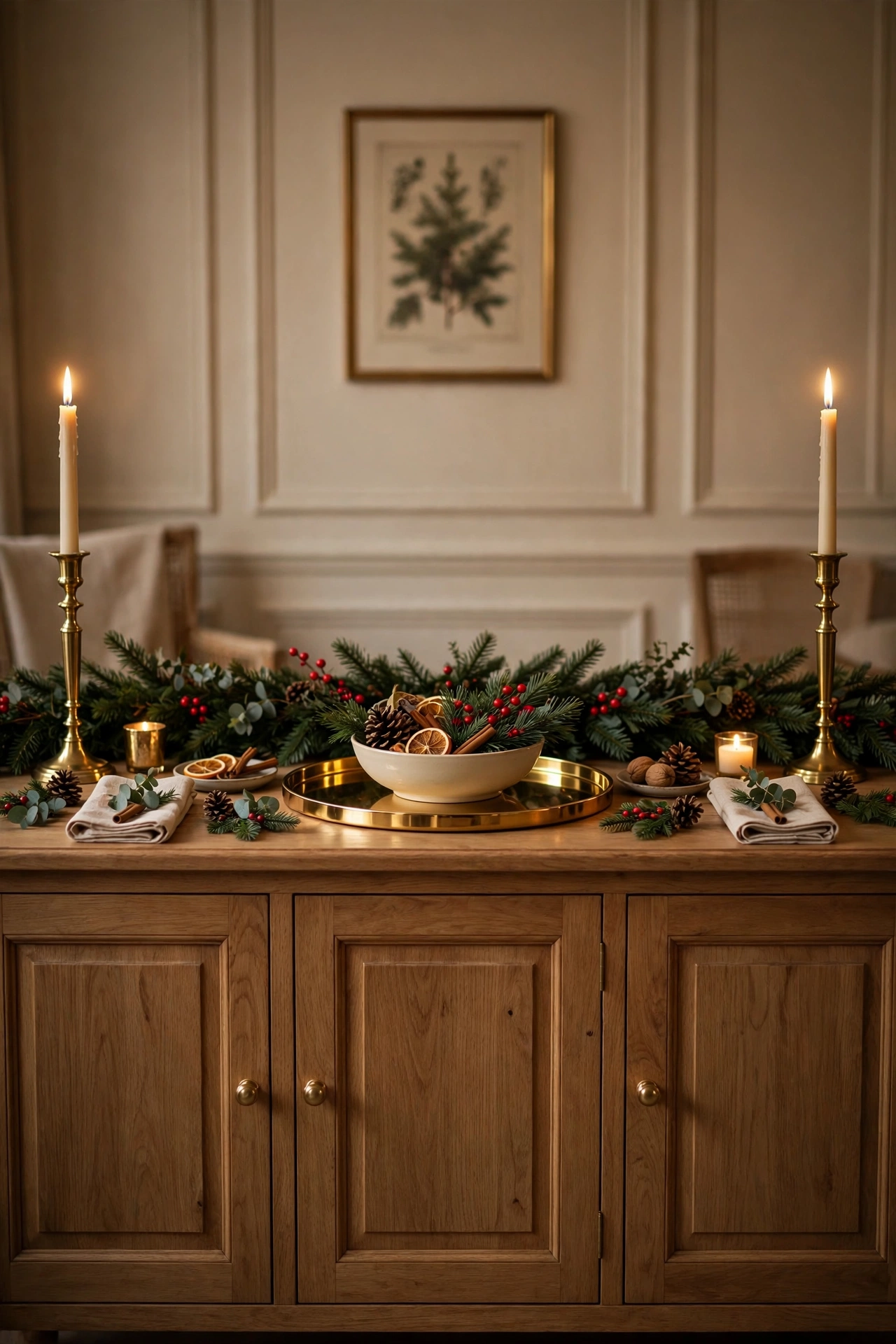
22
Style the Sideboard Like a Second Table
The sideboard is where guests look while they wait for food, so style it in the same palette as the table: a low garland along the back edge, tall candlesticks or lamps at both ends, and one tray or bowl in the middle. Keep the front third clear for serving dishes and drinks during the meal. Symmetric ends with a calm middle is the formula that works on every sideboard ever made.
Try it: Repeat one table element exactly on the sideboard, like the same taper candles. The echo is what makes two surfaces read as one room.
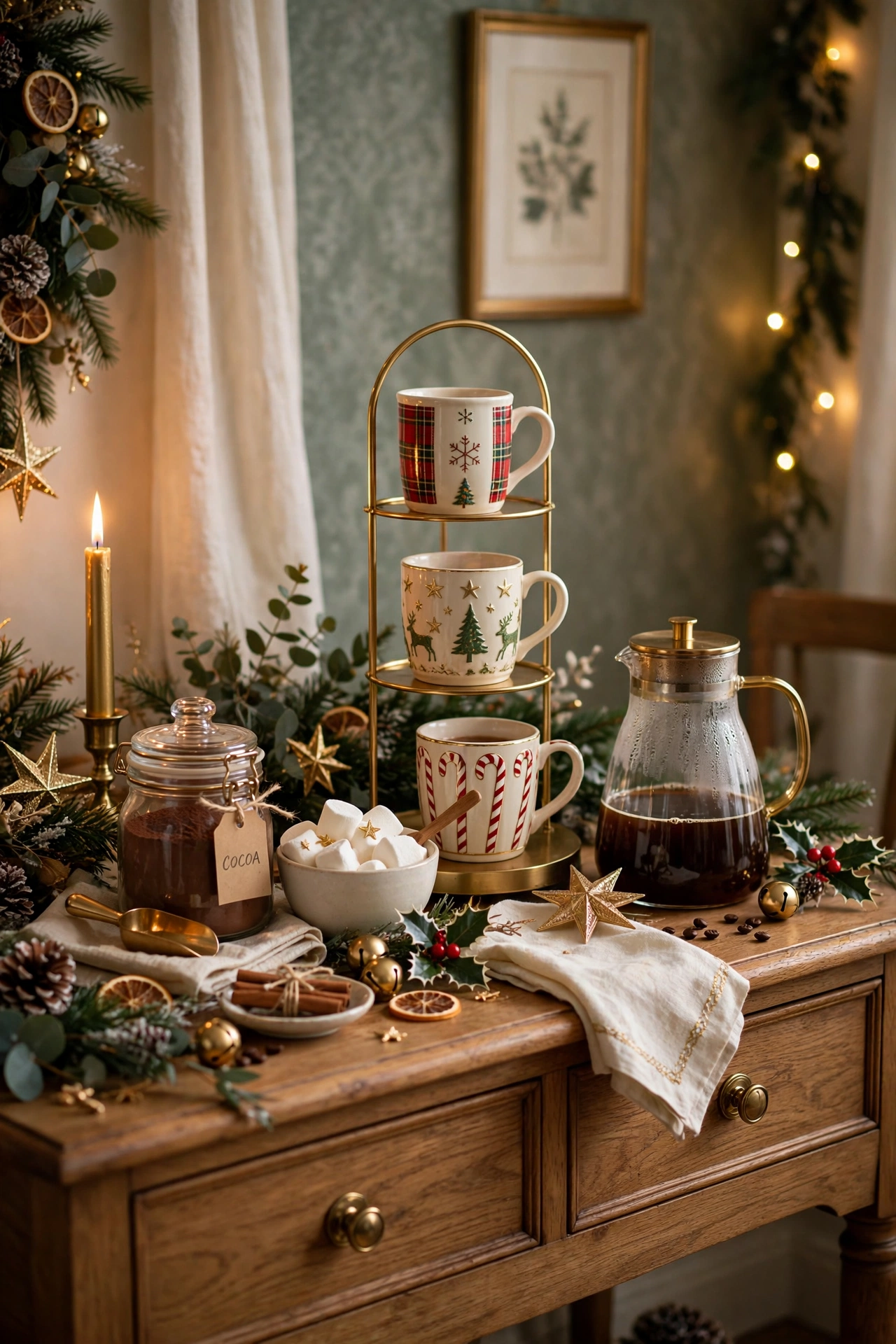
23
A Drink Station That Keeps Guests Out of the Kitchen
Set up coffee, cocoa fixings, and glasses on the sideboard end or a small cart in the dining room, with mugs, a cocoa jar, marshmallows, and a carafe. Guests serve themselves, the kitchen stays clear for cooking, and the station itself decorates the room’s emptiest corner. A tiered stand holds the whole station in about 1 square foot.
Try it: Put the cocoa station on a timer-friendly setup: kettle or slow cooker on warm from dessert onward. Self-serve hot drinks are the host’s night off.
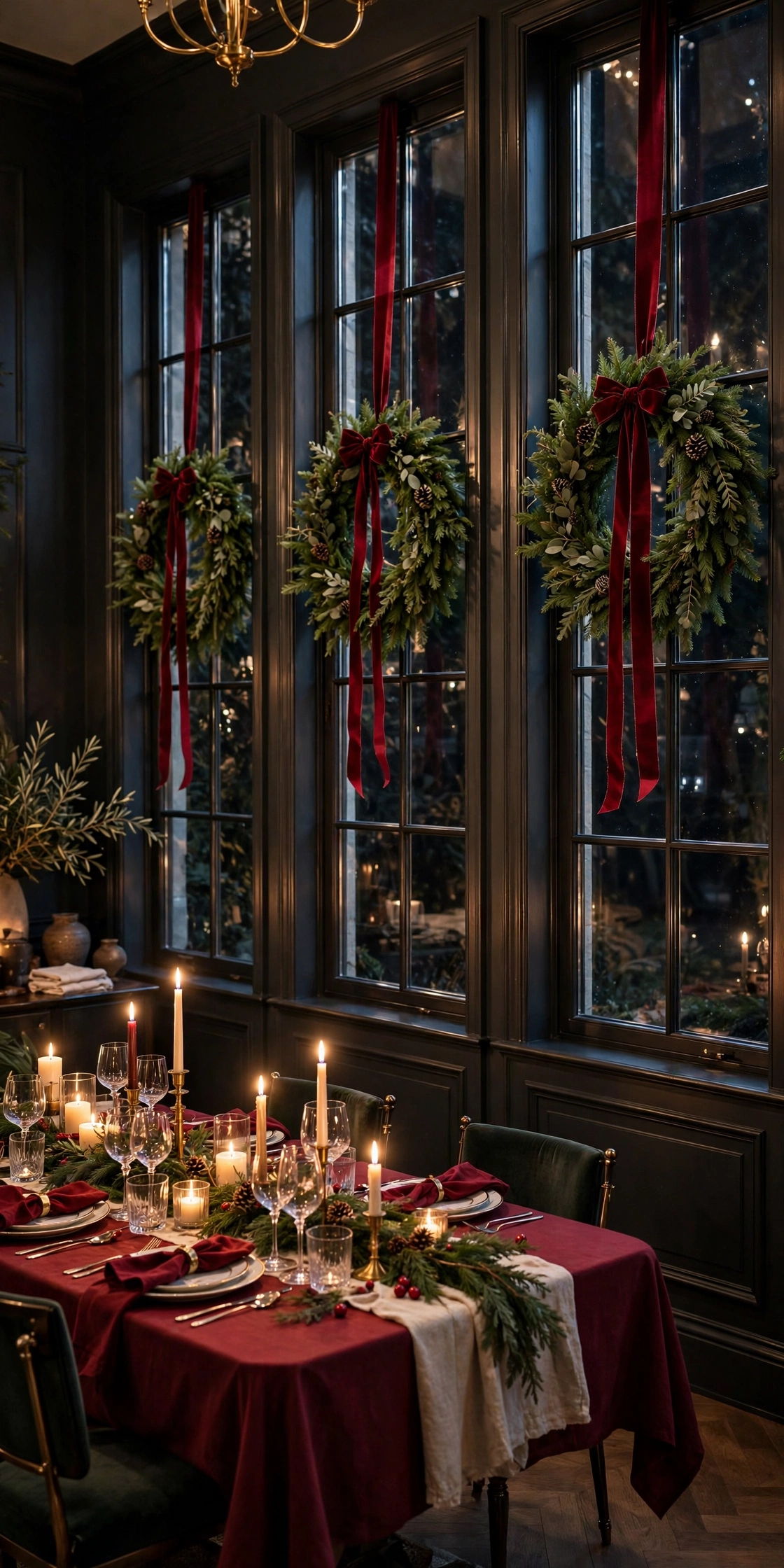
24
Wreaths in the Dining Room Windows
Hang a wreath in each dining room window at exactly the same height, measured from the top of the frame. From the table, the row of wreaths becomes the room’s backdrop; from the street, the candlelit windows are your house’s Christmas card. Use ribbon in your table’s accent color so the windows and the settings speak to each other.
Try it: Suction hooks on the glass hold wreaths up to 20 inches without hardware. Clean the glass with rubbing alcohol first or the hooks let go mid-dinner.
25
Dress the China Cabinet
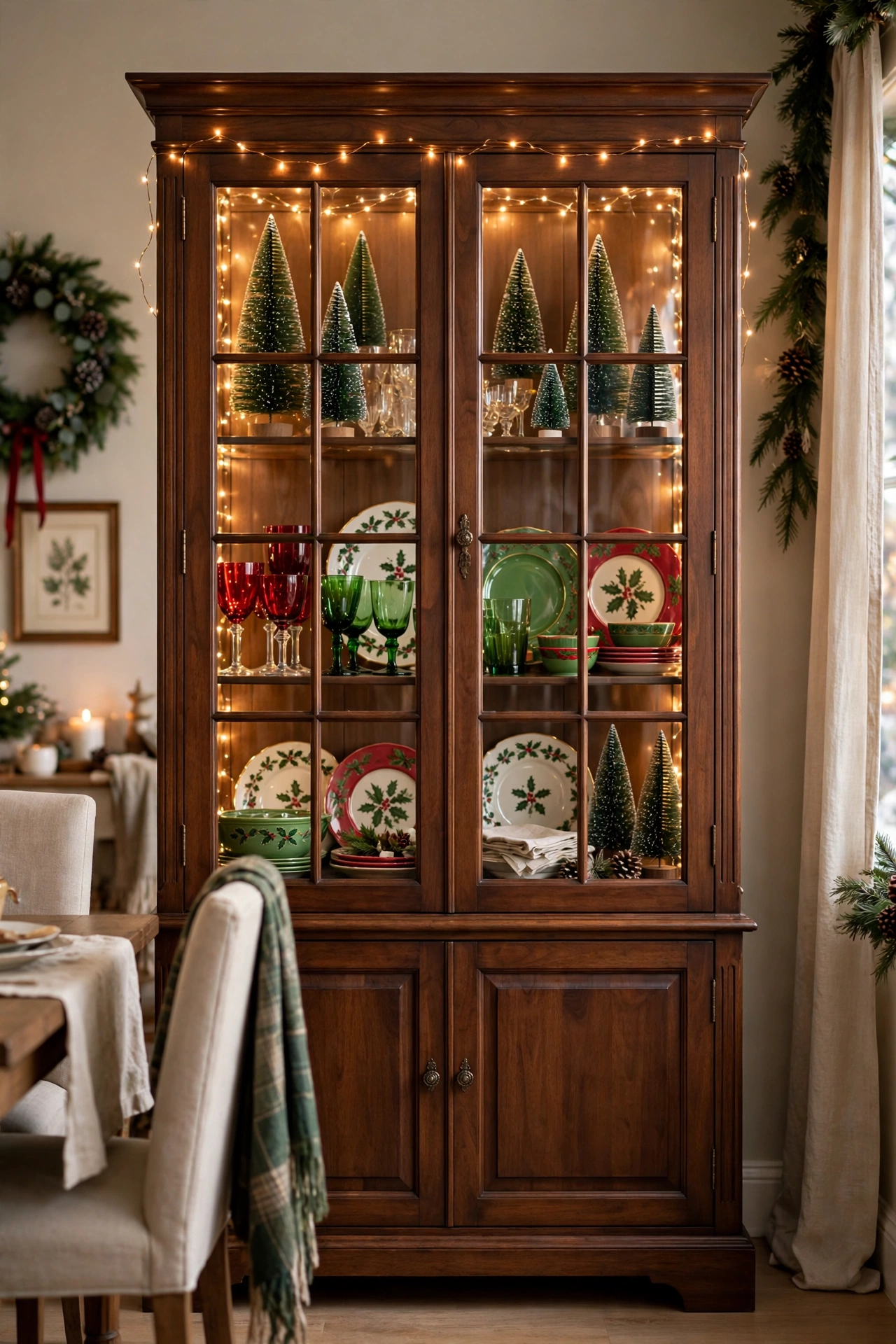
If your dining room has a glass-front cabinet or hutch, it is a display case you already own. Bring the holiday dishes, red and green glassware, and small bottle brush trees to the front shelves, and run a battery fairy light strand along the inside top edge. Rearranging takes 20 minutes and costs nothing, and the cabinet glows like a shop window all season.
Try it: Put battery tea lights in frosted jars on the glass shelves. Glass shelves bounce the light up and down, doubling the effect.
26
A Slim Tree for the Dining Room Corner
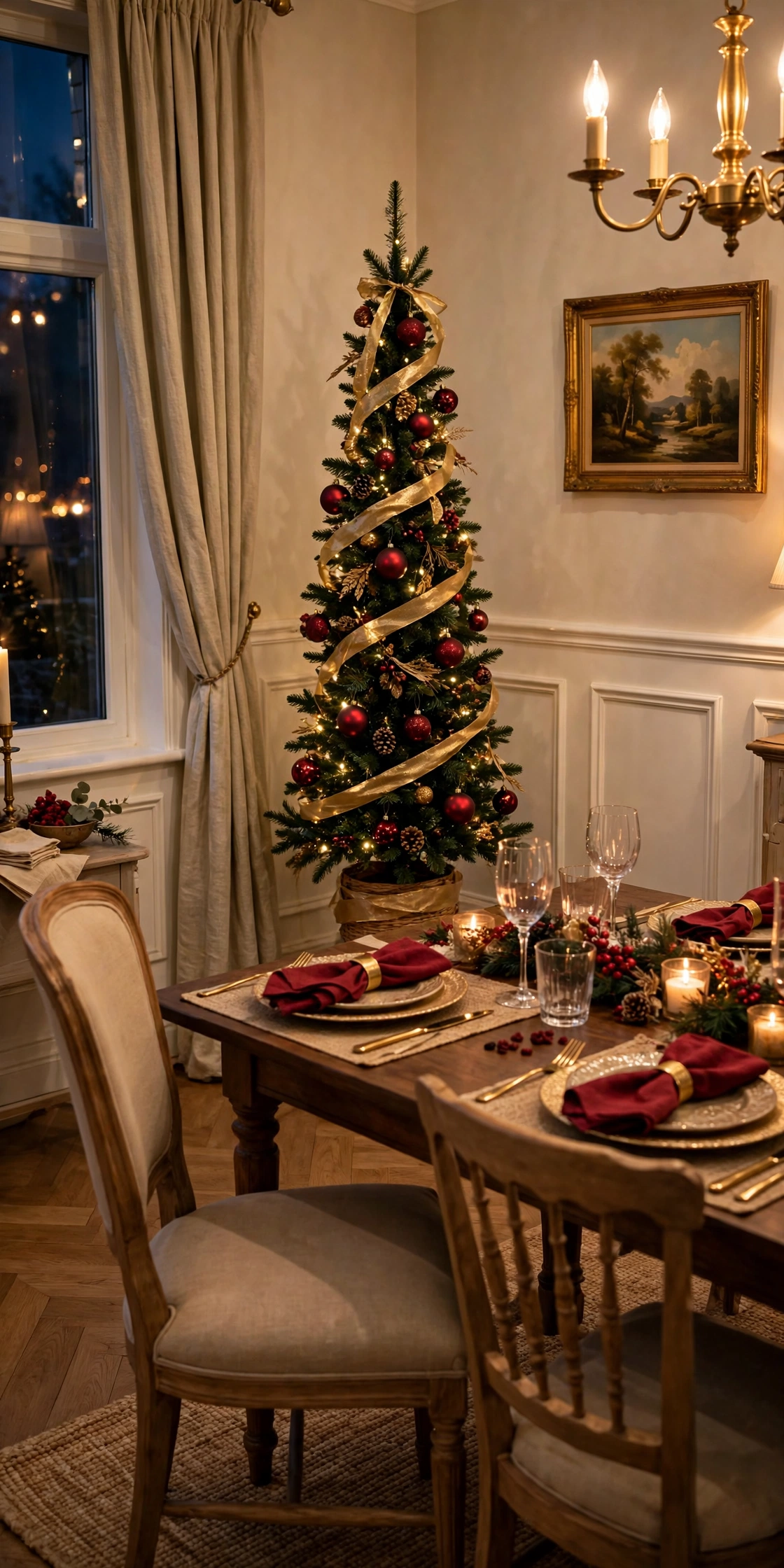
Most dining rooms have one underused corner, and a 4 to 5 foot slim tree fills it without touching a single chair’s pull-out space. Decorate it to match the table, not the main tree: same ribbon, same two colors. The tree gives the room its own glow source, which lets you dim the chandelier further at dinner.
Try it: Check the chair test before committing: pull every chair out as if seating guests, then place the tree. Corners that look free with chairs pushed in often are not.
27
Mini Wreaths on the Chair Backs
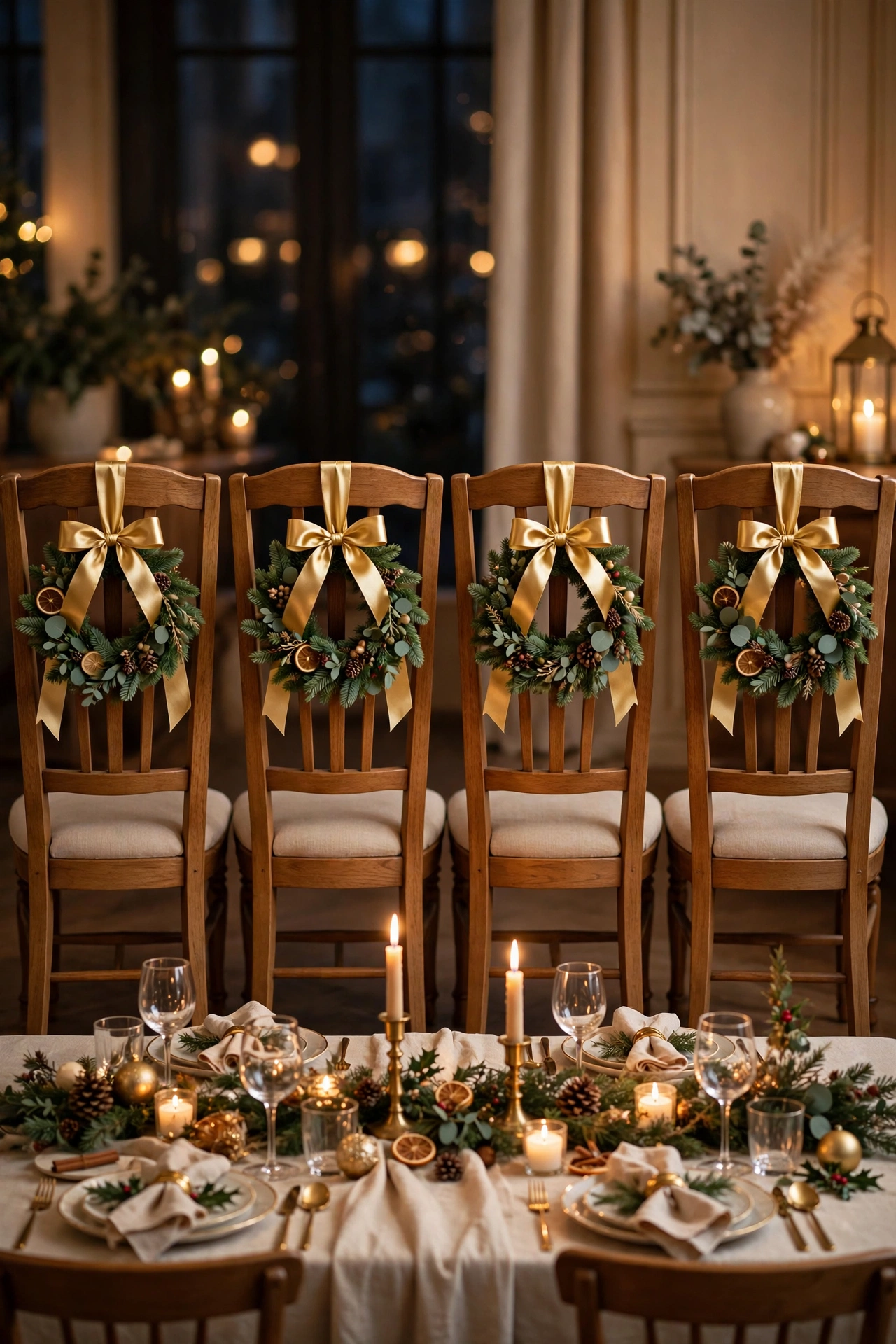
Tie a 6 to 8 inch mini wreath to the top rail of each chair back with a wide ribbon bow. It is the single most photographed dining room detail of the season, and a set of six mini wreaths costs $18 to $30. Host chairs can take a bigger wreath or a second bow; keep guest chairs matching so the row reads as a set.
Try it: Use wreaths on the side of the chair facing the room’s entrance. The first view of the table should include the wreath row.
28
Sashes and Big Bows for Plain Chairs
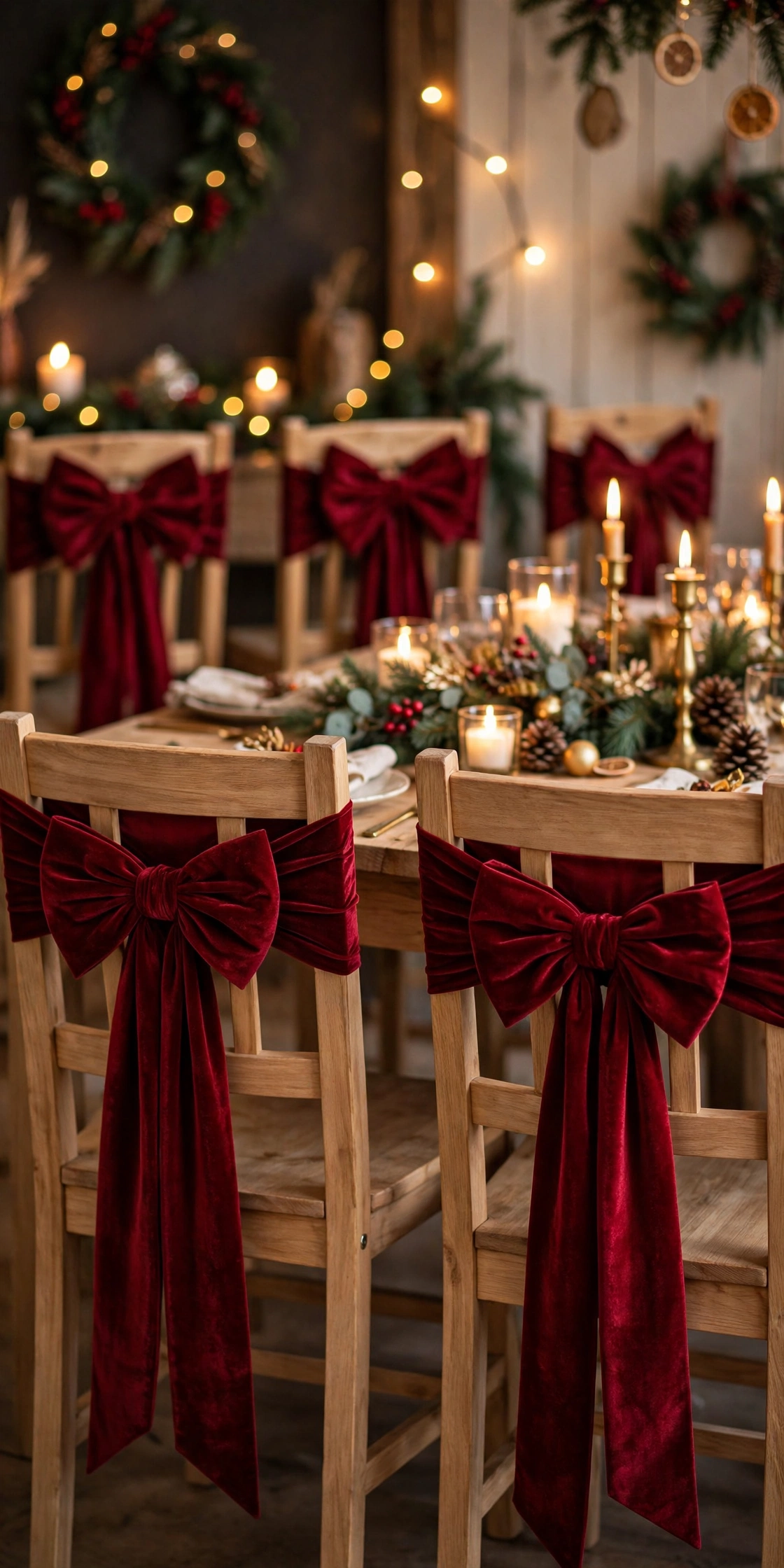
If mini wreaths bust the budget, tie one wide sash or oversized bow per chair instead: 4-inch ribbon, a simple knot, and tails cut to 10 inches. It takes 2 minutes per chair and transforms the plainest kitchen chairs into dining chairs. Velvet ribbon reads formal; burlap or plaid reads farmhouse.
Try it: Bow the two host chairs in the accent color and the side chairs in the neutral. The hierarchy looks designed and saves ribbon.
29
Cushions and Throws for Dinners That Linger
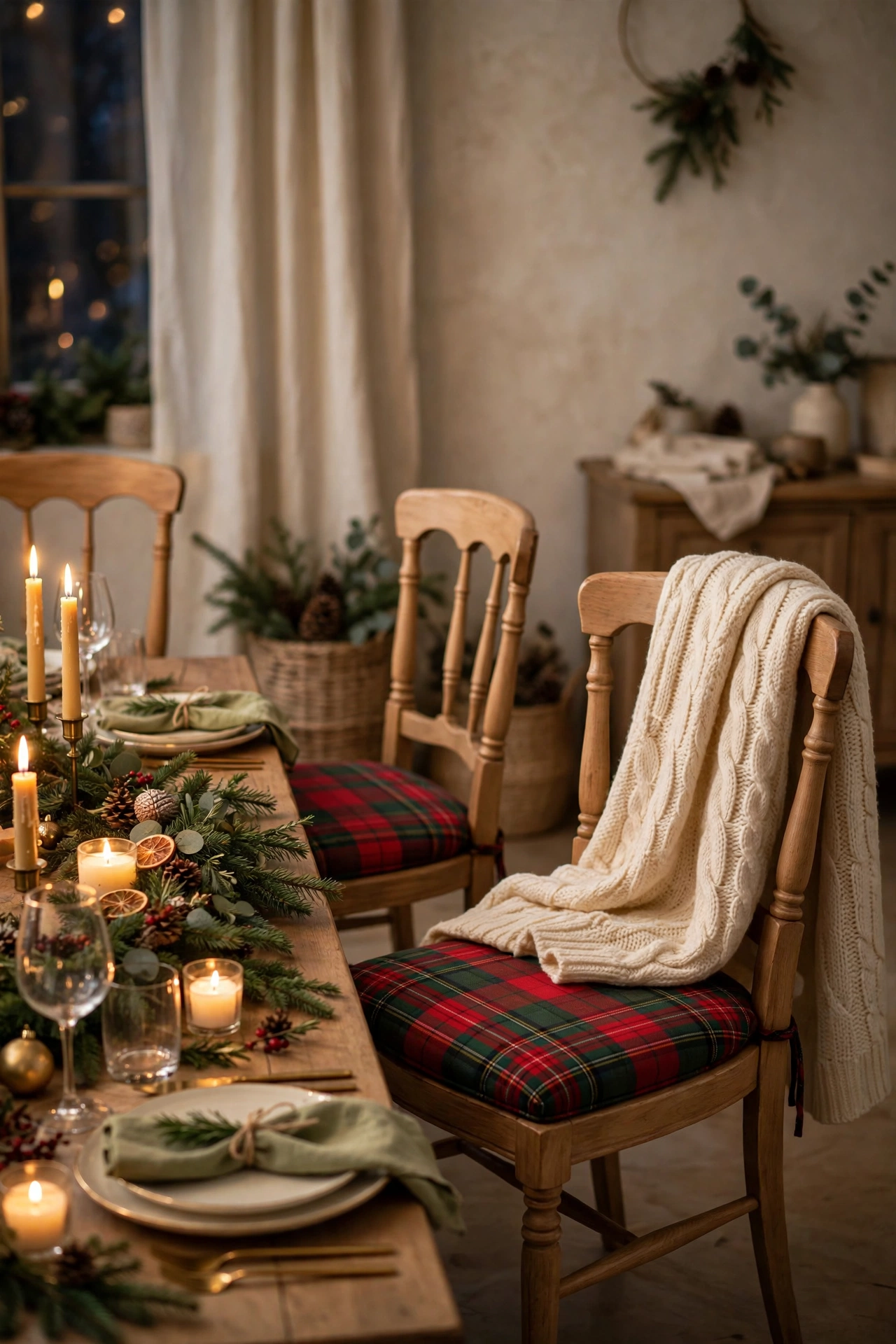
Guests stay at the table when the chairs are comfortable, so add plaid or velvet seat cushions and drape one throw over the host chairs. Cushion covers cost about $8 each and swap back in January. A dining room people linger in until midnight is better decor than any object you can buy.
Try it: Test-sit your own chairs for ten minutes while reading. If you shift twice, your guests will too; add the cushion.
30
The Kids’ Table, Styled Not Exiled
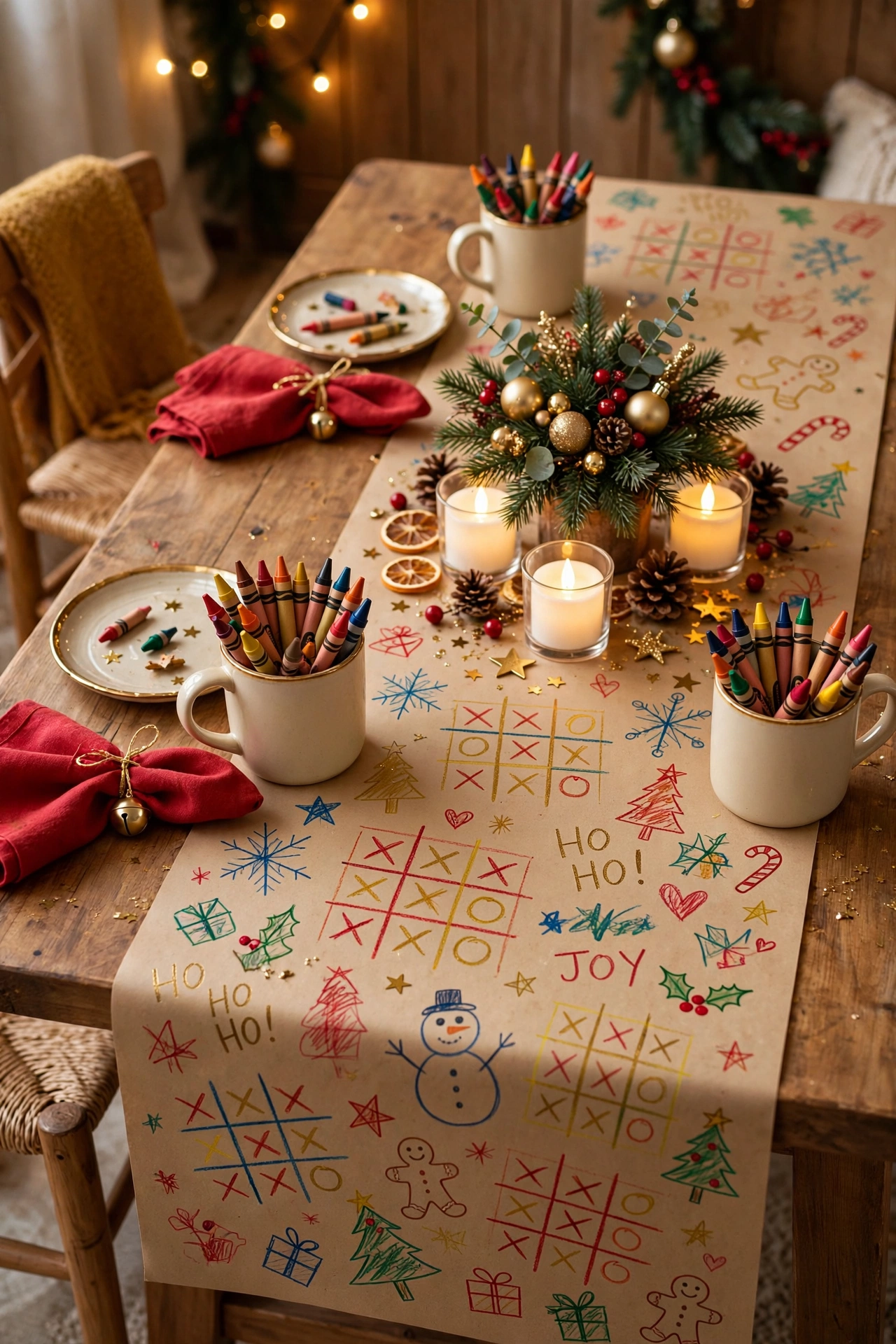
Give the kids’ table the same colors as the main table in unbreakable form: a brown paper runner they can draw on, mini versions of the centerpiece, flameless candles, and their own place cards. Set out crayons in a mug at each place. Kids who feel hosted behave like guests; kids exiled to a bare card table behave like exiles.
Try it: Draw one placemat-sized game on the paper runner before dinner: a maze, tic-tac-toe grids, a tree to decorate. It buys you the whole first course in peace.
31
Small Dining Room Rules: Go Slim and Go Up
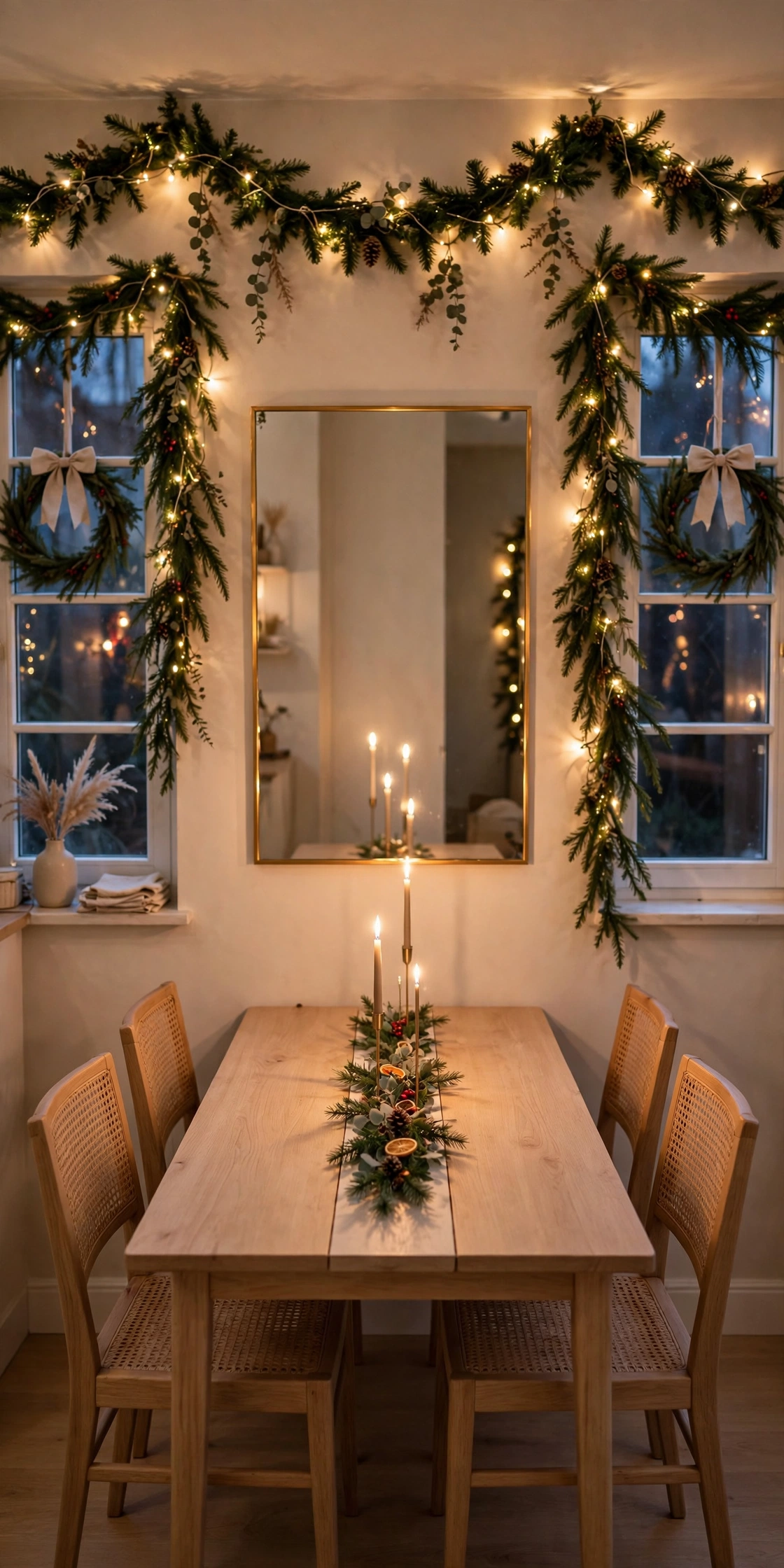
In a small dining room, keep the centerpiece under 8 inches wide, move decor to the walls, windows, and chandelier, and hang a mirror where it can double your candlelight. Every guest needs 24 inches of table edge and 36 inches behind their chair to push back. Decor that steals elbow room is the only kind guests remember unkindly.
Try it: Sit in every seat before the meal and look at the table edge. Anything within forearm reach of a plate will be moved by a guest, so move it yourself first.
32
The Everyday December Table
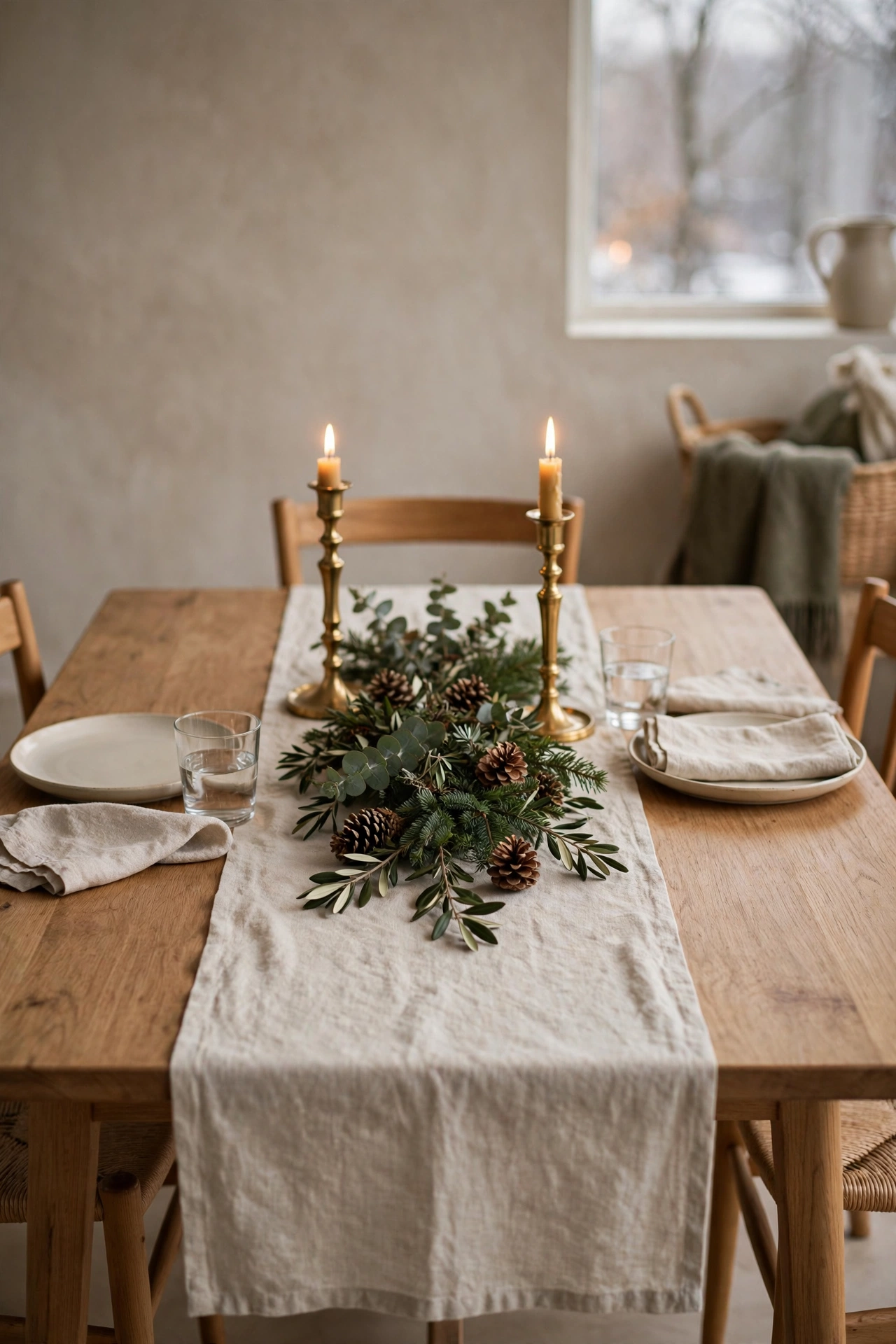
You do not eat feast-day meals for 25 straight days, so keep a base setting that lives on the table all month: runner, one low centerpiece, and a pair of candlesticks. It takes 10 minutes to set once and makes Tuesday soup feel like an occasion. Everything else in this guide layers on top of it for the big days.
Try it: Choose an everyday centerpiece with nothing perishable in it. A table you never have to rescue from wilting greenery is a table that stays dressed.
33
Feast Day in 30 Minutes: The Upgrade Sequence
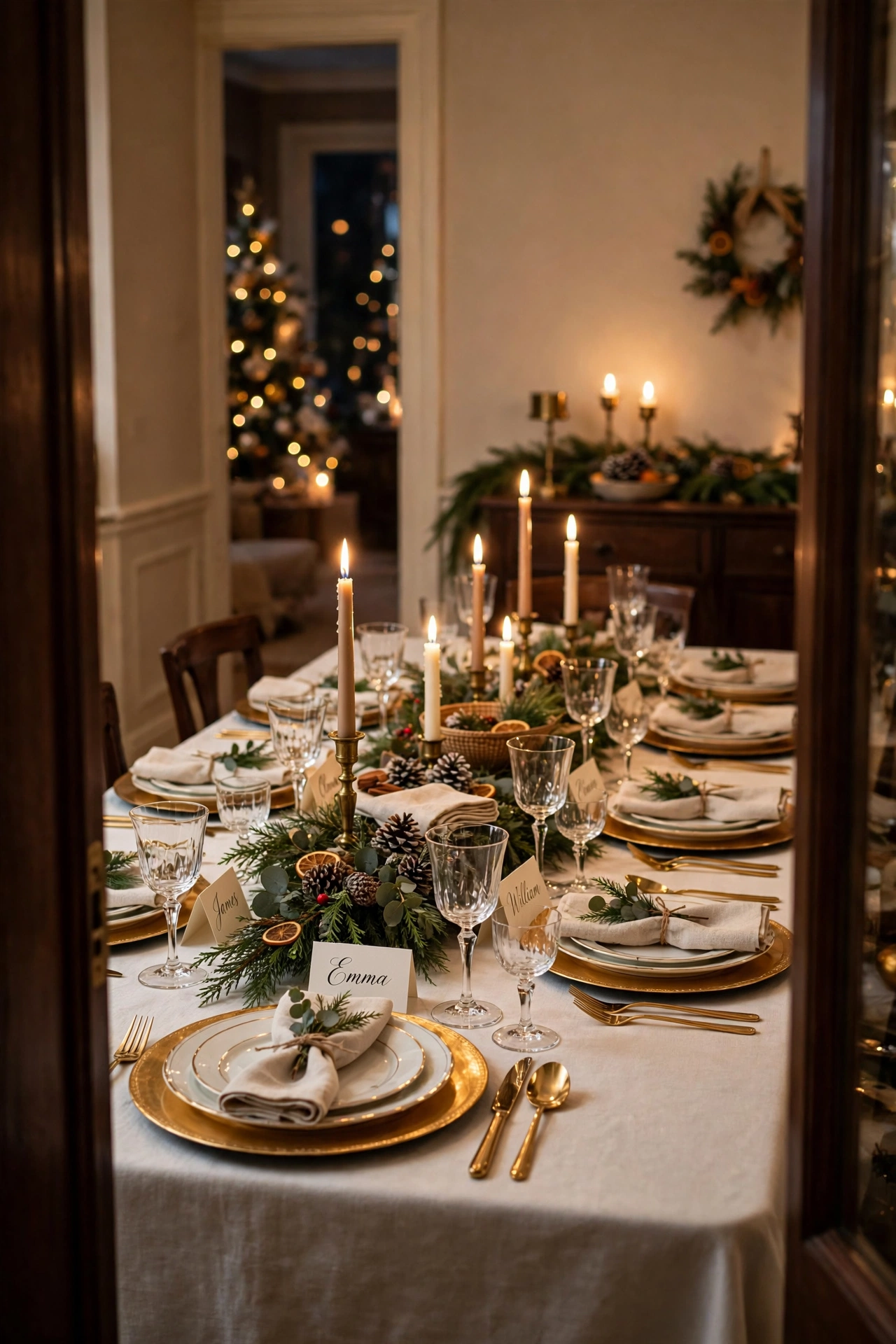
On the day, upgrade the everyday table in this order: cloth or fresh runner down (5 minutes), chargers and full settings out (10 minutes), place cards and napkin tucks (5 minutes), greenery and centerpiece refreshed (5 minutes), candles in and everything lit 20 minutes before guests sit (5 minutes). The sequence works because each step is visible from the door; if you run out of time at any point, the table already looks finished.
Try it: Set the table the morning of, then cover it with a clean flat sheet. It keeps dust and curious pets off, and the reveal when you pull it away feels like a magic trick.
34
Scent the Room Without a Single Candle
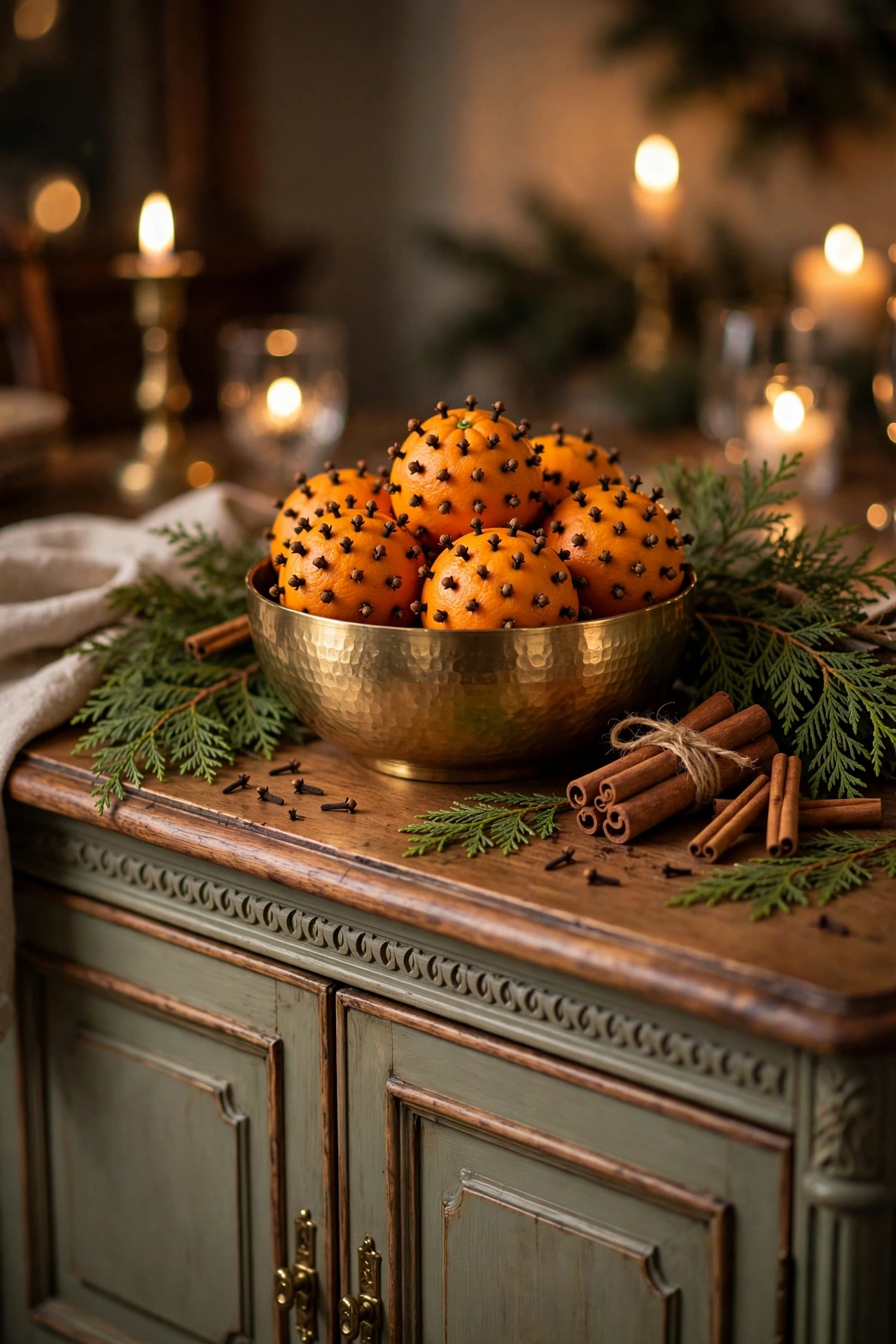
Since table candles must stay unscented, build the room’s aroma from food-adjacent sources: a bowl of clove-studded oranges on the sideboard, fresh cedar in the garland, and a simmer pot on the stove for the hour before guests arrive (orange peel, cinnamon sticks, cloves, topped up with water). The dining room smells like Christmas cooking, which is the one scent that never fights a meal.
Try it: Make the pomanders a week ahead. Oranges need a few days for the clove scent to deepen, and they keep for the whole season in a cool room.
Pro tip: Sit in every chair at your table the night before the big meal and look around. Every seat should have a view worth having: candlelight, a wreath in the window, the glow from the tree corner. The seat facing the blank wall and the kitchen door is where your most honest guest will sit, so fix that view first.
Three rules for dining room Christmas
- Sightlines over spectacle: Nothing between two facing guests should stand in the 12 to 24 inch band. Go low (under 12 inches) or go tall and slim (above 24), because conversation is the actual event and the decor is only the setting.
- Unscented at the table, always: Candles near food stay unscented, no exceptions, and scent comes from greenery, citrus, and the kitchen. A candle that flavors the food has failed at the one job it had.
- Comfort is a decoration: Allow 24 inches of table edge per guest and 36 inches behind each chair, cap the decoration budget on anything a guest has to move, and test-sit every chair. Guests remember how a dinner felt long after they forget how it looked.
After Christmas: the dining room reset
- Linens first: Wash tablecloths, runners, and napkins in the first week of January, iron them, and store them flat or rolled, never folded hard. Creases pressed in for 11 months become permanent residents.
- Candles and holders in one box: Store tapers upright in a tall box with the holders, wick trimmers, and matches. Tapers stored loose in a warm attic bend, and bent tapers drip.
- Photograph the full table: Take one wide photo and one close-up of a single setting before you clear the feast-day table. Next December you will rebuild the whole look in half the time, chargers and all.
More ideas you’ll love: christmas kitchen decor ideas, tabletop christmas tree ideas, christmas living room decor ideas, christmas decor ideas, and more in the Christmas Decor category.
Questions readers ask
How high should a Christmas centerpiece be?
Under 12 inches tall, or slim and above 24 inches. Anything in the 12 to 24 inch band sits exactly at eye level and blocks conversation across the table. When in doubt, sit in the lowest chair and check the sightline to the seat opposite.
Should candles on the dining table be scented?
No, never at the table. Scented candles compete with the flavor of food and can make a whole course taste like perfume. Keep table candles unscented and put scented ones in the entryway, living room, and bathroom instead.
How much space does each place setting need?
Plan 24 inches of table edge per guest, with the charger centered on that space. A 6-foot table seats three per side comfortably. Cramming in extra settings is the fastest way to make a beautiful table feel like a budget buffet.
How do I decorate a small dining room for Christmas?
Shrink the centerpiece to under 8 inches wide and move the decor up: chandelier dressing, window wreaths, and a styled sideboard or shelf. Use a mirror to double the candlelight, and keep every chair’s 36 inches of push-back space sacred.
What colors work best for Christmas dining room decor?
Start from your dishes and your room, not from a trend. Deep red and gold suit warm, formal rooms; white and silver suit cool, bright ones; green and natural wood suit everyone. Pick two main colors plus one metal and repeat them on the table, the sideboard, and the windows.
How far ahead can I set the Christmas table?
One to two days ahead is the sweet spot. Set everything except real greenery touches and food, then cover the table with a clean flat sheet to keep off dust. Light candles and add the fresh elements in the last 20 minutes.
How do I decorate dining chairs for Christmas?
Mini wreaths (6 to 8 inches) tied to the chair backs with wide ribbon are the classic choice, at $3 to $5 per chair. Wide ribbon sashes or oversized bows cost less and take 2 minutes per chair. Match all the guest chairs and let the host chairs carry the bigger version.
How do I store dining room Christmas decor?
One labeled box for the table (centerpiece pieces, napkin rings, place card supplies) and a separate tall box for candles and holders. Wash and iron linens before storing, and put your table photos in the box so next year’s setup starts from a picture, not a guess.
People Also Ask
What is the single most effective dining room Christmas decoration?
Candlelight. Unscented tapers at two heights, with the room lights dimmed, transform a plain table more than any centerpiece you can buy. If the budget covers only one thing, make it candles and holders.
Can I mix gold and silver on a Christmas table?
Yes, if each metal appears at least three times. One gold object among silver looks like a mistake; gold chargers, gold ribbon, and gold-rimmed glasses look like a decision. Two metals is the limit; three reads as clutter.
How do I make the dining room festive if there is no room for a tree?
Use the tree’s jobs, not the tree: glow from the chandelier and candles, greenery from a table garland and window wreaths, and height from dressed shelves or a sideboard display. A room with light, greenery, and one red accent reads as fully decorated with no tree at all.
loved these ideas? ✿
Save this guide for later
Pin it to your board so it’s there when you’re ready to recreate it.

Curated by
Hey! I'm Sanaullah — visual curator and content creator. I search, curate, and test the best aesthetic ideas across Pinterest so you can easily transform your living space, style daily outfits, and try simple creative DIYs without the overwhelm.