
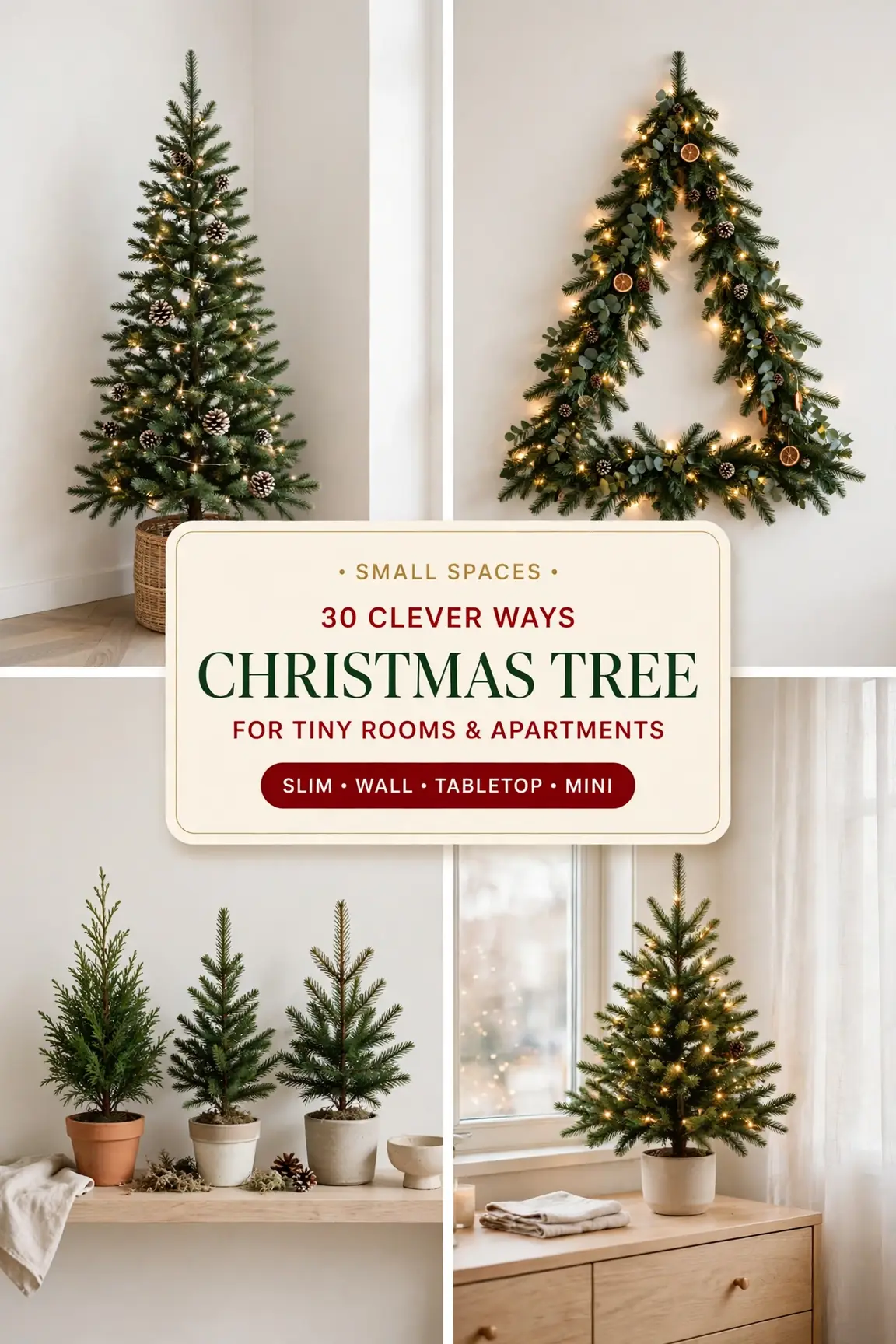
A small room does not need a small Christmas. It needs the right tree shape. The best christmas tree for small spaces is the one measured by footprint, not height: a slim profile in a dead corner, a flat back against the wall, or a tree lifted onto furniture you already own. Work through these ideas and you will end up with a tree that looks full-size in photos and leaves every walkway, door swing, and sofa seat exactly where it was.
Quick Idea Summary
- The key takeaway: Footprint is everything. A space saving christmas tree with a base diameter under 30 inches fits almost any apartment corner, and flat-back or wall trees need no floor space at all.
- The detail most people miss: Height is rarely the problem. A 6-foot pencil tree takes up less room than a 4-foot full tree, because diameter, not height, is what eats your floor.
- What it costs or how long it takes: Most ideas below cost $15 to $60 and take 10 to 30 minutes. Artificial christmas trees for small spaces run $25 to $120 and store flat or in one bag.
At a glance
| Tree type | Ideas | Budget |
|---|---|---|
| Slim floor trees | 01–05 | $25–$120 |
| Trees lifted onto furniture | 06–10 | $15–$70 |
| Wall trees, zero floor space | 11–16 | $0–$45 |
| Tabletop and mini trees | 17–22 | $8–$40 |
| Hanging and alternative trees | 23–26 | $10–$50 |
| Styling tricks that save space | 27–30 | $0–$30 |
The ideas
01
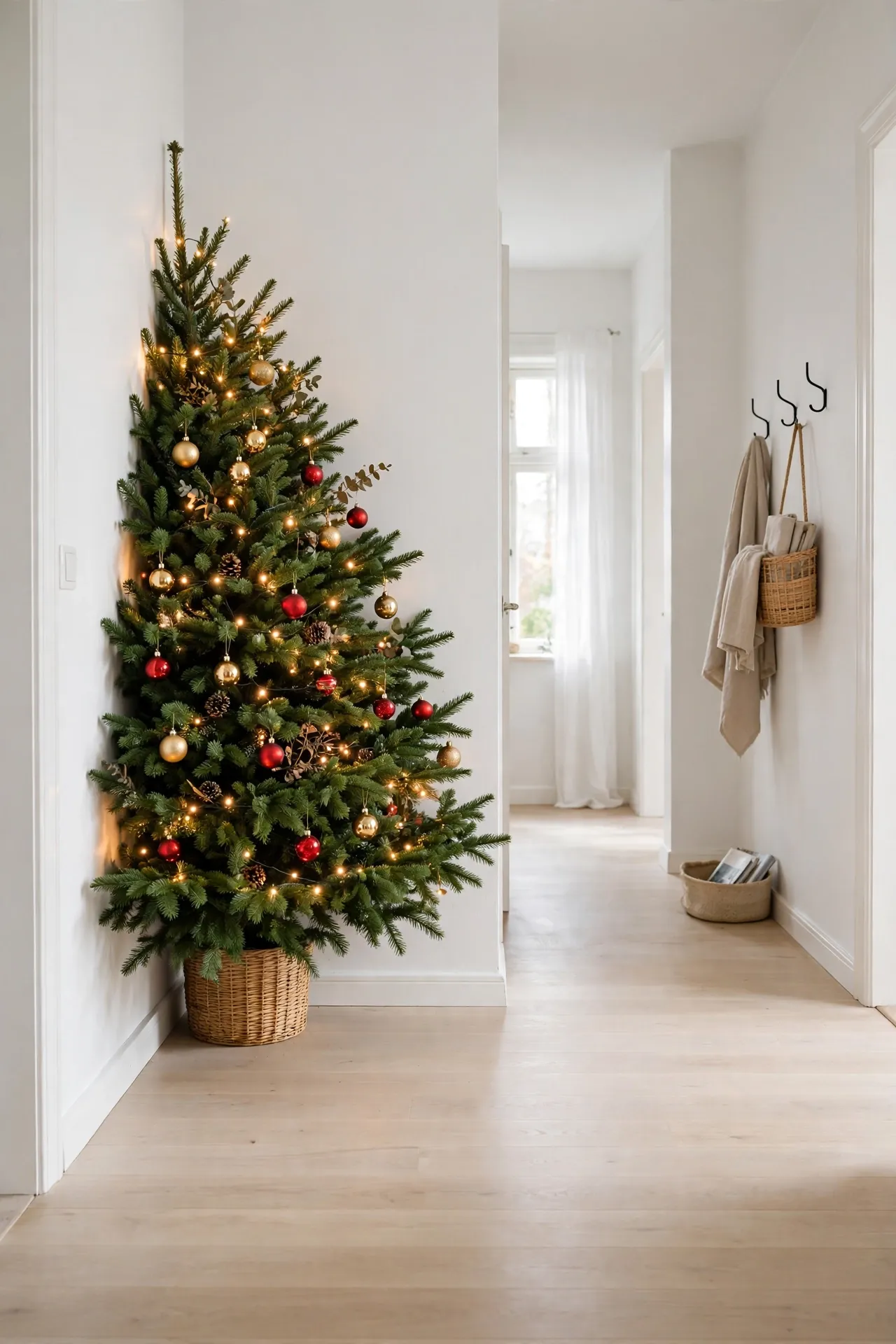
The Pencil Tree in a Dead Corner
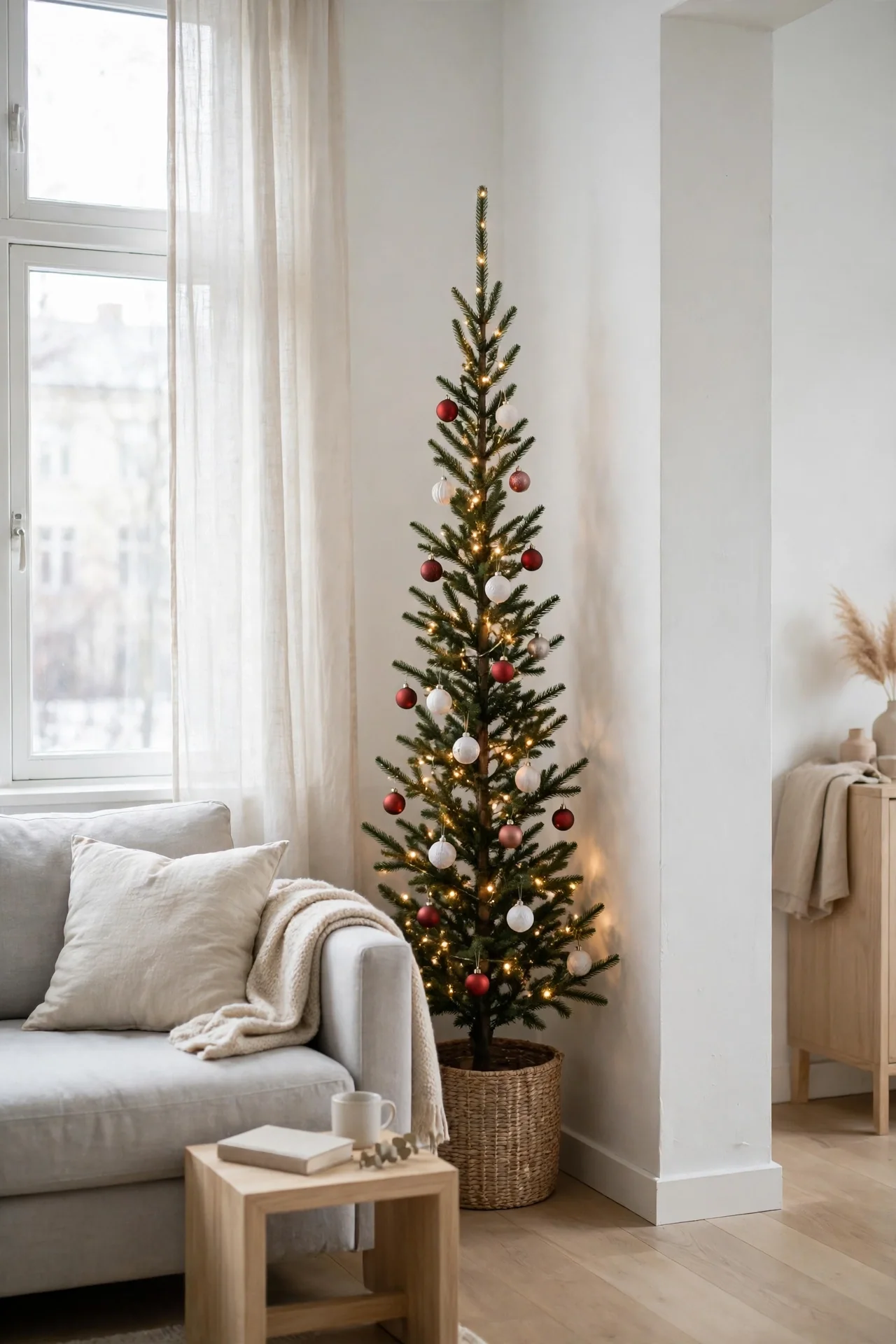
Every small room has one corner that holds nothing: beside the sofa, next to the TV stand, behind a door swing. A pencil tree with an 18 to 24 inch base diameter was made for that spot, and at 6 to 7 feet tall it still reads as a real, full-height tree. This is the classic christmas tree for small apartment living because it changes nothing about how the room works.
Try it: Outline the corner with painter’s tape before you buy. If a 24-inch circle fits inside the tape with the walkway untouched, the tree fits.
02
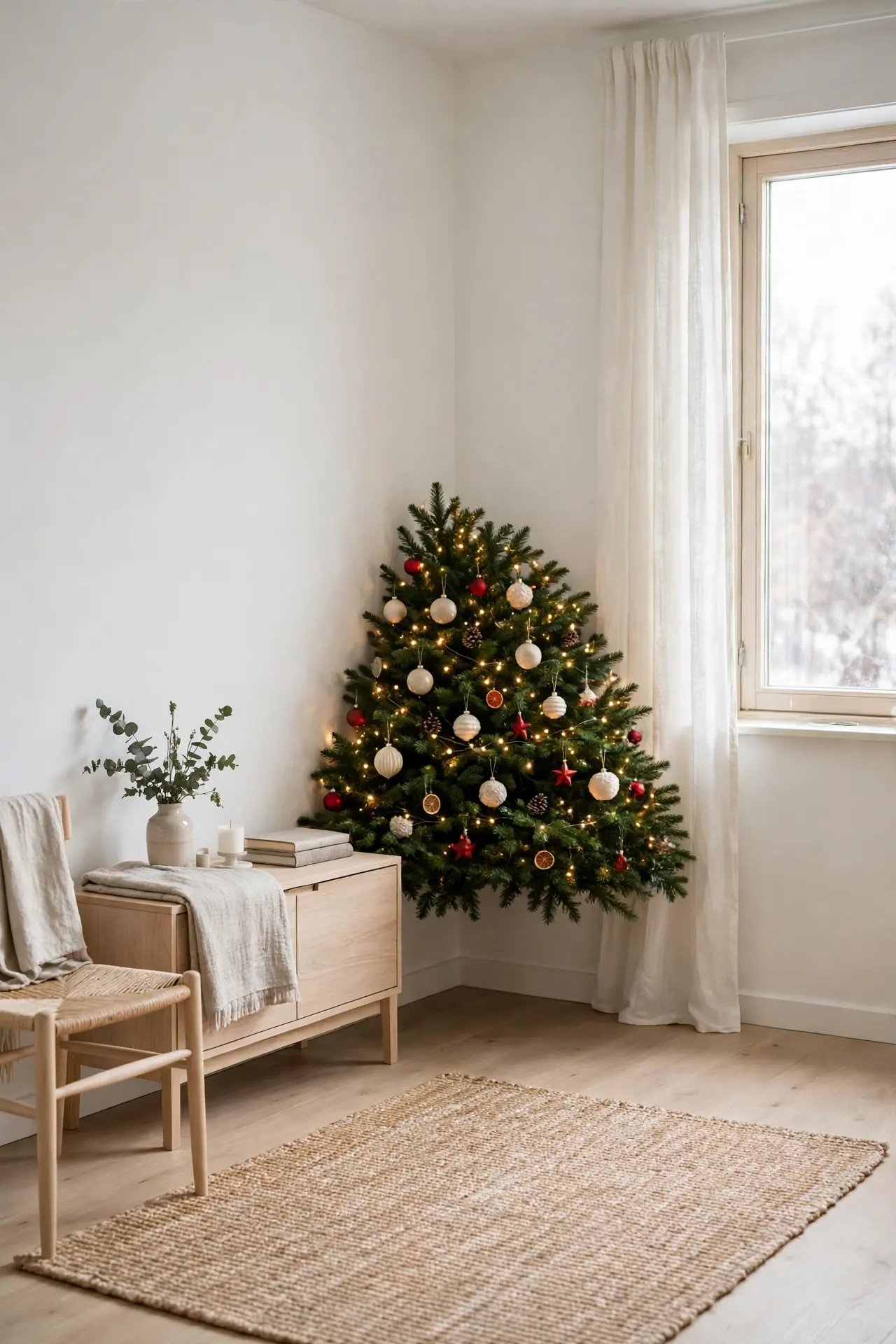
The Flat-Back Half Tree
A flat-back tree is literally half a tree: full and lush from the front, flat against the wall behind. It gives you the silhouette of a standard tree on roughly half the footprint, about 12 to 15 inches of depth. In a narrow room, that reclaimed foot of floor is the difference between a tree and an obstacle course.
Try it: Decorate only the front two-thirds and skip the back branches entirely. You need about 40 percent fewer ornaments than a full tree of the same height.
03
The Corner Quarter Tree
Quarter trees are shaped to nestle into a 90-degree corner, with two flat sides and one rounded front. They push the tree’s visual center into the room while the bulk hides in space that was never usable. A 6-foot corner tree holds nearly as many ornaments as a full tree and frees up the middle of the room completely.
Try it: Push the corner tree a full inch into the corner, not floating in front of it. The tighter the fit, the more floor you actually get back.
04
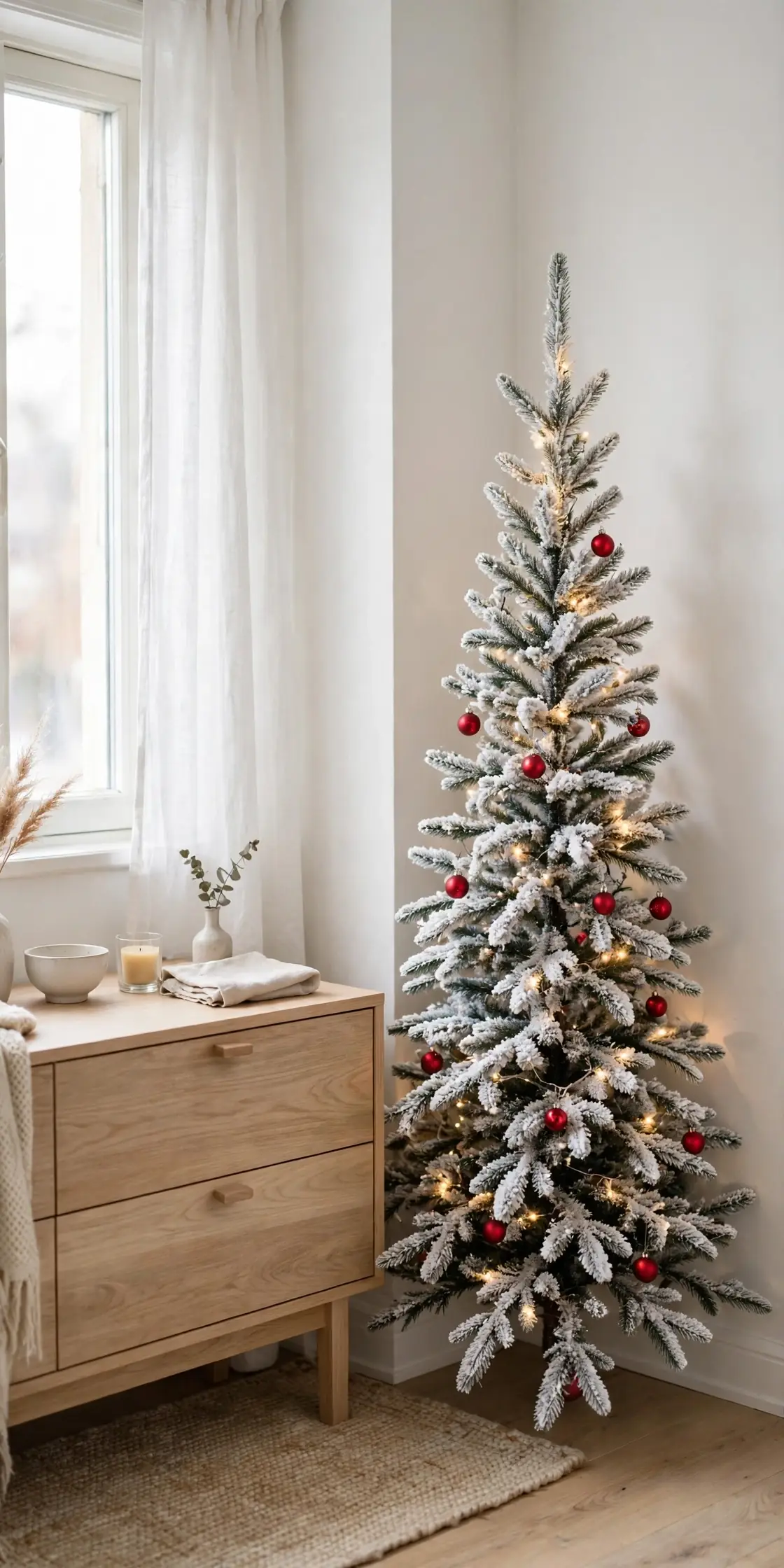
The Slim Flocked Tree
Flocking does visual work for you: the white-dusted branches look full and festive with a third fewer ornaments than a plain green tree needs. A slim flocked profile, around 24 inches wide, is one of the strongest artificial christmas trees for small spaces because the snow finish carries the look while the footprint stays tiny.
Try it: Keep flocked-tree ornaments to two colors plus one metal. The white branches are already busy; a tight palette keeps it elegant instead of chaotic.
05
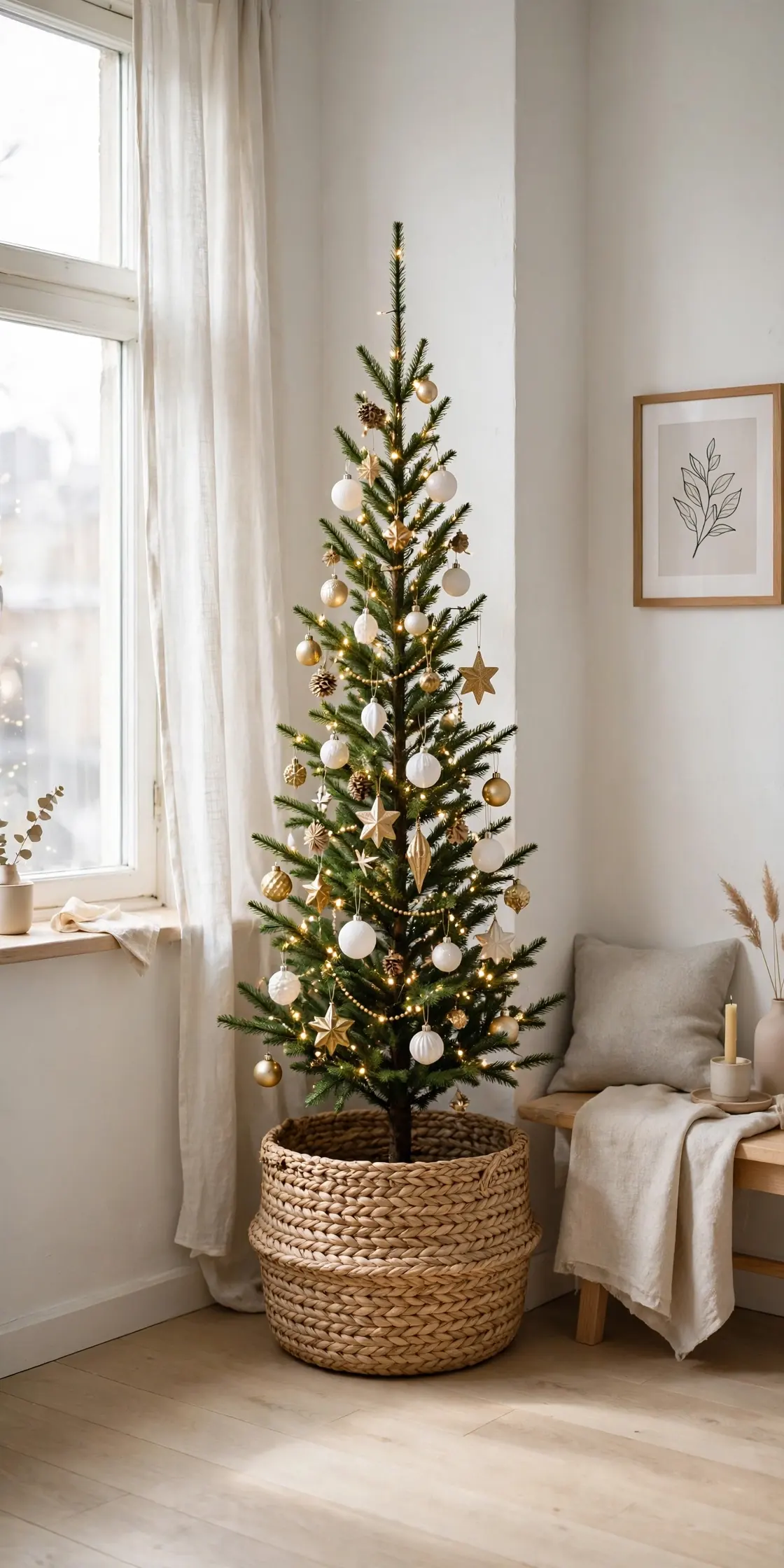
A Slim Tree in a Basket, Not a Skirt
A tree skirt spreads 36 to 48 inches across your floor. A woven basket or collar base takes up only the stand’s own footprint and hides the metal feet at the same time. Swapping the skirt for a basket can hand you back a full square foot, which in a small room is a side table’s worth of space.
Try it: Measure your stand before buying the basket; the basket opening must clear the stand by 2 inches. Stuff any gap with tissue so the tree sits dead straight.
06
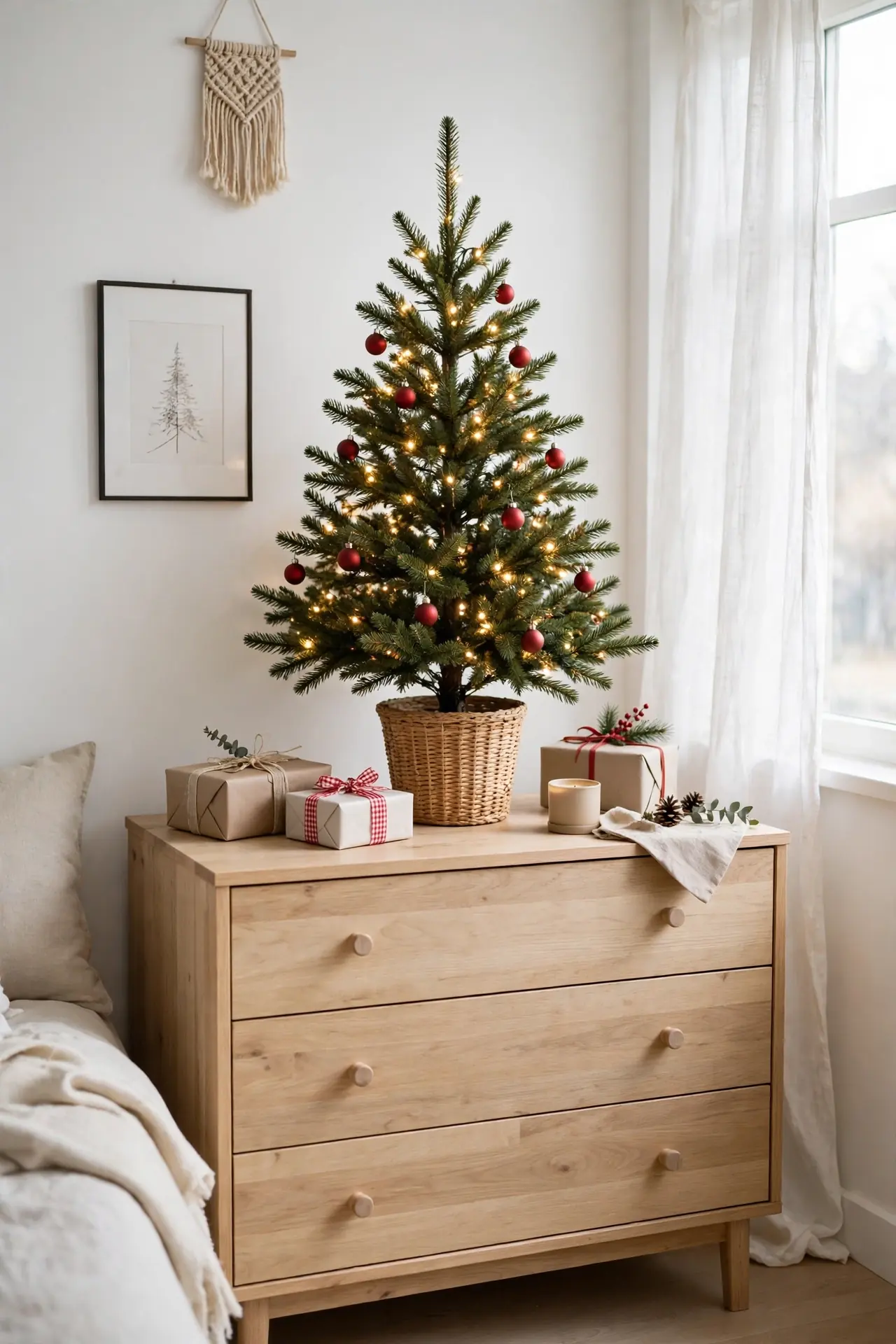
The Tabletop Tree on the Dresser
Lift a 2 to 3 foot tree onto a dresser, console, or sideboard and two problems vanish: no floor space is used, and the tree sits at eye level where it looks twice its size. This is the easiest xmas tree for small spaces because the furniture you already own becomes the stand. Presents stack underneath on the same surface.
Try it: Anchor the tree with museum putty or a heavy pot. A tree at elbow height on a dresser edge is one curious cat away from the floor.
07
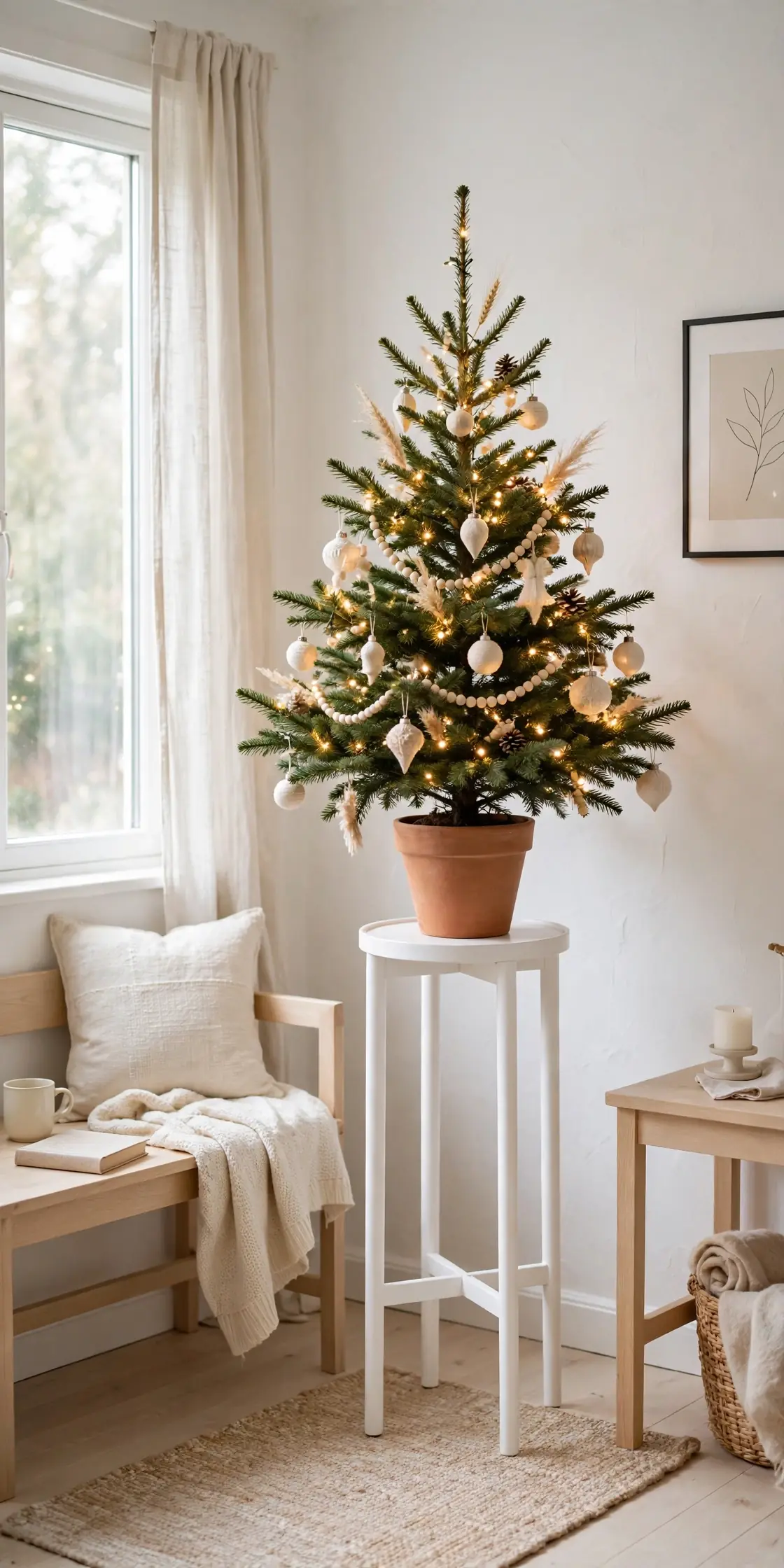
A Small Tree Raised on a Plant Stand
A 3-foot tree on a 2-foot plant stand has the presence of a 5-foot tree with a footprint of about 14 inches. The stand lifts the branches above sofa-arm height, so the tree reads as furniture-scale decor instead of a countertop novelty. It is the cheapest way to make a christmas tree in a small space feel grand.
Try it: Choose a stand with a lip or rim, or add a tray on top. A round pot on a flat stand slides; a rimmed stand locks it in place.
08
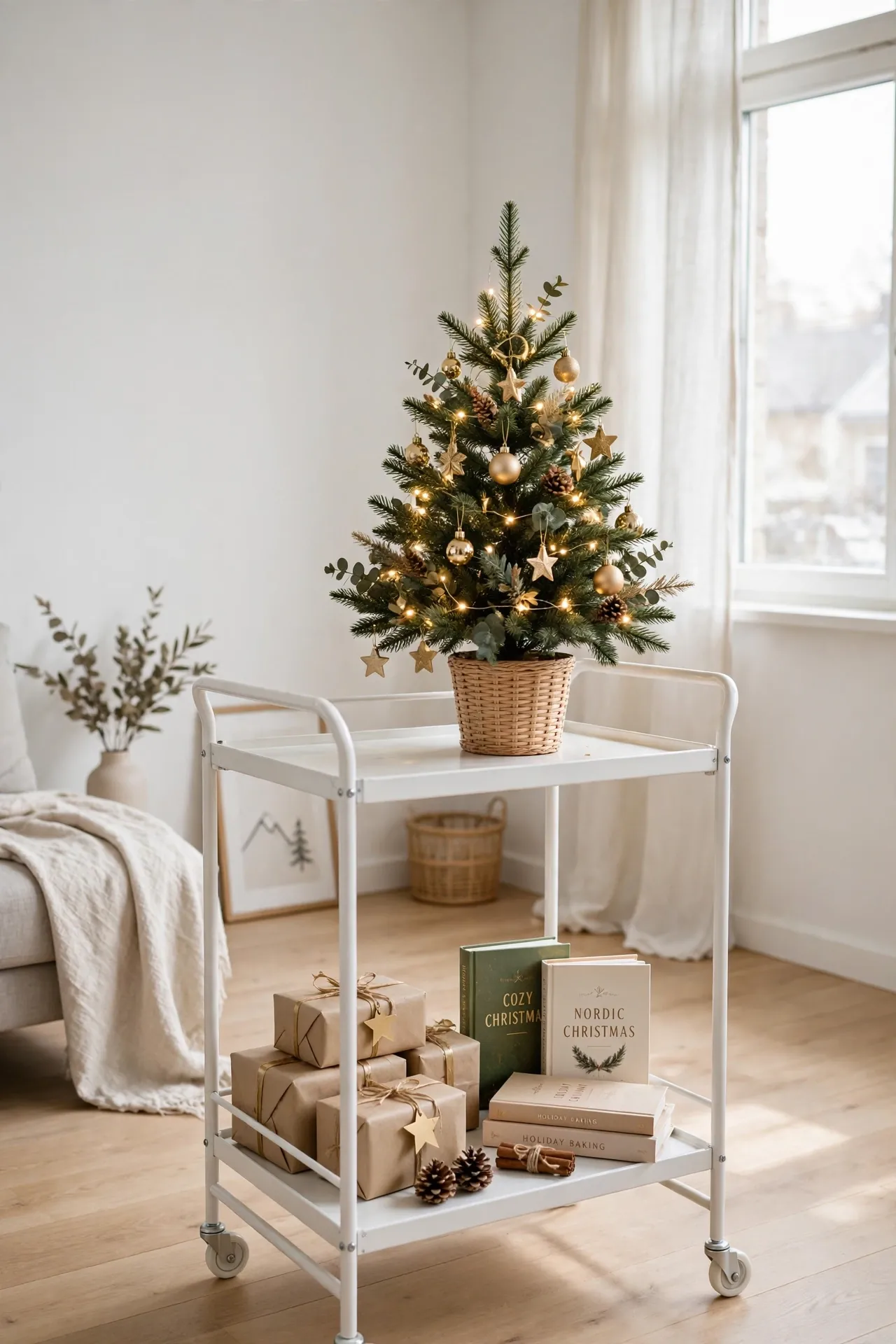
The Tree on the Rolling Cart
A bar cart or kitchen cart gives a mini tree a home that can move. Park it in the living room corner for the season, roll it aside in ten seconds when you need the floor for guests, a workout, or the vacuum. Renters in studios love this one because nothing is permanent and nothing is in the way.
Try it: Style the cart’s lower shelf with wrapped gifts or a stack of Christmas books. The whole cart becomes the display, not just the tree on top.
09
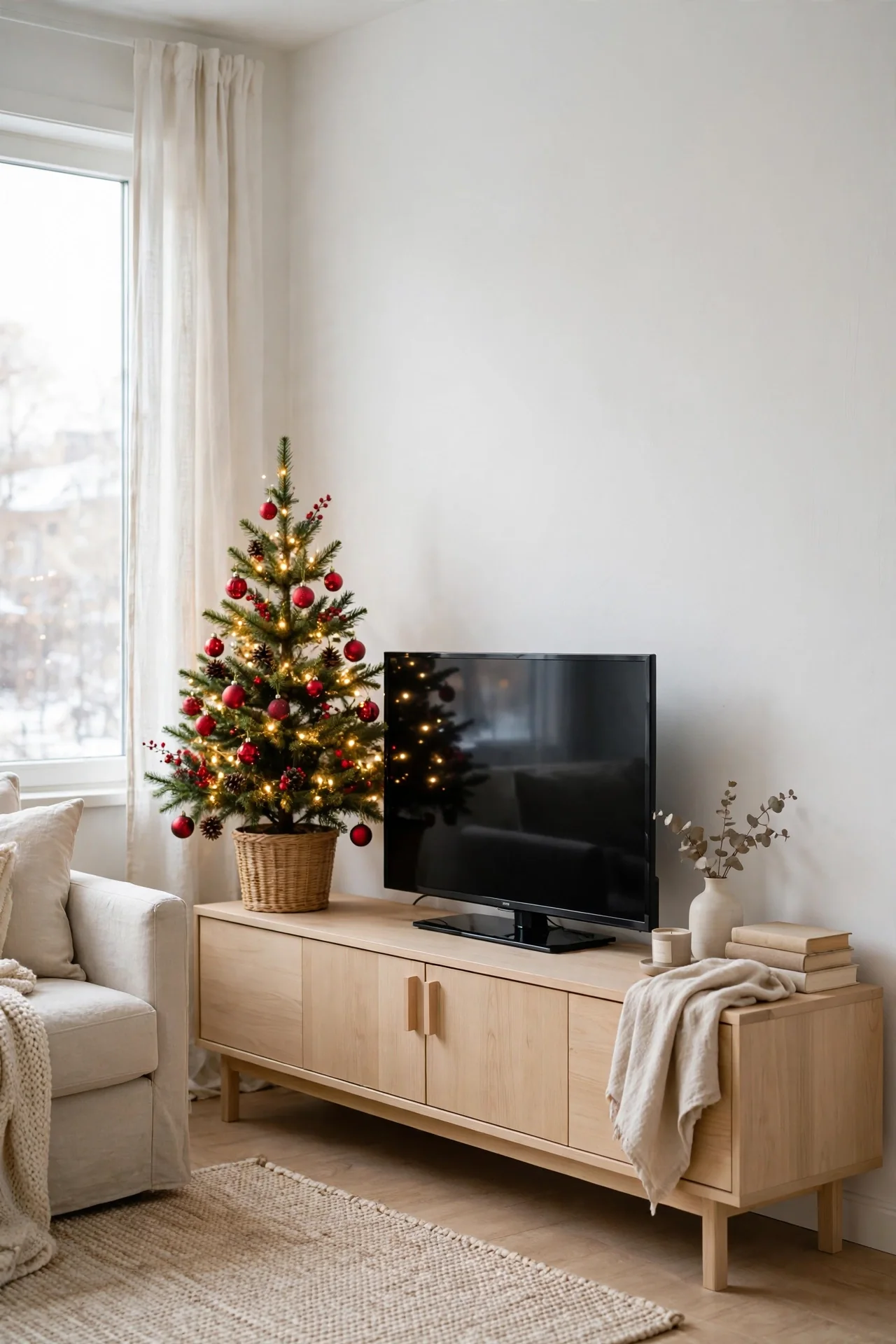
The Tree on the Media Console
The top of a low TV stand is dead display space most of the year. A 2 to 4 foot tree at one end of the console frames the television and turns movie nights into a lit scene. Keep it to one end only; a tree centered in front of the screen lasts exactly one evening.
Try it: Match the tree height to stay below the top of the TV. Branches overlapping the screen edge look like a mistake, not a style choice.
10
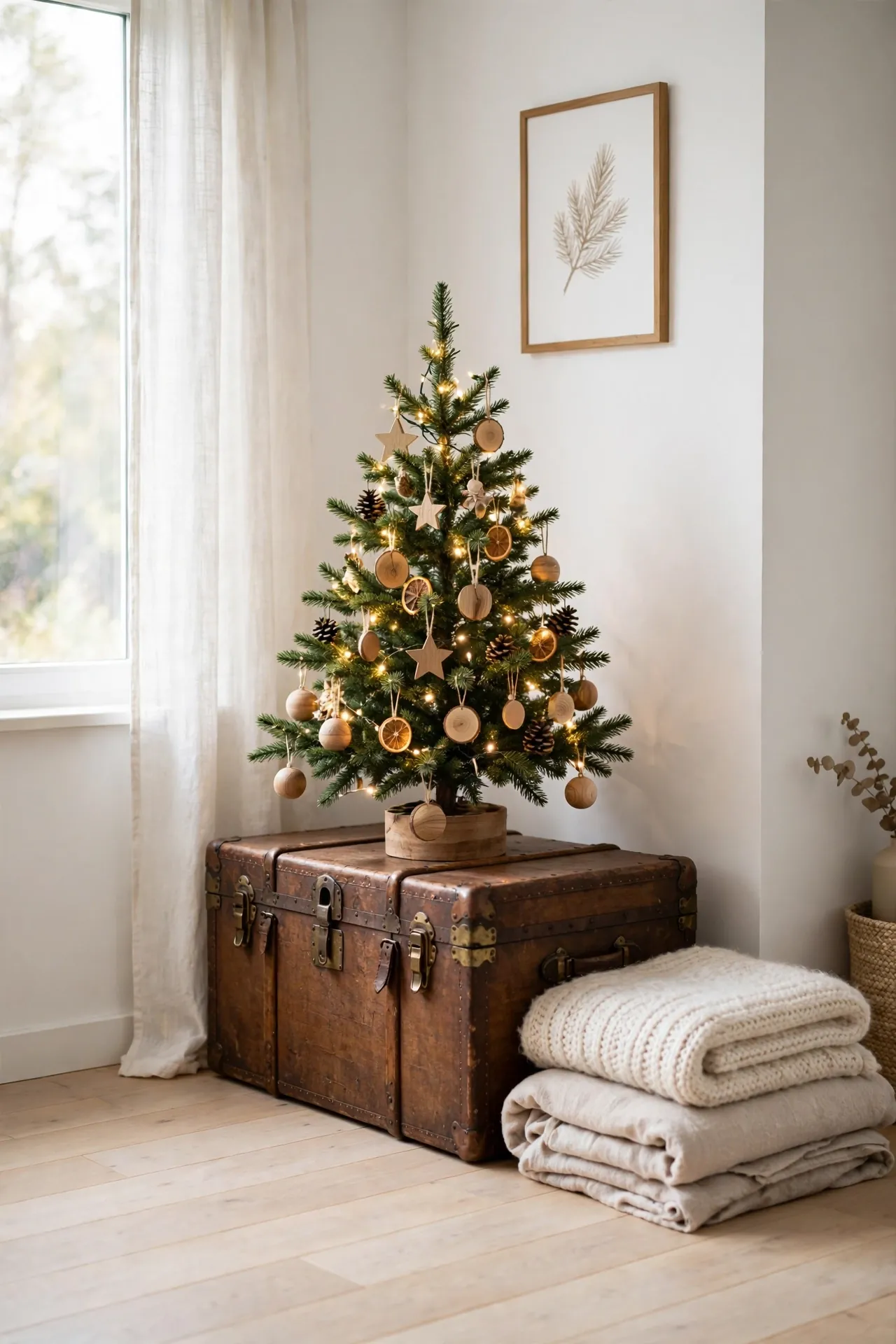
The Tree on a Storage Trunk or Ottoman
The smartest small-space furniture does two jobs, and a tree base should too. Set a tabletop tree on a storage trunk, bench, or lidded ottoman and the footprint stores your blankets, gift wrap, or the ornaments themselves in January. The tree uses zero extra floor because the storage was already standing there.
Try it: Put this year’s wrapping supplies inside the trunk. You will wrap gifts beside the tree, so the supplies live exactly where you use them.
11
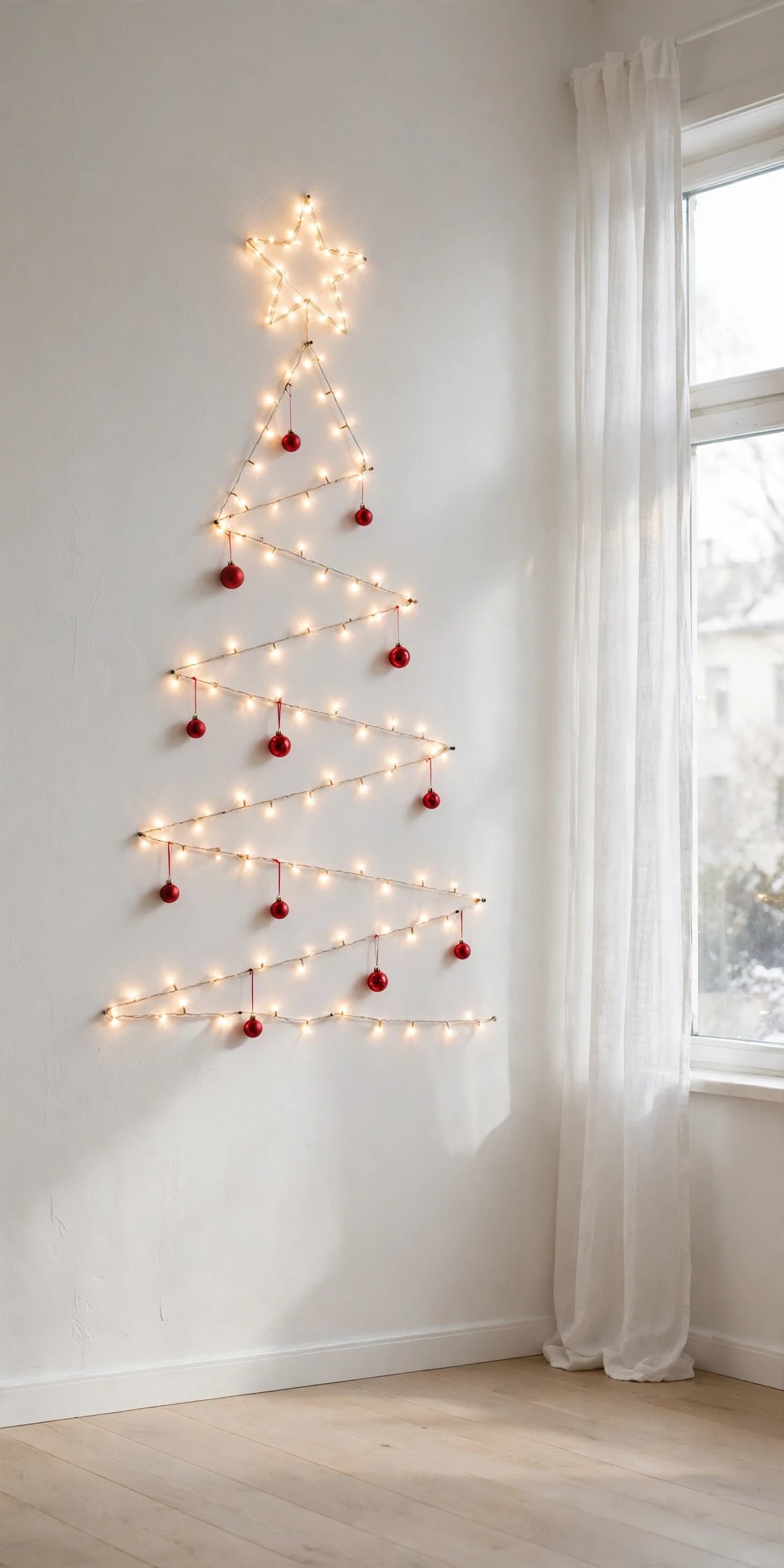
The String-Light Outline Tree
When there is genuinely no floor, the wall becomes the tree. Pin a warm-white light strand in a zigzag tree silhouette on removable hooks, add a star at the top, and hang a dozen lightweight ornaments from the strands. It takes zero floor space, costs under $20, and from across the room it glows like the real thing.
Try it: Sketch the silhouette in painter’s tape first and step back to check the proportions. A wall tree that leans is obvious once the lights are on.
12
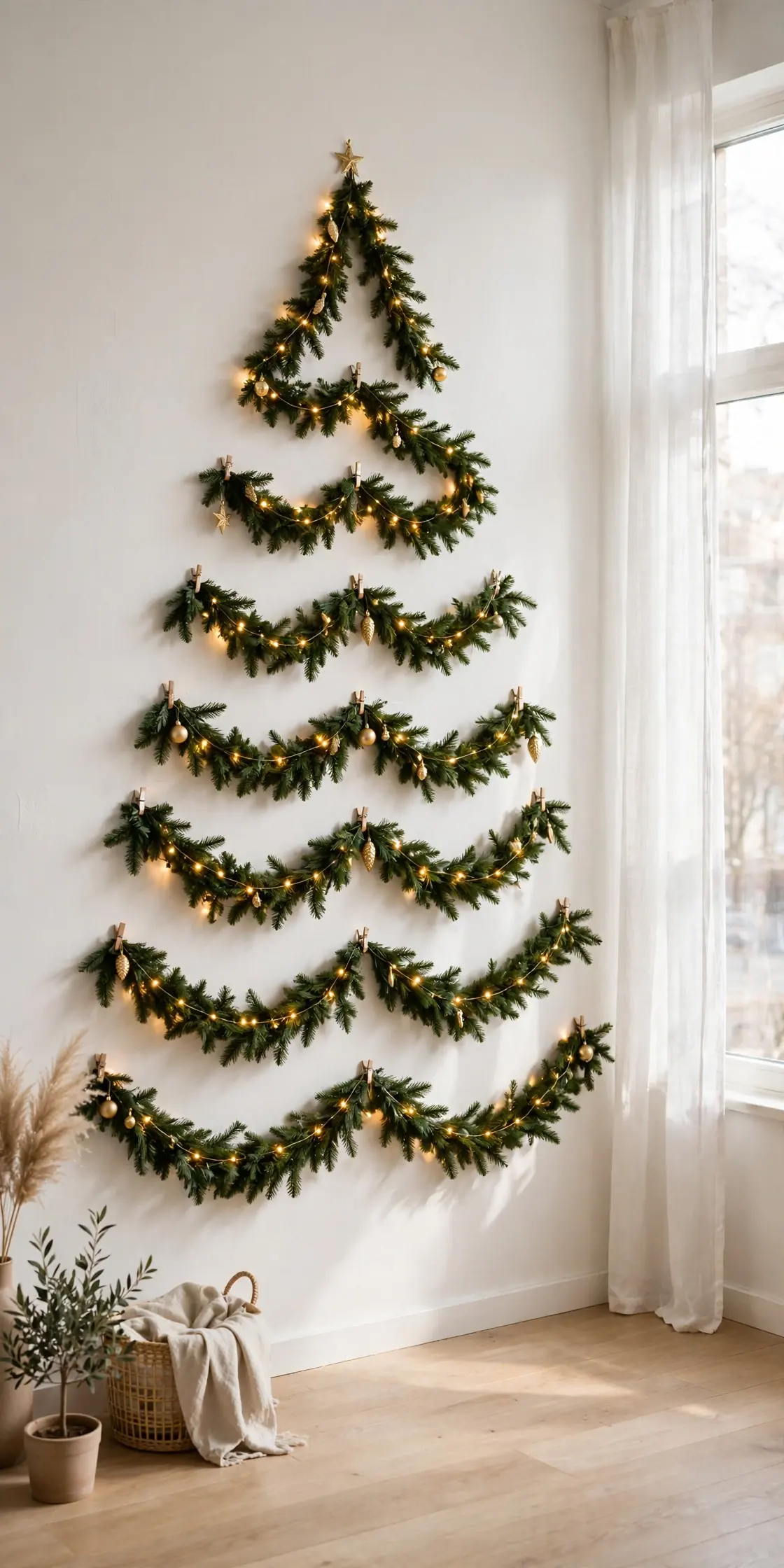
The Garland Wall Tree
A 9-foot garland swagged back and forth in shrinking rows makes a wall tree with real texture and depth, not just an outline. Weave in fairy lights and clip on ornaments, and it reads as greenery, not a diagram. Flat against the wall, it is the most forgiving christmas tree in a small space with toddlers or big dogs.
Try it: Use removable adhesive hooks rated for 2 pounds per swag point. Garland plus ornaments is heavier than it looks, and a fallen swag takes the row below with it.
13
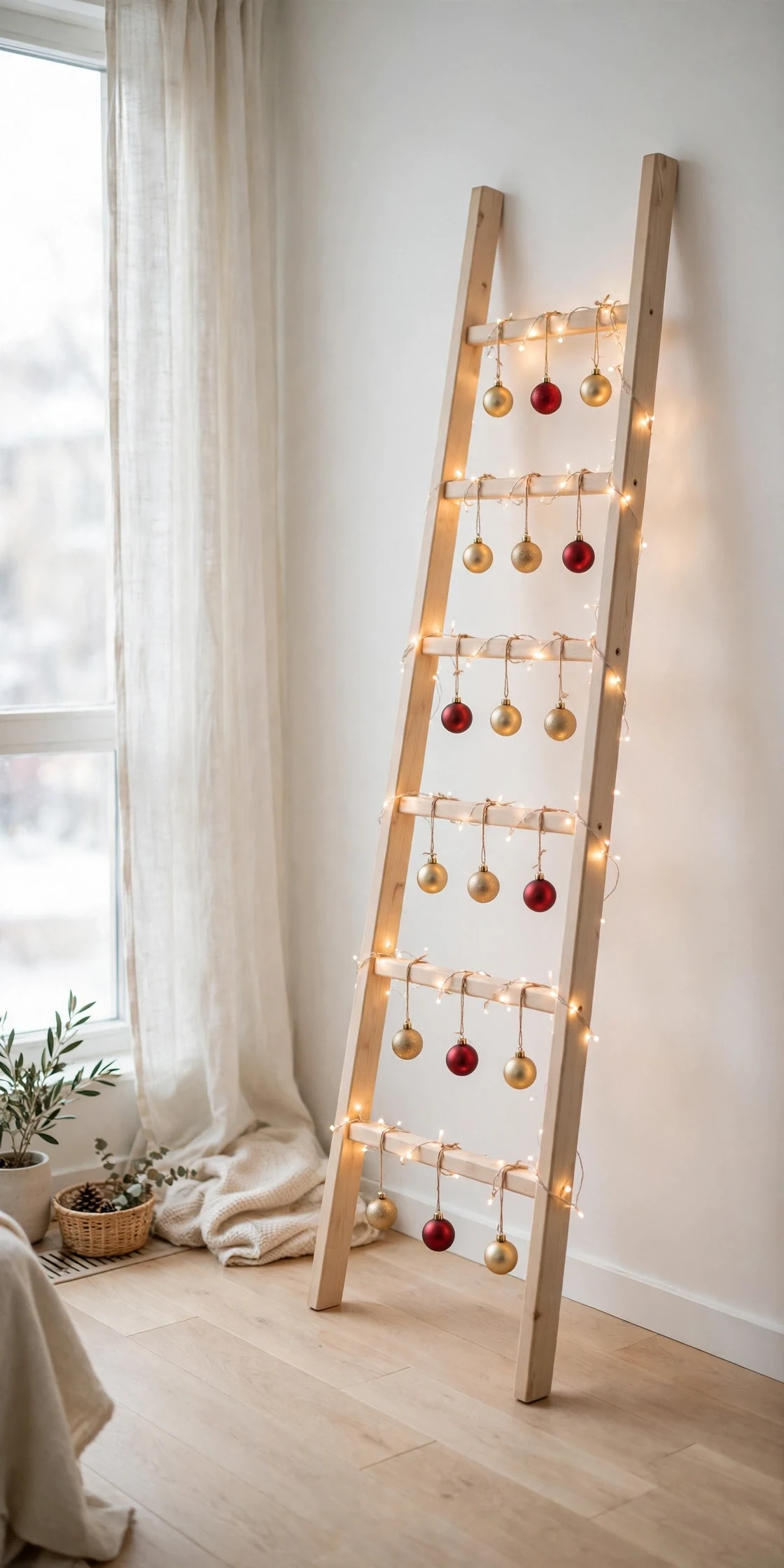
The Ladder Tree
Lean a wooden ladder or a set of graduated slats against the wall, wrap each rung with lights, and hang ornaments from the rungs like shelves. The ladder tree leans in a 10-inch strip of floor and holds more ornaments than most tabletop trees. When January comes it folds flat behind a door.
Try it: Keep the heaviest ornaments on the lowest rungs. A ladder tree is top-heavy by design, and weight at the bottom is what keeps it calm.
14
The Felt Wall Tree
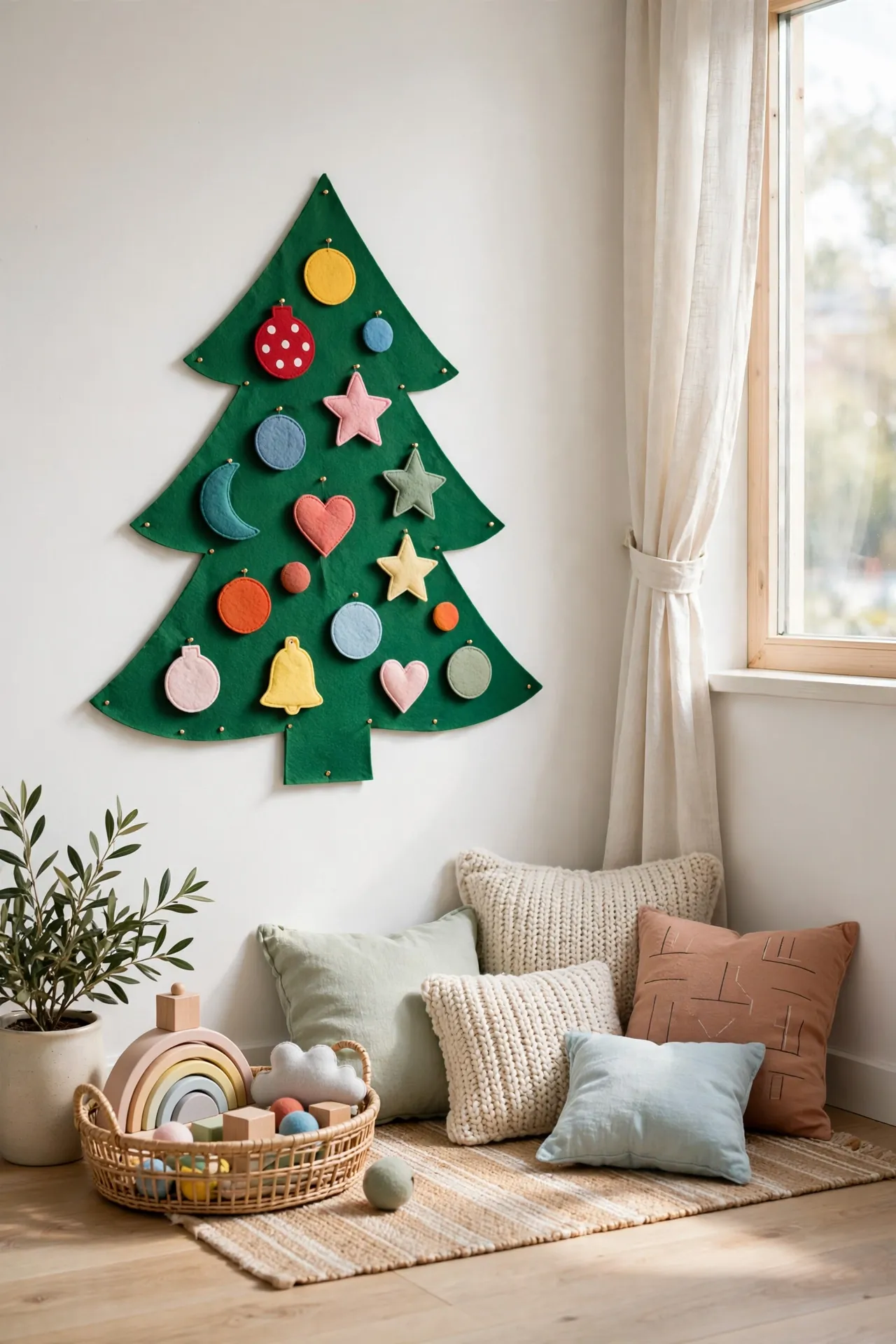
A felt tree pinned flat to the wall, with felt ornaments kids can stick and re-stick, is the tree that toddlers cannot pull down, because there is nothing to pull. It costs under $15, uses a wall instead of the floor, and doubles as a December-long activity. For a household with a crawling baby, this might be the only tree, and it is enough.
Try it: Hang the felt tree at child height in the play corner, not the living room’s best wall. It is a toy that looks like decor, so place it like a toy.

15
The Washi Tape Tree
Two rolls of washi tape make a tree outline that damages nothing, costs about $6, and comes off the wall in January without a trace. Fill the outline with cards, photos, paper snowflakes, or a strand of battery fairy lights taped along the lines. This is the renter’s christmas tree ideas for small spaces answer when even hooks are banned by the lease.
Try it: Use green or gold tape at least half an inch wide. Skinny tape reads as a drawing; wide tape reads as a design choice.
16
The Mounted Branch Tree
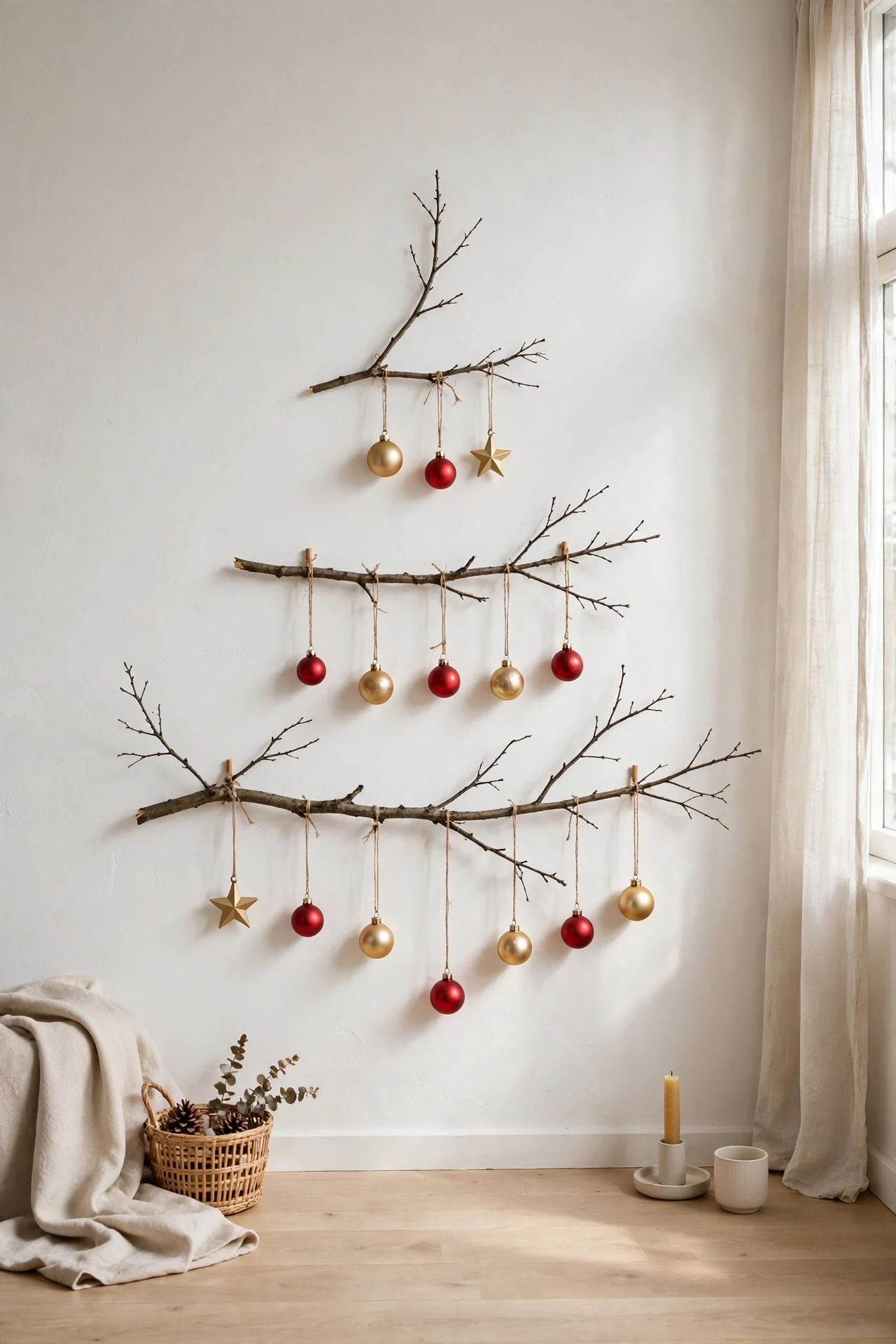
Mount one beautiful bare branch horizontally on the wall, or arrange three branches in a tree silhouette, and hang ornaments from twine at varied lengths. The branch tree has the sculptural, Scandinavian feel that design magazines love, and its entire footprint is the depth of a branch: about 3 inches. Foraged branches make it free.
Try it: Hang ornaments at odd-numbered lengths (5, 7, or 9 drops). Varied drops look like falling snow; even rows look like a shelf.

17
The Mini Tree Trio on a Shelf
Three mini trees, 8 to 14 inches, grouped on one shelf look like a tiny forest and cost less than one medium tree. Odd numbers and mixed heights are the whole trick: same-height minis look like stock on a store shelf, graduated minis look like a landscape. A shelf you already own becomes the display, so the floor never enters the conversation.
Try it: Mix one flocked, one green, and one metallic mini. Three textures at small scale read as a collection instead of duplicates.
18
The Picture Ledge Tree Scene
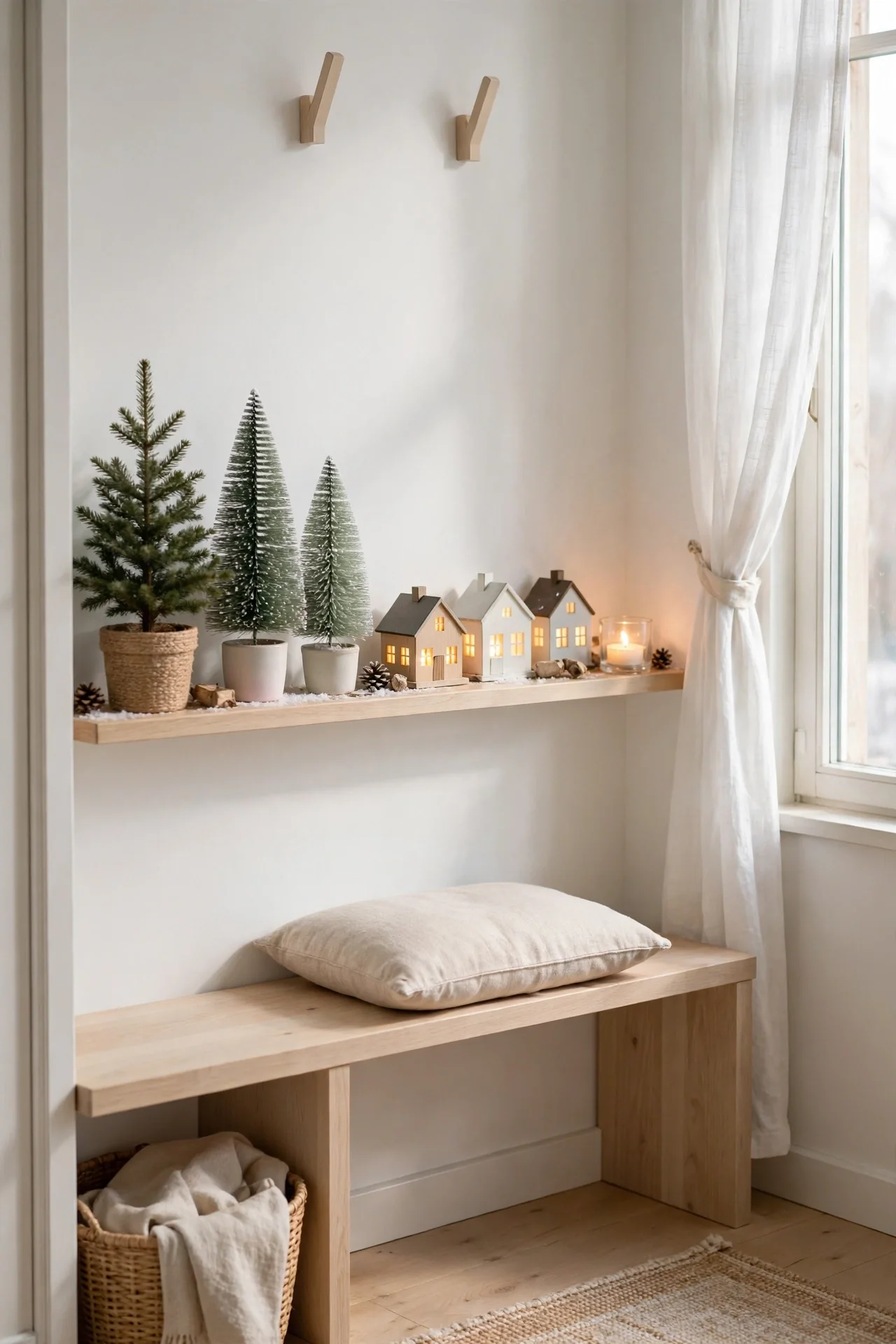
A picture ledge is 4 inches deep, and a flat-backed mini tree scene fits on it perfectly: a small tree, two bottle-brush trees, a tiny house or two. It turns a hallway ledge or the space above a desk into a Christmas vignette at eye level. Scenes beat single trees for charm per inch, and this one uses inches the room was wasting.
Try it: Add one battery tea light behind the tiny houses. Lit windows at dusk make the whole ledge scene glow like a village.
19
The Rosemary Topiary Tree
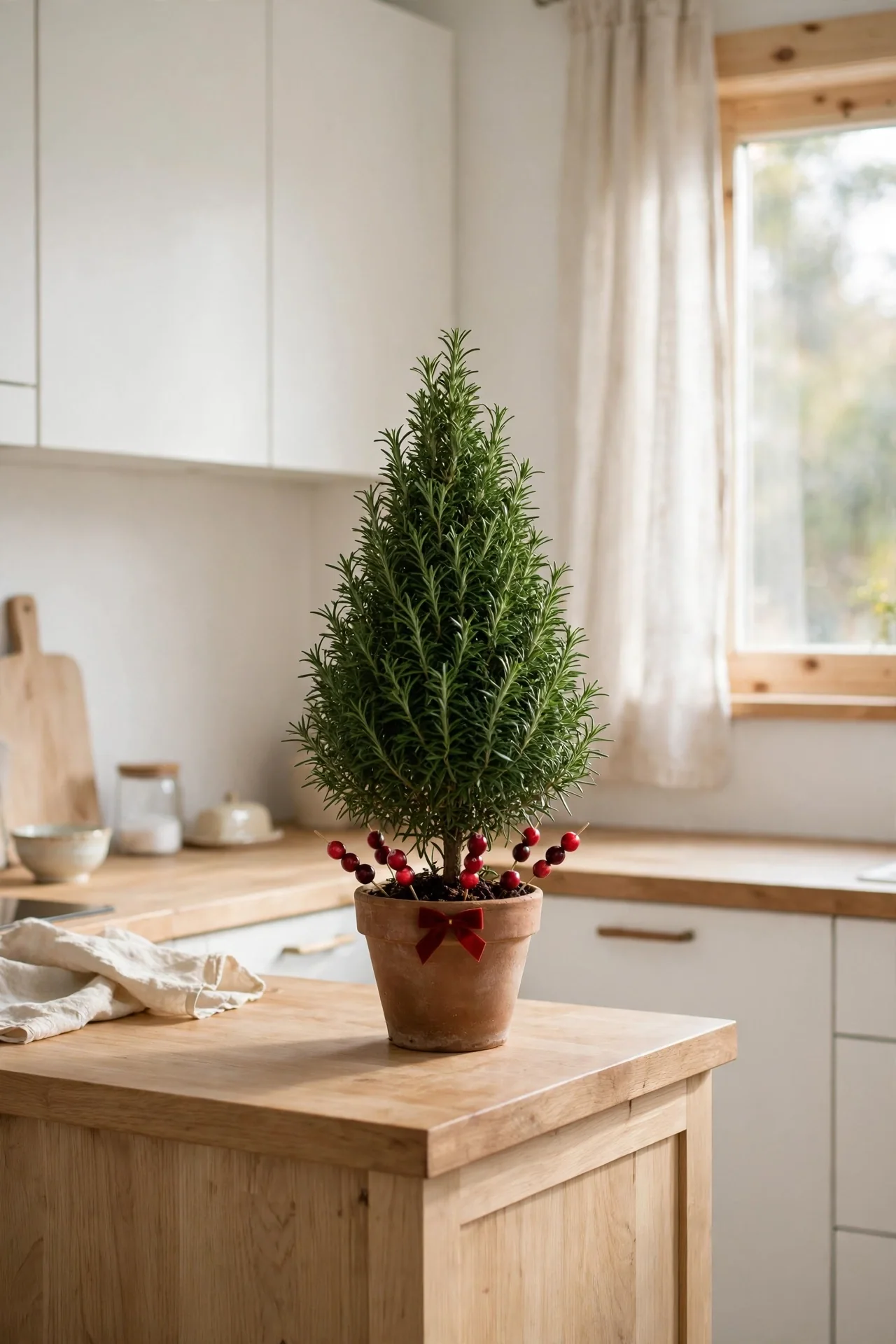
A rosemary plant trimmed into a cone is a living mini tree for the kitchen counter: fragrant, edible, and about 10 inches wide. Dress it with a tiny bow and a few cocktail picks with cranberries, and it perfumes the kitchen every time you brush past. After Christmas it goes back to being your herb supply, which is the ultimate small-space storage plan.
Try it: Keep the rosemary near the sink, not the stove. Counter trees dry out in a week near cooking heat; near water, you will actually remember to water it.
20
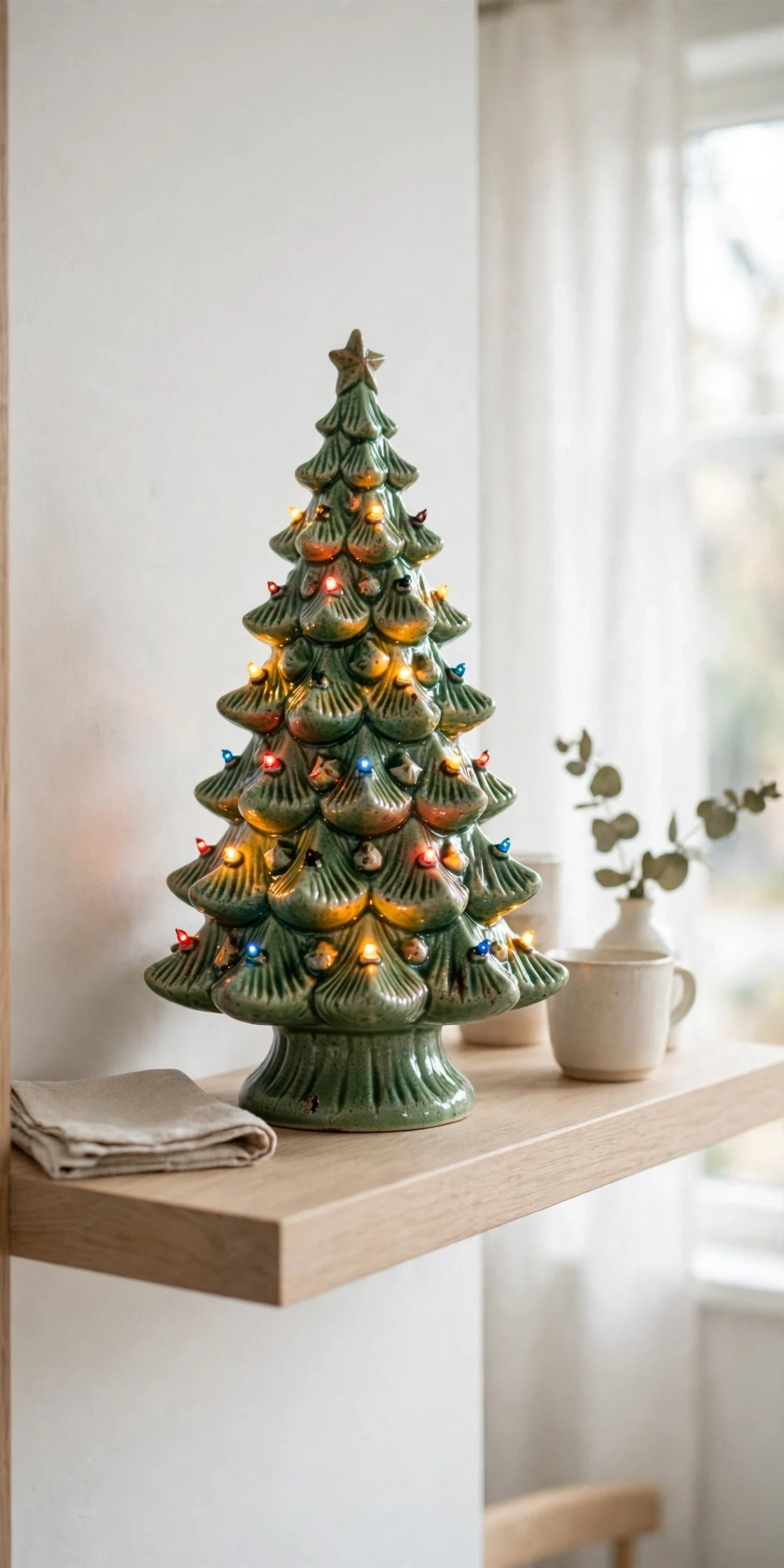
The Vintage Ceramic Tree
The ceramic light-up tree, 12 to 18 inches of glazed green nostalgia, is back in a big way, and it is a complete tree in the footprint of a mug. One plug or a battery pack, no ornaments to store, no needles, no stand. On a nightstand, desk, or bathroom counter it delivers the full tree effect in the smallest package that exists.
Try it: Choose the battery version for shelves without outlets. A cord hunting for a socket ruins the clean look that makes this tree work.

21
The Nightstand Tree
A small bedroom deserves its own tree, and a 12-inch mini on the nightstand is sized exactly right: it glows beside the bed, holds a dozen mini ornaments, and takes the footprint of a water glass. Falling asleep to tree lights in your own room is a luxury that costs about $12 and one square foot of nightstand you were not using.
Try it: Put the nightstand tree on a timer plug set to your bedtime routine. Lights that switch themselves off at midnight are lights you will actually use nightly.
22
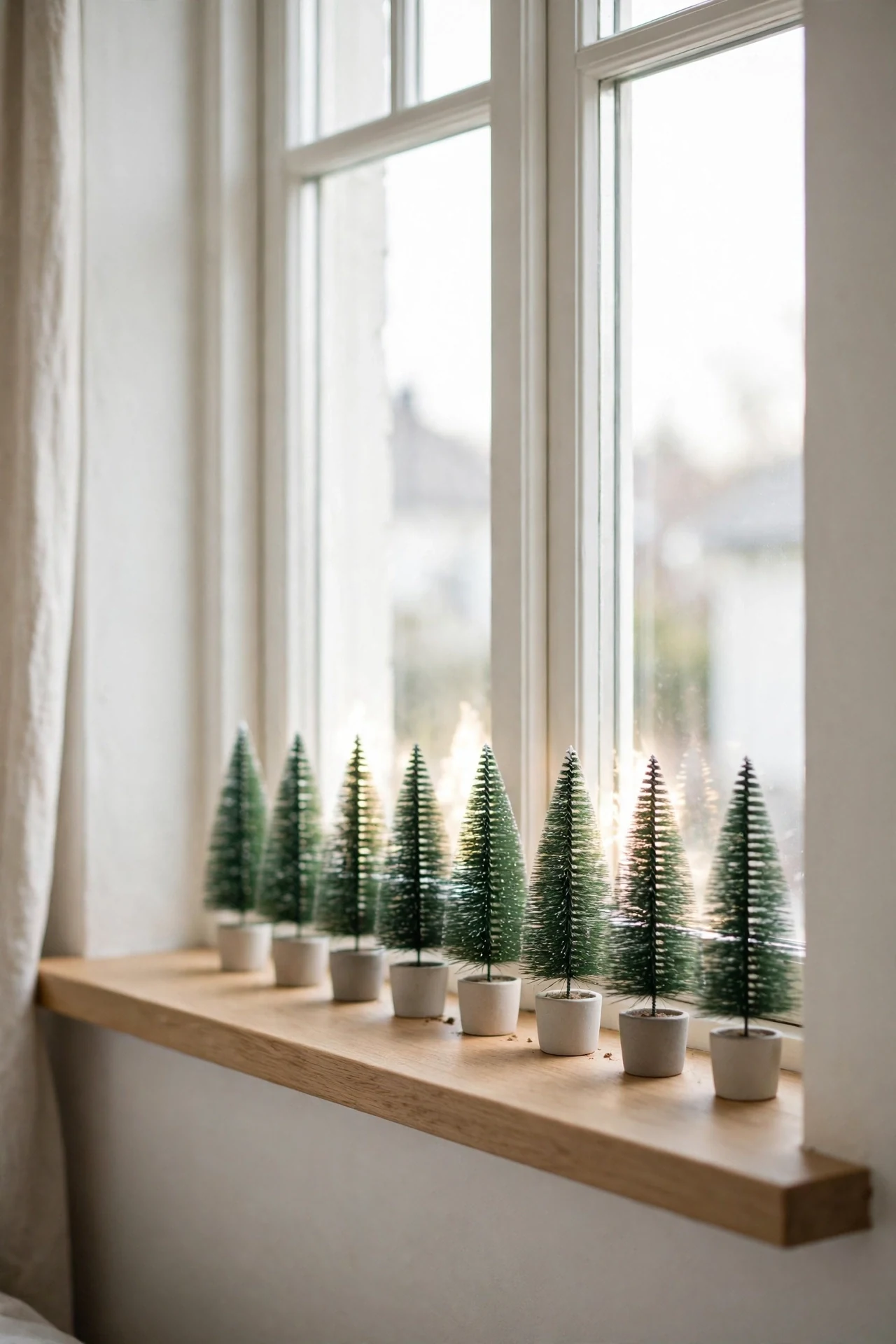
The Windowsill Mini Forest
Line the windowsill with a row of small trees, bottle-brush, ceramic, or mini pines in small pots, and the window becomes the tree. From inside it frames the view; from outside it is the house’s Christmas face, and it uses a surface that holds nothing but dust all year. A deep sill fits a forest of five to seven minis.
Try it: Keep the row to one tree style repeated. Identical minis in a row read as intentional architecture; mixed minis read as a collection that ran out of shelf.
23
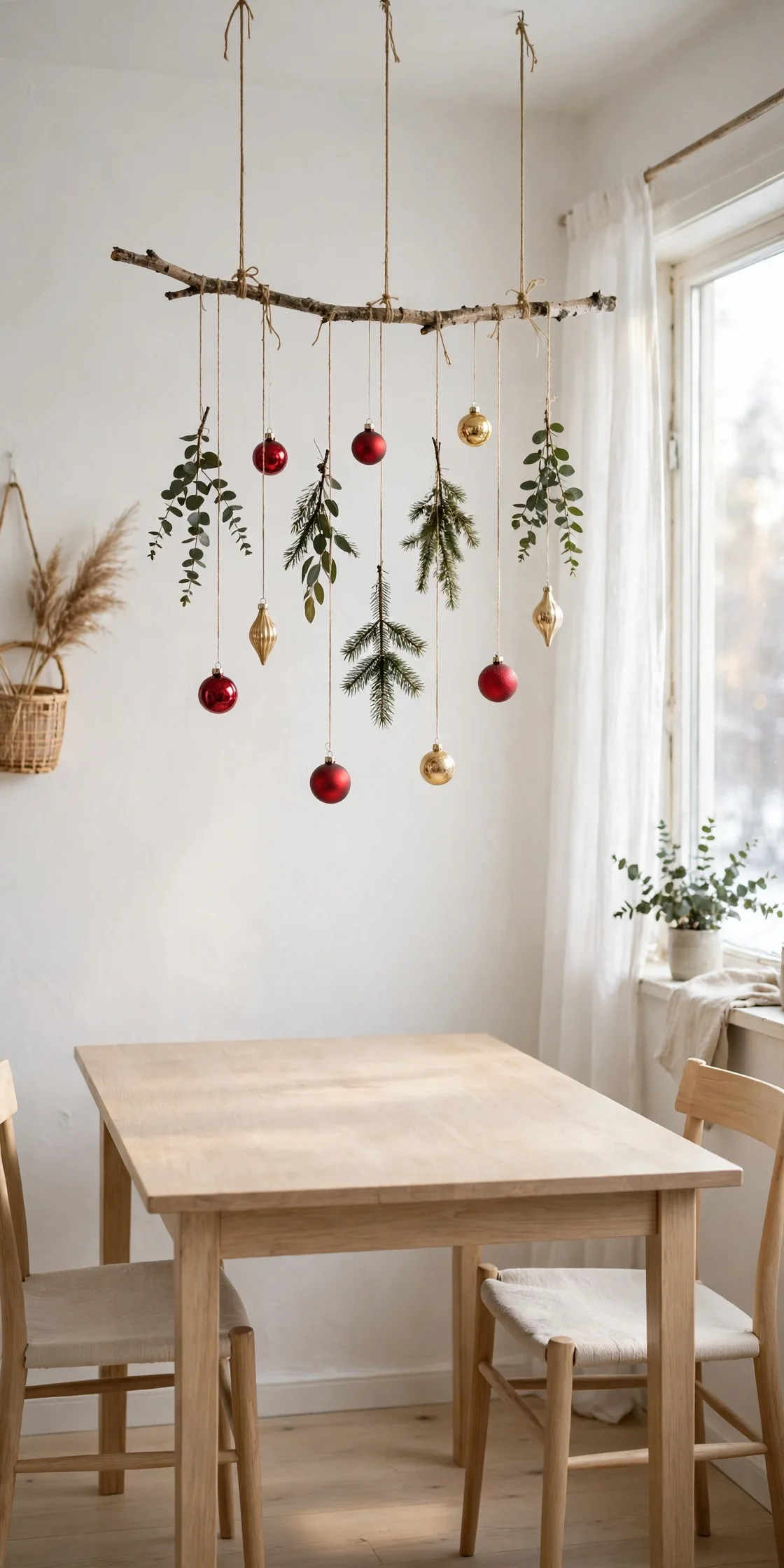
The Hanging Branch Mobile
Hang a branch from the ceiling over the dining table or in a corner, and suspend ornaments and greenery from it at different heights. The display floats above furniture, so the floor and the table surface stay fully usable, and the moving ornaments catch light all day. It is the most complimented idea on this list and it needs one ceiling hook.
Try it: Hang the branch at least 18 inches above head height over walkways, lower only above tables. Guests should admire it, not duck for it.

24
The Upside-Down Hanging Tree
A small tree hung upside down from a ceiling hook sounds like a joke until you see one: it frees the entire floor, keeps every ornament out of pet reach, and becomes the room’s conversation piece. Use a lightweight artificial tree under 4 feet and a hook rated well past its weight. In a studio, this is the only full tree some people can fit, and it photographs like a design stunt.
Try it: Secure the trunk to the hook with wire, then add a second safety line to a different point. One hook holds it; two lines keep it from slowly rotating.

25
The Book Stack Tree
Stack your largest books in shrinking tiers, wrap the stack with fairy lights, and top it with a star: a tree built from things already in the room, at zero cost and zero added footprint. Book lovers get a tree that is also a portrait of their year. It dismantles in January by shelving the books, which is the fastest takedown on this list.
Try it: Turn the spines inward or use the plainest covers on the outside. A rainbow of spines looks like a bookshelf; a muted stack looks like a tree.
26
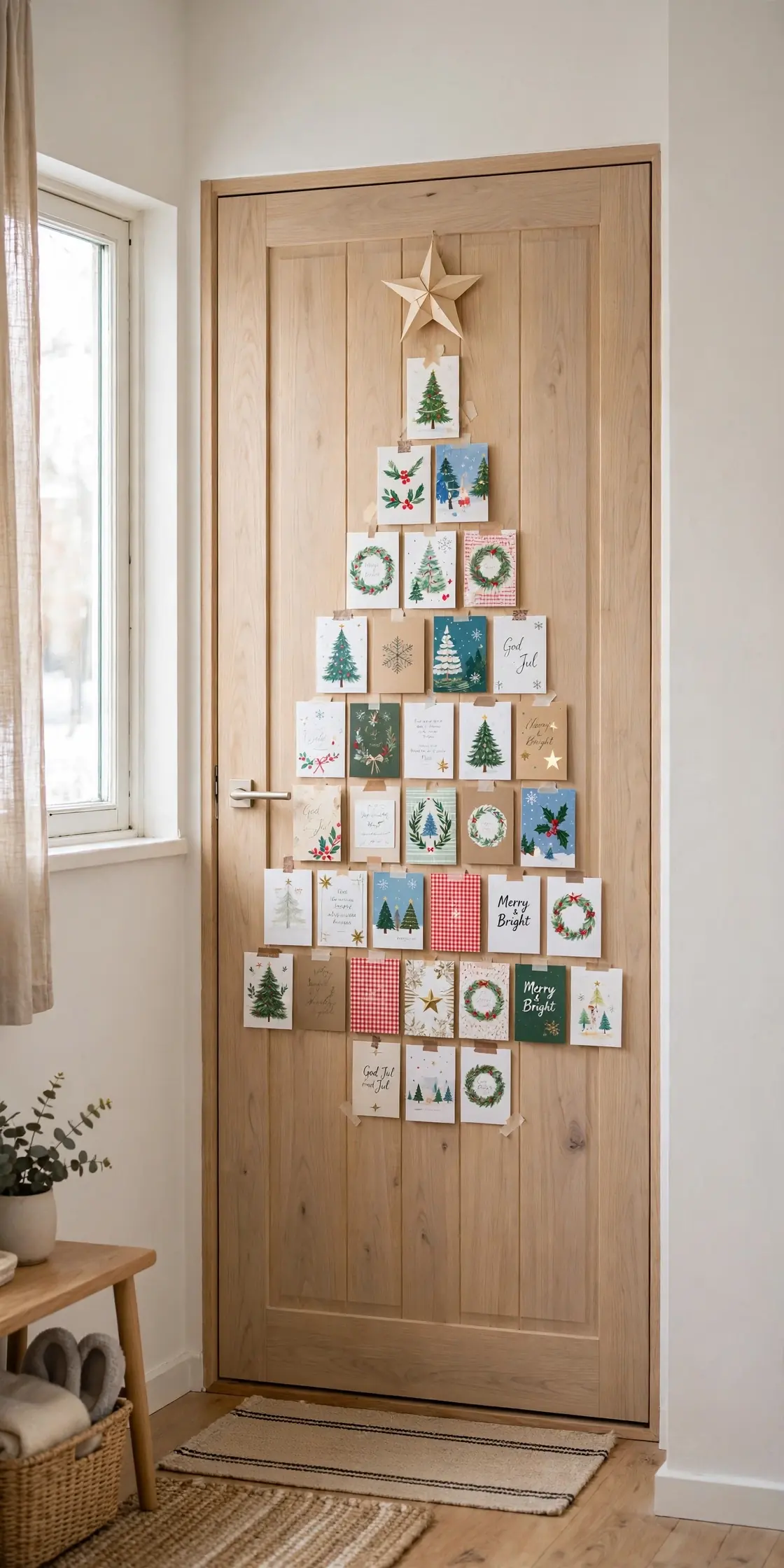
The Christmas Card Tree on a Door
Arrange the season’s cards in a tree silhouette on the back of a door or a blank wall section, taped or pinned in rows that narrow toward the top. It solves two problems at once: the cards get displayed instead of piling on the counter, and a dead door becomes the tree. Cost is zero if you receive cards, and the tree grows more charming every day of December.
Try it: Start the silhouette in early December with a tape outline and fill it as cards arrive. An outline waiting for cards looks intentional, not empty.
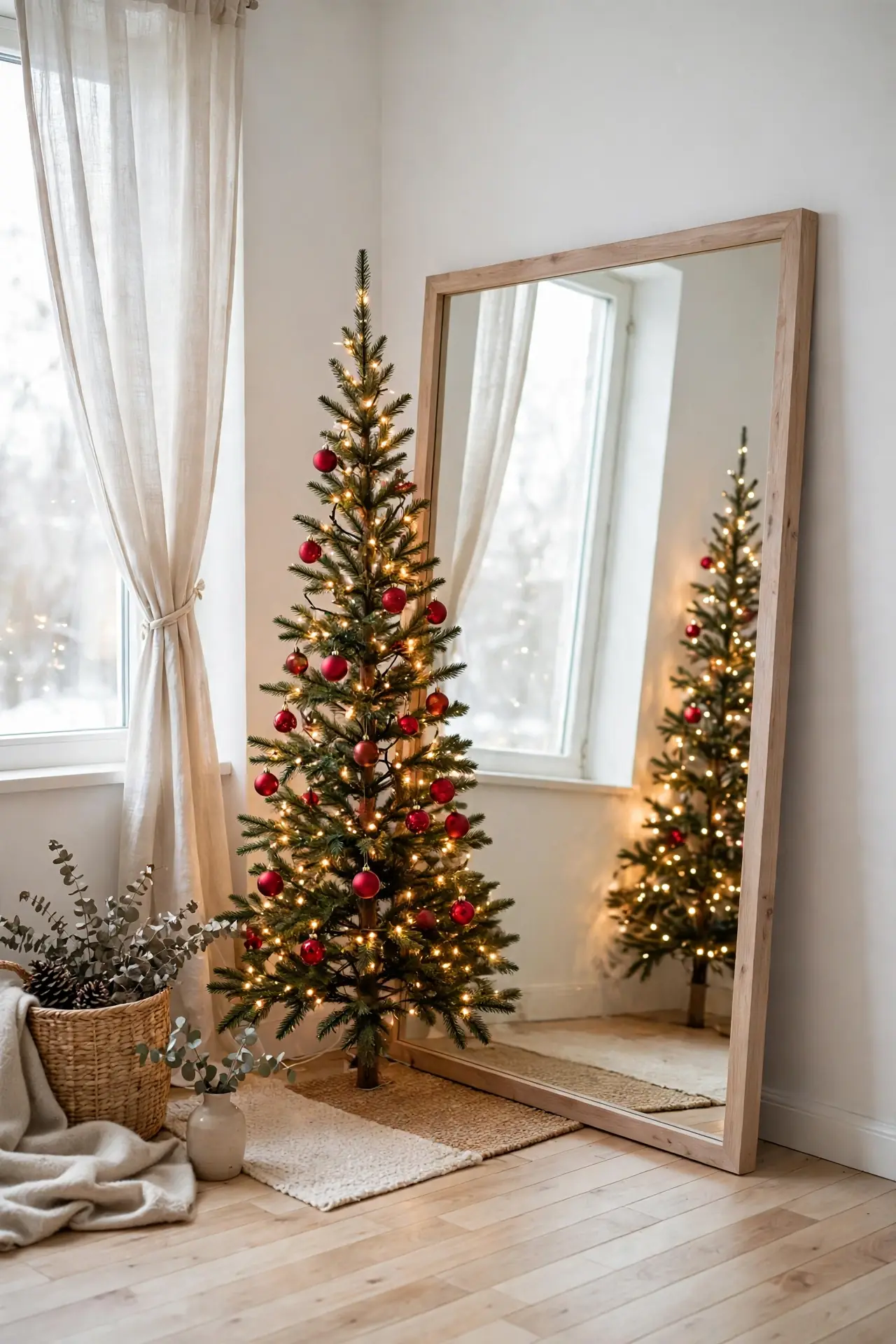
27
The Mirror Behind the Tree
Place a mirror, or lean a large framed one, behind a slim tree and the reflection doubles the lights, the ornaments, and the apparent size of the tree. It is the oldest small-space trick in decorating and it works every time: one 24-inch tree reads as a lush corner installation. The mirror also bounces daylight into the corner by day.
Try it: Angle the mirror slightly toward the room’s main seat, not straight at the tree. You want guests to catch the doubled glow from where they sit.
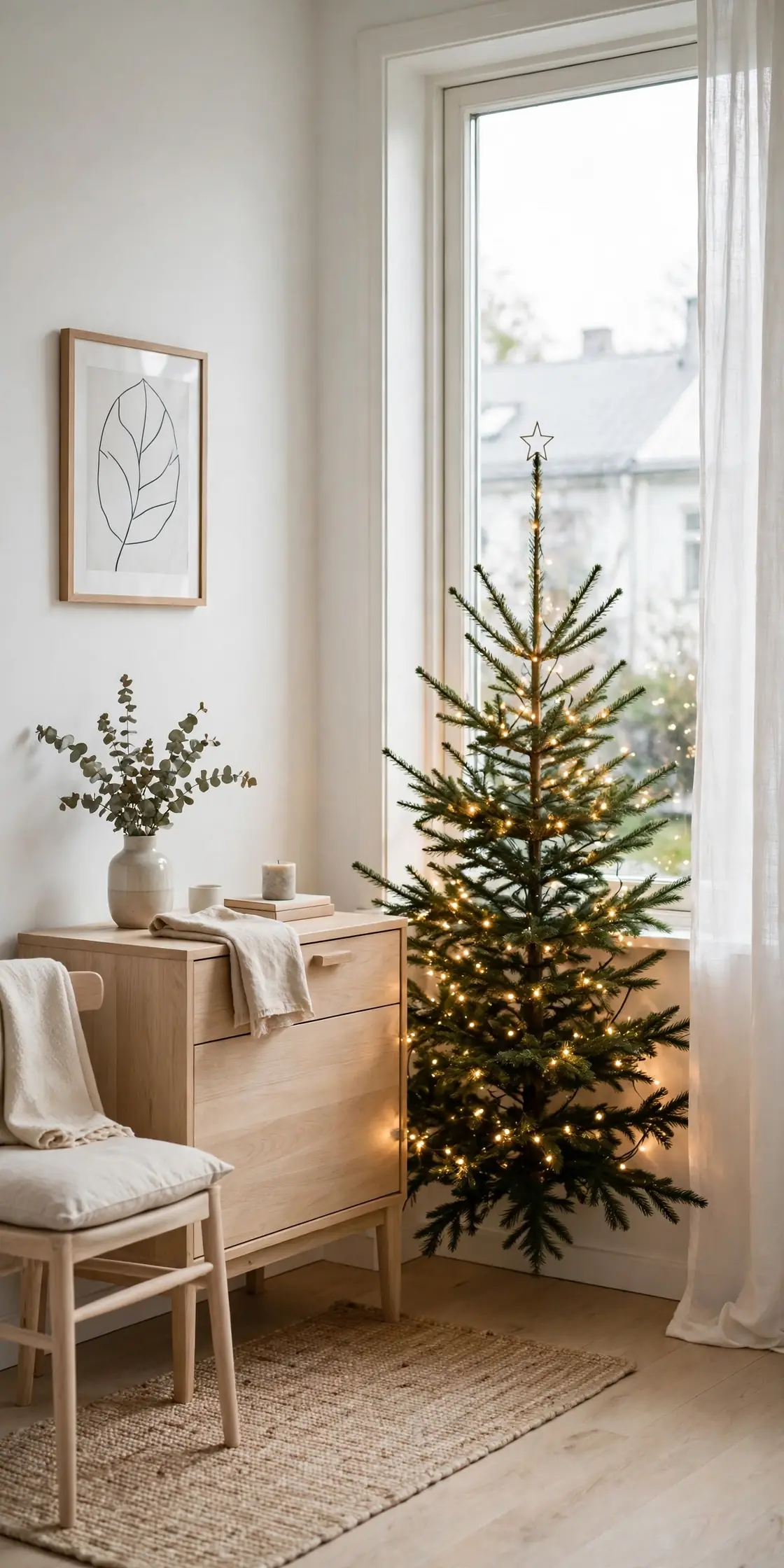
28
The Lights-Only Tree
Garlands, tinsel, and ribbon cascades all add visual and physical bulk. Skip them: weave 100 warm lights per foot deep into a slim tree’s branches and add nothing but a topper. The tree looks lush, modern, and twice as expensive, and the branches keep their slim silhouette instead of dressing out wider. Fewer decorations also means one small box of storage in January.
Try it: Push half the lights deep against the trunk, not on the tips. Depth lighting is what makes a bare tree look full instead of sparse.
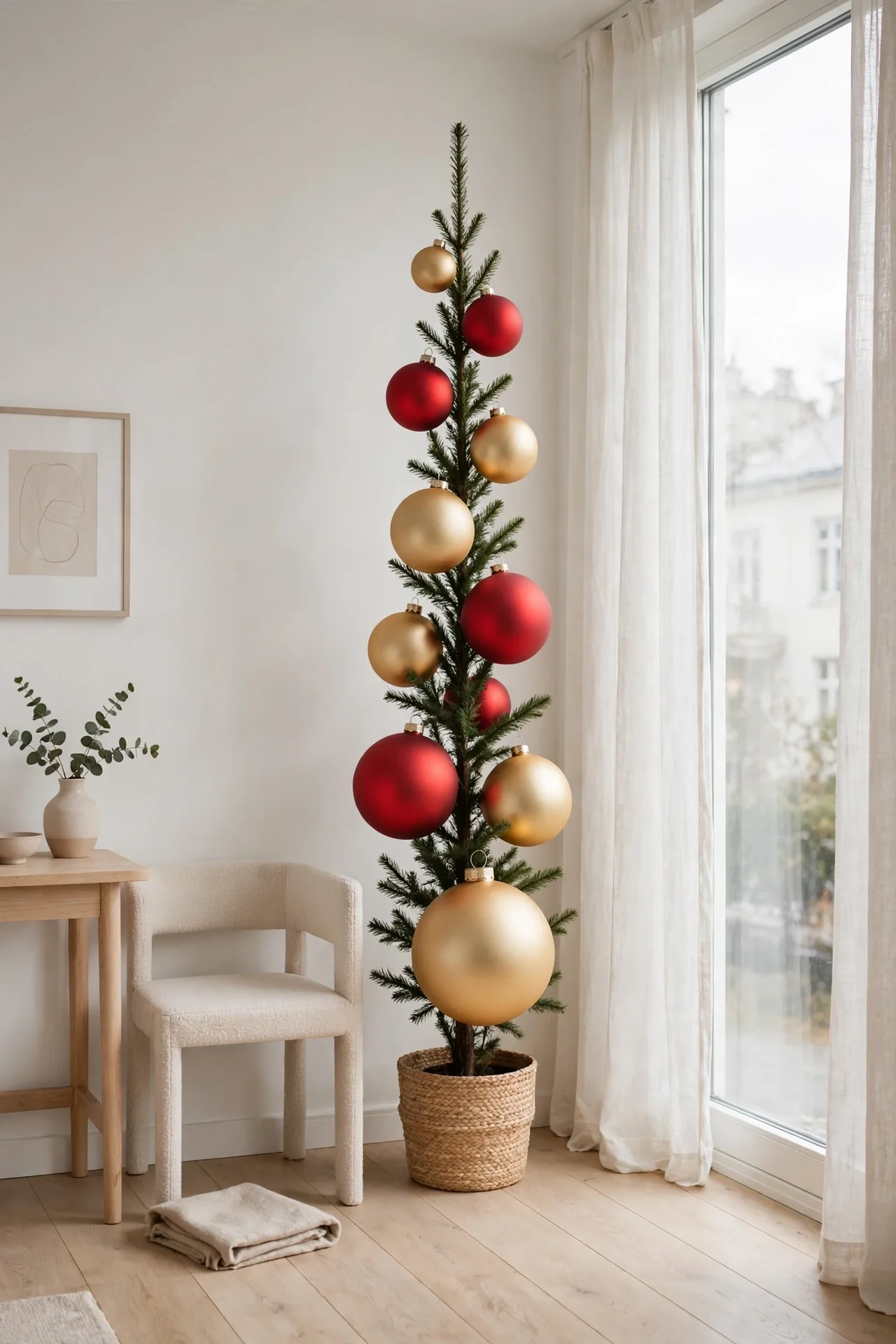
29
Fewer, Bigger Ornaments
Thirty small ornaments on a slim tree reads as clutter; twelve large ones read as design. Oversized ornaments, 3 to 4 inches, on a narrow tree create the boutique-hotel look and take ten minutes to hang. This edit also halves your ornament storage, which matters when the storage is one closet shelf.
Try it: Hang the biggest ornaments low and toward the trunk, smaller ones high and out. Weight at the visual base keeps a slim tree from looking top-heavy.
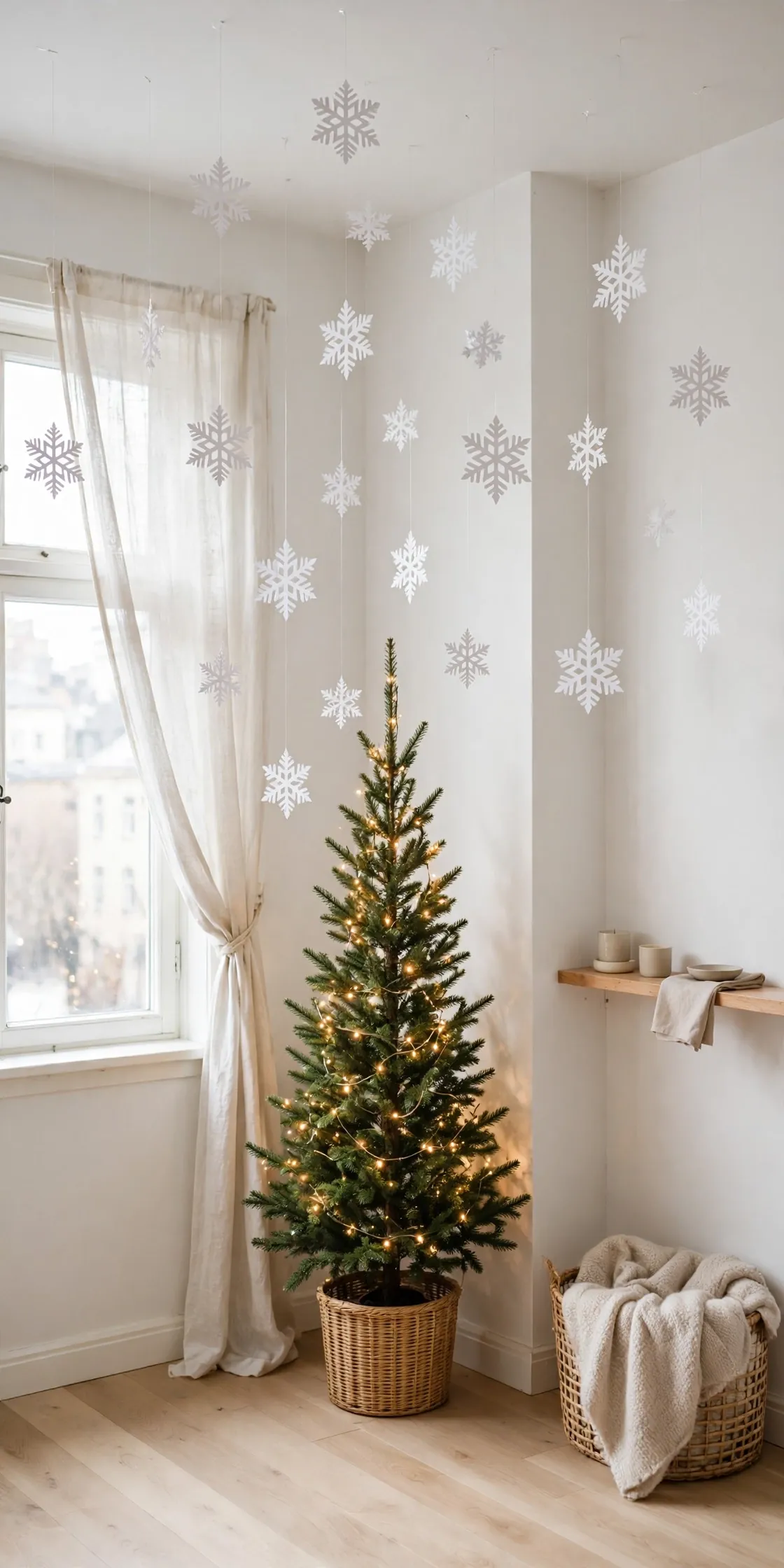
30
Decorate Upward: Snowflakes Above the Tree
When the floor is full, the ceiling is empty. Hang paper snowflakes or lightweight ornaments on clear thread at varied heights above your tree and the display gains a whole second layer without one extra inch of floor. The eye travels up, the tree looks taller, and the corner feels like a scene instead of a compromise.
Try it: Hang the lowest snowflakes at least a foot above the topper. Crowding the topper makes the tree look like it is wearing a hat; a gap keeps it elegant.
Pro tip: Before you buy anything, cut a painter’s tape outline of the tree’s base diameter on your floor and live with it for a day. If you never step inside the tape, the tree fits, whatever the room’s square footage says.
Three rules for a christmas tree for small spaces
- Measure the footprint, not the height: Choose by base diameter: under 24 inches for corners, under 15 inches of depth for flat-backs. An 8-foot ceiling handles a 6 to 6.5 foot tree; it is the width that decides whether the room still works.
- Decorate up and on, not out: Walls, doors, furniture tops, and the ceiling are your extra square footage. A christmas tree in a small space succeeds when half its presence is vertical or lifted, not spread across the floor.
- Keep the walkways sacred: Leave at least 24 inches of clear path past the tree, and keep door swings completely free. A tree you brush against daily will annoy you by December 10th, no matter how pretty it is.
After Christmas: storing a tree in a small home
- Flat trees store flat: Flat-back and slim artificial trees go into a storage bag under the bed or behind the sofa. Measure the under-bed clearance before you buy the bag; most are 6 to 8 inches tall.
- One bin for everything else: Ornaments, lights, and the topper for a small tree fit in a single lidded bin. Wrap lights around a piece of cardboard so next year’s setup takes minutes, not an untangling session.
- Wall tree kits roll up: Lights, garland, hooks, and tape for wall trees roll into one small pouch or shoebox. Label it with the wall it belongs to and next December’s tree takes 15 minutes to rebuild.
More ideas you’ll love: Apartment Christmas Tree Ideas: 30 Smart Ways to Fit a Real Tree in a Small Space, Small Christmas Tree Ideas: 25 Ways to Make a Little Tree Feel Grand, Wall Christmas Tree Ideas: 32 Clever Ways to Get a Full Tree With Zero Floor Space, Slim Christmas Tree Ideas: 30 Sleek Ways to Style a Narrow Tree, and plenty more in the Christmas Decor archive.
Questions readers ask
What is the best christmas tree for small spaces?
A slim pencil tree with a base diameter under 24 inches is the best all-round choice, because it gives full height on a corner-sized footprint. If you have no floor at all, a flat-back tree or a garland wall tree gives the same effect for zero footprint.
How tall should a tree be in a small apartment?
Leave 6 to 12 inches between the topper and the ceiling: for a standard 8-foot ceiling, a 6 to 6.5 foot tree is the sweet spot. Height is almost never the problem in a christmas tree for small apartment setups; width is, so spend your worry on the diameter.
Are artificial christmas trees for small spaces better than real ones?
For most small homes, yes: artificial christmas trees for small spaces come in exact slim and flat-back profiles real trees never grow in, they do not drop needles into a small room, and they store in one bag. A real tree wins on scent, so compromise with a small potted tree or scented greenery on the mantel.
Where do you put a christmas tree in a small space?
In a dead corner first, then against the wall with a flat-back, then on furniture: a dresser, console, or trunk. The right spot for a christmas tree in a small space is anywhere the floor plan already wastes, never in the middle of a walkway.
How do I make a small tree look full and expensive?
Weave lights deep into the branches at about 100 lights per foot of height, use fewer and larger ornaments, and add a mirror behind the tree to double the effect. A slim tree lit from within looks fuller than a wide tree lit only on the surface.
Can I have a Christmas tree with zero floor space?
Yes: wall trees made from lights, garland, or felt, a hanging branch, or an upside-down tree on a ceiling hook all deliver a real tree moment with the floor completely untouched. These are the true zero-footprint options and they are ideal for studios and dorms.
How much does a space saving christmas tree cost?
A space saving christmas tree costs $25 to $120 for slim and flat-back artificial models; tabletop and mini trees run $8 to $40, and wall trees can be made for $0 to $20 with tape, lights, or a foraged branch. Small spaces usually cost less to decorate, not more.
How do I store a Christmas tree in a small apartment after the holidays?
Use an under-bed storage bag for slim and flat-back trees, one lidded bin for ornaments and lights, and a shoebox for wall-tree supplies. If it does not fit in those three containers, it is too much tree for the apartment, so edit before you store.
People Also Ask
What size tree fits a studio apartment?
A 4 to 6 foot slim tree with a base under 24 inches fits most studios; in a studio under 300 square feet, a 3-foot tabletop tree on the dresser or a wall tree usually works better than any floor tree.
Do slim pencil trees look cheap?
No, not when they are lit properly: deep-woven lights, a basket base instead of a plastic stand, and a dozen quality ornaments make a pencil tree look like a boutique display. They look cheap only when the stand shows and the lights sit on the surface.
How many ornaments does a slim tree need?
About half what a full tree needs: roughly 20 to 30 ornaments for a 6-foot pencil tree, or 10 to 12 large ornaments for the styled, minimal look. Flat-back trees need about 40 percent fewer again, since the back is never seen.
loved these ideas? ✿
Save this guide for later
Pin it to your board so it’s there when you’re ready to recreate it.

Curated by
Hey! I'm Sanaullah — visual curator and content creator. I search, curate, and test the best aesthetic ideas across Pinterest so you can easily transform your living space, style daily outfits, and try simple creative DIYs without the overwhelm.