

Your front door gets seen more than any room in December, by guests, neighbors, and every delivery driver on the route, yet the porch is usually decorated last with whatever is left over. A great christmas planter fixes that in one move: it frames the door, carries your color palette outside, and makes the house look finished before anyone steps in. These christmas planter ideas cover urns, porch pots, window boxes, and doorstep arrangements with real prices and cold-weather tricks, so you can build outdoor christmas planters that still look good in January.
Quick Idea Summary
- The key takeaway: Work in layers: something tall in the center (birch logs, red dogwood, a dwarf spruce), evergreen branches fanning out around it, then one bright accent (berries, ornaments, a bow). That single formula builds almost every planter below, from a $15 crate to a pair of grand urns.
- The detail most people miss: Drainage decides whether a planter survives winter. A pot that cannot drain will fill with water, freeze solid, and crack. Drill holes, raise the pot on feet, or line it before you plant.
- What it costs or how long it takes: Most of these planters cost $15 to $45 to build with cut greens and take 20 to 40 minutes each. A matching pair for the front door lands around $50 to $80 total.
At a glance
| Zone | Ideas | Budget |
|---|---|---|
| Classic urns and porch pots | 01–07 | $20–$60 |
| Doorsteps, steps and entries | 08–13 | $12–$40 |
| Window boxes and railings | 14–19 | $15–$45 |
| Hanging baskets and vertical spots | 20–24 | $10–$35 |
| Creative containers and finishing touches | 25–30 | $8–$35 |
The ideas

01
The Classic Urn Pair Flanking the Door
The most searched look for a reason: two christmas porch pots in black urns, one on each side of the door, filled with evergreen branches, red berries, and a plaid bow. Symmetry does the styling for you, and the pair reads as intentional from the street. Choose urns 20 to 24 inches tall so the arrangement finishes near door-handle height.
Try it: Build both urns side by side at the same time, mirroring each stem. Making one and then copying it from memory never matches.

02
Berries and Pinecones, Nothing Else
Skip the ornaments and ribbons and let two ingredients carry the pot: glossy red winterberries and big sugar pinecones tucked into mixed evergreens. It is the most natural of all outdoor christmas planters and suits any house color. A 14-inch pot takes about 5 berry stems and 6 large cones.
Try it: Push pinecones in on short floral wires instead of resting them on top. Wired cones stay put in wind and look grown-in, not placed.

03
A Mini Tree in a Galvanized Bucket
A 2 to 3 foot potted spruce or faux mini tree dropped into a galvanized bucket is a planter and a tree in one. Add a red bow at the rim and a strand of battery lights and the job is done. Buckets cost $10 to $18 and shrug off weather that cracks ceramic.
Try it: Weight the bucket with two bricks under the pot. A top-heavy mini tree in a light bucket tips in the first storm.
04
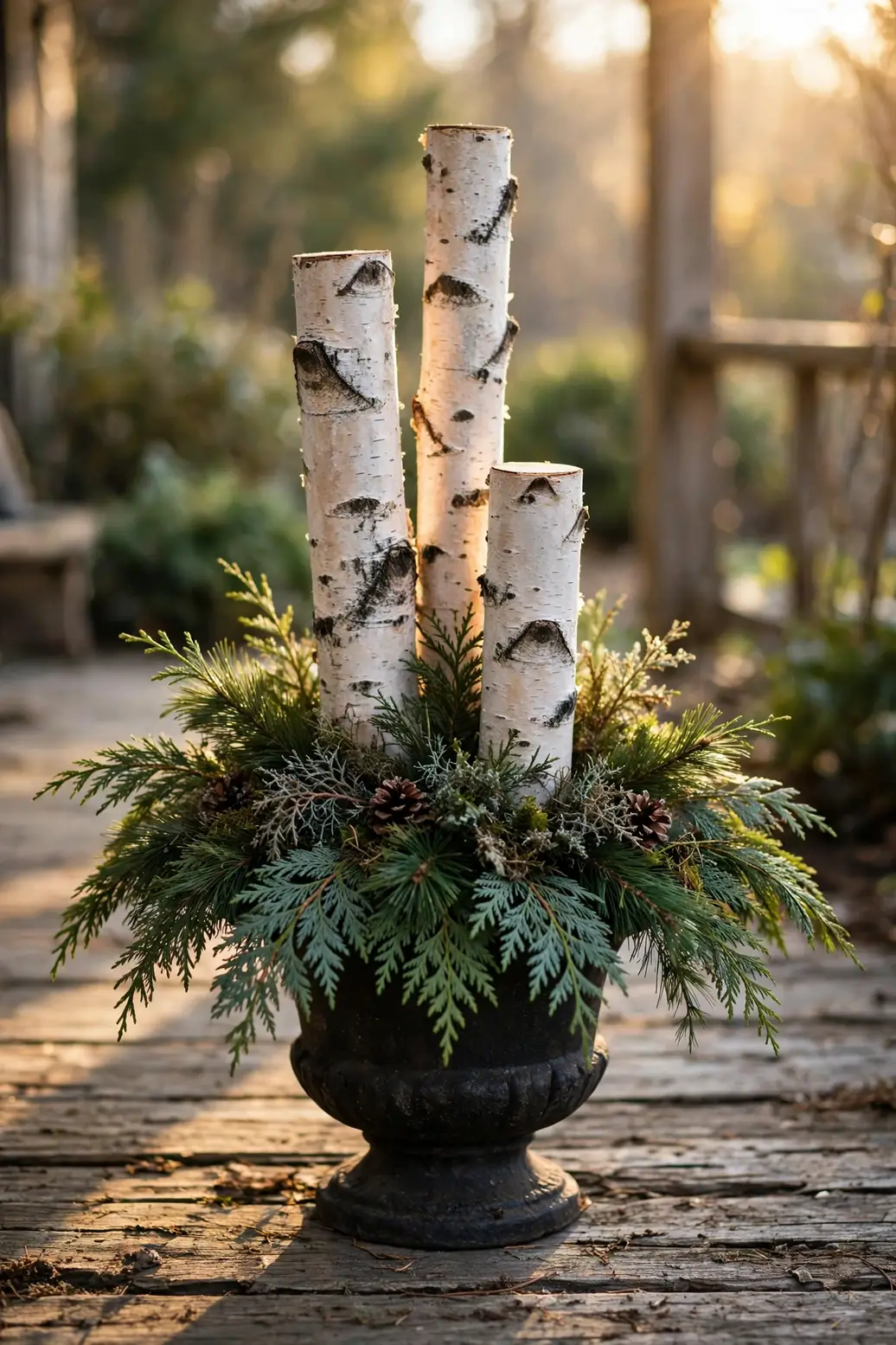
Birch Logs for Instant Height
Three birch logs, 24 to 36 inches long, stood upright in the center of a pot give you height no branch can match, and the white bark glows against dark greens. Ring them with cedar and pine so the logs rise out of a soft skirt. One bundle of birch logs costs about $12 and splits across two pots.
Try it: Cut or buy logs of three different heights. A staggered trio looks designed; three identical sticks look like a fence.

05
The Frosted, All-White Planter
Flocked branches, white-painted pinecones, silver ornaments, and a white or stone urn make a planter that looks dusted with fresh snow even in a mild winter. It is the calmest look on this list and photographs beautifully at dusk. Keep every accent in the white and silver family; one red bow would break the spell.
Try it: Dust the finished arrangement with a light pass of flocking spray, about $6 a can. It unifies real and faux pieces into one snowy story.

06
A Lantern Tucked Into the Greens
Set a black lantern with a flameless candle on a timer into the center of a wide planter, with greenery arranged around its base. The pot becomes the porch light after dark, and a timer means it greets you at the same time every evening. Lanterns with a 6-hour timer setting cost around $15 to $25.
Try it: Choose a lantern at least 12 inches tall. Shorter lanterns vanish once the greens around them fill out.

07
Ornaments as the Flowers
Treat shatterproof baubles like blooms: cluster them in groups of three on short picks throughout your christmas flower pots, the way you would place flowers in a summer arrangement. Metallic red, gold, or silver ornaments catch porch light and read as color from the street. A 24-pack of outdoor-safe shatterproof ornaments runs about $12.
Try it: Use matte and shiny finishes of the same color together. The mix reads as depth; all-shiny reads as a shop display.

08
The Step Cascade
Line one side of your front steps with planters in descending sizes, one per step, each filled with the same greens and one repeated accent. The repetition turns three ordinary pots into a designed staircase of green. Keep the other side of the steps completely clear for handrails and footing.
Try it: Repeat one element in every pot, like the same red bow. The repeated accent is what makes mismatched pots look like a set.
09
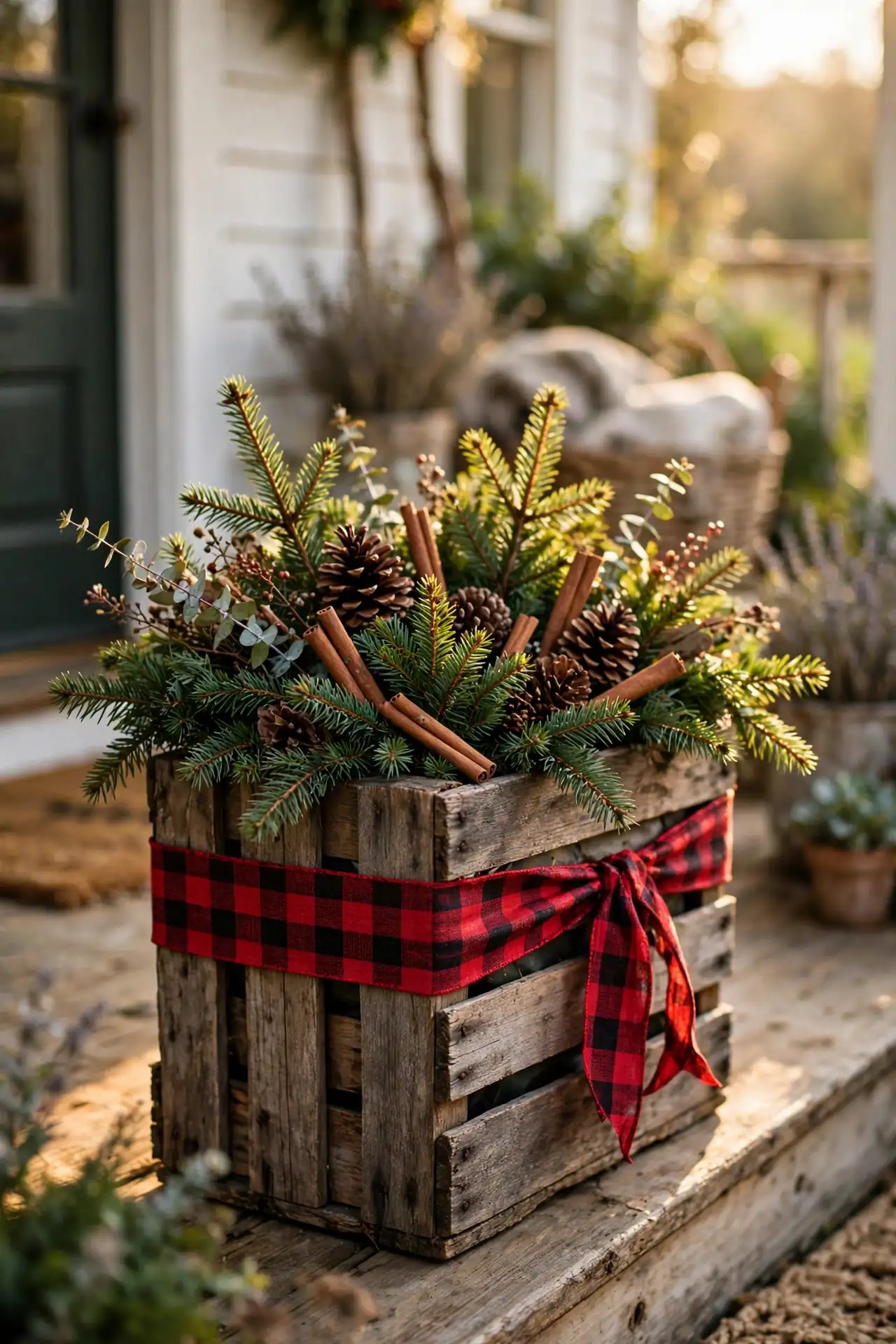
A Wooden Crate Planter
An unpainted wooden crate lined with a black trash bag and filled with spruce tips, pinecones, and cinnamon sticks is the farmhouse porch pot, and it costs under $20 to build. Wrap a wide plaid ribbon around the crate itself so the container joins the decoration. Crates stack and store flat in January.
Try it: Line the crate even if it looks waterproof. Melt water rots unlined wood in one season and leaks green dye onto porch boards.
10
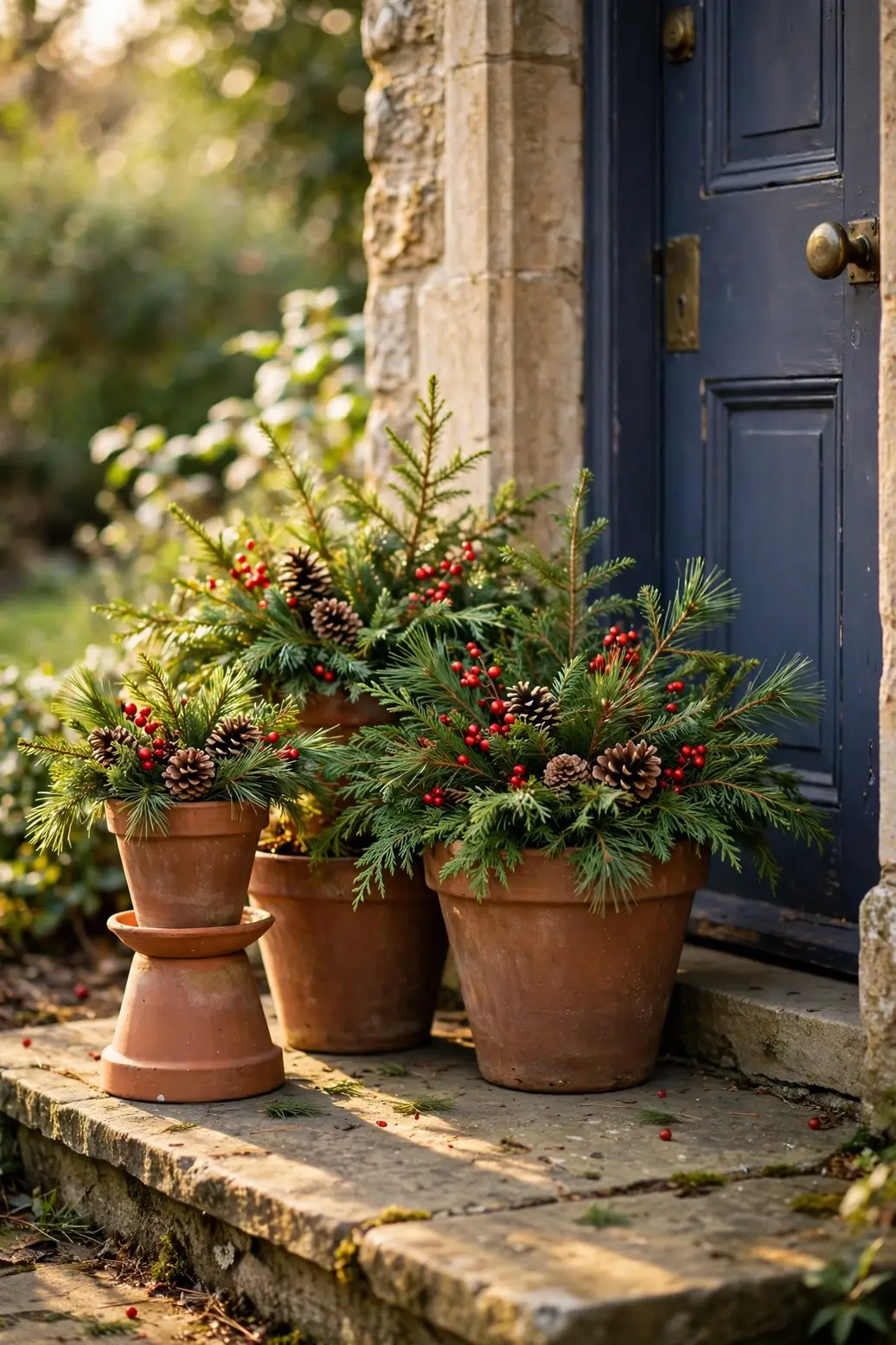
A Cluster of Terracotta Pots
Group three terracotta pots, small, medium, and large, beside the door instead of one big statement pot. Fill each with a single ingredient: one all greens, one all pinecones and branches, one with a small lit tree. Clusters suit narrow doorsteps where a wide urn would block the swing of the door.
Try it: Raise the back pot on an upturned empty pot. Three heights make the cluster; three pots at one height look like stock waiting to be planted.

11
The Basket Planter
A sturdy woven basket with a plastic liner makes a soft, cottage-style planter that warms up a brick or stone entry. Fill it loosely; baskets look best slightly overstuffed, with cedar spilling over the rim. Seal the outside with clear outdoor spray if the basket will sit in rain.
Try it: Set the basket on a small mat or tray. Basket bases wick moisture and can mark porch paint and wood.
12
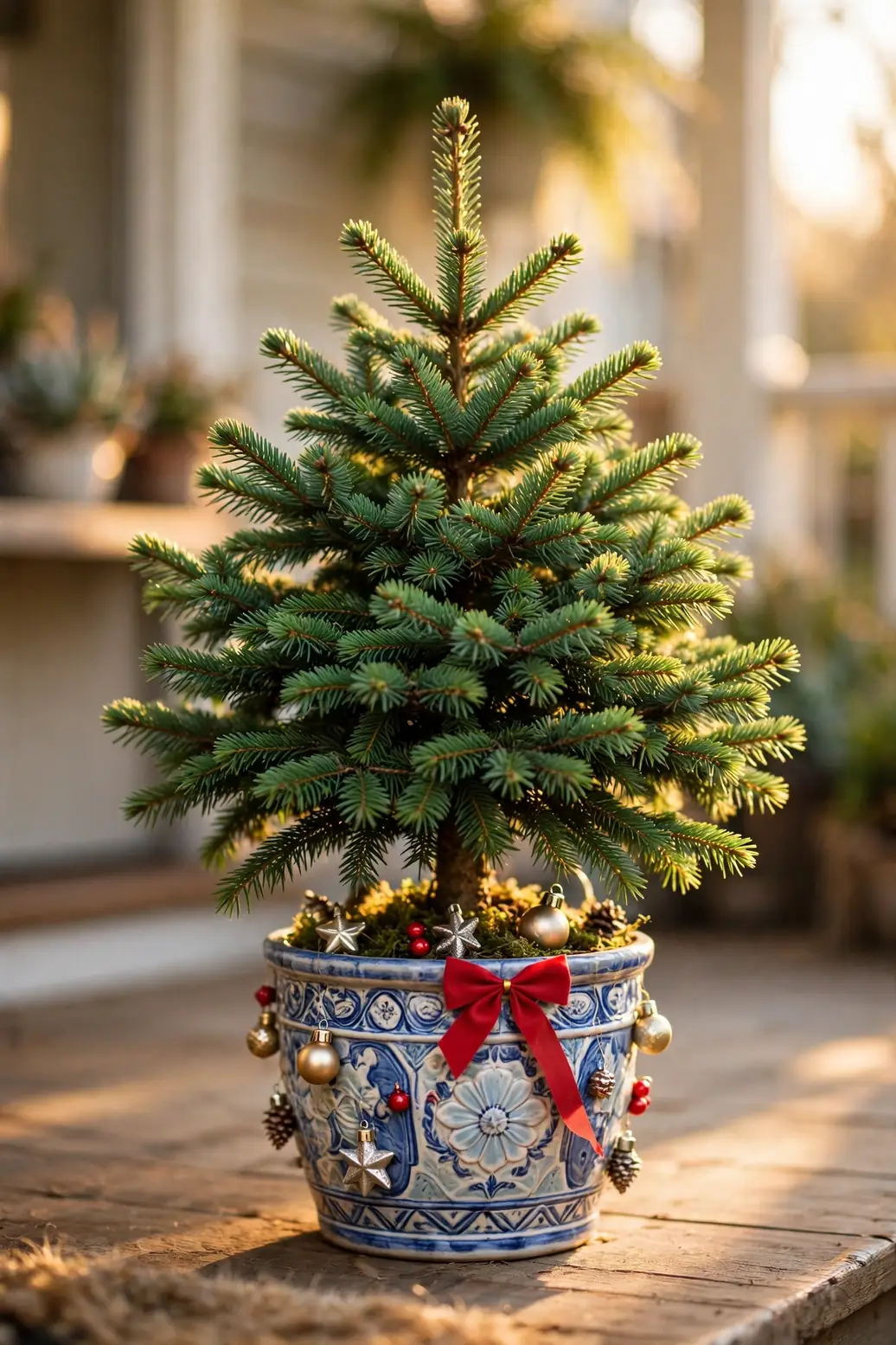
A Living Dwarf Spruce You Plant in Spring
Buy a potted dwarf Alberta spruce (about $20 to $30 at 2 feet), decorate it in its nursery pot slipped inside your good pot, and plant it in the garden in spring. It is the only planter on this list that gets more valuable every year. Add mini ornaments and a bow that come off in January.
Try it: Water it whenever the soil thaws. Potted evergreens dry out in winter wind even while the garden sleeps.
13
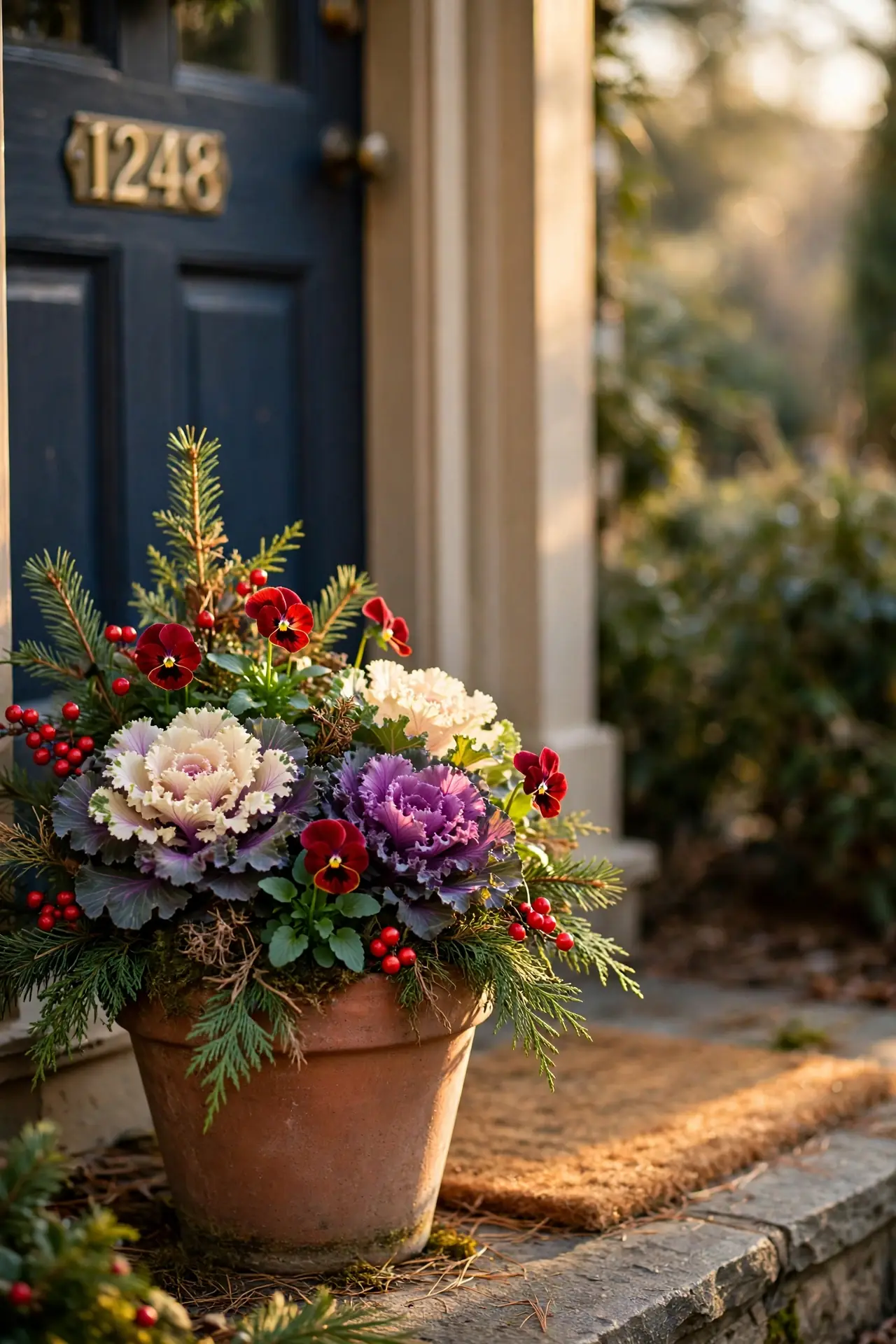
Ornamental Kale and Pansies for Mild Winters
Where winters stay above about 20 degrees, flowering kale and pansies give christmas flower pots actual blooms: purple, cream, and deep red rosettes that peak in cold weather. Tuck a few evergreen sprigs and red berries between them so the pot still reads as Christmas. A six-pack of kale costs around $6.
Try it: Put these pots where you see them up close, by the door rather than at the street. The detail of kale is lost from 20 feet away.

14
Window Boxes Dressed Like the Tree
Your christmas window boxes are planters at eye level, so dress them with the same recipe as the tree: evergreen branches as the base, red berries and pinecones as the ornaments, and a velvet bow at each end as the topper. Push cut stems firmly into the soil or foam so wind cannot lift them. A standard 36-inch box takes about 12 to 15 cut branches.
Try it: Build the box on the ground and lift it into place finished. Arranging greens while leaning out of a window guarantees a lopsided box.
15
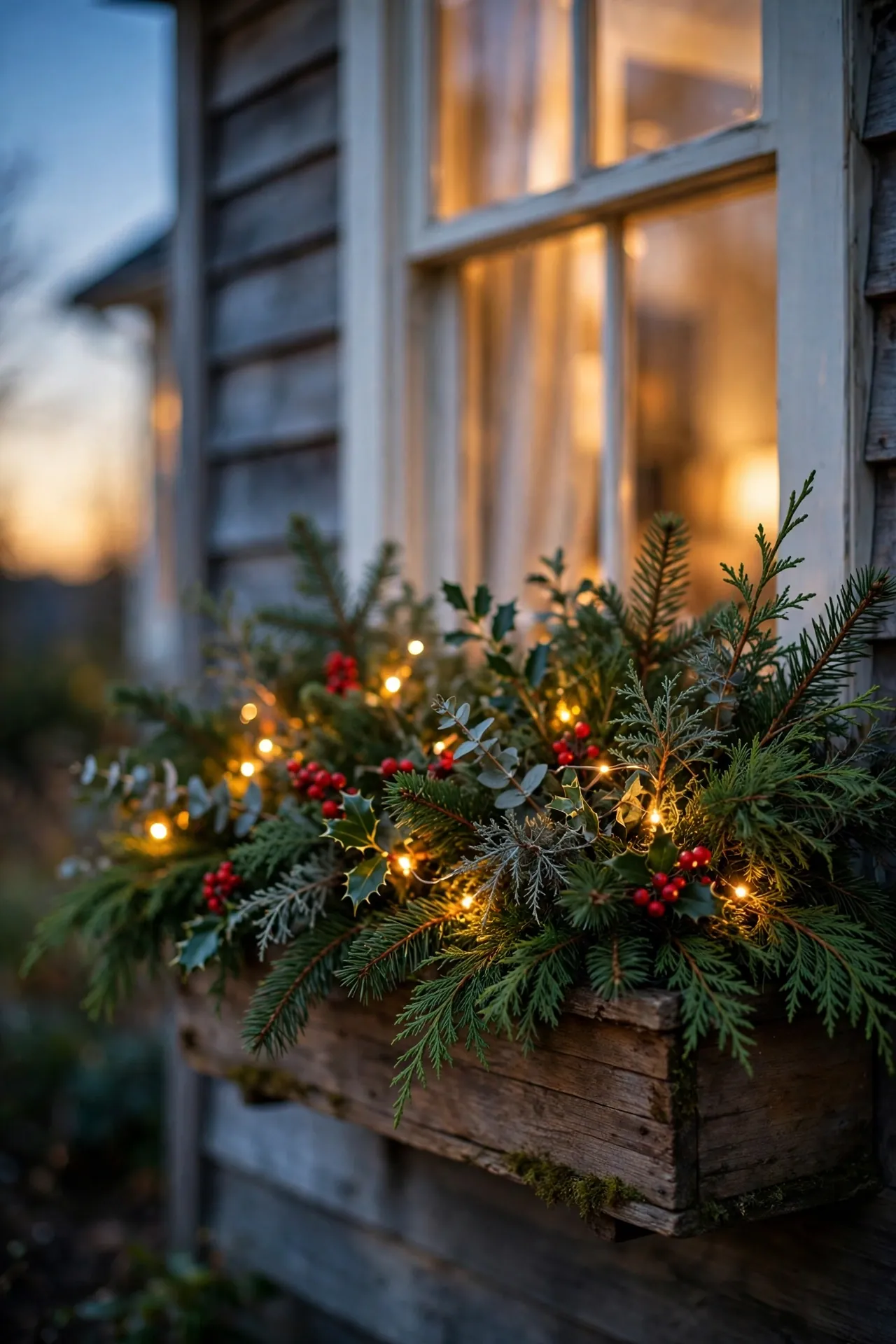
Lights Woven Through the Window Box
One strand of warm mini lights woven through a window box of greens turns a daytime planter into the house’s evening signature. Battery strands with timers avoid the cord problem entirely and cost about $8. From inside, the lit box frames the window like a picture.
Try it: Push the battery pack into the center of the box under the greens, switch side out. You will reach it weekly; burying it at the back means dismantling the box.

16
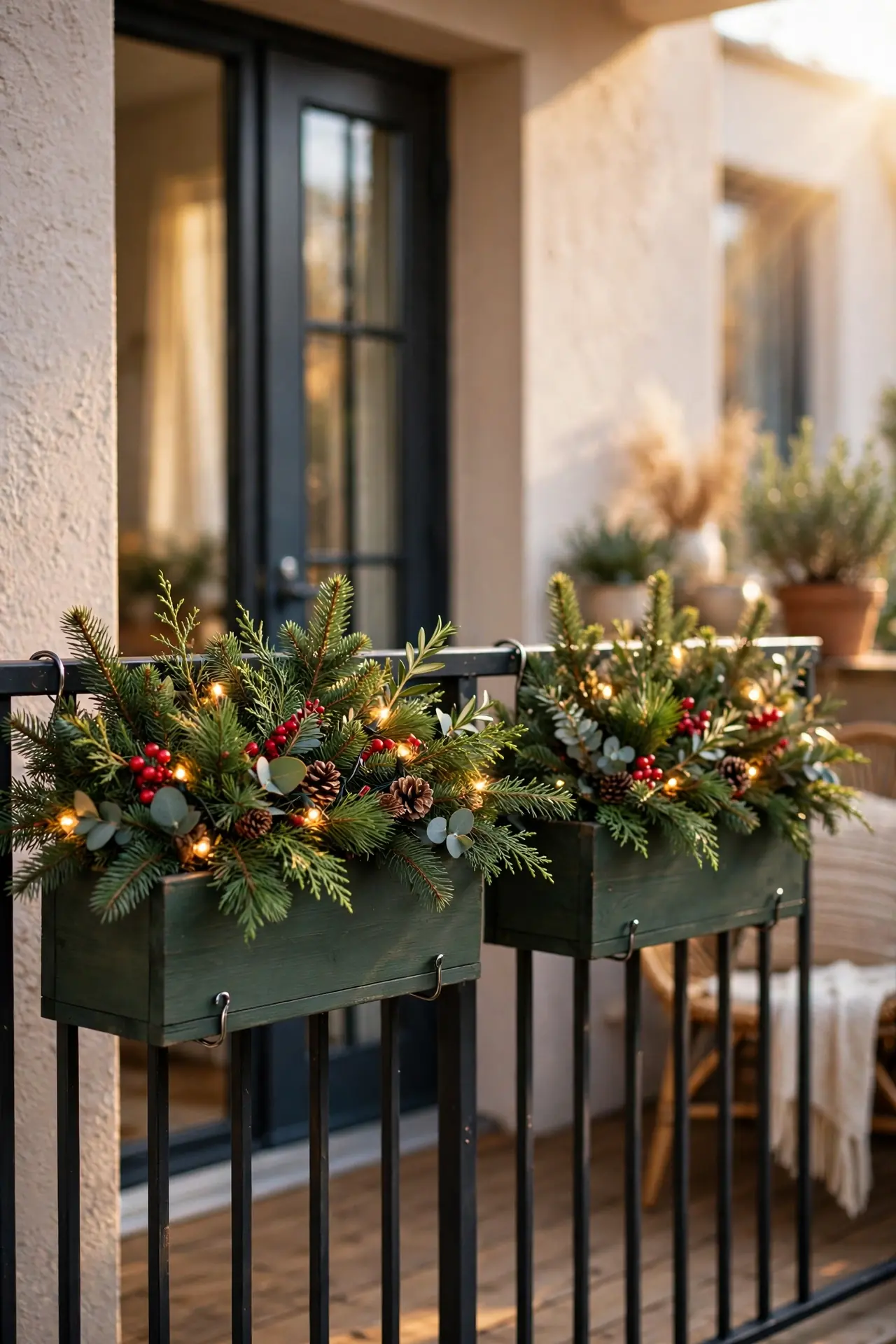
Railing Planters With a Garland Swag
Hook planter boxes over the porch railing and join them with a swag of garland draped between each box. The boxes give the garland structure, and the garland turns separate boxes into one long display. Zip ties hidden inside the greens hold everything against winter wind.
Try it: Keep railing boxes shallow and light. A waterlogged, soil-heavy box can pull on old railing joints all season.
17
Balcony Planter Boxes for Small Spaces
No porch, no problem: two railing boxes on a balcony hold the same greens, berries, and battery lights as a full porch display. Balcony planters are seen from inside more than from the street, so style the back of the box too. Keep total weight in mind; wet soil is heavier than it looks.
Try it: Use faux greens on high balconies. Hauling water and dropping needles over a railing gets old by week two.

18
The White and Silver Window Box
Match idea 05 at window height: flocked spruce tips, silver eucalyptus, white berries, and frosted cones in a white or pale box. Against dark siding this box glows; against white siding it reads as texture and shadow. It carries a modern house better than red and green does.
Try it: Add one strand of cool-white lights here only. Cool light on silver and white looks like moonlight on snow; warm light turns it yellow.
19
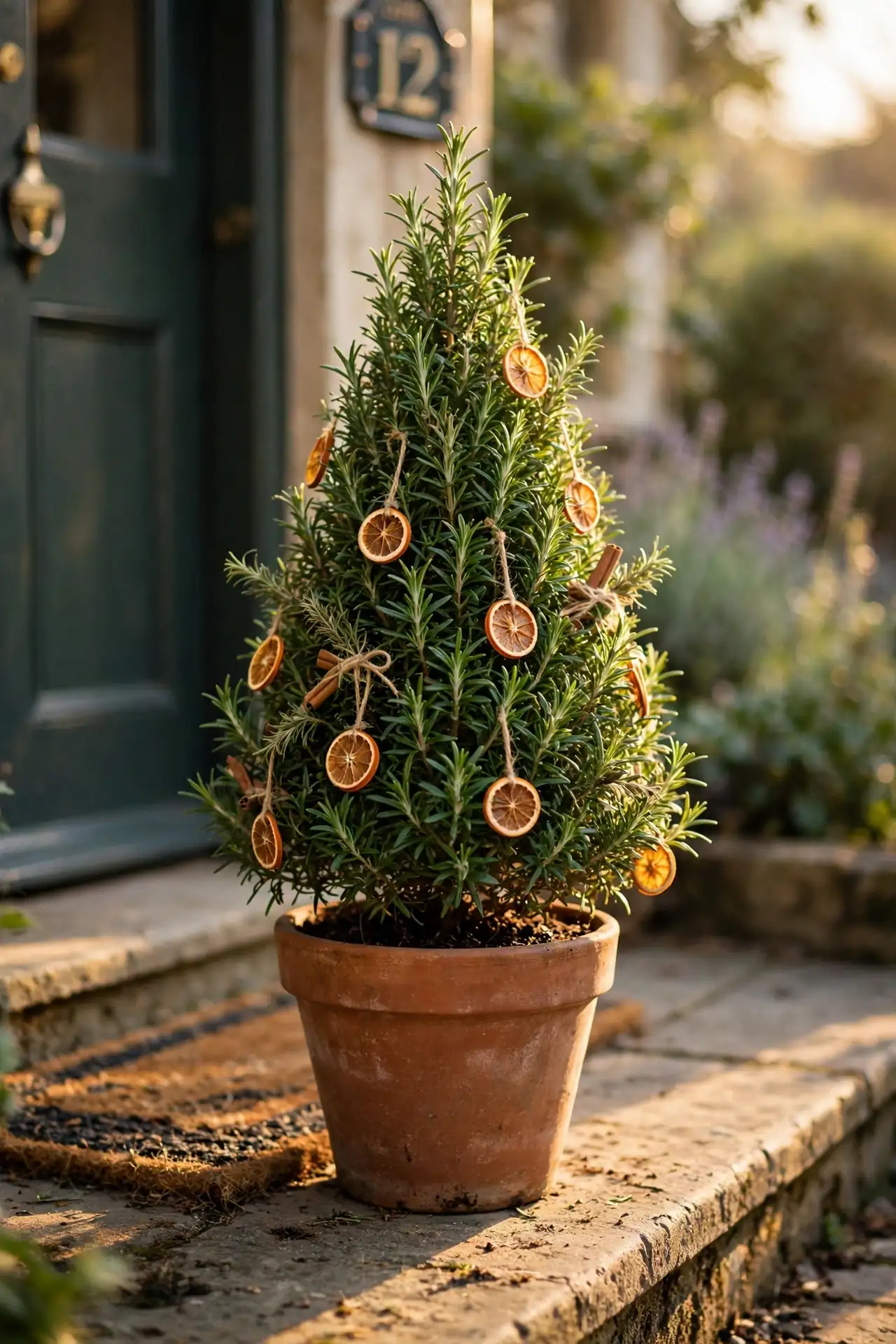
A Rosemary Tree in a Clay Pot
A rosemary plant trimmed into a cone is a fragrant mini tree for a doorstep planter: brush it as you pass and the whole entry smells like Christmas dinner. It suits mild climates and sunny porches, and it goes straight into January cooking. A 1-gallon rosemary cone costs about $15 to $20.
Try it: Decorate it with only tiny dried orange slices on thread. Heavy ornaments bend rosemary stems and the scent does the rest of the work.
20
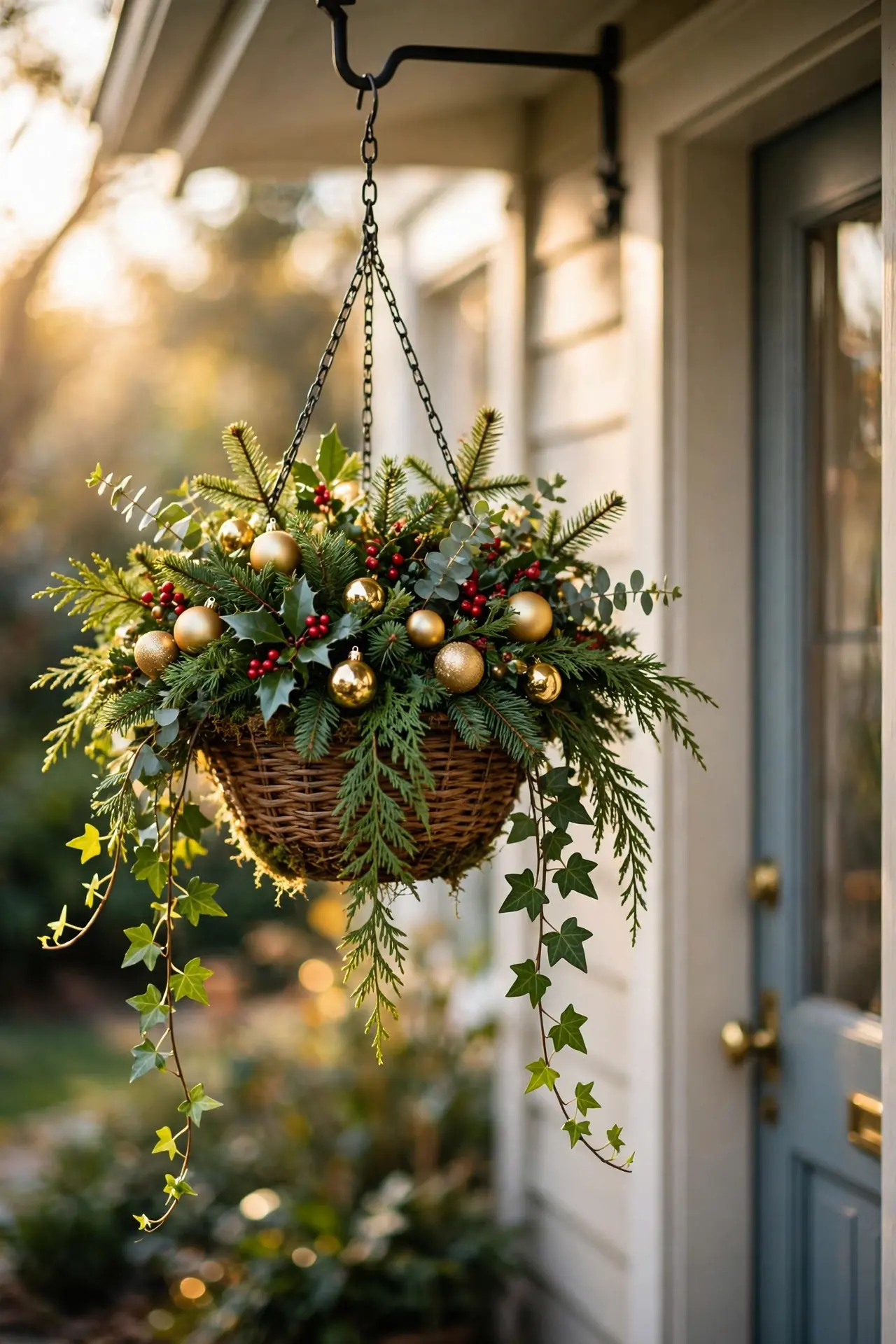
Hanging Baskets, Filled for Winter
Do not store the hanging baskets in November. Refill them with evergreen cuttings, trailing ivy, berries, and a few baubles on picks, and the porch gains decoration at eye level where wreaths usually stop. One basket takes about 8 to 10 cut stems pushed into damp foam or soil.
Try it: Hang baskets slightly lower than summer height. Winter arrangements are heavier and read better a few inches down.
21
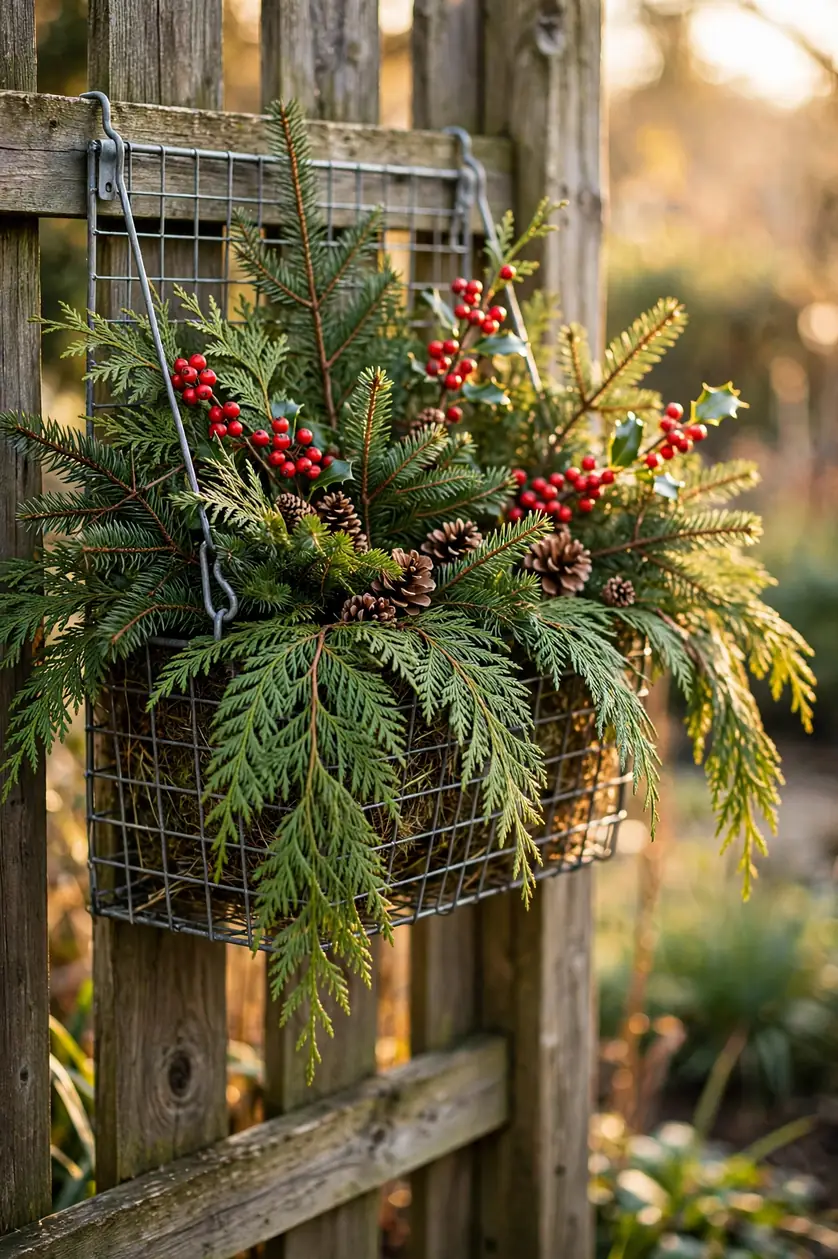
A Hayrack Planter on the Fence or Gate
A hayrack-style planter mounted on the front fence or gate moves the display to the edge of the property, where it greets people before the door does. Fill it full and loose, with cedar trailing over the front. Line it with coco fiber and pack the greens tight; exposed planters dry and loosen faster.
Try it: Save this for a fence you see from the porch. A display nobody looks at twice is effort spent in the wrong place.

22
Lit Cone Topiary Pair
Two cone-shaped topiary trees in matching black pots, each wrapped with one strand of warm lights on a shared timer, are the sharpest, most formal look on this list. They suit modern and colonial houses equally and need no other decoration. Faux pre-lit cones cost about $35 each and store in their pots.
Try it: Set both timers for the same minute. A pair that switches on together at dusk looks like one decision, not two appliances.

23
The Stacked-Pot Tower
Stack three pots, large, medium, small, with soil between them, and plant greens cascading out of each tier like a fountain. The tower fills a deep porch corner that a single pot leaves empty, and it costs little more than the pots you already own. Wire the stack through the drainage holes if your porch gets strong wind.
Try it: Keep the top tier simple: one upright spruce tip and a bow. Busy tops make towers look like they are falling over.
24
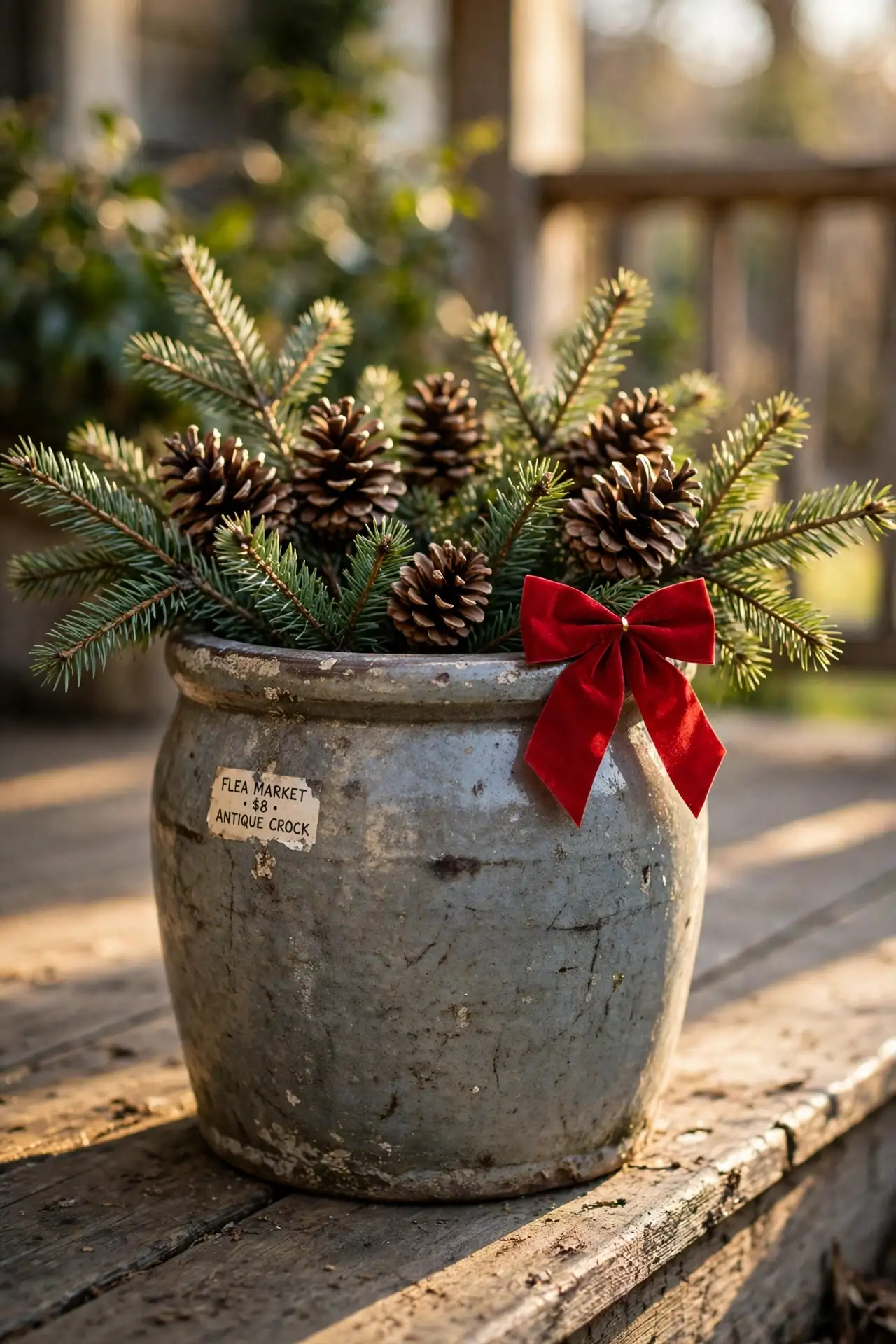
A Vintage Crock or Enamel Pot
A stoneware crock, enamel bucket, or old olive bucket from a flea market gives a planter instant history that new pots cannot fake, for $8 to $20. Fill it simply: the container is the ornament, so plain greens and one bow are enough. Put a modern plastic pot inside to protect the vintage piece from freeze damage.
Try it: Never plant directly in a valuable vintage container outdoors in winter. Freeze-thaw cracks crocks from the inside.
25
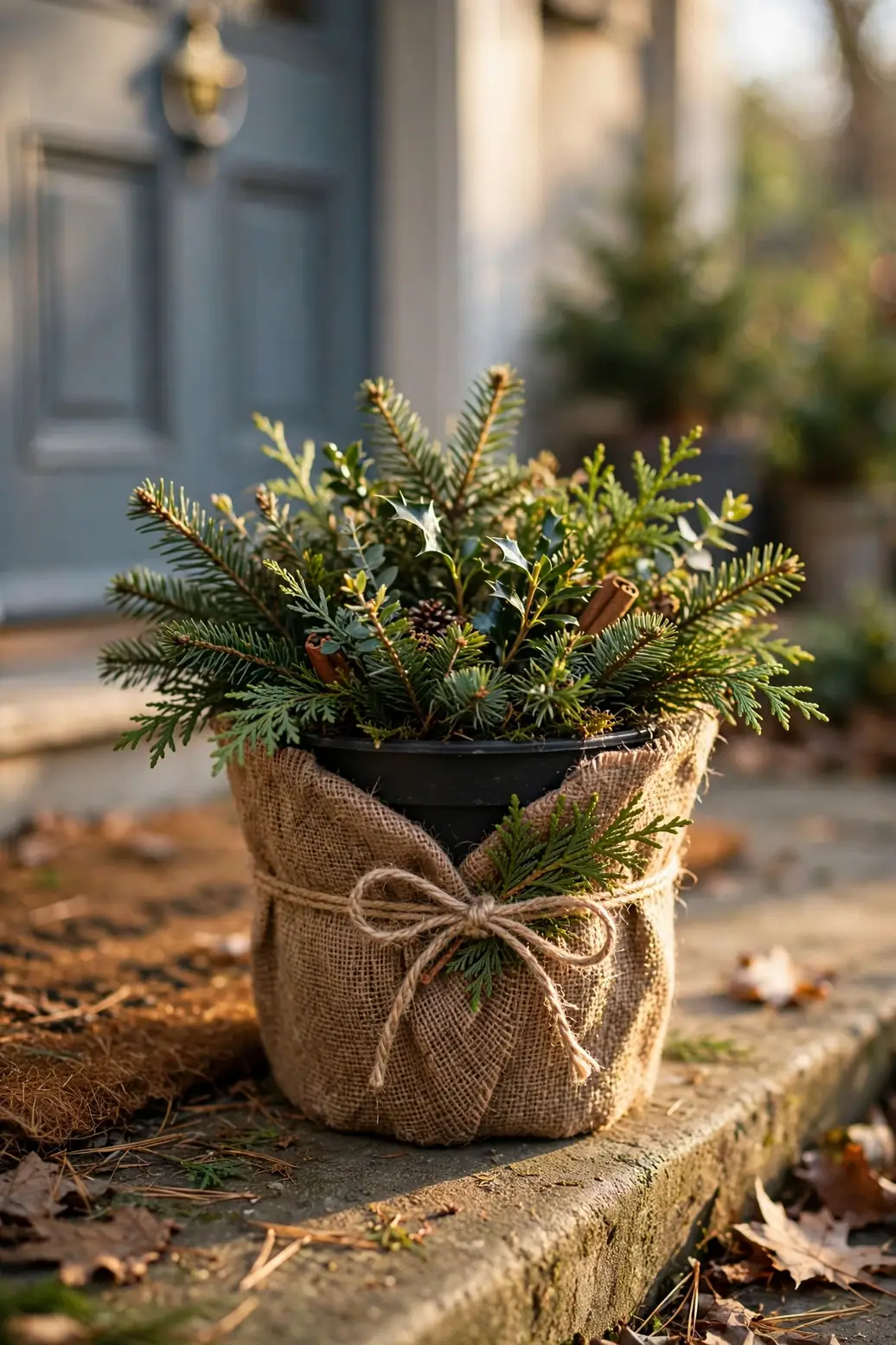
The Burlap-Wrapped Budget Planter
Wrap a plain nursery pot in burlap, tie it with twine and a sprig of cedar, and you have a rustic planter for under $10 including the greens. This is the fastest way to put a planter at every door, window, and step without buying containers. Burlap also insulates roots slightly on cold nights.
Try it: Use the black plastic pots plants came in all summer. The wrap hides them completely and they were free.
26
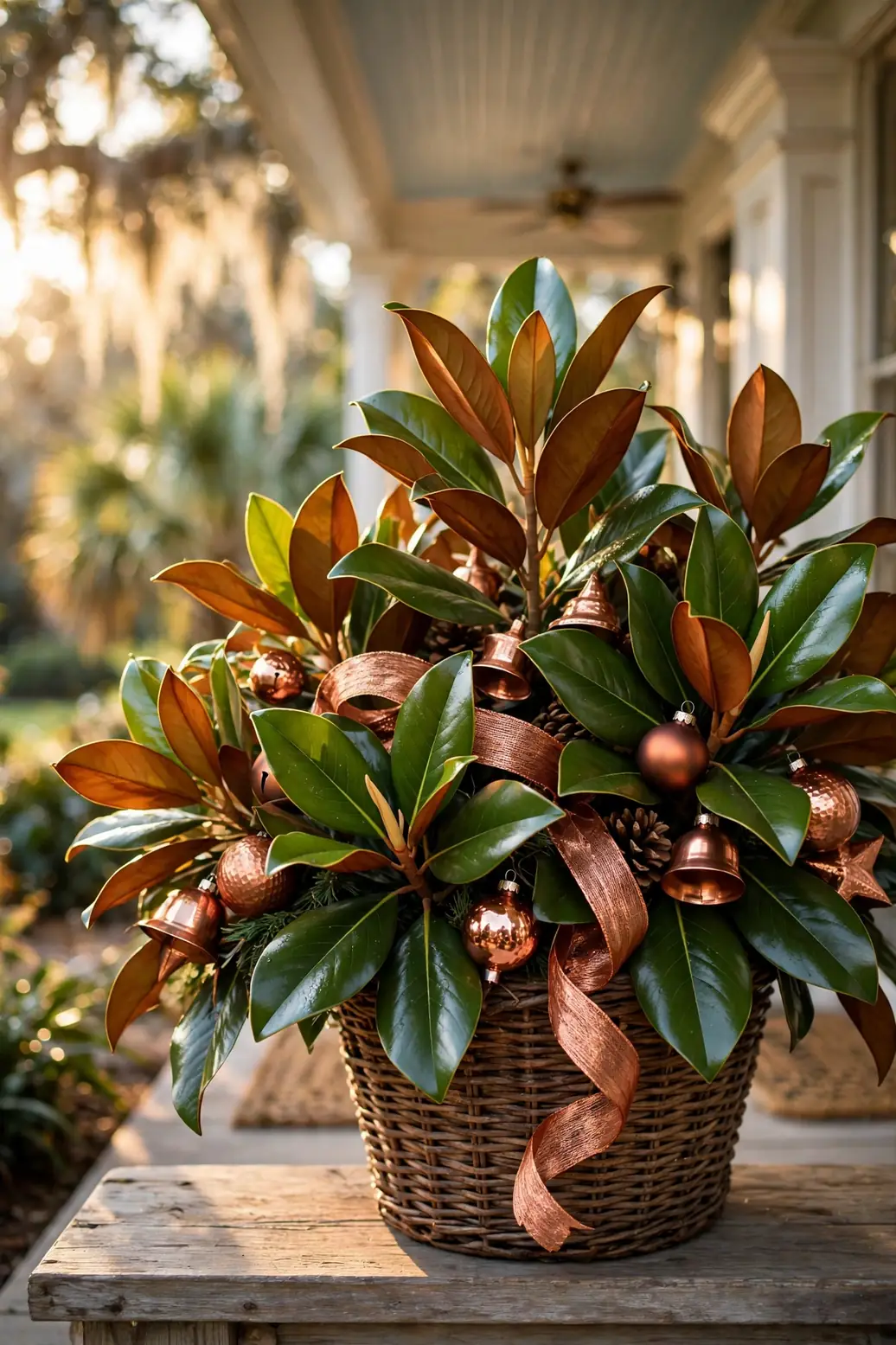
Magnolia Leaves and Copper, Southern Style
In warmer regions the classic planter swaps pine for magnolia leaves, glossy green on top and copper-brown beneath, with copper ornaments or ribbon picking up the color. Magnolia holds up for weeks outdoors and needs no watering once cut. A bundle of cut magnolia stems runs about $15.
Try it: Turn a third of the leaves brown-side out on purpose. The two-tone mix is the whole point; all-green magnolia just looks like a shrub.

27
White Cyclamen and Silver Foliage
For a quiet, wintry pot near the door, plant white cyclamen with silvery dusty miller and a few white berry stems. It reads as frost and candlelight rather than Santa, and it suits minimalist houses that red and green overwhelm. Cyclamen thrives in cold porch weather and blooms for weeks.
Try it: Keep this one under cover, on a porch rather than an open step. Cyclamen hates being rained on directly.

28
Red Dogwood Stems for Drama
A fan of bare red dogwood stems rising 3 feet out of a low bed of greens is the boldest planter on this list and one of the cheapest: the stems cost about $10 a bundle and the color is visible from the end of the street. It suits contemporary houses and anyone tired of bows.
Try it: Cut stem ends at an angle and push them deep into wet soil or sand. Tall bare stems lever themselves out of shallow foam in wind.

29
The Five-Minute Faux Drop-In
Buy or build one lush faux arrangement on a foam base sized to your pot, and drop it in every November and lift it out every January. Faux greens have become convincing, they never dry out, and the per-year cost after the first season is zero. A good drop-in costs $30 to $50 once.
Try it: Mix in 3 to 4 real pinecones and one real cedar sprig each year. The real textures fool the eye about the rest.

30
Solar Lights for a Doorstep With No Outlet
If your doorstep has no outlet, push 4 to 6 solar stake lights down into a wide planter among the greens; they charge by day and ring the arrangement with light by night. It solves the most common reason doorsteps stay dark. Choose warm-white solar stakes, about $12 for a set, and pull them on cloudy stretches to charge in full sun.
Try it: Angle the solar panels south and wipe them weekly. A dirty or shaded panel is the difference between glowing all evening and dying at 7 pm.
Pro tip: Photograph your planters from the street, not from the porch. Every planter looks lush from two feet away; the street view shows you the gaps, the too-small pot, and the bow nobody can see, which are the three things actually worth fixing.
Three rules for christmas planters that hold up outdoors
- Drainage before decoration: Every outdoor pot needs a drainage hole, pot feet or a trivet, and a liner if it is porous. Trapped water freezing is what cracks pots and kills arrangements, not the cold itself.
- Scale to the door, not the porch: A planter should finish roughly a third of the door’s height including greens. Small pots by a big door read as clutter; one generous pot reads as a welcome.
- Anchor everything against wind: Push stems at least 4 inches into soil, sand, or foam, wire the pinecones and ornaments, and weight light containers. December weather tests every planter eventually.
After Christmas: the planter reset
- Greens out, pots stay: Cut greens last into January in cold climates, so lift them out, compost them, and leave the dressed empty pots by the door rather than storing everything. A clean empty urn still looks intentional.
- Store faux and accents dry: Brush soil off ornaments, bows, and faux arrangements and store them in one labeled bin. Damp storage is what makes next year’s planter smell like a basement.
- Plant the living ones: Get dwarf spruces, rosemary, and kale out of their decorative pots and into the ground or a bigger pot by early spring. Check each pot for freeze cracks before it goes back into service.
More ideas you’ll love: Christmas Window Box Ideas, Christmas Yard Decor Ideas, Christmas Walkway Decorating Ideas, Christmas Decor Ideas, and More in Christmas Decor
Questions readers ask
What do you put in a christmas planter?
Start with evergreen branches (pine, cedar, spruce, or fir) as the base, something tall in the center like birch logs, dogwood stems, or a dwarf spruce, then one bright accent: red berries, pinecones, ornaments, or a bow. Soil, sand, or floral foam in the pot holds the stems upright.
How long do outdoor christmas planters last?
Arrangements of cut greens last about 4 to 6 weeks outdoors in cold weather, often into mid-January. In mild climates they dry faster, closer to 3 weeks. Living plants like dwarf spruce and ornamental kale last all winter with occasional watering.
Can I use faux greenery in outdoor christmas planters?
Yes, faux greenery works well outdoors and is the practical choice for high balconies, windy sites, and no-outlet doorsteps. Choose UV-resistant pieces so they do not fade blue by January, and mix in a few real pinecones to keep the arrangement believable.
How do I stop a christmas planter from cracking in the cold?
Make sure the pot can drain, raise it on pot feet so the base is not frozen to the ground, and line porous pots like terracotta and stoneware with plastic. Water expands as it freezes, so a pot that stays dry inside rarely cracks.
What size planter looks best by a front door?
A planter 16 to 24 inches tall, holding an arrangement that finishes around a third of the door’s height, suits most entries. Use a matching pair for double doors or wide porches, and a single larger pot for a narrow doorstep.
How much does a christmas planter cost to make?
A DIY christmas planter costs about $15 to $45 depending on the pot and how much greenery you buy; foraged branches and pinecones bring it toward the low end. Ready-made outdoor planters cost $60 to $120 for the same look.
When should I put christmas planters out?
Late November is ideal in most climates: after the first hard frosts have finished the fall flowers but before the ground freezes too hard to push stems into soil. Cut greens put out in late November easily last through New Year.
How do I keep cut greens fresh in a planter?
Push stems into moist soil or sand and water the planter whenever the soil thaws; cut evergreens drink through their stems outdoors. Keep planters out of strong direct sun where possible, and an anti-desiccant spray adds about a week of freshness.
People Also Ask
What is the best greenery for outdoor christmas planters?
Cedar and pine are the best all-rounders: flexible, fragrant, and long-lasting outdoors. Spruce and fir tips add structure, boxwood adds a neat edge, and magnolia is the best choice in warm climates. Mix at least two textures so the arrangement does not look flat.
Do christmas planters need watering in winter?
Living plants in planters do: water dwarf spruce, kale, and rosemary whenever the soil thaws and feels dry. Cut-green arrangements need the soil kept moist so stems can drink, but they need far less attention than summer planters.
Can I leave a christmas planter out after Christmas?
Yes, and many people do: remove the bows, ornaments, and berries in January and the evergreens, birch logs, and pinecones become a plain winter planter that looks right until spring. It is the longest-working decoration you own.
loved these ideas? ✿
Save this guide for later
Pin it to your board so it’s there when you’re ready to recreate it.

Curated by
Hey! I'm Sanaullah — visual curator and content creator. I search, curate, and test the best aesthetic ideas across Pinterest so you can easily transform your living space, style daily outfits, and try simple creative DIYs without the overwhelm.