
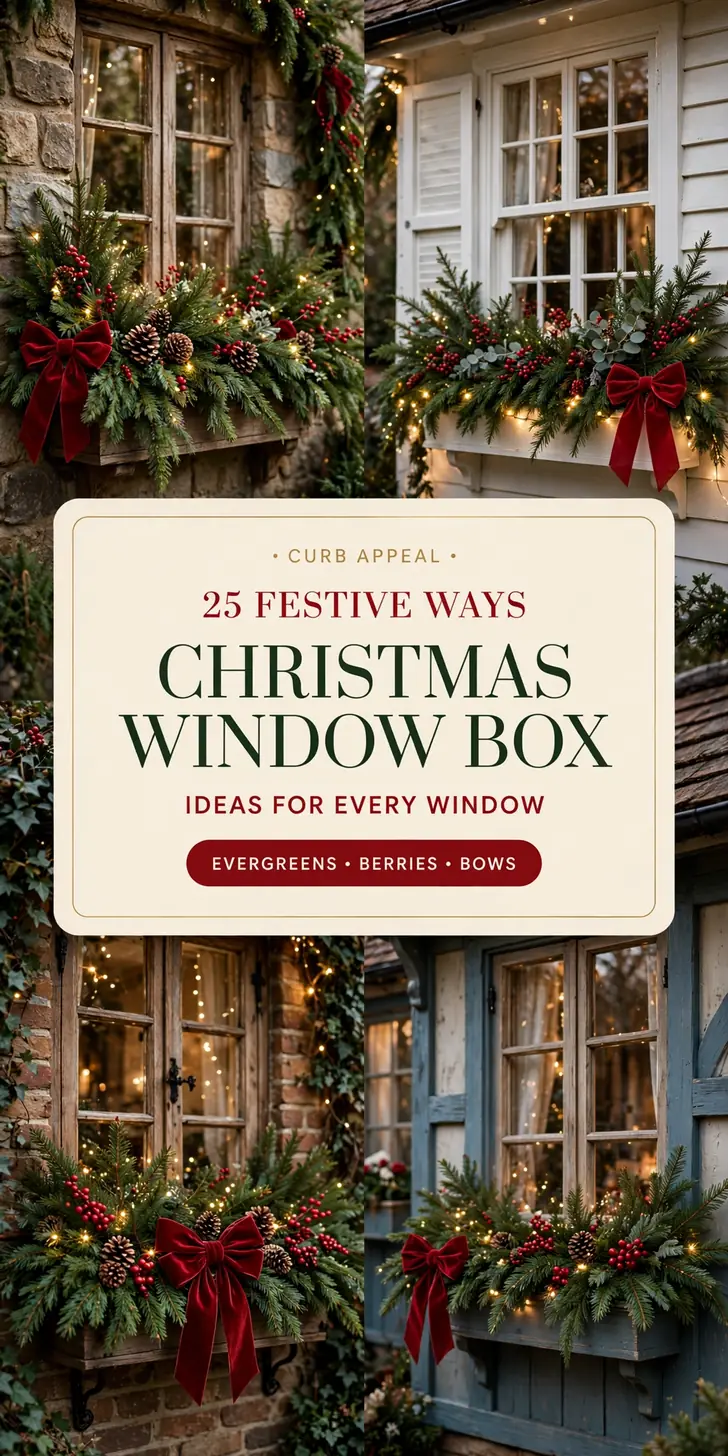
Your windows are the face your house shows the street, and a christmas window box is the fastest way to dress that face for the season. Decorating a window box for christmas takes about 20 minutes per box once you know the formula: evergreen fullness at the back, color in the middle, something trailing over the front edge. These window box christmas decorations work on any budget, from free yard clippings to full designer arrangements. Follow them and your house will be the one people slow down to look at.
Quick Idea Summary
- The key takeaway: Every good christmas window box uses the same three layers: height at the back (branches, twigs, mini trees), fullness in the middle (mixed evergreens, berries, pinecones), and spill over the front (cedar, ivy, ribbon). Get the layers right and even a $10 box looks designed.
- The detail most people miss: The box is viewed from 20 feet away, not 2. Fine details disappear from the street, so one big bow, bold berries, and strong contrast beat a dozen small decorations every time.
- What it costs or how long it takes: A fresh-greenery box costs $10 to $40 in materials and takes 20 to 30 minutes to build. Cut greens stay fresh outdoors for 4 to 6 weeks, so one November build carries you through New Year.
At a glance
| Zone | Ideas | Budget |
|---|---|---|
| Evergreen foundations | 01–06 | $10–$45 |
| Color, berries and texture | 07–12 | $8–$35 |
| Light, shine and focal points | 13–17 | $8–$30 |
| Themed designs | 18–22 | $12–$40 |
| Shortcuts and winter-long looks | 23–25 | $10–$50 |
The ideas
01
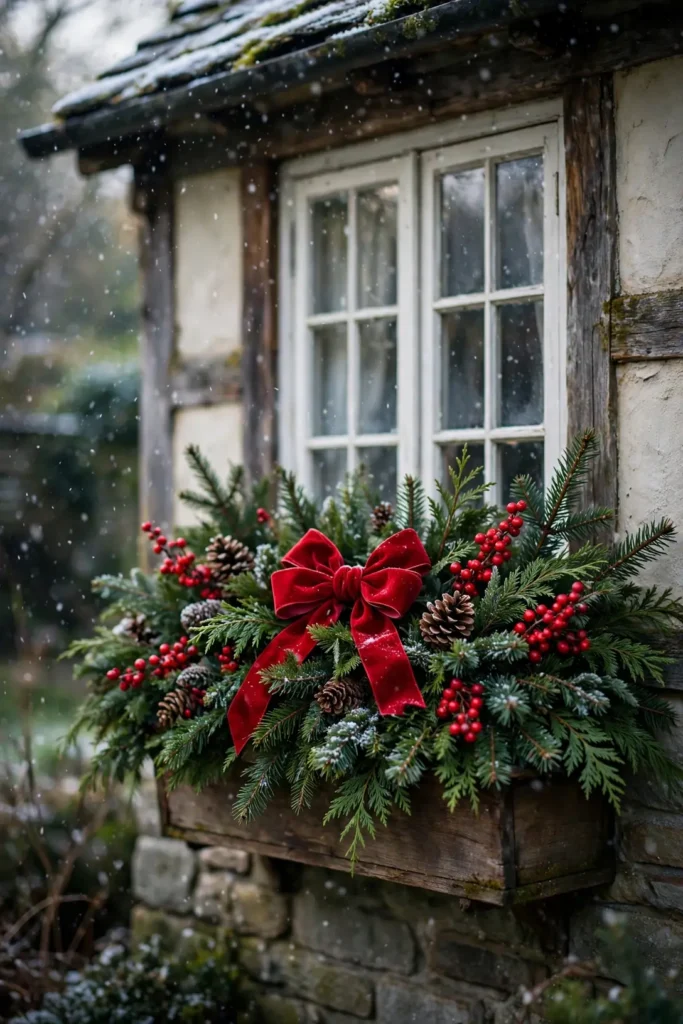
The Classic: Evergreens and One Big Red Bow
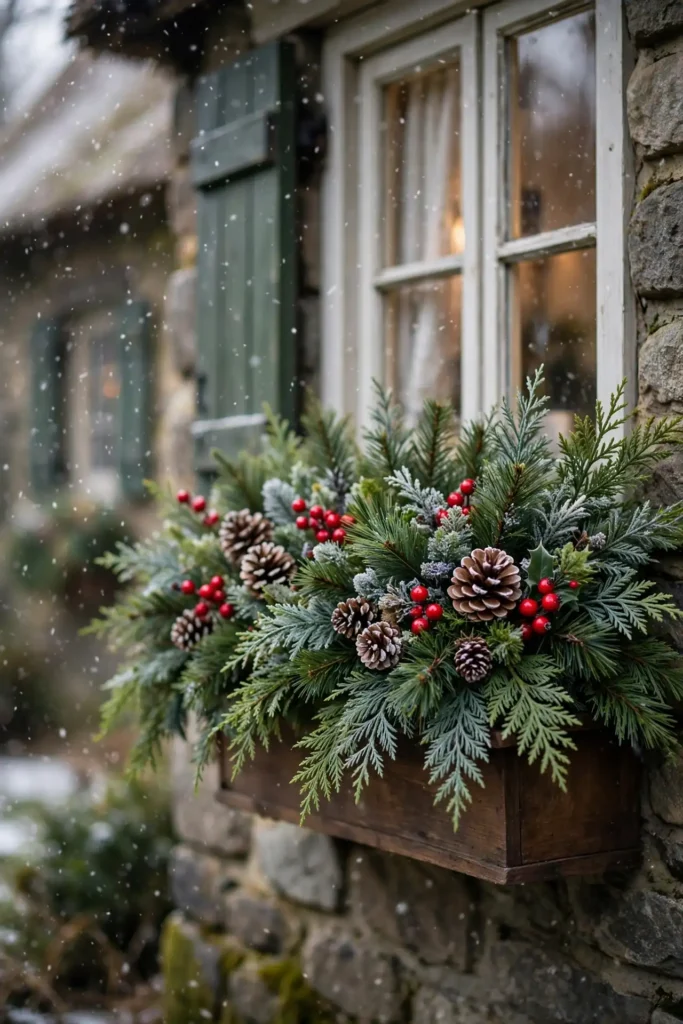
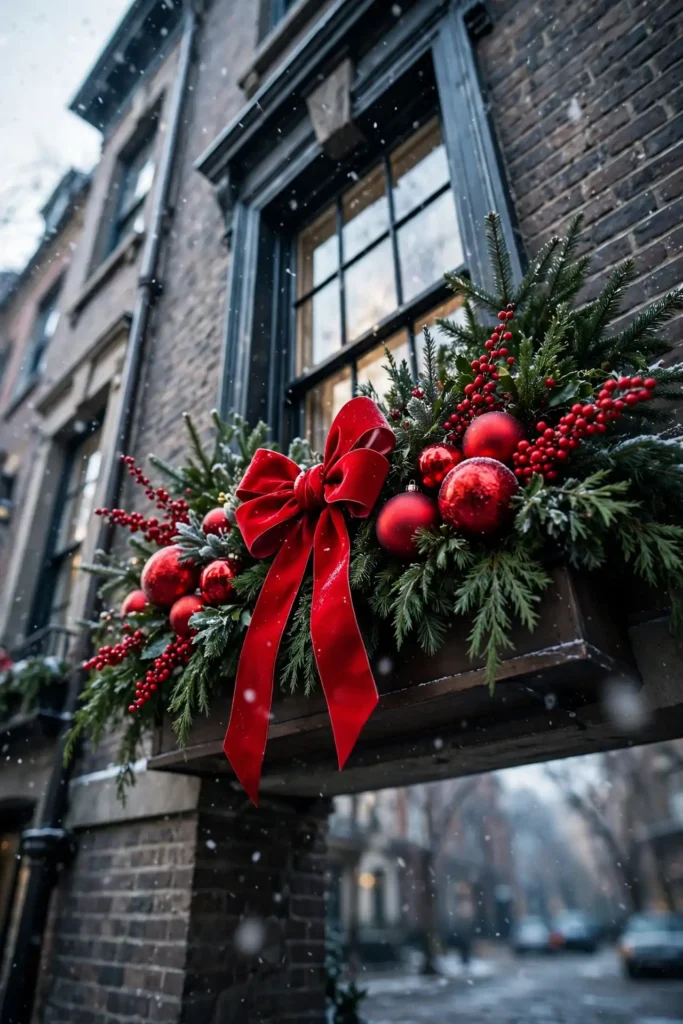
This is the christmas window box design that never dates: a full bed of mixed evergreens, clusters of red berries, a few pinecones, and one generous red velvet bow in the center. The single bow matters; three small bows compete and cancel out, while one big focal point reads clearly from the sidewalk. It suits brick, colonial, and cottage houses especially well.
Try it: Size the bow to the box, about one-fifth of the box length. A 36-inch box wants a 7-inch bow with 12-inch tails wired into the greenery.
02
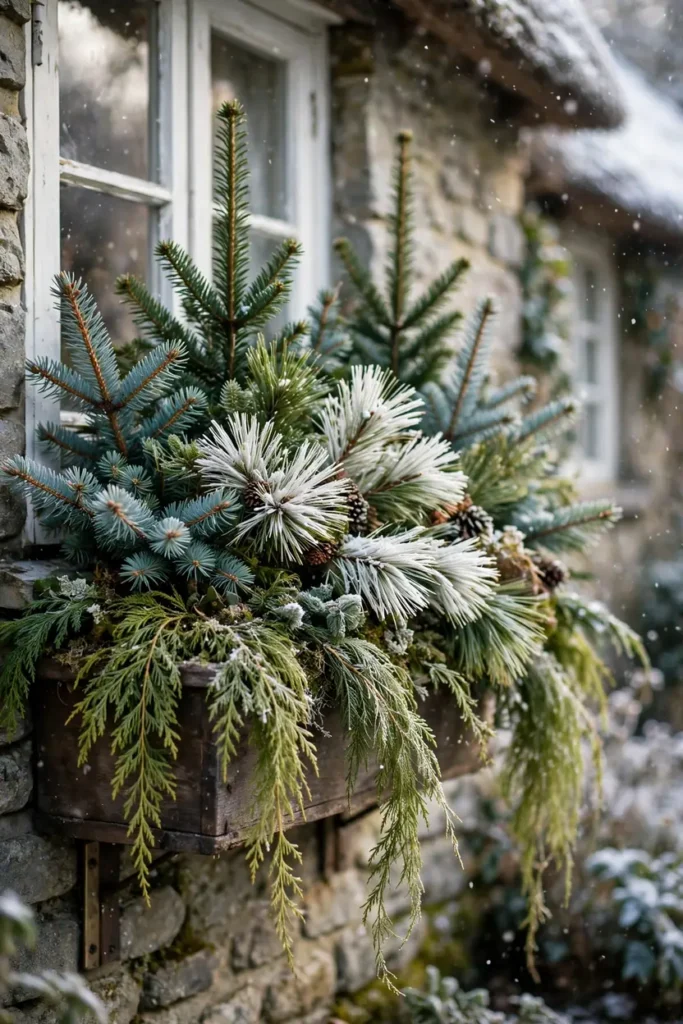
Mix Four Greens, Never One
A box filled with a single greenery looks flat, because every needle catches light the same way. Combine cedar for soft spill, white pine for fullness, fir for structure, and a little spruce for blue-green contrast, and the same box suddenly has depth. Garden centers sell mixed bundles for $8 to $15, or trim your own shrubs and tree for free.
Try it: Push stems 3 to 4 inches deep into moist soil or floral foam at a 45-degree angle. Angled stems arc naturally instead of standing like pencils.
03
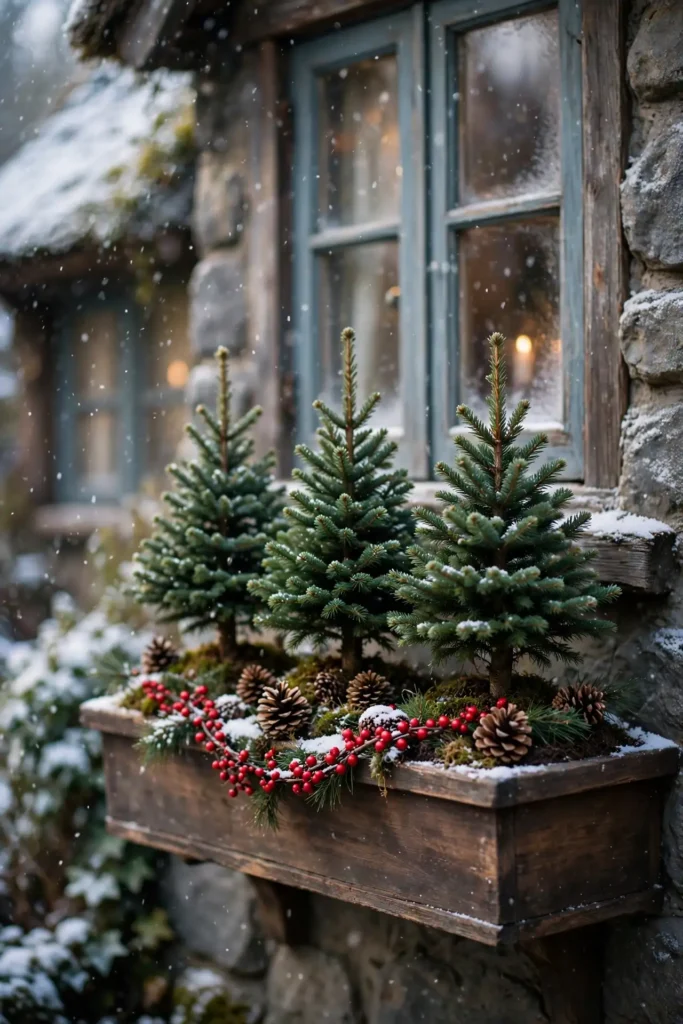
A Row of Mini Christmas Trees
Line up three dwarf Alberta spruce or three small faux trees along the box and you have instant architecture: a tiny forest under your window. Live dwarf spruce in 1-gallon pots run $12 to $18 each and can be planted in the yard later. Keep the trees identical in size for a formal look, or stagger heights for a woodland one.
Try it: Leave the trees in their nursery pots and sink the pots into the box. Watering is easier, and in spring the trees lift straight out for planting.
04
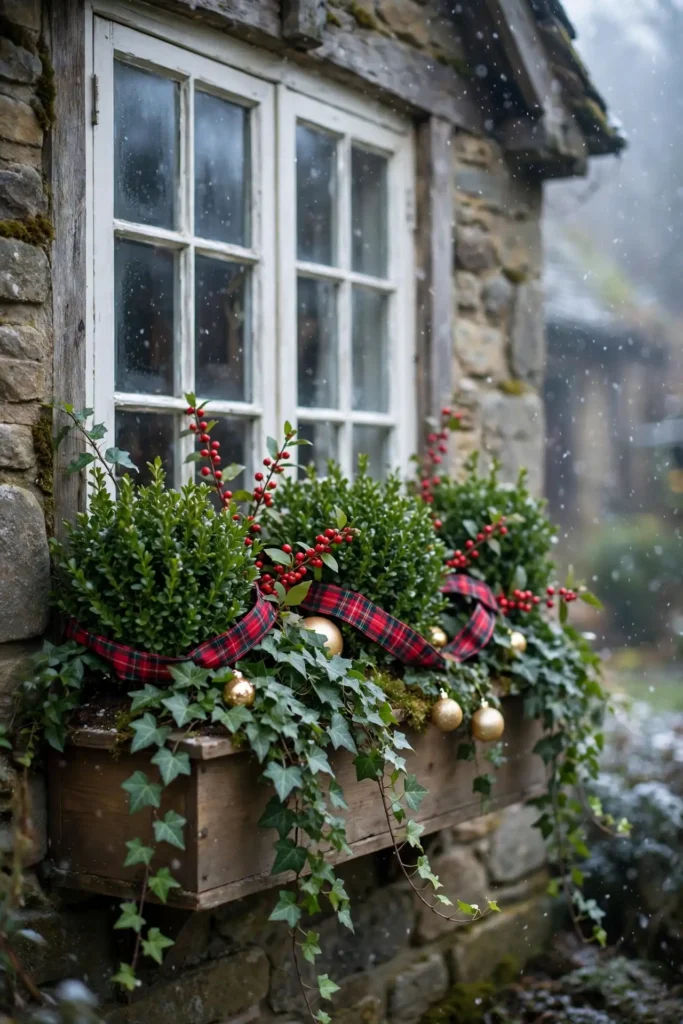
The Living Box: Boxwood and Ivy
If your window box already holds boxwood shrubs and trailing ivy, you are 80 percent done; the living structure is the arrangement. Tuck red berry stems and a few gold ornaments between the boxwood, add a plaid ribbon, and the box reads as one of the most elegant christmas window box ideas on the street. Living boxes also skip the January brown-out completely.
Try it: Water living boxes deeply before a hard freeze. Hydrated roots survive cold snaps far better than dry ones, and the ivy keeps its gloss.
05
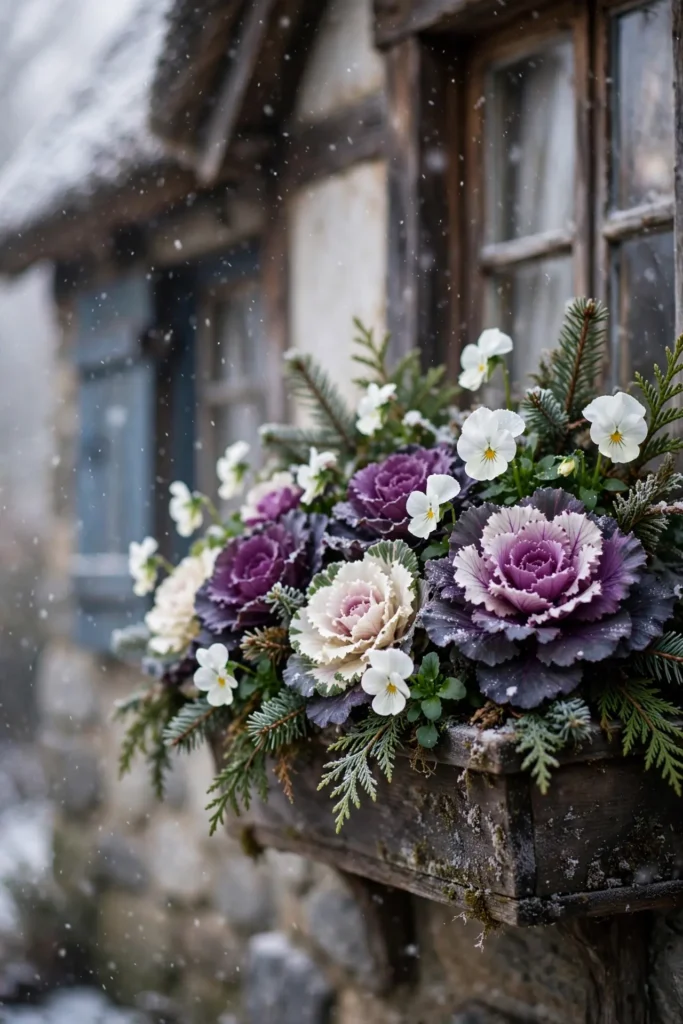
Ornamental Kale for Living Color
Ornamental kale and flowering cabbage are the rare plants that look better after frost: purples deepen, whites brighten, and the rosettes read as winter roses in the box. Plant them in October at $3 to $5 per start, then dress the gaps with evergreen cuttings and pinecones in December. This is one of the best ideas for winter window boxes in zones 5 to 8, where kale holds into January.
Try it: Pair purple kale with white pansies and silver dusty miller. The cool palette glows against green siding and dark window trim.
06
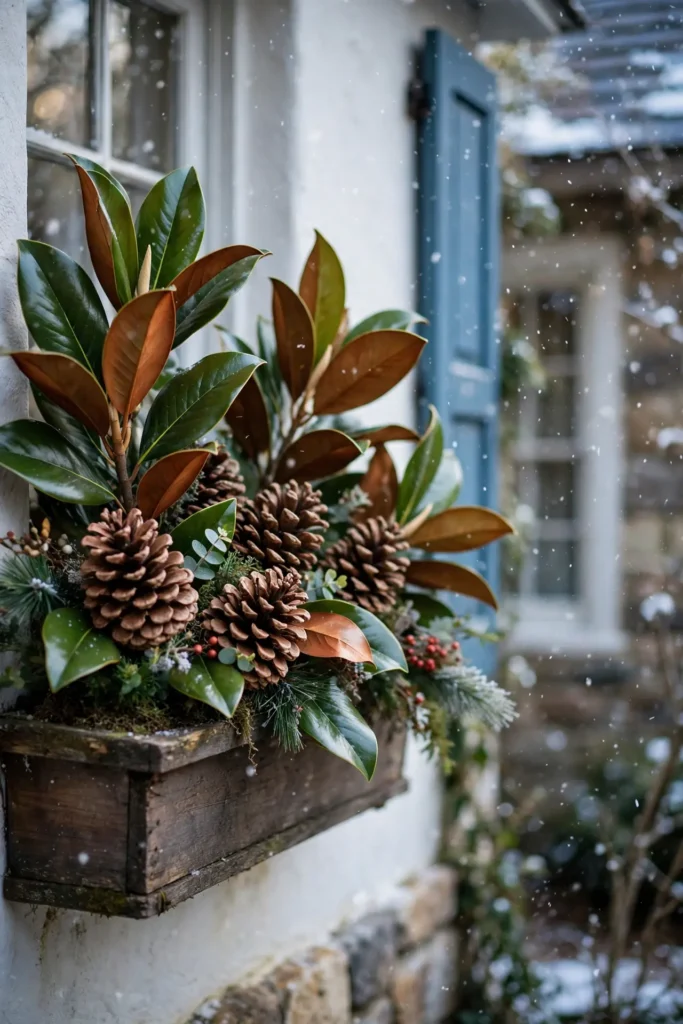
Magnolia Leaves and Sugar Cones
Magnolia leaves bring a glossy, leathery richness that plain pine cannot: deep green on top, copper brown underneath, and they hold for weeks without wilting. Alternate the leaves to show both sides, then anchor the arrangement with big sugar pinecones. It is the classic southern christmas window box, and it looks expensive even when the leaves were free from your own tree.
Try it: Wire each pinecone to a wooden floral pick before inserting it. Cones sitting loose on top of greenery blow out in the first storm.
07
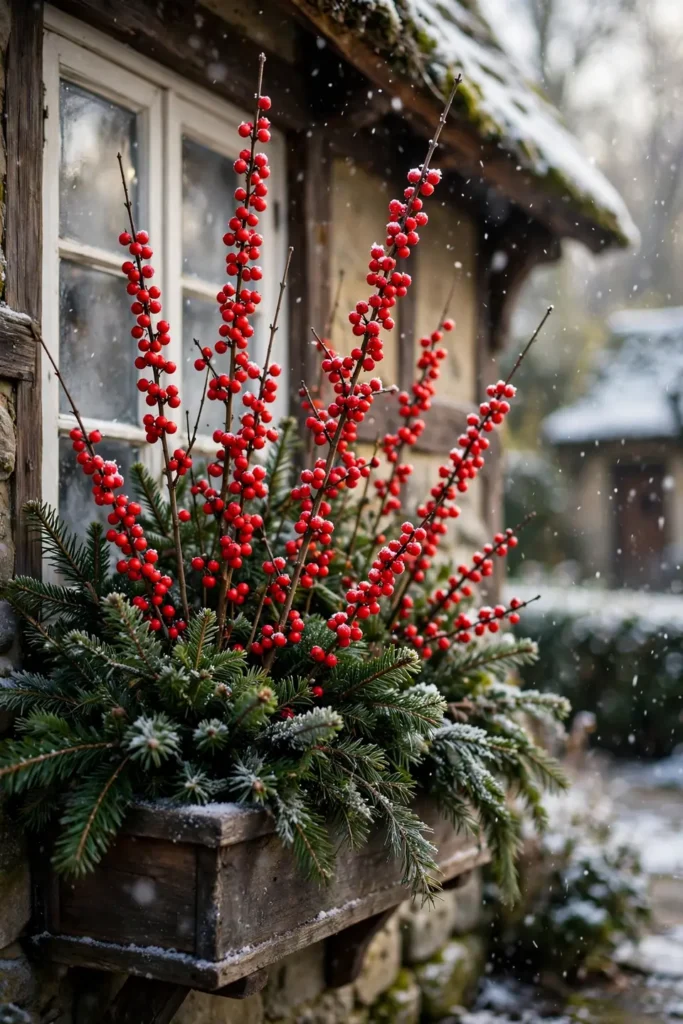
Winterberry for the Red Pop
Nothing reads “Christmas” from the street like winterberry: leafless stems loaded with glossy red berries that seem to glow against green. Three to five stems per box, pushed tall through the evergreens, carry the whole design. Faux winterberry works just as well visually and lasts for years; a bunch costs about $6 and never feeds the birds instead of decorating.
Try it: Cluster berries in odd-numbered groups of 3 or 5 stems, not spread evenly. Clusters look like nature; even spacing looks like a store display.
08
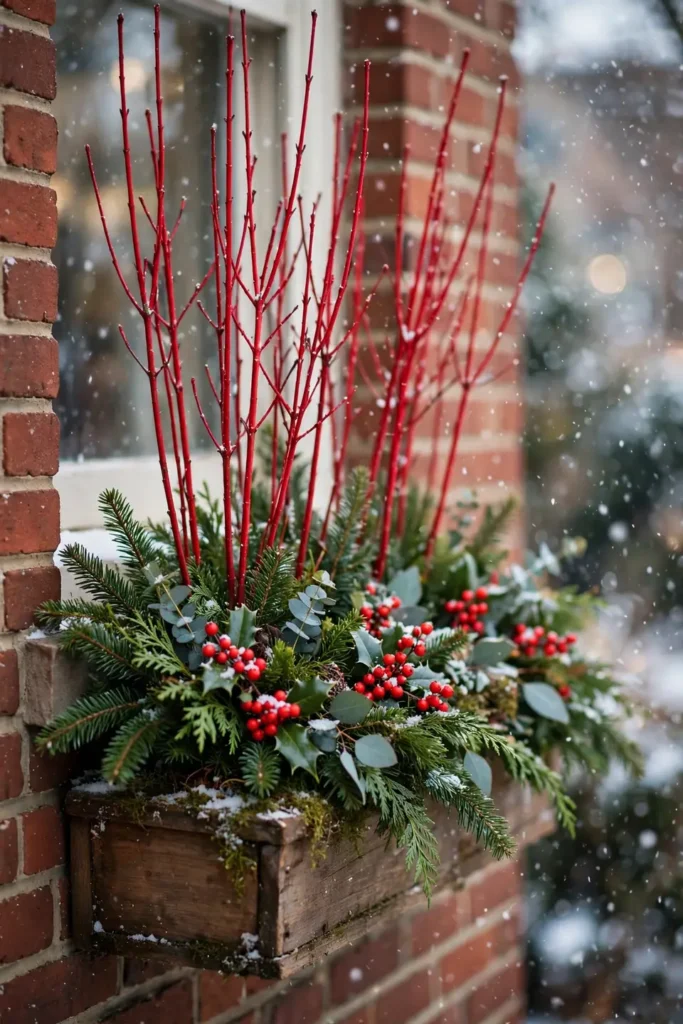
Red Twig Dogwood for Height
Every box needs something tall at the back, and red twig dogwood gives you height and color in one stem: 2 to 3 feet of brilliant red branches that echo the berries below. Yellow twig dogwood does the same job in gold for blue-and-silver schemes. Cut your own if you grow the shrubs, since they need hard pruning in late winter anyway.
Try it: Cut twigs 6 inches longer than you think you need and trim after arranging. You can shorten a branch in the box; you cannot lengthen it.
09
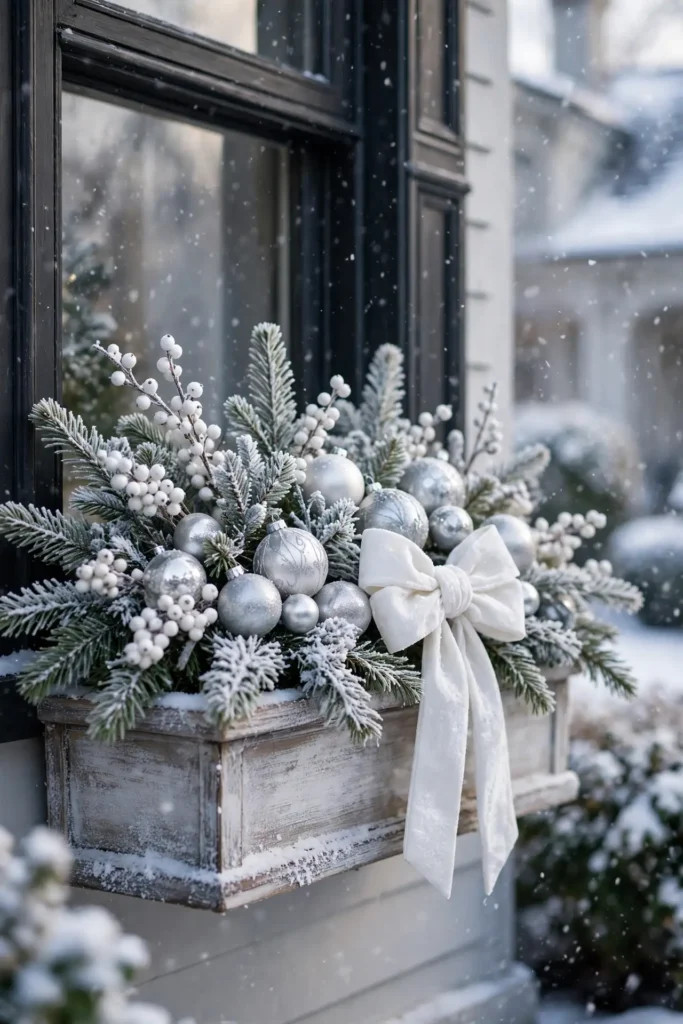
The Frosted Winter Wonderland Box
For a quiet, elegant scheme, go all frost: flocked or frost-sprayed greenery, white berries, silver ornaments, and a white velvet bow. Against dark siding or black window trim, this box photographs like a snow globe scene. A can of flocking spray costs about $7 and frosts two boxes; real snow does the job free if your climate cooperates.
Try it: Keep every metal in the box silver, including the bow’s wire and any lantern. One gold item breaks the icy spell.
10
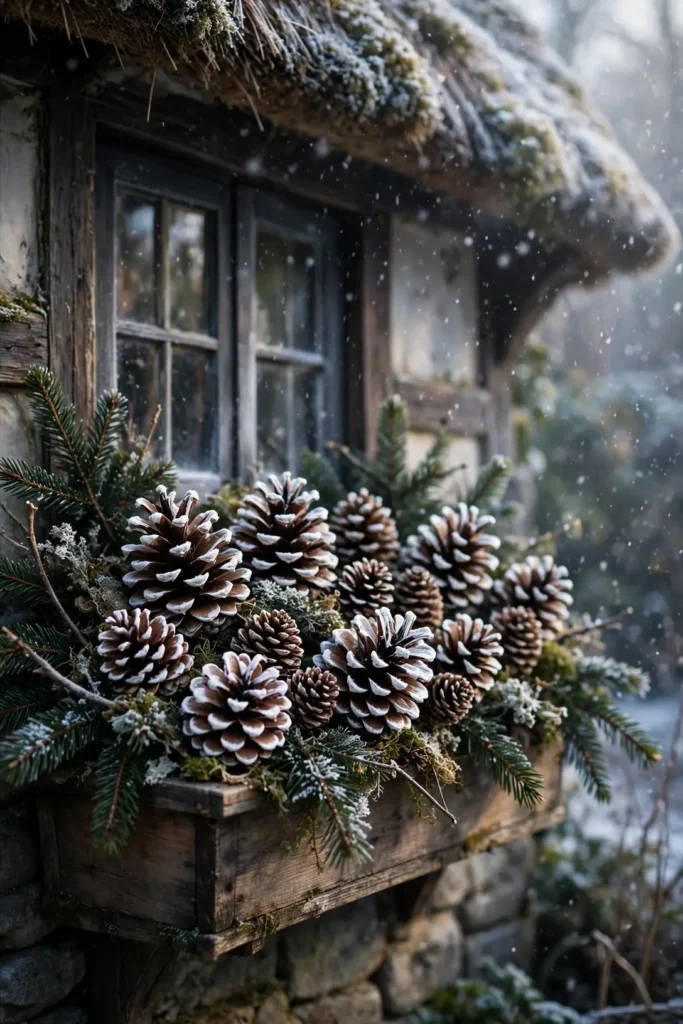
Pinecones, Piled Generously
Pinecones are the cheapest texture in Christmas decorating: free from most yards, or $5 a bag at the craft store. Fill the gaps between greenery with cones in three sizes, a few tipped with white paint for a snow-dusted look, and the box gains the woodland weight that carries it through winter. Cones also hold up in any weather, unlike most decorations.
Try it: Bake collected cones at 200°F for 30 minutes before using them. It melts the sap, opens them fully, and removes any insects.
11
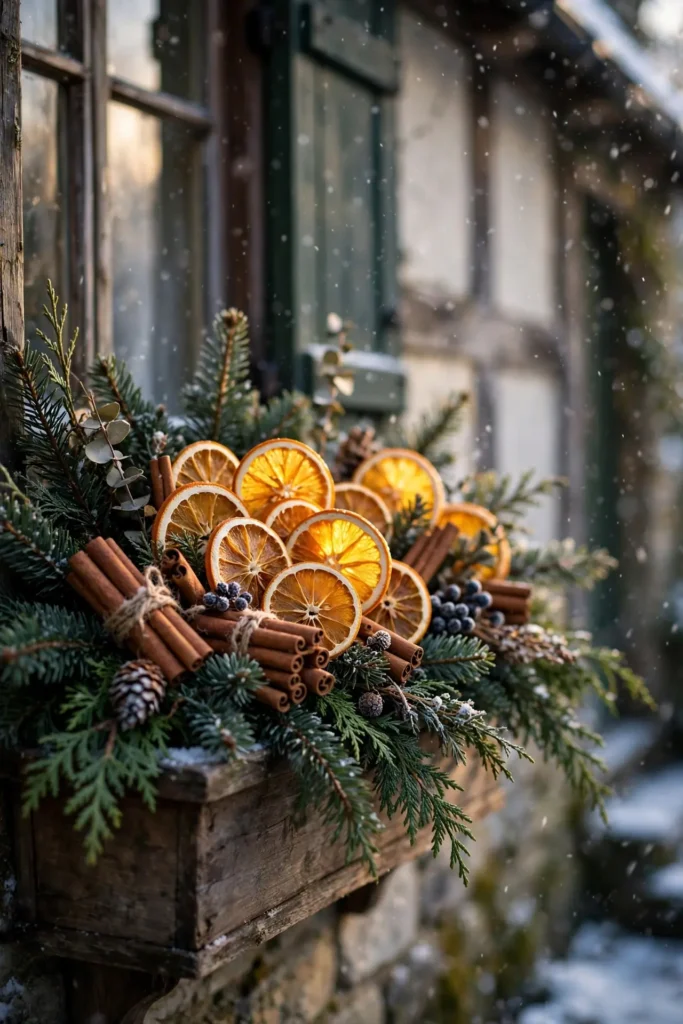
Dried Oranges and Cinnamon Sticks
Dried orange slices glow like stained glass when December sun hits them, and bundles of cinnamon sticks add the spice-market note that makes passersby smile. Wire the slices to picks in groups of three and nestle them against dark greenery, where the orange reads brightest. This old-fashioned pairing costs under $8 per box and perfumes the air near the window on mild days.
Try it: Dry orange slices at 200°F for about 3 hours, flipping hourly. Under-dried slices mold outdoors; fully dried ones last the season.
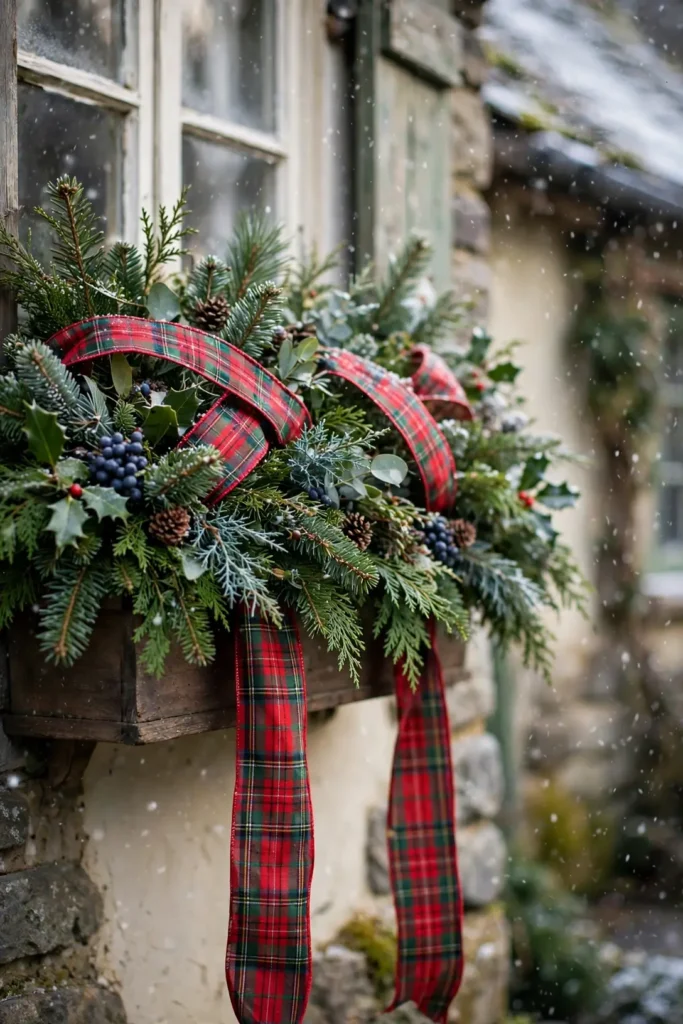
12
Plaid Ribbon Woven Through
A length of plaid ribbon woven in and out of the greenery ties the whole box together and fixes the most common box problem: a front that looks like separate plants instead of one arrangement. Use wired ribbon, 2.5 inches wide, and let two loose tails hang over the front edge. Stewart plaid and black-watch plaid both disappear beautifully into evergreens while still reading festive.
Try it: Anchor ribbon with three U-shaped floral pins instead of tying it. Pinned ribbon keeps its swoops in wind and repositions in seconds.
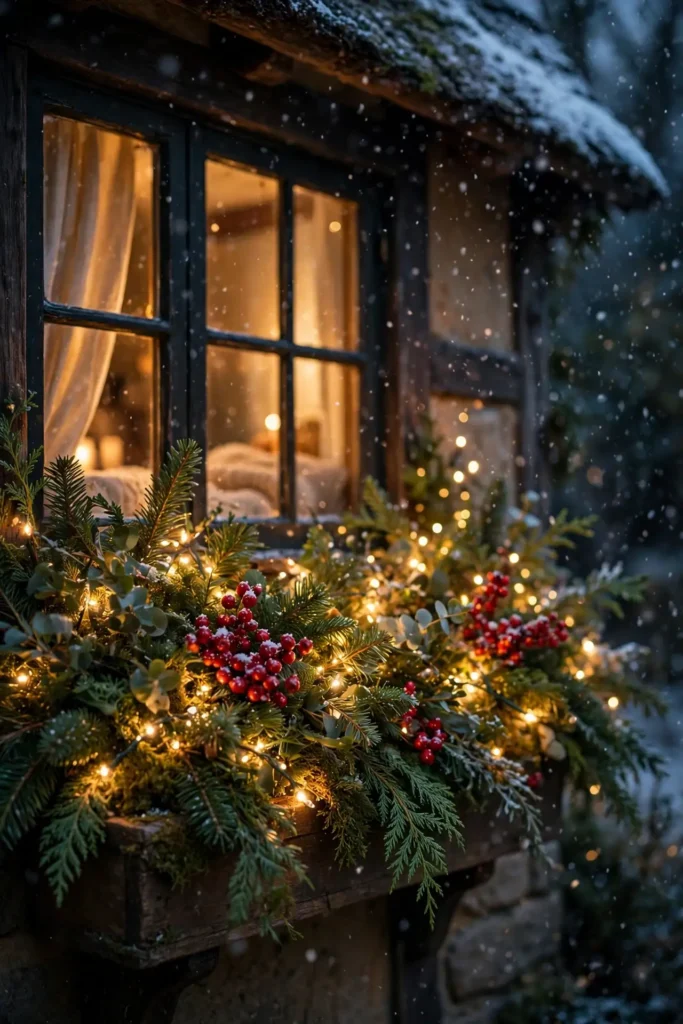
13
Fairy Lights Woven Through the Greens
A single strand of warm white fairy lights turns a daytime box into the street’s evening star: greenery glows from within and every berry catches a highlight. One 10-foot battery strand with a timer, about $8, covers a standard box. Set the timer for dusk to midnight and you never touch it again all season.
Try it: Weave the strand deep in the greenery, not draped on top. Buried lights make the box glow; surface lights just outline it.
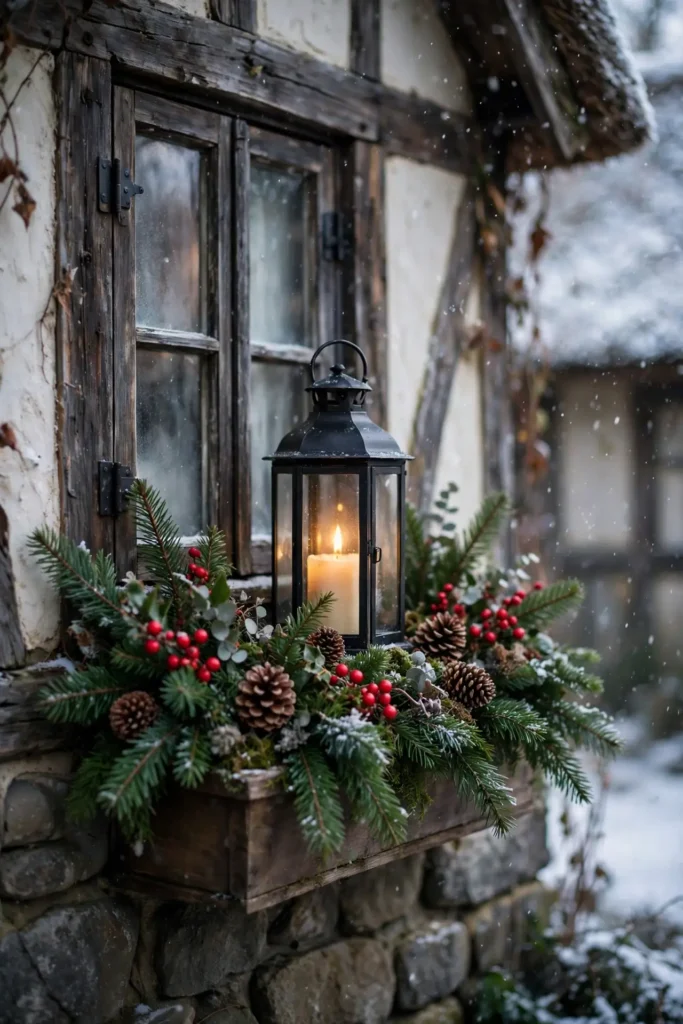
14
One Lantern as the Centerpiece
A black or copper lantern settled into the middle of the box gives the arrangement a heartbeat: height, structure, and a candle glow that anchors everything around it. Use a flameless candle with a timer outdoors, since real flames and dry greenery are a poor mix. The lantern goes back on the porch in January, so the $15 to $25 cost spreads across the whole year.
Try it: Choose a lantern at least 10 inches tall for a standard box. Shorter lanterns sink into the greenery and disappear.
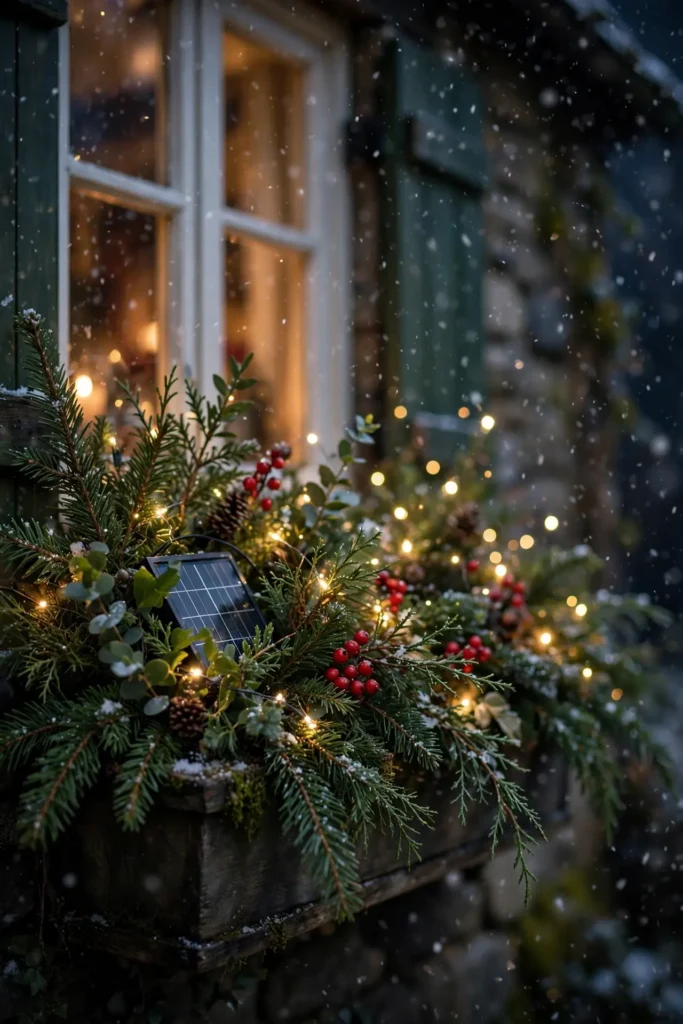
15
Solar Sparkle for Boxes Without an Outlet
Second-story and far-from-the-door xmas window boxes rarely sit near an outlet, and that is where solar fairy lights earn their keep: the small panel hides in the greenery, charges by day, and switches itself on at dusk. Expect 6 to 8 hours of glow from a full day of sun. In cloudy northern winters, choose solar strands with a USB-rechargeable battery backup.
Try it: Angle the solar panel south and brush snow off it after storms. A panel under snow charges nothing, no matter how bright the day.
16
A Mini Wreath on the Box Front
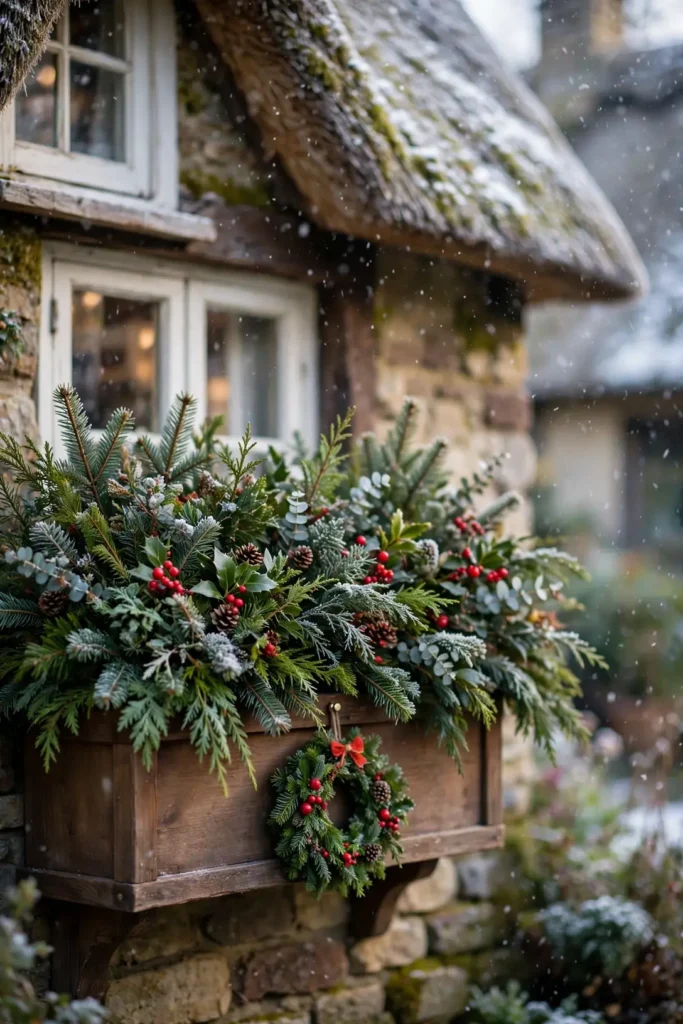
Hang one small wreath, 8 to 10 inches across, on the front face of the box and the whole arrangement gains a finished, deliberate look. Hook it over the box rim with a bent wire hanger, dress it with the same berries and bow as the box, and it becomes the signature people remember. On long boxes, a centered trio of small wreaths works too.
Try it: Match the wreath’s greenery to the box’s main green. Matching greens make the wreath look grown from the arrangement, not stuck on it.
17
Shatterproof Ornaments and Jingle Bells
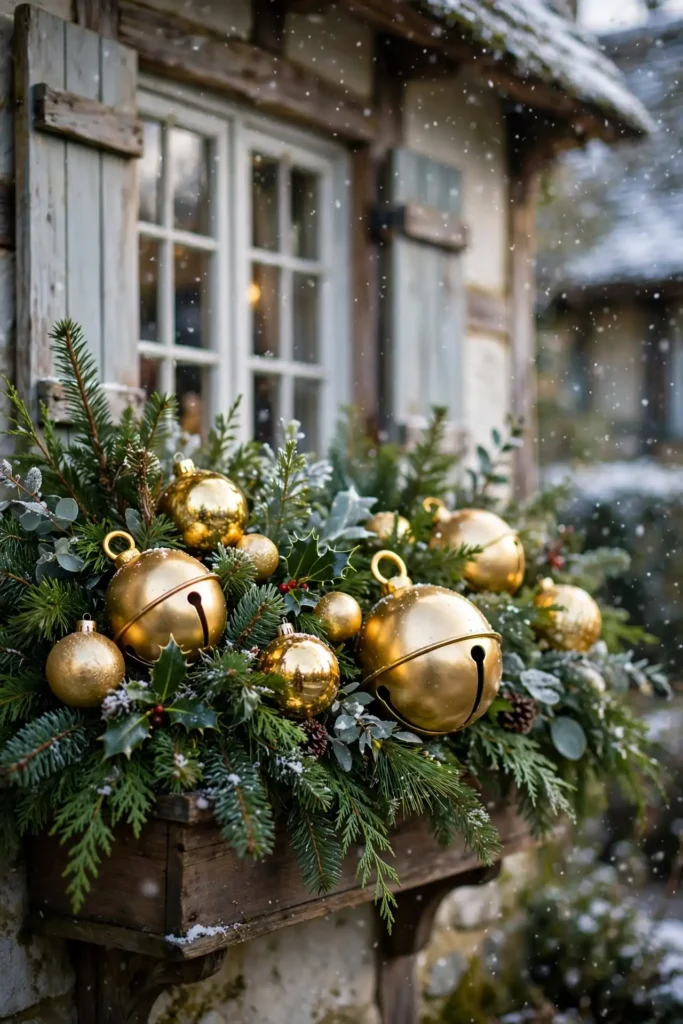
Tuck shatterproof baubles and oversized jingle bells deep into the greenery where they catch light but cannot blow away. Gold suits traditional schemes, silver suits frosted ones, and matte red disappears into the greens until the sun hits it. A $10 ornament pack dresses two boxes, and shatterproof is non-negotiable outdoors: glass and December storms do not mix.
Try it: Wire ornaments in clusters of three on one pick instead of placing singles. Clusters read as fruit on the branch and stay put in wind.
18
The Candy Cane Peppermint Box
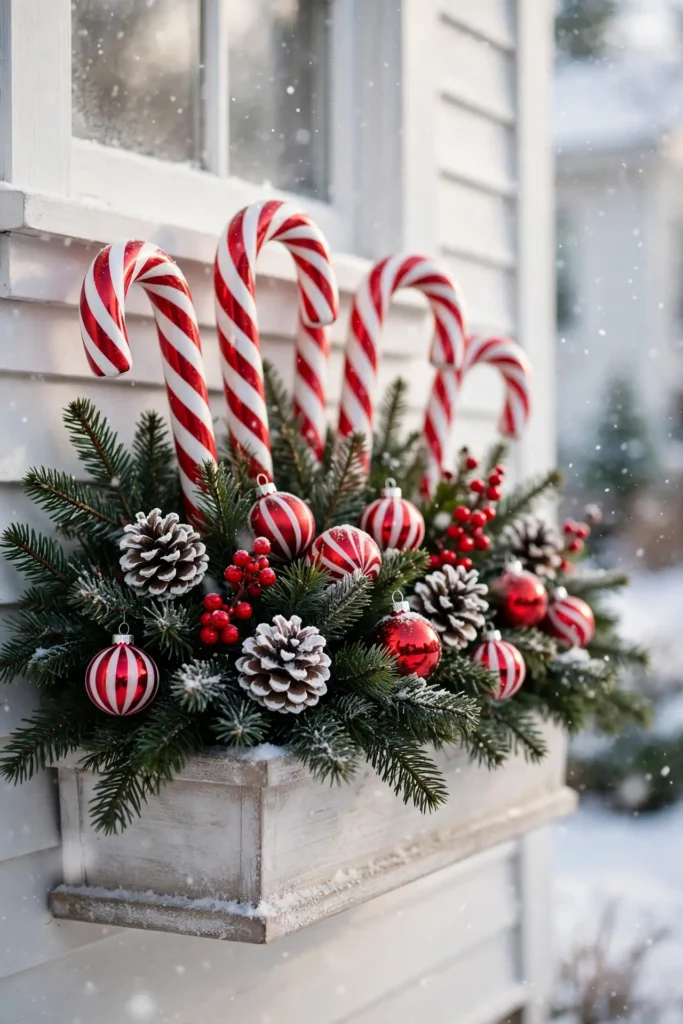
Red and white stripes are pure December joy: red and white ornaments, white-tipped pinecones, red berries, and a candy-stripe bow over a base of dark green. Add three oversized faux candy canes as the height at the back and kids will vote it the best box on the street. This is the most playful of the christmas window box designs, and it pops hardest against white or cream houses.
Try it: Keep the white elements truly white, not cream. Cream against red reads vintage; bright white against red reads peppermint.
19
The Woodland Box: Birch, Twigs and Burlap
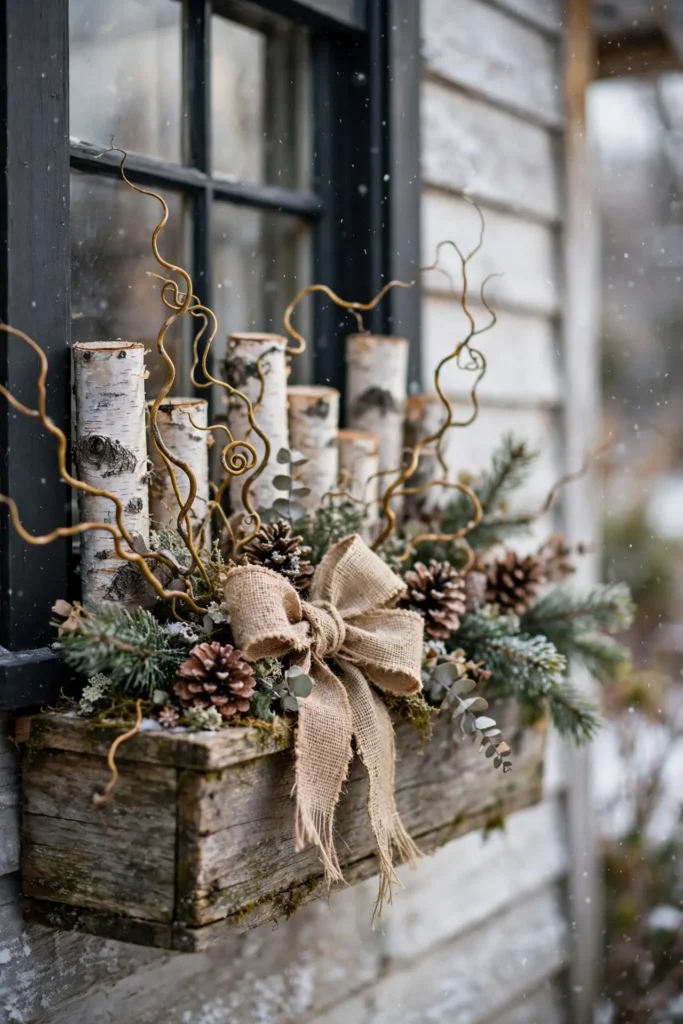
For rustic and farmhouse houses, build the box from the woods: short birch log rounds standing at the back, curly willow twigs for movement, pinecones, and a burlap bow. Skip the shine entirely; matte natural textures are the whole point. Most of it can be gathered free after the first fall storm drops branches in every yard.
Try it: Stand three birch rounds of different heights together like a tiny skyline. Odd heights look collected; equal heights look like fence posts.
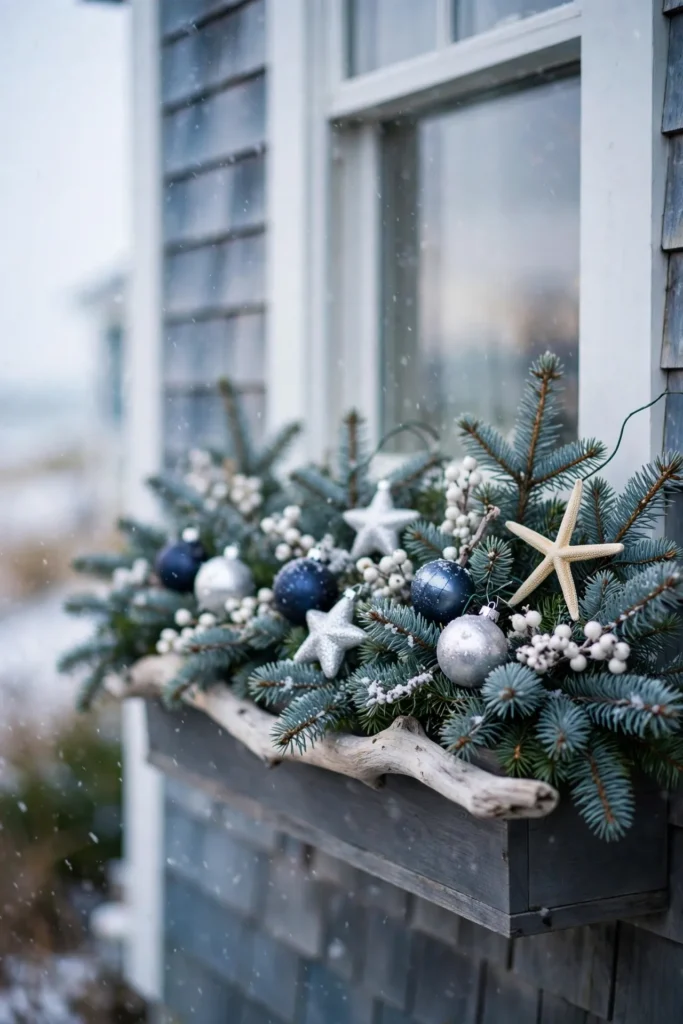
20
The Coastal Box: Driftwood and Blue
Beach houses deserve a christmas window box that speaks their language: blue and silver ornaments, white berries, a piece of driftwood laid along the front, and sand dollars or starfish wired in among the greens. The blue reads as winter sea rather than summer, especially paired with frosted cedar. Keep the greenery silvery (blue spruce, dusty miller) to hold the palette together.
Try it: Use navy and silver rather than turquoise. Deep blue stays wintry; bright aqua drifts back into summer.
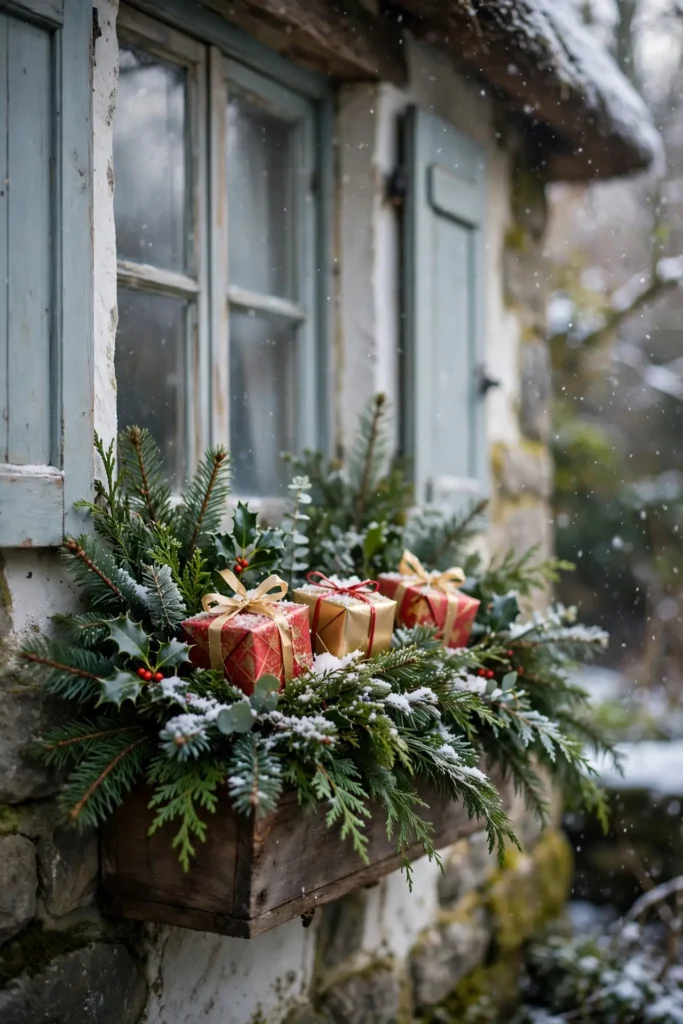
21
Presents in the Box
Fill the middle of the box with small wrapped gift boxes in your scheme’s colors, nestled between the greens like presents waiting under a tree. Wrap them in outdoor-safe materials: plastic-coated paper, fabric, or painted wooden blocks, since real gift paper dissolves in the first rain. Three boxes in graduated sizes, tied with real ribbon, cost almost nothing and read as pure celebration from the street.
Try it: Paint wooden craft blocks instead of wrapping boxes. Paint survives any weather, and the blocks store flat for next year.
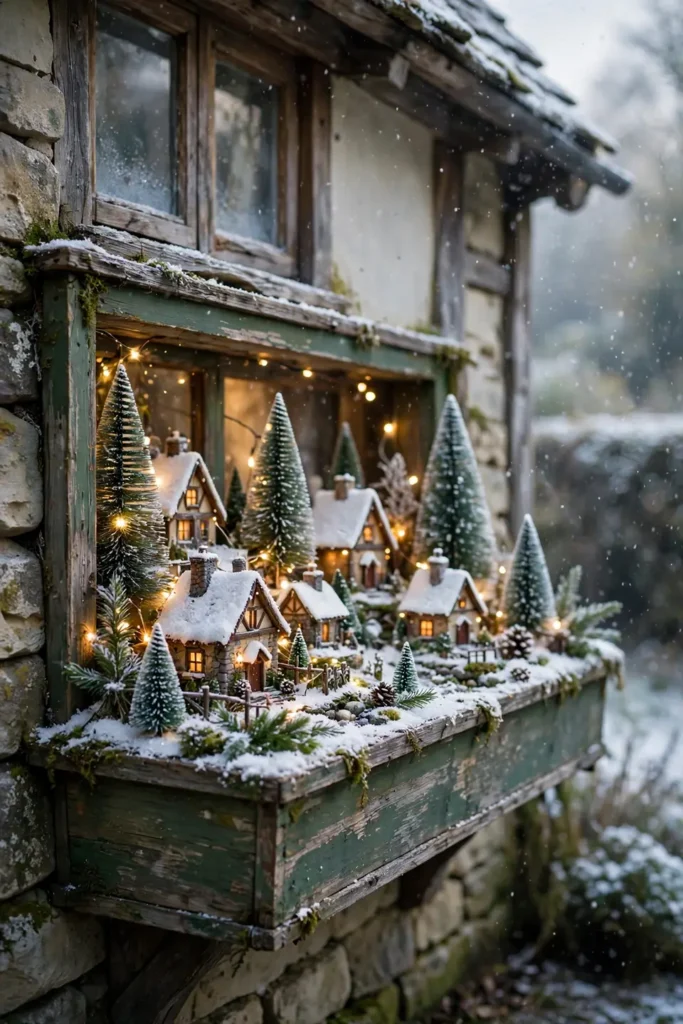
22
A Miniature Village in the Box
Turn one wide box into a tiny snow village: two or three small houses, bottle-brush trees, a dusting of fake snow, and warm light from a fairy strand behind the windows. It is the box children press their noses to, and it works best on a ground-floor window near the door where people pass close. Village houses from dollar stores keep the whole scene under $15.
Try it: Raise the back row of houses on a hidden foam block. Two levels of rooftops look like a real hillside village instead of a lineup.
23
The Fully Faux Box, Zero Maintenance
If watering, freshness, and January cleanup are not for you, build the whole box from quality faux greenery once and reuse it for five seasons or more. Good faux cedar and pine run $20 to $40 per box but pay for themselves by year two, and they look full on day one and day forty alike. Choose UV-stable stems so the green does not fade blue by February.
Try it: Mix one real element into the faux: fresh pinecones or real berry stems. One natural texture keeps the whole box from reading artificial up close.
24
Big and Bold for High Windows
A second-story window box is seen from 40 feet and below, so decorate for distance: double the bow size, choose the largest berries and ornaments you can find, and push the color contrast to maximum with red against deep green. Fine ribbon patterns and small ornaments simply vanish at that range. Lightweight faux materials also matter up high, both for installation safety and wind load.
Try it: Test from the sidewalk before you finish. If a detail cannot be seen from the street, it is weight and money wasted.
25
The Winter-Long Box (Beautiful Into February)
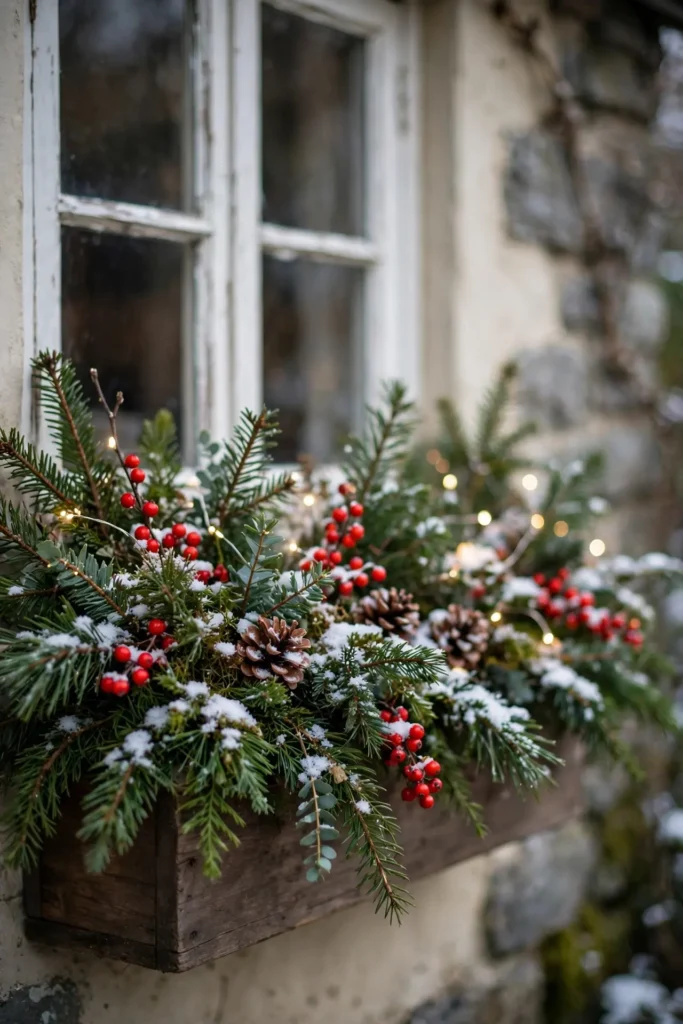
The smartest of all christmas window box ideas costs nothing extra: design the box so it converts. Build the base from plain evergreens, winterberries, pinecones, and white lights, then add the obviously-Christmas pieces (red bow, ornaments, candy canes) as removable layers. On January 2nd, pull the red layer out and what remains is a handsome winter box that carries your windows gracefully to spring.
Try it: Photograph the box at its Christmas peak, then again as a winter box. Next year you will rebuild both versions in half the time.
Pro tip: Stand across the street and squint at your finished box. Whatever you can still make out in the squint (bow, berries, one bright accent) is the design; everything else is filler. Spend your money on the parts that survive the squint test.
Three rules for christmas window boxes
- Layer back, middle, front: Height at the back, fullness in the middle, spill over the front edge. A box arranged in these three layers looks three times as full as the same materials spread in one flat row.
- Keep the soil moist, not soggy: Cut greens drink through their stems, so water the box weekly until the soil freezes solid. Check drainage holes stay open; a box that holds standing water splits when it freezes.
- Weatherproof and wire everything: Outdoor-rated lights and ribbon only, shatterproof ornaments only, and every loose piece wired or pinned. December wind audits every weak attachment.
After Christmas: the window box reset
- Strip the greens before they brown: Pull fresh cuttings in the first week of January and compost them. Faux arrangements get brushed off, boxed, and stored whole so next year is a five-minute reinstall.
- One labeled bin per box type: Store ornaments, bows, lanterns, and lights for the window boxes in a single bin marked “window boxes.” Finding everything in one place is the difference between decorating and excavating.
- Leave the living, mulch the roots: Living boxwood, spruce, and ivy stay in place; add 2 inches of mulch over the soil to buffer freeze-thaw cycles, and water once during any dry, above-freezing spell.
More ideas you’ll love: outdoor Christmas decor ideas, christmas yard decor ideas, christmas front porch ideas, christmas walkway decorating ideas and Christmas Decor.
Questions readers ask
What do you put in a christmas window box?
Start with evergreen cuttings (cedar, pine, and fir) as the base, then add winterberry or faux berry stems, pinecones, one bow, and a strand of battery fairy lights. That five-part formula covers the classic look; themed boxes swap the accents, not the formula.
How long do fresh evergreen window boxes last?
Cut evergreens last 4 to 6 weeks outdoors in cold weather, and longer where nights stay below freezing. Keep the soil moist until it freezes, and avoid placing boxes where afternoon sun bakes them, which can cut freshness to 2 to 3 weeks.
How much does decorating a window box for christmas cost?
Expect $10 to $40 per box with purchased greenery bundles, or nearly free if you trim your own trees and shrubs. Faux greenery costs $20 to $40 per box once and typically lasts five seasons, making it the cheapest option over time.
Can I use faux greenery for window box christmas decorations?
Yes, and it is the practical choice for high windows, vacation homes, and warm climates where cut greens dry out fast. Pick UV-stable stems with wired branches you can shape, and mix in real pinecones so the box reads natural up close.
What are the best christmas window box designs for a small window?
A slim box with one strong focal point works best: mixed greens, a cluster of berries, and a single bow, with trailing cedar softening the front edge. Skip mini trees and lanterns on small windows; they crowd a short box and blur together.
Do christmas window boxes work in very cold climates?
Yes, cold is actually their friend: cut greens stay fresh longest in freezing weather. Use shatterproof ornaments (glass can crack in deep cold), wire everything against wind, and water the soil before it freezes solid so stems can drink as long as possible.
How do I light xmas window boxes without an outdoor outlet?
Battery-powered fairy lights with a built-in timer are the simplest answer, and solar strands work where the box gets at least 5 hours of daylight. Both avoid cords across walkways, and timers mean the lights run themselves from dusk to midnight.
When should I put up and take down a christmas window box?
Put boxes up the weekend after Thanksgiving so the greens last through New Year without tiring. Take the Christmas-specific pieces down in the first week of January, or strip the red layer and keep the winter version up until spring bulbs arrive.
People Also Ask
What is the best greenery for a christmas window box?
A mix, not a single green: cedar for trailing spill, white pine for soft fullness, and fir or spruce for upright structure. The three textures together look layered and professional, while any one alone looks flat.
What are some ideas for winter window boxes after Christmas?
Remove the red and obviously festive pieces and keep the evergreen base, winterberries, pinecones, and white lights. Add birch rounds or red twig dogwood for fresh interest, and the box reads as intentional winter decor through February.
How do I make a christmas window box look full?
Use more greenery than looks reasonable, stems pushed in at angles in three layers, and fill every visible gap with a pinecone or berry cluster. A standard 36-inch box takes about 25 to 30 cut stems to look genuinely full.
loved these ideas? ✿
Save this guide for later
Pin it to your board so it’s there when you’re ready to recreate it.

Curated by
Hey! I'm Sanaullah — visual curator and content creator. I search, curate, and test the best aesthetic ideas across Pinterest so you can easily transform your living space, style daily outfits, and try simple creative DIYs without the overwhelm.