
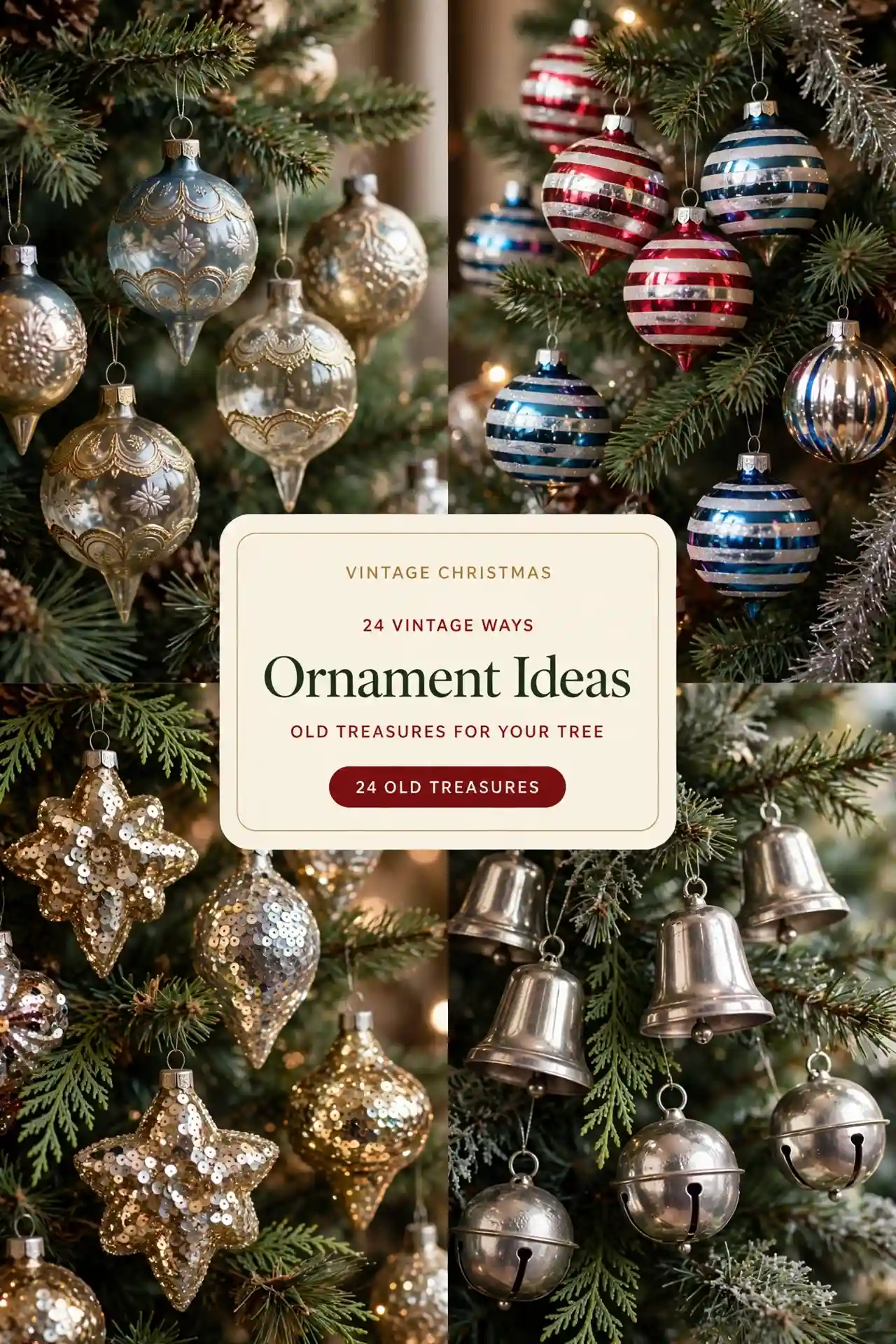
You do not need a huge collection or a big budget to make your tree look like it has been decorated for generations. Most vintage christmas ornament ideas fail for the same reason: they mix every decade at once, so the tree looks like a jumble sale instead of a story. This list works the other way around. These 24 vintage christmas ornaments are grouped by era and look, from Victorian glass and beaded trims to mid-century Shiny Brites, retro sequins, and heirloom-style pieces you make to keep, so you can pick one era for the whole tree or mix two that sit well together. Whether you are hunting antique christmas ornaments at estate sales, dressing a tree with vintage christmas tree decorations you already own, or learning how to make vintage christmas ornaments yourself, every idea here tells you what to look for, what it costs, and how to hang it safely.
Quick Idea Summary
- The key takeaway: Era is what makes a vintage tree read as vintage. One decade, one palette, and one kind of glass repeated across the tree looks far older and more intentional than twenty unrelated old things.
- The detail most people miss: The cap and the hook tell the age. A brass cap with a wire loop, a cardboard box with tissue dividers, or a faded maker mark is worth more as proof of age than a shiny finish, so check the top of the ornament before you buy it.
- What it costs or how long it takes: Thrifted vintage style christmas ornaments often cost $2 to $8 each, genuine mid-century glass runs $5 to $25 a box, and the makes here take 20 minutes to an hour. Nothing here needs a specialist tool, and nothing needs to be bought new at full price.
At a glance
| Group | Ideas | Look | Best for |
|---|---|---|---|
| Victorian | 01-06 | Painted glass, beads, lace, dried fruit | A candlelit, formal tree |
| Mid-century | 07-12 | Shiny glass, pastels, reflectors, tinsel | A bright 1950s tree |
| Retro | 13-18 | Sequins, satin, felt, glitter houses | A playful, colourful tree |
| Heirloom-style | 19-24 | Embroidery, buttons, lace, silver bells | A tree you add to every year |
Victorian
01
Hand-Painted Victorian Glass Baubles
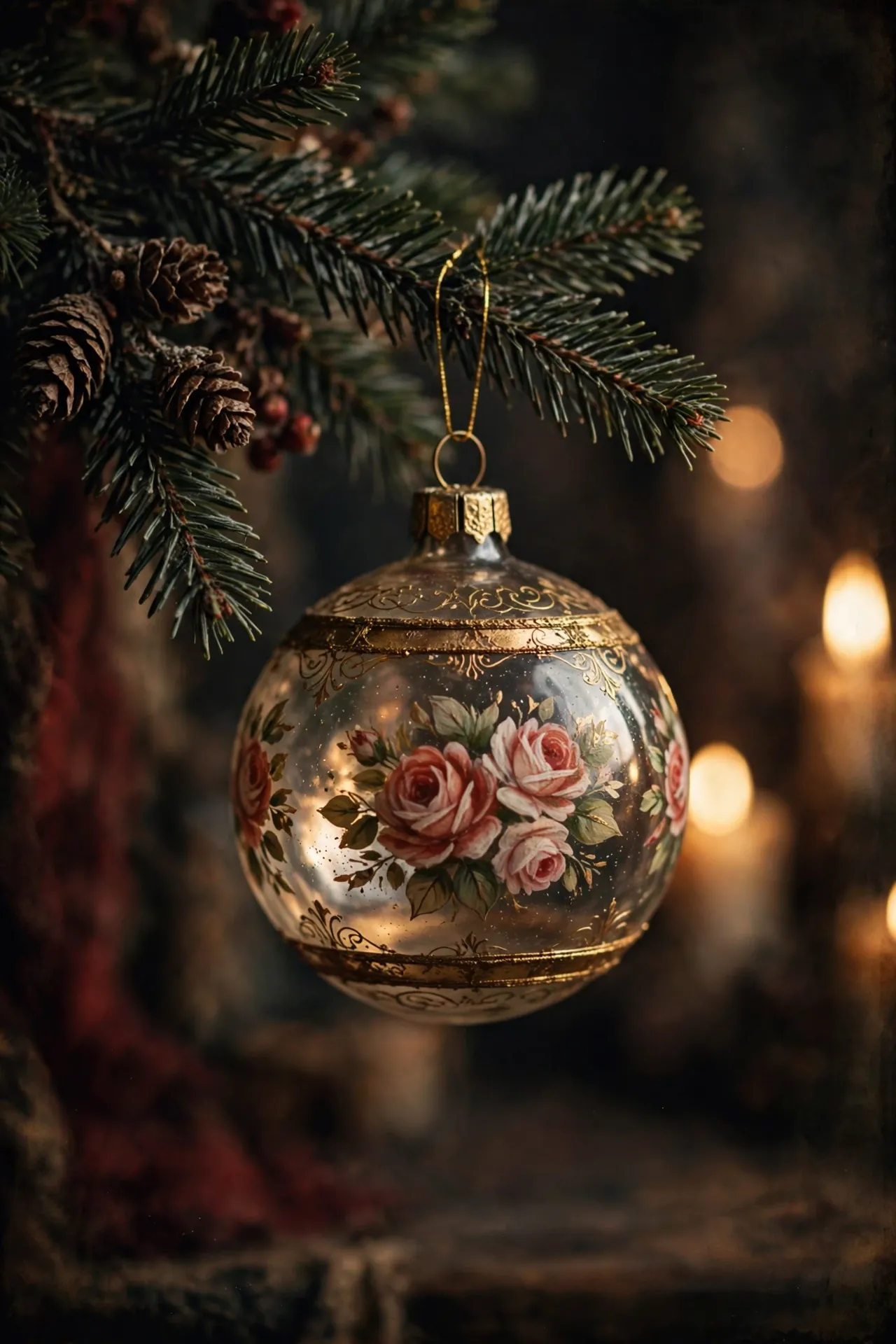
Hand-painted Victorian glass baubles are the classic image of vintage christmas decorations: thin mouth-blown glass, painted by hand with roses, birds, or winter scenes, and finished with a small brass cap. They are light, fragile, and best hung high on the tree where hands and pets cannot reach them, and a set of six in a tissue-lined box is the easiest way to start a collection. Look for paint that shows tiny brush marks and slight unevenness, because perfectly even printing usually means a modern copy.
Try it: Hang painted glass on the inner branches, not the tips, and use short wire hooks rather than string. The inner branch holds the weight, and the bauble still catches the light through the outer branches.

02
Mercury Glass Teardrop Ornaments
Mercury glass teardrops get their silvery, mottled shine from a double-walled glass technique that looks like old silver, and they suit Victorian trees because the shape is long and elegant rather than round. They were made to catch candlelight, so they still do their best work near warm white lights rather than bright multicolour strands. Buy them in mixed silver and gold if you can, because a single colour reads flat on a green tree.
Try it: Pair a mercury teardrop with a plain matte bauble in the same colour. The matte ball stops the shine from looking noisy, and the teardrop still reads as the special piece.
03
Beaded Victorian Fringe Baubles
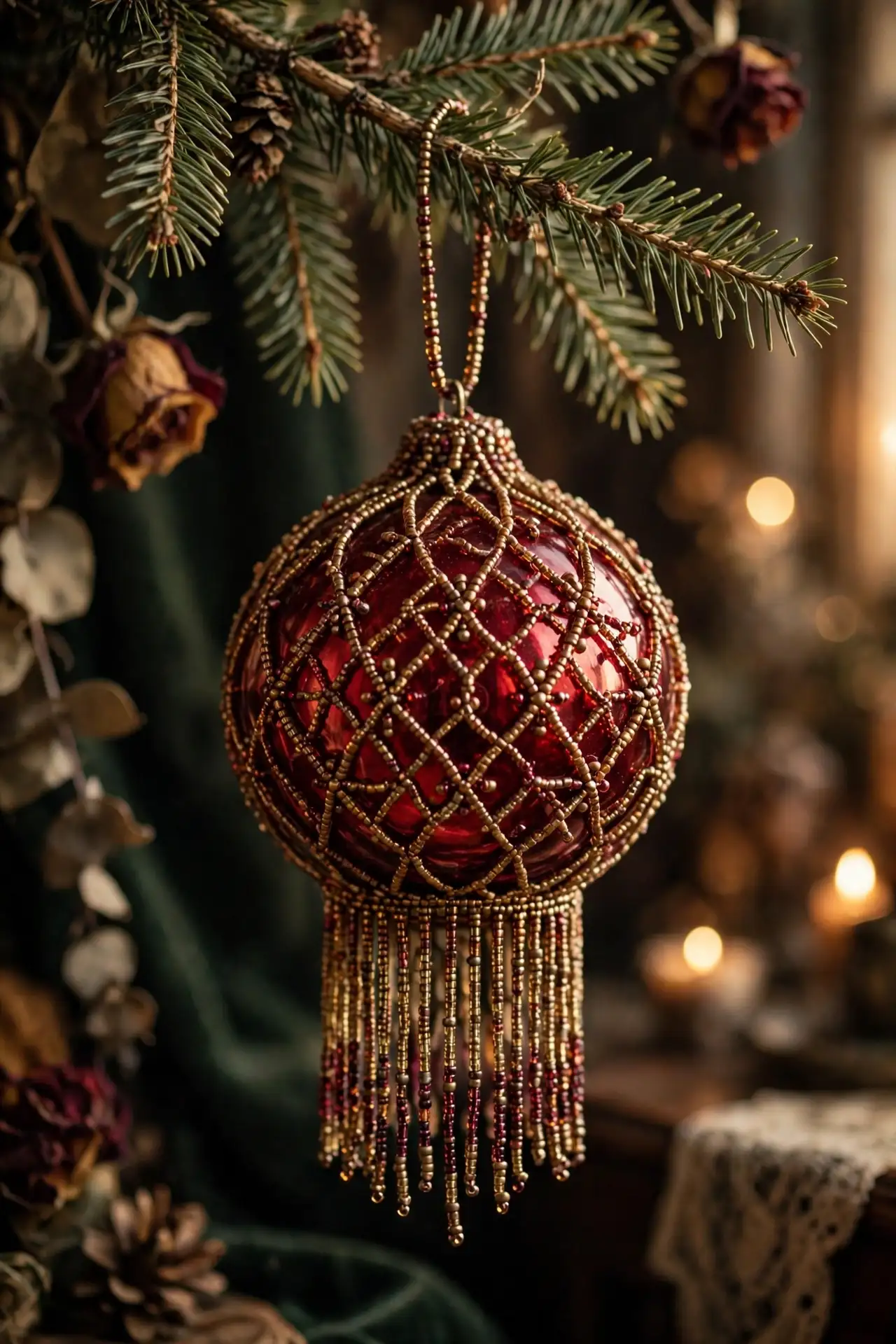
Beaded Victorian fringe baubles are glass balls wrapped in tiny seed beads and finished with a fringe of beads at the bottom, and they add texture that plain glass cannot give. They are heavier than plain baubles, so they belong on sturdy middle branches, and they look best in deep red, gold, and cream rather than bright modern colours. If the fringe is tangled, do not pull it straight; lay the ornament flat and comb the beads gently with your fingers.
Try it: Use three beaded baubles only, spaced evenly around the tree, and let the rest of the tree stay plain. Three is enough to set the Victorian tone without turning the tree into a bead shop.
04
Victorian Paper Scrap Angels
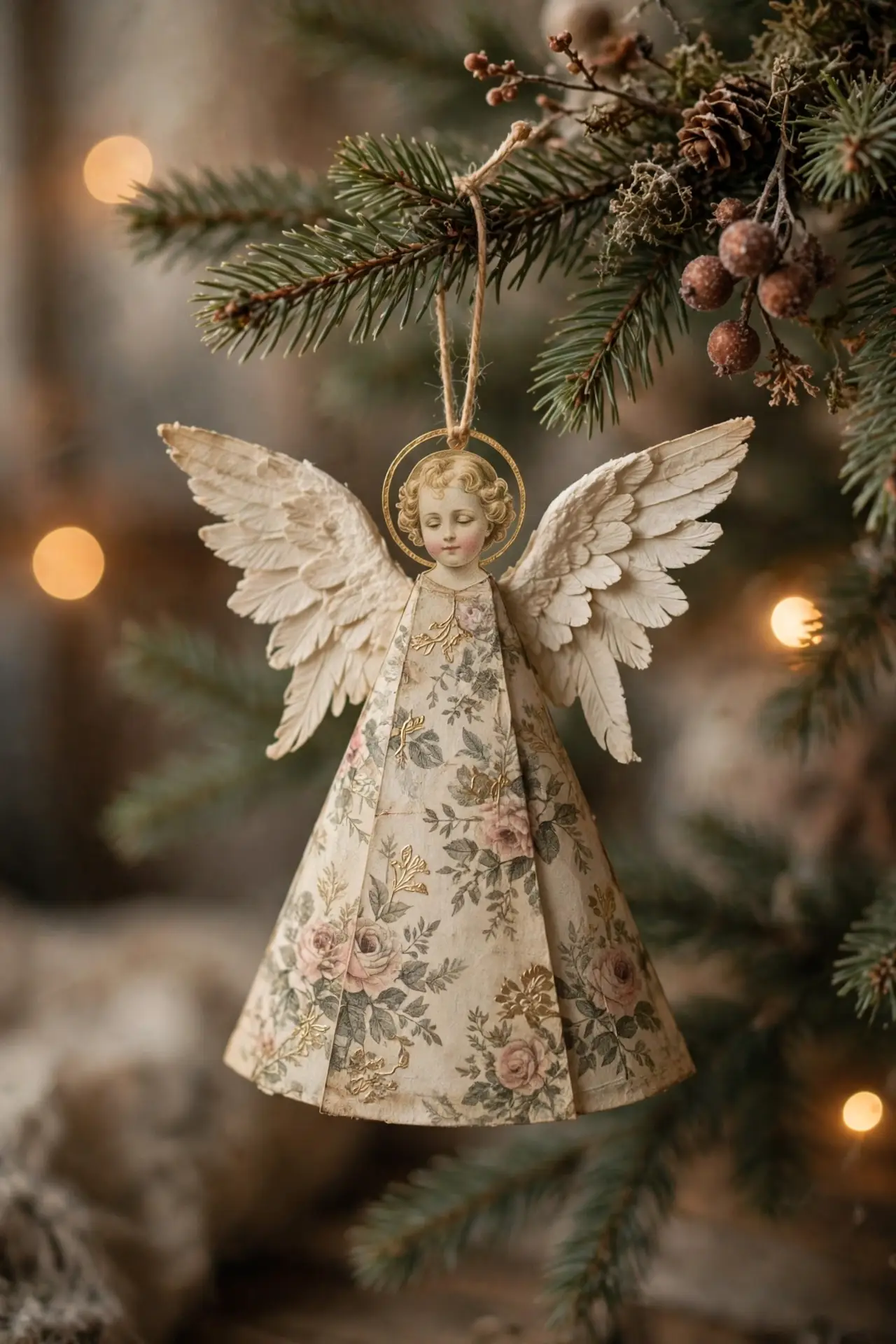
Victorian paper scrap angels are made from printed paper scraps, the embossed pictures Victorians pasted into albums, folded into a simple angel shape with a paper cone dress and a small face. They cost almost nothing, they weigh nothing, and they are the easiest way to add a genuinely Victorian shape to a tree that is otherwise all glass. Print your scraps on matte card, not glossy paper, because gloss catches the light and breaks the old-paper look.
Try it: Make the angel dress from a single sheet of music paper or old book paper, and keep the wings plain cream. The contrast between the printed dress and the plain wings is what makes the angel read as Victorian rather than crafty.
05
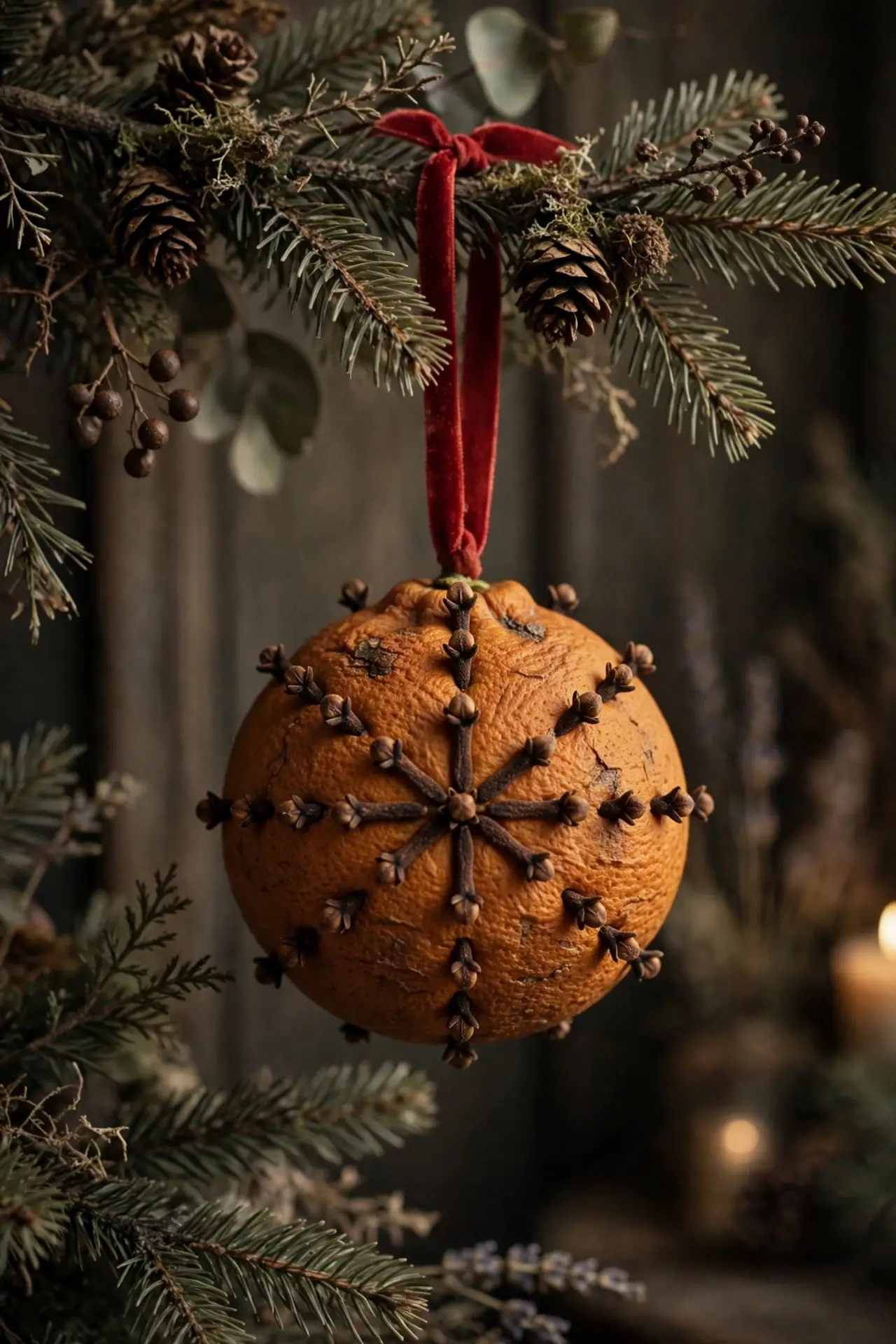
Dried Fruit and Spice Pomanders
Dried fruit and spice pomanders are whole oranges studded with cloves and hung by a ribbon, a Victorian decoration that smells as good as it looks and costs very little. They are not glass, so they are safe on low branches, and they last the whole season if you dry them fully before you hang them. Stud the cloves in a simple pattern, a star or a spiral, rather than covering the whole orange, because a pattern reads as decoration and a covered orange reads as a kitchen project.
Try it: Dry the pomander for a week on a rack before hanging, and hang it away from direct heat. A fully dried pomander stays firm and fragrant; a damp one softens and drops cloves on the carpet.
06
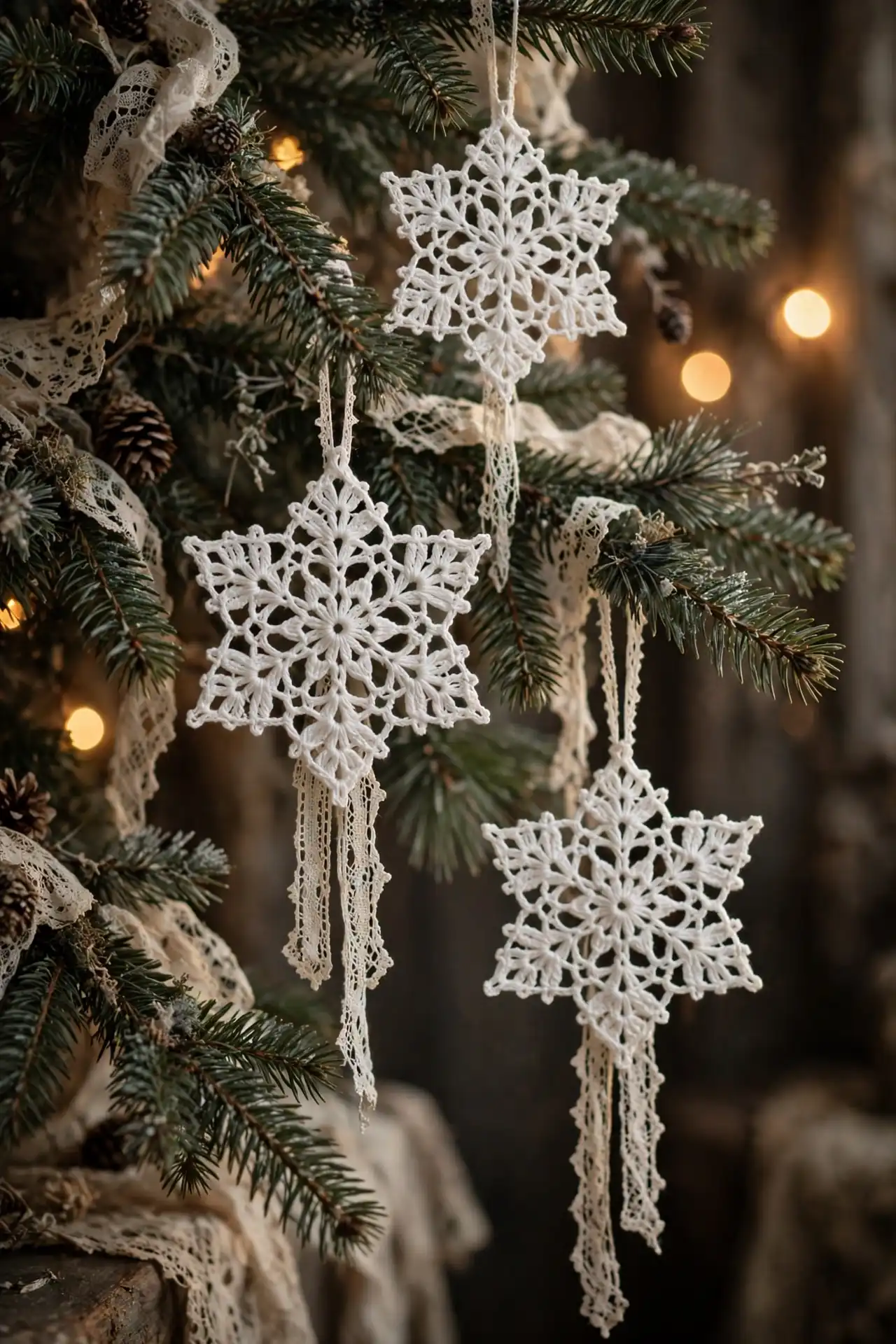
Victorian Crochet Snowflake Ornaments
Victorian crochet snowflakes are small, stiffened cotton snowflakes in white or cream, and they are the quietest ornament on this list in the best way: they soften a tree full of shiny glass without adding another colour. They weigh almost nothing, so they can hang on the finest tips, and a set of twelve in slightly different patterns looks far more expensive than it is. Stiffen them with a light starch spray and press them flat while they dry, or they curl and look limp on the tree.
Try it: Hang crochet snowflakes on the outer tips and glass baubles deeper inside. The white tips frame the tree, and the glass still glows through the gaps.
Mid-century
07
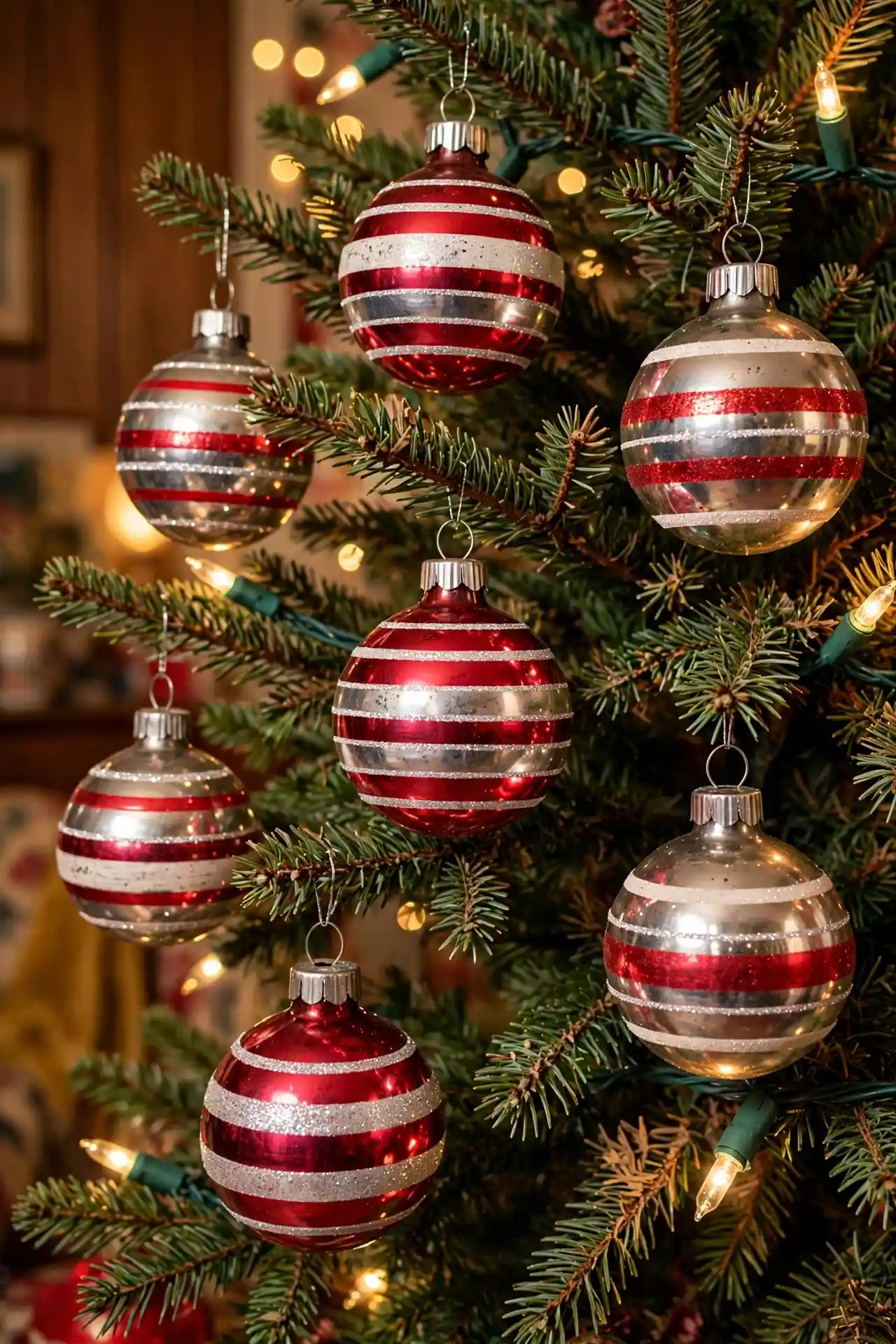
Shiny Brite Striped Glass Baubles
Shiny Brite striped glass baubles are the mid-century icon: American-made from the 1940s through the 1960s, with hand-painted stripes, stencilled snowflakes, and reflector indent finishes that catch the light in a way modern ornaments cannot match. Hunt them at estate sales, where boxes of twelve often sell for $15 to $25, and check the cap, because the original brass cap with a wire loop is the surest sign of a real one. Hang them in one colour family, red and silver or blue and gold, rather than every colour at once.
Try it: Put one striped Shiny Brite at eye level on each side of the tree and fill the rest of the tree with plain glass in the same colours. The eye-level pieces carry the vintage story, and the plain balls keep the tree from looking busy.
08
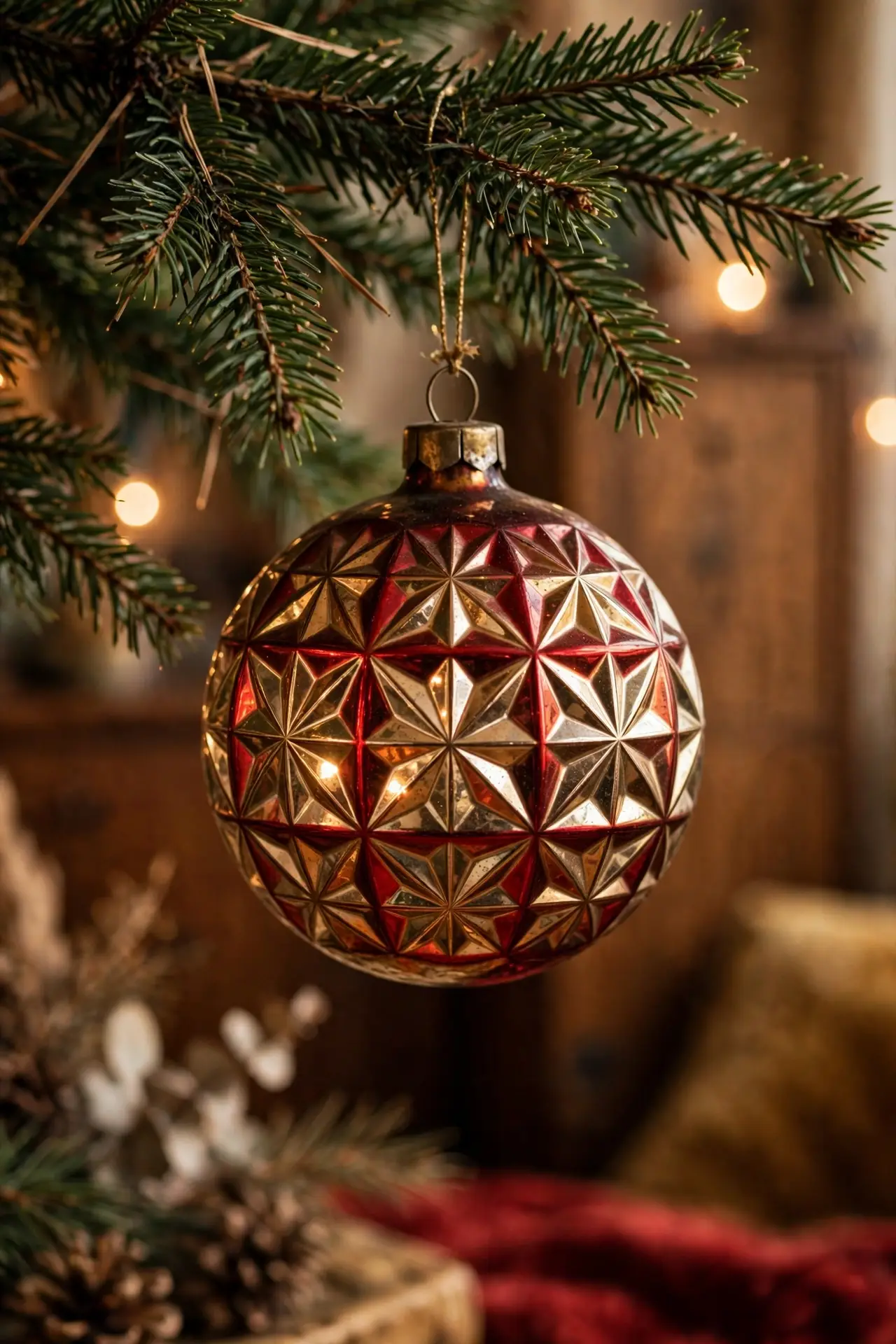
Reflector Indent Ornaments
Reflector indent ornaments are glass baubles with a pressed dent on each side that reflects the lights back in a starburst pattern, and they are the most light-hungry ornament on a mid-century tree. They need warm white or clear lights close by to work, because coloured lights wash out the reflection, and they look best hung where a light sits just behind them. If you only buy one kind of mid-century glass, buy these, because nothing else on the tree moves light the same way.
Try it: Hang reflector indents in pairs, one on each side of a light strand, so the reflections face each other across the branch. Paired indents double the sparkle without doubling the number of ornaments.
09
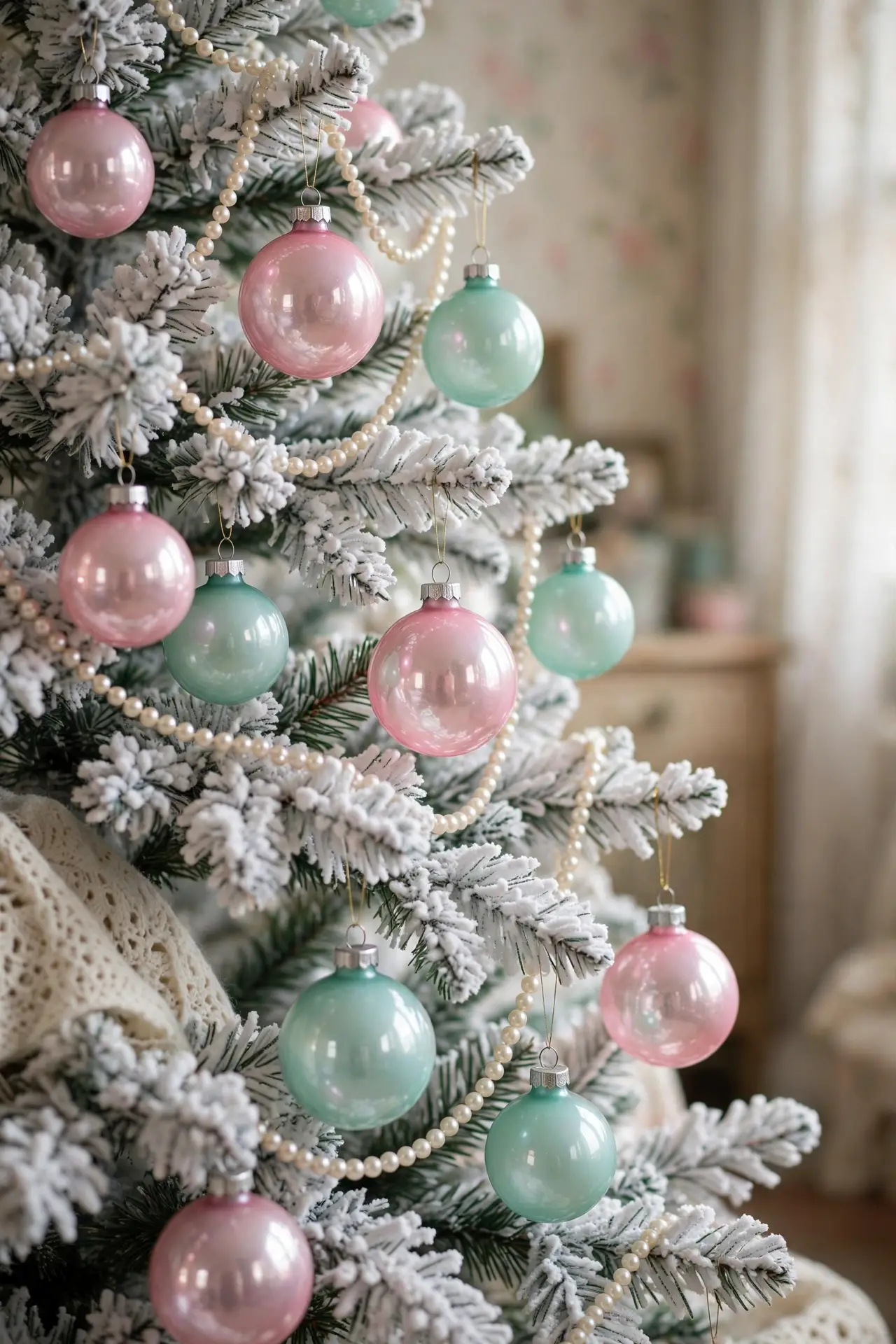
Mid-Century Pastel Glass Baubles
Mid-century pastel glass baubles in pink, mint, and powder blue are pure 1950s department store, and they are the easiest way to make a vintage tree feel soft rather than formal. They suit white or flocked trees best, because the pastels disappear against a dark green tree, and they pair with pearl garlands and a pink star topper for the full retro effect. Buy them in sets, because single pastels look accidental and a set looks like a planned palette.
Try it: Keep pastels to the top third of the tree and use deeper colours below. The pale top reads like snow and light, and the tree does not look washed out from the floor.

10
Atomic Starburst Glass Ornaments
Atomic starburst glass ornaments are teardrops and balls painted with starbursts, boomerangs, and atomic-age lines, and they are the most graphic ornament on this list. They were made for trees that also carried aluminium branches and colour wheels, so they still look best on a tree with a few metallic touches rather than a fully natural one. Use them sparingly, one or two per branch cluster, because a whole tree of starbursts turns into a pattern book.
Try it: Hang one starburst ornament next to a plain silver ball. The plain ball acts as a pause, and the starburst reads as a designed accent rather than a novelty.
11
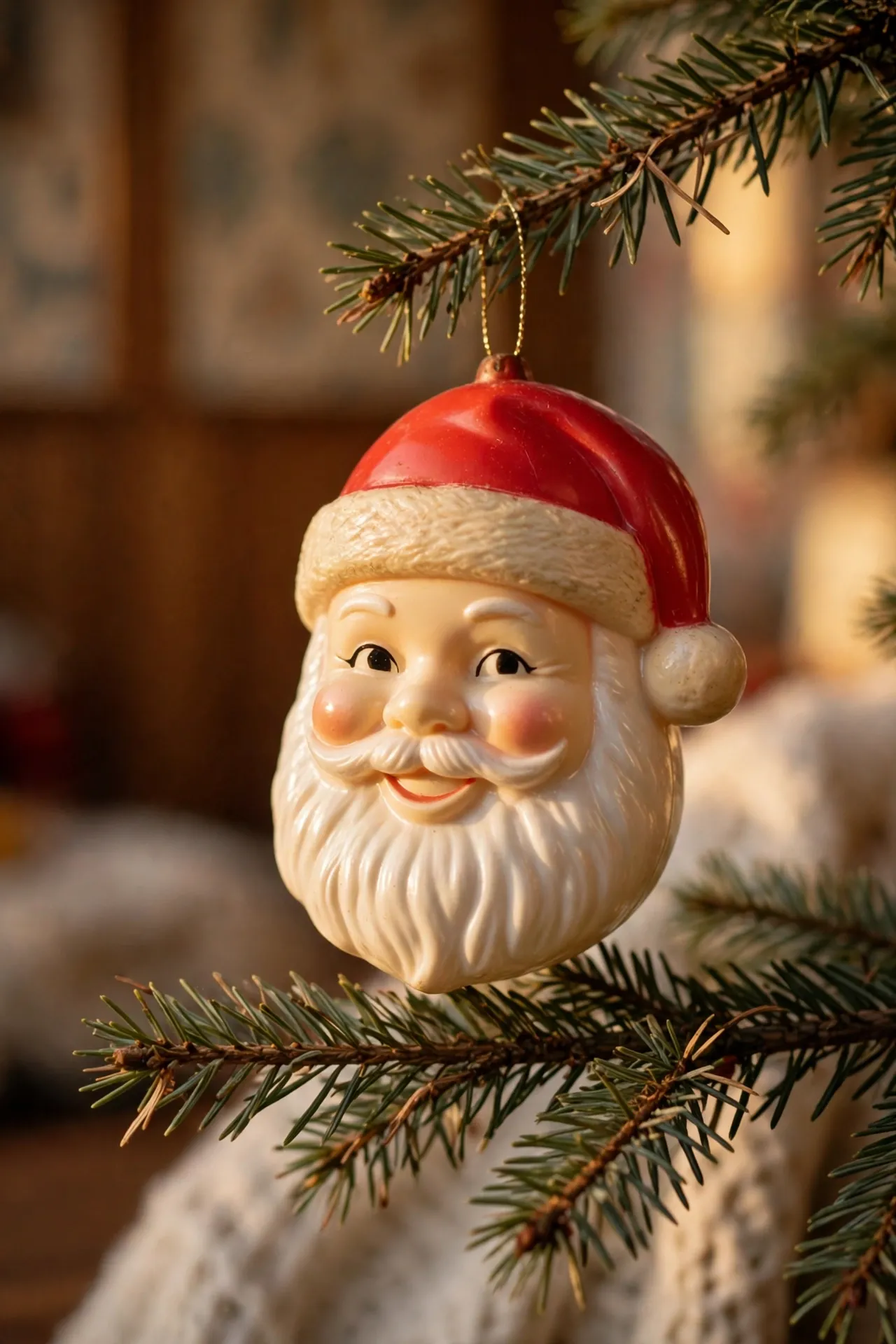
Mid-Century Plastic Santa Face Ornaments
Mid-century plastic Santa face ornaments, the winking Santa mugs and faces that were gas station giveaways in the 1960s, are now collectibles at $8 to $15 each, and they are the friendliest ornament on a retro tree. They are plastic, so they are safe on low branches and around children, and a row of Santas on the lower branches gives the tree a playful base that glass cannot give. Look for faces with clear paint and intact noses, because chipped paint is the first thing the eye finds.
Try it: Hang Santa faces on the bottom third only, facing outward, and keep the upper tree in glass. The tree reads as grown-up on top and fun at child height, which is exactly how a family tree should work.
12
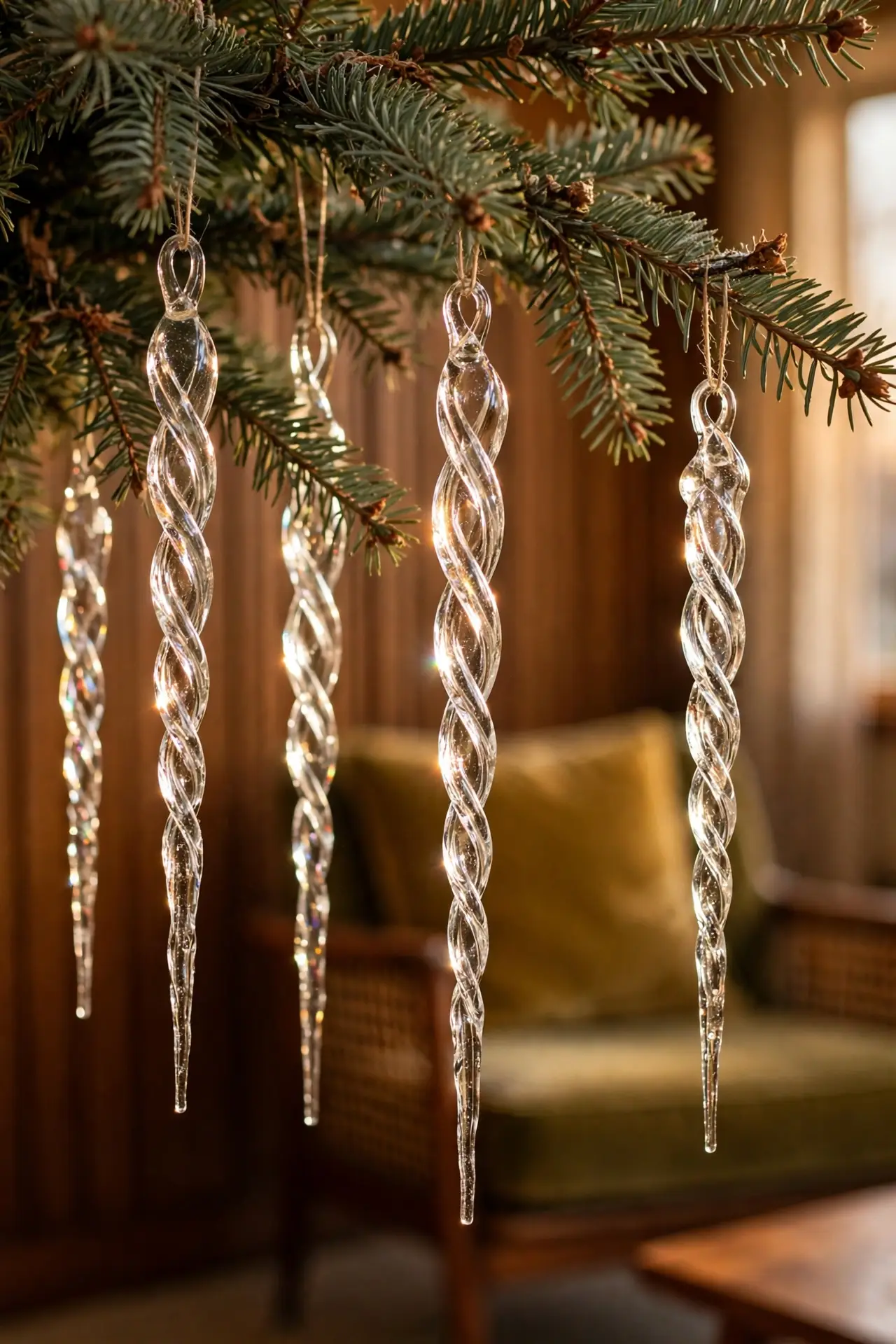
Glass Icicle Ornaments
Glass icicle ornaments are long, twisted glass drops that hang from the branch tips like frozen water, and they were a mid-century favourite because they add length and movement to a tree that is otherwise all round baubles. They are fragile and they tangle easily, so store them in individual tissue wraps and hang them last, after the baubles are placed. Use them on the outer tips only, where they can hang straight down without catching on other ornaments.
Try it: Hang icicles in groups of three at different lengths on the same branch tip. A single icicle looks lost, but three at staggered lengths look like a frozen drip.
Retro

13
Retro Glitter Styrofoam Baubles
Retro glitter styrofoam baubles are lightweight balls covered in fine glitter in red, gold, green, and silver, and they are the easiest retro ornament to make in bulk. They weigh nothing, so they can hang anywhere, and they are the best choice for a tree that children will decorate, because a dropped glitter ball does not break. Use fine glitter, not chunky glitter, because fine glitter reads as vintage sparkle and chunky glitter reads as a school project.
Try it: Make glitter baubles in two colours only, for example red and gold, and use plain matte baubles for the rest of the tree. Two glitter colours look retro; five look like a craft box exploded.
14
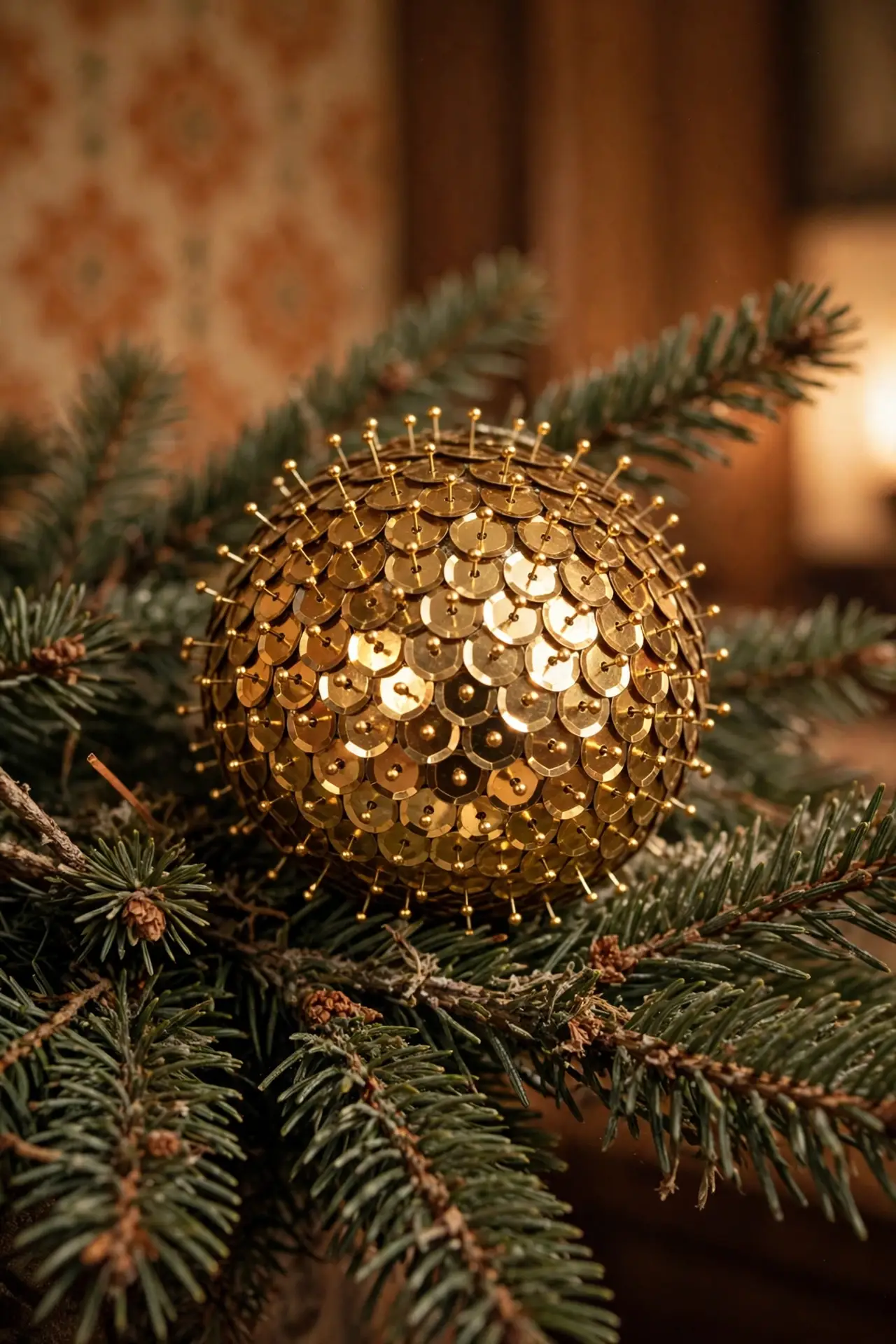
Sequin and Pin Styrofoam Ornaments
Sequin and pin styrofoam ornaments are the 1970s classic: sequins pinned in overlapping rows onto a foam ball until the whole ball shimmers, with a ribbon loop for hanging. They take about an hour each, so they are a good evening project rather than a last-minute make, and they last for years if you press each pin fully in. Work in rows from the top down, overlapping each row by half a sequin, or gaps will show and the ball will look patchy.
Try it: Use one sequin colour per ball and vary the colour across balls, rather than mixing colours on one ball. Single-colour sequin balls look like vintage shop pieces; mixed-colour ones look homemade in the wrong way.
15
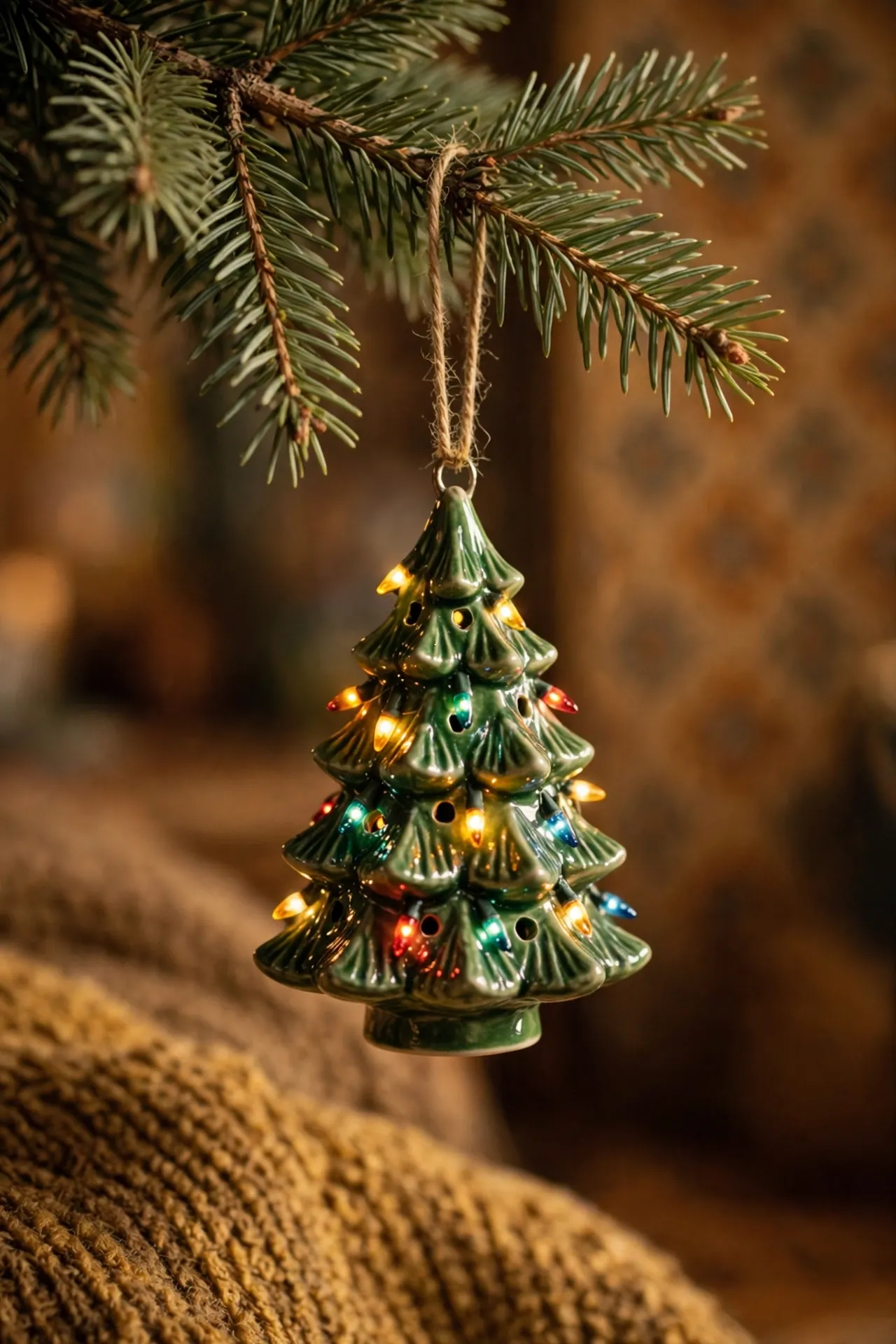
Mini Ceramic Tree Ornaments
Mini ceramic tree ornaments are tiny versions of the ceramic Christmas trees made in hobby classes in the 1970s, complete with tiny plastic lights, and they hang from the branches like little trees on a tree. Originals in green or white sell for $40 to $120 depending on size, but small reproductions are widely available and safe to hang. Place them where they will not be hidden, on outer branches at eye level, because a ceramic tree tucked inside the branches just looks like a green lump.
Try it: Hang mini ceramic trees in a cluster of three on one side of the tree, not spread all over it. A cluster reads as a deliberate vintage vignette; scattered ones read as random.

16
Putz House Ornaments
Putz house ornaments are tiny cardboard and glitter houses from 1930s to 1950s Germany and Japan, with cellophane windows that glow when light sits behind them, and they are the most charming retro ornament you can hang. They are light but fragile, so hang them on sturdy branches and keep them away from the lowest branches where they can be knocked. Arrange them in a small group on one branch, with bottle brush trees if you have them, rather than spreading one house per branch.
Try it: Put a warm white fairy light just behind the Putz houses, not inside them. The light through the cellophane windows makes the houses glow without any fire risk.
17
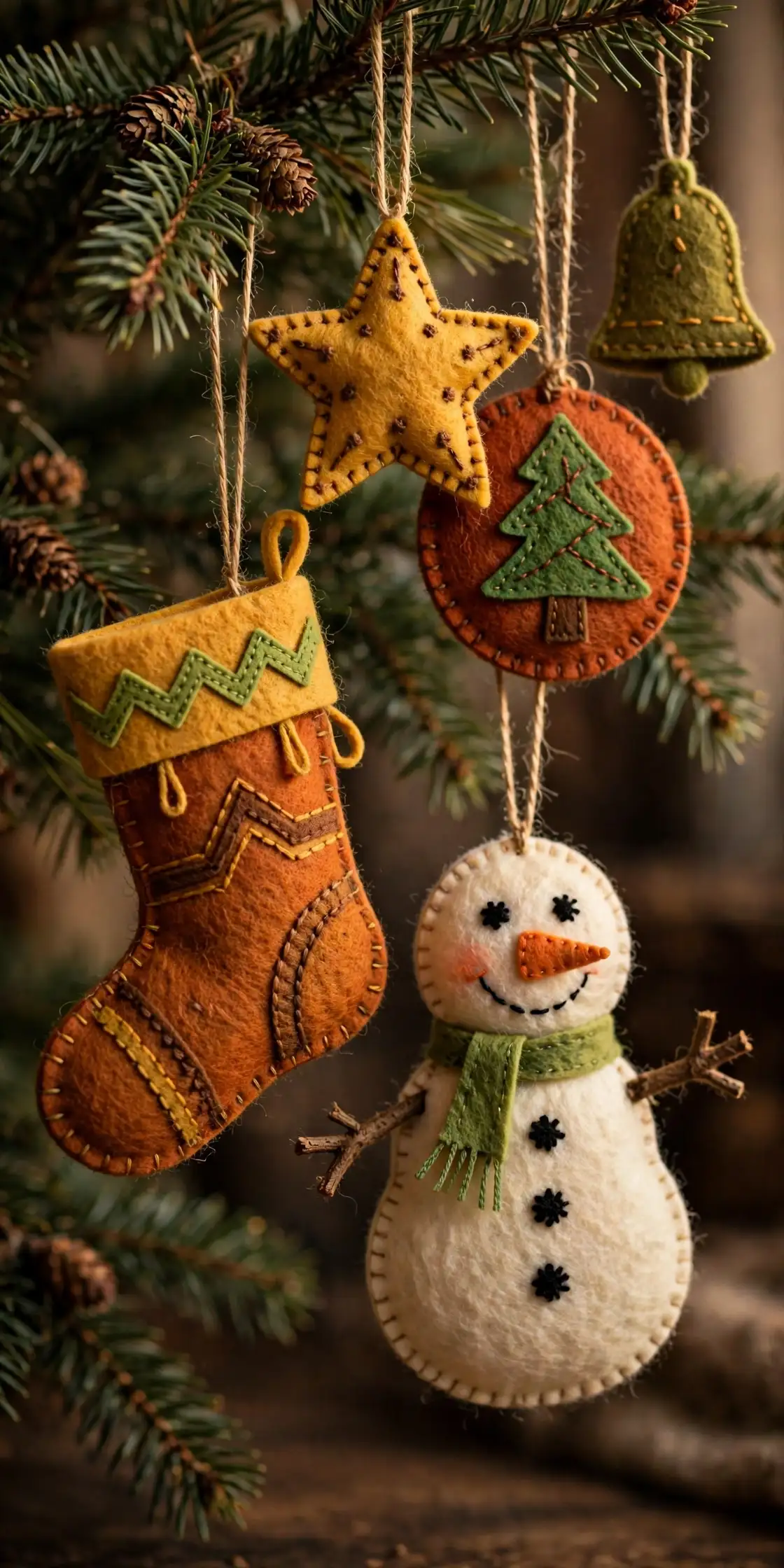
Retro Felt Applique Ornaments
Retro felt applique ornaments are flat felt shapes, stockings, trees, Santas, and snowmen, with smaller felt pieces stitched or glued on top, in the bold colours of 1970s craft books. They are soft, safe, and child-friendly, and they are the best retro choice for a tree that will be touched a lot. Cut the base shape from thick felt and the details from thin felt, because thin felt bases flop and thick felt details look clumsy.
Try it: Use a single stitch colour, cream or gold, for all the applique details on a set. One stitch colour ties the whole set together even when the shapes are different.

18
Beaded Satin Ball Ornaments
Beaded satin ball ornaments are satin-covered balls with beaded patterns glued or pinned in swirls and stars, and they were a staple of 1980s trees because they add softness that glass cannot give. They are light and unbreakable, so they suit low branches and family trees, and they look best in burgundy, gold, and cream rather than bright satin colours. Keep the bead pattern simple, one swirl or one star per ball, because a crowded bead pattern disappears on satin from more than a few feet away.
Try it: Alternate one beaded satin ball with one plain glass ball along a branch. The satin softens the glass, and the glass stops the satin from looking dull.
Heirloom-style

19
Hand-Embroidered Hoop Ornaments
Hand-embroidered hoop ornaments are small wooden hoops with linen stretched across them and a simple stitched design, a snowflake, a star, or a name, and they are the heirloom piece most people actually keep and pass on. They take an evening each, but they last for decades, and a new hoop added every year builds a family record on the tree. Use linen, not cotton, because linen holds its shape in the hoop and cotton sags over time.
Try it: Stitch the year in one corner of every hoop, even if it feels plain now. In ten years the dates are the whole point, and a hoop without a date is just a nice stitch.

20
Vintage Button Ornaments
Vintage button ornaments are made from old buttons, mother-of-pearl, Bakelite, and covered buttons, glued or wired into a ball or a small wreath shape, and they turn a button tin into a tree decoration with a real history. They are heavier than they look, so wire them rather than gluing them if the ornament will be handled, and keep the colour palette to cream, gold, and one accent colour. Sort the buttons by size before you start, because a mix of tiny and huge buttons on one ball looks accidental.
Try it: Use one grandmother’s button tin for the whole set, not buttons bought new. The mix of ages and materials in a real tin is what makes the ornament read as heirloom rather than craft.

21
Heirloom Lace-Wrapped Baubles
Heirloom lace-wrapped baubles are plain glass or foam balls wrapped in a piece of old lace or a lace doily, tied at the top with a narrow ribbon, and they are the softest heirloom ornament on this list. They suit cream and gold trees, and they are the best use for a lace doily that is too worn for the table but too pretty to throw away. Wrap the lace snugly and tie it firmly, because loose lace slides and bunches at the bottom of the ball.
Try it: Use lace in one tone, ivory, across the whole set, and vary the bauble colour underneath. The ivory lace unifies the set while the colours underneath give each ball its own character.

22
Mini Teacup Ornaments
Mini teacup ornaments are tiny teacups and saucers, real vintage ones or good reproductions, hung by a ribbon through the handle, and they are the most unexpected heirloom ornament on a tree. They are heavier than baubles, so hang them on strong middle branches, and they suit a tree that already has a tea-party or storybook feel. Fill each cup with a sprig of pine or a tiny pinecone for display, but keep the filling light so the cup does not tip forward.
Try it: Hang teacups in a vertical line down one side of the tree, like a tea set on display. A line reads as a collection; scattered teacups read as lost crockery.

23
Heirloom Silver Bell Ornaments
Heirloom silver bell ornaments are small silver or silver-plated bells with a ribbon loop, and they are the only ornament on this list that also makes a sound, which is part of their charm and part of their risk. They suit a formal tree, they look best in silver and cream, and they should hang where they will not be knocked constantly, because a bell that rings every time someone passes the tree stops being charming fast. Polish them once a season, not every week, because over-polishing wears the plating thin.
Try it: Hang silver bells on the inner branches, where the branches muffle the ring slightly. You still hear a soft chime when the tree is touched, but the bells do not ring at every draught.
24
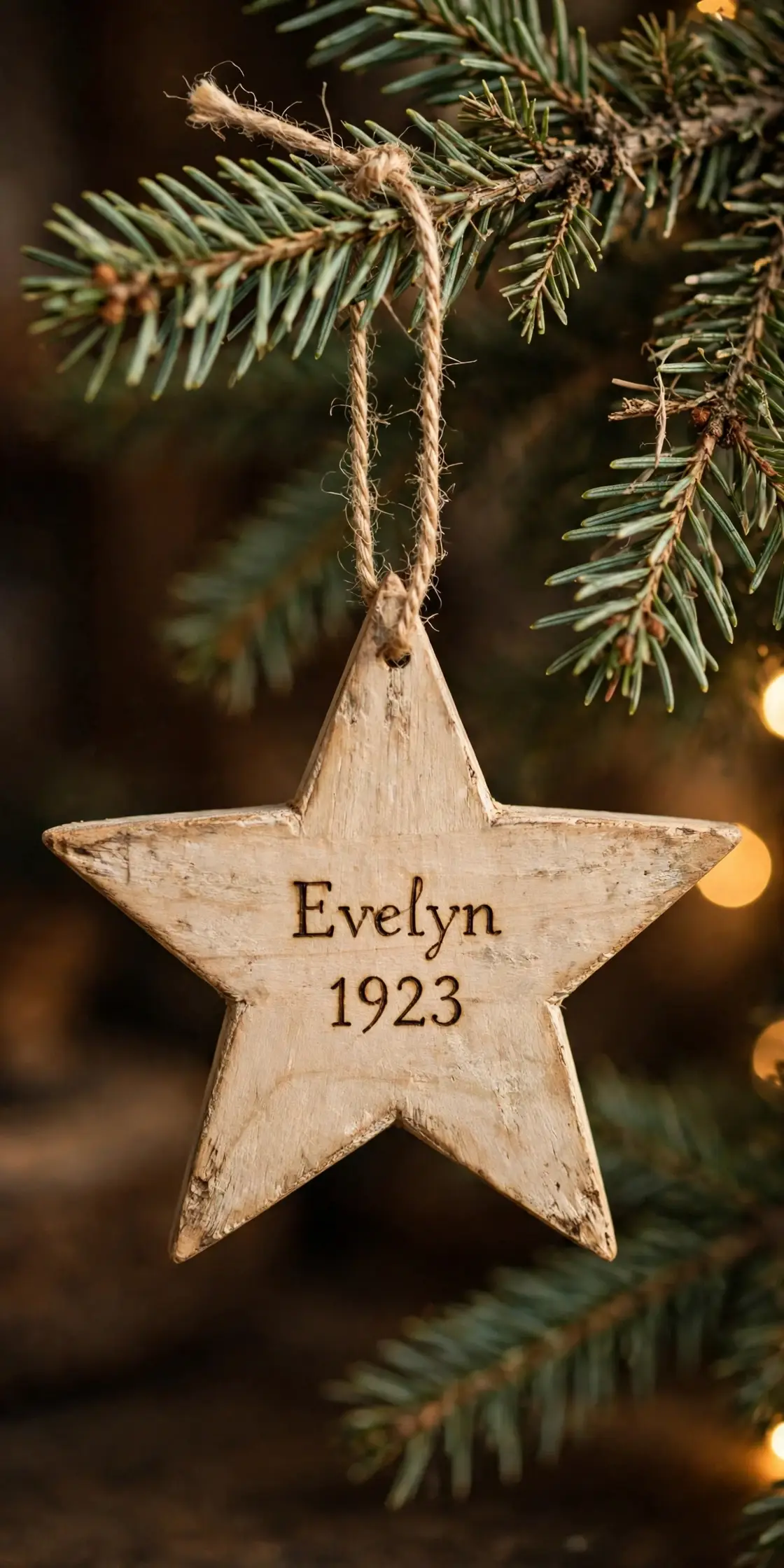
Engraved Wooden Name Ornaments
Engraved wooden name ornaments are flat wooden discs or stars with a name and a year engraved or burned into them, and they are the heirloom ornament that grows with the family, one new name each year. They are light, unbreakable, and safe on any branch, and they suit any tree because the wood tone sits quietly next to glass, felt, and lace. Order or burn the engraving before you paint or stain the wood, because engraving after finishing tears the finish around the letters.
Try it: Keep the same wood, the same font, and the same size for every name ornament you add. A matched set across years looks like a family tradition; mixed sizes and fonts look like separate purchases.
Pro tip: If you buy vintage glass, buy the box, not the single ornament. A box with its dividers, tissue, and label proves the age, protects the glass in storage, and costs less per ornament than singles, and a full box of one kind is the fastest way to make a tree look collected rather than assembled.
Three rules for vintage ornaments that look collected, not cluttered
- One era leads, the others support: Pick one era for at least half the tree, and let a second era appear in small accents only. A Victorian tree with three mid-century baubles still reads as Victorian; a tree split evenly between four eras reads as a sale table.
- Repeat a colour, not an ornament: Use the same two or three colours across every era on the tree, and the different shapes will still sit together. A red Victorian bauble, a red Shiny Brite, and a red felt ornament belong together; a red, pink, blue, and green tree does not, even if every ornament is genuinely old.
- Leave gaps for the lights: Vintage glass needs light behind it to glow, so do not pack ornaments so tightly that the lights disappear. Hang the glass first, step back, and only then fill the gaps with felt, lace, and paper pieces.
Hanging, storing, and keeping vintage ornaments safe
- Hang glass high and soft things low: Put fragile glass on upper and middle branches, and felt, lace, plastic, and wood on the lower branches where hands, pets, and vacuum cleaners reach. This one habit saves more vintage glass than any storage box.
- Store glass in its own dividers, never loose in a bag: Wrap each glass ornament in tissue, place it in a divided box, and label the box by era. Loose glass in a bag chips every time the bag moves, and a chipped Shiny Brite loses most of its value.
- Check old paint before children handle ornaments: Some very old painted ornaments may carry lead paint, so keep painted glass out of reach of small children, wash hands after handling, and do not let children play with chipped painted ornaments. When in doubt, hang the piece high and enjoy it as decoration only.
Questions readers ask
How do I tell a real vintage glass ornament from a modern copy?
You tell a real vintage glass ornament from a modern copy by checking the cap, the weight, and the paint. Real mid-century glass is thin and light, with a brass cap and a wire loop, and hand-painted details that show slight unevenness. Modern copies are heavier, with a plain metal cap and perfectly even printed patterns.
How do I clean antique glass ornaments safely?
You clean antique glass ornaments safely by dusting them with a soft, dry cloth and nothing else. Do not wash them, do not use glass cleaner, and do not rub the painted areas, because water and cleaner lift old paint and cloud old glass. If an ornament is very dusty, use a soft brush and work gently around the painted design.
Where is the best place to find vintage christmas ornaments?
The best place to find vintage christmas ornaments is estate sales, thrift shops, and flea markets, where full boxes often sell for less than single ornaments online. Estate sales are best for mid-century glass in its original box, thrift shops are best for single pieces and retro ornaments, and online shops are best when you need one specific colour or maker to complete a set.
Are old glass ornaments safe to hang on a real tree?
Old glass ornaments are safe to hang on a real tree if you hang them on strong branches, use wire hooks, and keep them away from heat and low branches. Use warm white LED lights rather than old hot bulbs, because heat and fragile glass do not mix, and water the tree well so dry branches do not drop ornaments.
Can I mix vintage ornaments from different eras on one tree?
You can mix vintage ornaments from different eras on one tree if you keep one era dominant and repeat the same two or three colours across the whole tree. A Victorian-led tree with a few mid-century baubles in the same colours reads as collected, while an even split across four eras with no shared colour reads as cluttered.
How do I store vintage ornaments so they last?
You store vintage ornaments so they last by wrapping each glass piece in tissue, placing it in a divided box, and storing the box upright in a cool, dry place. Never store glass loose in a bag, never stack heavy boxes on top of glass, and label each box by era so you can find the set you want without opening every box.
What are Shiny Brite ornaments, and why are they so popular?
Shiny Brite ornaments are American glass ornaments made from the 1940s through the 1960s, with hand-painted stripes, stencilled designs, and reflector indents, and they are popular because they are recognisable, collectible, and still affordable in full boxes. Their brass caps, thin glass, and painted finishes make them easy to identify, and a full box in one colour is the fastest way to give a tree a genuine mid-century look.
How do I make vintage style ornaments if I cannot find real ones?
You make vintage style ornaments if you cannot find real ones by starting with plain glass or foam baubles and adding old-looking finishes: fine glitter, seed beads, lace, or hand-painted stripes in muted colours. Use matte and muted tones rather than bright modern colours, keep the design simple, and finish with a brass cap and a wire loop, because those small details are what make a new ornament read as vintage.
People Also Ask
What are vintage Christmas ornaments called?
Vintage Christmas ornaments are often called antique ornaments, Shiny Brites, mercury glass, or Dresden ornaments, depending on their age and origin. Dresden ornaments are pressed cardboard ornaments from Germany, Shiny Brites are American glass from the 1940s to 1960s, and mercury glass is double-walled silvered glass.
How old does an ornament need to be to count as vintage?
An ornament generally counts as vintage if it is at least 20 to 30 years old, so ornaments from the 1990s and earlier now qualify, while ornaments from the 1940s to 1970s are the most collected. Age alone is not enough, though: the ornament should also show the materials, colours, and making methods of its era.
How do I display vintage ornaments without a tree?
You display vintage ornaments without a tree by hanging them in a window, on a branch in a vase, or in a glass-fronted cabinet, where the light can still reach the glass. A bare branch in a tall vase with five or six glass ornaments makes a striking display, and a cabinet with divided shelves keeps fragile pieces safe while still showing them off.
loved these ideas? ✿
Save this guide for later
Pin it to your board so it’s there when you’re ready to recreate it.

Curated by
Hey! I'm Sanaullah — visual curator and content creator. I search, curate, and test the best aesthetic ideas across Pinterest so you can easily transform your living space, style daily outfits, and try simple creative DIYs without the overwhelm.