
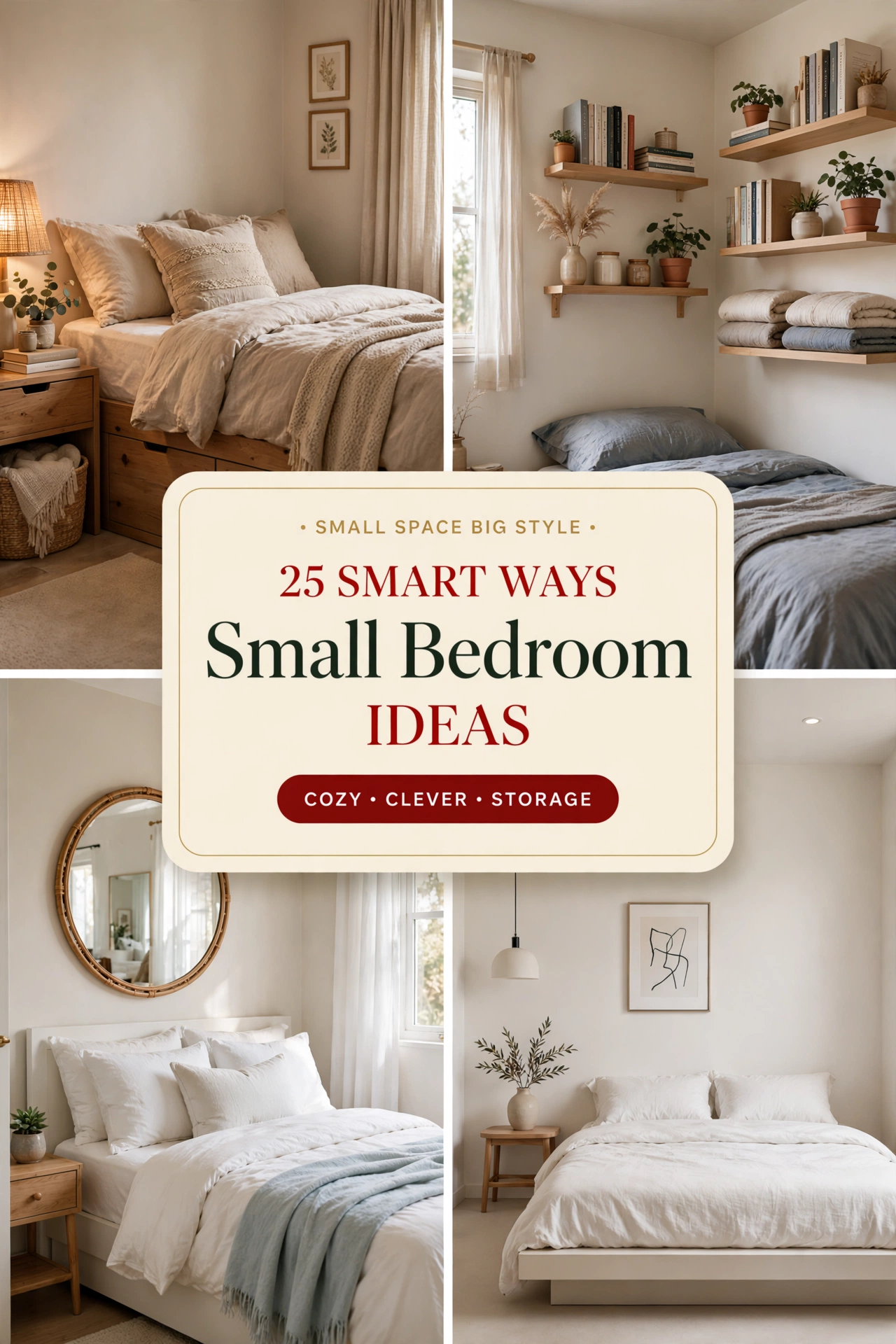
Your bedroom is small, but it should never feel like a compromise. With the right layout, clever storage, and a few light-bouncing tricks, even a 10×10 foot box can feel calm, airy, and completely yours. Here are 25 small bedroom ideas that actually work in tight spaces, each with a real price tag and a tip you can use today.
Quick Idea Summary
- The key takeaway: small bedrooms feel bigger when you free up floor and wall space, bounce light around, and choose furniture that works double duty.
- The detail most people miss: curtains hung at ceiling height and one large mirror do more for perceived space than any piece of furniture you could buy.
- What it costs or how long it takes: most of these ideas cost between $10 and $120 and take an afternoon; the priciest is a storage bed at around $400, and even that assembles in about two hours.
At a glance
| Zone | Ideas | Budget |
|---|---|---|
| Layout | 01–05 | $0–$200 |
| Storage | 06–12 | $25–$350 |
| Color and light | 13–17 | $15–$120 |
| Bed and bedding | 18–21 | $40–$450 |
| Finishing touches | 22–25 | $10–$90 |
The small bedroom ideas
01
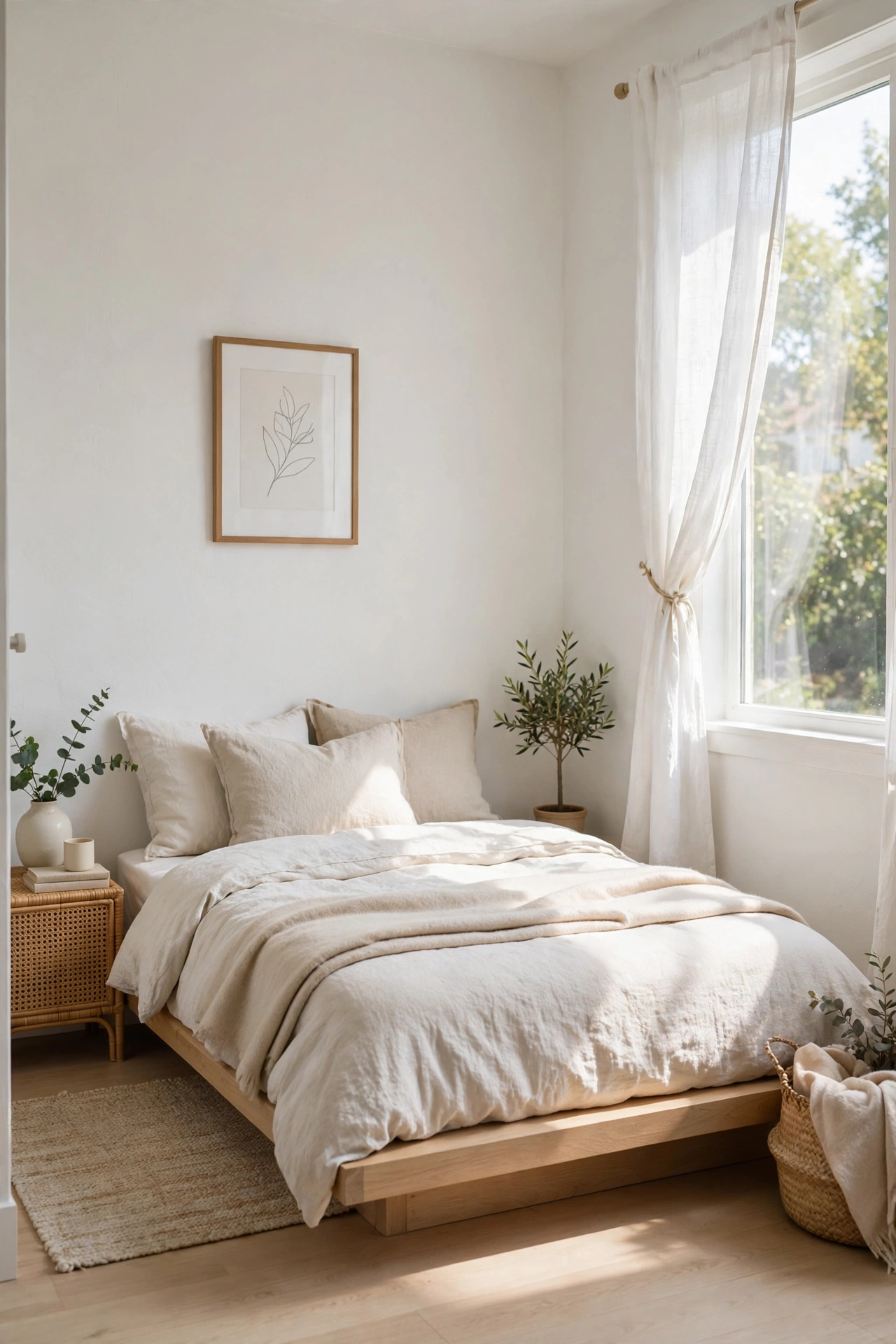
Switch to a low platform bed
A tall headboard and box spring eat visual height, which is the first thing your brain reads as “cramped.” A low platform bed, with the mattress top sitting 14 to 18 inches off the floor, exposes more wall and makes the ceiling feel higher.
Try it: measure your current bed’s total height, then shop for a frame under 12 inches to the rail; Japanese-style platforms start around $120.
02
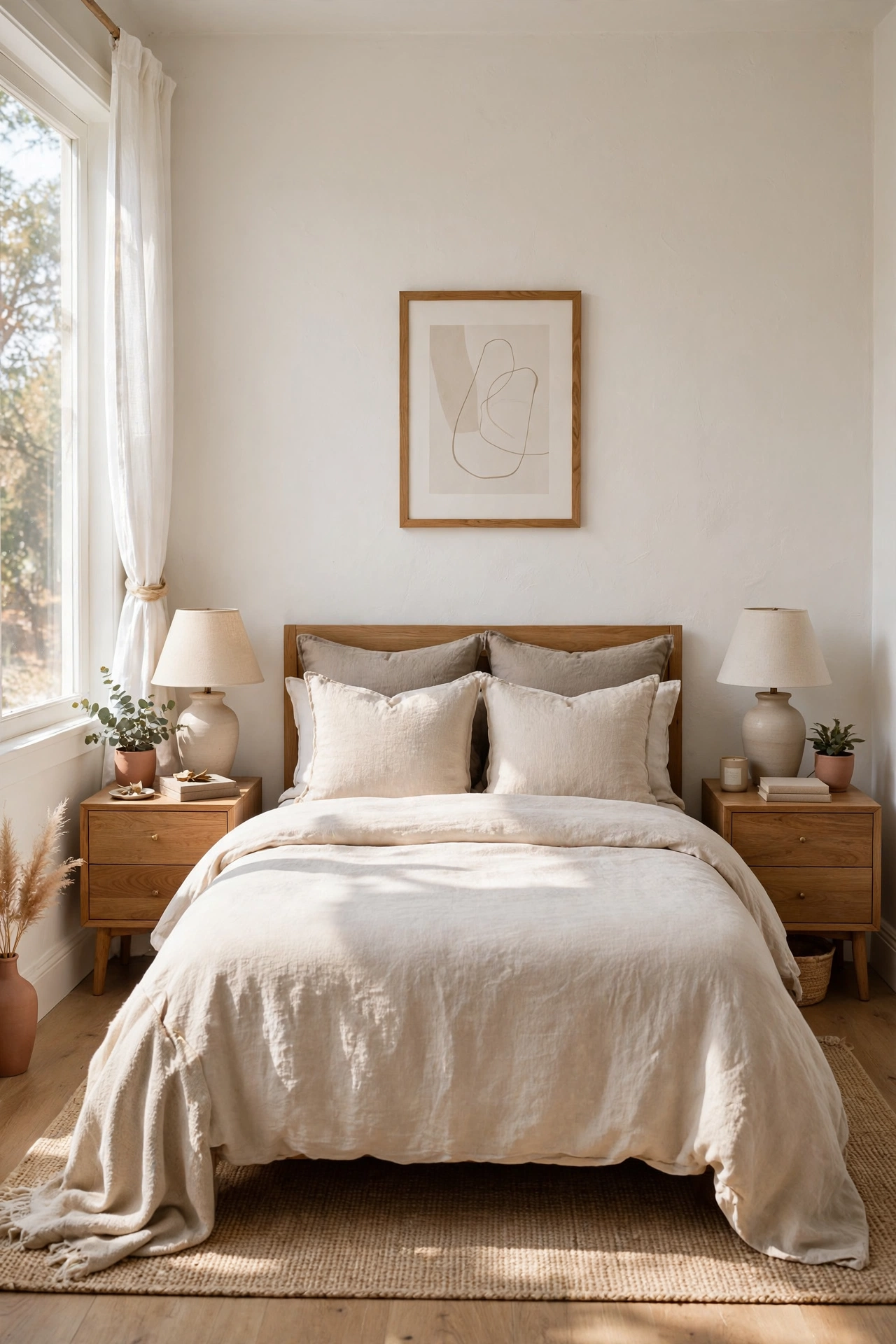
Center the bed instead of wedging it into a corner
A bed pushed into a corner forces you to climb over it every night and creates one dead walkway, which reads as smaller than it is. Centering the bed on one wall gives you two even walkways of 24 inches each, and symmetry tricks the eye into seeing a finished, generous room.
Try it: move the bed before you buy anything; even a 6-inch shift on each side changes how the room walks.
03
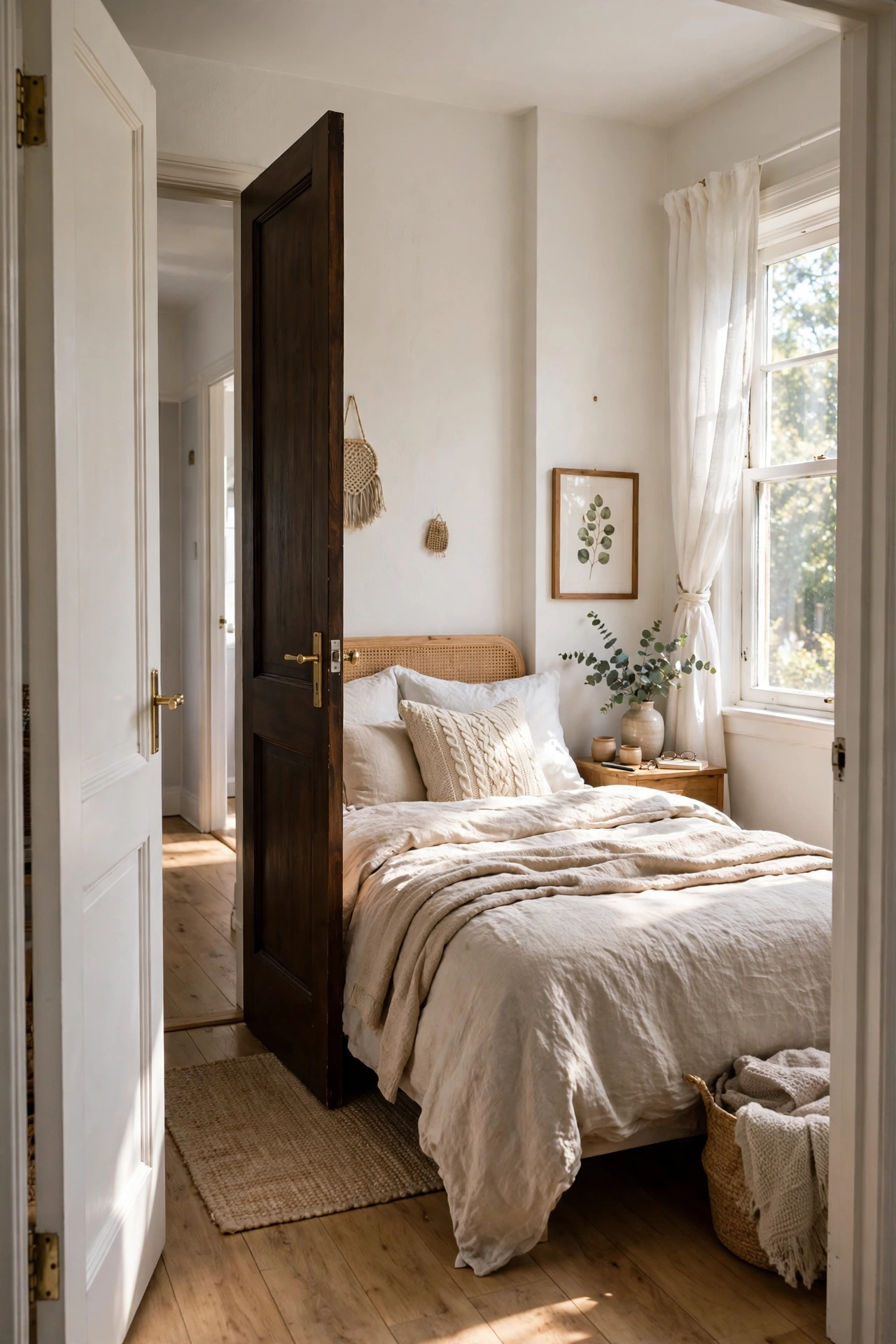
Keep the door swing zone empty
If the door opens and immediately hits a dresser or wardrobe corner, that collision becomes your daily reminder that the room is tight. Stand in the doorway and mark where the door swings; that arc is sacred, non-negotiable floor space.
Try it: tape the swing arc on the floor with painter’s tape for a week to see how much you were fighting it.

04
Run a rug bigger than the bed
A small rug that floats in the middle of the room chops the floor into pieces and shrinks it. A rug that extends at least 18 inches past each side of the bed unifies the floor into one continuous surface, which reads as larger.
Try it: for a queen bed, aim for an 8×10 rug; low-pile flatweaves around $90 hold up best under beds.

05
Create one long sightline from the door
Your brain judges room size by the longest uninterrupted line of sight. Arrange furniture so you can see from the doorway to the farthest wall without a tall piece blocking the path, even if that means a lower dresser instead of a wardrobe.
Try it: take a photo from the doorway; if the first thing you see is the back of furniture, rearrange.
06
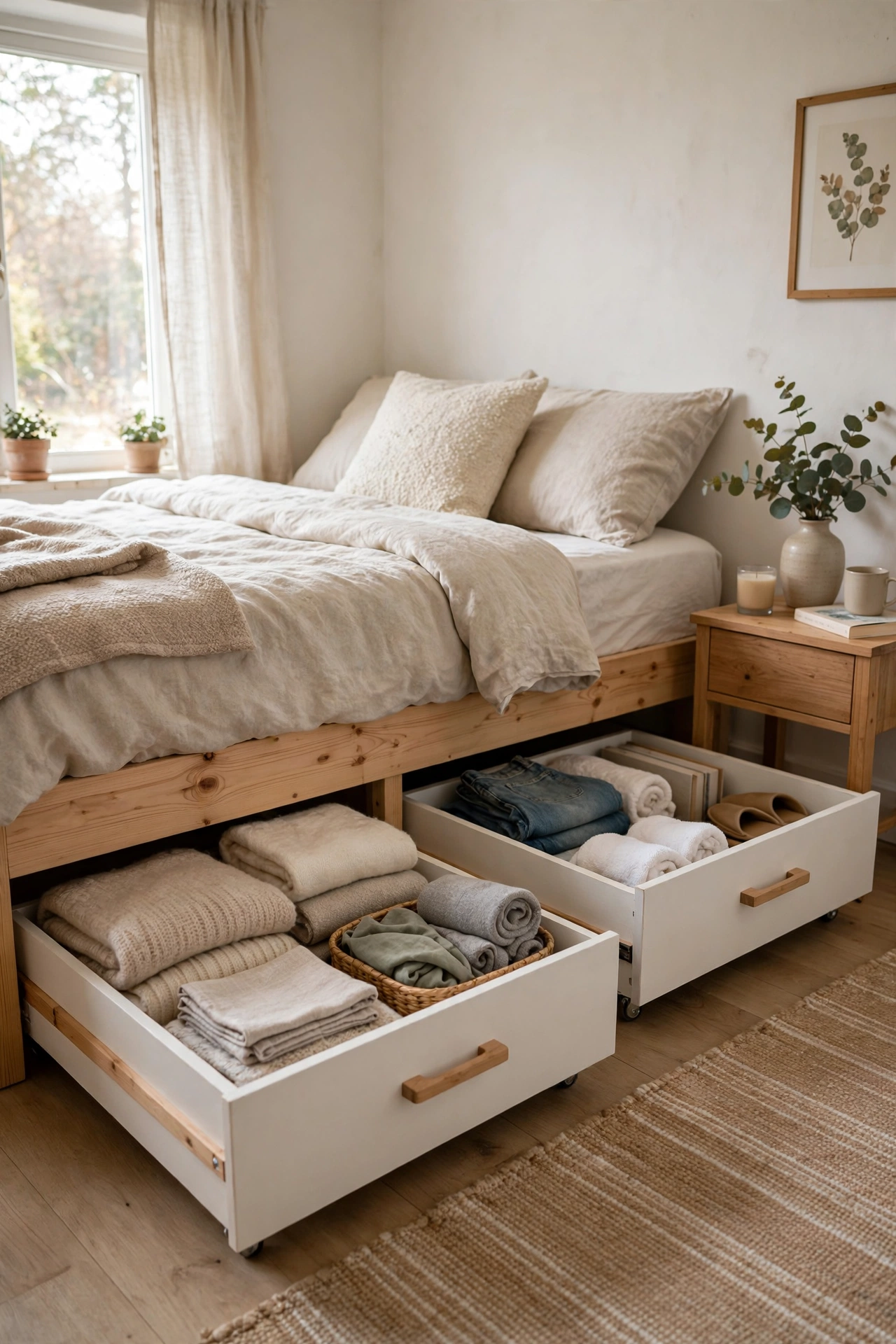
Put the space under your bed to work
Under-bed dead space is the largest unused storage area in a small bedroom, often 25 to 30 cubic feet. Flat drawers or low bins on wheels keep out-of-season clothes and extra bedding hidden but reachable.
Try it: standard under-bed boxes are about 7 inches tall, so measure your bed’s clearance before buying; wheeled ones run about $25 for a set of two.
07
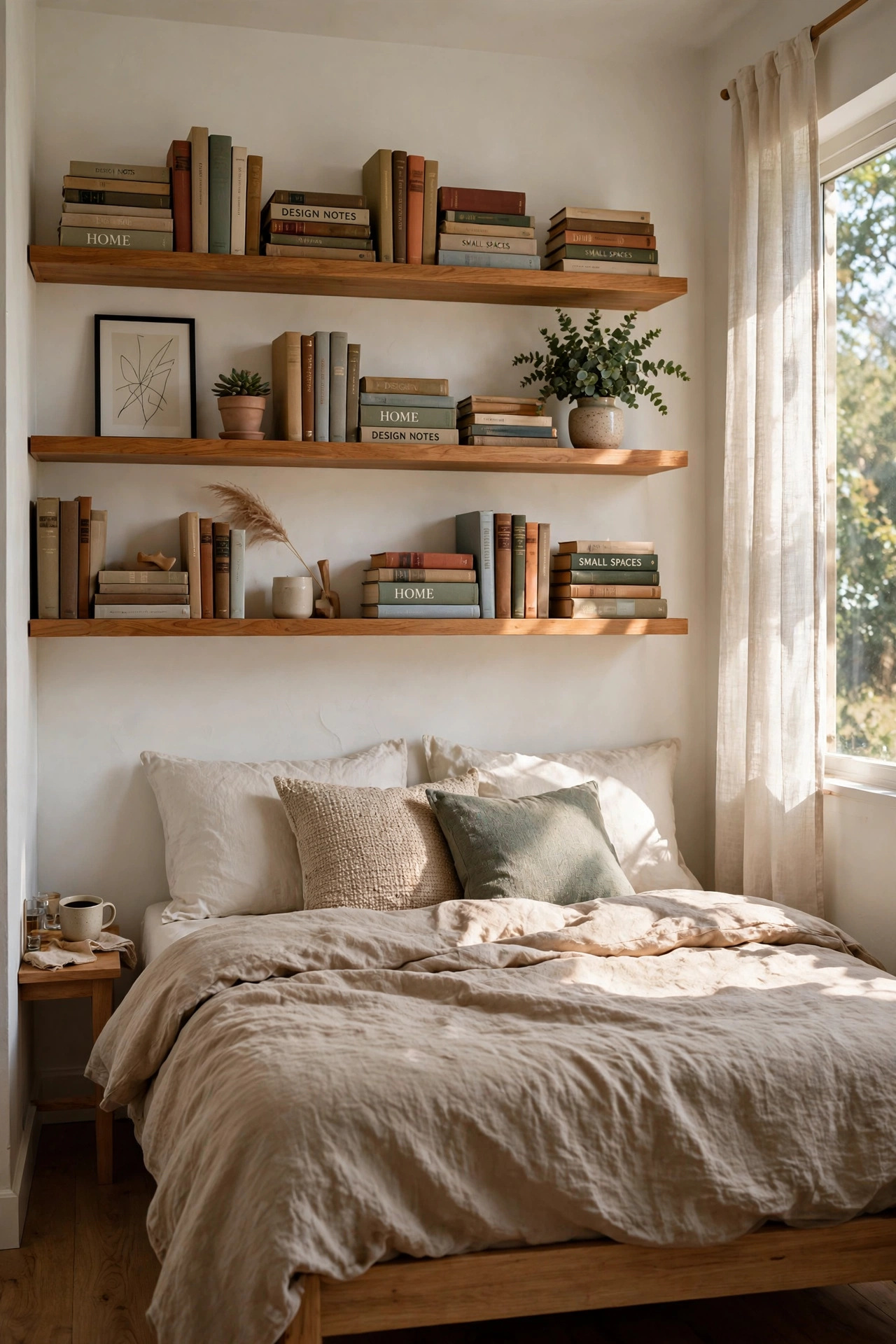
Add floating shelves above the bed
The wall above the headboard is storage gold that costs zero floor space. Two or three 36-inch floating shelves, spaced 12 to 15 inches apart, hold books, a small plant, and a candle, and they draw the eye upward.
Try it: install the lowest shelf 20 inches above the mattress top so you can sit up without knocking anything down.

08
Trade a wide dresser for a tall, narrow one
A 48-inch-wide dresser swallows nearly half a small bedroom wall. A 24-inch-wide, 48-inch-tall dresser holds the same volume of clothes with half the footprint, and the vertical line stretches the room upward.
Try it: look for six-drawer vertical units around $150; anchor any dresser taller than 30 inches to the wall.
09
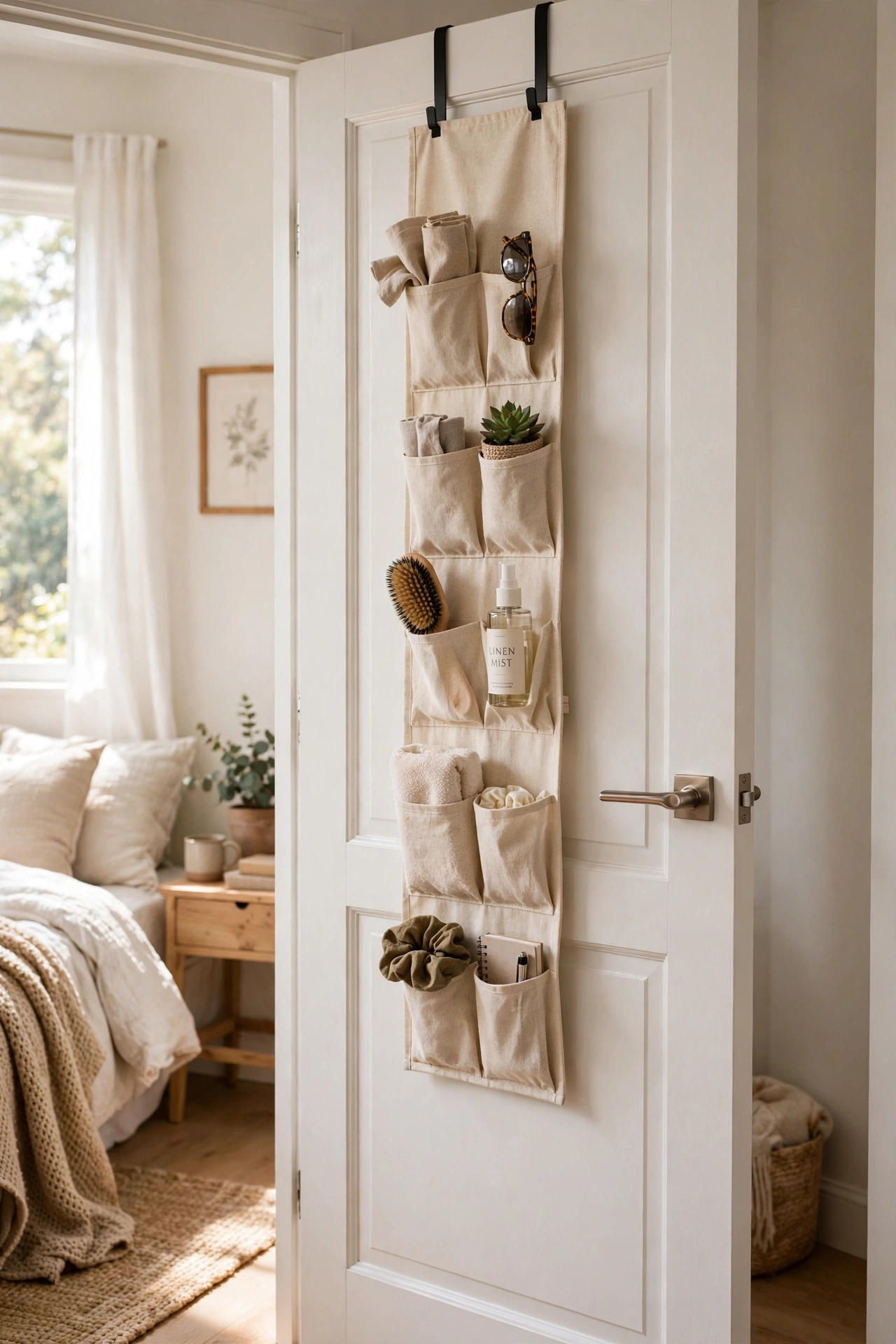
Use the back of the door
The inside of the bedroom door can hold shoes, bags, scarves, or accessories without touching a single inch of floor or wall. A slim over-door organizer about 18 inches wide disappears when the door is open.
Try it: choose felt or fabric organizers under $30; they are quieter than metal racks every time the door moves.

10
Choose a headboard with built-in shelves
A shelf headboard combines the bed’s anchor point with a nightstand, a bookcase, and a lamp perch in one footprint. Units with two side towers and an overhead shelf run about $200 and replace a nightstand on each side.
Try it: keep the shelves shallow, 6 to 8 inches deep, so they store books without becoming a clutter display.
11
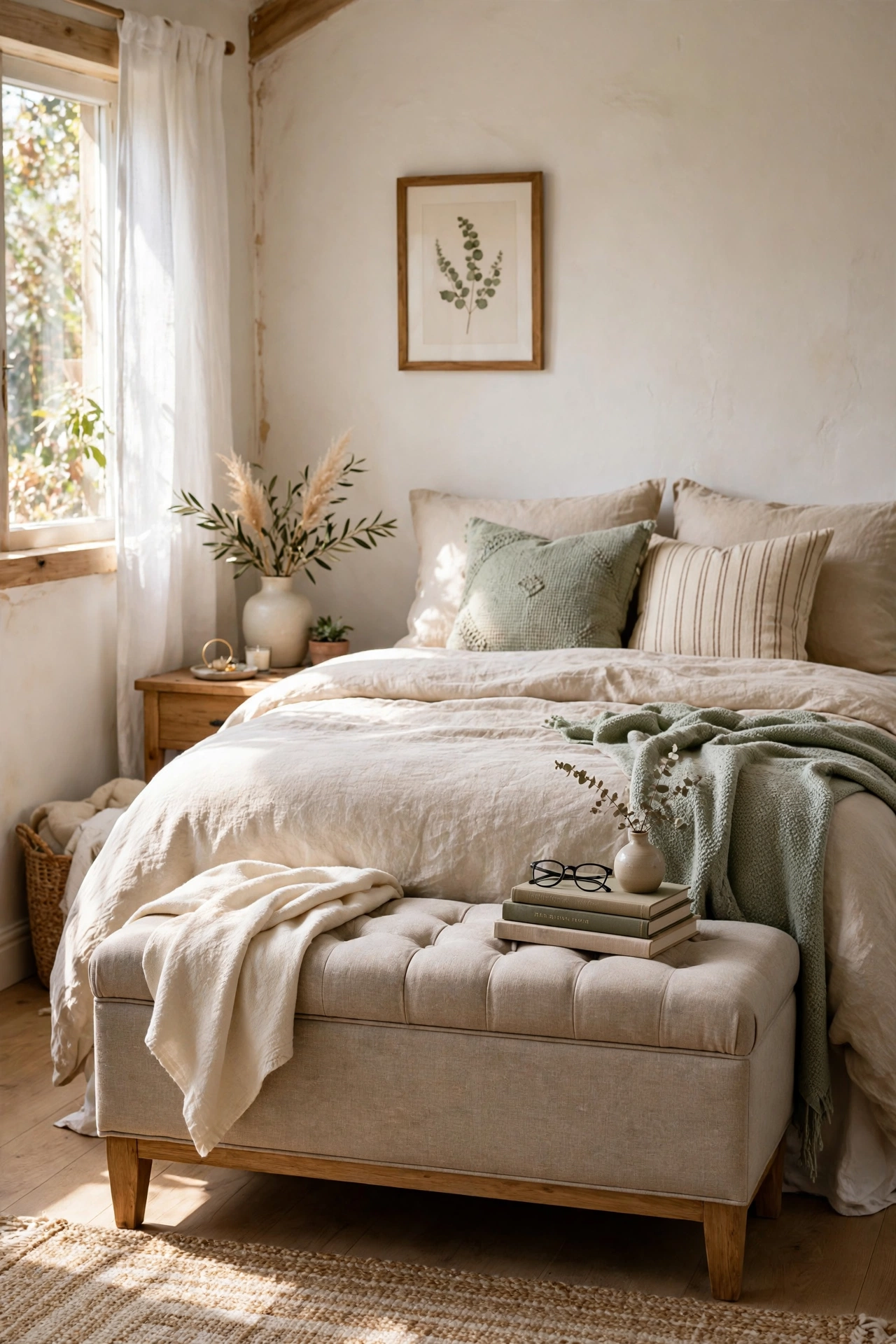
Park a storage ottoman at the foot of the bed
A 36 to 44-inch ottoman at the foot of the bed gives you a seat for getting dressed, a landing spot for the throw blanket, and hidden storage for shoes or bedding. It fills the leftover gap most small bedrooms have at the foot.
Try it: pick one with a hinged lid around $60 to $90 so it stays shut and doubles as a bench.
12
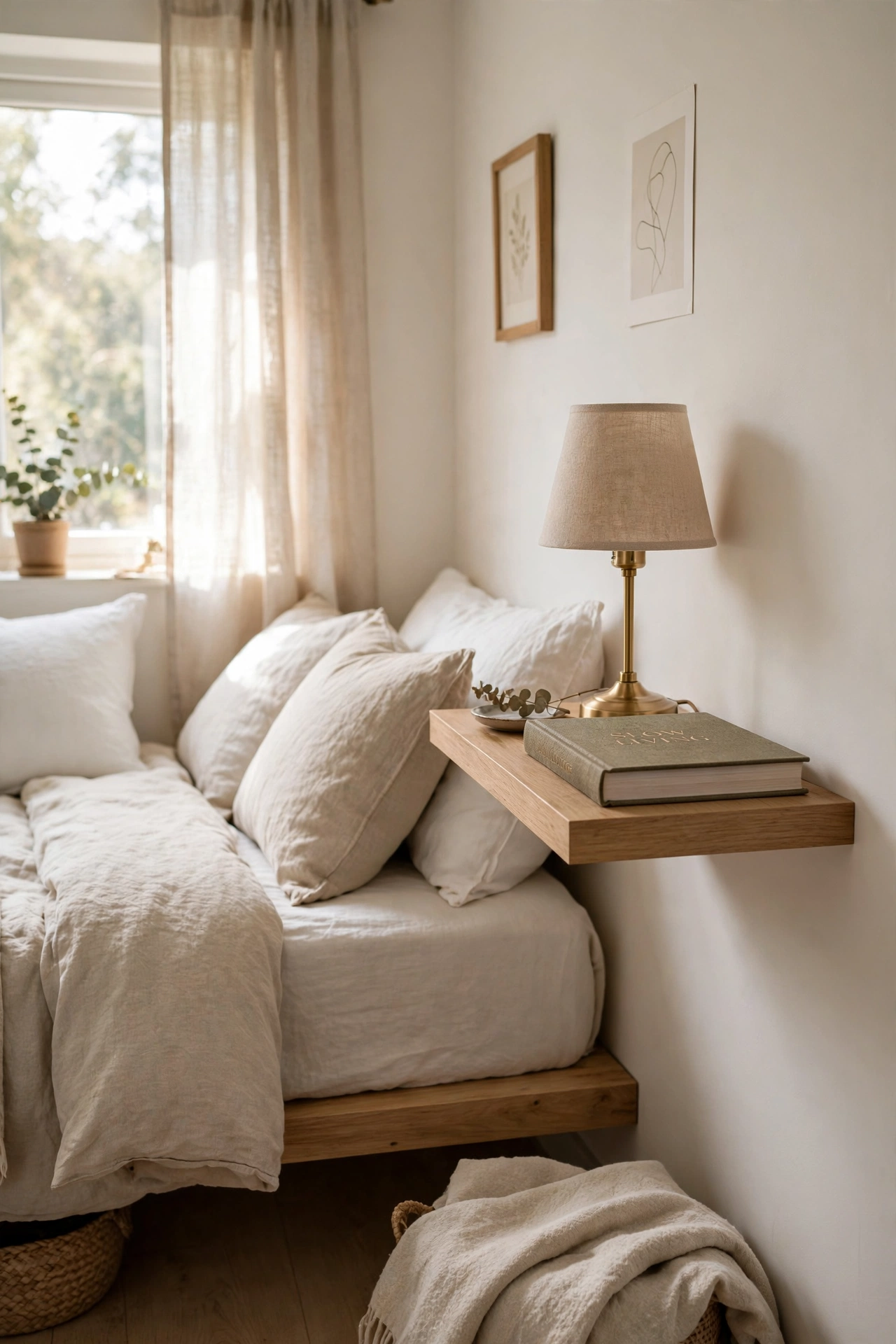
Swap nightstands for floating shelves
Two 12-inch floating shelves mounted at mattress height do the job of nightstands while exposing the floor underneath, which makes the room feel airier. You save roughly 4 square feet of floor space per side.
Try it: mount each shelf 2 inches above mattress level; add a clip-on reading light or a wall sconce above it.

13
Paint walls and ceiling the same light color
When the ceiling is a different color than the walls, the line where they meet becomes a visual border that shrinks the room. One warm white, like a soft ivory, carried across walls and ceiling blurs that edge so the room feels taller.
Try it: a gallon of quality ceiling-and-wall paint covers about 350 square feet; a small bedroom needs two gallons, around $60 to $80.
14
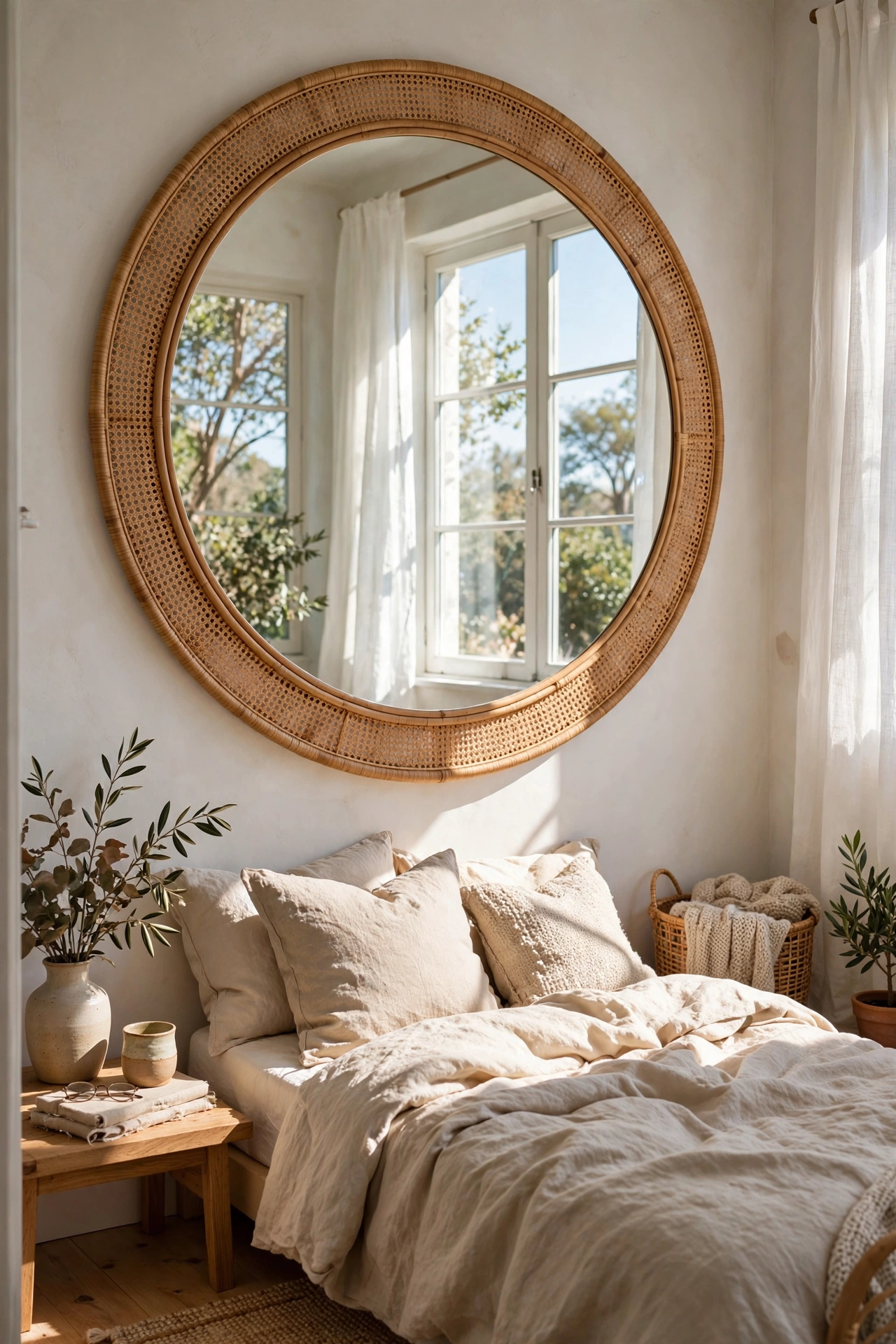
Hang one big mirror opposite the window
One large mirror, at least 24 by 36 inches, placed where it catches the window doubles the light in the room and creates the illusion of a second window. Several small mirrors scattered around just create visual noise.
Try it: lean a full-length mirror against the wall for under $50 before committing to mounting holes.
15
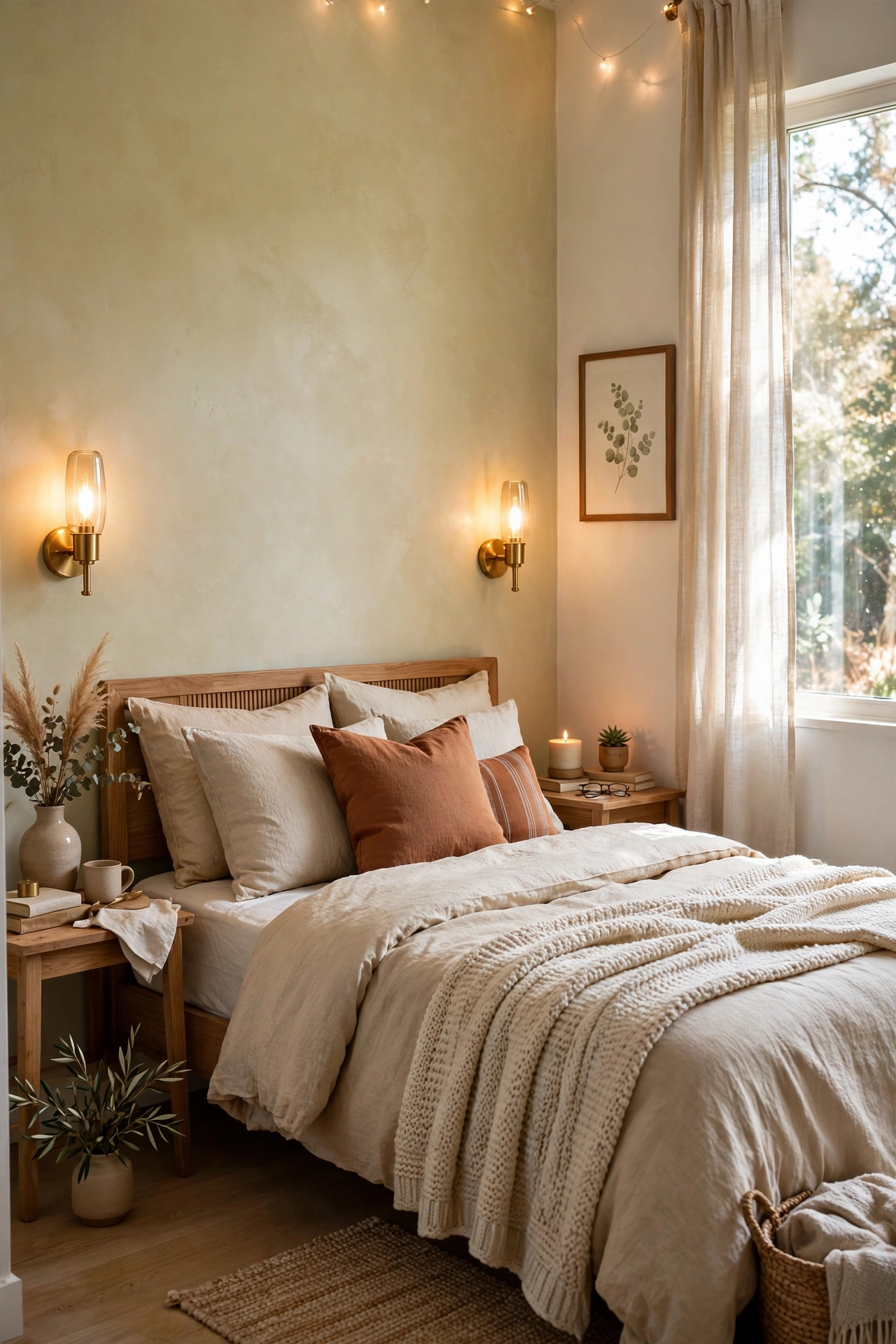
Layer your lighting with sconces
A single overhead light flattens a small bedroom and casts harsh shadows in corners. Wall sconces at 2700K warm white, mounted 40 inches above the floor beside the bed, free up nightstand space and make the room glow in layers.
Try it: plug-in sconces start around $40 a pair and need no electrician; add a dimmer plug for about $12.

16
Hang curtains at ceiling height
Curtains mounted right at the window frame cut the wall short and make windows look smaller. A rod hung 4 to 6 inches below the ceiling, extending 8 to 12 inches past each side of the window, draws the eye up and makes the window feel twice its size.
Try it: use lightweight linen-look panels around $25 a pair so they filter light without darkening the room.
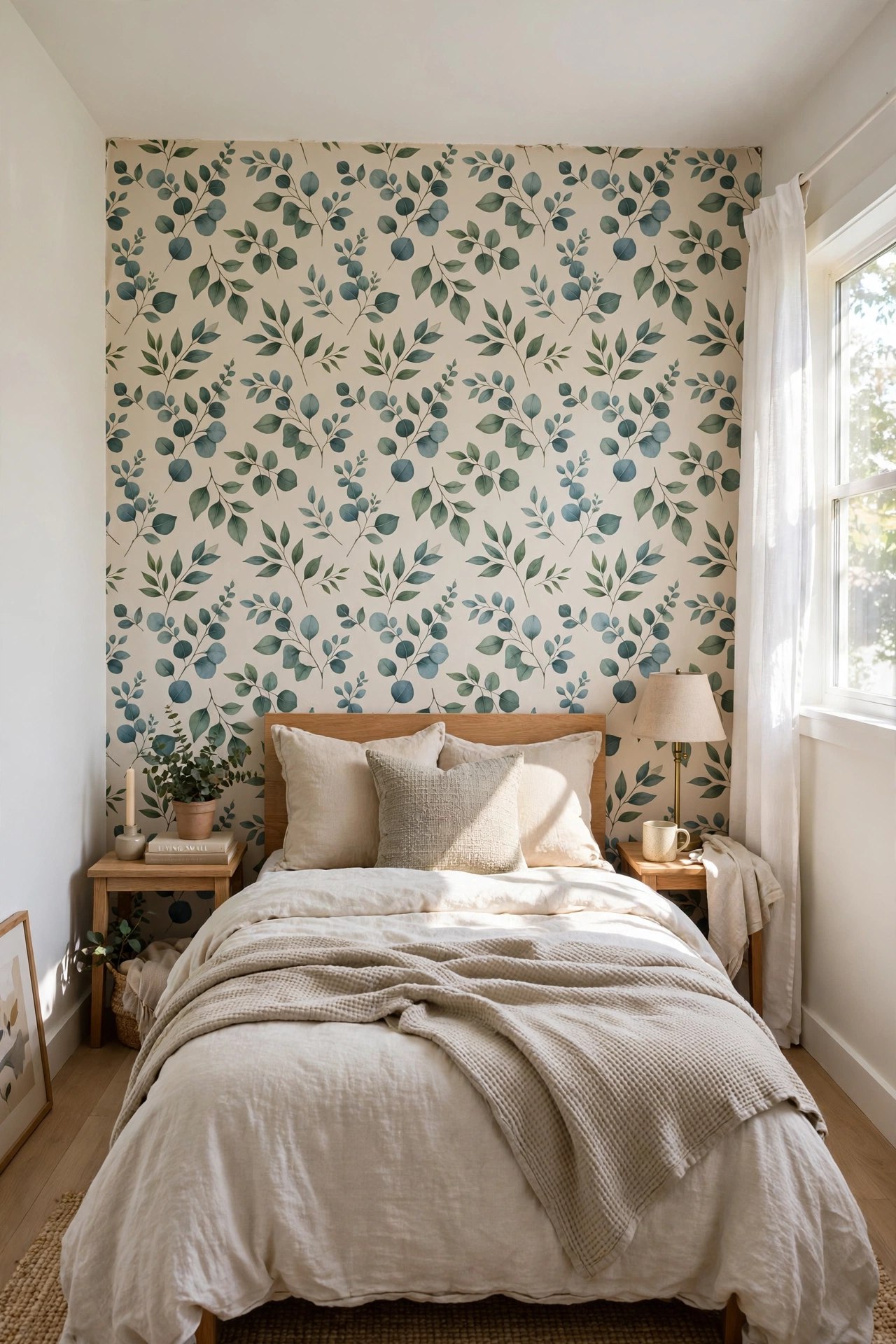
17
Add one peel-and-stick accent wall
One patterned wall behind the bed creates depth and a focal point without closing the room in the way four dark walls would. Peel-and-stick wallpaper removes cleanly, which makes it ideal for renters.
Try it: one 10-foot accent wall needs about two rolls, roughly $60 to $90; smooth the paper from the center outward to avoid bubbles.
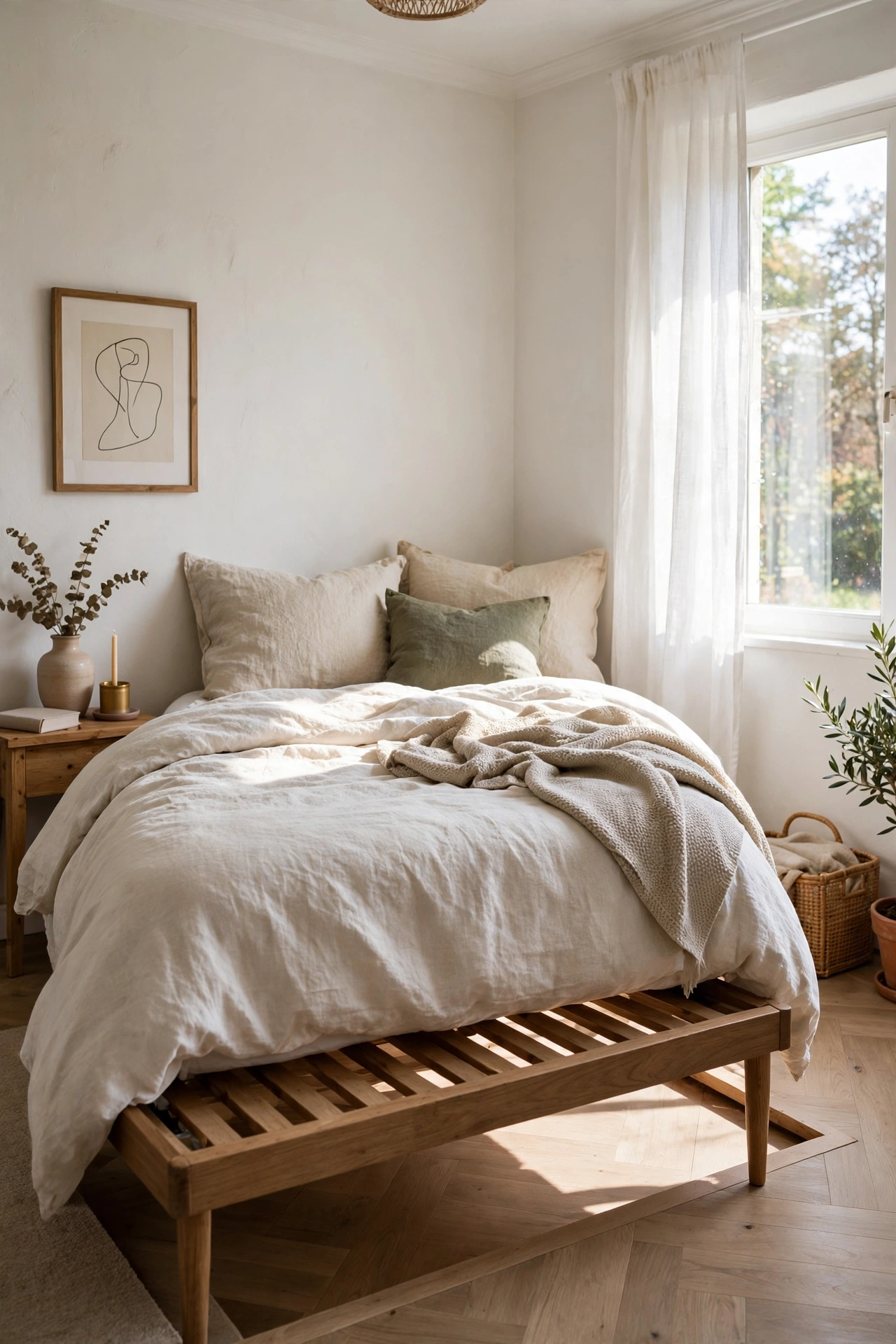
18
Pick a bed with visible legs
A solid bed base blocks the floor line and makes the bed look like a wall. A frame with 6-inch legs lets you see floor underneath the bed, which your brain reads as extra space, a trick that can make a room feel 10 to 15 percent more open in photos.
Try it: if you already own the bed, risers with an open design or a simple leg swap can cost under $30.

19
Keep bedding light and uniform
Busy patterns and dark duvets break the bed into visual chunks, and since the bed is the biggest object in the room, it dominates. Solid light bedding in white, ivory, or pale gray turns the bed into one calm, unifying mass.
Try it: a white duvet cover set starts around $40; wash everything in one load so the whites actually match.
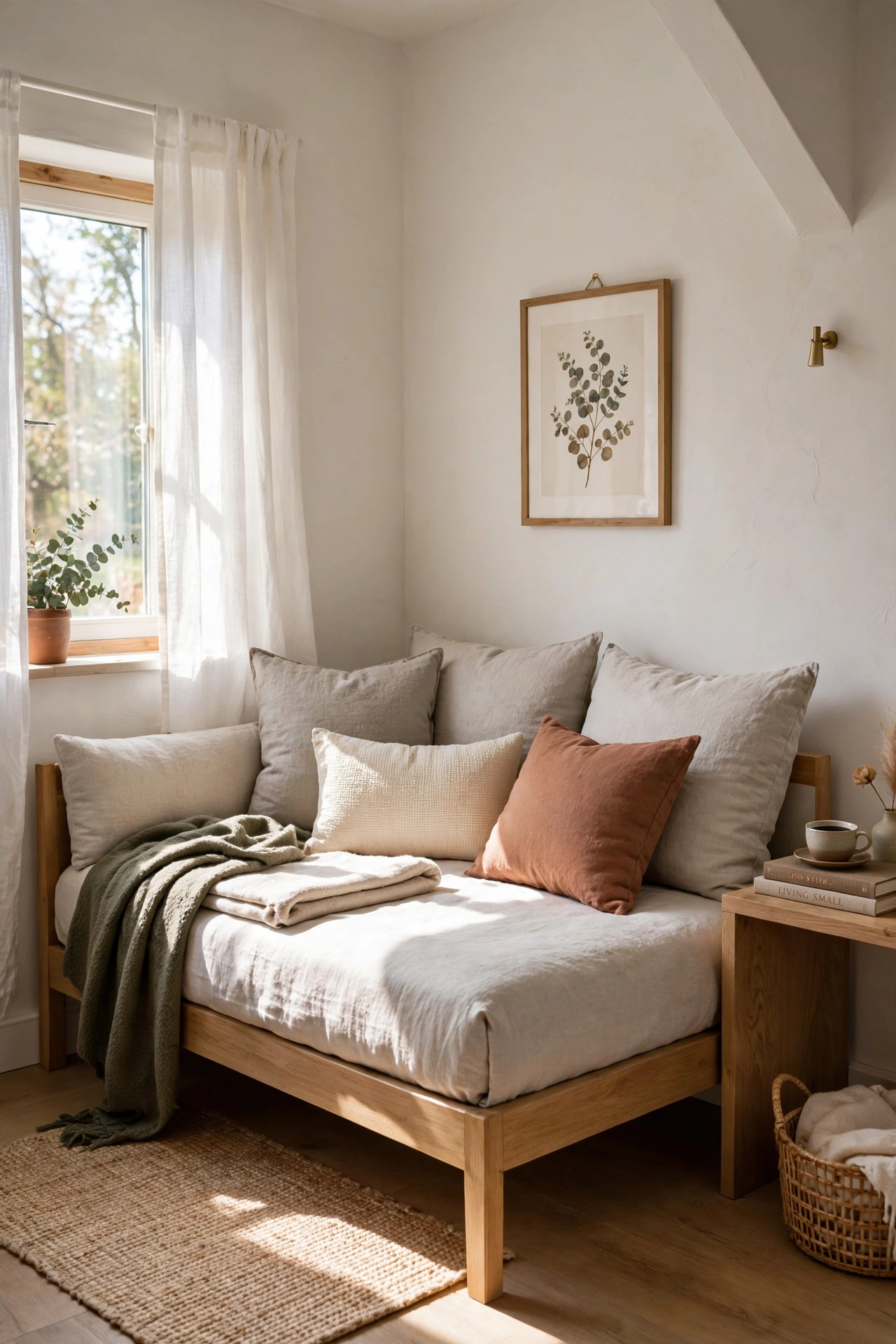
20
Consider a daybed for multi-use rooms
If your small bedroom also has to be an office, guest room, or studio living space, a daybed works as a sofa by day and a bed by night. A twin daybed leaves nearly 3 feet of floor space that a queen would eat.
Try it: add a firm 6-inch mattress and bolster pillows; daybed frames start around $200.
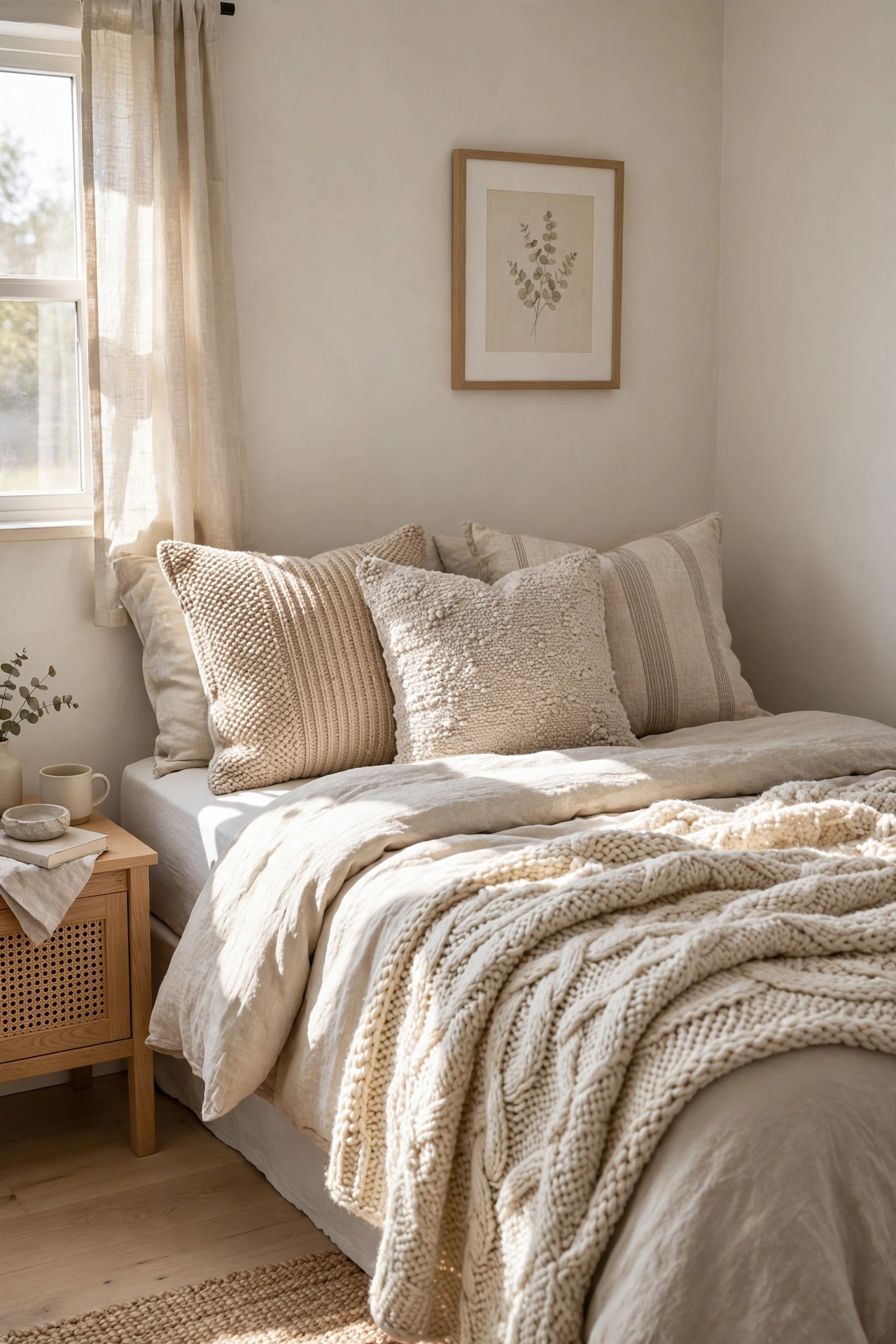
21
Layer texture instead of color
A small room with ten competing colors feels chaotic, but a small room with one palette and five textures feels rich. Combine a linen duvet, a knit throw, velvet cushions, and a jute rug in the same color family for depth without clutter.
Try it: keep to three tones, one light, one mid, one dark, and vary the fabrics within them.
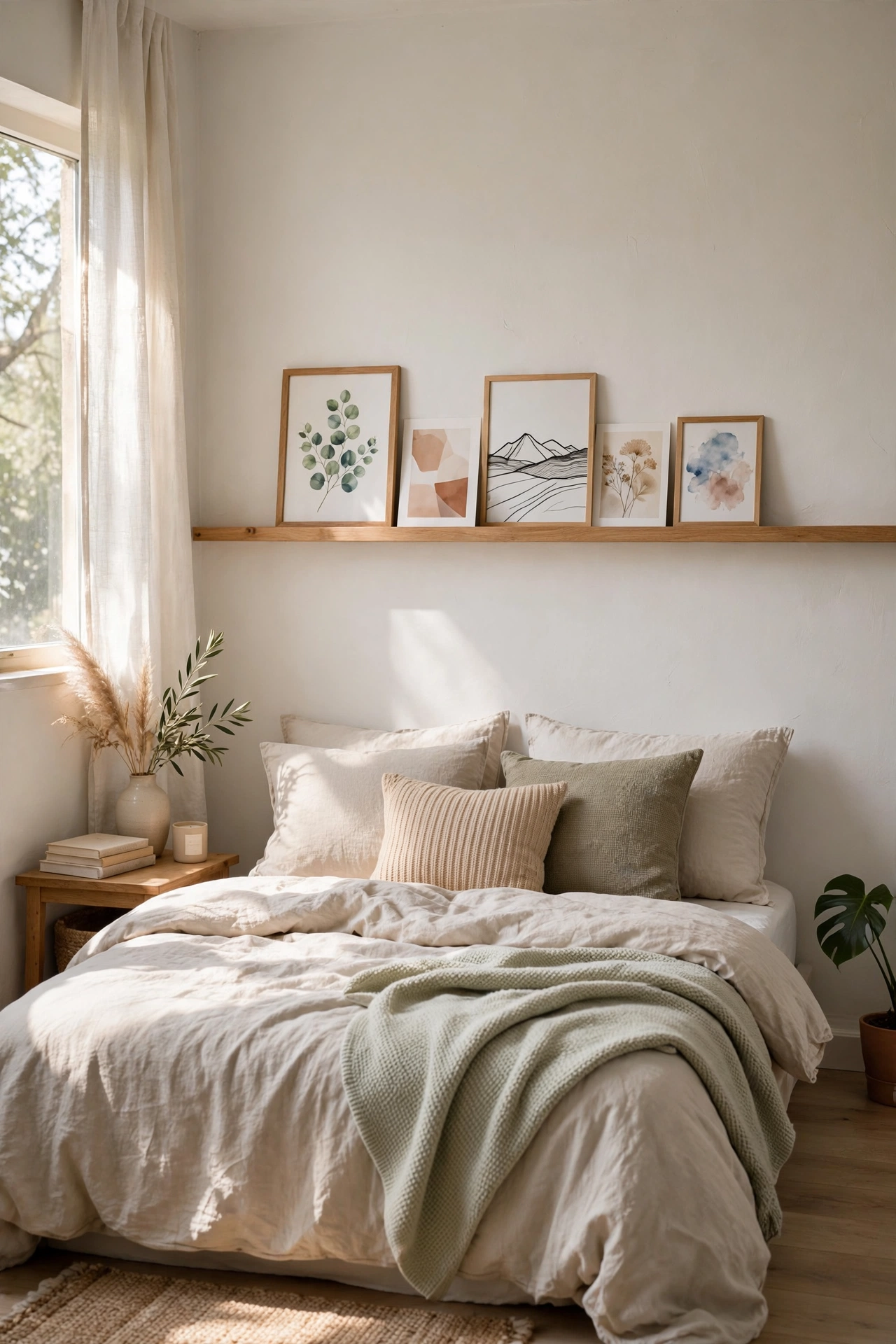
22
Use a picture ledge instead of a gallery wall
A full gallery wall in a tiny bedroom can feel busy, but bare walls feel unfinished. A single 36-inch picture ledge above the bed holds two or three prints, lets you swap art without new holes, and keeps the arrangement calm.
Try it: hang the ledge 8 to 10 inches above the headboard so it relates to the bed, not the ceiling.

23
Go vertical with one or two plants
Floor plants steal precious square footage, but greenery makes a small room feel alive and finished. A hanging pothos or a small plant on a floating shelf adds life at eye level with zero footprint.
Try it: pothos and snake plants survive low light and cost under $15; use a ceiling hook rated for the pot’s weight.
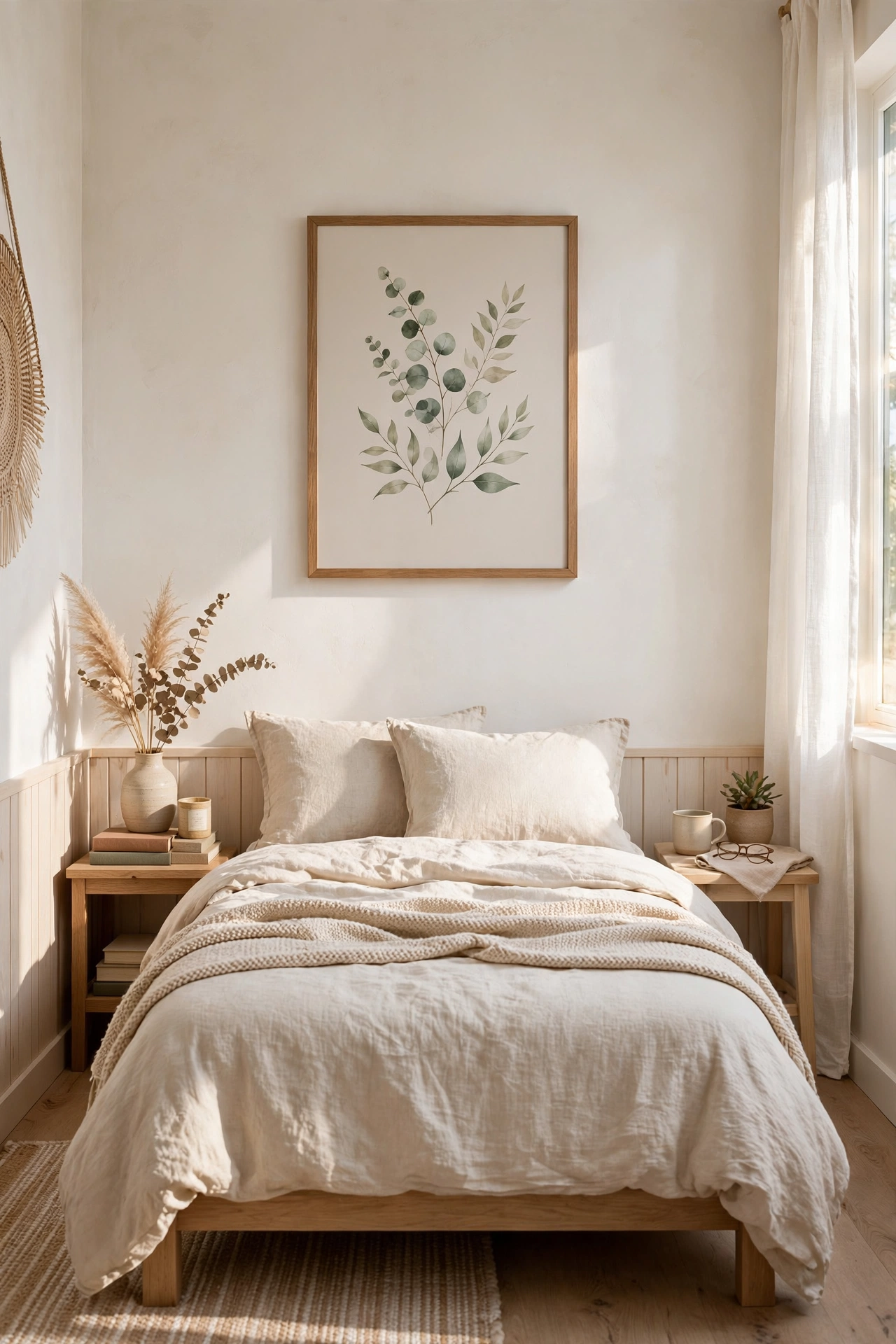
24
Hang art at the right scale
Tiny art on a big wall makes the wall look bigger and emptier; oversized art crowds the room. The sweet spot is one piece about two-thirds the width of the bed, hung so its center sits 57 to 60 inches off the floor, which is average eye level.
Try it: trace the frame size on kraft paper and tape it up first; live with it for a day before hammering.
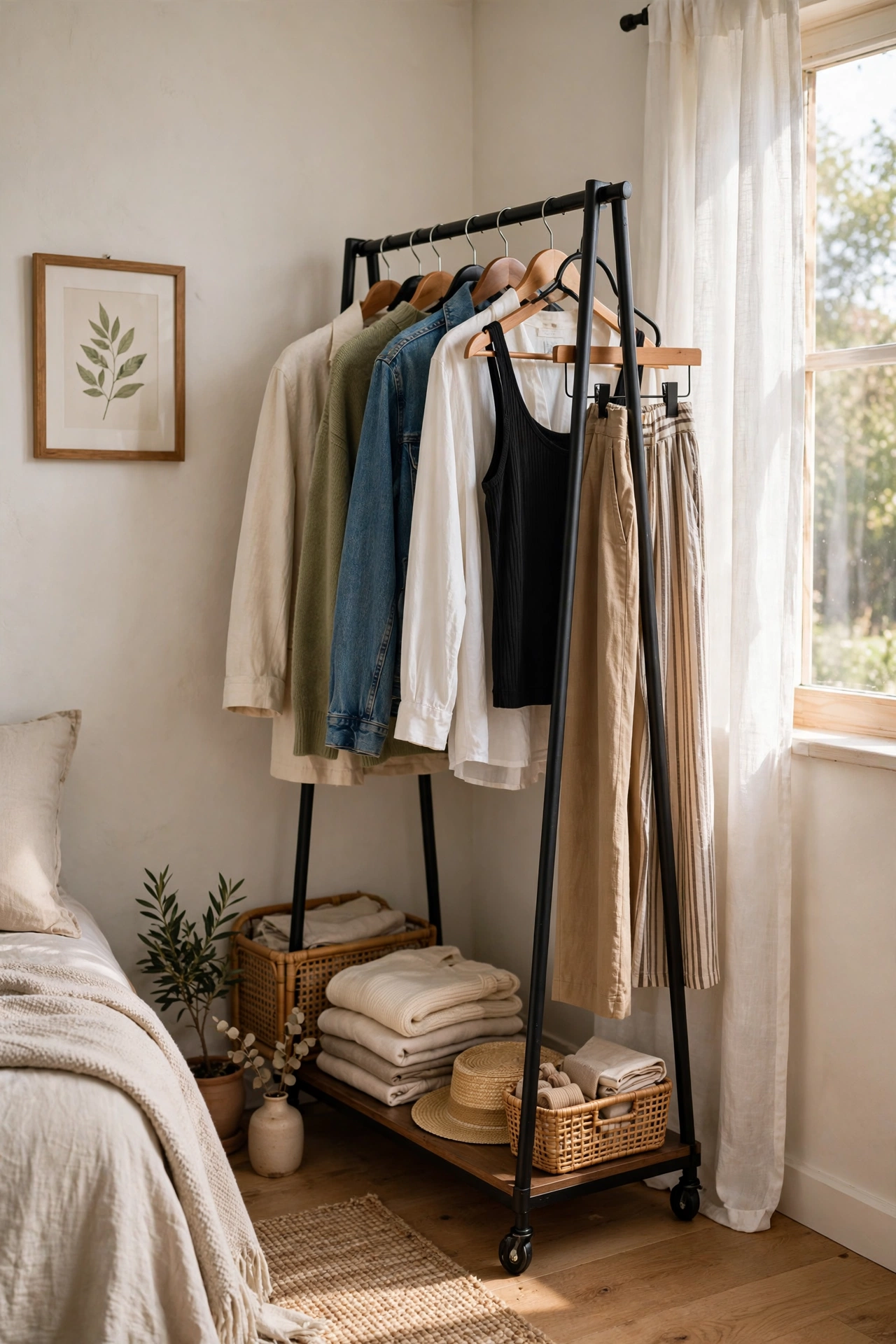
25
Replace a bulky wardrobe with a curated rack
A full wardrobe is a visual wall of bulk, but an open clothing rack with 15 to 20 of your best pieces acts like decor and forces a capsule mindset. Keep it tidy and it becomes a style statement instead of an eyesore.
Try it: a sturdy single-rail rack costs about $35; matching slim hangers for $12 make everything look intentional.
Pro tip: if you can only do three things, do these: hang the curtains at ceiling height, put one big mirror opposite the window, and clear everything off the floor that does not have a home. Those three alone can make a small bedroom feel a full size bigger.
Three rules for small bedrooms
Small rooms are not just scaled-down big rooms; they run on their own physics. Internalize these three rules and every one of these bedroom design ideas above works harder.
- See more floor, feel more room: the eye measures a room by visible floor, so legs on furniture, floating shelves, and wall-mounted lights all buy you perceived square footage without moving a wall.
- Every piece earns its spot twice: in a small bedroom, a nightstand that is only a nightstand is a luxury; favor the storage bed, the shelf headboard, the ottoman bench, and the daybed, because dual-purpose furniture is how tiny rooms punch above their weight.
- Light is square footage: a dark corner reads as a missing corner, so bounce daylight with mirrors, layer warm lighting at different heights, and keep window treatments light; brightness literally expands how big a room feels.
Keeping a small bedroom clutter-free
Small bedroom storage solves where things live, but staying clutter-free is a habit system. These three practices keep the ideas above working instead of slowly burying them.
- Give everything a closed home: open surfaces invite pile-ups, so assign every category, chargers, books, laundry, papers, a drawer, bin, or shelf with a lid; if a new item has no home, it does not enter the room.
- Run a five-minute nightly reset: make the bed, return the throw, clear the nightstand, and toss laundry in the hamper before sleep; five minutes prevents the weekend-long avalanche that makes small rooms feel hopeless.
- Edit on a one-in-one-out rule: small bedrooms cannot absorb accumulation, so every new decor piece, book, or gadget means one leaves; this keeps the room at its designed capacity instead of slowly shrinking it.
More ideas you’ll love:
small living room ideas
Christmas bedroom decor
Home & Living
Questions readers ask
What is the best bed size for a small bedroom?
A full or double bed is the sweet spot for most small bedrooms. A twin leaves the most floor space, but a full gives couples and sprawlers real comfort while still leaving 24 inches of walkway on each side in a 10×11 room. Measure before you commit, and remember that a smaller bed in the right position feels better than a larger bed crammed into a corner.
What colors make a small bedroom look bigger?
Light, warm neutrals like ivory, soft beige, pale sage, and light gray reflect the most light and make walls recede. Painting the walls and ceiling the same shade removes the visual border between them, which adds perceived height. One dark accent wall can work for drama, but keep the other three walls light so the room stays bright.
How do I arrange furniture in a tiny bedroom?
Start with the bed, since it is the largest piece; center it on the longest unobstructed wall. Then place the dresser on the wall with the least foot traffic and keep the door swing completely clear. Stand in the doorway after each move and check your sightline to the far wall; if a tall piece blocks it, swap it for something lower or narrower.
Can I put a king bed in a small bedroom?
You can, but it will dominate everything. A king needs at least 2 to 3 feet of walkway on each exposed side to feel workable, which means the room should be at least 12×12 feet. In anything smaller, a queen or full with great storage and bedding will feel more luxurious than a king you have to climb over.
How do I make a small bedroom cozy instead of cramped?
Cramped comes from clutter and harsh light; cozy comes from texture and warmth. Layer linen, knit, and velvet in one calm palette, use warm 2700K lighting at two or three heights, and keep surfaces mostly clear so the softness stands out. A small rug, a candle, and one piece of art you love do more for coziness than any amount of stuff.
What should I avoid in a small bedroom?
Avoid solid-to-the-floor bed bases, oversized dressers, multiple small mirrors, busy multi-color bedding, and curtains hung tight to the window frame. Each of these chops the room into smaller visual pieces. Also resist filling every wall; negative space is what lets a small room breathe.
How much does it cost to refresh a small bedroom?
A meaningful refresh costs $150 to $400. Paint runs $60 to $80, curtains $25 to $50, a rug $90 to $150, and under-bed storage $25 to $50. Furniture swaps like a storage bed or dresser can add $150 to $400 each, so start with the cheap light-and-layout changes and buy furniture only where storage is the bottleneck.
Where should I put a mirror in a small bedroom?
Opposite or adjacent to the window, where it catches and bounces daylight across the room. One large mirror does far more than several small ones, and leaning a full-length mirror in a corner works beautifully. Avoid placing mirrors where they reflect clutter, like the inside of an open closet, since they double whatever they show.
People Also Ask
Does a dark wall make a small bedroom look smaller?
A full room of dark walls will close the space in, but a single dark accent wall usually does the opposite: it creates depth and a focal point that makes the room feel designed rather than cramped. The key is keeping the other walls light, using warm lighting, and making sure the dark wall gets daylight or a light source aimed at it.
Is it better to have a big rug or no rug in a small bedroom?
A big rug is almost always better. A rug that extends 18 inches past the bed on each side unifies the floor into one surface and makes the room feel larger, while no rug leaves the floor feeling cold and unfinished. The only exception is wall-to-wall carpet, where adding a rug on top can look cluttered.
How do you make a small bedroom look expensive?
Cohesion is what reads as expensive. One calm color palette, matching curtain panels, uniform bedding, and consistent finishes on hardware and frames make a room look designed. Add one statement piece, like a beautiful mirror or a textured throw, and keep everything else quiet; restraint is the cheapest luxury there is.
loved these ideas? ✿
Save this guide for later
Pin it to your board so it’s there when you’re ready to recreate it.

Curated by
Hey! I'm Sanaullah — visual curator and content creator. I search, curate, and test the best aesthetic ideas across Pinterest so you can easily transform your living space, style daily outfits, and try simple creative DIYs without the overwhelm.