
Your living room might be short on square footage, but that does not mean it has to feel cramped, cluttered, or compromise-y. With the right layout moves, right-sized furniture, and a few light and storage tricks, a small living room can feel open, calm, and genuinely inviting. Try even a handful of these 28 small living room ideas and your small space will start living much larger than its footprint.
Quick Idea Summary
- The key takeaway: A small living room feels bigger when every piece earns its spot: scale furniture to the room, keep sightlines open, and push storage up the walls instead of across the floor.
- The detail most people miss: Pulling the sofa even 8 inches off the wall and letting the front legs of seating sit on the rug changes how the whole room reads, for free.
- What it costs or how long it takes: Most of these are weekend-friendly. Rearranging costs nothing; a mirror, baskets, and curtain hardware run about $25 to $60 each; right-sized swaps like a loveseat or storage ottoman land in the $150 to $450 range.
At a glance
| Zone | Ideas | Budget |
|---|---|---|
| Layout | 01–06 | $0–$40 |
| Furniture scale | 07–12 | $0–$450 |
| Light and color | 13–18 | $25–$120 |
| Storage and multifunction | 19–24 | $30–$300 |
| Finishing touches | 25–28 | $15–$80 |
The small living room ideas
01
Float the sofa off the wall
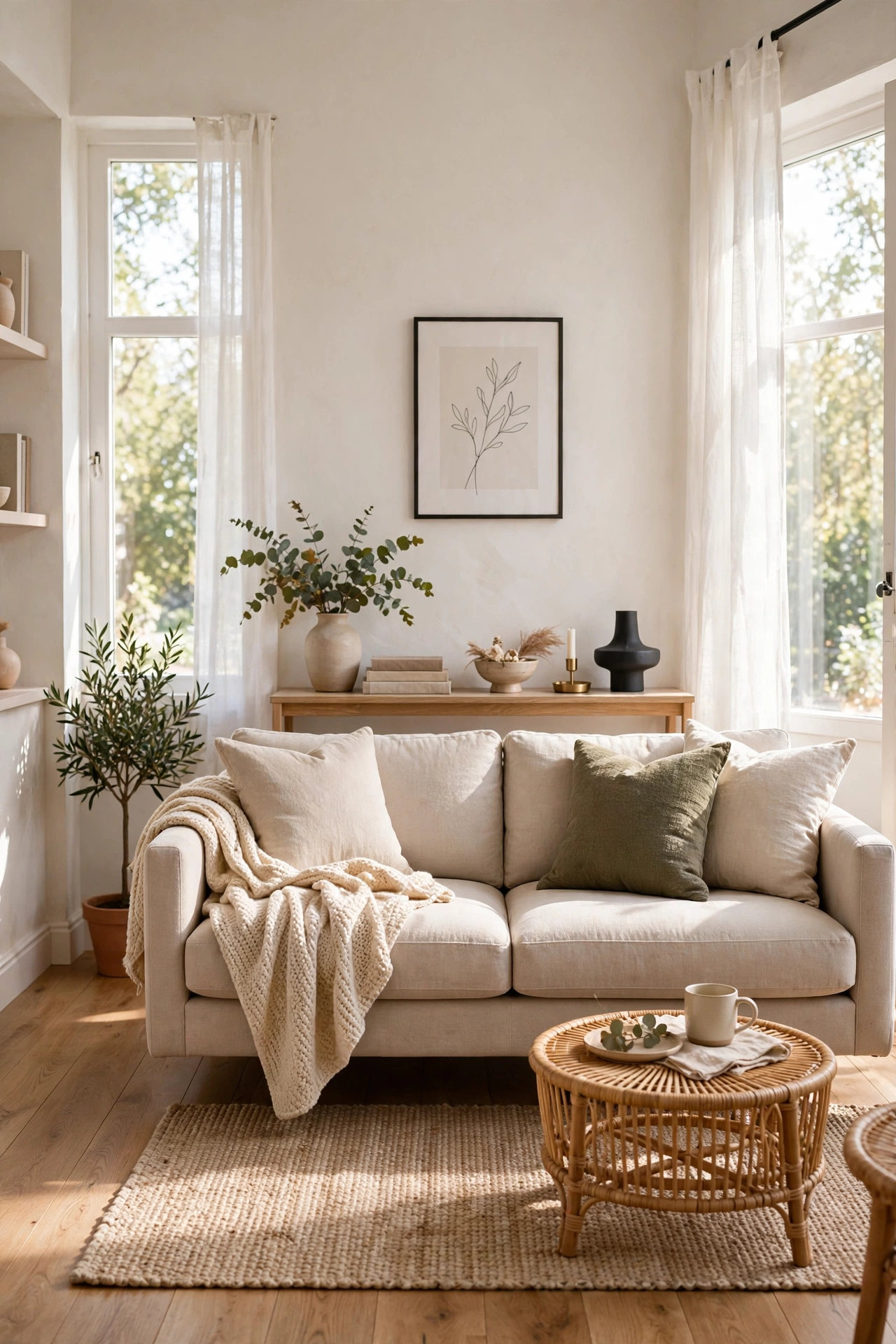
Pushing the sofa flat against the wall is the instinct move in a tight room, but it usually backfires by making the space feel like a waiting area. Pulling it forward even 8 to 12 inches creates a soft shadow gap behind it that reads as depth, and it frees a real walkway on the other side. Your seating suddenly feels intentional instead of shoved aside.
Try it: Slide the sofa forward tonight and put a slim console or a row of baskets behind it. If the gap looks awkward, hang a low piece of art there to make it look planned.
02
Angle one chair to break the box
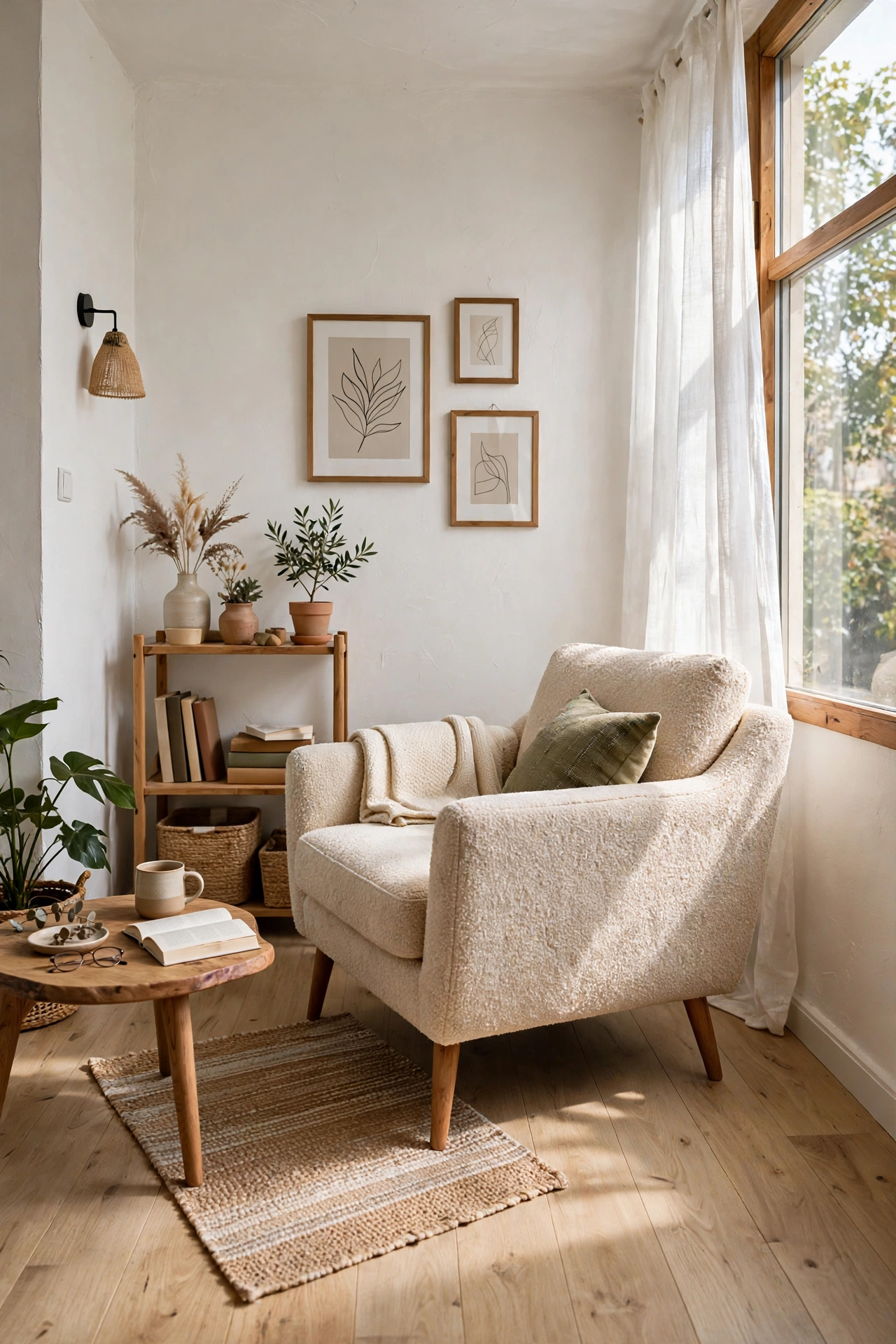
When every piece of furniture runs parallel to the walls, a small room reads as a rigid rectangle and the eye measures every inch. Angling a single armchair even slightly diagonal introduces a visual curve that softens the geometry and makes traffic flow feel natural. It is the cheapest layout trick there is and it works in rooms as narrow as 9 feet wide.
Try it: Turn one chair 20 to 30 degrees toward the sofa and live with it for two days. If conversation feels easier, the angle stays.

03
Let one big rug define the zone
A too-small rug chops a small living room into disconnected pieces and makes the floor look busy. One rug that is large enough for the front legs of the sofa and both chairs to sit on unifies everything into a single, generous zone. A 5×8 rug suits most small rooms, and an 8×10 can make a compact space feel bigger by stretching the visual floor plan.
Try it: Tape the rug outline on the floor with painter’s tape before buying. If all the front legs land inside the tape, the size is right.
04
Carve one clear traffic lane
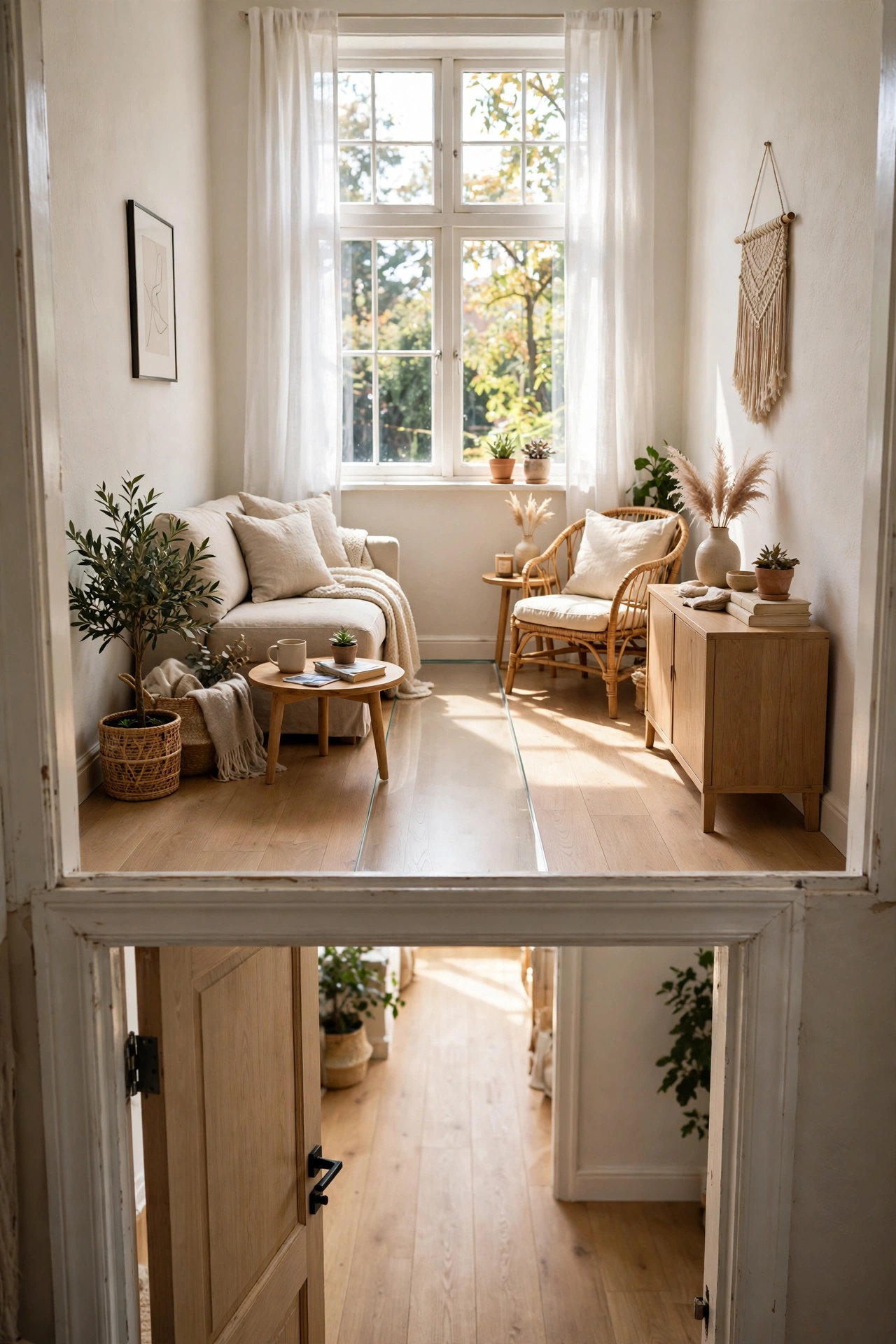
Small rooms feel crowded when people have to sidestep furniture to get through them. Map a single path from the entry to the room’s exit or window, keep it 30 to 36 inches wide, and refuse to let any furniture leg, basket, or plant stray into it. A room you can walk through smoothly feels twice as calm as one you have to navigate.
Try it: Walk your daily path through the room with a laundry basket in your arms. Anything you bump is in the lane and needs to move.

05
Give the room one focal point
Rooms without a clear star end up with furniture pointed in three directions, which reads as clutter even when everything is tidy. Choose one feature, the fireplace, the big window, the TV, or a statement art piece, and aim the main seating at it. Everything else becomes supporting cast and the room instantly feels composed.
Try it: Stand in the doorway and notice where your eyes land first. That is your focal point. Angle the loveseat and chairs to face it.
06
Turn a dead corner into a reading nook
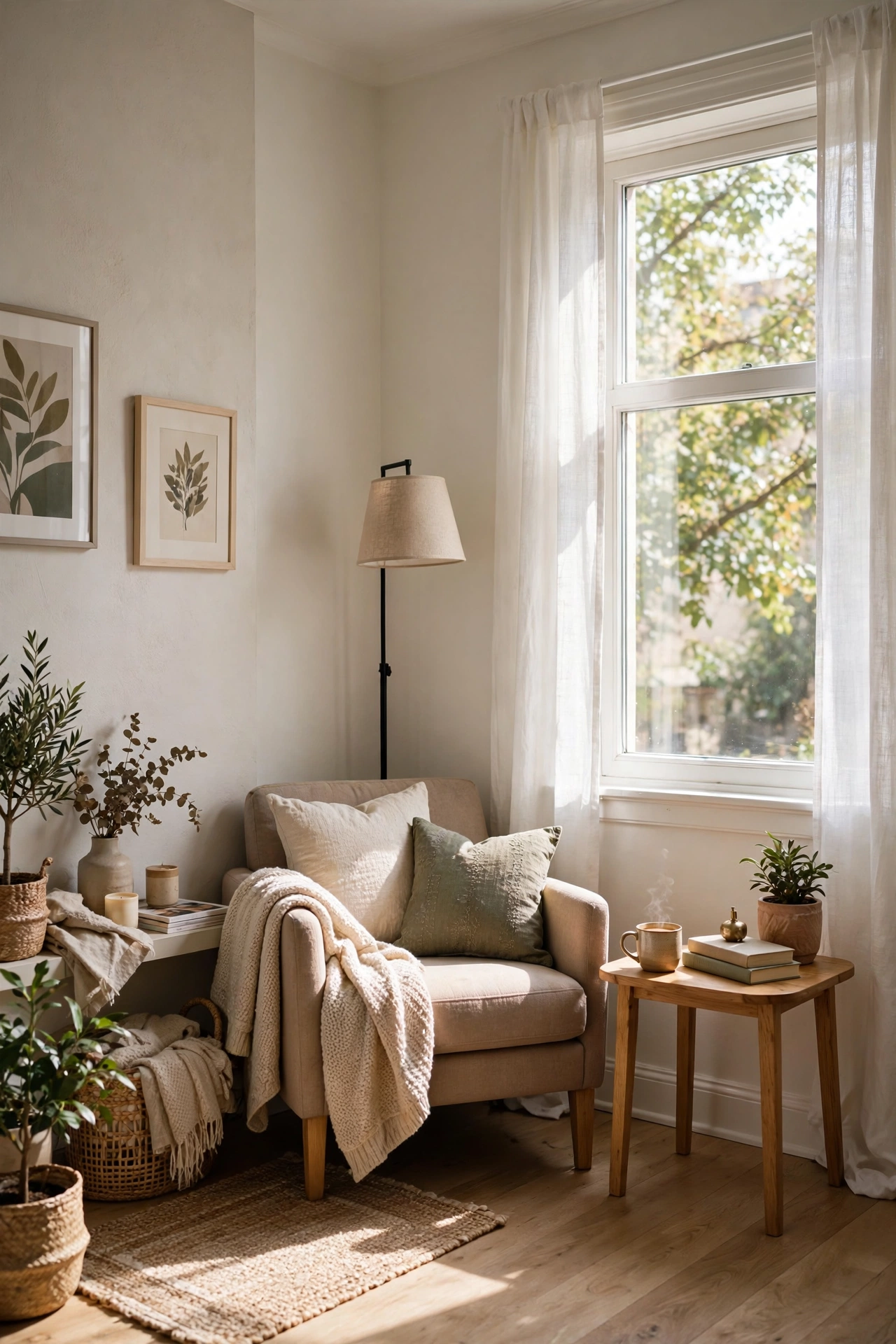
Every small living room has one underused corner, usually where the light is best but nothing useful lives. A slim armchair, a floor lamp, and a small side table turn that dead zone into a second function without stealing anything from the main seating. You gain a whole extra reason to love the room for about two square feet of floor.
Try it: Place the chair near the brightest window you have. Natural light does the decorating work for free.
07
Swap the full sofa for an apartment-size loveseat
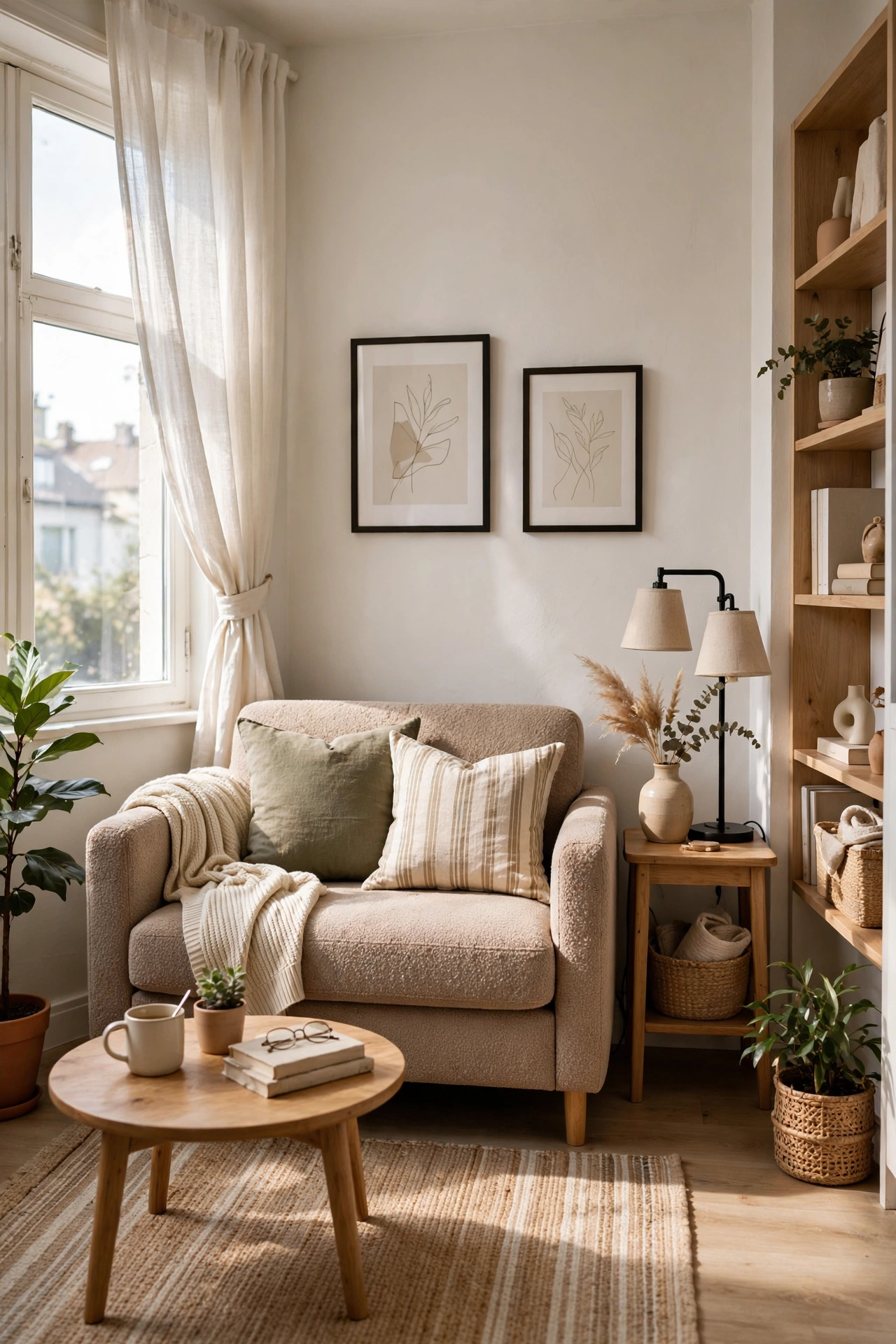
A standard 84 to 96 inch sofa can swallow a small living room whole, leaving no room for anything but a walkway. An apartment-size sofa or loveseat in the 68 to 78 inch range seats two comfortably and hands back 12 to 18 inches of precious floor. Scale the biggest piece down and the whole room breathes easier.
Try it: Measure your current sofa, then subtract 15 inches and mark the new footprint with tape. Sit with that for a day before you shop.
08
Choose armless or slim-arm seating
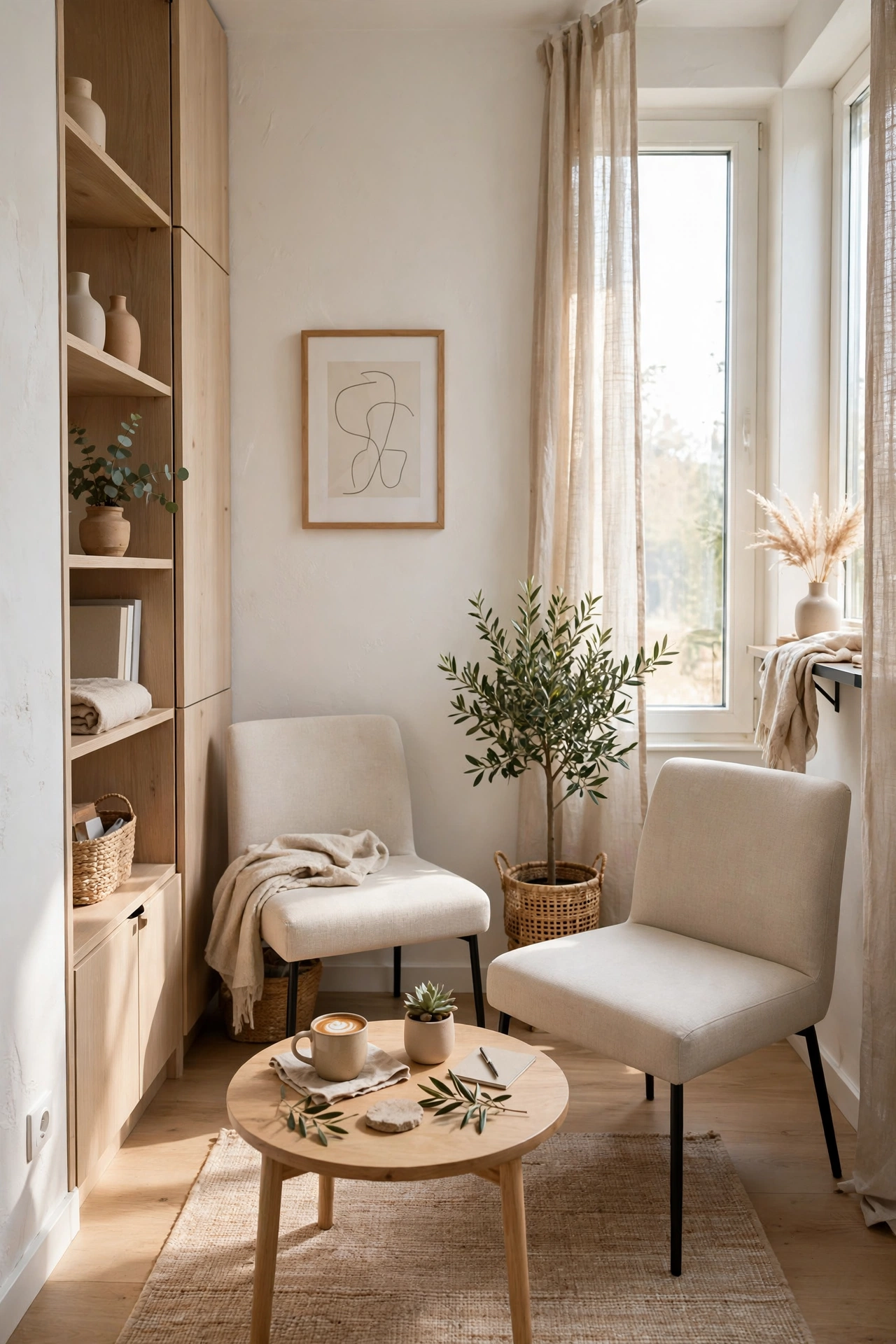
Bulky rolled arms eat up to 8 inches of width per side without adding any seating comfort. Armless chairs or sofas with slim track arms fit more usable seat into the same footprint and look lighter from across the room. You keep the same number of seats while visibly shrinking the furniture.
Try it: When shopping, check the outside width against the inside seat width. If arms claim more than 6 inches total, keep looking.
09
Go round with the coffee table
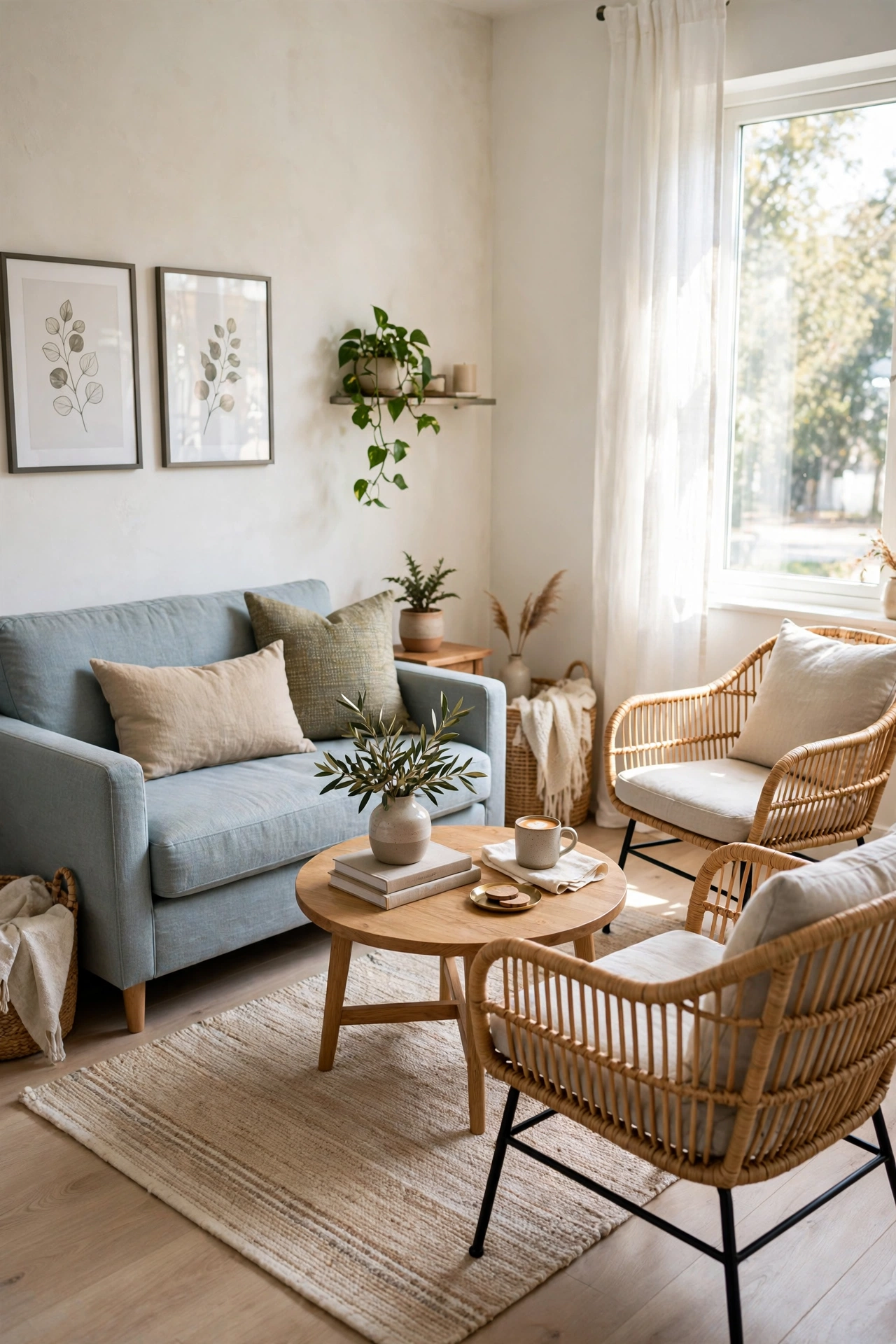
A rectangular coffee table in a tight seating arrangement creates corners that shins find and traffic has to swing around. A round table of 30 to 36 inches softens the geometry, improves flow between seats, and tucks neatly into an angled layout. Round tables also seat more people comfortably around them when friends come over.
Try it: Borrow a round table or even a large ottoman for a week. If nobody misses the corners, make the swap permanent.
10
Replace the coffee table with nesting tables
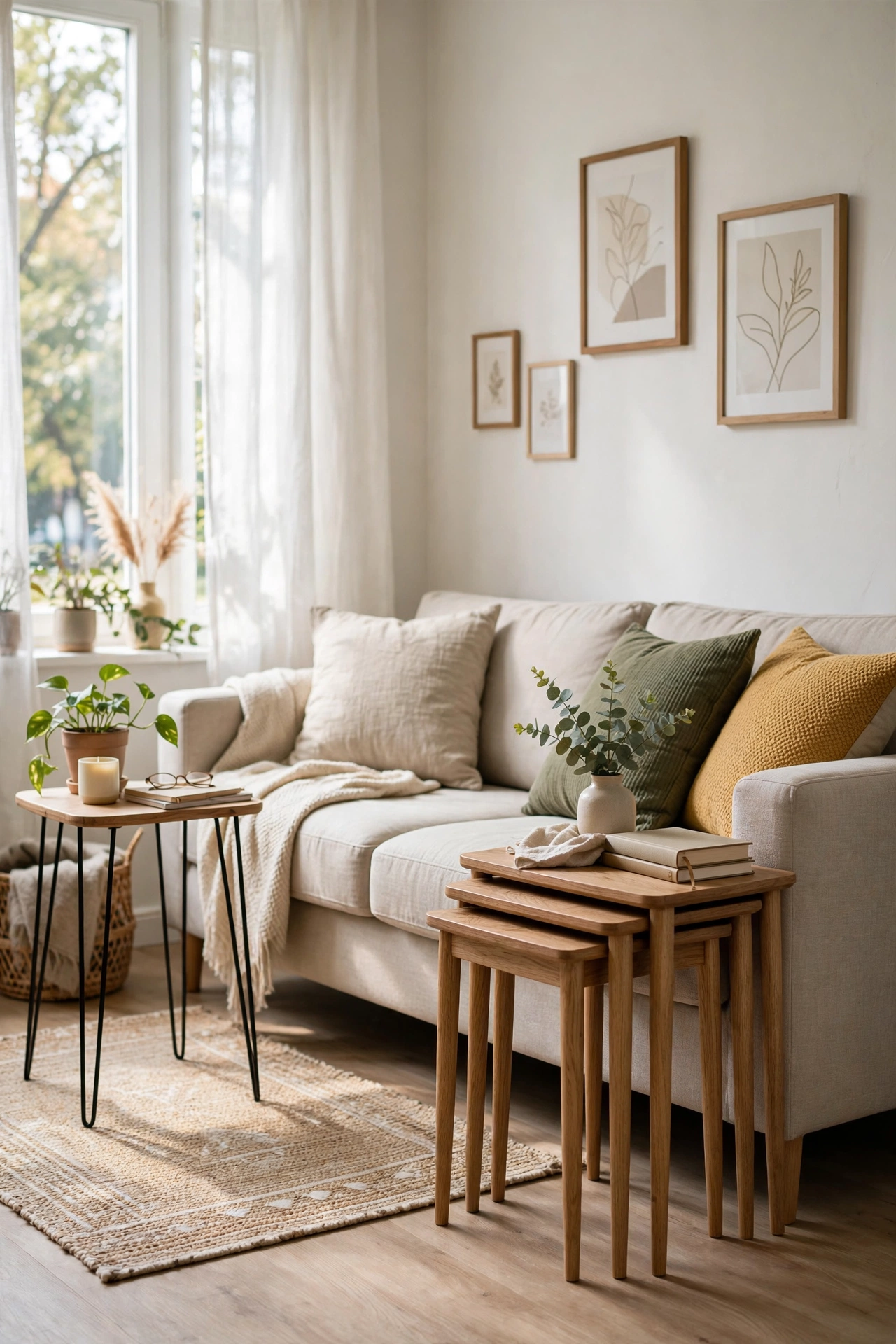
A big coffee table occupies the center of the room all day for the few minutes you actually need a drink spot. A set of two or three nesting tables stacks into the footprint of one small table and fans out when guests arrive. You keep your surface space and gain back the center of the room.
Try it: Pick nesting tables with slim legs and no crossbars, so the smaller ones slide fully underneath. A half-tucked stack just looks messy.
11
Mount the TV on the wall
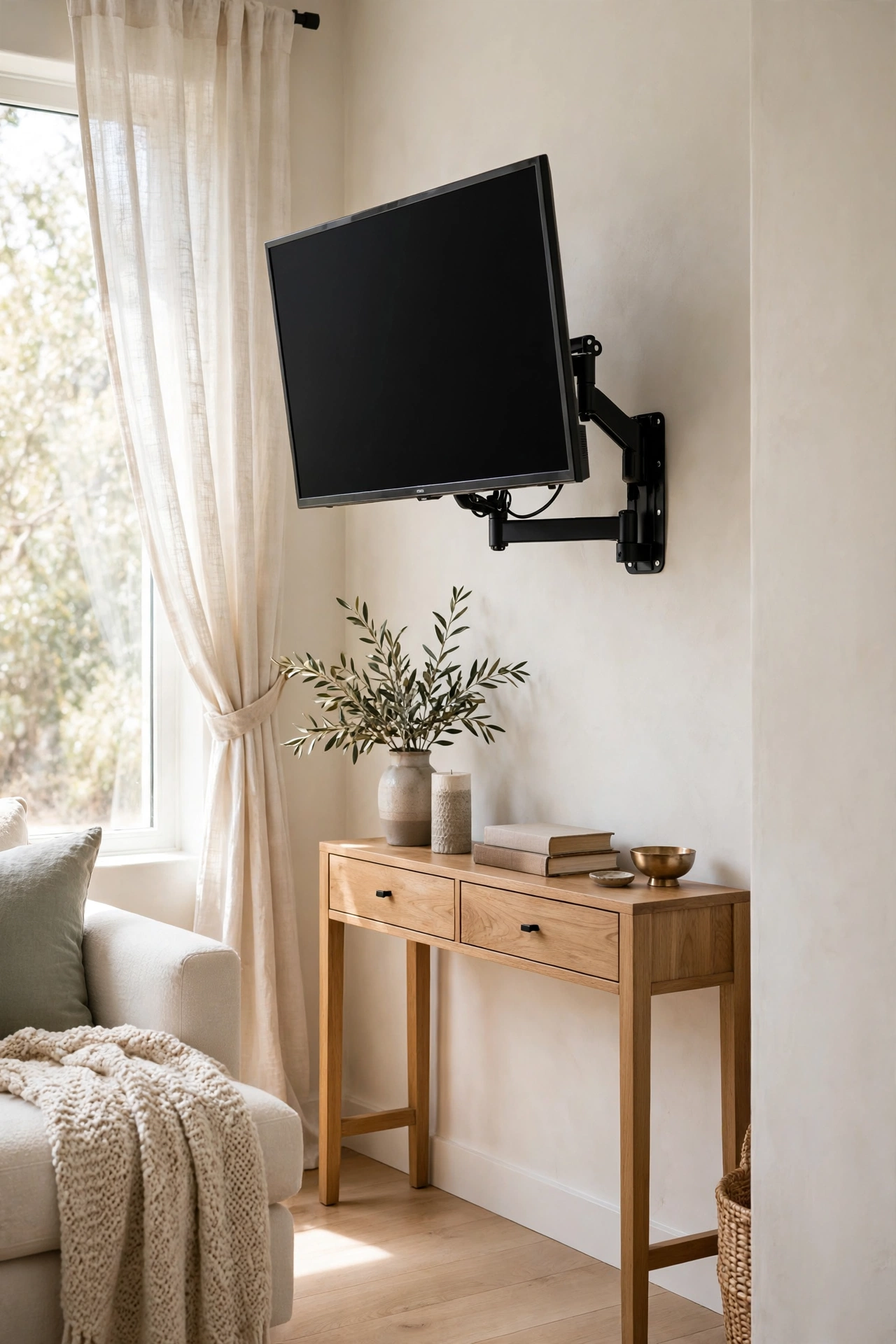
A TV on a stand plus a media console can claim three feet of your room’s depth before you even sit down. A wall-mounted TV on a slim swivel arm frees the entire floor below it for a narrow console, a bench, or simply open space. The screen sits at a better viewing height too, right at seated eye level.
Try it: Sit in your usual spot and have someone hold the TV at different heights. Mark eye level on the wall before you drill anything.
12
Pick furniture with visible legs
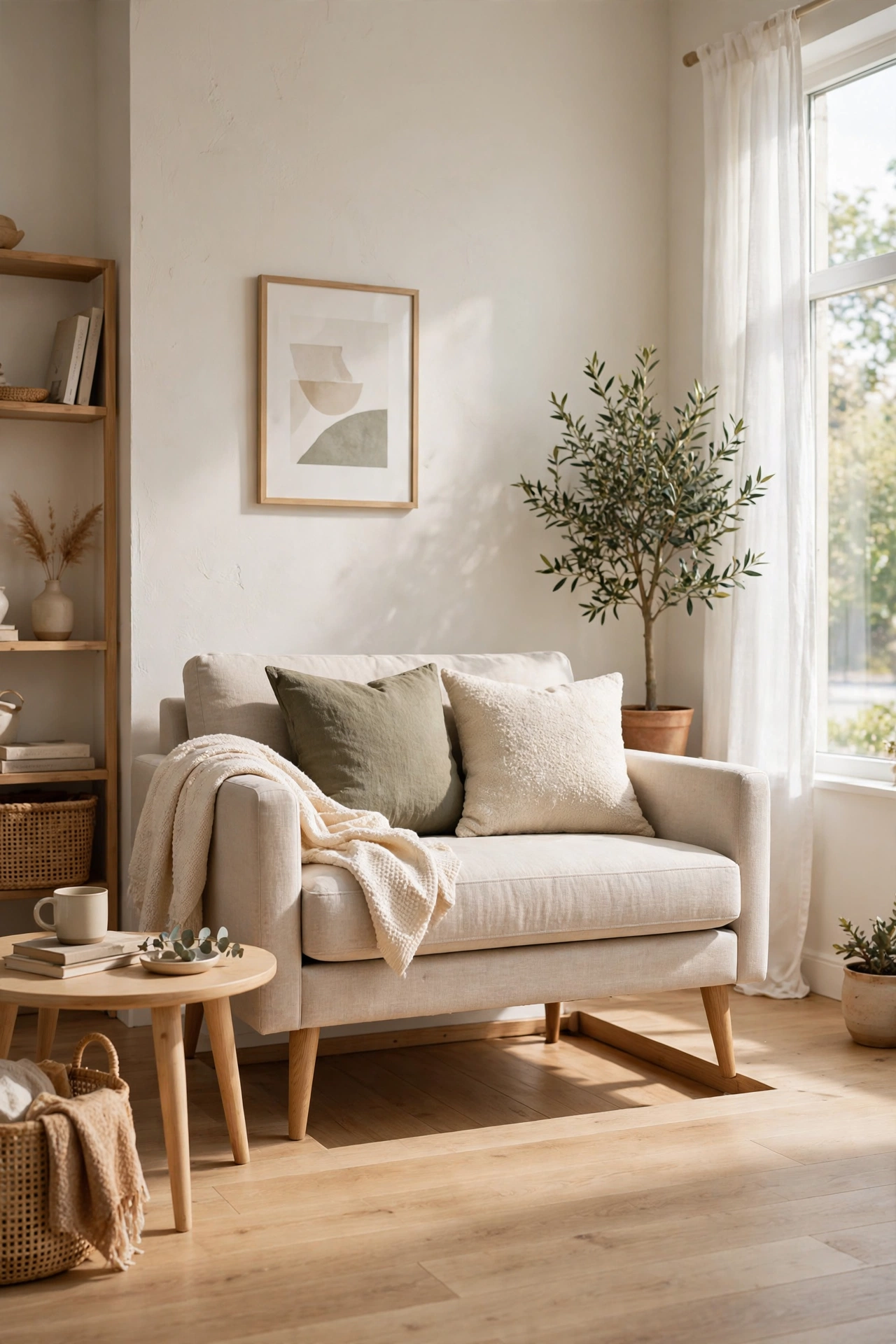
Pieces that sit flat on the floor create a solid visual block that the eye reads as bulk. Sofas, consoles, and media stands raised on 4 to 6 inch legs reveal a band of floor beneath them, which the brain registers as open space. It is a subtle illusion, but in a 200 square foot room it noticeably lightens every piece.
Try it: If you love your current sofa, 4 inch furniture risers under the legs create the same airy gap for under $20.
13
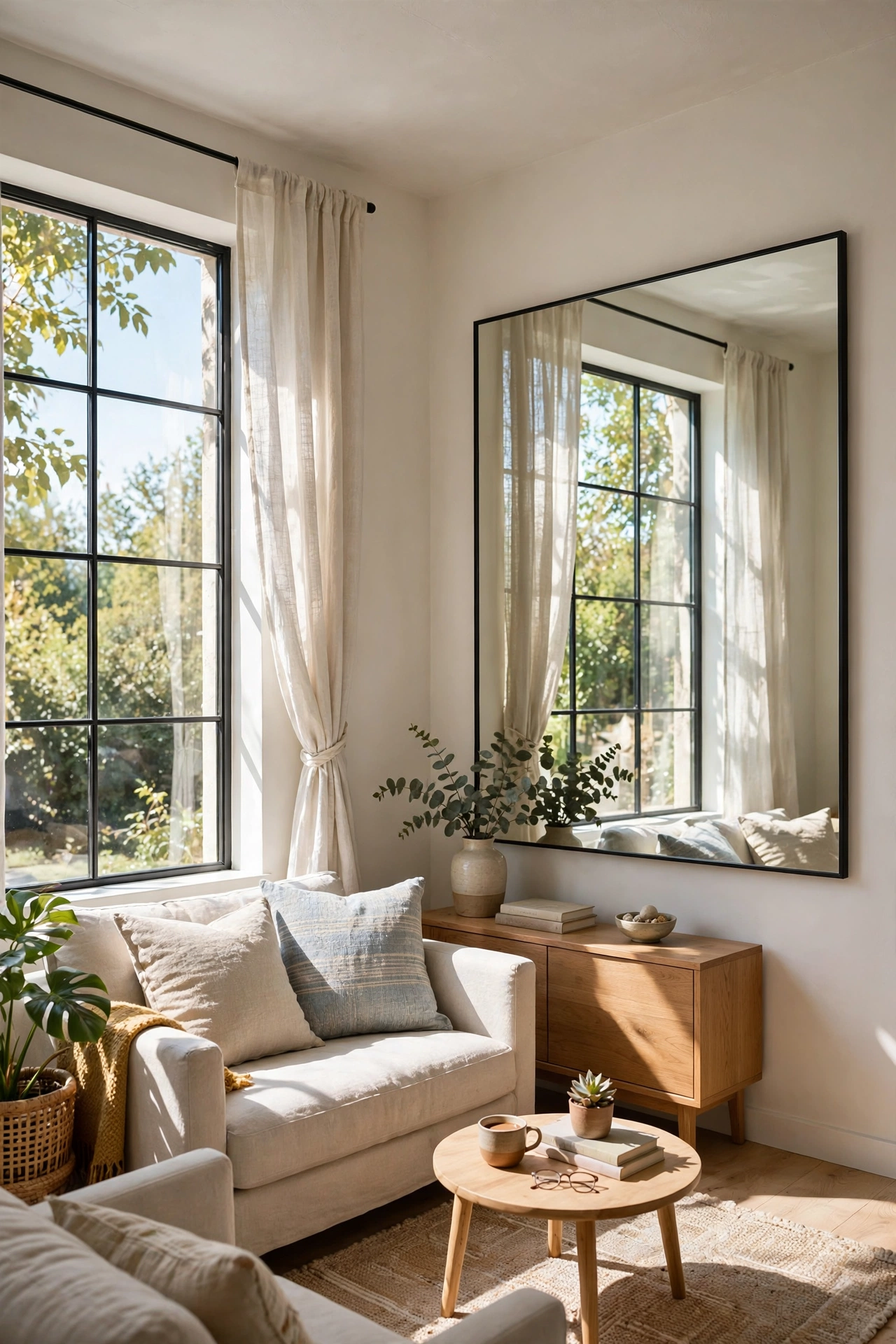
Hang a mirror opposite the window
Nothing stretches a small living room faster than a well-placed mirror. Hung opposite or adjacent to the main window, it bounces daylight deep into the room and doubles the view, which the eye reads as extra space. Go big: a mirror that is at least two thirds the width of the sofa makes the strongest statement.
Try it: Lean the mirror against the wall and check the reflection from your seat. You want sky or greenery reflected, not the ceiling fan.
14
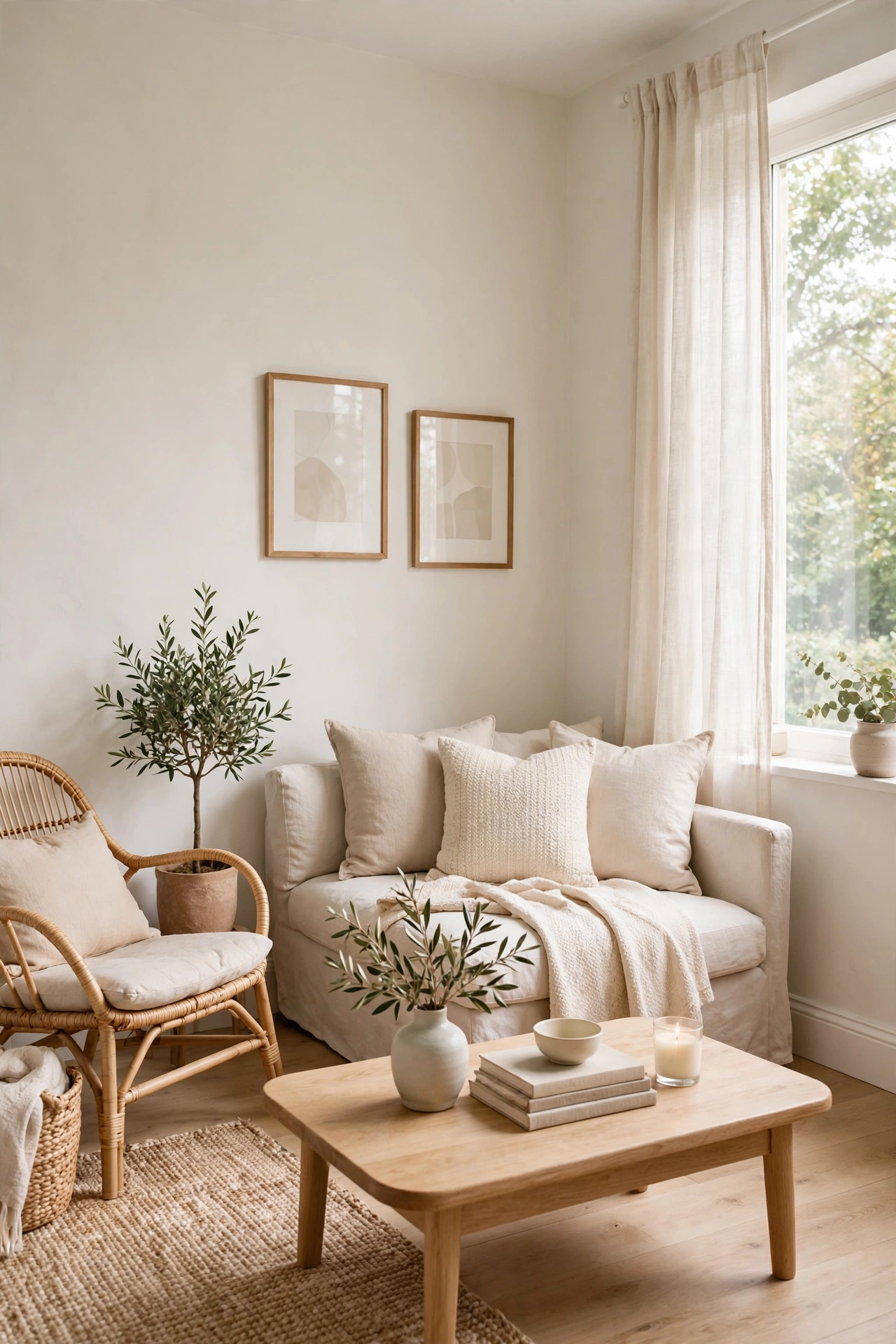
Paint it pale and warm
Cool stark white can make a small room feel flat and boxy, while pale warm shades like warm white, light greige, or soft putty blur the corners and bounce light around. The room feels wrapped rather than walled in. Keep the finish eggshell or satin so the walls softly reflect light instead of absorbing it.
Try it: Paint large swatches on two walls and observe them morning and evening. Warm neutrals shift nicely through the day; cool grays can go gloomy after dark.
15
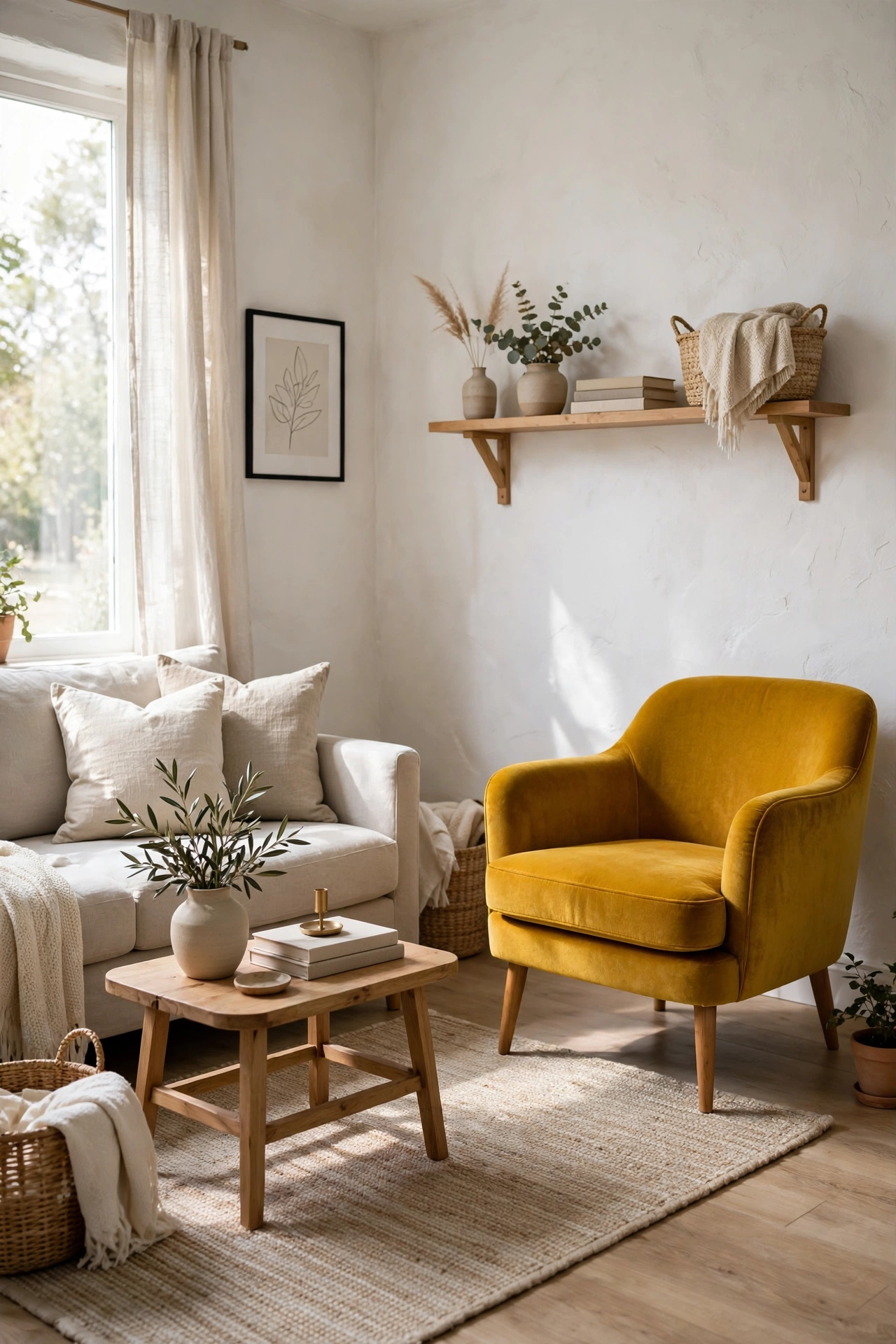
Commit to one bold accent color
Small rooms do not have to be all beige, but scattered color in five directions reads as visual noise. Choose one bold accent, a mustard chair, a teal throw, an emerald plant pot, and repeat it in two or three small touches. The room gains personality and drama while the palette stays disciplined enough to feel calm.
Try it: Gather your colorful accessories in one pile, then put back only the ones that match your chosen accent. Donate the rest.
16
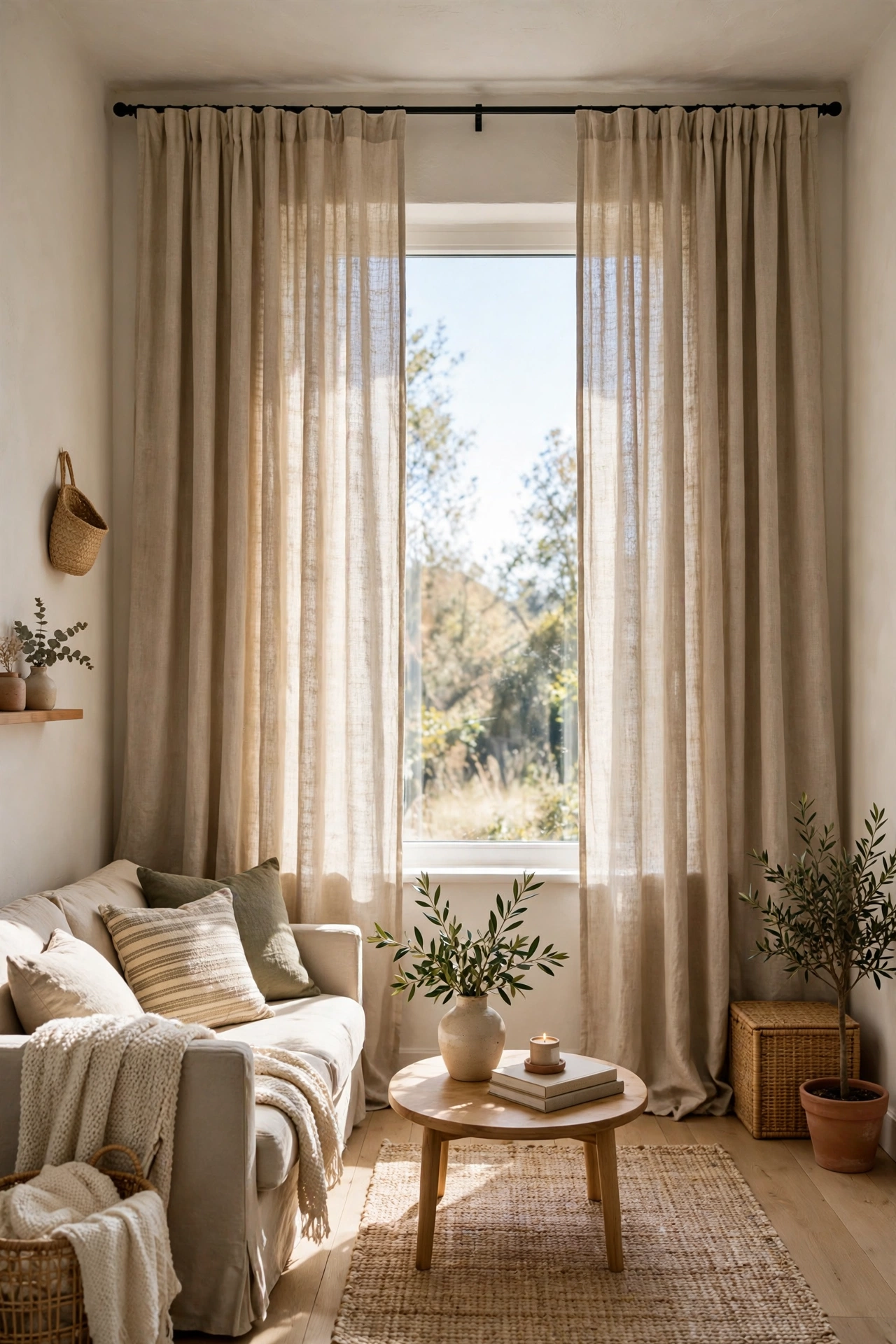
Hang curtains high and wide
Curtains hung just above the window frame shrink the window and, with it, the room. Mounting the rod 4 to 6 inches below the ceiling and 6 to 10 inches wider than the frame on each side makes the window look dramatically larger and draws the eye upward. Floor-length panels in a light fabric add softness without visual weight.
Try it: This is a $25 curtain rod upgrade that photographs like a renovation. Use lightweight linen or cotton so the panels do not overwhelm the wall.
17
Layer three light sources
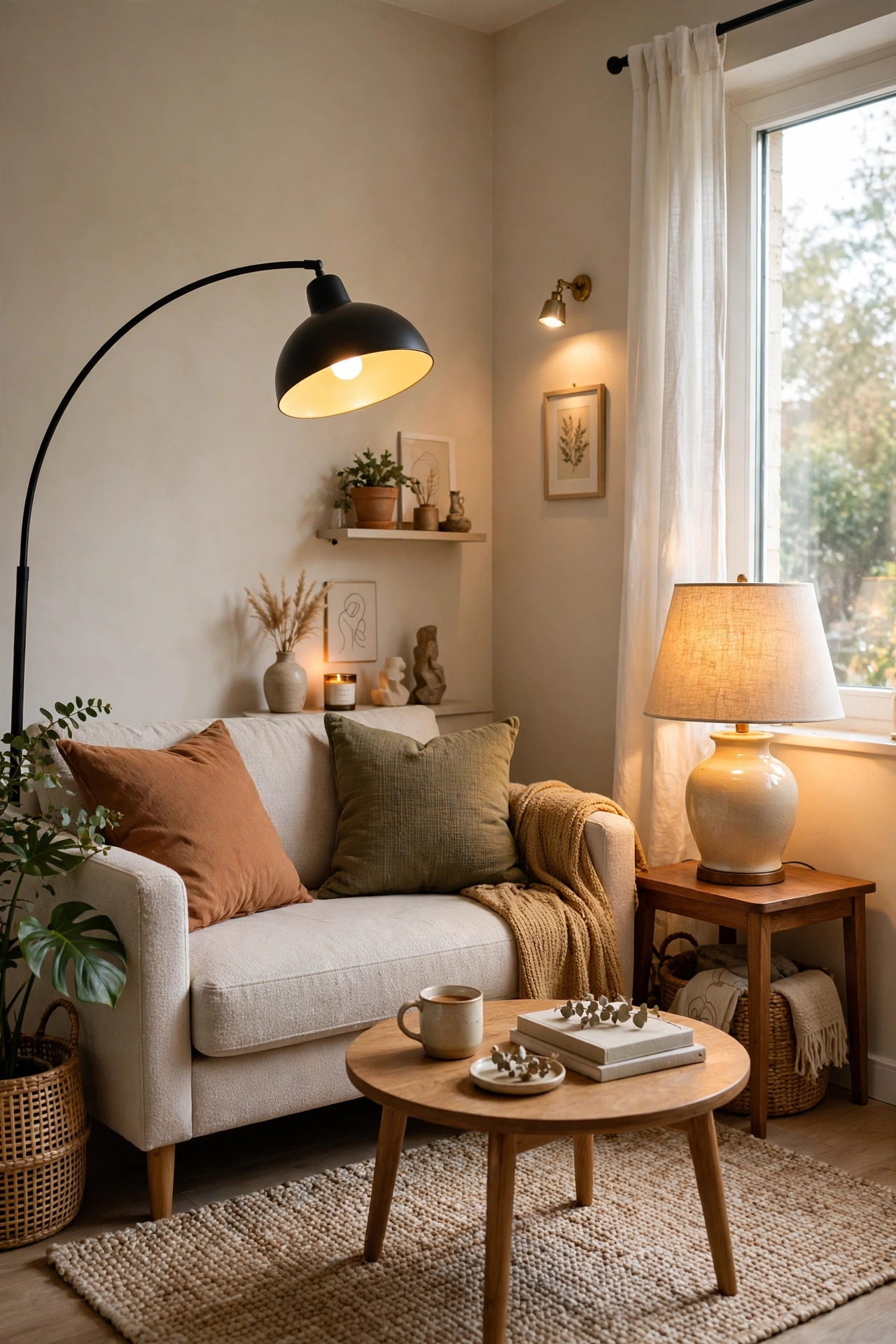
One overhead light flattens a small room and leaves corners in shadow, which makes the space feel smaller than it is. Layering an arc or floor lamp for reading, a table lamp for warmth, and a small accent light for a shelf or plant fills the room evenly. Warm 2700K bulbs keep it cozy rather than clinical.
Try it: Put your lamps on plug-in dimmers, about $12 each. Being able to lower the light in the evening makes the room feel larger and calmer.
18
Keep the ceiling bright and the fixture slim
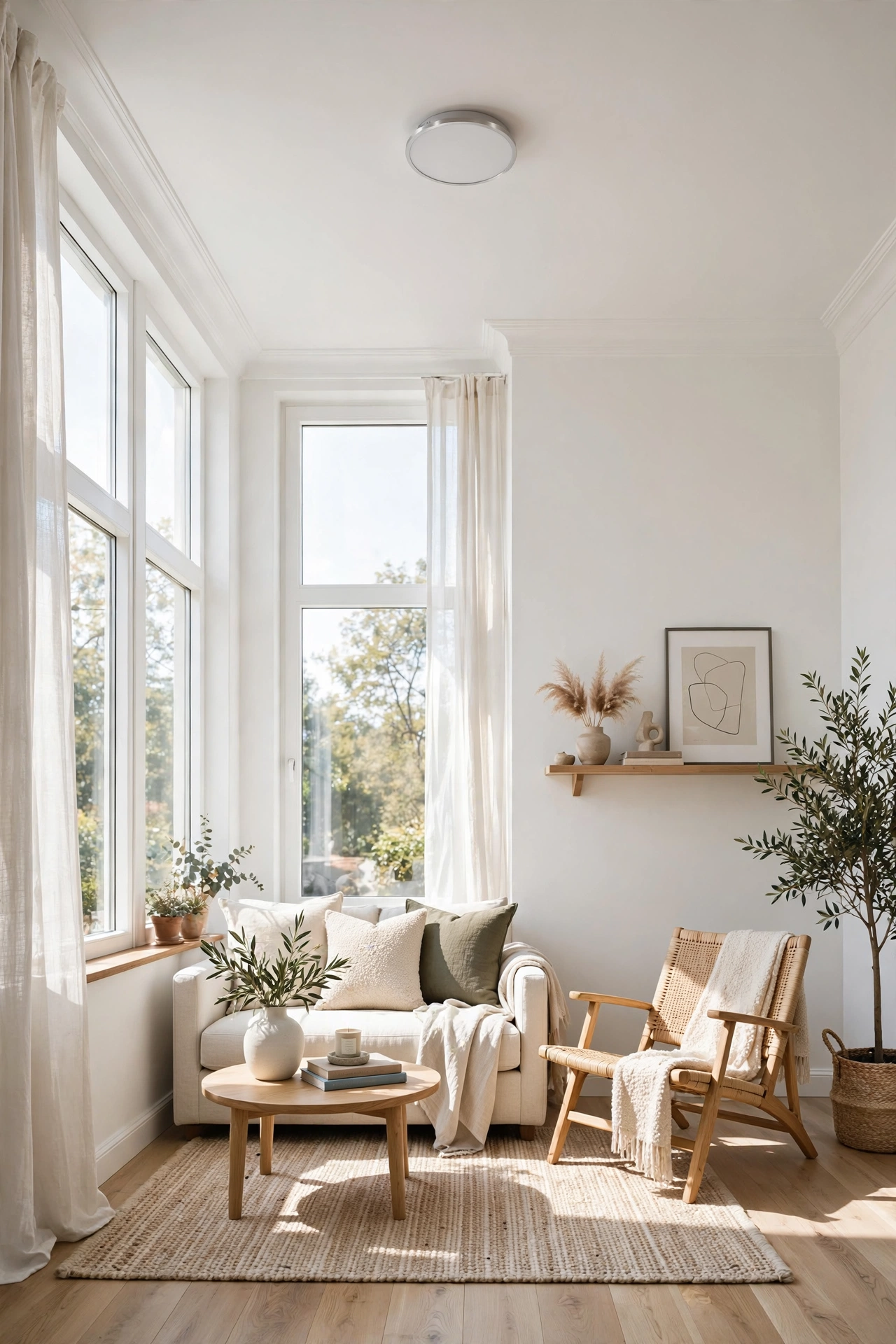
A dark or busy ceiling presses down on a small room. A clean white ceiling with a slim flush-mount or semi-flush fixture keeps sightlines open all the way up, which is free visual height. If you have a pendant you love, hang it high enough that nobody has to duck, at least 7 feet from the floor.
Try it: While you are at it, paint the ceiling the same warm white as the trim. Matching trim and ceiling erases the line where the wall ends, which stretches the height.

19
Make the ottoman do the storing
A storage ottoman with a lift-top lid is the hardest-working piece a small living room can own: footrest, extra seat, coffee table with a tray on top, and a hidden home for throws, remotes, and board games. It replaces a coffee table and a clutter basket in one 36 inch square. Choose one with a flat, firm top so a tray sits steady.
Try it: Before buying, list what would actually live inside it. If you cannot name five things, a plain ottoman plus a basket may serve you better.

20
Choose a sofa with built-in storage
The dead space under and behind a sofa is some of the most wasted real estate in a small living room. Sofas with built-in drawers, a chaise with a lift-up compartment, or a sleeper with a storage base turn that void into real capacity. You gain the equivalent of a small dresser without adding a single piece of furniture.
Try it: Measure what you would store: folded throws need 8 inches of depth, board games need 12. Buy the depth your stuff actually requires.
21
Build up with tall, narrow storage
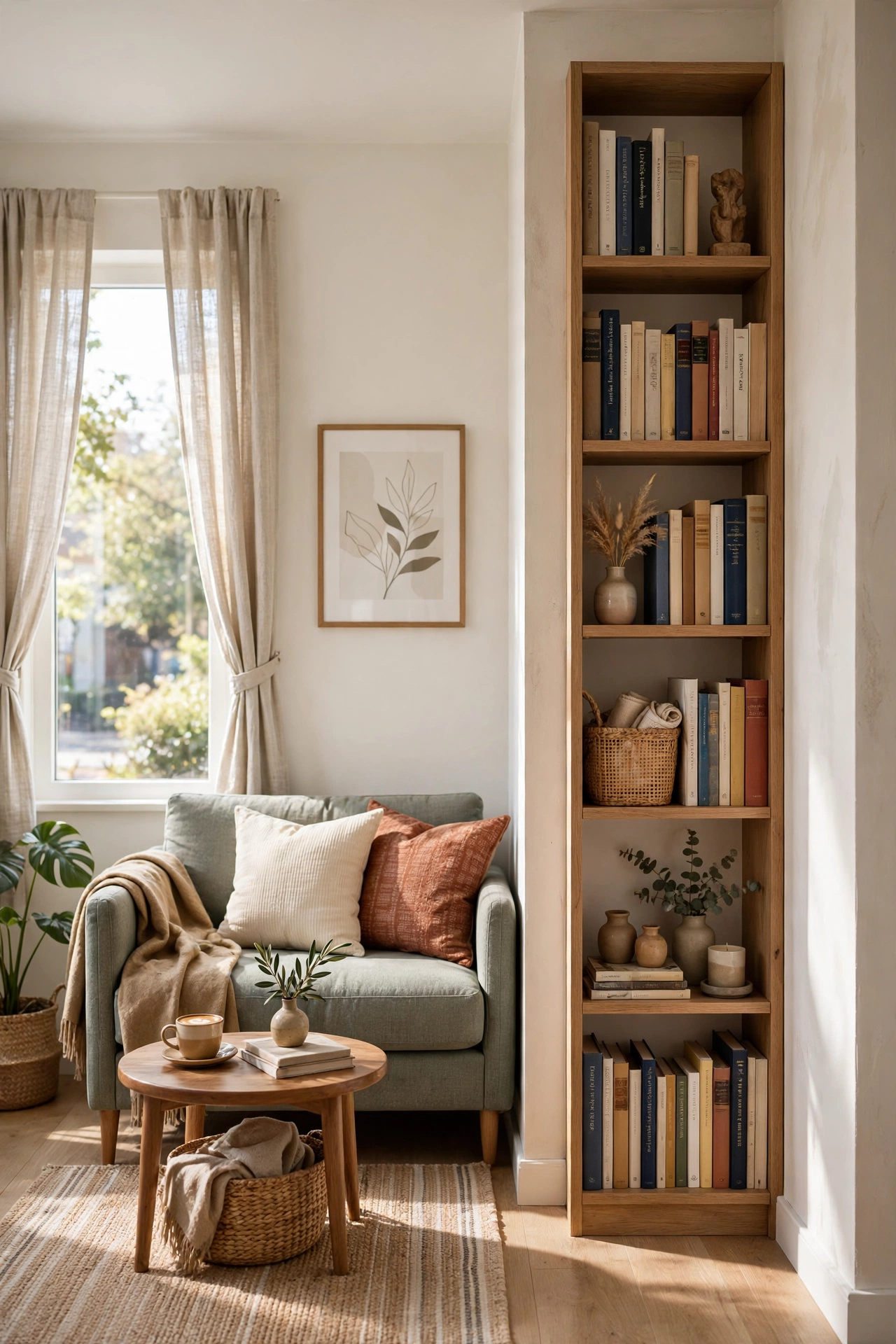
Floor space is the currency of a small living room, so spend your storage budget on height. A tall, narrow bookcase with a 12 to 16 inch footprint holds as much as a wide low cabinet while drawing the eye upward, which makes ceilings feel higher. Anchor anything over 4 feet tall to the wall with an anti-tip kit.
Try it: Style tall shelves with books on the lower two thirds and lighter objects, plants and art, up top. Heavy bottoms keep the room feeling grounded.
22
Swap the bookcase for floating shelves
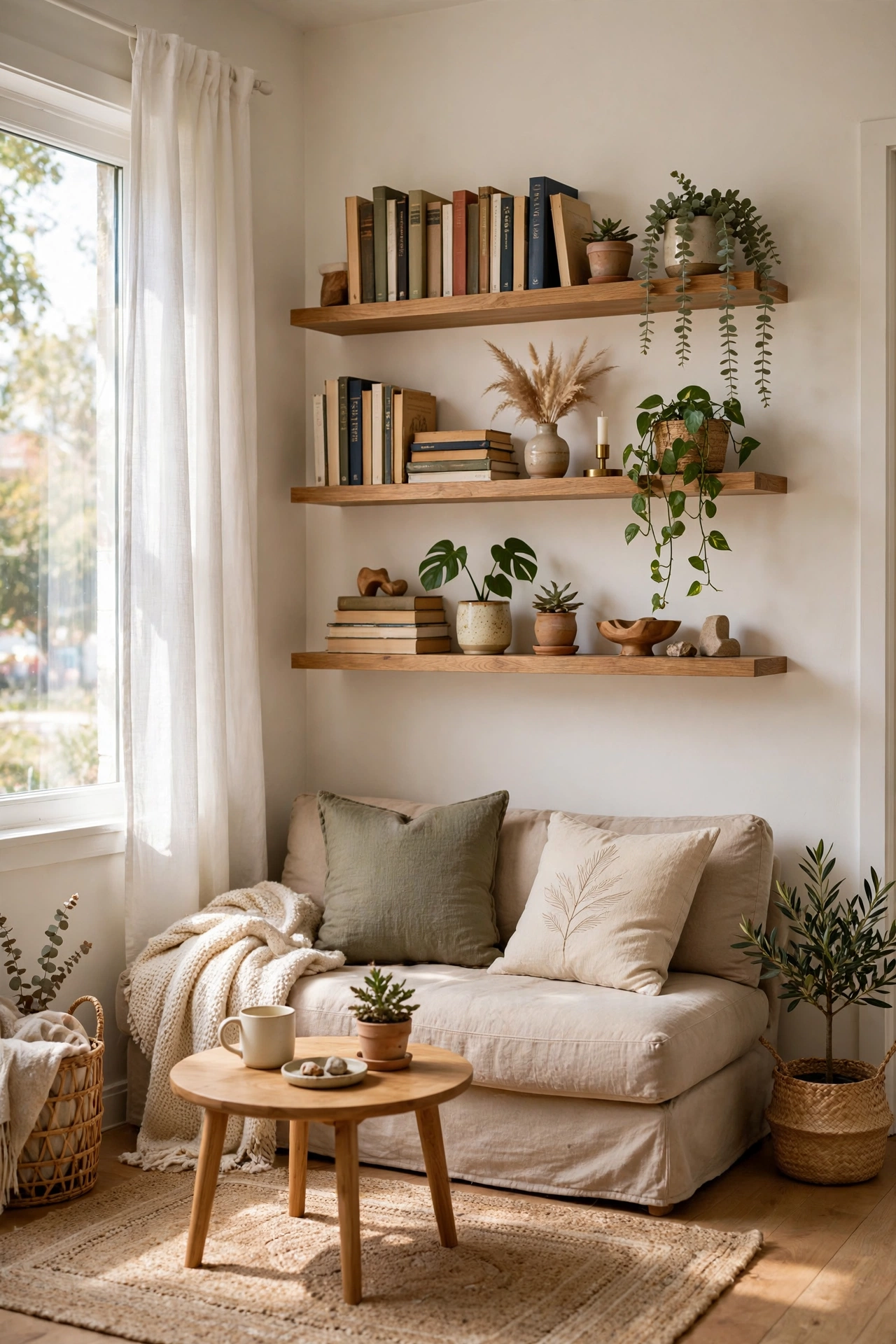
A full bookcase can feel like a wall of visual weight in a compact room. Two or three floating shelves hold the same books, frames, and plants while leaving the floor and the lower wall completely open. The room keeps its storage and loses the bulk. Stagger shelf lengths slightly for a lighter, more designed look.
Try it: Limit each shelf to about 70 percent full. The breathing room between objects is what makes floating shelves look airy instead of crowded.

23
Slide a console behind the sofa
The 10 inches of space behind a floated sofa is prime real estate most people leave empty. A slim console table, 10 to 12 inches deep, holds a lamp, a catch-all bowl, and books while anchoring the back of the seating arrangement. It makes a floated layout look deliberate and gives you a landing spot right where you sit.
Try it: If 10 inches feels tight, a narrow wall-mounted ledge shelf at the same height does the same job with zero floor footprint.

24
Corral the soft stuff in baskets
Throws, spare pillows, and magazines are what make a living room cozy, and they are also what make it look messy when they have no home. Two or three woven baskets in matching tones give every soft item a designated spot and add natural texture at the same time. A lidded basket beside the sofa swallows a whole throw collection in seconds.
Try it: Assign one basket per category: throws, remotes and chargers, kids or pet gear. Tidy-up becomes a 60 second game instead of a chore.
25
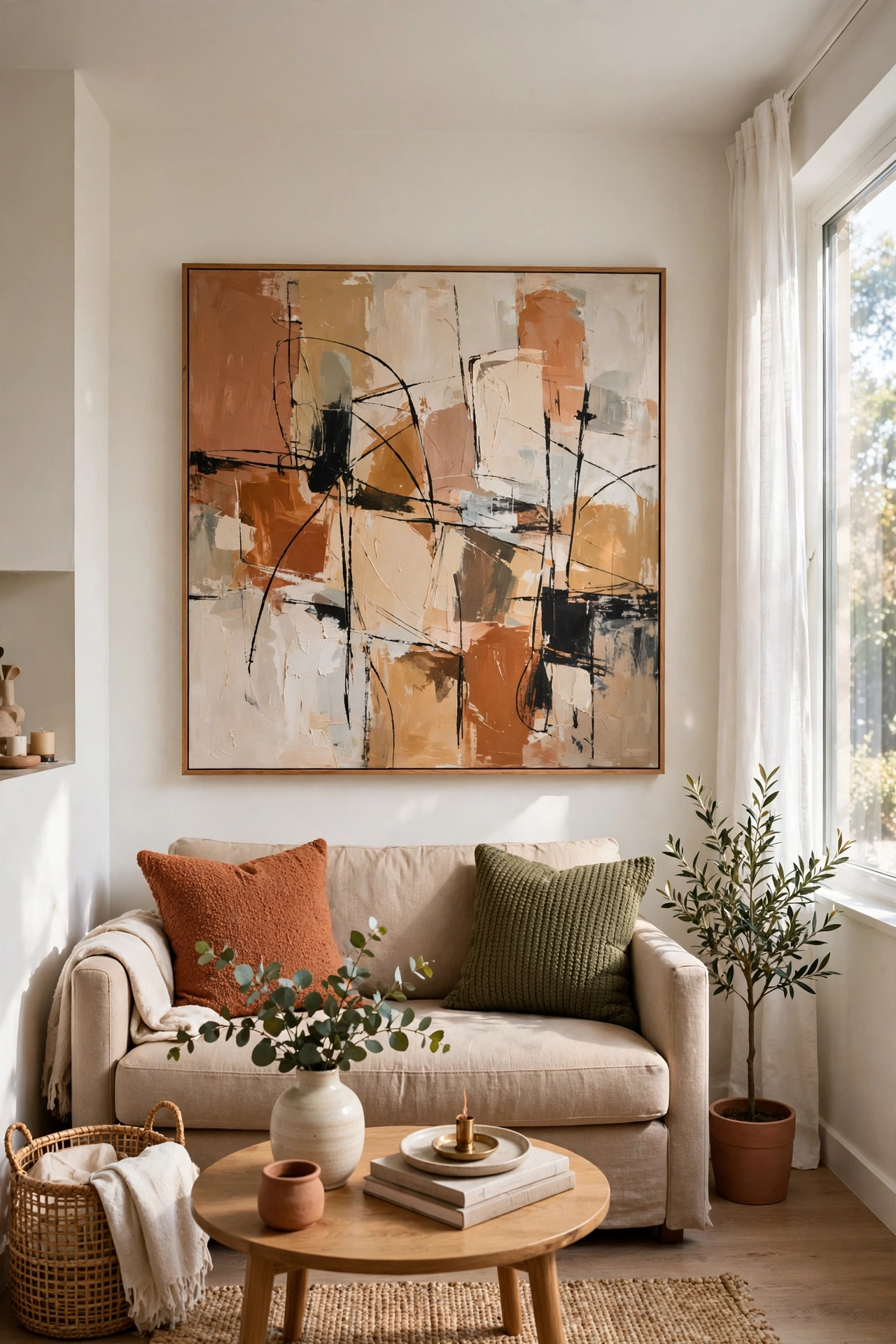
Hang one large art piece, not five small ones
A gallery of small frames scatters the eye across the wall and makes a compact room feel busy. One large piece of art, roughly two thirds the width of the sofa below it, gives the wall a single confident focal point and actually makes the wall feel bigger. It is the same reason one big mirror beats three small ones.
Try it: Cut a paper template the size of the art you are considering and tape it up for a day. If it feels right at full scale, buy with confidence.
26
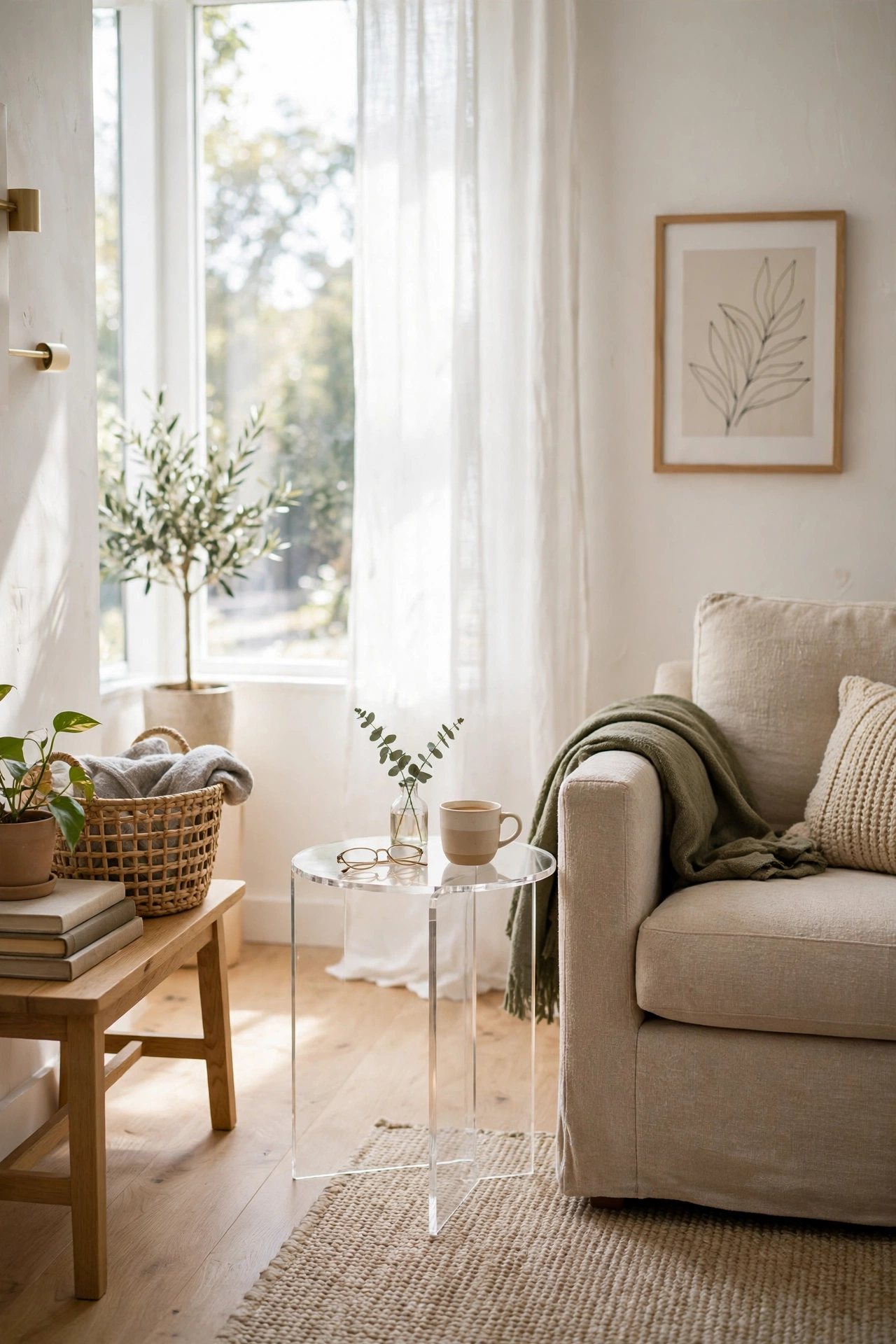
Use a glass or acrylic side table
Every solid surface in a small room adds visual weight, but you still need somewhere for a lamp and a drink. A glass or acrylic side table performs the job while practically disappearing, letting the eye travel straight through it to the floor beyond. It is the closest thing to having a table and not having one.
Try it: Pair the ghost table with one textured object, a ceramic vase or a stack of books, so it reads as styled rather than invisible.
27
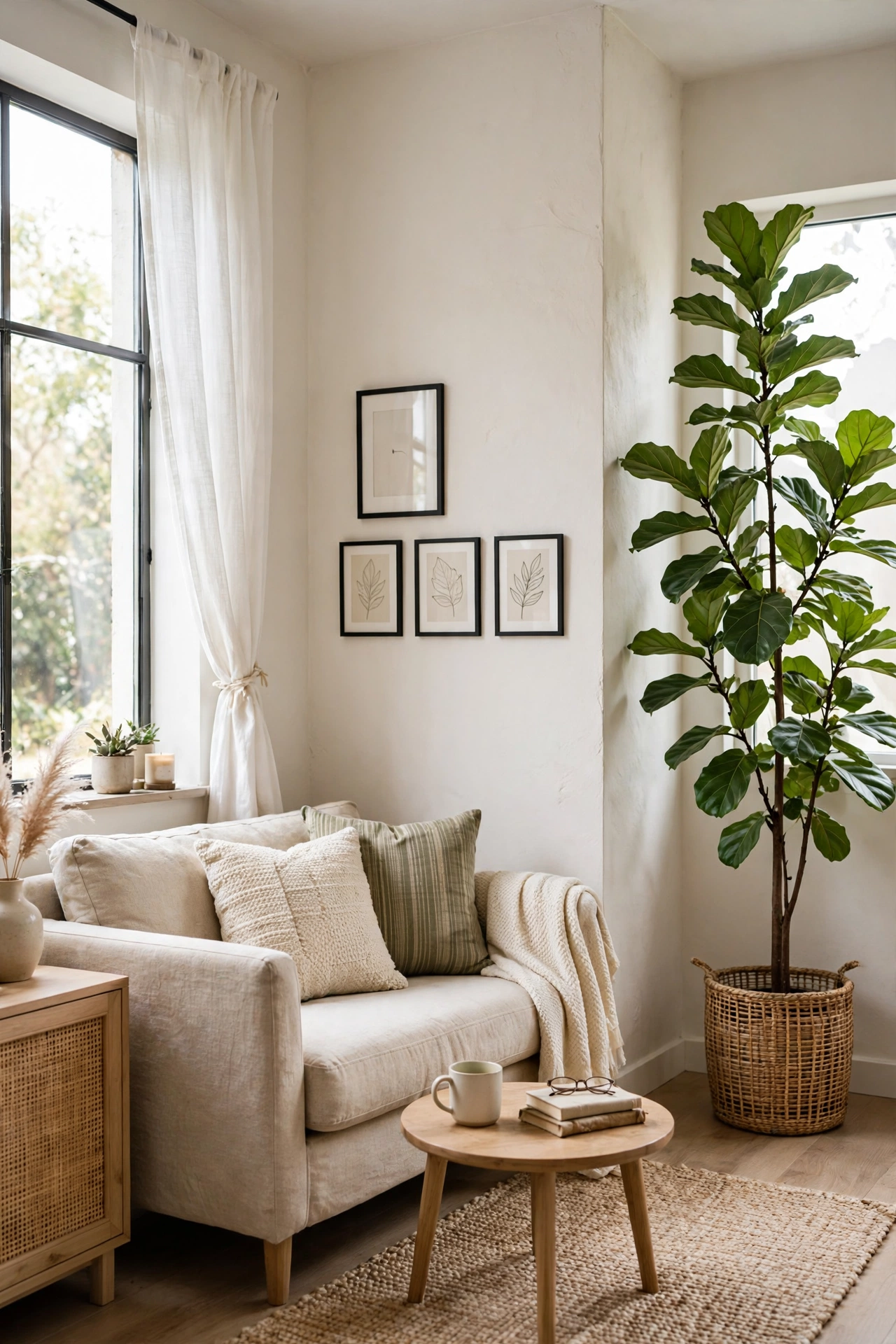
Add one tall plant for vertical lift
A tall plant in an empty corner does three jobs at once: it fills dead space, it pulls the eye upward toward the ceiling, and it adds living texture that no decor object can match. A fiddle leaf fig, olive tree, or tall snake plant in a simple pot keeps the look clean. One strong plant beats five small ones scattered around.
Try it: Place the plant where it gets the light it needs first, then arrange furniture around it. A dying plant in the perfect spot is worse than a thriving one in the second-best spot.
28
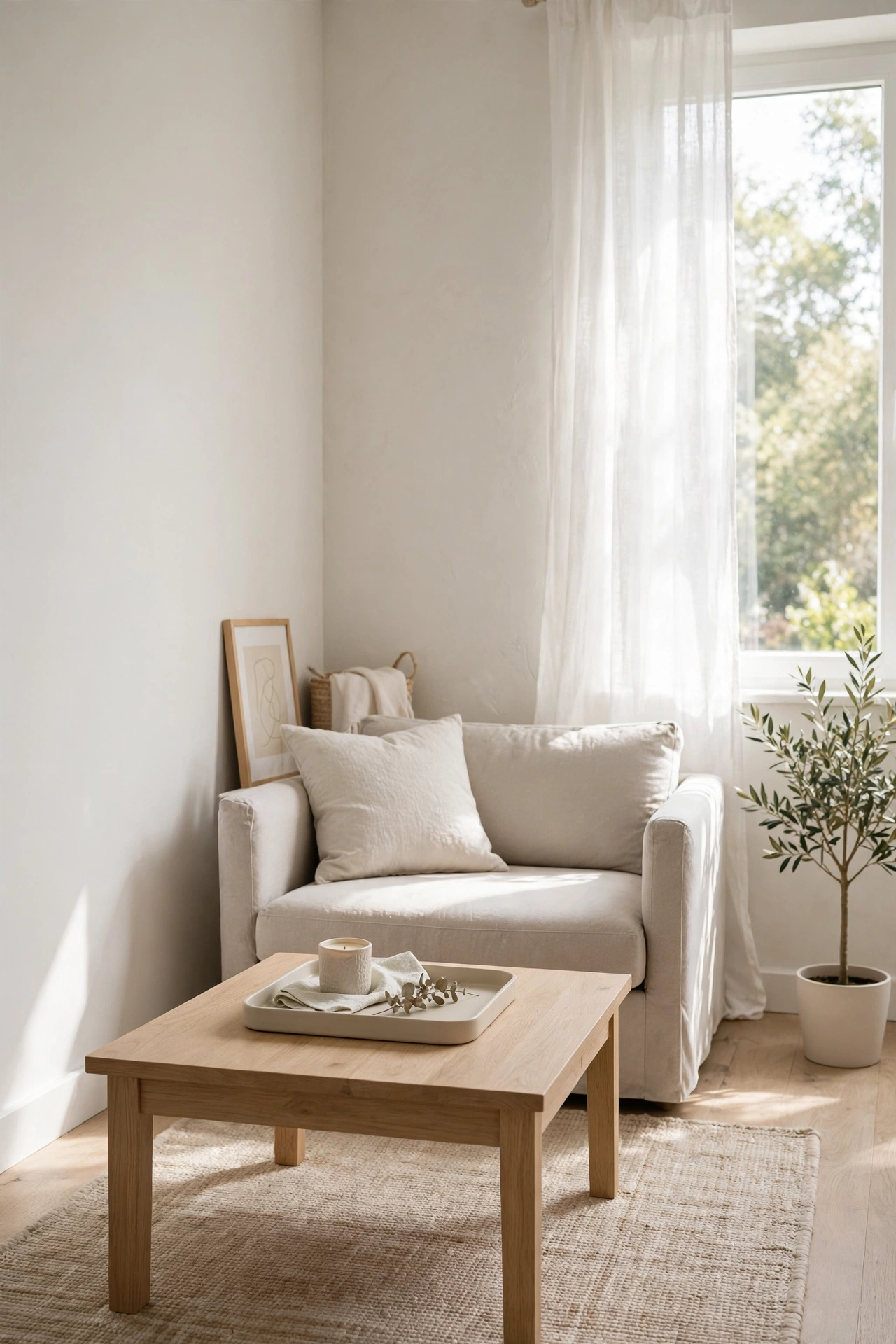
Edit surfaces down to one beautiful thing
In a small living room, every surface is on display, so a coffee table with seven objects reads as clutter no matter how pretty each one is. Style each surface with one anchor, a tray, a stack of books, or a single vase, and let it breathe. The room will look styled, calm, and twice as tidy with half the objects.
Try it: Remove everything from one surface, then add back only your three favorite pieces. If it still feels full, you know your true limit is two.
Pro tip: Start with the free moves first: float the sofa, angle a chair, hang the curtains higher, and edit your surfaces. Those four cost nothing and most people see the difference the same evening — proof that smart living room layouts start with what you already own.
Three rules for small living rooms
Small rooms punish random decisions and reward deliberate ones. These three rules keep every choice you make working in the same direction, the way good small space design tips always do.
- Scale the furniture to the room, not your dreams: Measure the room first and buy to the tape, not to the showroom. An apartment-size loveseat at 72 inches, a 30 inch round table, and a 5×8 rug are the proportions that consistently work in rooms under 250 square feet.
- Keep the floor as visible as possible: Every square foot of floor you can see is a square foot your brain counts as space. Choose leggy furniture, mount what you can on the wall, and resist filling corners just because they are empty.
- Give everything a hidden home: If an object has no designated spot, it lives on a surface, and surfaces are what make small rooms look chaotic. Storage ottomans, lidded baskets, and sofa drawers absorb the daily clutter that would otherwise stay visible.
Keeping a small living room clutter-free
A small living room does not get messy because you own too much; it gets messy because too much has nowhere to go. A little system keeps it calm with almost no effort.
- Adopt the one-tray rule for surfaces: Every flat surface gets a maximum of one tray, and only what fits on the tray may live there. Remotes, coasters, and the current read go on the tray; everything else gets put away. The rule is simple enough to actually follow.
- Do a two-minute reset every evening: Set a timer and return throws to their basket, dishes to the kitchen, and stray items to their homes. In a small room, two minutes genuinely restores order because there is simply less ground to cover.
- Audit seasonally with the box method: Four times a year, walk the room with a box and remove anything you have not used or loved in the last season. Small rooms have no spare capacity for maybes, and each audit keeps the space feeling fresh.
More ideas you’ll love: small bedroom ideas, Christmas living room decor ideas, studio apartment Christmas decor, Home & Living
Questions readers ask
What is the best sofa size for a small living room?
For most small living rooms, an apartment-size sofa between 68 and 78 inches wide hits the sweet spot: it seats two adults comfortably without dominating the floor. Measure your wall first and leave at least 30 inches of walkway on one side. If the room is under 10 feet wide, consider a loveseat plus one accent chair instead of a full sofa.
Should I push all my furniture against the walls in a small living room?
No, and this is the most common mistake. Floating the sofa even 8 inches off the wall creates a sense of depth and gives you space for a slim console behind it. Furniture does not need to touch the walls to fit; it needs clear walkways and a sensible focal point. Try it for a week before deciding it does not work.
What colors make a small living room look bigger?
Pale, warm neutrals like warm white, light greige, and soft putty reflect light and blur the room’s corners so the space feels larger. Keep the ceiling a clean white and limit bold color to one accent repeated in small doses. Dark colors can work in small rooms, but they need strong lighting and discipline to avoid feeling cave-like.
How do I arrange a small living room with a TV?
Mount the TV on the wall at seated eye level to free the floor beneath it, then arrange seating in a gentle arc or L-shape facing it. Keep a 30 to 36 inch path clear for walking, and use a slim media console rather than a bulky entertainment unit. A swivel wall mount lets you angle the screen for different seats without rearranging furniture.
Where should I put a mirror in a small living room?
Opposite or adjacent to the largest window, where it can catch and bounce natural light deep into the room. A large mirror, at least two thirds the width of the sofa, makes the strongest impact. Avoid placing it where it reflects clutter or a blank wall, since a mirror doubles whatever it faces.
Can a small living room have a coffee table?
Yes, but choose wisely. A round table between 30 and 36 inches keeps traffic flowing, and a set of nesting tables gives you surface space only when you need it. If the room is truly tiny, a storage ottoman with a tray on top works as a coffee table, footrest, and hidden storage in one piece.
How do I add storage to a small living room without bulky furniture?
Go vertical and go hidden: tall narrow bookcases, floating shelves, and wall-mounted cabinets use height instead of floor space. For hidden storage, storage ottomans, sofas with built-in drawers, and lidded baskets absorb clutter without adding visual bulk. The goal is storage you notice only when you open it.
What is the biggest mistake people make in small living rooms?
Buying furniture that is too large for the room, especially oversized sofas and coffee tables. One piece that is out of scale throws off the entire layout and makes every other decision harder. Always measure the room and the piece, tape the footprint on the floor, and check walkways before anything gets delivered.
People Also Ask
How can I make my small living room look bigger without renovating?
Rearrange first: float the sofa off the wall, angle a chair, and clear one traffic lane. Then add a large mirror opposite the window, hang curtains high and wide, and switch to warm pale walls if you can paint. These moves change how the room reads without touching a single wall.
Is a sectional a good idea for a small living room?
Usually not, unless it is a compact apartment-size sectional designed for small spaces. A standard sectional eats floor space and locks your layout in place. A loveseat plus an accent chair gives you the same number of seats with far more flexibility to rearrange as your needs change.
How much does it cost to refresh a small living room?
A meaningful refresh runs $150 to $600 depending on what you change. Free rearrangement plus $25 to $60 accessories like a mirror, baskets, and curtain hardware make a visible difference. Swapping in one right-sized piece, such as a storage ottoman or loveseat, lands in the $150 to $450 range and transforms how the room functions.
loved these ideas? ✿
Save this guide for later
Pin it to your board so it’s there when you’re ready to recreate it.

Curated by
Hey! I'm Sanaullah — visual curator and content creator. I search, curate, and test the best aesthetic ideas across Pinterest so you can easily transform your living space, style daily outfits, and try simple creative DIYs without the overwhelm.