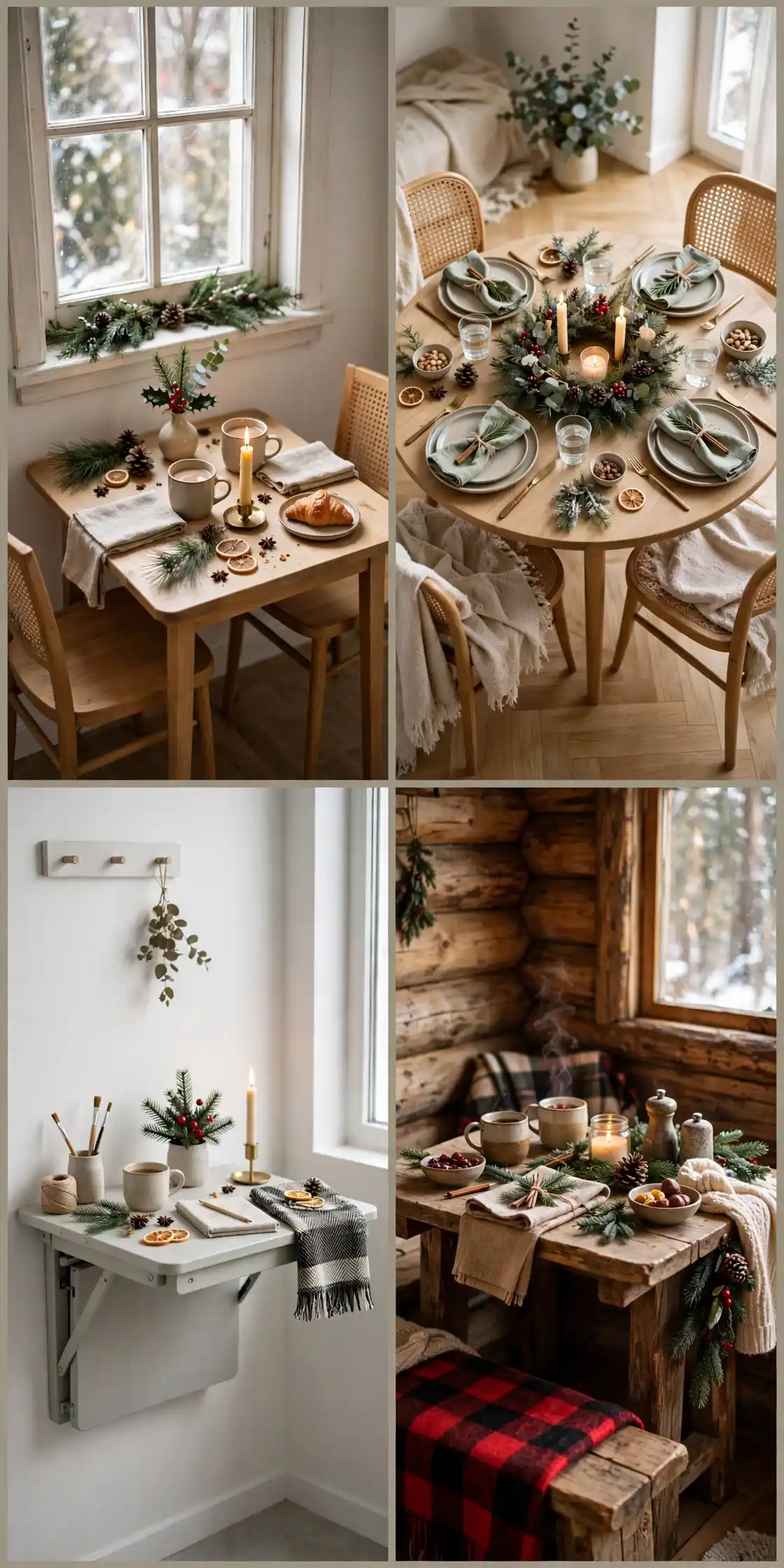


A front door dressed with a plastic wreath can look flat from the street, because shiny fake leaves catch the light the same way all winter and never change. A front door dressed with a natural christmas wreath looks alive, because real evergreens smell of the woods, soften as the season goes on, and catch frost and rain the way a garden does. Most natural christmas wreath projects fail in the same way: people buy fresh greens with no plan, wire them onto a frame in a hurry, and watch the wreath shed and brown before Christmas Day. This list works the other way around. These 22 natural christmas wreath ideas are grouped by material, fresh evergreen, eucalyptus and soft foliage, twig and grapevine, pinecone, dried fruit and spice, berries and herbs, and mixed natural and foraged, so you can pick one material, build it properly, and keep it fresh. If you want the fuller picture first, our Christmas Wreath Ideas covers 22 wreaths for every style and budget. Pick one group here, gather only what fits it, and your door will look gathered from nature, not bought from a shelf.
- The key takeaway: One material, done well, beats a mixed pile. A wreath built from a single material, all fir, all eucalyptus, all pinecones, reads as a design, while a wreath with a bit of everything reads as leftovers.
- The detail most people miss: Freshness is a construction choice, not luck. Greens wired tightly with their cut ends tucked into the frame stay green for weeks, while loose bundles that dry out at the stems shed within days.
- What it costs or how long it takes: Most of these 22 ideas cost $10 to $40 in materials, and each takes 30 minutes to 2 hours to make. A natural wreath is often cheaper than a good artificial one, because the greens come from the garden, a market bunch, or a foraged walk.
At a glance
| Group | Ideas | Materials | Best for |
|---|---|---|---|
| Fresh Evergreen | 01-04 | Fir, spruce, cedar, pine, boxwood | Classic front doors |
| Eucalyptus and Soft Foliage | 05-07 | Eucalyptus, olive, lavender | Soft, modern doors |
| Twig and Grapevine | 08-10 | Grapevine, moss, cinnamon | Rustic, bare doors |
| Pinecone | 11-13 | Pinecones, fir, frost spray | Woodland doors |
| Dried Fruit and Spice | 14-16 | Citrus, apple, cinnamon, anise | Scented, farmhouse doors |
| Berries and Herbs | 17-19 | Berries, rosemary, bay | Fragrant, colourful doors |
| Mixed Natural and Foraged | 20-22 | Foraged greens, dried flowers, mixed | Wild, statement doors |
Jump to an idea ↓
- 01 Classic Fir and Spruce Wreath
- 02 Cedar Frond Cascade Wreath
- 03 Long-Needle Pine Wreath
- 04 Boxwood and Fir Tidy Wreath
- 05 Silver Eucalyptus Round Wreath
- 06 Eucalyptus and Olive Branch Wreath
- 07 Dried Eucalyptus and Lavender Wreath
- 08 Bare Grapevine Twig Wreath
- 09 Moss-Covered Twig Wreath
- 10 Twig and Cinnamon Stick Wreath
- 11 All-Pinecone Rustic Wreath
- 12 Pinecone and Evergreen Cluster Wreath
- 13 Frosted Pinecone Wreath
- 14 Dried Orange Slice Wreath
- 15 Dried Citrus and Cinnamon Wreath
- 16 Dried Apple Slice and Star Anise Wreath
- 17 Red Berry and Evergreen Wreath
- 18 Winterberry Branch Wreath
- 19 Rosemary and Bay Herb Wreath
- 20 Foraged Hedgerow Wreath
- 21 Dried Flower and Grass Wreath
- 22 Large Natural Front Door Wreath
Fresh Evergreen

01
Classic Fir and Spruce Wreath
A front door with no wreath can look bare in December, because the door is the first thing visitors see and it carries no season at all. A classic fir and spruce natural wreath fixes that in one hanging, because dense fir branches mixed with spruce give a full green ring that reads as Christmas from the street. Steps: 1. Soak a straw or foam wreath frame and cut fir and spruce branches into 20 cm lengths. 2. Wire small bundles of three branches onto the frame, each bundle overlapping the last by half, working all the way around. 3. Tuck the cut ends under the next bundle, add a jute bow at the bottom, and hang the wreath on a sturdy hook.
Try it: Work in one direction only, clockwise or counter-clockwise, never both. Bundles wired in two directions fight each other and leave gaps, while bundles wired one way lie flat and full.
02
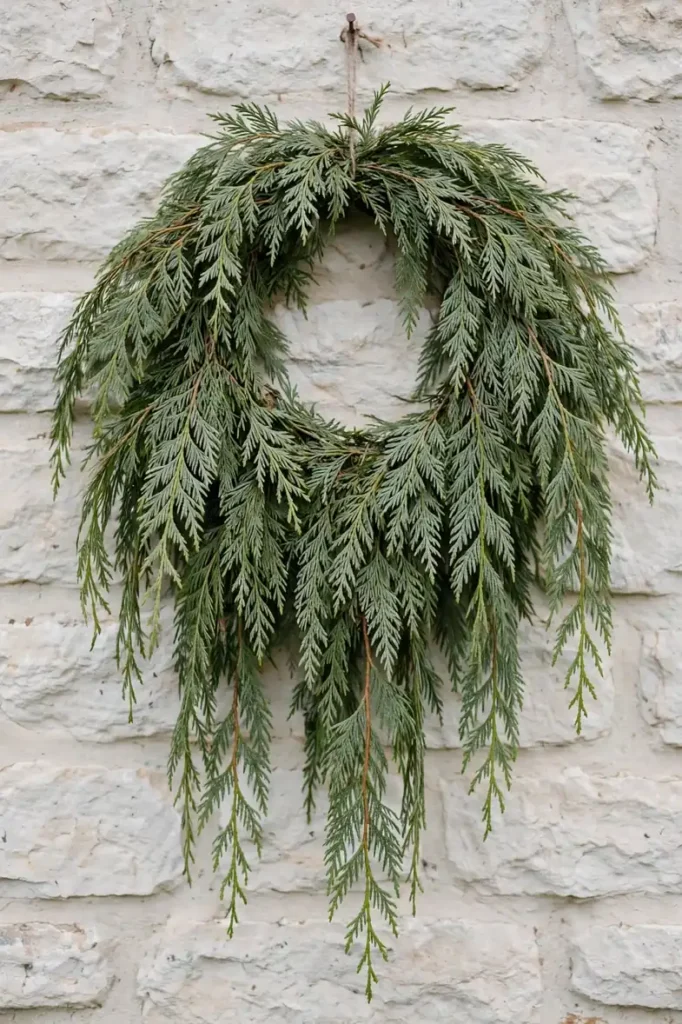
Cedar Frond Cascade Wreath
A door dressed with a stiff round wreath can look formal, because a perfect circle gives no movement. A cedar frond cascade wreath softens the door, because long flat cedar sprays droop slightly downward and give the wreath a flowing shape. Steps: 1. Choose a wire frame and cut cedar fronds into lengths of 25 to 35 cm. 2. Wire the longest fronds at the bottom of the frame so they cascade, then fill upward with shorter fronds. 3. Keep the top of the wreath light and the bottom full, so the cascade reads as a waterfall of green.
Try it: Let the cedar droop naturally instead of wiring every frond flat. Cedar wired flat loses its cascade, while cedar left to fall makes the wreath look gathered, not assembled.
03
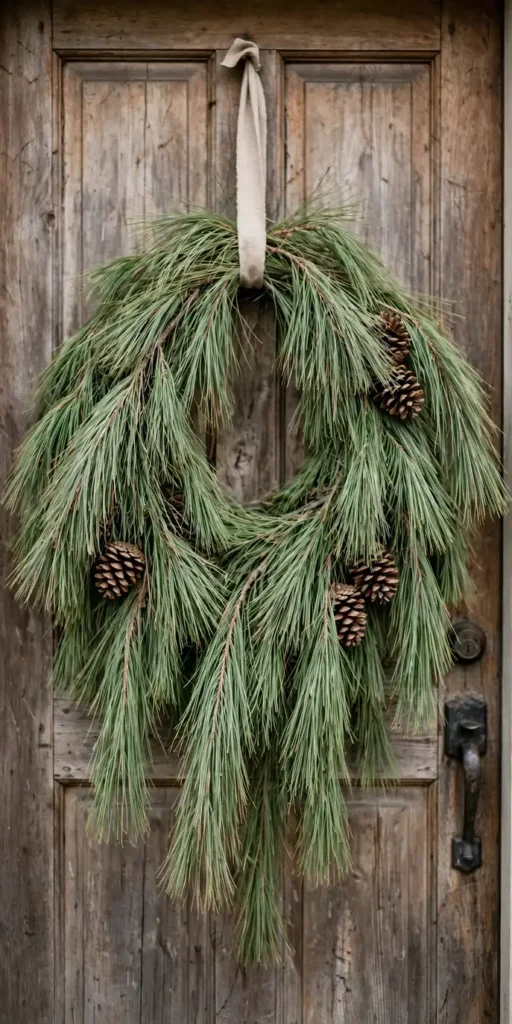
Long-Needle Pine Wreath
A door dressed with short-needled greens can look dense and heavy, because short needles pack into a solid wall of green. A long-needle pine natural wreath looks softer, because the long needles fall in loose layers and move in the wind. Steps: 1. Cut long-needle pine branches into 25 cm lengths and strip the bottom 5 cm of needles. 2. Wire bundles of two branches onto a wire frame, overlapping each bundle by a third. 3. Fluff the needles outward once the ring is complete, and hang the wreath where it catches a breeze.
Try it: Use fewer bundles than you think you need. Pine needles are long and full, so a sparse ring fills out on its own, while an overpacked ring looks like a hedge.
04
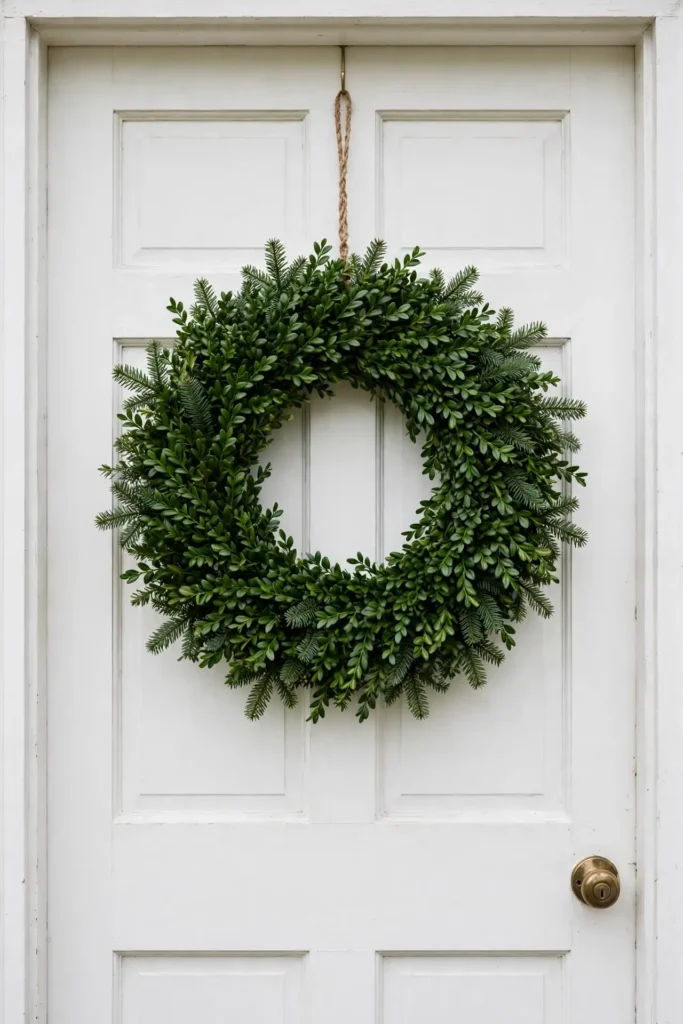
Boxwood and Fir Tidy Wreath
A door dressed with a wild, shaggy wreath can look untidy on a neat house, because the house itself is crisp and the wreath is not. A boxwood and fir tidy natural wreath matches a neat door, because small boxwood leaves give a smooth, clipped surface with fir sprigs only at the edges. Steps: 1. Cover a foam frame with small boxwood sprigs, wiring them close together in a single direction. 2. Add short fir sprigs around the outer edge only, to give the ring a soft outline. 3. Trim any sprig that sticks out beyond the ring, and hang the wreath with a thin twine loop.
Try it: Trim the wreath after hanging, not before. A wreath trimmed on the table looks even until it hangs, while a wreath trimmed in place sits true against the door.
Eucalyptus and Soft Foliage
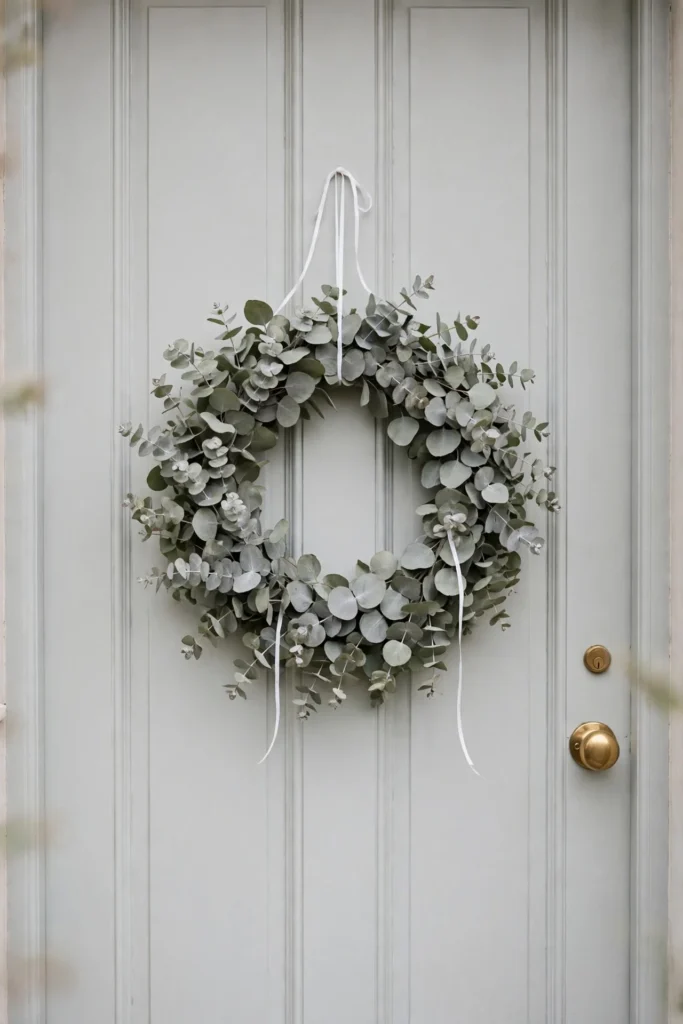
05
Silver Eucalyptus Round Wreath
A door dressed with dark green can look heavy on a pale house, because dark greens absorb light instead of reflecting it. A silver eucalyptus natural wreath lightens a pale door, because the round grey-green leaves catch light and read as soft silver from the street. Steps: 1. Buy two large bunches of silver dollar eucalyptus and cut the stems into 20 cm lengths. 2. Wire bundles of three stems onto a wire frame, overlapping each bundle by half. 3. Keep the ring even and round, with no single stem sticking out, and hang it with a white ribbon.
Try it: Use fresh eucalyptus, not dried, for a front door wreath. Fresh eucalyptus holds its colour and scent for weeks outdoors, while dried eucalyptus fades and crumbles in damp weather.

06
Eucalyptus and Olive Branch Wreath
A door dressed with a single foliage can look one-note, because one leaf shape repeats all the way around the ring. A eucalyptus and olive branch natural wreath adds a second shape, because slender olive leaves contrast with round eucalyptus and give the ring texture. Steps: 1. Cut eucalyptus and olive branches into 20 cm lengths. 2. Wire alternate bundles onto the frame, one eucalyptus bundle, one olive bundle, all the way around. 3. Add a few small dark olives where the bundles meet, and hang the wreath with a linen loop.
Try it: Keep the two foliages in equal amounts. A wreath that is mostly eucalyptus with a little olive looks like eucalyptus with weeds, while equal amounts read as a designed mix.
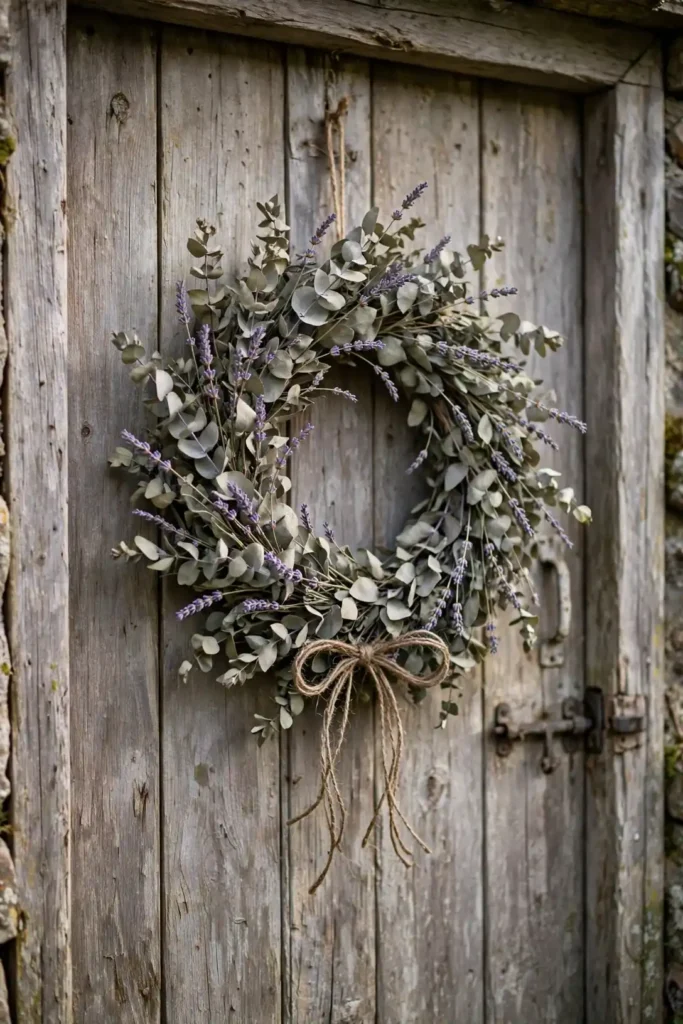
07
Dried Eucalyptus and Lavender Wreath
A door dressed with fresh greens needs replacing every few weeks, because fresh greens dry and drop. A dried eucalyptus and lavender natural wreath lasts the whole season and beyond, because dried leaves hold their shape and the lavender keeps its scent. Steps: 1. Gather dried eucalyptus stems and dried lavender sprigs, both fully dry. 2. Wire eucalyptus bundles onto a grapevine frame, then tuck lavender sprigs between the bundles. 3. Hang the wreath on a sheltered door or indoors, where rain cannot reach it.
Try it: Hang a dried wreath under a porch roof, not on an open door. Rain softens dried leaves and washes out lavender scent, while a sheltered spot keeps the wreath crisp all winter.
Twig and Grapevine
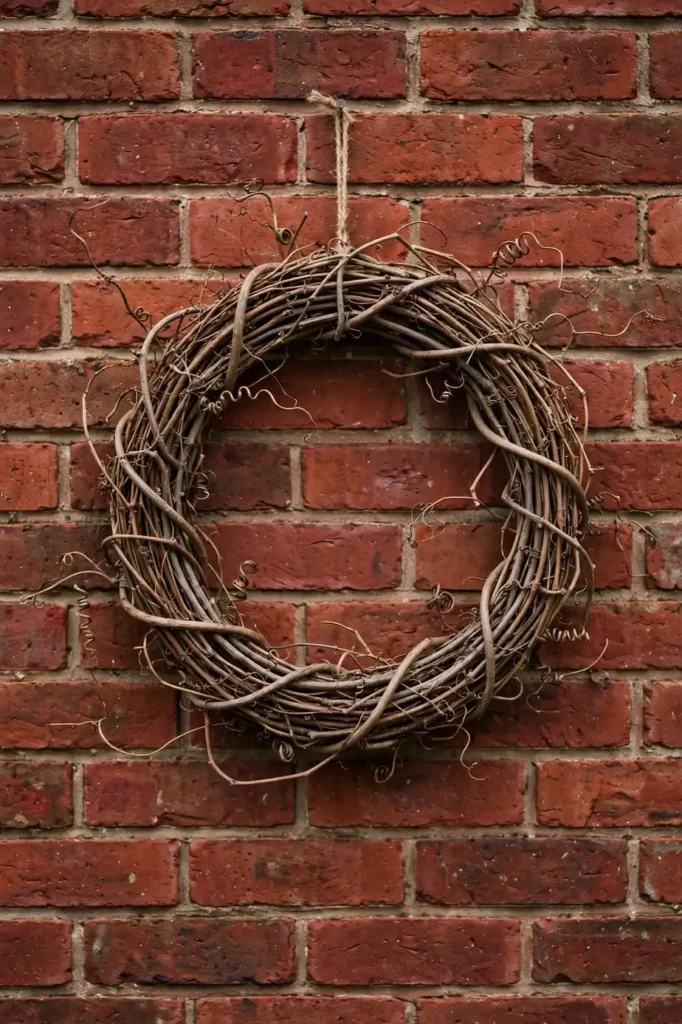
08
Bare Grapevine Twig Wreath
A door dressed with a full green wreath can look busy on a rustic house, because the house already has texture in its wood and stone. A bare grapevine twig natural wreath suits a rustic door, because the twisted brown vines give shape without colour. Steps: 1. Buy or make a grapevine wreath form, or twist fresh grapevine into a ring and let it dry. 2. Trim any vine end that sticks out sharply, keeping the curls. 3. Hang the bare wreath with a simple twine loop and nothing else.
Try it: Choose a form with uneven, curly vines, not a machine-pressed flat ring. A curly form reads as handmade and natural, while a flat pressed ring reads as a craft-store base.
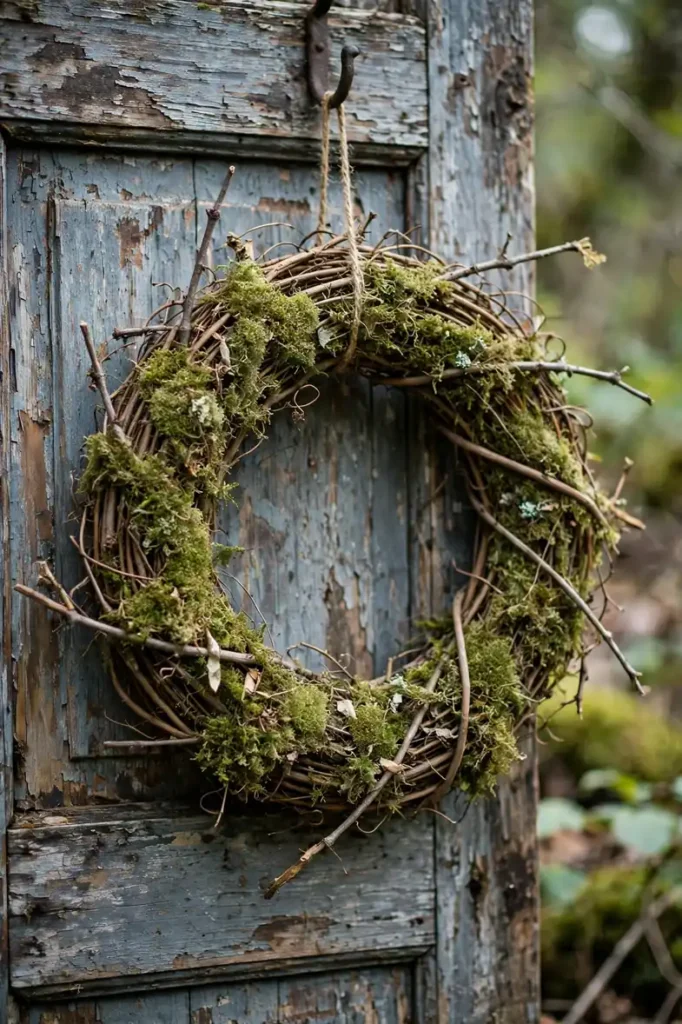
09
Moss-Covered Twig Wreath
A door dressed with bare twigs can look stark in deep winter, because brown on brown gives no softness. A moss-covered twig natural wreath warms the door, because soft green moss fills the gaps between the vines and reads as a woodland floor. Steps: 1. Take a grapevine form and press sheet moss into the gaps, securing it with florist pins. 2. Add small twigs across the moss to hold it in place and keep the woodland look. 3. Mist the moss lightly once a week if the door is sheltered, and hang it out of direct rain.
Try it: Use sheet moss, not loose moss, for a door wreath. Loose moss sheds onto the doorstep within days, while sheet moss pinned in place stays put all season.
10
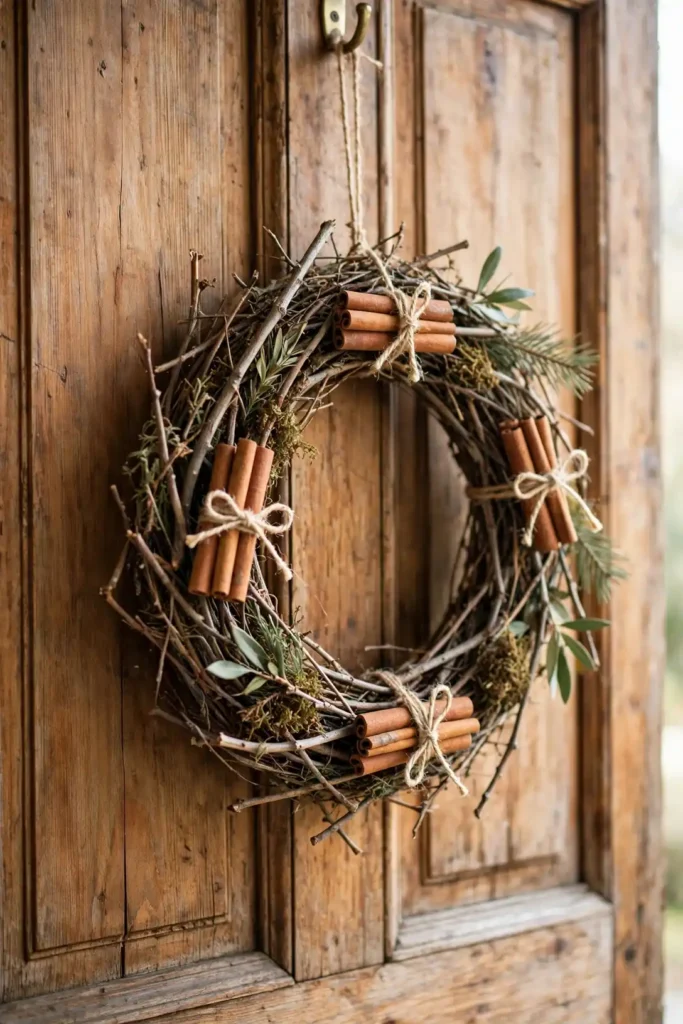
Twig and Cinnamon Stick Wreath
A door dressed with a plain twig wreath can look unfinished, because twigs alone give shape but no Christmas signal. A twig and cinnamon stick natural wreath adds that signal, because bundles of cinnamon sticks tied with twine read as Christmas and smell of spice. Steps: 1. Take a grapevine form and tie bundles of three cinnamon sticks with twine. 2. Wire the bundles onto the form at even intervals, four or five around the ring. 3. Add a few small pinecones between the bundles if you like, and hang the wreath with a twine loop.
Try it: Tie the cinnamon bundles with twine, not wire. Wire shows and looks hardware-store, while twine matches the twigs and reads as part of the design.
Pinecone

11
All-Pinecone Rustic Wreath
A door dressed with greenery can look like every other door, because greenery repeats everywhere in December. An all-pinecone natural wreath stands out, because a ring of nothing but cones, in different sizes and shades of brown, reads as woodland craft. Steps: 1. Collect or buy 40 to 60 pinecones in mixed sizes, and dry them fully. 2. Glue or wire the largest cones onto a foam or straw frame first, spaced evenly. 3. Fill the gaps with medium and small cones until no frame shows, and hang the wreath with a jute loop.
Try it: Dry the cones in a low oven before building. Cones gathered damp close up and shed sap, while cones dried fully open wide and stay open on the door.

12
Pinecone and Evergreen Cluster Wreath
A door dressed with an all-pinecone wreath can look heavy, because cones alone give no green. A pinecone and evergreen cluster natural wreath balances the two, because fresh fir fills the ring and cone clusters at the bottom give it weight. Steps: 1. Build a full fir wreath on a wire frame, as in the classic fir idea. 2. Wire clusters of three pinecones at the bottom of the ring, and one smaller cluster on each side. 3. Tuck a few fir sprigs over the wire joins so no wire shows.
Try it: Cluster the cones instead of spreading them evenly. Cones spread all around the ring look like polka dots, while cones in clusters read as a designed focal point.

13
Frosted Pinecone Wreath
A door dressed with plain brown cones can look dark against a dark door, because brown on brown gives no contrast. A frosted pinecone natural wreath lightens the ring, because white-tipped cones and a few frosted sprigs read as snow. Steps: 1. Build a pinecone and evergreen wreath, then brush the cone tips and sprig ends with white craft paint or frost spray. 2. Let the frost dry fully before hanging, so it does not transfer to the door. 3. Hang the wreath where it catches light, so the white tips catch the eye.
Try it: Frost only the tips, not the whole cone. A cone painted solid white looks like a snowball, while a cone with white tips reads as frosted by nature.
Dried Fruit and Spice

14
Dried Orange Slice Wreath
A door dressed with greenery alone can look like it forgot scent, because green gives colour but no smell. A dried orange slice natural wreath adds scent and colour, because amber citrus rounds among fir branches glow like stained glass. Steps: 1. Slice oranges 5 mm thick and dry them in a low oven until crisp, turning once. 2. Build a fir wreath on a wire frame, then wire the orange slices onto the ring at even intervals. 3. Add a cinnamon stick beside every second slice, and hang the wreath on a sheltered door.
Try it: Dry the slices until they are crisp, not leathery. Leathery slices curl and darken within a week, while crisp slices stay flat and bright all season.
15
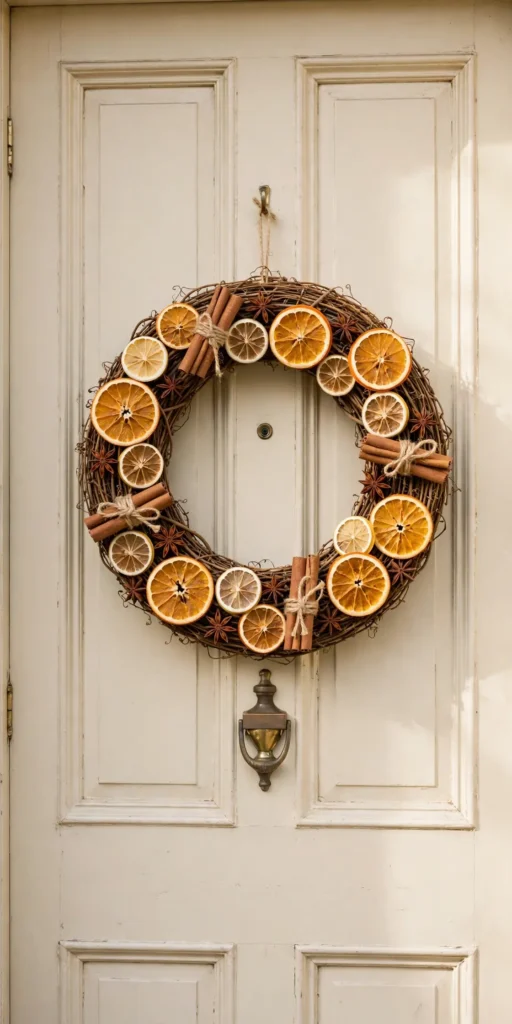
Dried Citrus and Cinnamon Wreath
A door dressed with orange slices alone can look one-note, because one fruit repeats all around the ring. A dried citrus and cinnamon natural wreath adds a second texture, because lemon slices, cinnamon bundles, and star anise break up the orange. Steps: 1. Dry orange and lemon slices until crisp, and gather cinnamon sticks and star anise. 2. Build a grapevine or fir base, then wire the citrus slices, cinnamon bundles, and anise in a repeating pattern. 3. Keep the pattern even all the way around, so the wreath reads as a design from any angle.
Try it: Repeat the same small pattern, slice, cinnamon, anise, all the way around. A random scatter of fruit and spice looks like a fruit bowl, while a repeating pattern reads as a wreath.

16
Dried Apple Slice and Star Anise Wreath
A door dressed with citrus can look bright and sharp, because orange and lemon are strong colours. A dried apple slice and star anise natural wreath looks softer, because pale apple rounds and brown star-shaped spice give warm, muted tones. Steps: 1. Slice apples 5 mm thick, soak briefly in lemon water so they do not brown, and dry until crisp. 2. Build a soft greenery or grapevine base, then wire the apple slices in a ring with a star anise at the centre of every second slice. 3. Hang the wreath on a sheltered door, out of rain.
Try it: Soak the apple slices in lemon water before drying. Unsoaked slices brown in the oven and look burnt, while lemon-soaked slices dry pale and creamy.
Berries and Herbs

17
Red Berry and Evergreen Wreath
A door dressed with plain evergreen can look like it forgot Christmas colour, because green alone is the colour of every month. A red berry and evergreen natural wreath adds the Christmas colour, because clusters of red berries against fir read as festive from the street. Steps: 1. Build a full fir wreath on a wire frame. 2. Cut berry sprays into 15 cm lengths and wire them into the ring in clusters of three, spaced evenly. 3. Keep the berries on the outer face of the ring, not buried inside, so they catch the eye.
Try it: Use artificial berry sprays if the door faces hungry birds. Real berries disappear within days where birds feed, while good artificial berries last the season and look real from the street.

18
Winterberry Branch Wreath
A door dressed with a full green wreath can look heavy on a small porch, because a dense ring fills the whole door. A winterberry branch natural wreath lightens a small porch, because bare branches covered in small red berries give colour without bulk. Steps: 1. Gather winterberry branches or buy a bunch, and cut them into 30 cm lengths. 2. Bend the branches into a loose ring and wire them together, letting some ends stick out naturally. 3. Hang the airy ring with a thin wire or twine, and let the branches move slightly in the wind.
Try it: Let a few branch ends stick out beyond the ring. A winterberry wreath trimmed into a perfect circle loses its wild look, while loose ends read as gathered branches.

19
Rosemary and Bay Herb Wreath
A door dressed with a pine wreath can smell of pine and nothing else, because pine dominates every other scent. A rosemary and bay herb natural wreath smells of the kitchen, because rosemary and bay release scent every time the door moves. Steps: 1. Gather long rosemary sprigs and bay branches, and cut them into 20 cm lengths. 2. Wire bundles of rosemary and bay alternately onto a wire frame, overlapping each bundle by half. 3. Hang the wreath on a door that opens often, so the movement releases the scent.
Try it: Hang an herb wreath where the door is used daily. An herb wreath on a rarely opened door gives little scent, while one on a busy door perfumes the hallway every time it swings.
Mixed Natural and Foraged
20
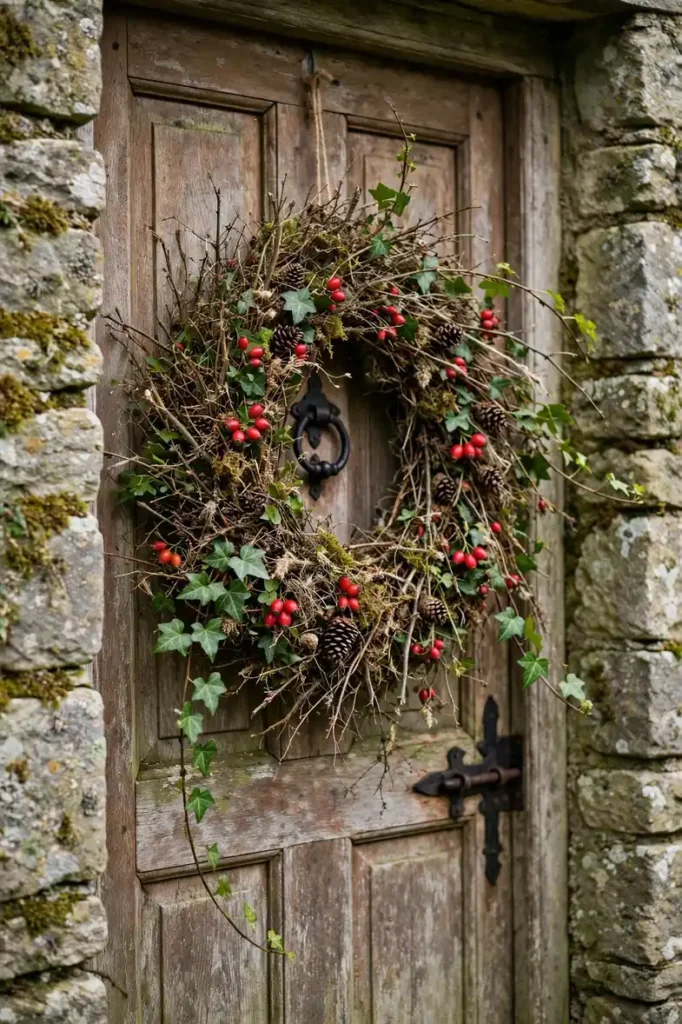
Foraged Hedgerow Wreath
A door dressed with shop-bought greens can look too perfect, because every branch matches. A foraged hedgerow natural wreath looks gathered, because ivy, rosehips, small cones, and bare twigs from a walk give a ring no shop can copy. Steps: 1. Gather ivy, rosehips, small cones, and interesting twigs from your garden or a permitted walk, and check nothing is protected. 2. Build a grapevine or wire base, then wire the foraged pieces in mixed bundles all the way around. 3. Leave the ring slightly uneven, with a few pieces sticking out, and hang it with twine.
Try it: Gather only what you can identify and what is plentiful. A foraged wreath built from protected or scarce plants harms the hedgerow, while a wreath from common ivy, hips, and cones costs nothing and harms nothing.

21
Dried Flower and Grass Wreath
A door dressed with evergreen can look dark in a light hallway, because green absorbs light indoors. A dried flower and grass natural wreath lightens an indoor door, because strawflowers, grasses, and seed heads in cream, gold, and soft pink glow in hallway light. Steps: 1. Gather dried strawflowers, grasses, and seed heads, all fully dry. 2. Wire small mixed bundles onto a straw frame, overlapping each bundle by half. 3. Hang the wreath indoors, on a bedroom or hallway door, where it will not get wet.
Try it: Keep a dried flower wreath indoors only. Rain and damp soften dried flowers and flatten grasses, while a dry hallway keeps the wreath airy all winter.

22
Large Natural Front Door Wreath
A tall door dressed with a standard wreath can look lost, because a small ring disappears on a big door. A large natural front door wreath fills a tall door, because an oversized ring of mixed fresh greens, cones, and berries matches the scale of the door. Steps: 1. Choose a frame at least 60 cm across, and gather double the greens you would use for a standard wreath. 2. Build the ring in layers, fir first, then cedar and pine for fullness, then cones and berry clusters on the outer face. 3. Hang the wreath from a sturdy over-door hook or a nail, not a suction hook, and check it sits centred.
Try it: Measure the door before you build. A wreath that is too small for a tall door looks like an afterthought, while a wreath sized to the door reads as a statement.
Pro tip: Build the wreath a week before you hang it, and store it flat in a cool place. A wreath built in a rush on hanging day sheds loose stems all over the porch, while a wreath built a week early settles, and any loose piece shows itself before the door ever sees it.
Three rules for natural wreaths that look intentional, not thrown together
Most natural wreaths look unfinished for the same three reasons, and all three are fixable.
- First, limit the materials. One or two materials per wreath, repeated consistently, look intentional, while a wreath with a bit of everything looks like a clear-out.
- Second, hide every join. Wire, glue, and cut ends tucked under the next bundle are what separate a wreath from a pile of branches, because the finish is what the eye reads first.
- Third, match the scale to the door. A huge wreath on a small cottage door dominates it, and a small wreath on a tall door disappears, so choose a ring sized to the door you actually have, not the door you wish you had.
Storing and reusing your natural Christmas wreaths
Natural wreaths last longer than most people expect if you store them properly, and the storage step is part of the making, not an afterthought.
- First, keep fresh wreaths cool and misted. A fresh evergreen wreath hung on a sheltered door and misted lightly every few days stays green for four to six weeks, while one on a hot, sunny door dries in two.
- Second, store dried wreaths flat and dry. Dried eucalyptus, flower, and pinecone wreaths crush against each other, so keep each one in its own box with tissue paper, in a dry cupboard.
- Third, compost what is spent. Fresh greens, citrus, and herbs that have dried out go on the compost, and grapevine frames and pinecones can be reused next year, so a natural wreath leaves almost nothing for the bin.
Questions readers ask
What is the best natural Christmas wreath for a front door?
The best natural christmas wreath for a front door is a fresh fir and spruce wreath, because fir holds its needles longest and spruce adds fullness, and the combination survives cold, wind, and rain better than softer greens. For a sheltered porch, a eucalyptus or dried citrus wreath is a good second choice.
How do I make a natural Christmas wreath?
You make a natural christmas wreath by cutting fresh branches into short lengths, wiring small bundles onto a frame so each bundle overlaps the last, and tucking the cut ends under the next bundle until the ring is full. Start with fir for a classic wreath, since fir is forgiving, holds its needles, and fills a frame quickly.
How long does a fresh natural wreath last?
A fresh natural wreath lasts four to six weeks on a sheltered, cool door, and two to three weeks on a hot, sunny, or windy door, because heat and wind dry the cut stems fastest. Mist the wreath lightly every few days and keep it out of direct sun to stretch its life toward the longer end.
What greens are best for a natural Christmas wreath?
Fir is best for needle hold, cedar is best for a soft cascade, pine is best for a loose, full look, and boxwood is best for a tidy, clipped ring, because each green brings a different texture. Mixing two greens, such as fir and cedar, gives a fuller wreath than either one alone.
Can I make a natural wreath without a frame?
Yes, you can make a natural wreath without a bought frame by twisting fresh grapevine into a ring and letting it dry, or by bending willow or winterberry branches into a loose circle and wiring them together. A homemade twig ring is the most natural base of all, and it costs nothing.
How do I keep a natural wreath fresh?
You keep a natural wreath fresh by soaking the frame before building, misting the finished wreath lightly every few days, hanging it on a cool, sheltered door out of direct sun, and bringing it indoors overnight in a hard frost. Fresh cut christmas wreaths kept this way stay green well past Christmas Day.
What is the difference between a fresh and a nearly natural wreath?
A fresh wreath is made from real cut greens that will dry over the season, while a nearly natural wreath is made from high-quality artificial greens designed to look real. Fresh wreaths smell wonderful and cost less, while nearly natural wreaths last for years and never shed.
How do I store a natural wreath after Christmas?
You store a natural wreath after Christmas by composting the spent greens, keeping grapevine frames and pinecones for next year, and storing dried wreaths flat in their own tissue-lined boxes in a dry cupboard. Dried eucalyptus and pinecone wreaths stored this way last for several seasons.
People Also Ask
What is the 70/30 rule for natural Christmas wreaths?
The 70/30 rule for natural Christmas wreaths means roughly 70 percent of the door display stays as it is, and 30 percent carries natural decoration. The rule is a guide, not a law, but a door that follows it will read as festive rather than cluttered.
How do I make my natural wreath look shop bought, not homemade?
You make your natural wreath look shop bought, not homemade, by wiring bundles evenly, hiding every join under the next bundle, trimming stray stems after hanging, and keeping one or two materials across the whole ring. A wreath with even bundles, hidden wire, and a clear material palette reads as designed, while loose bundles and visible wire read as a first attempt.
What natural wreaths should beginners avoid?
Beginners should avoid all-pinecone wreaths and large statement wreaths on a first attempt, because each of those needs many cones or double the greens to look full. Start with a classic fir wreath or a bare grapevine ring, and save pinecone and oversized rings for a second season.
loved these ideas? ✿
Save this guide for later
Pin it to your board so it’s there when you’re ready to recreate it.

Curated by
Hey! I'm Sanaullah — visual curator and content creator. I search, curate, and test the best aesthetic ideas across Pinterest so you can easily transform your living space, style daily outfits, and try simple creative DIYs without the overwhelm.