

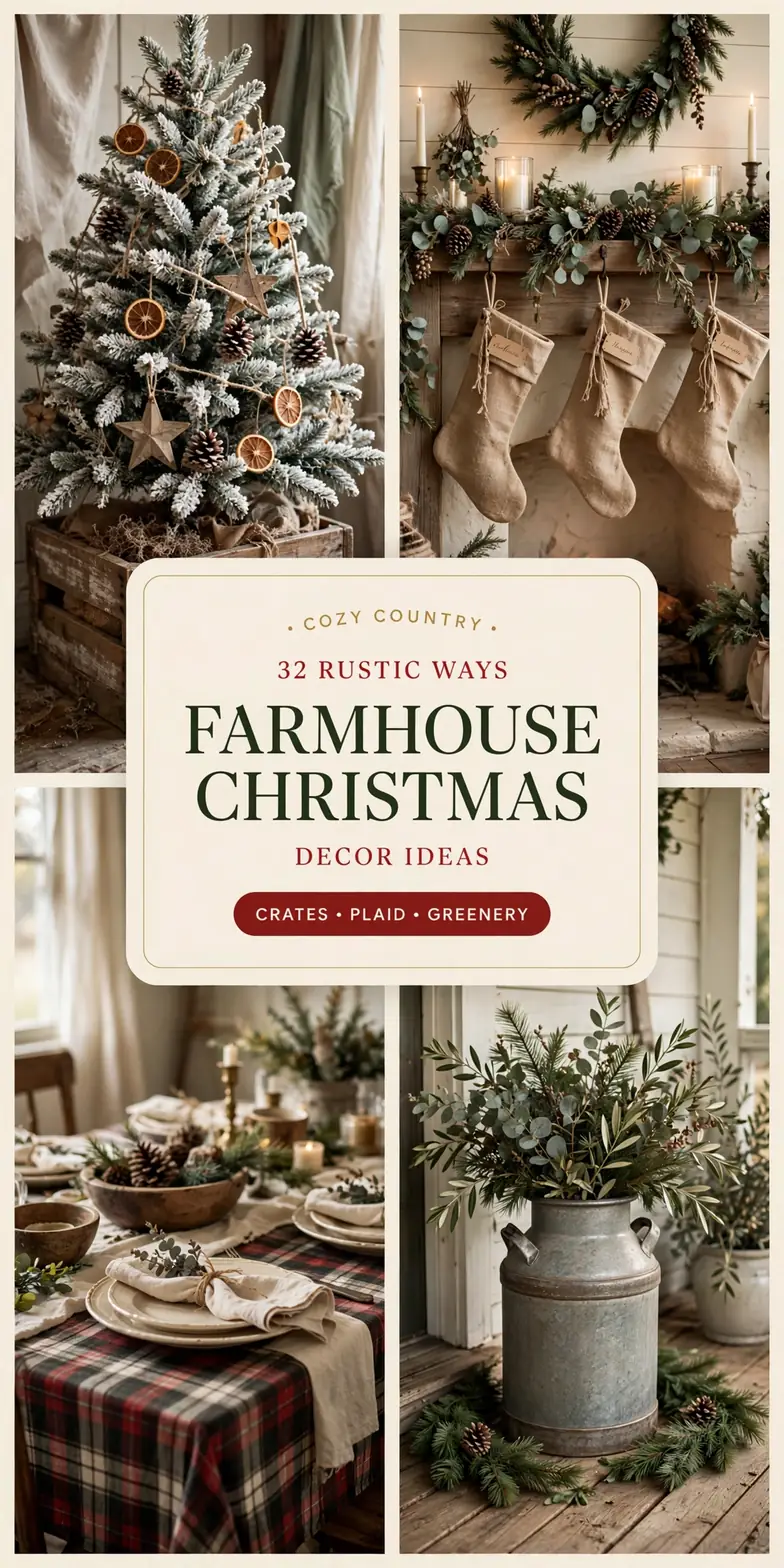
Farmhouse style and Christmas were made for each other: weathered wood, soft plaid, real greenery, and nothing too shiny or too perfect. The best farmhouse christmas decor does not come from a matching set; it comes from layering rustic christmas decorations you mostly already own, crates, quilts, mason jars, and galvanized metal, until every room feels collected over years instead of bought in one cart. Work through these ideas room by room and your home will feel warm, gathered, and ready for everyone to pile in.
Quick Idea Summary
- The key takeaway: Farmhouse Christmas is a texture recipe, not a shopping list. Weathered wood, galvanized metal, burlap, plaid, and fresh greenery in a cream, sage, and muted red palette will carry the whole house.
- The detail most people miss: Rustic christmas decorations only read as farmhouse when the shine is gone. Swap glossy ornaments and glitter for matte wood, fabric, and metal finishes and the same tree looks twice as expensive.
- What it costs or how long it takes: Most ideas below cost $10 to $40 using thrift finds and dollar-store greenery. The full house, tree to porch, fits into one weekend.
At a glance
| Zone | Ideas | Budget |
|---|---|---|
| The farmhouse tree | 01–07 | $20–$80 |
| Mantel and fireplace | 08–12 | $15–$60 |
| Living spaces and textiles | 13–18 | $15–$55 |
| Kitchen and dining | 19–25 | $10–$50 |
| Entry, porch and stairs | 26–29 | $15–$60 |
| Bedrooms and finishing glow | 30–32 | $10–$40 |
The ideas
01
The Farmhouse Christmas Tree, Full and Natural
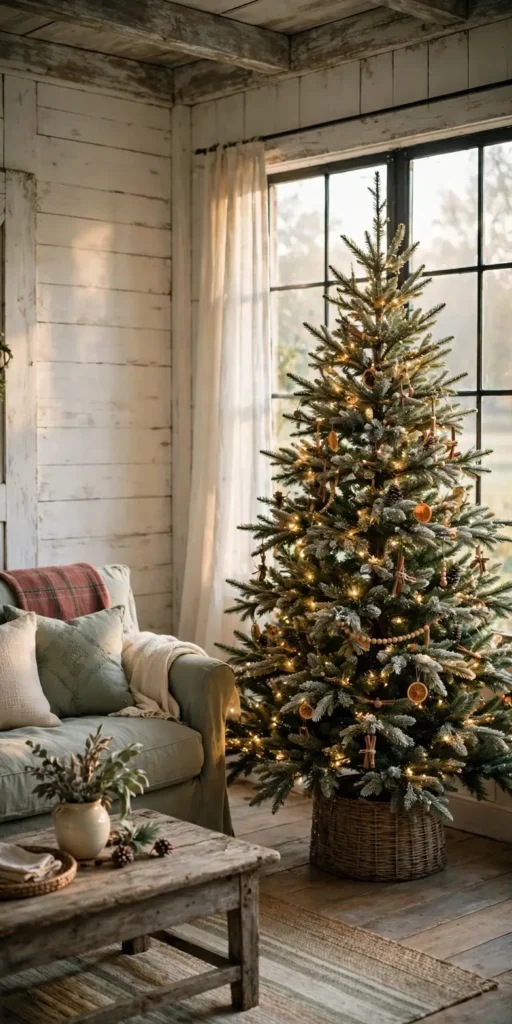
Start with the tree itself. A farmhouse christmas tree should look like it grew somewhere: full branches, a slightly irregular shape, and either no flocking or a light dusting on the tips only. Warm white lights, 100 per foot of height, woven deep into the branches keep it glowing instead of glittering.
Try it: Skip the perfectly matched tree if you are buying new. A sparse, realistic spruce looks more farmhouse than a dense showroom tree once the wood and fabric ornaments go on.

02
Rustic Christmas Ornaments Only
Set one rule for the tree: every ornament is wood, fabric, paper, or galvanized metal. Rustic christmas ornaments in those four finishes mix freely without ever looking random, and they survive kids, pets, and storage bins for decades. Aim for 8 to 10 ornaments per foot of tree, mixing three sizes.
Try it: Retire the shiny baubles to a bowl on the table instead of the tree. They still sparkle somewhere, and the tree stays honest.
03
Farmhouse Christmas Tree Decorations in Layers
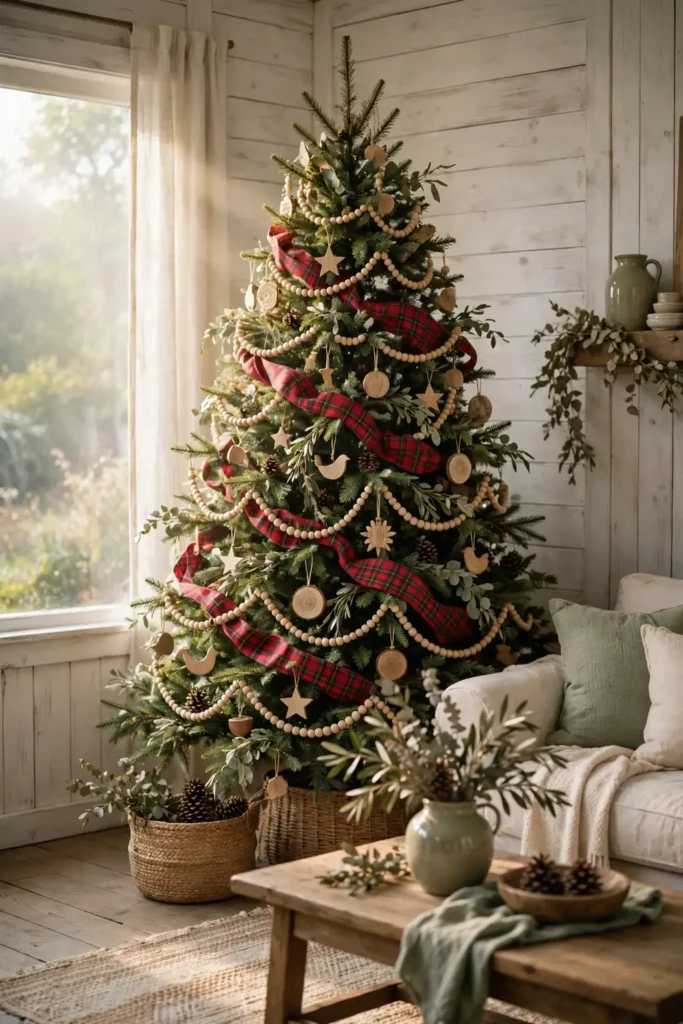
Layer the tree the way stylists do: lights first, then a wooden bead garland swagged in loose scallops, then wide burlap or plaid ribbon tucked deep every 12 inches, then ornaments, biggest first. Farmhouse christmas tree decorations look rich because of the order, not the quantity. Two garlands is plenty; three is a traffic jam.
Try it: Drape the bead garland before the ribbon. Ribbon tucked over the beads locks them in place and stops the midnight slide.

04
Rustic Christmas Tree Decorations You Can Make
The most charming rustic christmas tree decorations cost almost nothing: cinnamon stick bundles tied with twine, dried orange slices, twine balls, and salt-dough stars. An afternoon of making gives you 30 ornaments for about $8, and the tree smells like Christmas instead of just looking like it.
Try it: Dry orange slices at 200°F for 3 hours, flipping hourly. Under-dried slices mold in storage; properly dried ones last for years.
05
A Grouping of Rustic Christmas Trees
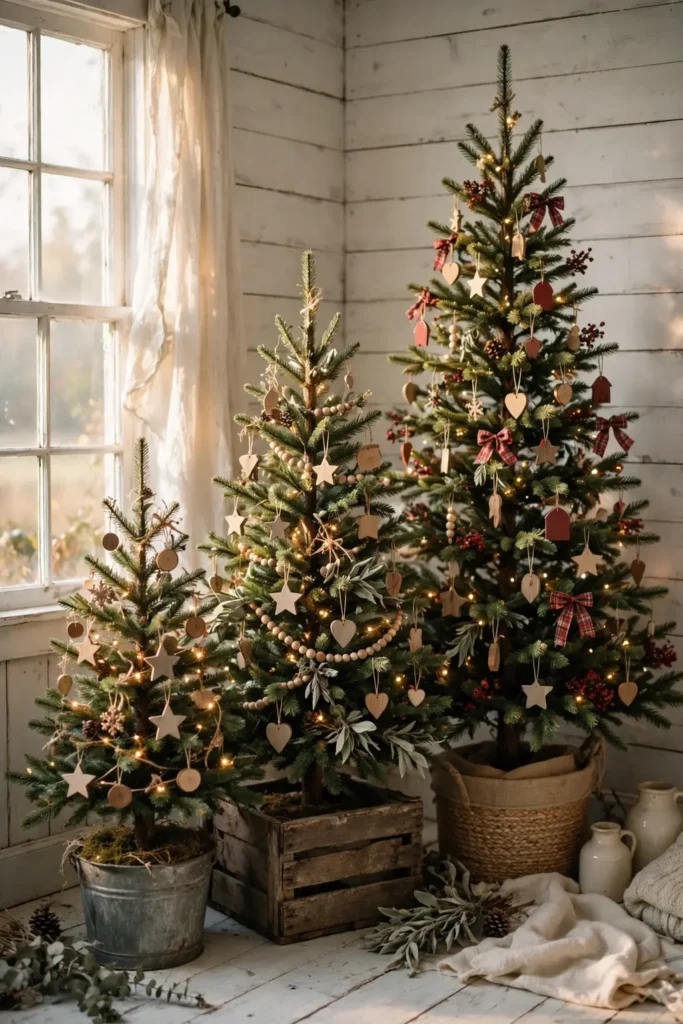
One tree is a decoration; three trees are a landscape. Group rustic christmas trees in odd heights, a 4-foot, a 3-foot, and a tabletop 2-foot, in an empty corner, beside the fireplace, or flanking the front door. Keep the decorations minimal and matching across all three so the grouping reads as one idea.
Try it: Put the smallest tree in a galvanized bucket and the middle one in a crate. Different bases at different heights are what make the grouping look grown, not bought.
06
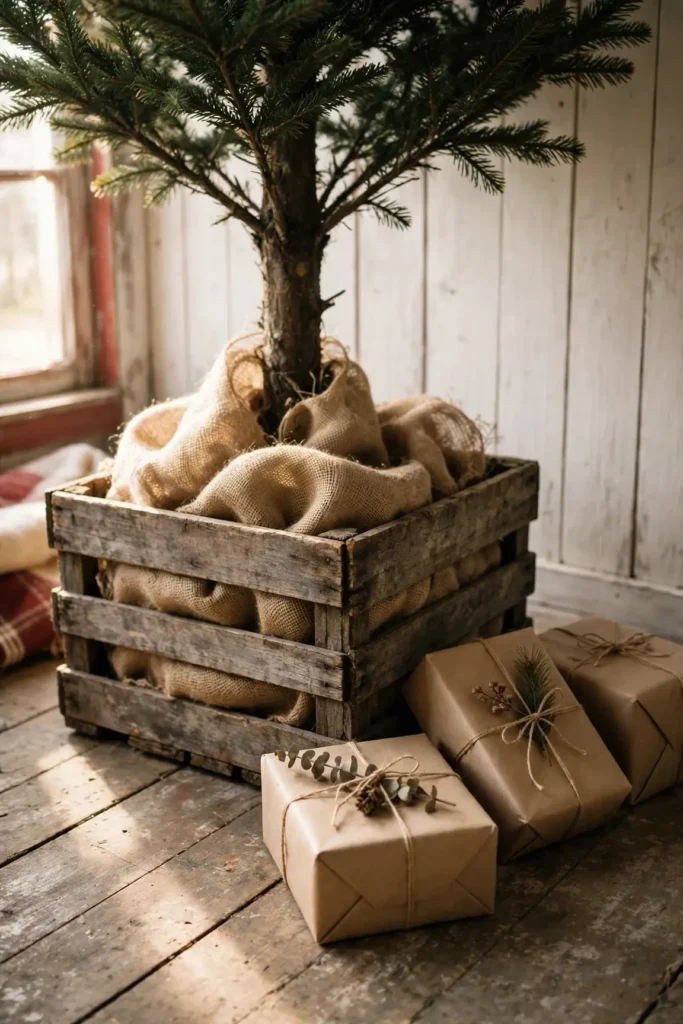
A Wooden Crate or Galvanized Tub Tree Base
A tree skirt is the most-skipped detail in farmhouse decorating, because a crate does the job better. Slide the stand into a weathered wooden crate, a galvanized tub, or a woven basket and the base becomes part of the decor instead of something to hide. An $18 thrifted crate makes a $60 tree look collected for years.
Try it: Measure your stand’s widest point before buying the crate; you need 2 inches of clearance on every side, then stuff the gaps with burlap.
07
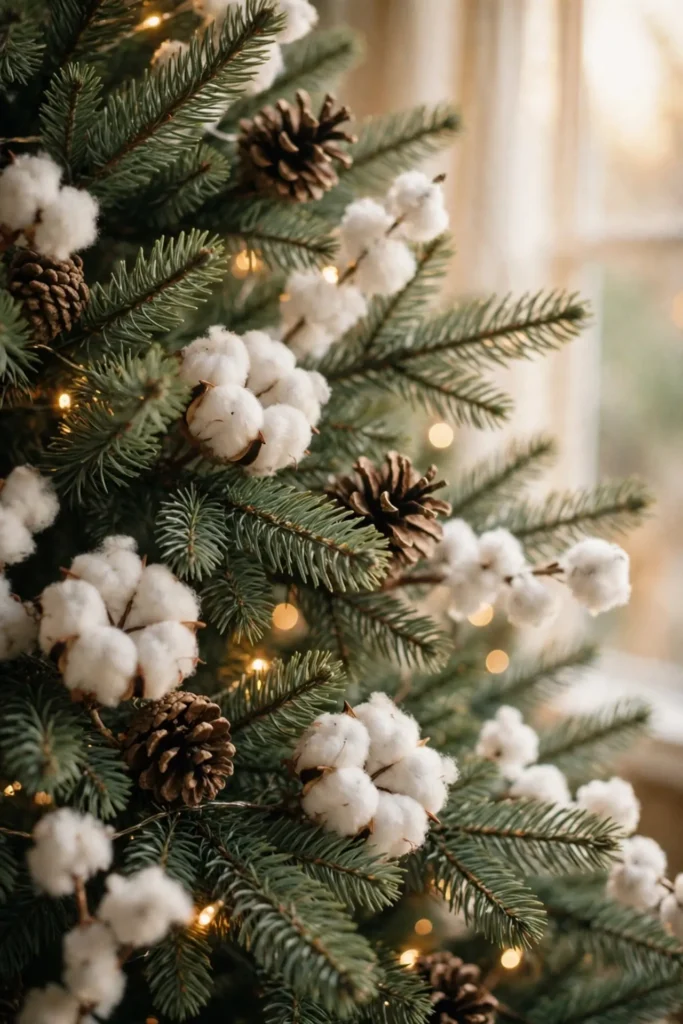
Cotton Stems and Pinecones Tucked In
Finish the tree with nature doing the decorating: cotton stems pushed into the branches, pinecones wired to the tips, and a few sprigs of faux eucalyptus for softness. These fillers cost about $12 for the whole tree and blur the line between the tree and the room around it.
Try it: Wire pinecones near the trunk, not the branch tips. Deep placement looks like the tree grew them; tip placement looks like they were hung as an afterthought.
08
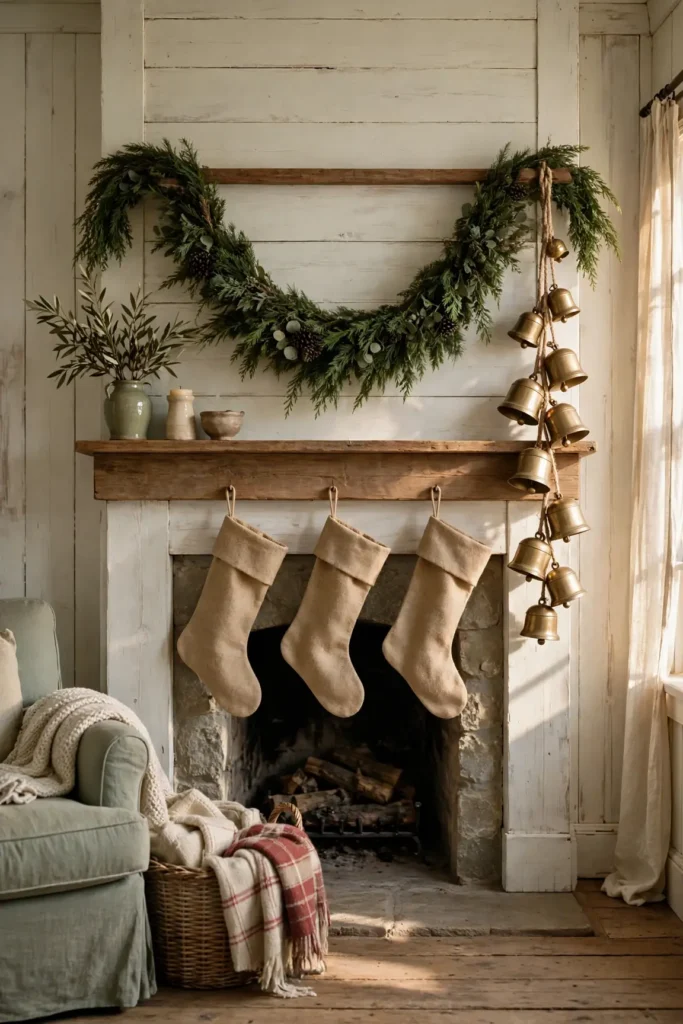
Mantel Garland with Bells
Drape thick mixed greenery across the mantel with a deep center swag, then hang a strand of oversized sleigh bells from one corner. The bells are the farmhouse signature: they move, they catch light, and they make a soft sound when the heat kicks on. A $12 bell strand does more for a mantel than $50 of extra ornaments.
Try it: Layer two garlands, one pine, one cedar, instead of buying one expensive mixed garland. The two-texture layer looks foraged and costs half as much.
09
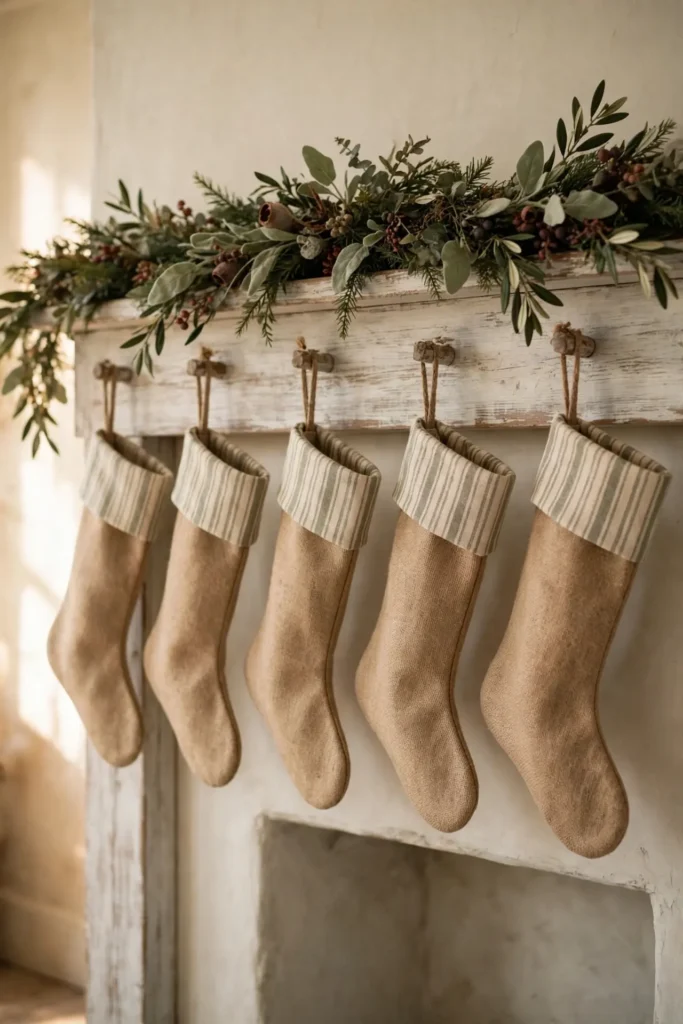
Burlap Stockings with Real Cuffs
Burlap stockings are the farmhouse default, but the cuff is what separates the good ones from the craft-fair ones. Choose stockings with a folded cuff in grain sack stripe, faux fur, or red ticking, and hang them from weighted hooks or a peg rail. Five stockings on a standard mantel fills it without crowding.
Try it: Iron a strip of fusible interfacing inside each cuff. Burlap cuffs flop by week two without support, and floppy cuffs make the whole mantel look tired.

10
A Wooden Nativity as the Mantel Center
Give the mantel one quiet centerpiece: a carved or cut-wood nativity, kept unpainted or whitewashed. Wood nativities suit farmhouse rooms because they read as folk art, not decoration, and they hold the center of the mantel without competing with the garland. A simple 5-piece set runs $25 to $40 and becomes the heirloom piece.
Try it: Raise the nativity on a stack of two old books or a wood slice. Six inches of height is the difference between centerpiece and clutter.
11
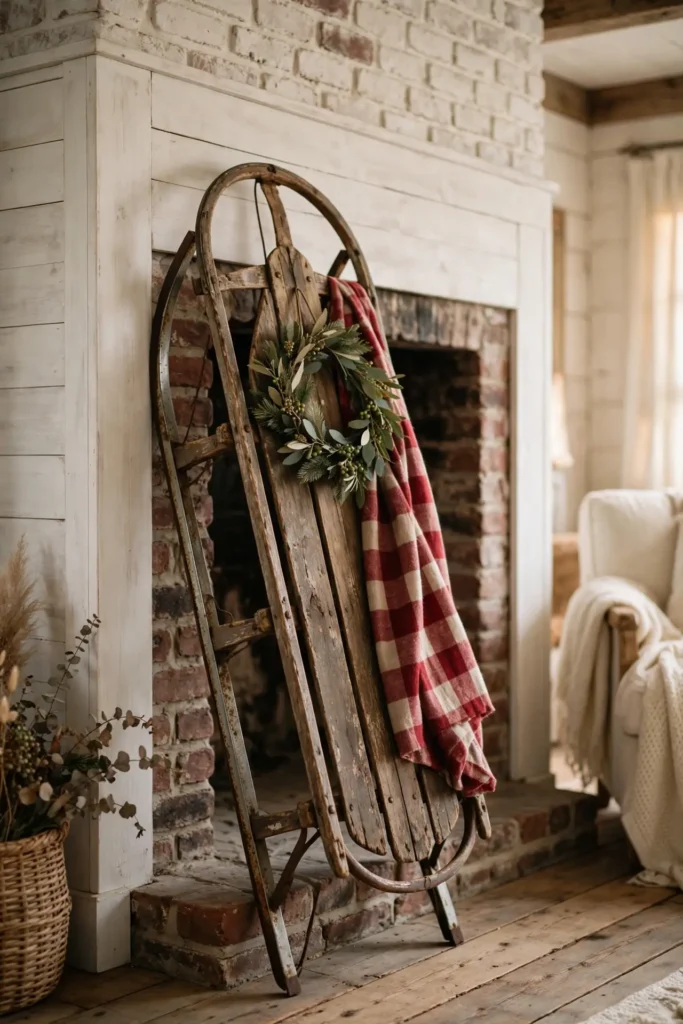
A Vintage Sled by the Fireplace
Lean a weathered wooden sled against the fireplace or hang it on the wall beside it, dressed with one small wreath and a plaid scarf. Flea-market sleds run $20 to $35 in most regions and fill the awkward vertical space beside a mantel better than any picture frame. No fireplace? The sled works by the front door just as well.
Try it: Check the runners before buying. A sled with intact metal runners leans stably; a warped one will slide on hardwood at 2 a.m.
12
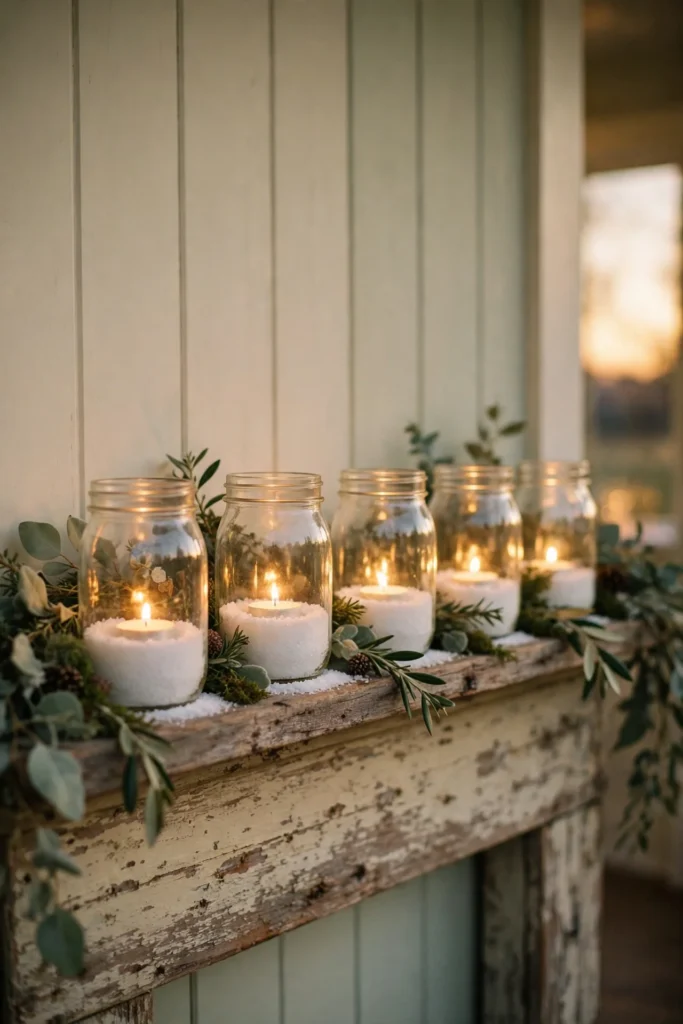
Mason Jar Luminaries with Epsom Salt Snow
Coat the inside bottom third of mason jars with Epsom salt over a glue wash, drop in a tea light or flameless candle, and line them along the mantel, hearth, or table. The salt sparkles like frosted snow for about $1 a jar, and a row of six costs less than one store-bought candle holder.
Try it: Make these the week you decorate, not in October. Epsom salt absorbs humidity and clouds over a month in storage.
13
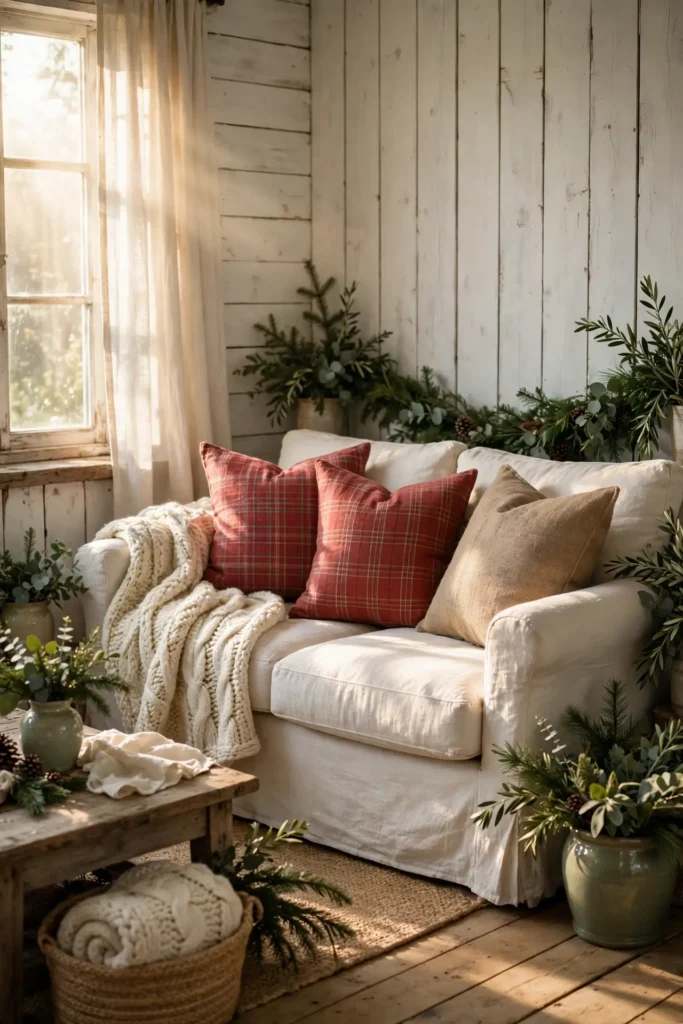
Plaid Throws and Grain Sack Pillows
The sofa is where farmhouse Christmas gets comfortable: two plaid throw pillows, one grain sack pillow with a simple stenciled tree or stripe, and a chunky knit throw over the arm. Keep the everyday inserts and swap only the covers, a $35 change that takes 10 minutes. The living room zone rules from any good christmas living room decor apply here too: textiles first, objects second.
Try it: Limit the sofa to one plaid. Two competing plaids is the fastest way to make farmhouse look like a lumberjack accident.
14
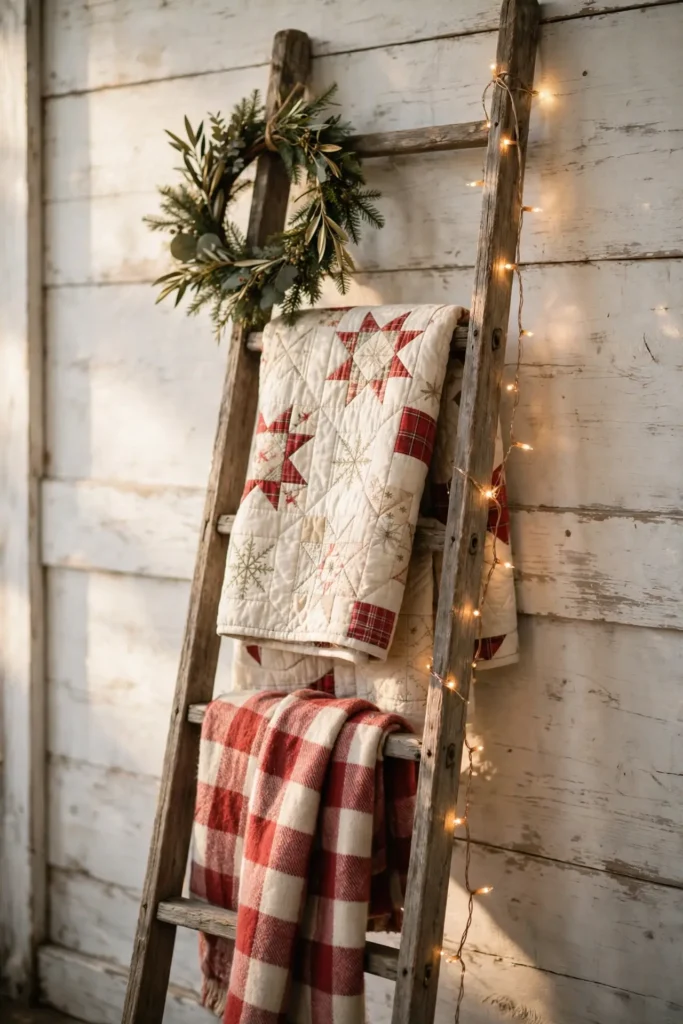
A Quilt Ladder Dressed for Christmas
A leaning blanket ladder is farmhouse furniture that decorates itself in December: drape your Christmas quilts and plaid throws over the rungs, add one small wreath at the top, and weave fairy lights down one side. It fills a bare wall, stores the blankets you actually use, and costs nothing if the ladder already exists.
Try it: Fold quilts pattern-side out on alternating rungs. The ladder reads as a display, not laundry storage, when the patterns face the room.
15
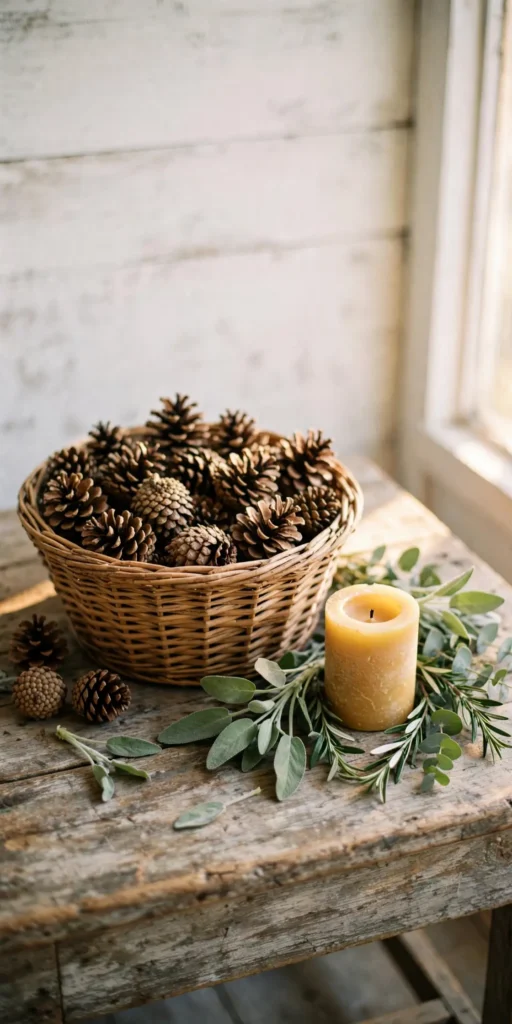
Baskets of Pinecones on Every Surface
Wicker and wire baskets are the farmhouse container for everything: pinecones on the coffee table, ornaments on the sideboard, rolled throws beside the sofa. A basket corrals loose seasonal bits into one intentional object, and gathered pinecones are free. Three baskets per main room is the sweet spot.
Try it: Dust gathered pinecones with a single mist of white paint from 18 inches away. One pass gives a snowy hint; three passes give you white plastic.
16
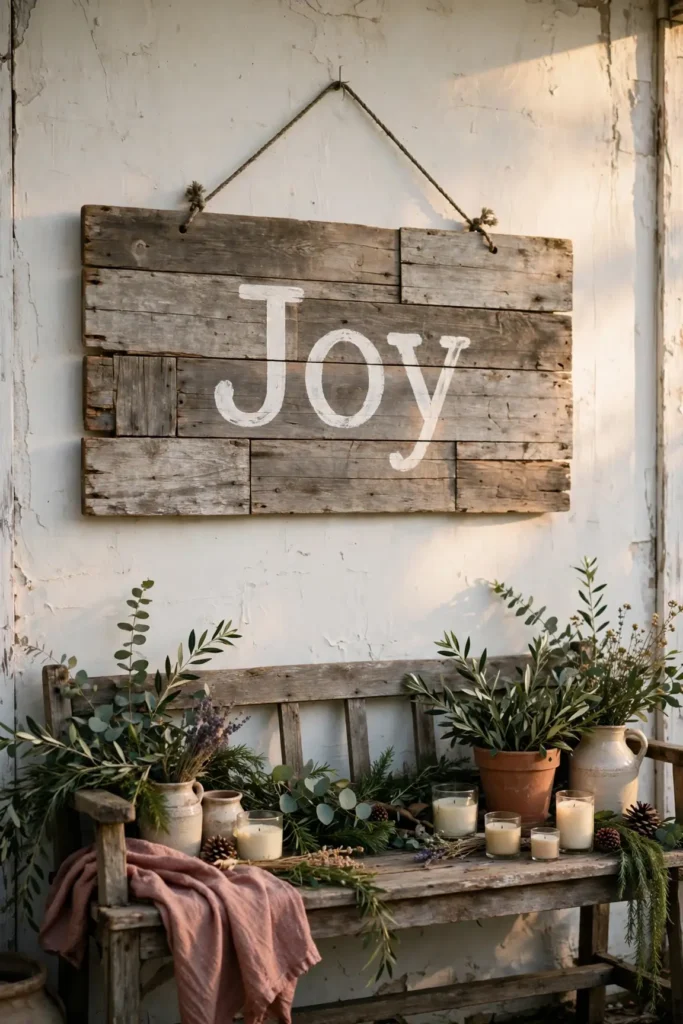
A Reclaimed Wood Sign with One Good Word
One hand-lettered sign on weathered wood, Joy, Gather, or Farm Fresh Christmas Trees, anchors a farmhouse wall like nothing else. Keep it big (24 inches or wider) and the lettering simple; small signs with long quotes read as clutter. A plank, chalk paint, and a stencil make one for under $10.
Try it: Sand the painted letters once, lightly, after they dry. Fresh paint on old wood looks fake; 30 seconds of distressing fixes it.
17
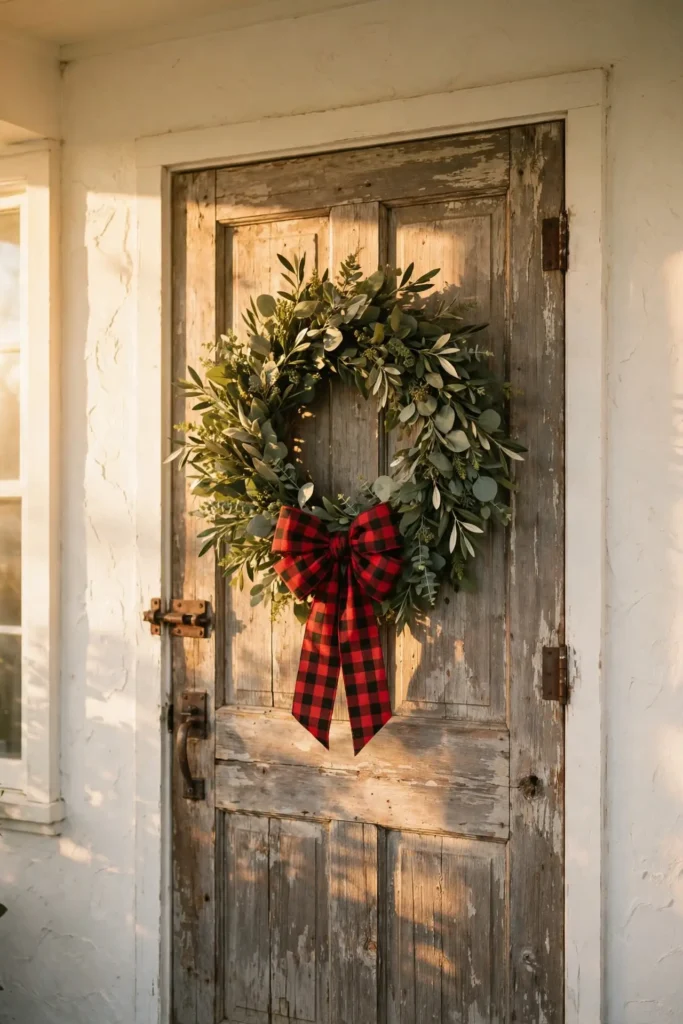
A Big Greenery Wreath with a Buffalo Check Bow
The farmhouse wreath formula never fails: an oversized plain greenery wreath, 24 to 30 inches, one buffalo check bow at the bottom, and nothing else. Hang it on the front door, over the mantel, or on an interior wall or window where it backlights at dusk. Restraint is the whole point; the bow does the talking.
Try it: Wire the bow separately and clip it on. You can swap a red bow for a grain sack one in January and keep the wreath up all winter.
18
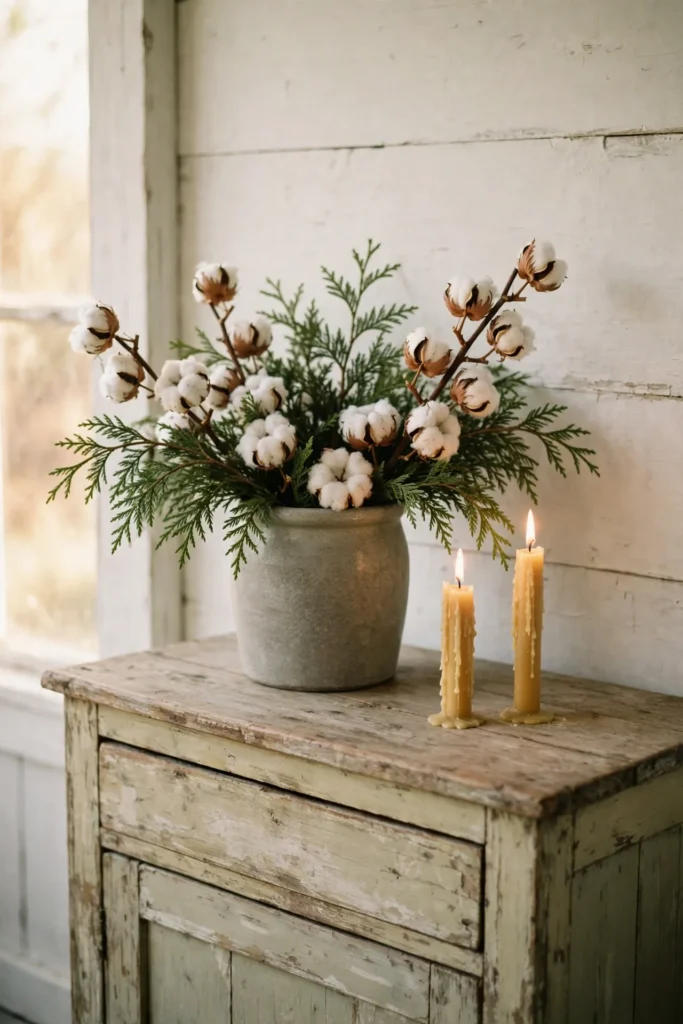
A Stoneware Crock of Greenery and Candles
Fill a stoneware crock or old pitcher with cedar sprigs, cotton stems, and two beeswax tapers, and set it wherever a room needs a center: coffee table, sideboard, entry console. Crocks are the farmhouse vase, heavy, matte, and honest, and a thrifted one costs $5 to $15.
Try it: Put a brick or a jar of sand in the bottom of tall crocks. Top-heavy greenery arrangements tip exactly once, usually onto the good rug.
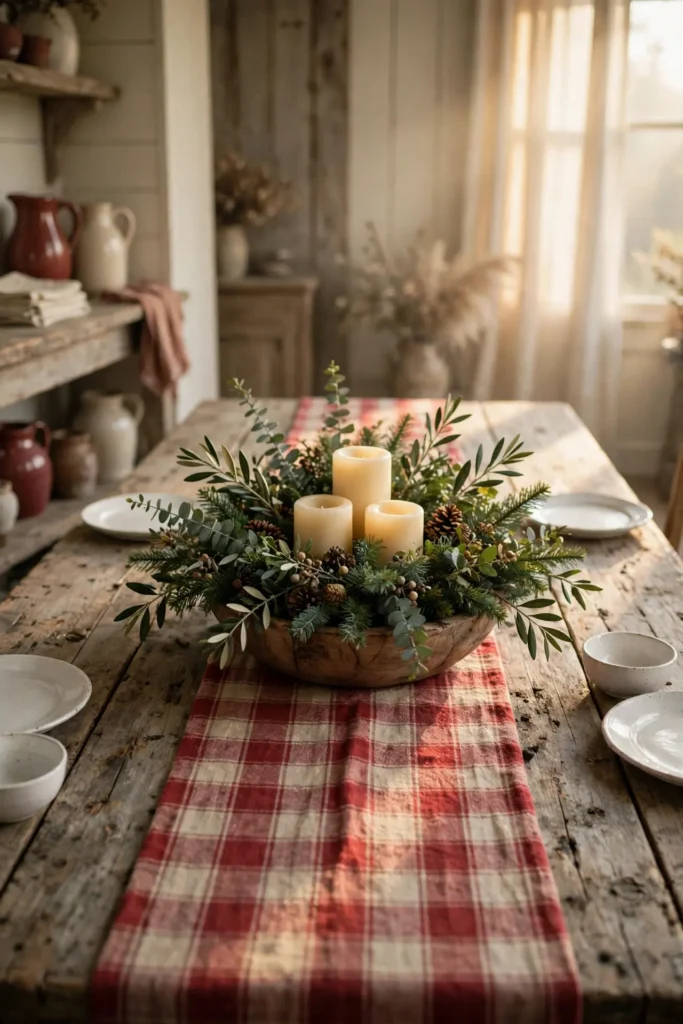
19
The Dining Table: Plaid Runner and Dough Bowl
Run a red plaid or natural burlap runner down the farmhouse table and set a long wooden dough bowl in the center filled with greenery, pinecones, and three pillar candles. The dough bowl centerpiece moves in one lift when dinner needs the table, which is why it beats a fixed arrangement every time. Total cost with a thrifted bowl: about $30.
Try it: Keep the centerpiece under 10 inches tall. Guests should talk over it, not around it.
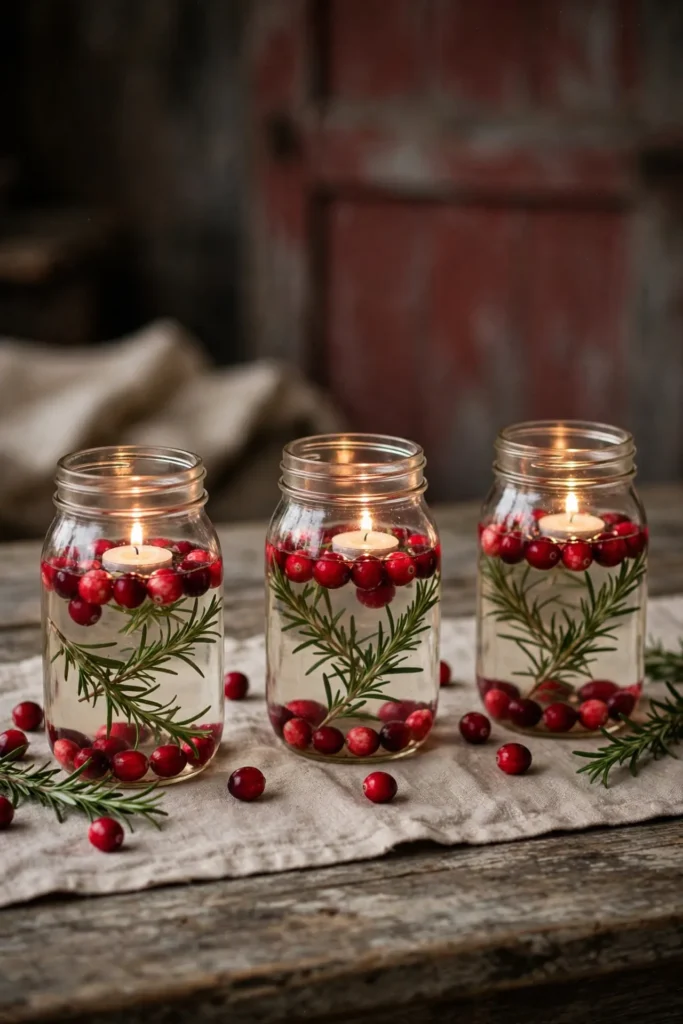
20
Mason Jar Centerpieces with Cranberries
Line three mason jars down the runner, fill with water, a handful of fresh cranberries, a sprig of rosemary, and a floating candle. Cranberries float, glow red through the glass, and last a full week in water. At roughly $2 a jar, this is the cheapest centerpiece that still makes guests ask how you did it.
Try it: Build these the morning of a gathering, not the night before. The rosemary stays bright green for about 10 hours in water, then starts to dull.
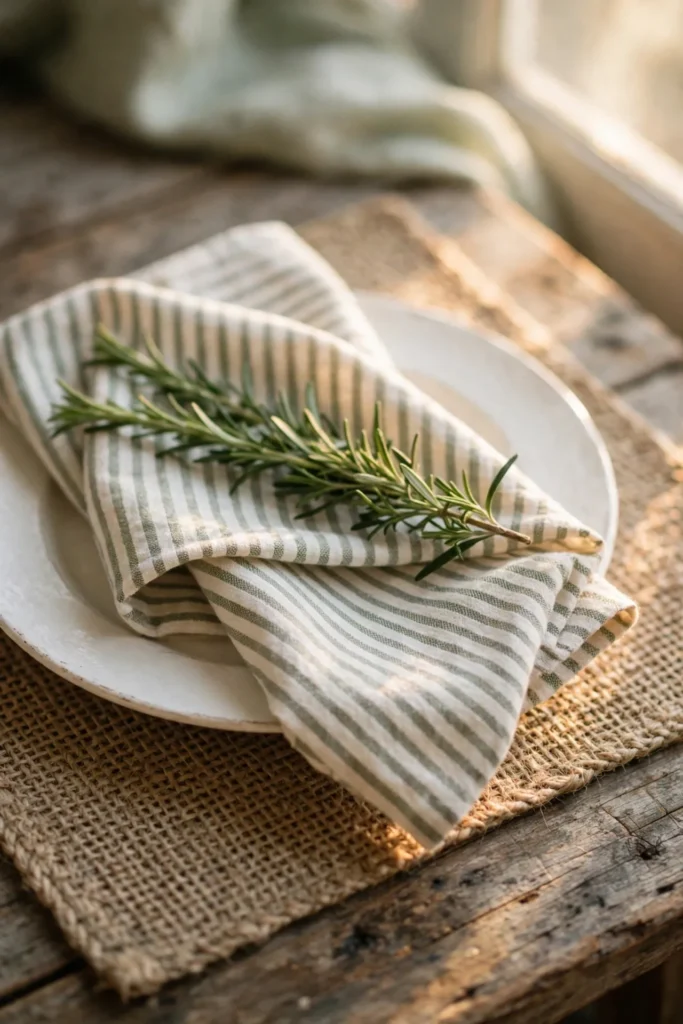
21
Jute Placemats and Simple Place Settings
Farmhouse place settings stay simple: jute or woven placemats, white everyday dishes, a cloth napkin in ticking stripe, and one rosemary sprig or cinnamon stick laid across the plate. The setting costs almost nothing per guest and photographs like a magazine table because the materials are all matte and natural.
Try it: Skip chargers if your table is under 36 inches wide. Placemat plus plate fills a narrow farmhouse table correctly; a charger pushes elbows off the edge.
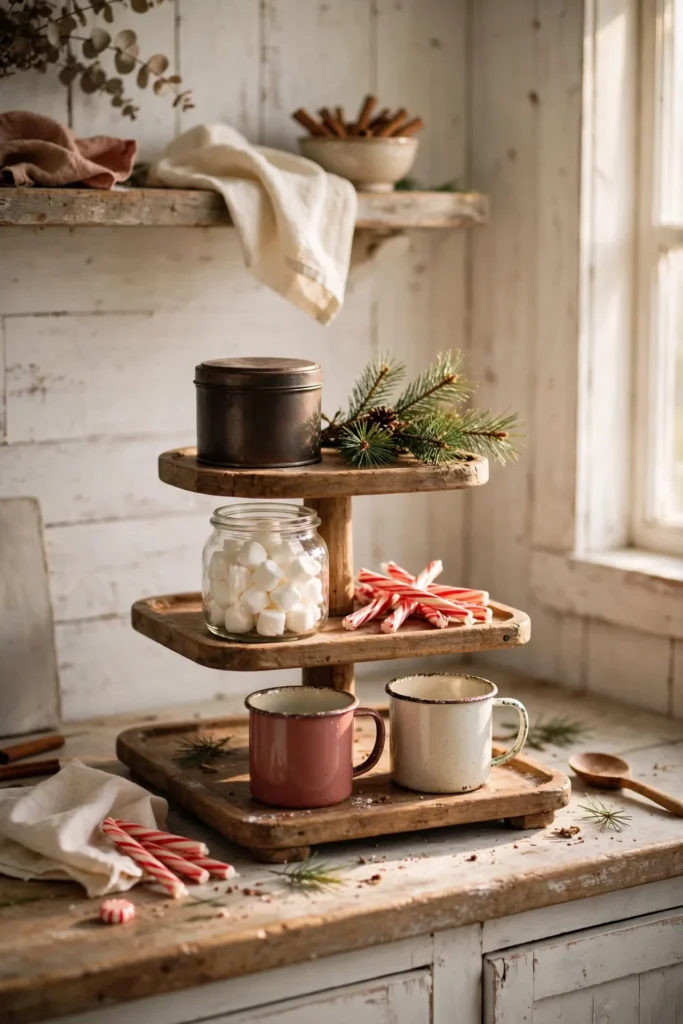
22
A Tiered Tray Cocoa Bar
Stack a wooden tiered tray with cocoa tins, marshmallows in a jar, peppermint sticks, and your best mugs, then park it on the kitchen counter for the season. A cocoa bar is decor that gets used daily, and the tiered tray keeps it to one square foot of counter. Add a sprig of pine on top so it reads Christmas, not just drinks.
Try it: Put the cocoa bar near the kettle or coffee maker, not the prettiest corner. A bar nobody walks past is a bar nobody uses.
23
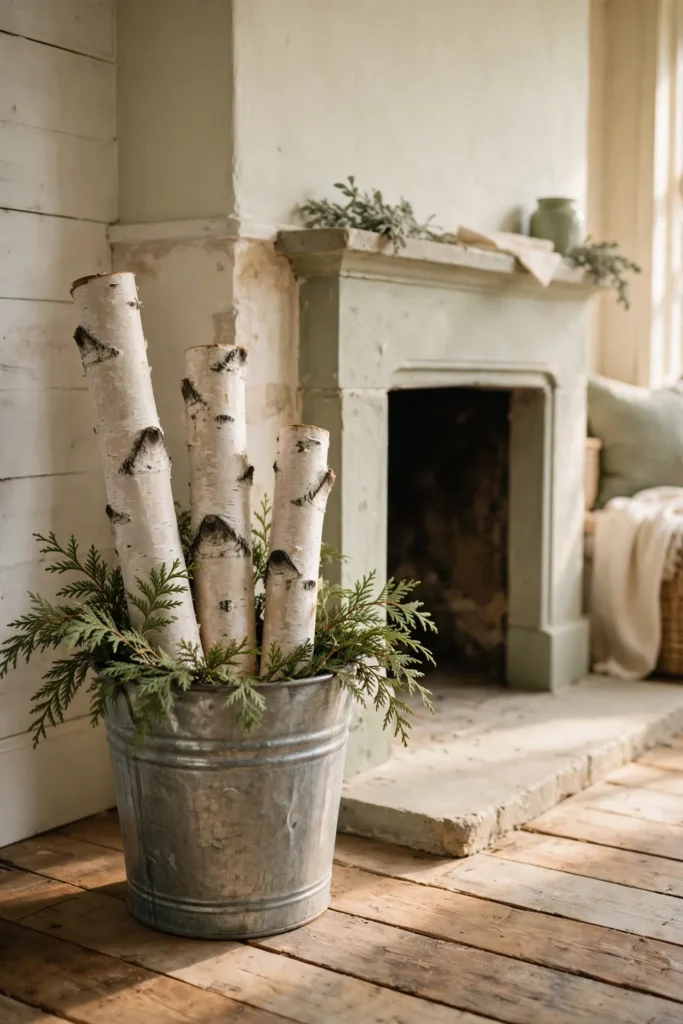
A Galvanized Bucket of Birch Logs
Stand three birch logs upright in a galvanized bucket, tuck greenery around the tops, and set it beside the fireplace, the entry bench, or the dining table as a floor centerpiece. Birch bark is the farmhouse neutral: white, textured, and free if you know anyone who splits firewood.
Try it: Cut logs at three heights, 18, 24, and 30 inches. Equal heights look like a fence; staggered heights look like a forest.
24
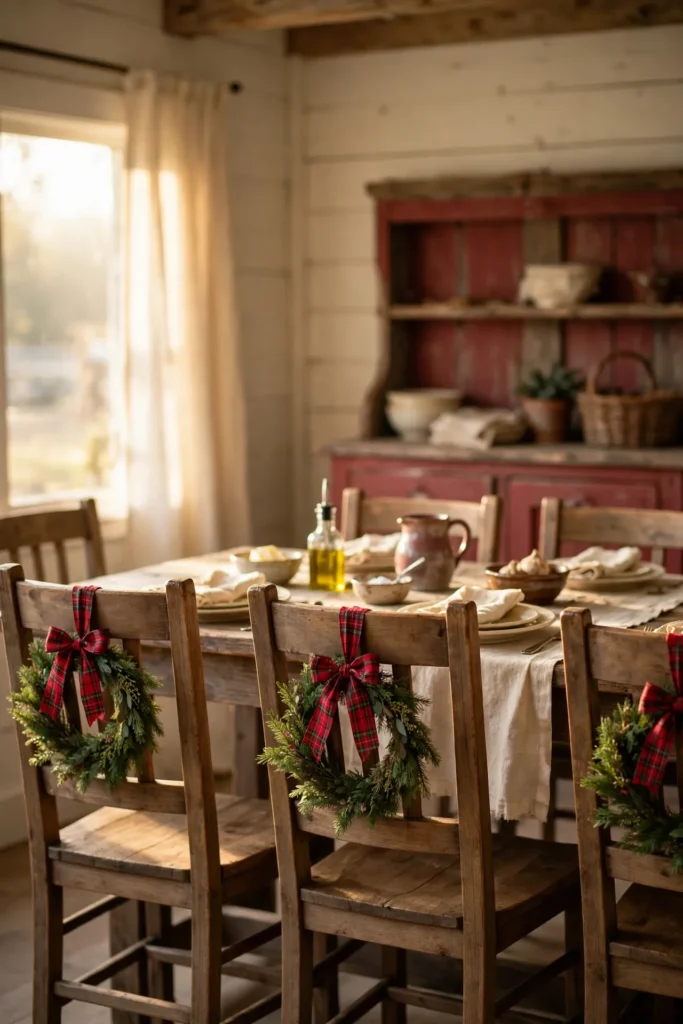
Mini Wreaths on the Chair Backs
Tie a small 6-inch greenery wreath to the back of each dining chair with plaid ribbon, and an ordinary dining set becomes the Christmas table. Six mini wreaths cost about $15 to make from one garland, and guests see them the whole meal from across the table.
Try it: Tie wreaths with a simple knot at the back, bow facing out. Glue dots and pins snag sweaters; ribbon unties in January with zero damage.
25
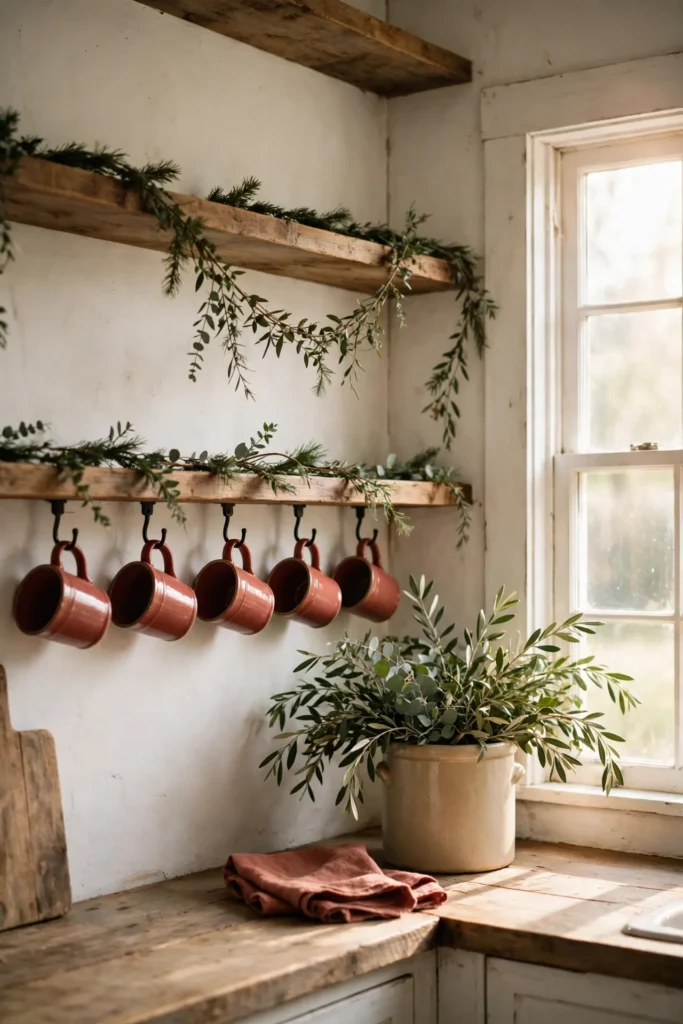
Garland on the Kitchen Shelves and Window
Decorating farmhouse for christmas should always reach the kitchen, because that is where everyone stands. Run one slim garland along the open shelves or above the sink window, hang your Christmas mugs from their hooks in a row, and set a small crock of greenery by the stove. Ten minutes, one garland, and the hardest-working room joins the season.
Try it: Keep shelf garland above head height and away from the stove’s heat plume. Greenery near burners dries to tinder by mid-December.
26
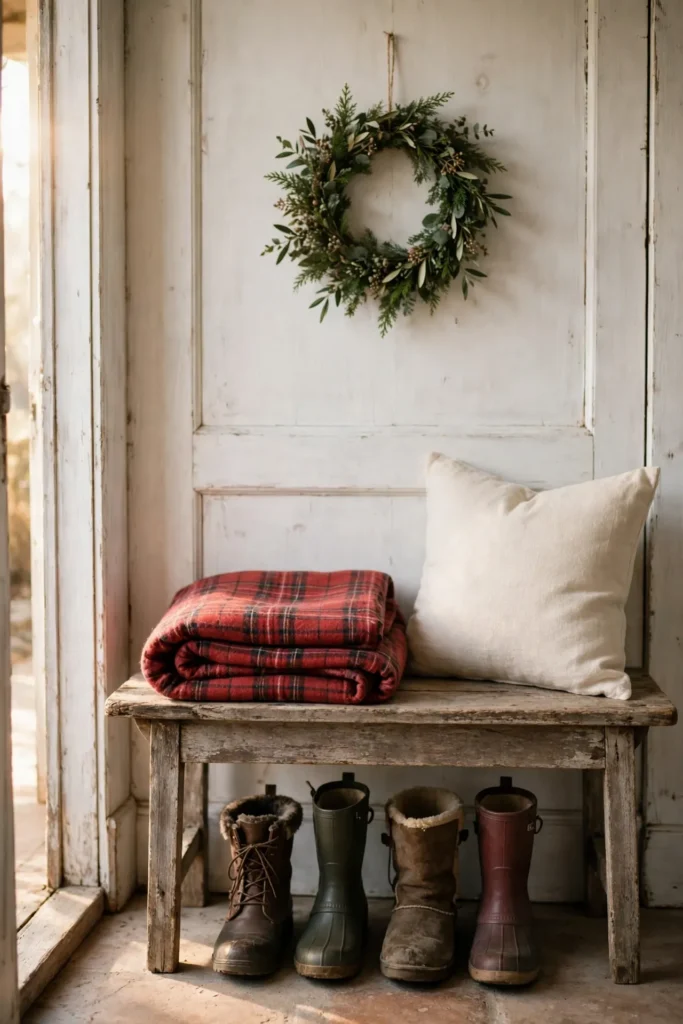
The Entryway Bench, Dressed
A wooden bench by the door with a folded plaid blanket, one pillow, a small wreath on the wall above, and boots lined up beneath it is the farmhouse entry in one square meter. It tells guests exactly what kind of house they have walked into. If you only decorate one non-living space, make it this one.
Try it: Put a galvanized tray under the bench for wet boots. Farmhouse charm survives December; farmhouse floors under puddles do not.
27
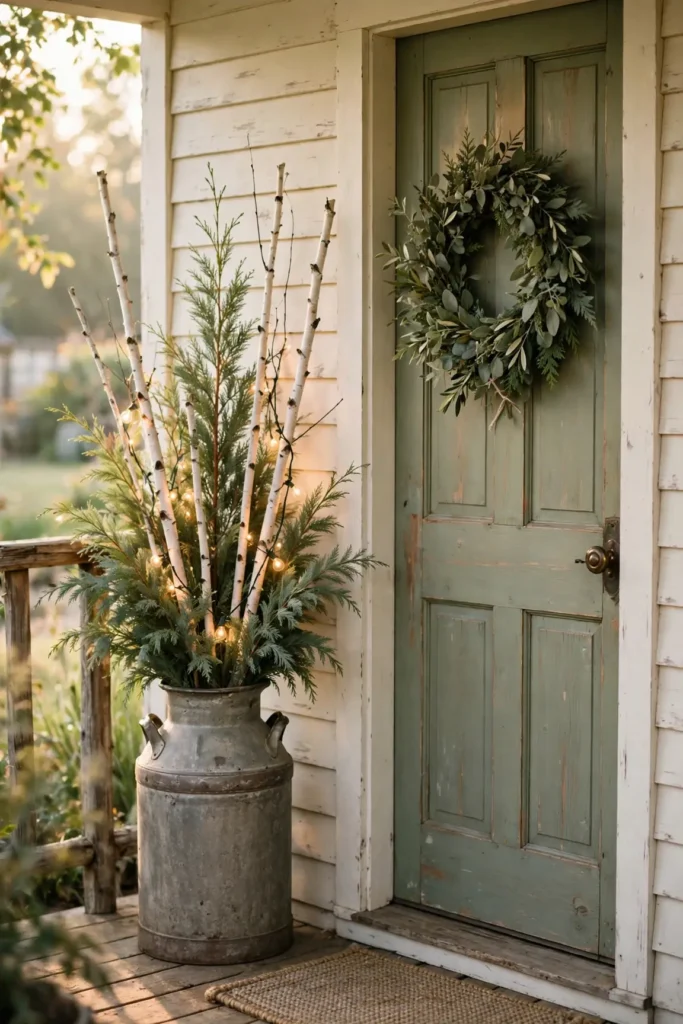
A Milk Can of Greenery by the Front Door
An old milk can filled with tall cedar branches, birch sticks, and a strand of warm lights is the farmhouse porch anchor. Milk cans run $25 to $40 at antique shops, weigh enough to ignore the wind, and need no styling beyond the greenery. Pair it with the door wreath and the porch is done.
Try it: Fill the can three-quarters with sand before adding branches. A top-heavy milk can in a December storm becomes a dent in your door.
28
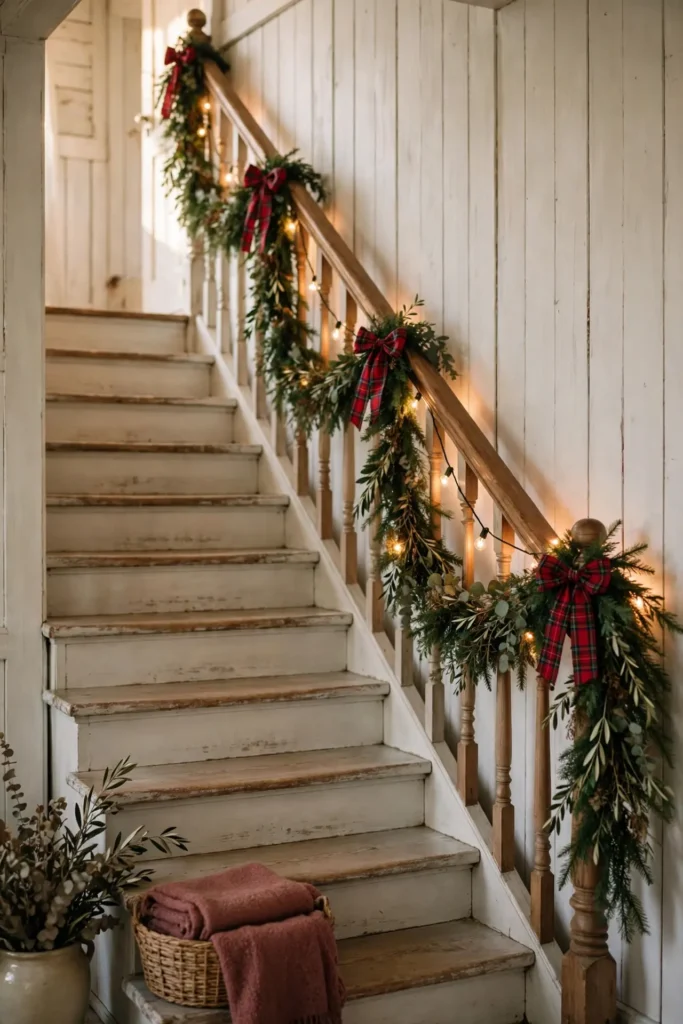
Garland and Bows Up the Stair Rail
Swag garland along the stair rail in loose scallops, tie a plaid bow at every third baluster, and let one strand of warm lights follow the swag. The staircase is the biggest vertical surface in most houses, and farmhouse stairs dressed this way become the backdrop of every December photo.
Try it: Attach garland with jute twine ties every 18 inches instead of wire. Twine matches the look and will not scratch a painted rail.
29
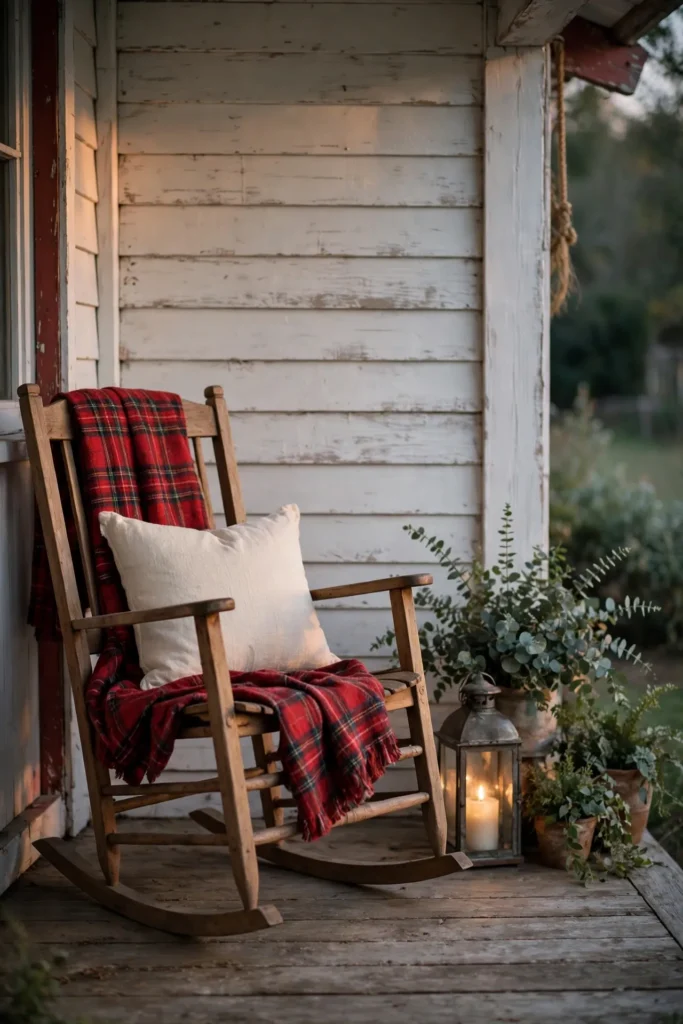
A Porch Chair That Invites Sitting
Set one rocking chair or porch swing with a plaid throw, a lumbar pillow, and a lantern with a flameless candle beside it. A porch that looks sat-in feels welcoming in a way a row of decorations never does, and on mild evenings it actually gets used with cocoa in hand.
Try it: Choose outdoor-rated fabric or bring the throw in nightly. December dew turns a cotton plaid blanket musty in about three nights.
30
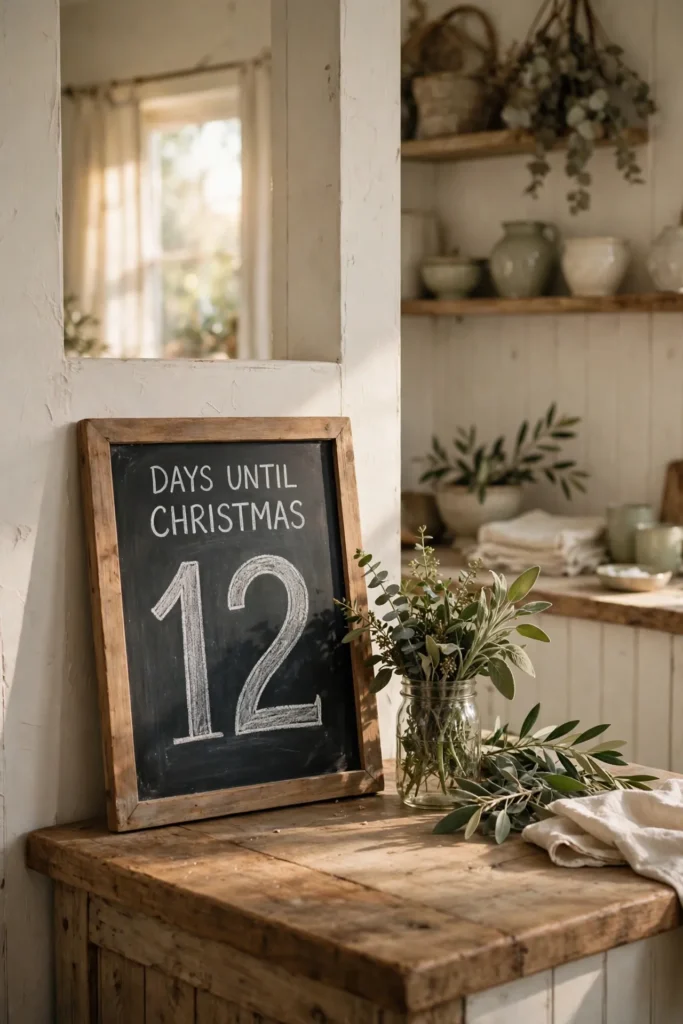
A Chalkboard Countdown in the Kitchen
A framed chalkboard counting down the days, hung in the kitchen or propped on the counter, is farmhouse decor with a daily ritual attached. Kids update it, guests photograph it, and the chalk lettering takes 60 seconds. Boards run $10 to $20, or make one from a thrifted picture frame and chalkboard paint.
Try it: Write the number big and the word “days” small, and let the youngest person in the house do the writing. Imperfect chalk numbers are the charm.
31
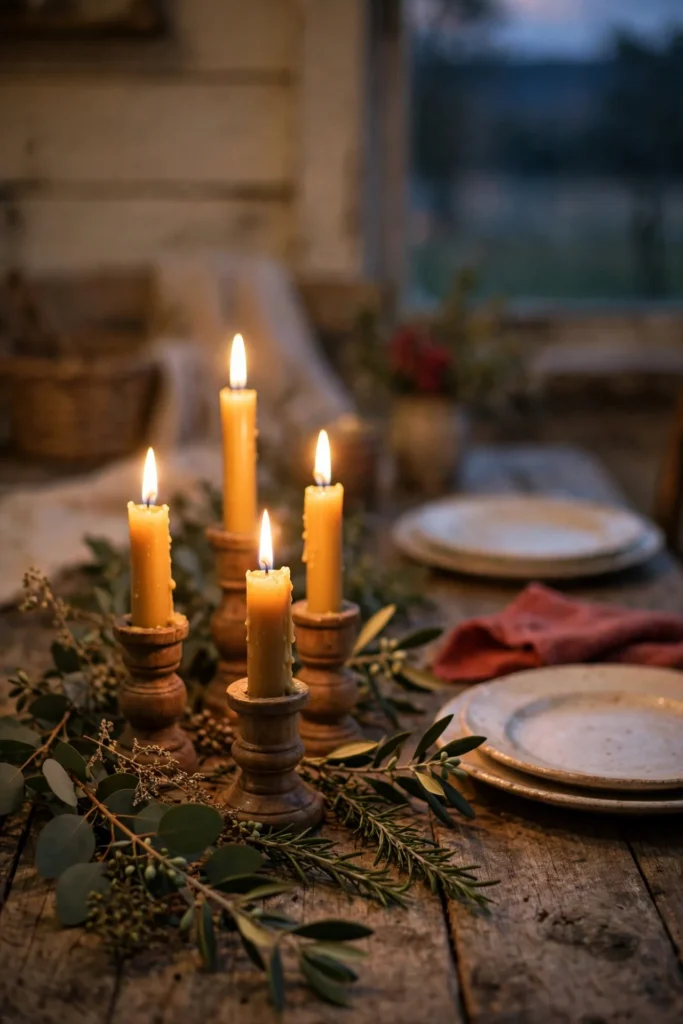
Beeswax Tapers in Wooden Holders, Every Evening
Farmhouse rooms run on candlelight after dark: beeswax tapers in turned-wood holders on the table, the mantel, and the sideboard, lit every evening in December. Beeswax burns warm-colored and smells faintly of honey, and wooden holders keep the whole setup in the matte, natural palette. A set of six holders costs about $20 and outlasts trends.
Try it: Put the tapers on a timer-based flameless set in any spot you cannot see from your chair. Real flames belong where eyes are; the glow is identical.
32
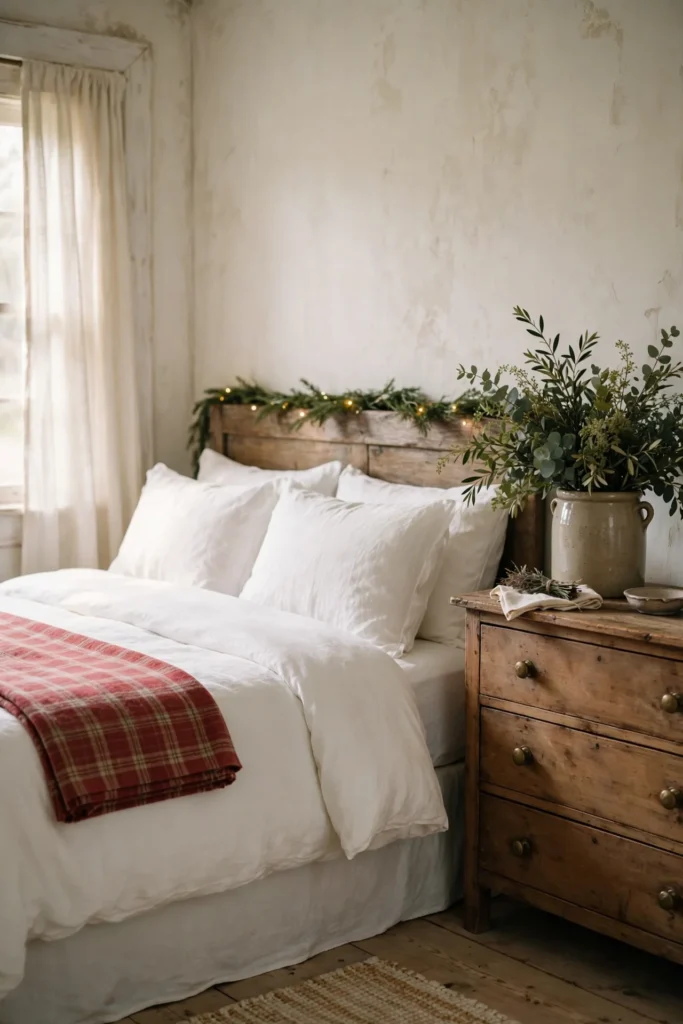
A Quiet Farmhouse Bedroom Finish
End with the bedroom kept quiet: a slim garland along the headboard, one plaid throw folded at the foot of the bed, and a small crock of greenery on the dresser. Bedrooms need the least Christmas of any room, just enough that waking up feels seasonal. If your taste runs rougher and more woodsy, the rustic christmas decorations in our rustic guide push the same materials further.
Try it: Use battery fairy lights in the headboard garland with a timer set to your wake-up time. A gently lit bedroom at 6 a.m. in December is the coziest alarm clock there is.
Pro tip: Walk your house with a basket in the week before decorating and gather every wood, wicker, galvanized, and plaid thing you own into one pile. Decorate from the pile first and shop only for the gaps. A farmhouse Christmas built from your own collected things always looks richer than one bought to match, and the pile usually covers 80 percent of this list.
Three rules for farmhouse Christmas
Farmhouse style falls apart when it gets precious, so hold these three lines while you decorate.
- Matte over shiny, always: Wood, galvanized metal, burlap, cotton, and stoneware can mix in any combination. The moment a glossy, glittered, or chrome piece joins in, the room reads confused instead of collected.
- Greenery is the glue: Every vignette needs something green and alive-looking, a garland, a crock of cedar, cotton stems. Farmhouse objects without greenery look like a yard sale; with greenery they look like Christmas.
- Two plaids maximum per room: One plaid pattern per room is charming, two is the limit, three turns the room into a fabric store. Repeat your two plaids in different scales, big check and small check, to stretch them further.
After Christmas: putting the farmhouse away
Farmhouse materials are sturdy, which makes storage simple, as long as you protect the soft things from the hard things.
- Textiles in the cedar chest or a sealed bin: Wash quilts, throws, and stockings, fold them with a lavender sachet or cedar block, and seal them away from attic heat. Burlap goes in its own bag; it sheds fibers onto everything it touches.
- Greenery flat, ornaments in the crates they decorated: Coil garlands flat in labeled bins, and pack wood and metal ornaments in the same crates and baskets you displayed them in. They are unbreakable storage that already matches next year’s plan.
- Candles and jars in the pantry zone: Store beeswax tapers upright in a cool cupboard, never the attic, where summer heat warps them. Mason jar luminaries keep best with the salt emptied out and the jars washed, ready to refill next December.
More ideas you’ll love: Start with our rustic christmas decor ideas, browse vintage christmas decor ideas and traditional christmas decor ideas, get specific with christmas living room decor ideas, or wander the whole Christmas decor collection.
Questions readers ask
How do I start decorating farmhouse for christmas on a budget?
Start with what you own: gather every wood, wicker, metal, and plaid item in the house, then add fresh or faux greenery and warm lights. A $12 garland, a $12 bell strand, and gathered pinecones carry the whole look. Spend what is left on the tree base, a crate or basket, because it shows every single day.
What colors define farmhouse christmas decor?
Cream, white, and weathered wood browns as the base, sage and deep green from the greenery, and one muted red, barn red or cranberry, as the accent. Keep every finish matte. If a color shines or glitters, it does not belong in the palette.
How do I decorate a farmhouse christmas tree differently from a regular tree?
Use rustic ornaments only, wood, fabric, paper, and galvanized metal, layer in a bead garland and wide burlap or plaid ribbon, and finish with a crate or tub instead of a skirt. The tree should look gathered over years, not matched from one box.
Can I do farmhouse christmas decor in a small apartment or a modern house?
Yes, because farmhouse is materials, not architecture. A crate tree base, two plaid cushions, a crock of greenery, and mason jar luminaries give any small or modern room the farmhouse feel without a single beam or shiplap wall.
What is the difference between farmhouse and rustic christmas decorations?
Rustic leans rougher: raw logs, antlers, heavier wood, darker tones. Farmhouse is rustic cleaned up for daily living, with more white and cream, softer textiles, and galvanized metal alongside the wood. Most homes look best mixing them, farmhouse in the living spaces, rustic at the porch and fireplace.
How many ornaments does a farmhouse christmas tree need?
About 8 to 10 per foot of height, so a 7-foot tree wants 60 to 70. Because farmhouse ornaments are larger and matte, you need slightly fewer than a traditional tree, and the gaps get filled with ribbon, beads, and cotton stems instead.
When should I put up farmhouse christmas decor?
The weekend after Thanksgiving suits farmhouse style best, since the greenery and candles carry it for a full month without looking tired. The porch and entry can go up a week earlier if you host early December gatherings.
How do I make farmhouse decor not look like a theme restaurant?
Use real and worn materials instead of new distressed-look pieces, keep word signs to one or two in the whole house, and let everyday objects, books, blankets, the cocoa mugs, stay in the rooms. Lived-in beats staged every time.
People Also Ask
What are the must-have farmhouse christmas tree decorations?
A wooden bead garland, wide burlap or plaid ribbon, rustic ornaments in wood and metal, cotton stems, and a crate or galvanized tub for the base. Those five pieces give any tree the farmhouse read, even a basic artificial one.
Are rustic christmas trees better real or artificial?
A real tree wins on scent and irregular shape, the two things farmhouse style values most. A good artificial rustic tree wins on cost per year and can be fluffed fuller. If you go artificial, choose a sparse, unlit spruce style and add your own warm lights deep in the branches.
What is the easiest farmhouse christmas decoration to make?
Mason jar luminaries with Epsom salt snow: glue, salt, a jar, and a tea light, about $1 each and 10 minutes for a set of six. Dried orange slice ornaments are a close second and make the whole tree smell wonderful.
loved these ideas? ✿
Save this guide for later
Pin it to your board so it’s there when you’re ready to recreate it.

Curated by
Hey! I'm Sanaullah — visual curator and content creator. I search, curate, and test the best aesthetic ideas across Pinterest so you can easily transform your living space, style daily outfits, and try simple creative DIYs without the overwhelm.