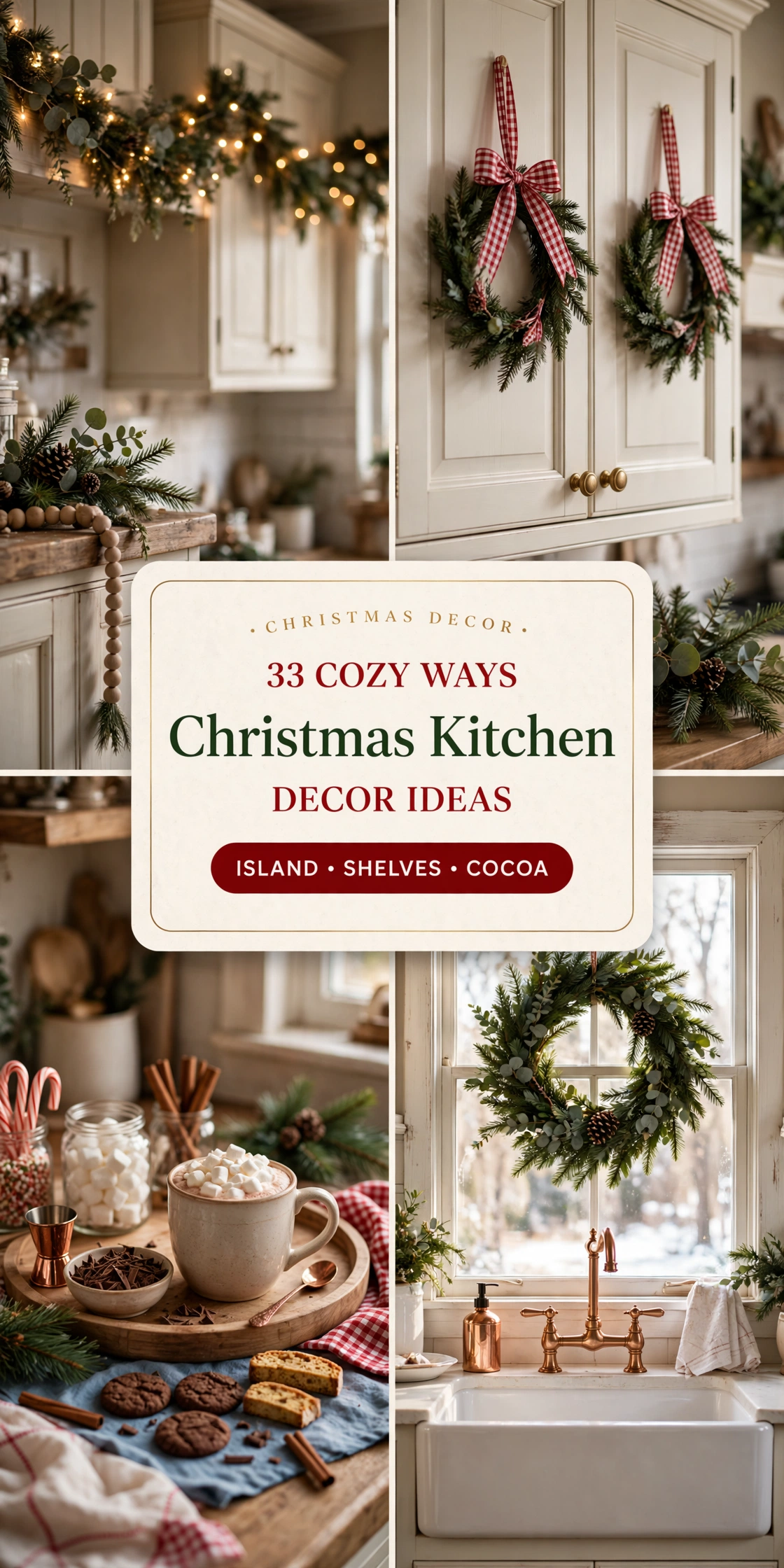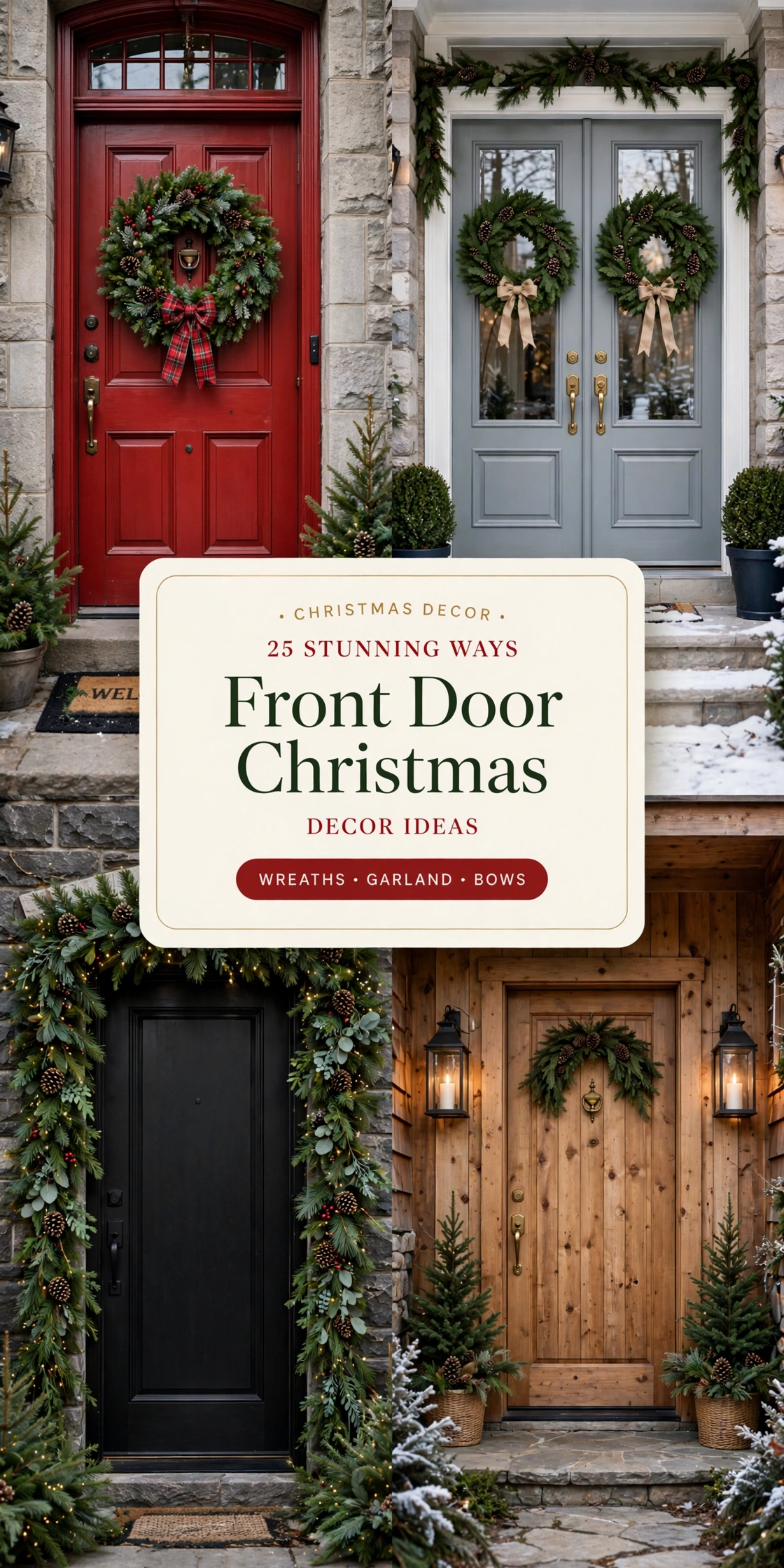

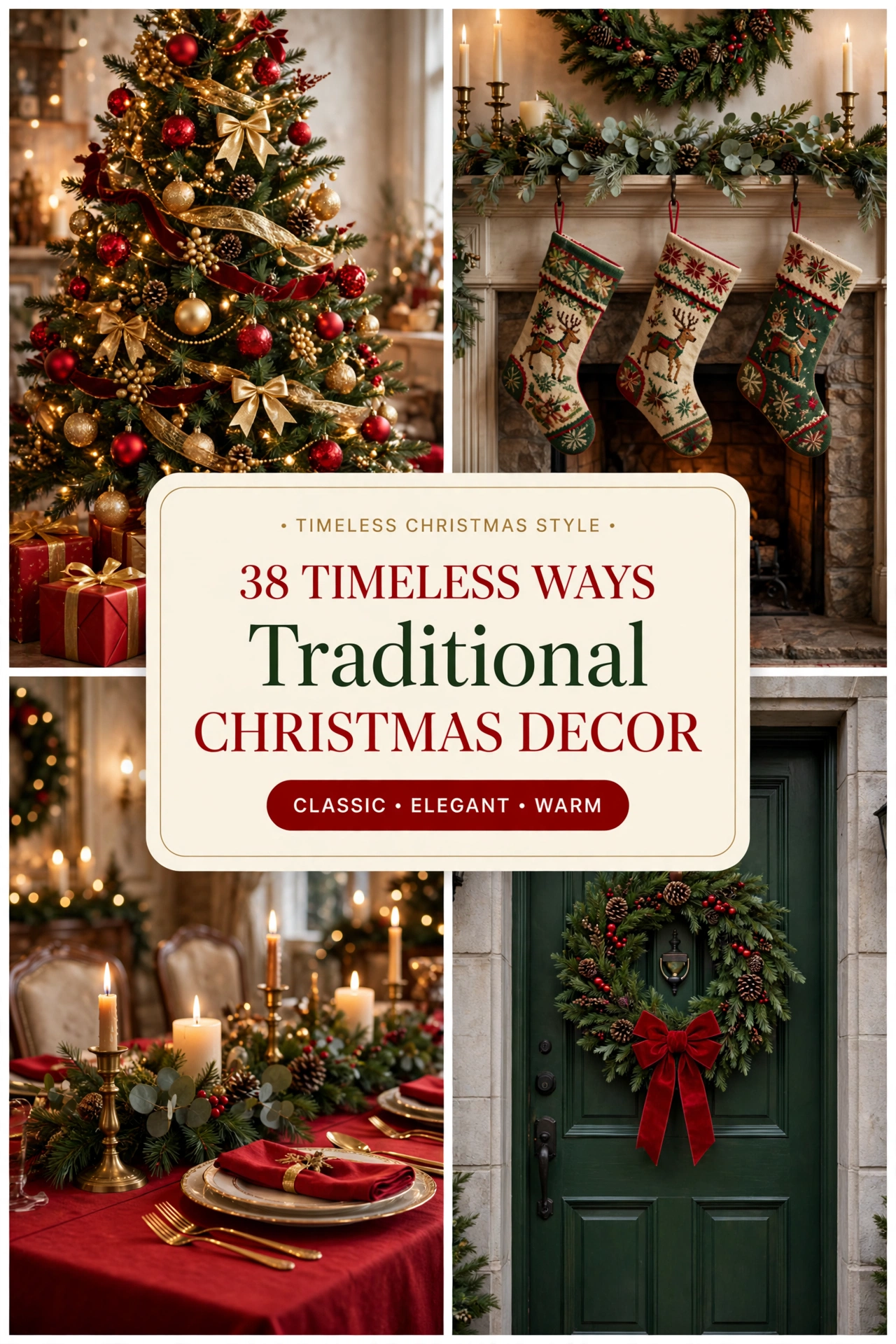
Traditional Christmas decor is not about being old-fashioned, it is about being right. Red and green, plaid and pine, candles and carols: these are the elements that have worked for a century because they speak a visual language everyone understands. These traditional christmas decor ideas show how to do the classics properly, with the details that separate timeless from tired. Follow this guide and your home will feel like Christmas has always felt, at its very best.
Quick Idea Summary
- The key takeaway: Traditional style runs on three pillars: the red-green-gold palette, natural materials (pine, wood, berries), and symmetry. Get those three right and every individual piece falls into place.
- The detail most people miss: Real candles were the original Christmas lights, and their warm flicker is still unmatched. Use real tapers where safe (dining table, mantel with supervision) and flameless everywhere else; the mix reads as authentic.
- What it costs or how long it takes: Most ideas below cost $10 to $50 and take under 2 hours. A full traditional home fits into one long weekend.
At a glance
| Zone | Ideas | Budget |
|---|---|---|
| The tree | 01–08 | $25–$90 |
| Mantel and fireplace | 09–14 | $20–$70 |
| Table and dining | 15–20 | $20–$60 |
| Entry and porch | 21–26 | $15–$60 |
| Windows and stairs | 27–31 | $15–$50 |
| Details and traditions | 32–38 | $5–$40 |
The traditional Christmas decor ideas

01
The Red and Gold Tree
The traditional tree is red and gold on green: red balls in two finishes, gold ribbon or garland, a gold star topper, warm white lights. It is the tree from every classic Christmas movie because it works in every room. No theme, no novelty, just the canon done well.
Try it: Use three reds (cranberry, classic, burgundy) and two golds (shiny, matte). The shade variation is what makes a simple palette look rich instead of flat.
02
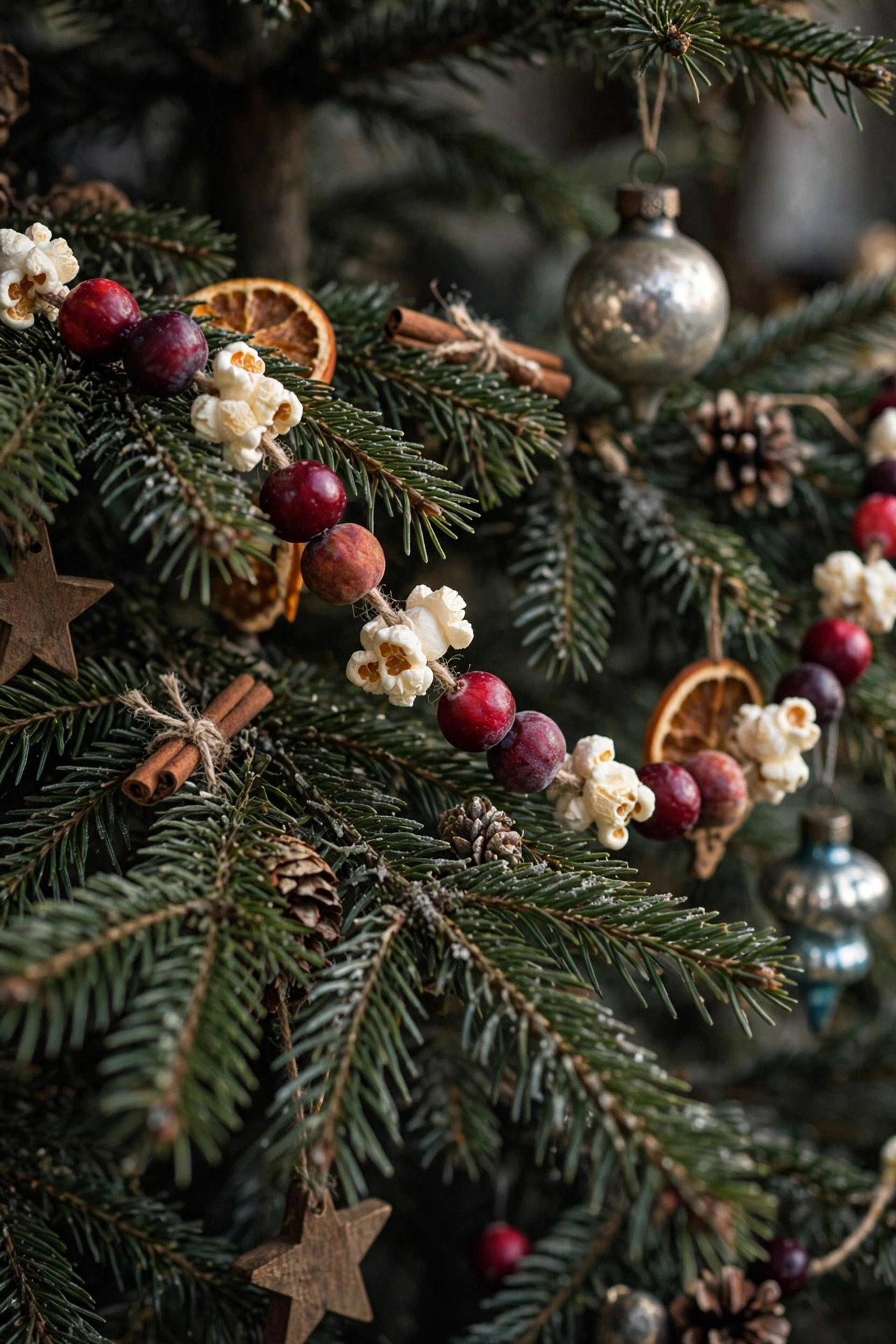
Cranberry and Popcorn Garland
String fresh cranberries and air-popped popcorn on heavy thread for the oldest tree garland there is. It is edible, biodegradable, and beautiful against green branches. Make it the week of Christmas; popcorn stales after about 7 days.
Try it: Alternate 5 cranberries with 3 popcorn pieces. The rhythm looks intentional; random stringing looks sparse.
03
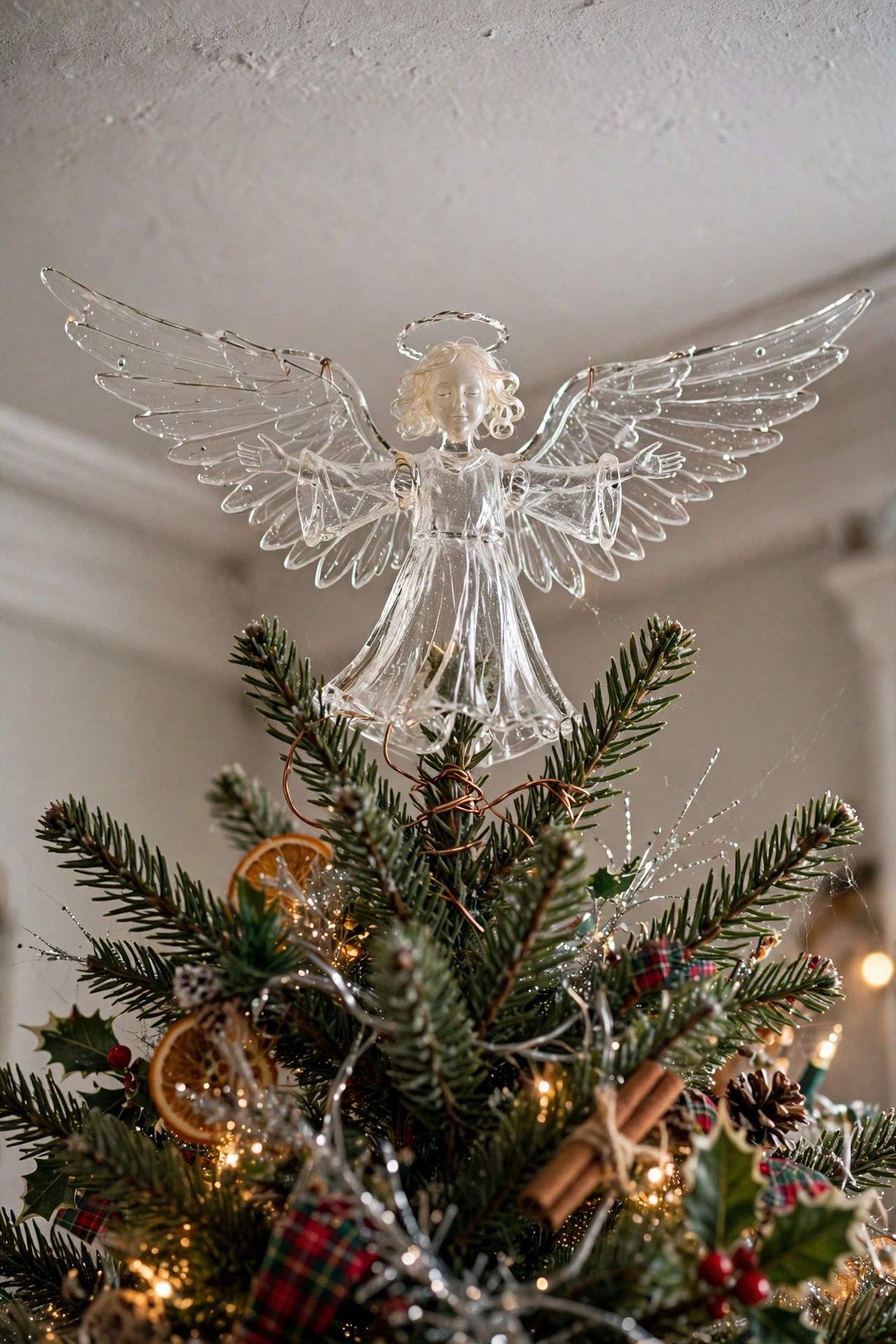
The Angel Topper
Top the traditional tree with an angel, not a star. Angels are the older tradition (stars came with commercial toppers), and a spun-glass or ceramic angel with outstretched arms crowns the tree like a blessing. Size it to the tree: one-tenth of the height.
Try it: Wire the angel to the top branches, not just perched on the tip. Angels are top-heavy and December has gravity.

04
Tinsel Icicles, Strand by Strand
Hang tinsel one strand at a time, 50 to 100 strands, draped over branch tips. The old way takes 20 minutes and looks like frozen rain; the handful-thrown way looks like a mistake. This single technique separates traditional trees from lazy ones.
Try it: Hang tinsel last, after ornaments. Draped over ornament edges it catches light at every angle.
05
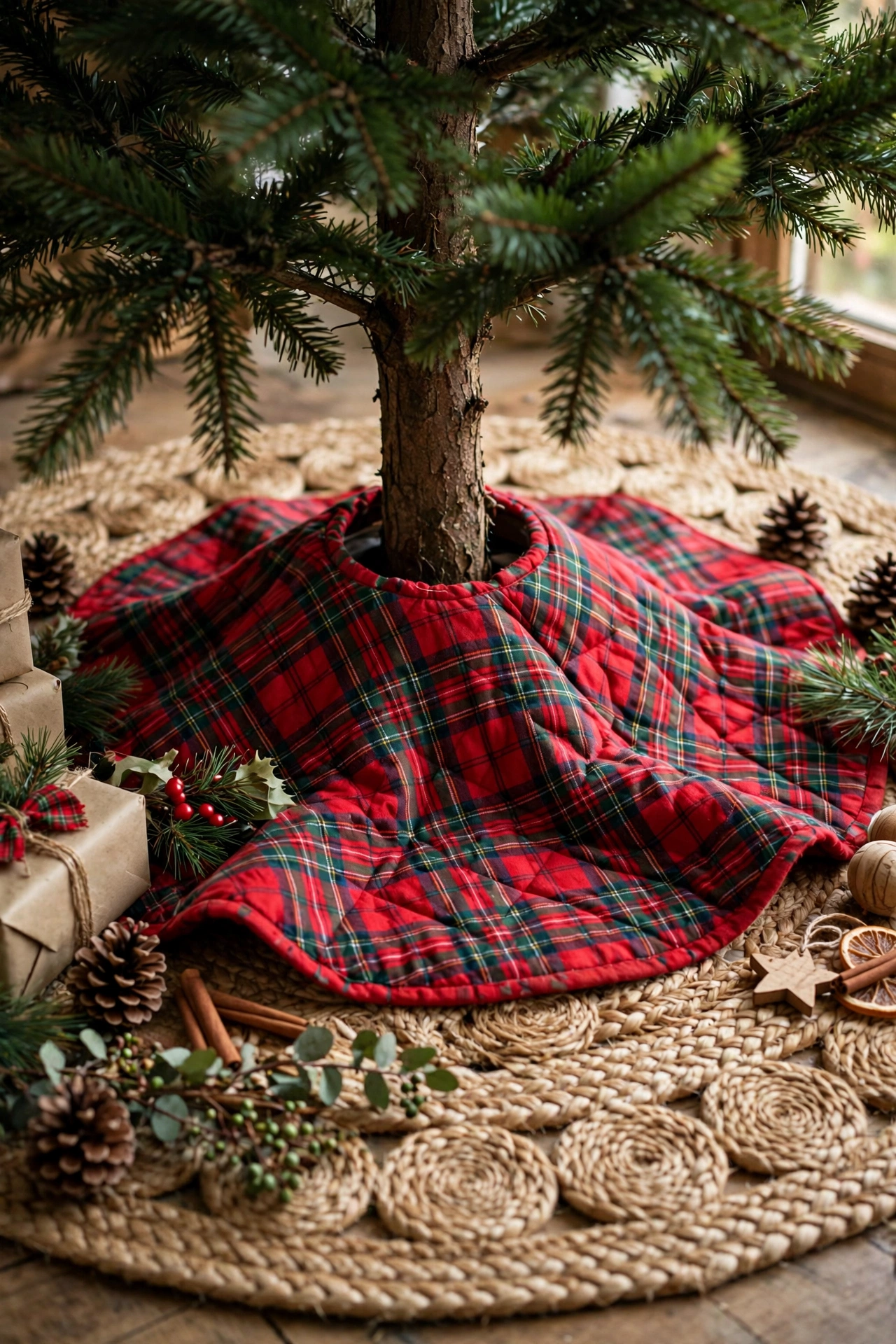
The Plaid Tree Skirt
A red and green plaid tree skirt, quilted or wool, grounds the traditional tree. Plaid at the base echoes through the whole room when you repeat it in throws and pillows. The skirt should extend 6 inches beyond the tree’s widest branches.
Try it: Layer a round braided jute rug under the plaid skirt. The natural texture under the pattern looks collected, not matched.
06
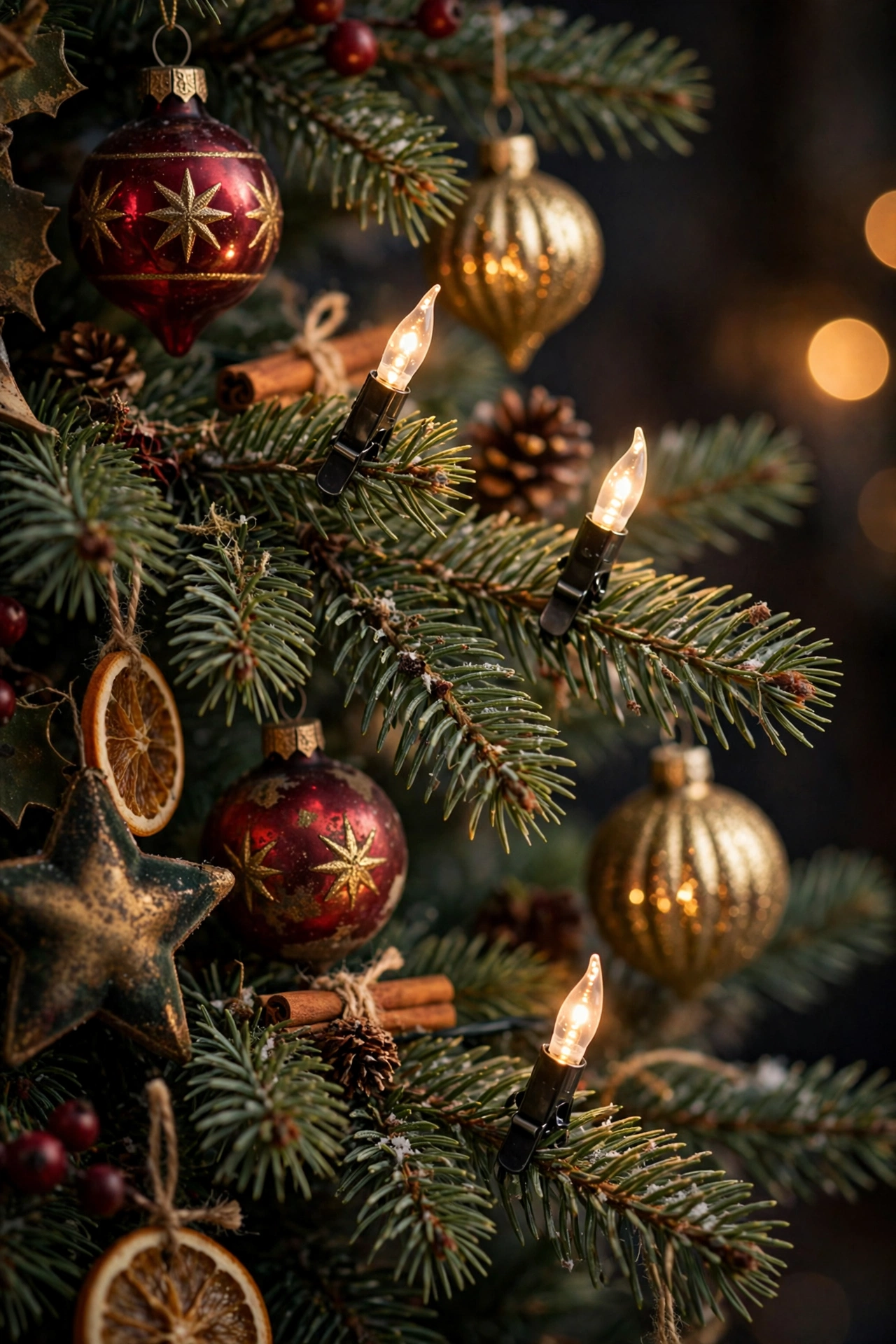
Clip-On Candles for Old-World Glow
Clip-on candle lights on the branch tips recreate the pre-electric Christmas tree glow. Use LED versions (zero fire risk) on 10 to 15 outer branches. The flickering points of light among the ornaments are pure 19th century.
Try it: These read best on trees with some space between branches. Dense artificial trees hide the candle effect.
07
Wooden Ornaments Throughout
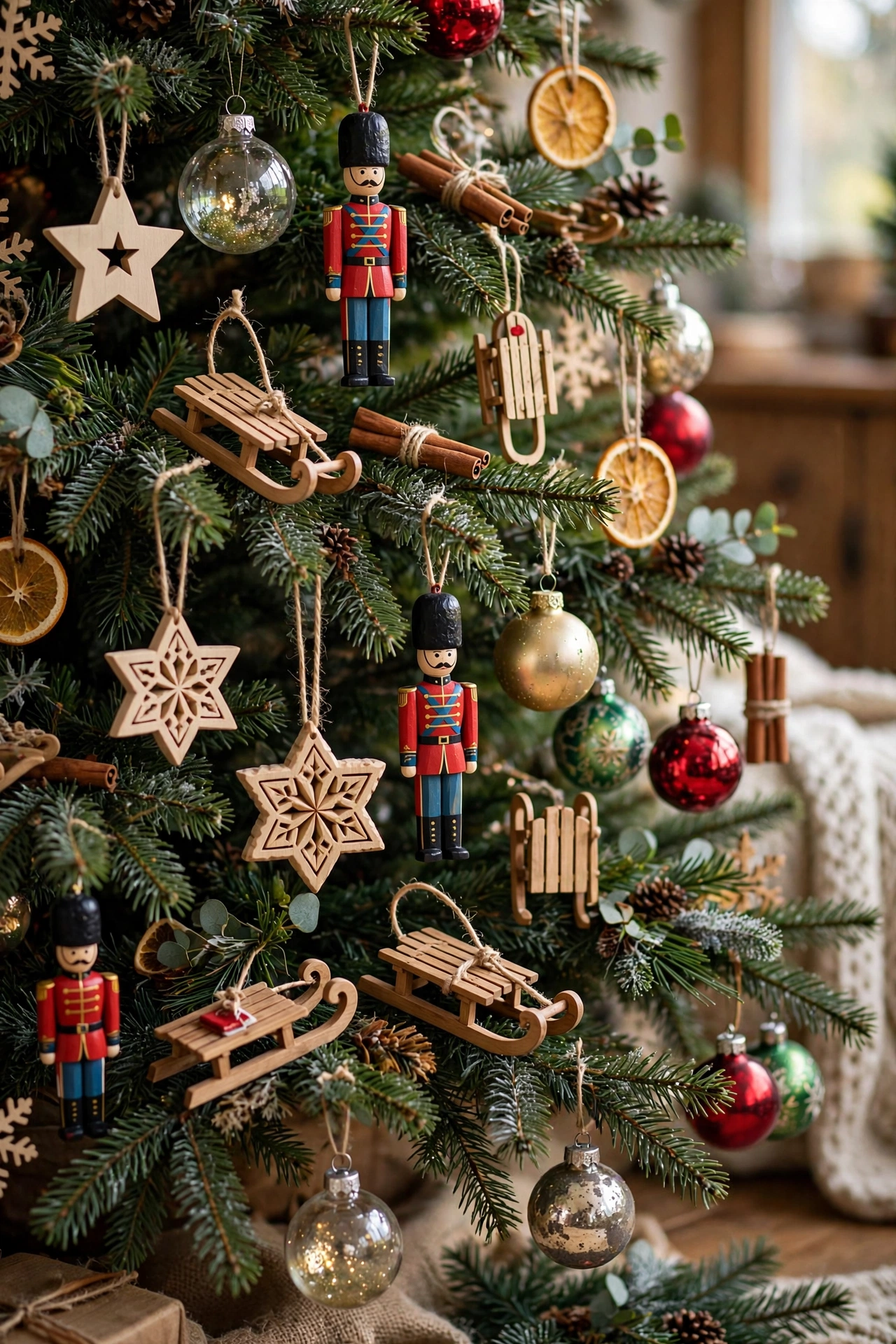
Mix wooden ornaments, carved stars, painted soldiers, miniature sleds, among the glass balls. Wood adds the handmade warmth that all-glass trees lack, and wooden ornaments are indestructible around kids and pets. A dozen wooden pieces transform a tree’s character.
Try it: Hang wooden ornaments on the outer branches where their silhouettes show. Glass goes deeper; wood goes forward.

08
Presents Wrapped in the Palette
Wrap presents in red, green, gold, and kraft paper with real ribbon, and place them under the tree from early December. Coordinated wrapping is decor for three weeks, and the tree looks finished long before Christmas morning. Even empty decoy boxes work.
Try it: Add a sprig of pine or a cinnamon stick to each bow. The natural accent makes store-bought ribbon look custom.
09
The Classic Garland Mantel
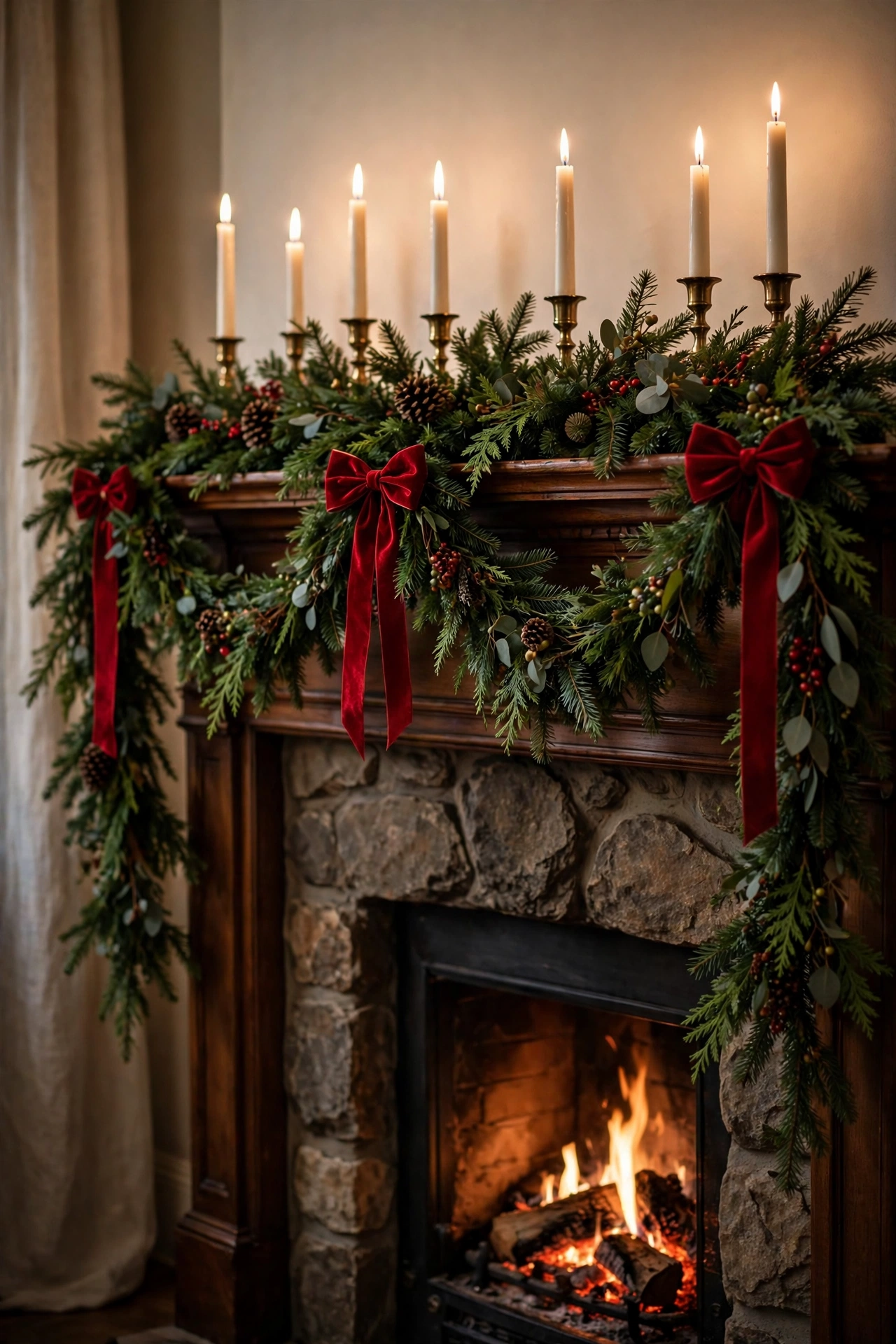
Swag fresh or faux evergreen garland across the mantel with a dip in the center, red velvet bows at the swag points, and tapered candles behind. This is the mantel from every Christmas card. Keep the palette to green, red, and candle-glow gold.
Try it: Wire the bows to the garland, not just tied on. Wired bows hold their shape all season; tied bows sag by week two.
10
Needlepoint Stockings
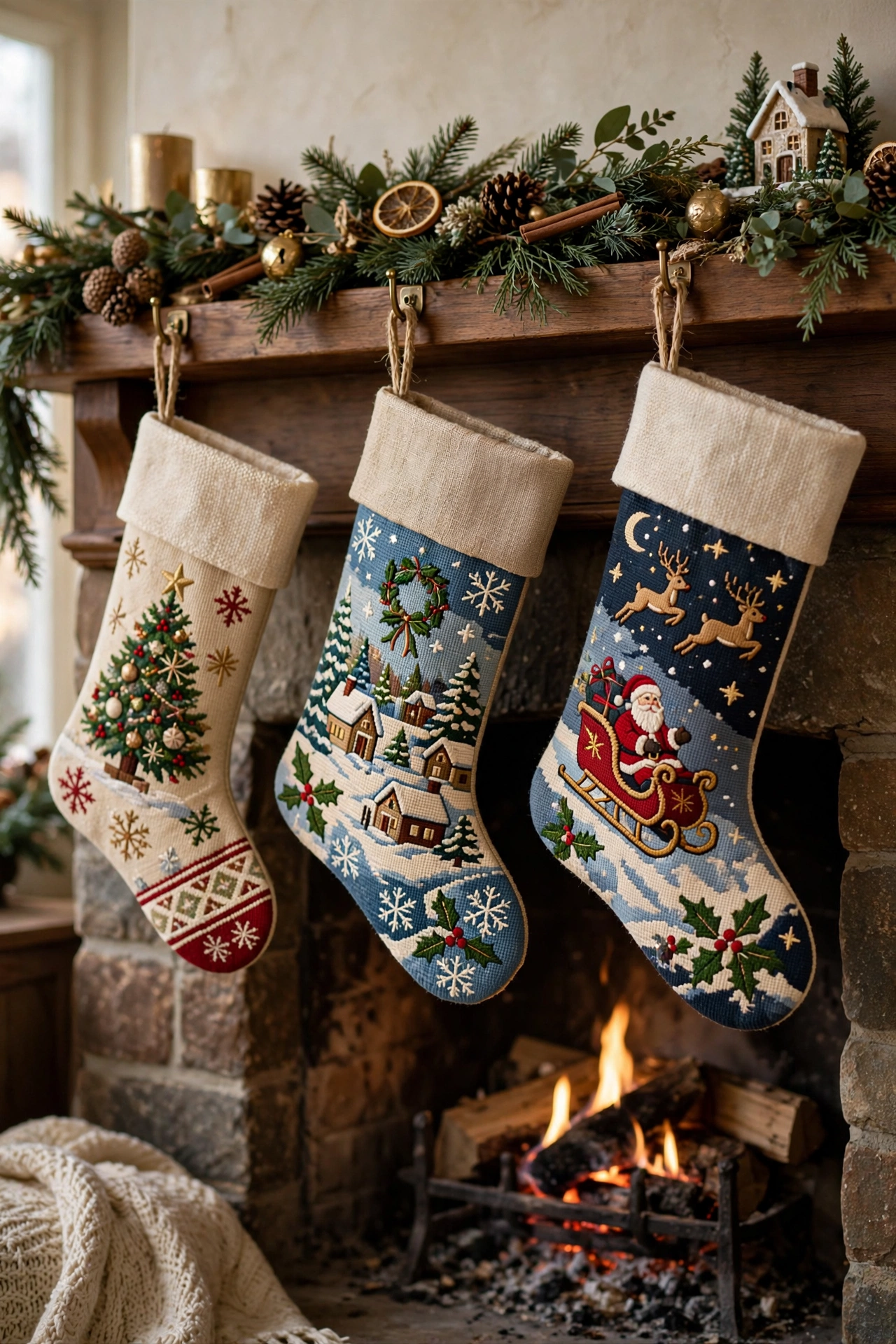
Needlepoint stockings with Christmas scenes, each one slightly different, are the traditional mantel. Hang them in birth order or by height, cuffs folded. The hand-stitched look signals a house that takes Christmas seriously.
Try it: Stuff stockings with tissue until Christmas Eve. Flat stockings look deflated; plump ones look expectant.
11
Candles in Front of the Mirror
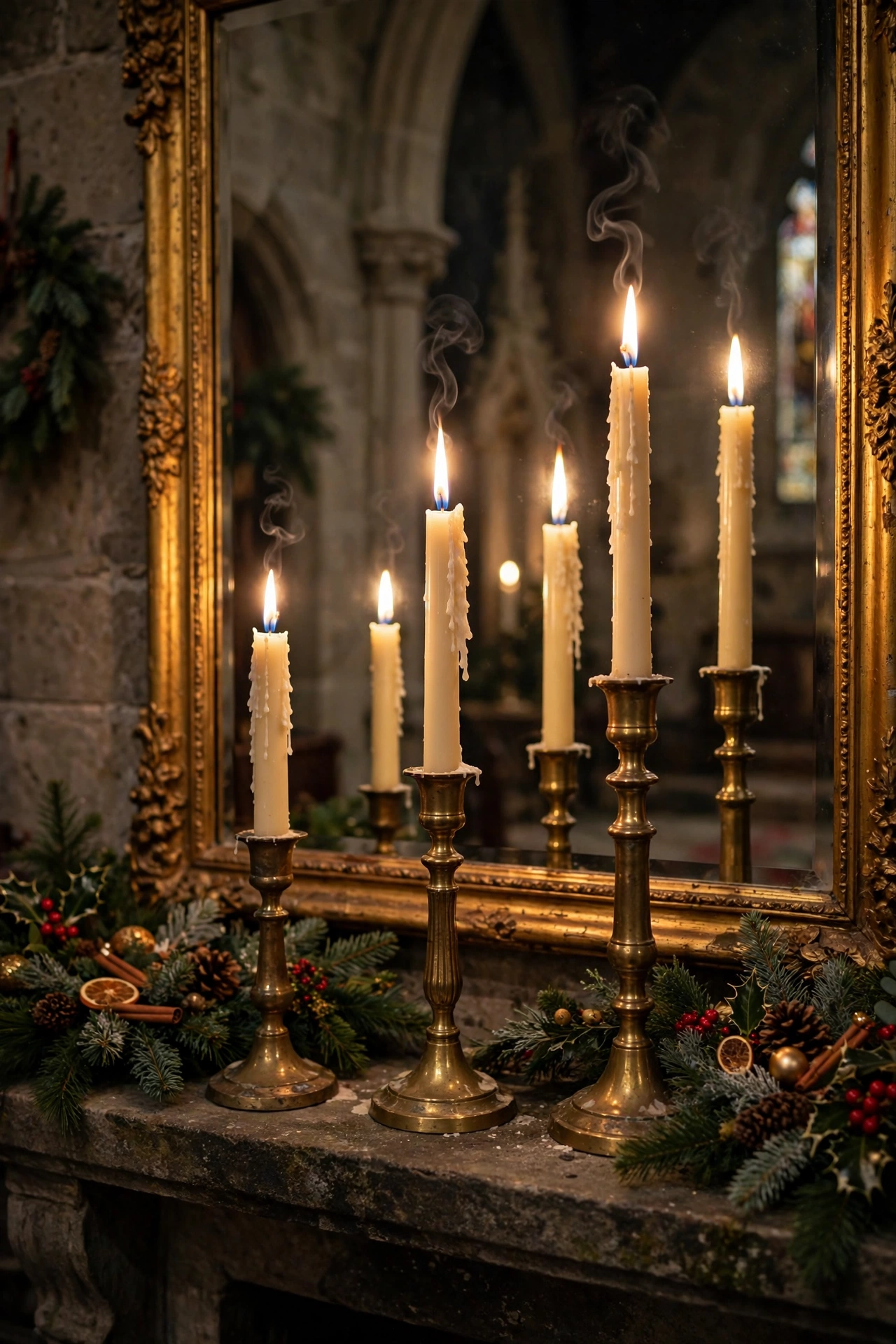
If your mantel has a mirror, line tapered candles in front of it. The mirror doubles every flame and the mantel glows like a chapel. Brass candlesticks suit traditional style best; their warm metal is part of the palette.
Try it: Vary candle heights by at least 3 inches between neighbors. Even heights look like a choir; varied heights look like a gathering.
12
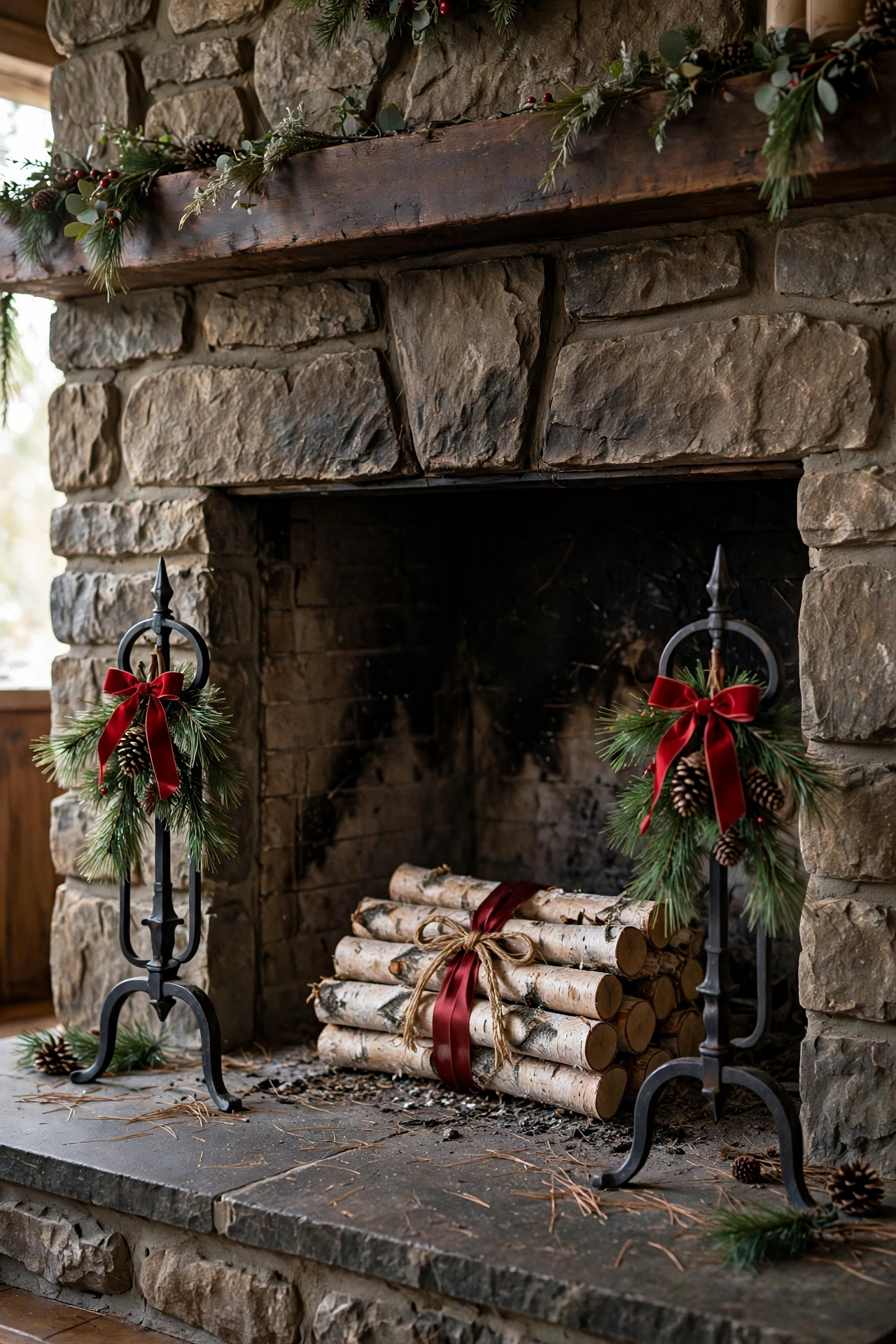
Dress the Fireplace Tools
Even fireplace tools get the treatment: tie a small pine sprig and red bow to the andiron handles, or stand a bundle of birch logs tied with ribbon in the firebox. The fireplace is the room’s hearth in every sense; details here register subconsciously.
Try it: Keep a stack of real firewood beside the hearth even if you burn gas. The wood pile is the traditional signal of a working fireplace.
13
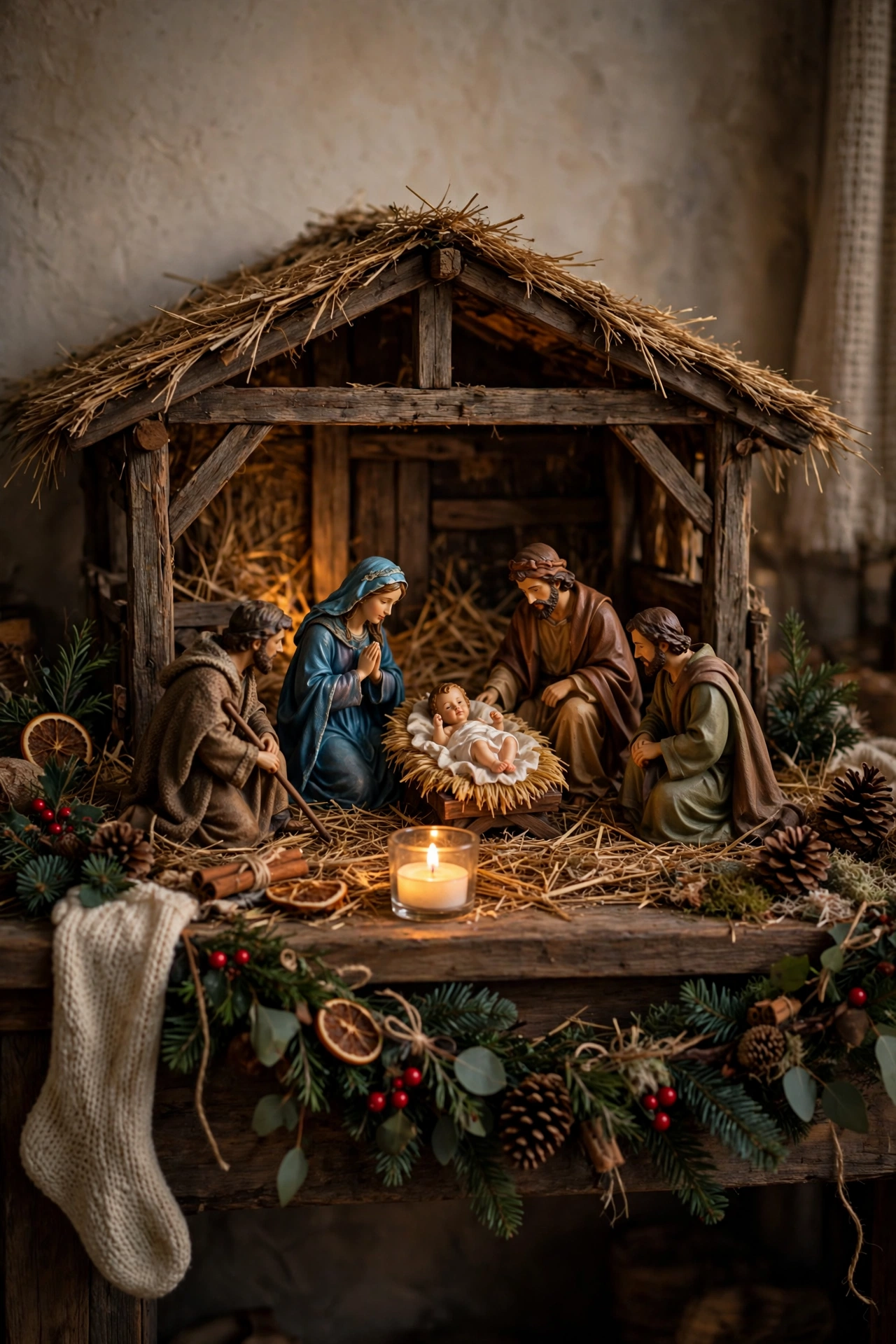
The Nativity on the Mantel
Place the nativity at the mantel’s center, the place of honor. Arrange figures in a shallow arc with the stable behind, straw or burlap underneath. Even small children understand this arrangement; it is the oldest Christmas image there is.
Try it: Add one battery tea light inside the stable. The glow marks the scene’s importance without any wiring.
14
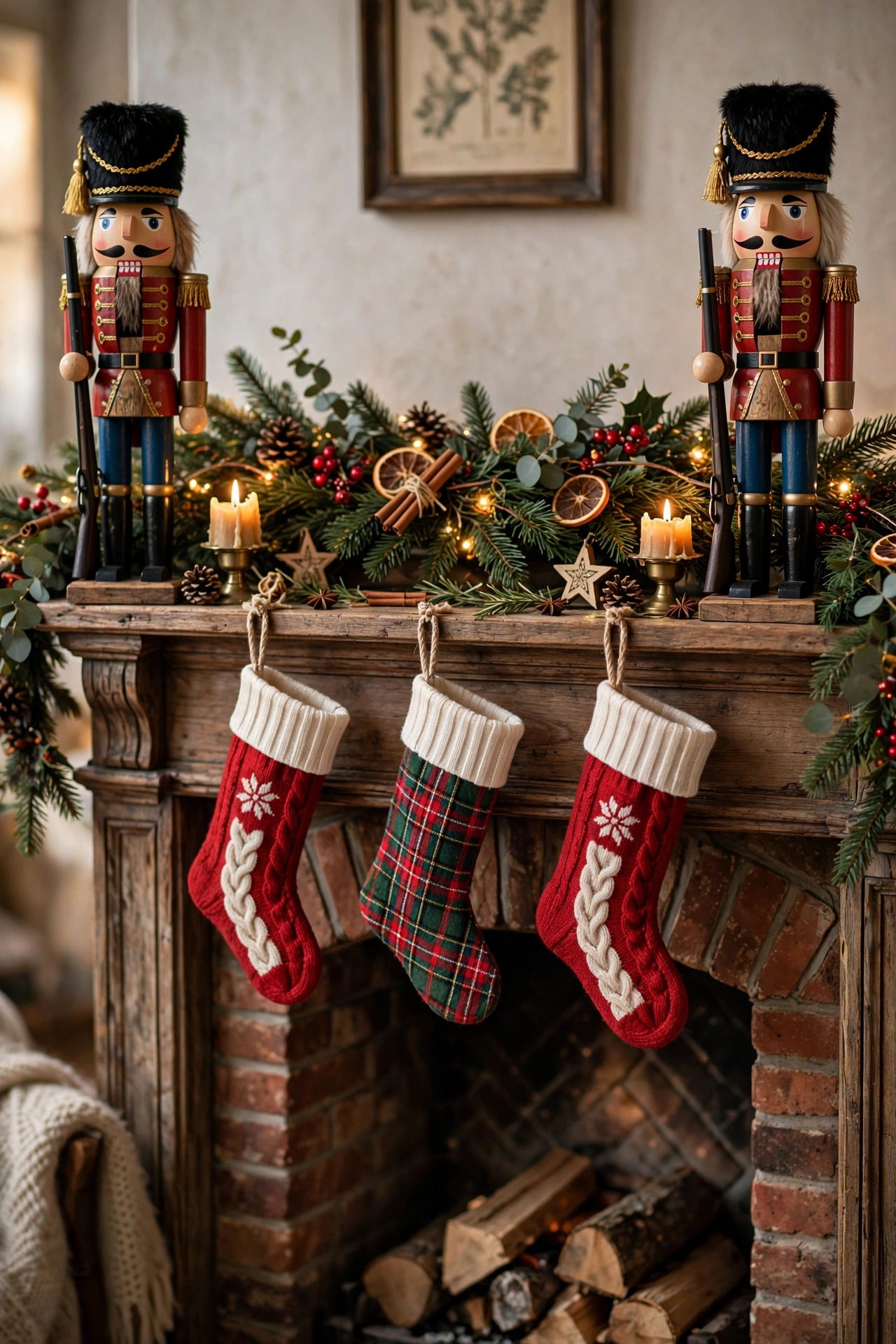
Nutcrackers Flanking the Mantel
Stand wooden nutcrackers at each end of the mantel like guards. Matched pairs suit traditional symmetry; a graduated lineup suits a longer mantel. Their painted uniforms add the folk-art note traditional rooms need.
Try it: Put the tallest figure at the outer ends stepping inward, or centered stepping outward. Pick one direction and commit; mixed directions look accidental.
15
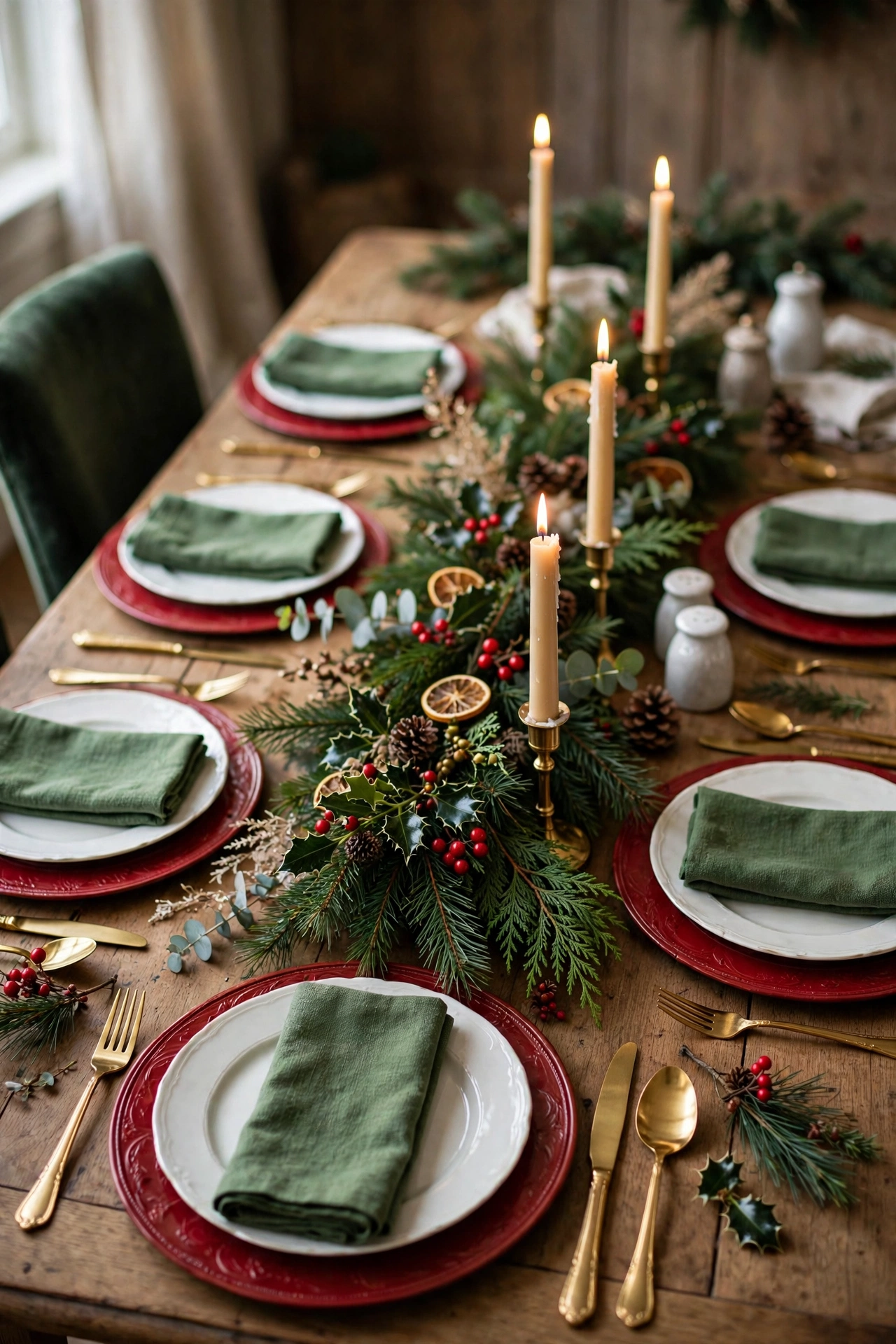
The Red, Green, and Gold Tablescape
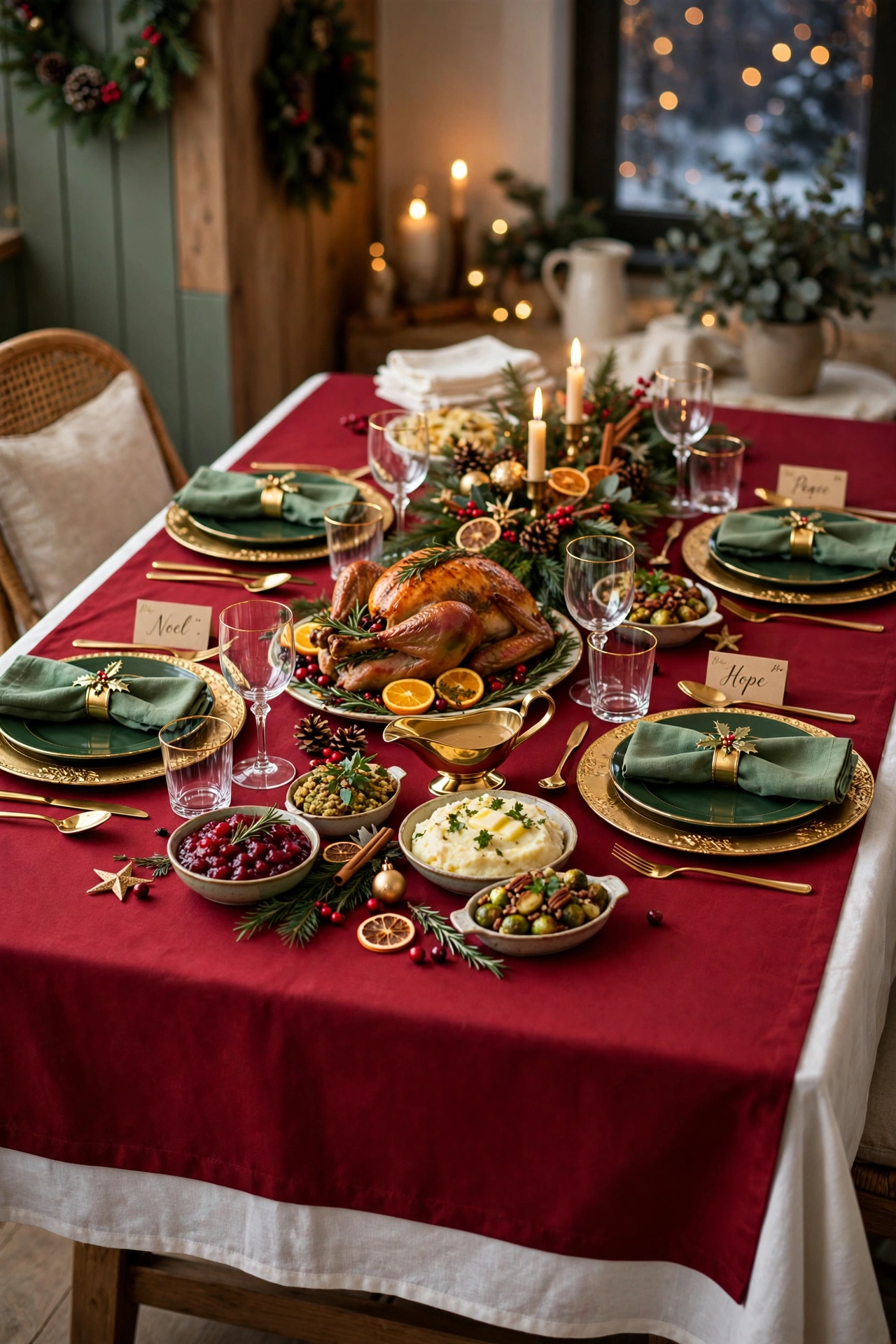
Set the table in the full traditional palette: white plates, red chargers, green napkins, gold flatware or gold-rimmed glasses. A pine and berry runner down the center, tapered candles, done. This is the table everyone pictures when they hear “Christmas dinner.”
Try it: Fold napkins into a simple pocket and tuck in the menu or a pine sprig. One fold, endless elegance.
16
The Candle and Pine Centerpiece
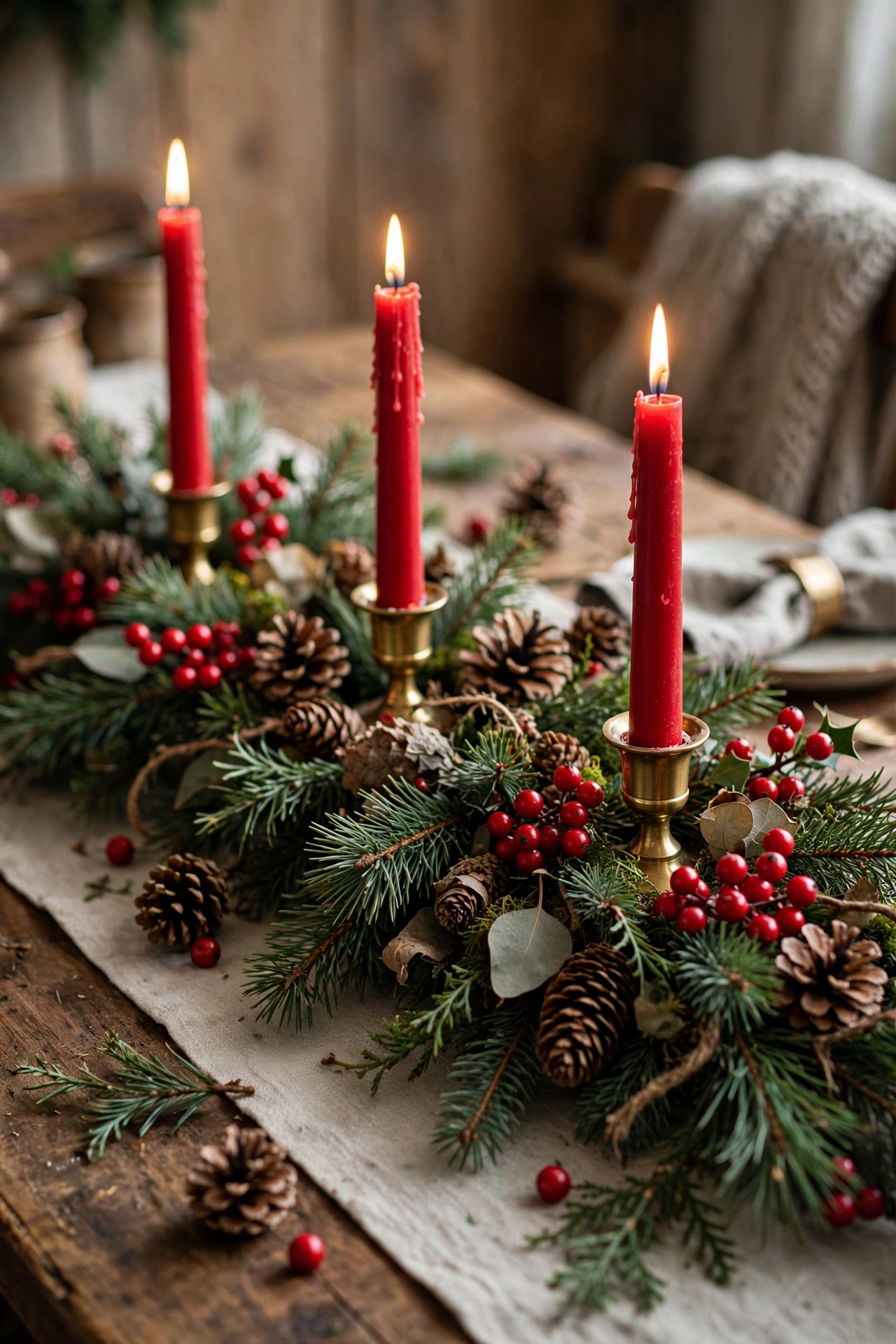
Build the centerpiece from what the season gives: a long low arrangement of pine branches, red taper candles in brass holders, pinecones, and red berries. Keep it under 12 inches so guests see each other. Nature plus candlelight needs nothing else.
Try it: Cut pine branches at an angle and keep the stems in water tubes. Fresh pine lasts 3 weeks hydrated; 3 days dry.
17
Handwritten Place Cards
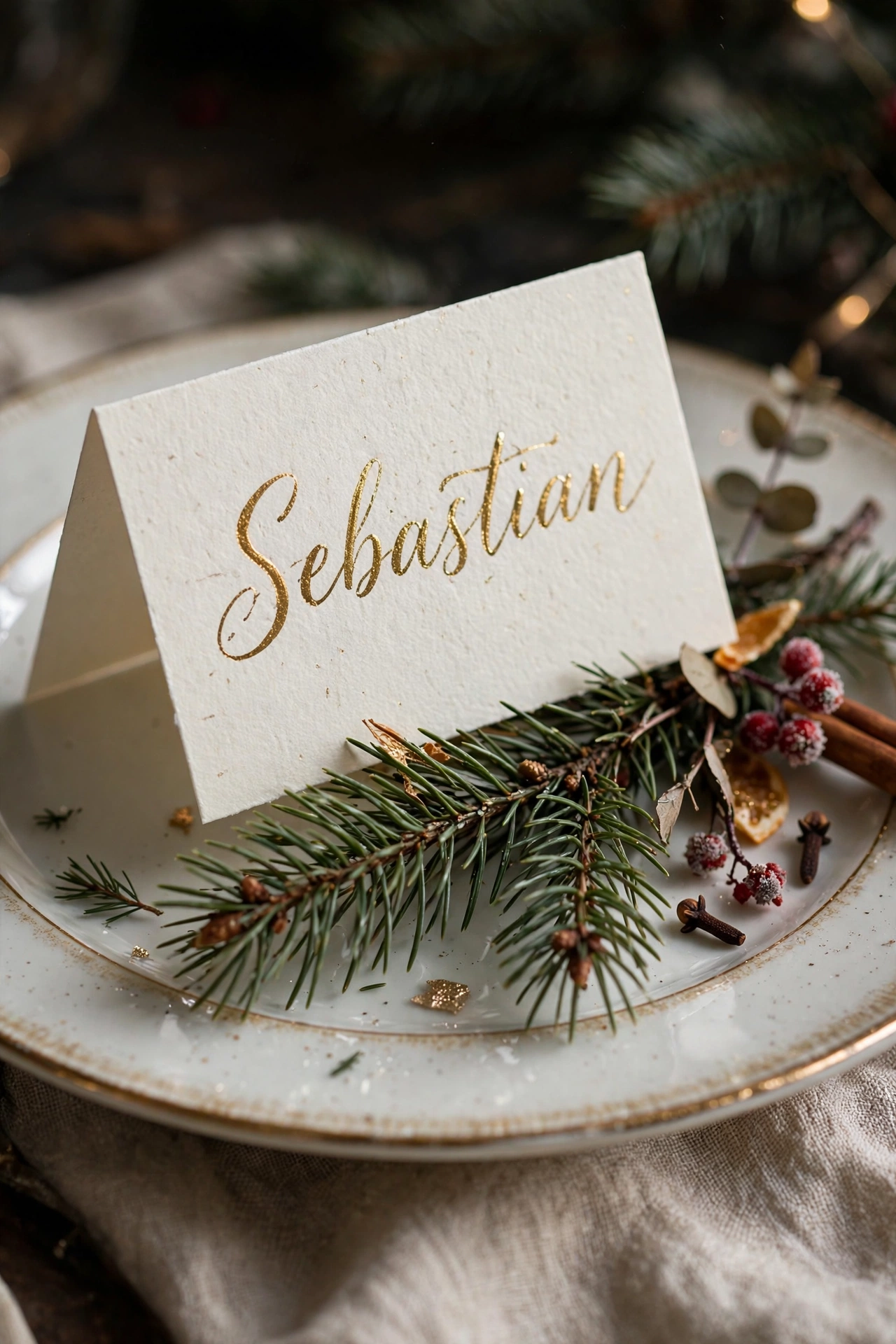
Write each guest’s name on a simple card tented on the plate, or on a pinecone with a paint pen. Handwritten place cards are the smallest effort with the largest hospitality signal. They say this dinner was planned, not thrown together.
Try it: Use the same pen for every card. Mixed handwriting tools look sloppy; one good gold pen looks intentional.
18
The Red Tablecloth
A deep red tablecloth transforms the dining room in one move. Layer it over a white cloth so the white shows at the edges, or use red alone for full drama. Red grounds gold flatware and green napkins like nothing else.
Try it: Iron the tablecloth. A wrinkled red tablecloth reads as casual; a pressed one reads as occasion.

19
The Wassail Bowl
Serve wassail or punch from a proper bowl with a ladle, garnished with orange slices and cinnamon sticks. The bowl becomes the table’s second centerpiece, and the ritual of ladling drinks feels ceremonial. A $20 thrifted punch bowl works perfectly.
Try it: Freeze cranberries and orange slices into the ice ring. The garnish chills without diluting and looks beautiful melting.
20
The Styled Sideboard
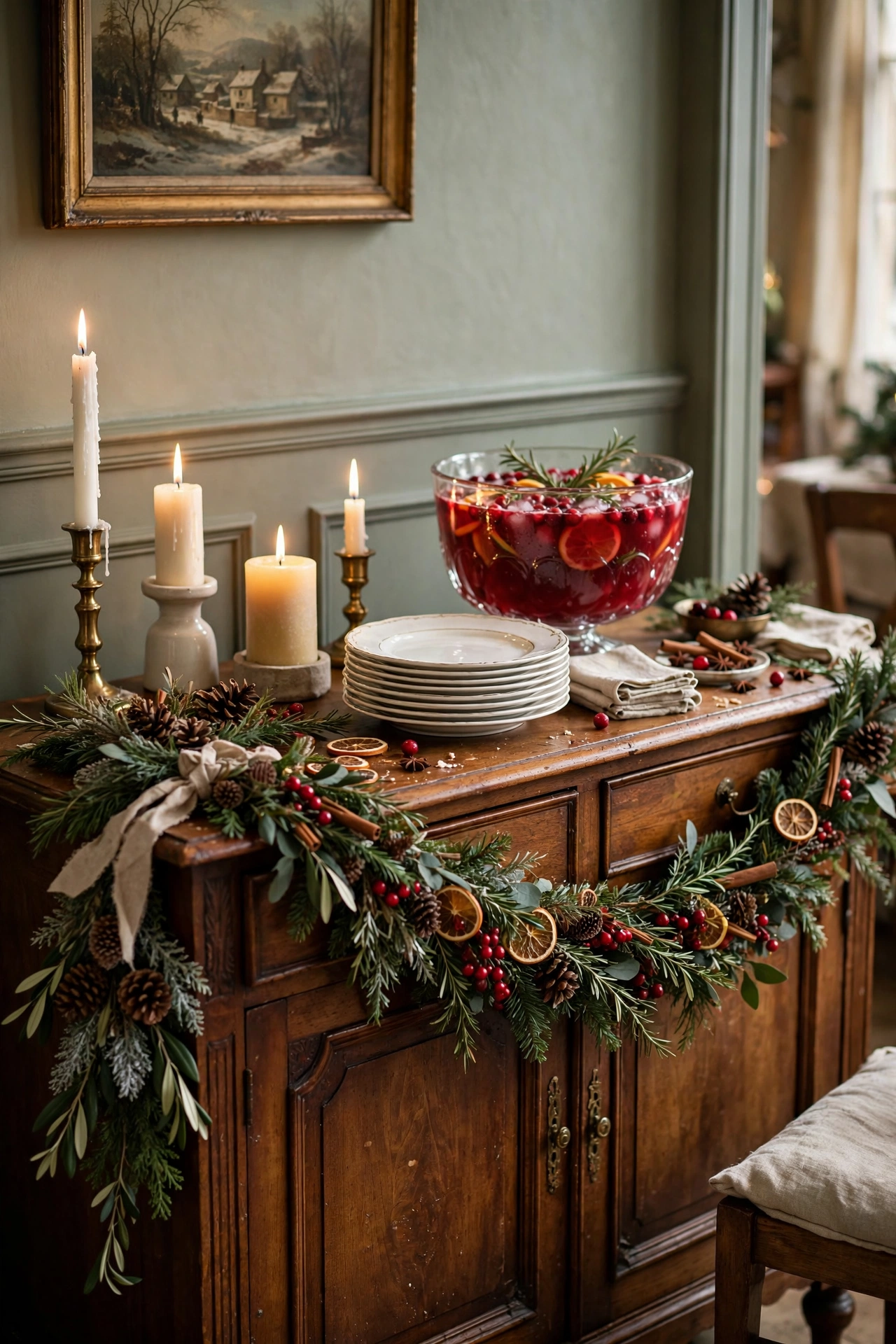
Dress the dining room sideboard like a second mantel: garland swagged across, candles at varied heights, a stack of plates at one end, the punch bowl at the other. The sideboard holds the overflow so the table stays clean.
Try it: Put the dessert plates and coffee setup on the sideboard before dinner. Clearing the table for dessert takes 30 seconds.
21
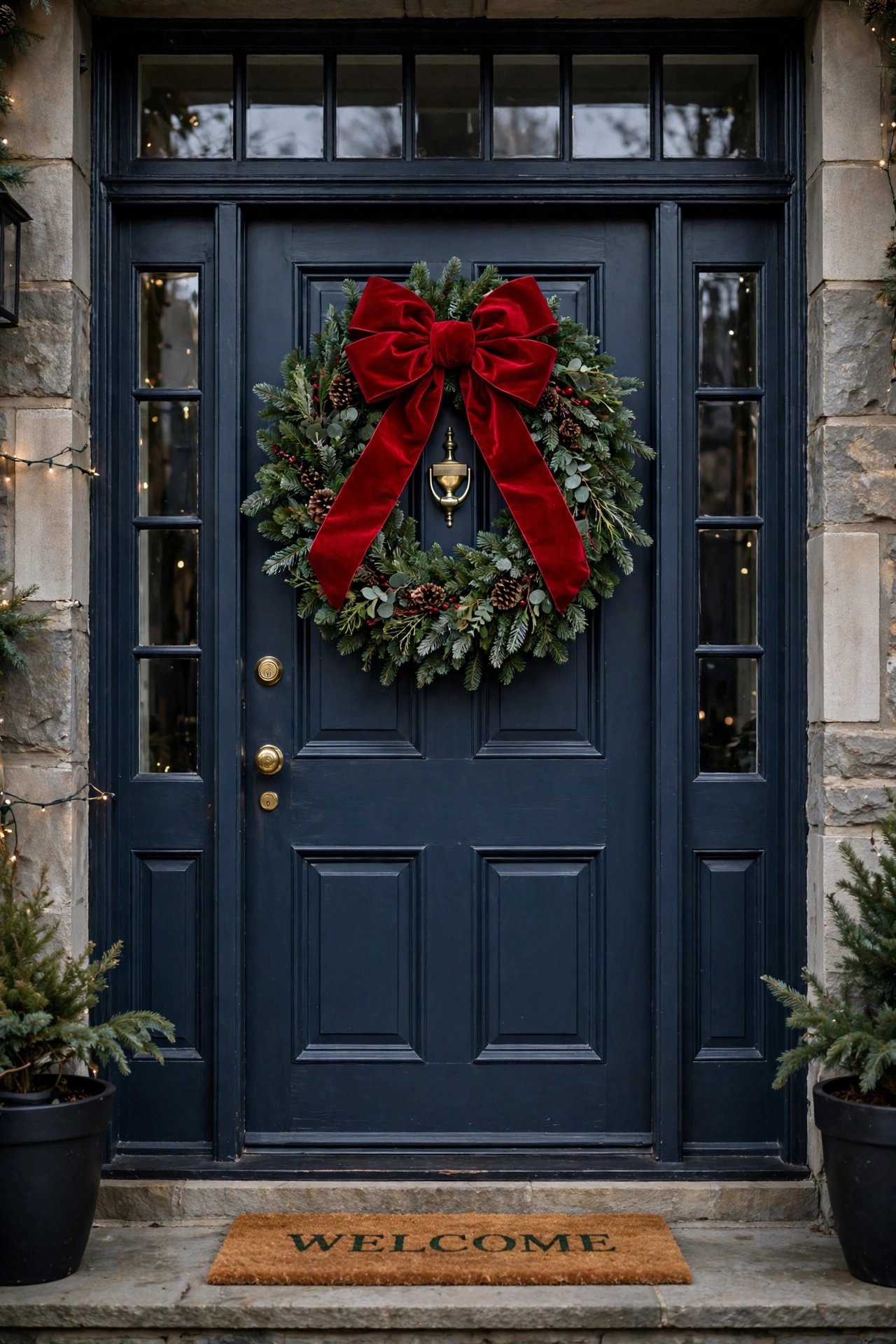
The Wreath and Bow Door
Hang a full evergreen wreath with a big red velvet bow on the front door. It is the single most traditional outdoor decoration and the only one you truly need. Size the wreath to the door: it should span half the door’s width.
Try it: Hang the wreath slightly above center. Centered wreaths look static; just-above-center looks welcoming.
22
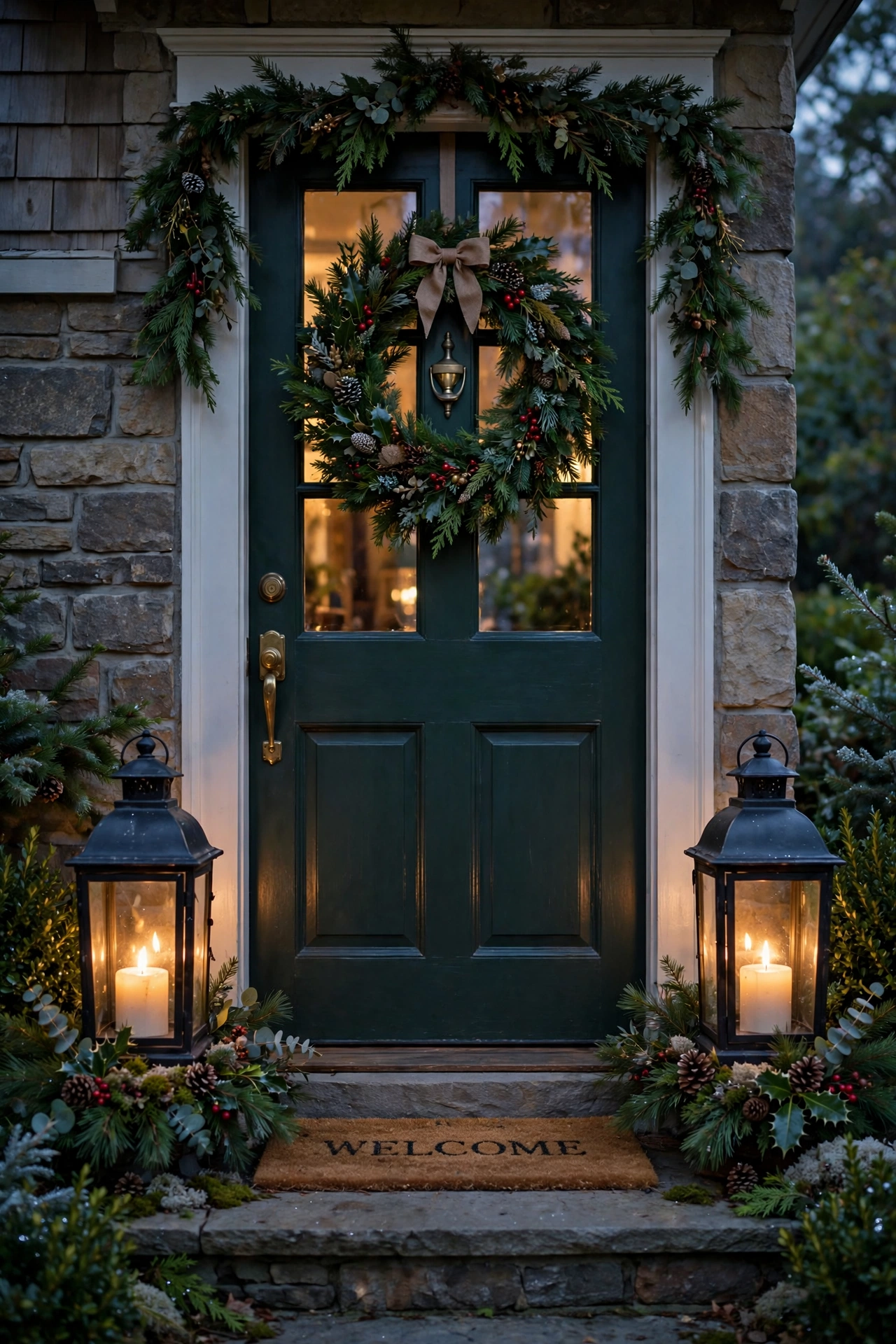
Lanterns Flanking the Door
Stand a lantern on each side of the front door with a real or flameless candle inside. Symmetrical lanterns are the traditional entry: balanced, warm, formal. Greenery tucked around the lantern bases softens the look.
Try it: Use real candles in sheltered entries, flameless in windy ones. A blown-out lantern is worse than none.
23
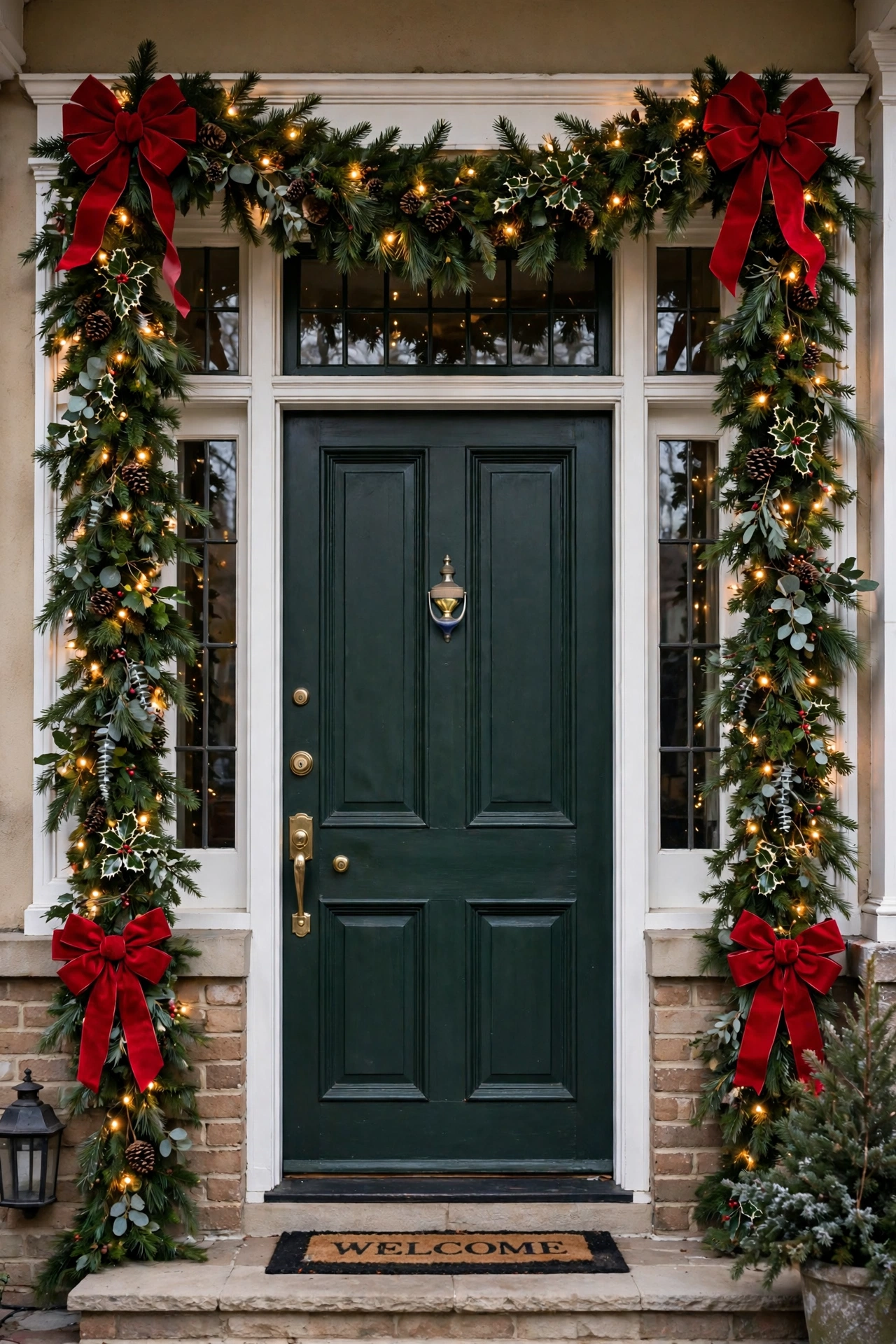
Garland Around the Door Frame
Frame the front door with garland, swagged across the top and down both sides, with red bows at the corners. The door becomes a picture frame for everyone who enters. Secure with removable outdoor hooks; never nails in the frame.
Try it: Weave lights through the door garland. The lit frame at dusk is the warmest welcome on the street.
24
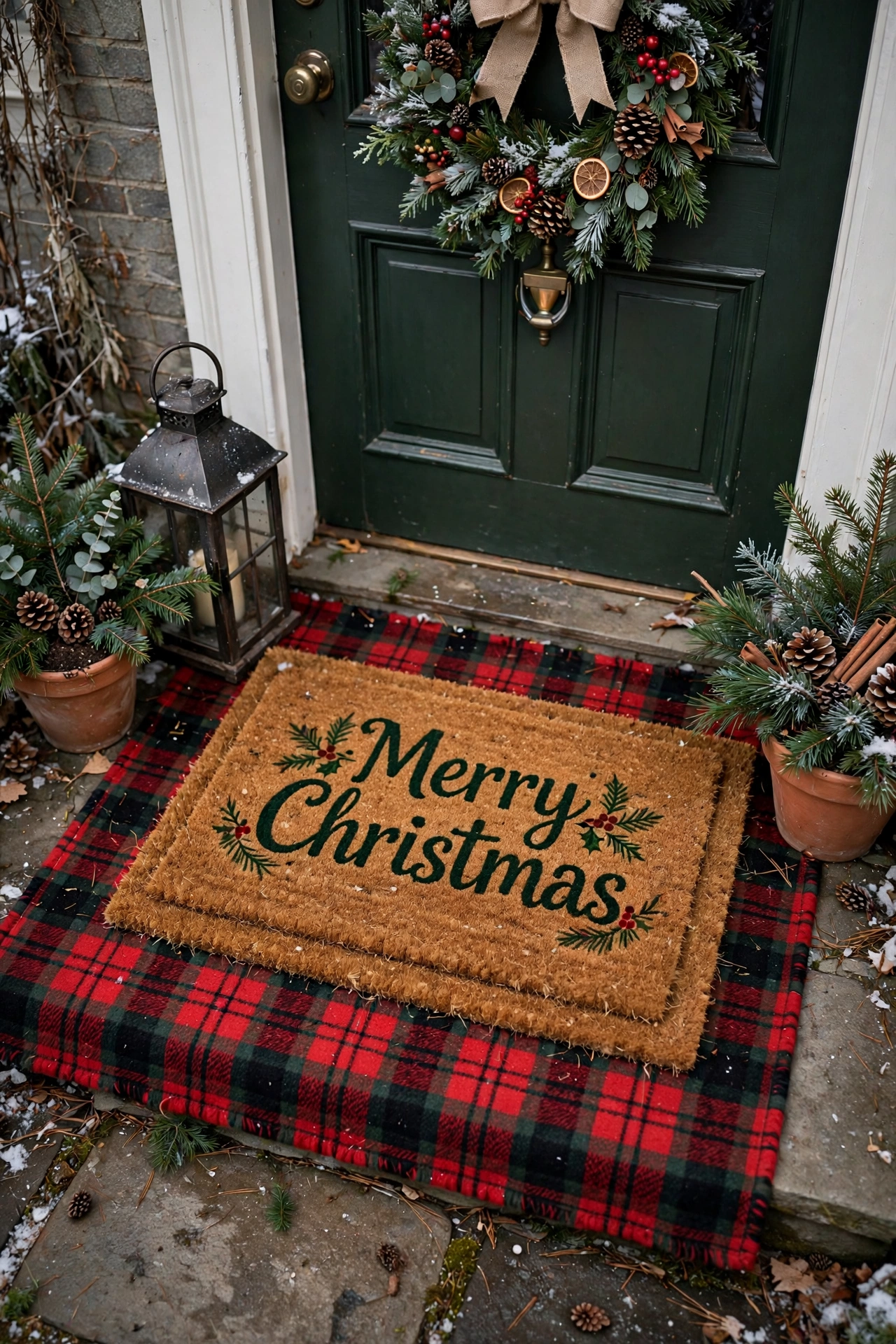
The Coir Doormat
A natural coir doormat with a simple “Merry Christmas” or pine motif is the traditional choice. It handles winter boots, looks right with every house style, and costs under $25. Layer it over a larger plaid rug for the styled look.
Try it: Shake the mat weekly. Coir traps dirt beautifully but releases it onto the porch if never shaken.
25
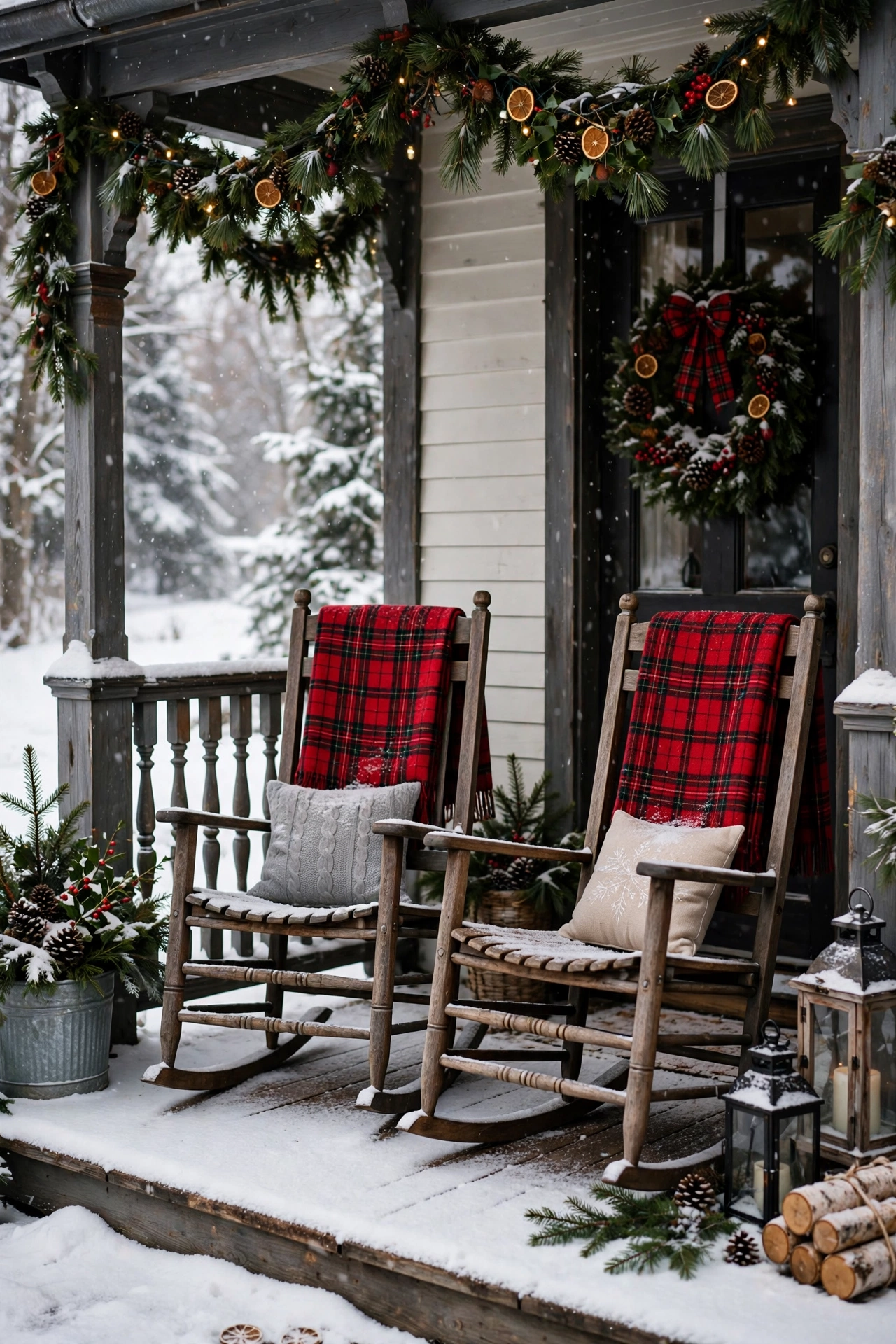
Rocking Chairs With Plaid Blankets
Dress porch rocking chairs with red plaid blankets folded over the backs. The chairs say “sit a while” even in December, and the plaid reads as Christmas from the street. Add a small pillow each if the chairs are deep.
Try it: Bring the blankets in during rain. Wool plaid survives weather; good cotton throws do not.
26
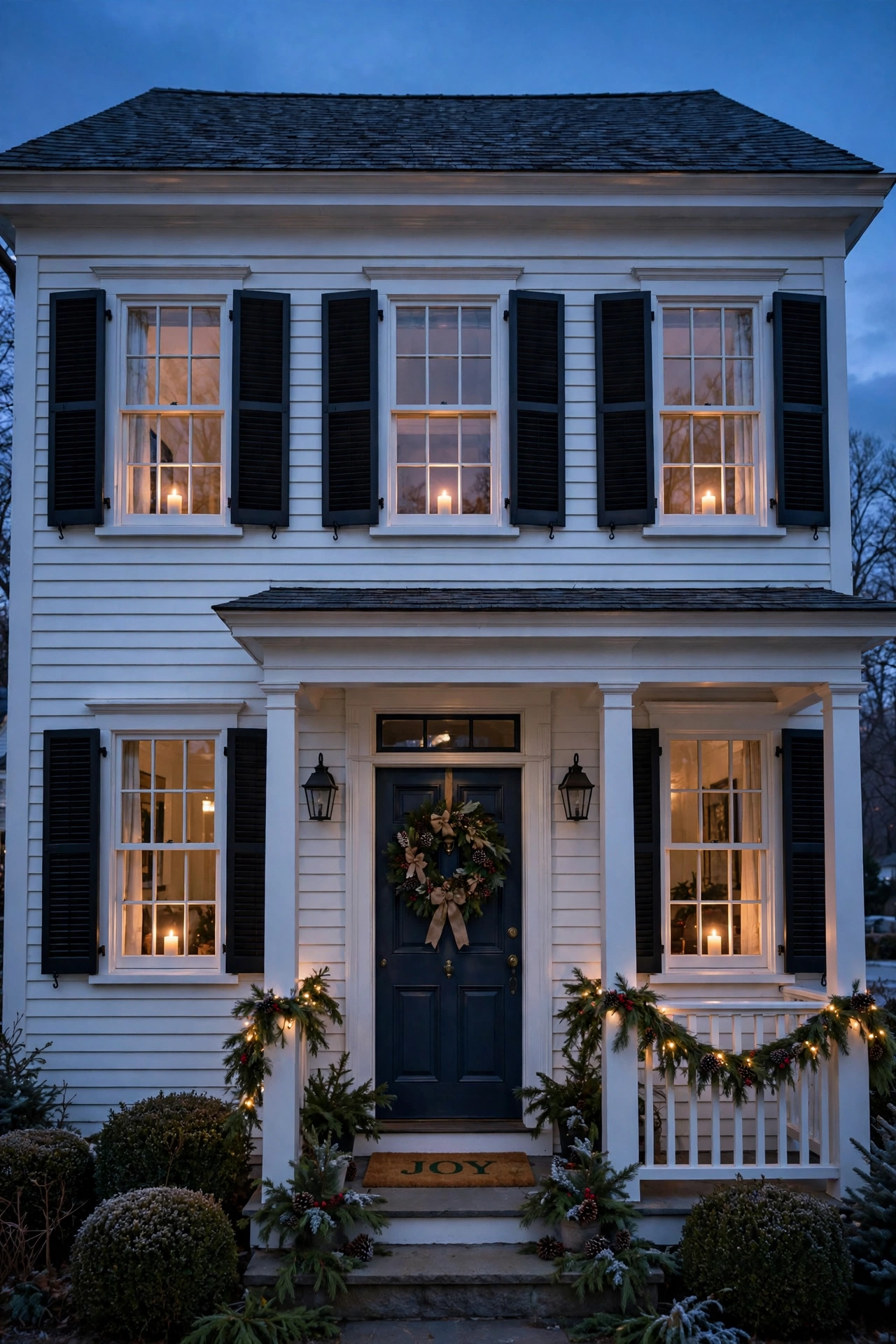
Candles in Every Window
A single electric candle in each front window is the colonial tradition that never left. Battery candles with dusk timers mean zero effort. The row of glowing windows unifies the whole house exterior.
Try it: Use the same candle in every window, all with the same timer setting. Uniformity is the entire effect.
27
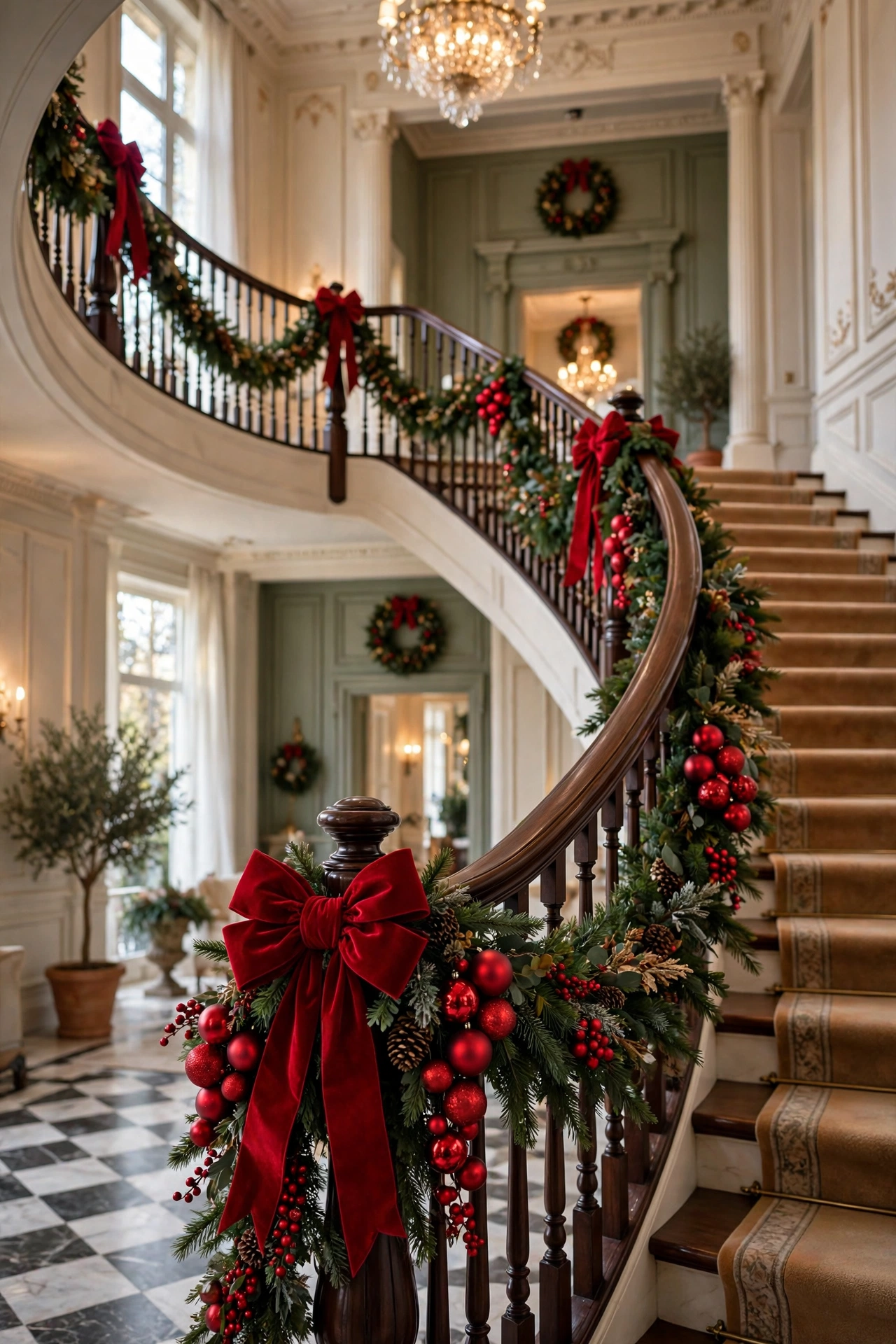
Garland on the Staircase
Swag garland along the banister with red bows at every newel post and midpoint. The staircase is the home’s grand gesture; dressed for Christmas it becomes the backdrop for every holiday photo. Secure with green floral wire.
Try it: Add small clusters of red ornaments at each bow. The ornament clusters make basic garland look expensive.
28
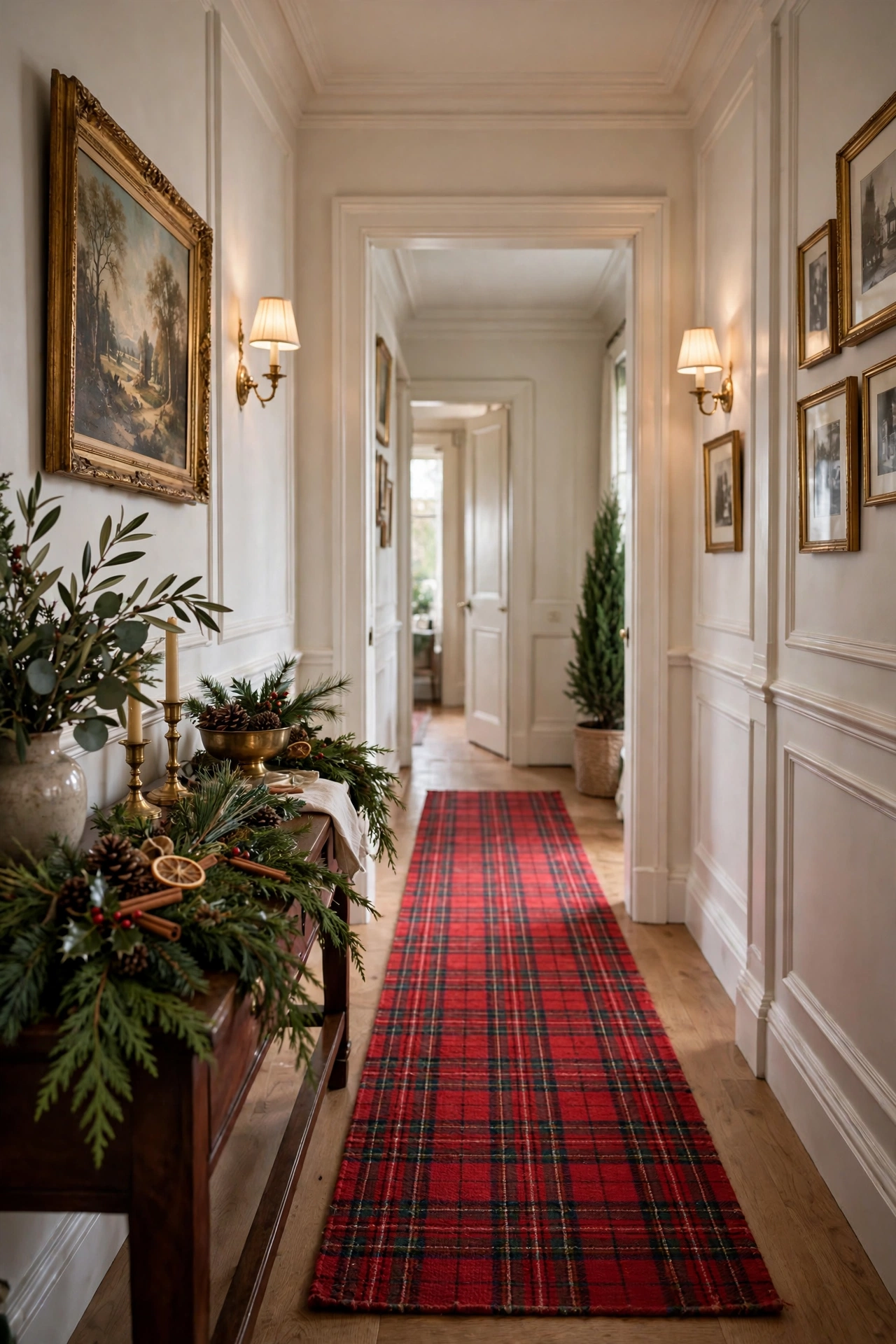
The Plaid Hallway Runner
Lay a red plaid runner down the hallway for December. It is unexpected, it protects floors from party traffic, and it carries the Christmas palette through the house’s arteries. Flat-weave rugs work best; they do not trip anyone.
Try it: Use rug tape on hard floors. A sliding runner in a busy hallway is a hazard, not decor.
29
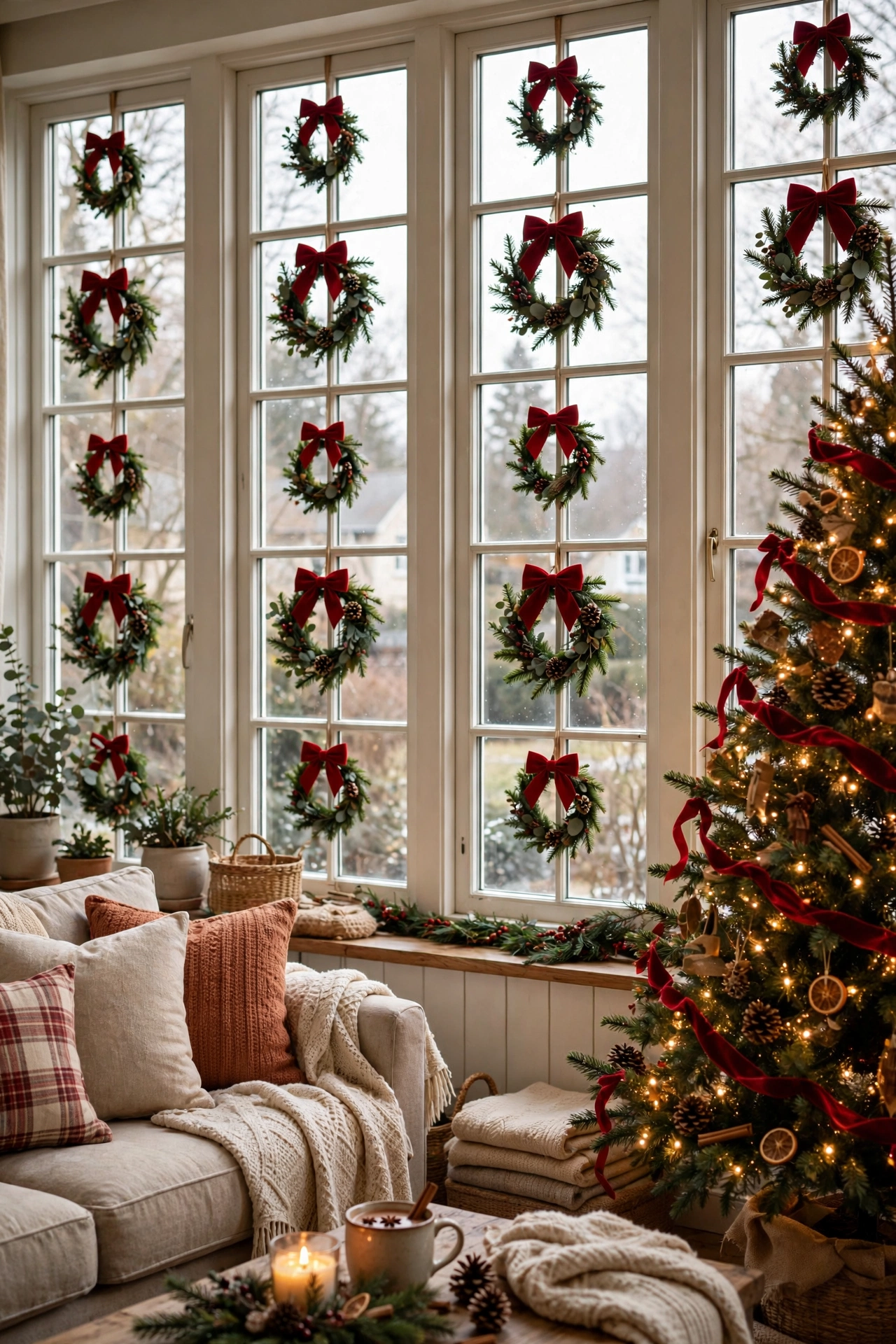
Wreaths in the Interior Windows
Hang small wreaths with red bows in the interior windows facing the main rooms. They frame the outdoor view in Christmas and look intentional from inside where you spend December. Suction cups on the glass, ribbon over the top.
Try it: Match the interior wreath ribbon to the tree ribbon. The repetition ties the rooms together.
30
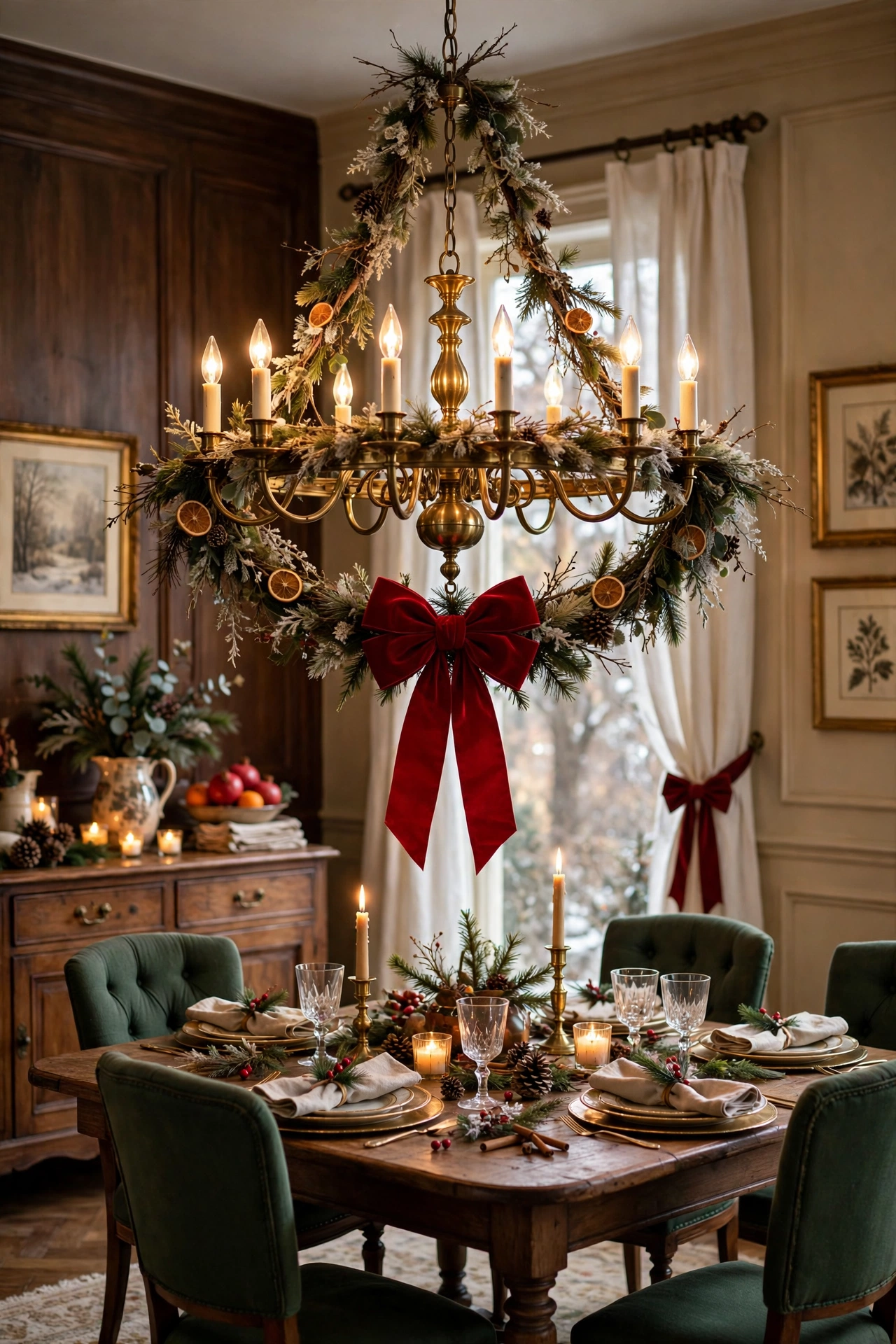
Greenery on the Chandelier
Drape light garland or pine swags over the dining room chandelier, with a red bow at the center drop. The chandelier becomes a hanging wreath and the dining room gains its crown. Keep greenery clear of real candle flames.
Try it: Use only faux greenery on chandeliers with real candles. Real pine near open flame is a risk no tradition justifies.
31
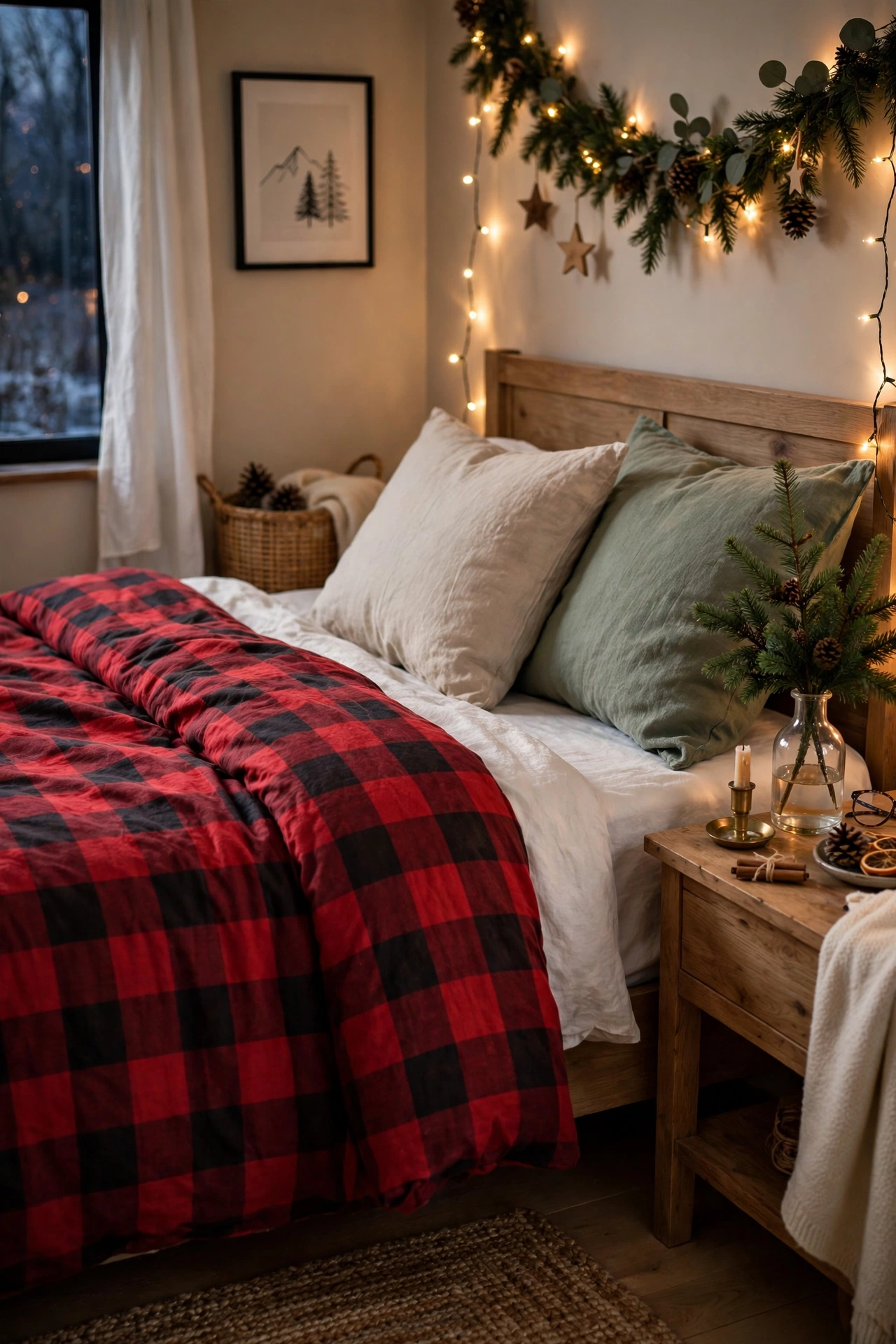
Plaid Bedding in the Bedrooms
Swap bedroom duvets for red plaid for December. The bedroom becomes part of Christmas instead of the undecorated backstage. One plaid duvet plus the everyday pillows is enough; the bed should not look like a gift box.
Try it: Add a single evergreen sprig in a bud vase on the nightstand. The scent carries the theme without more textiles.
32
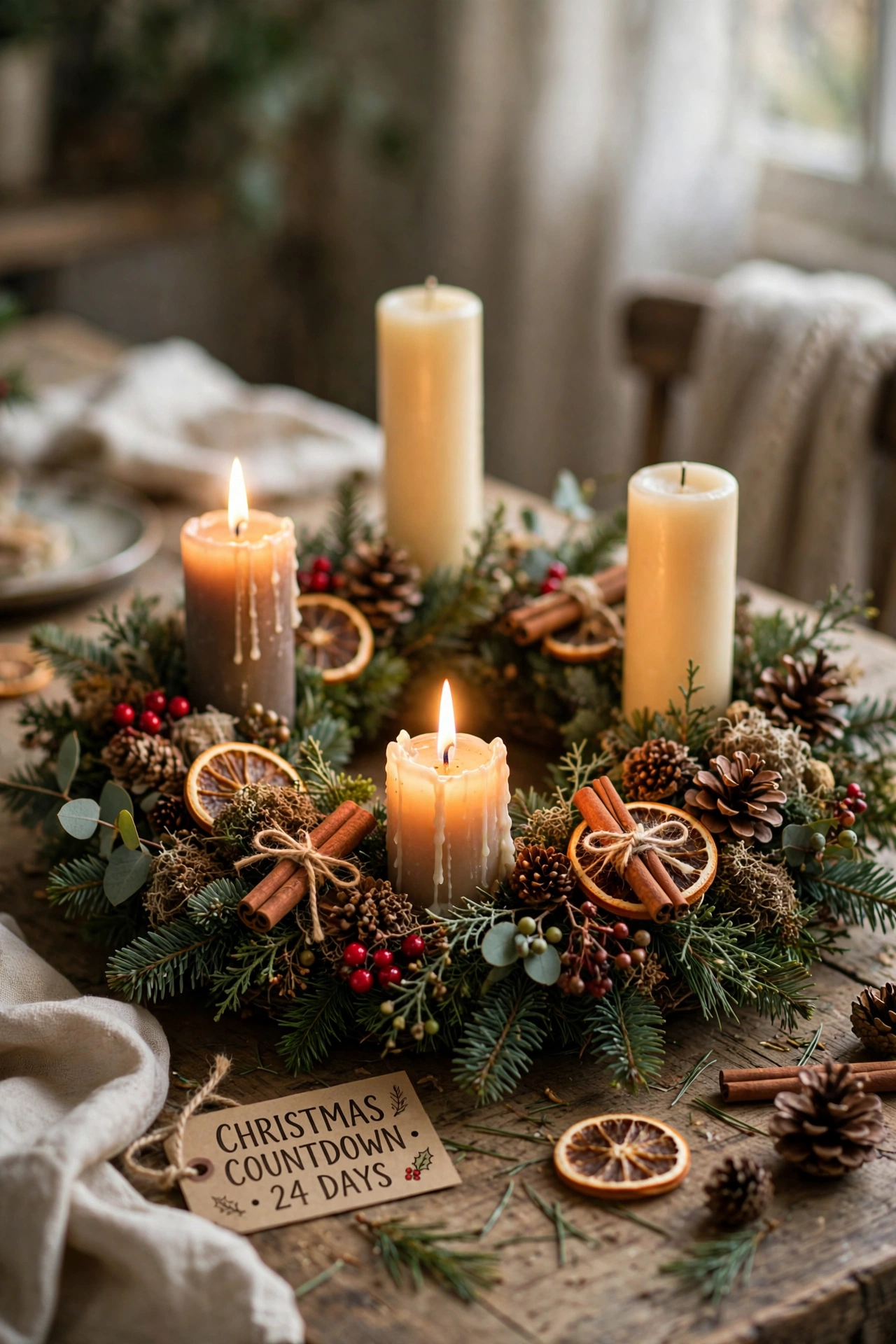
The Advent Wreath
The advent wreath, four candles around an evergreen ring, is the traditional countdown. Light one more candle each Sunday of December. Place it on the dining table or mantel where the growing light marks the season’s progress.
Try it: Use real candles for the advent wreath and light them at dinner. The ritual is the point; flameless misses it.
33
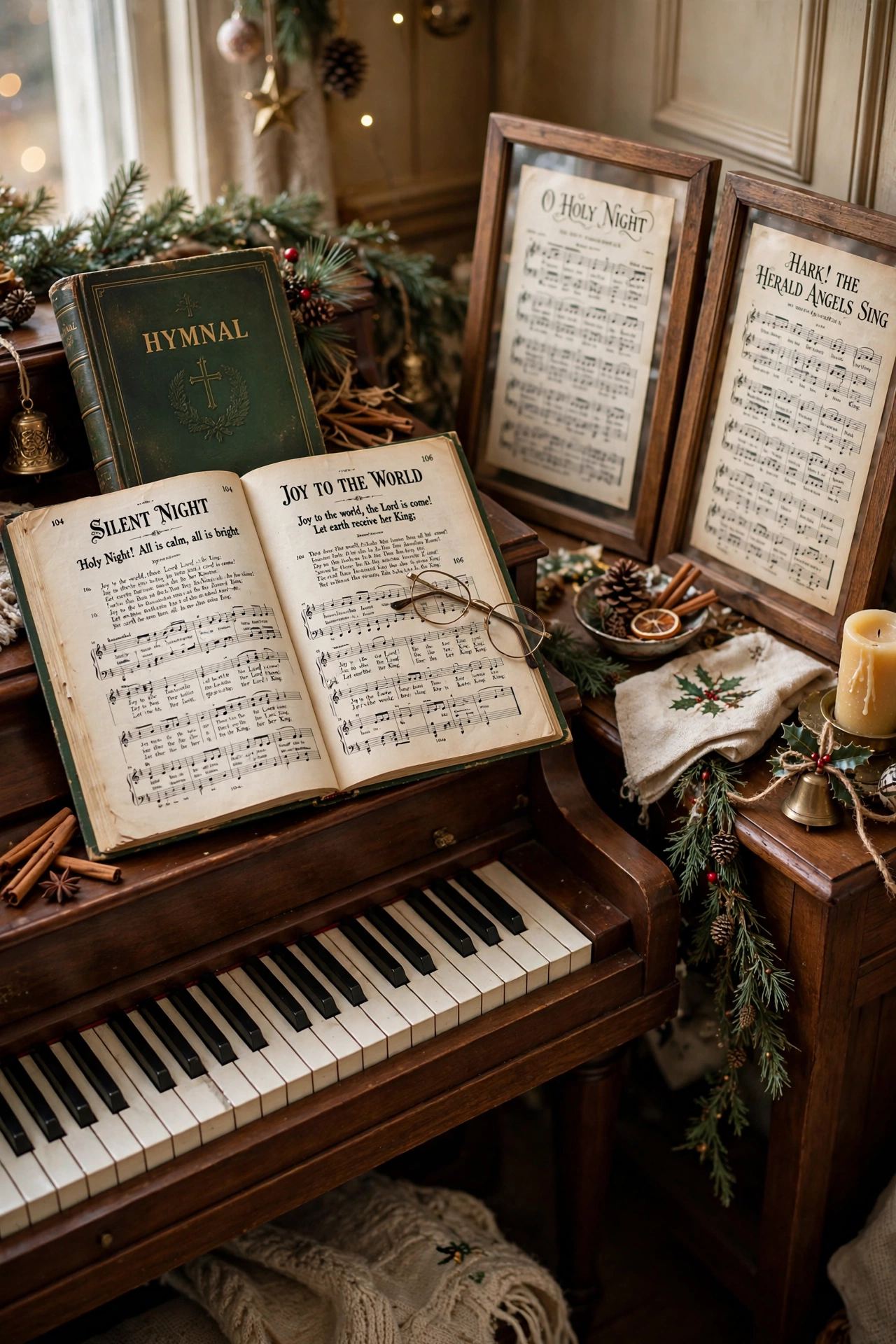
Carol Sheets and Hymnals on Display
Stand open hymnals or framed carol sheets on the piano and side tables. The typography of old carols is beautiful, and the suggestion of singing fills the room. This is decor for the tradition of Christmas, not just its look.
Try it: Leave a hymnal open to “Silent Night” on the piano. Guests will play it; they always do.
34
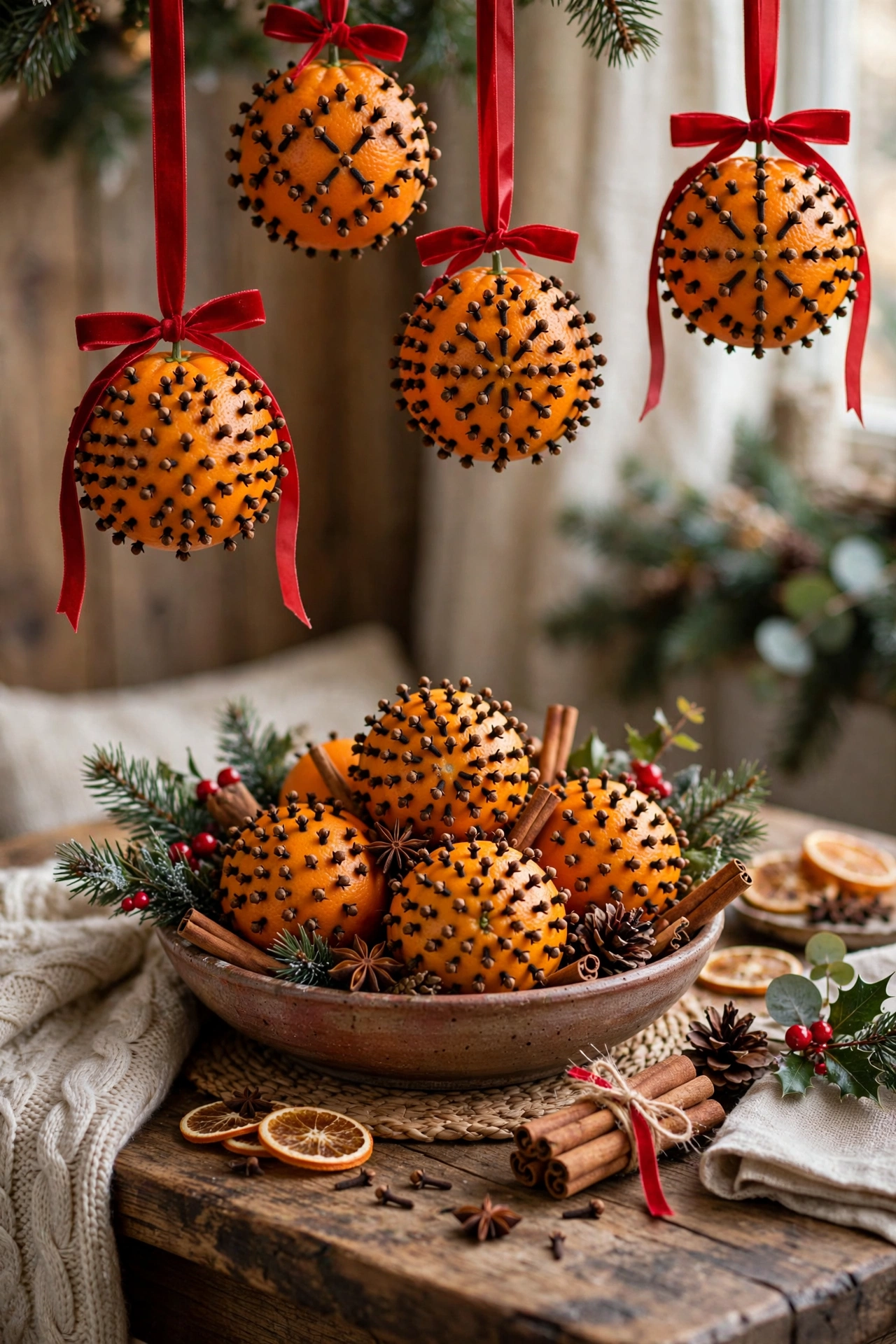
Orange Pomanders With Cloves
Stud oranges with whole cloves in patterns and hang them with red ribbon. They scent the room for weeks and look like jeweled ornaments. A bowl of pomanders on the coffee table is the oldest air freshener there is.
Try it: Roll the orange in orris root powder after studding. It preserves the fruit and fixes the scent for months.
35
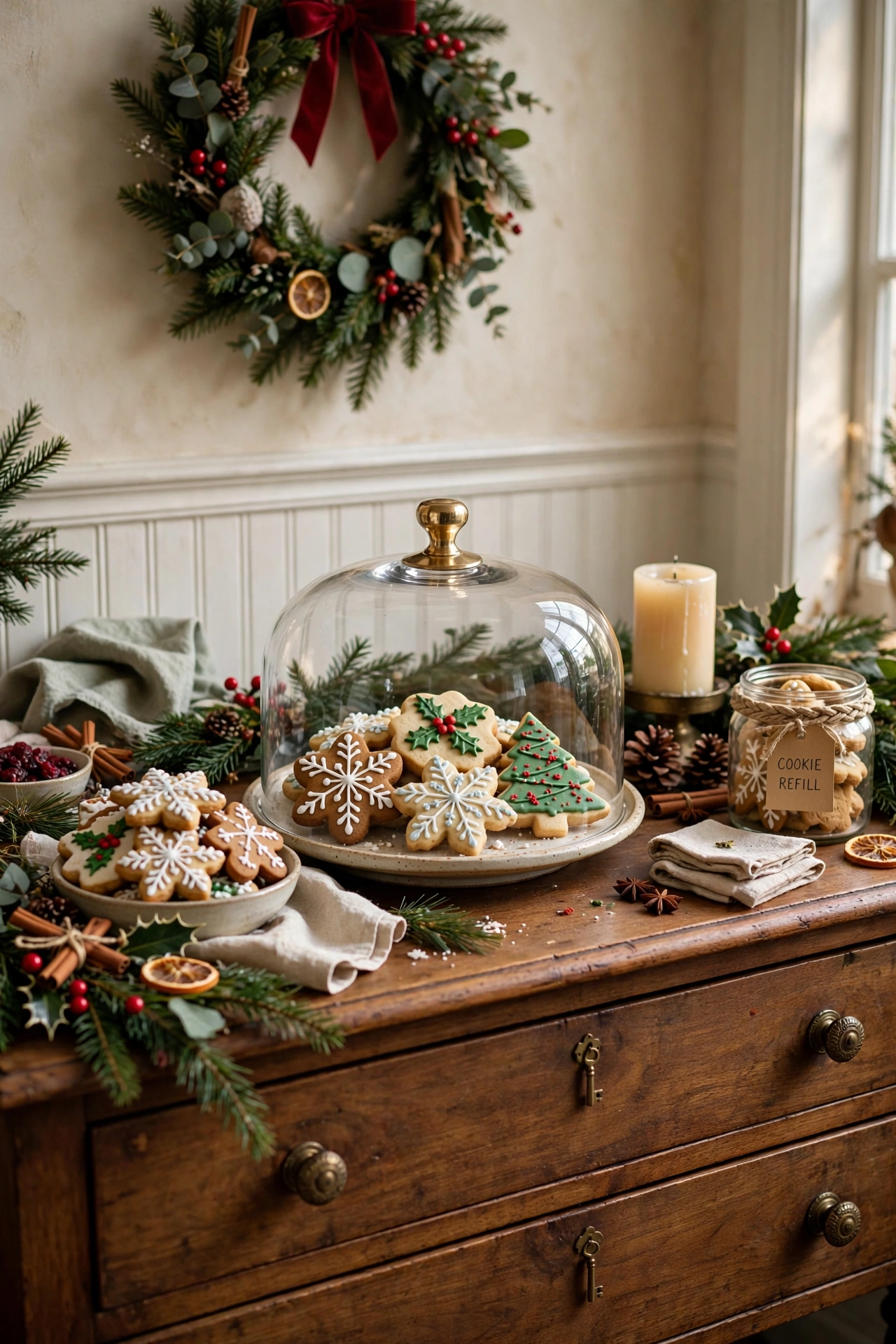
The Cookie Plate as Decor
Keep a plate of Christmas cookies on the sideboard all December, replenished as needed. Decorated cookies are edible art, and a full cookie plate signals a house where Christmas is lived, not just displayed. Cover with a dome between servings.
Try it: Bake one batch a week instead of all at once. Fresh cookies all month beat a heroic single bake that goes stale.
36
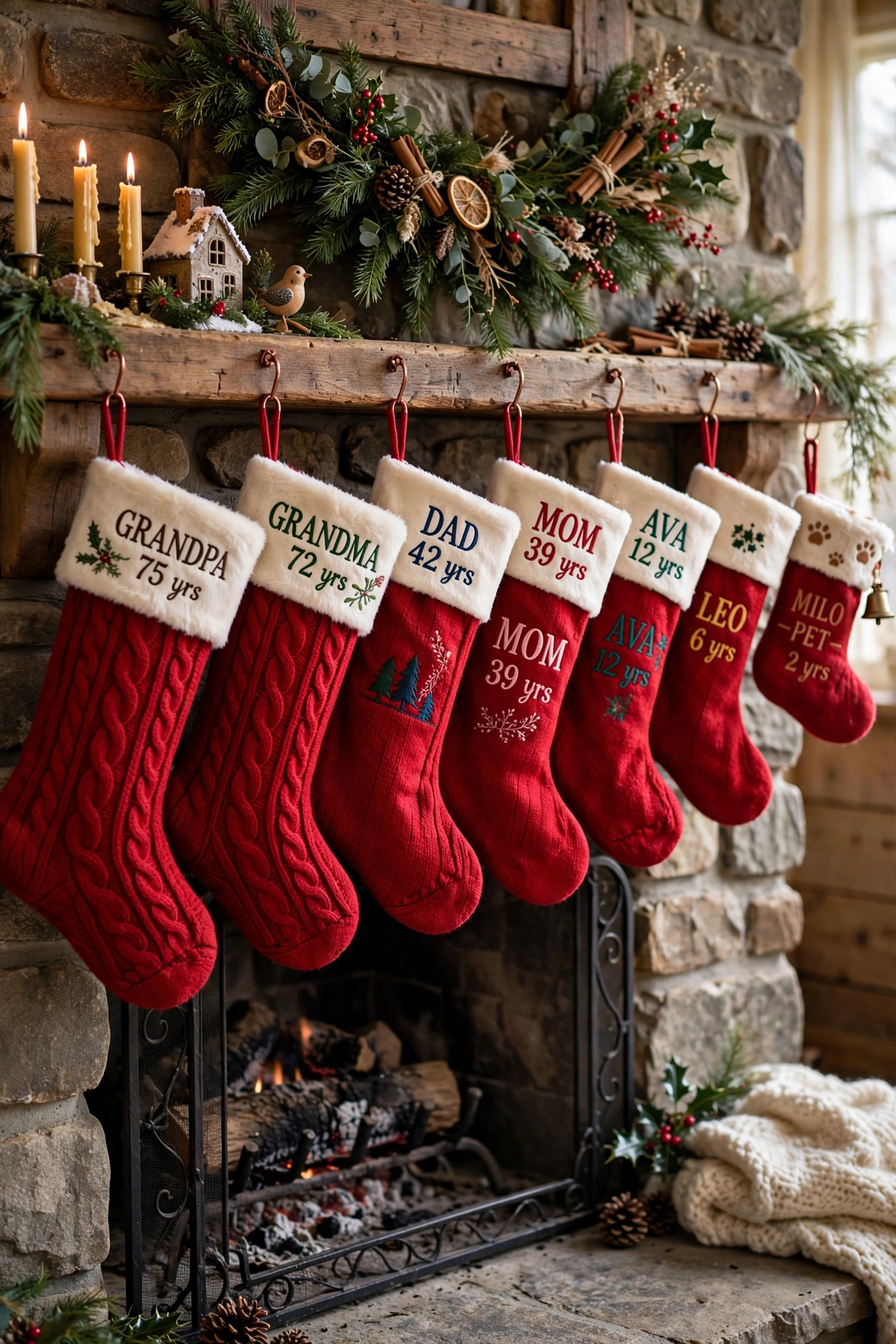
Stockings for Everyone, Including Pets
Hang a stocking for every family member plus the pets. The full row, graduated by height, is the traditional mantel at its most personal. Pets’ stockings get a treat on Christmas morning; the ritual includes everyone.
Try it: Hang stockings in age order. The visual rhythm pleases the eye and the kids know exactly which is theirs.
37
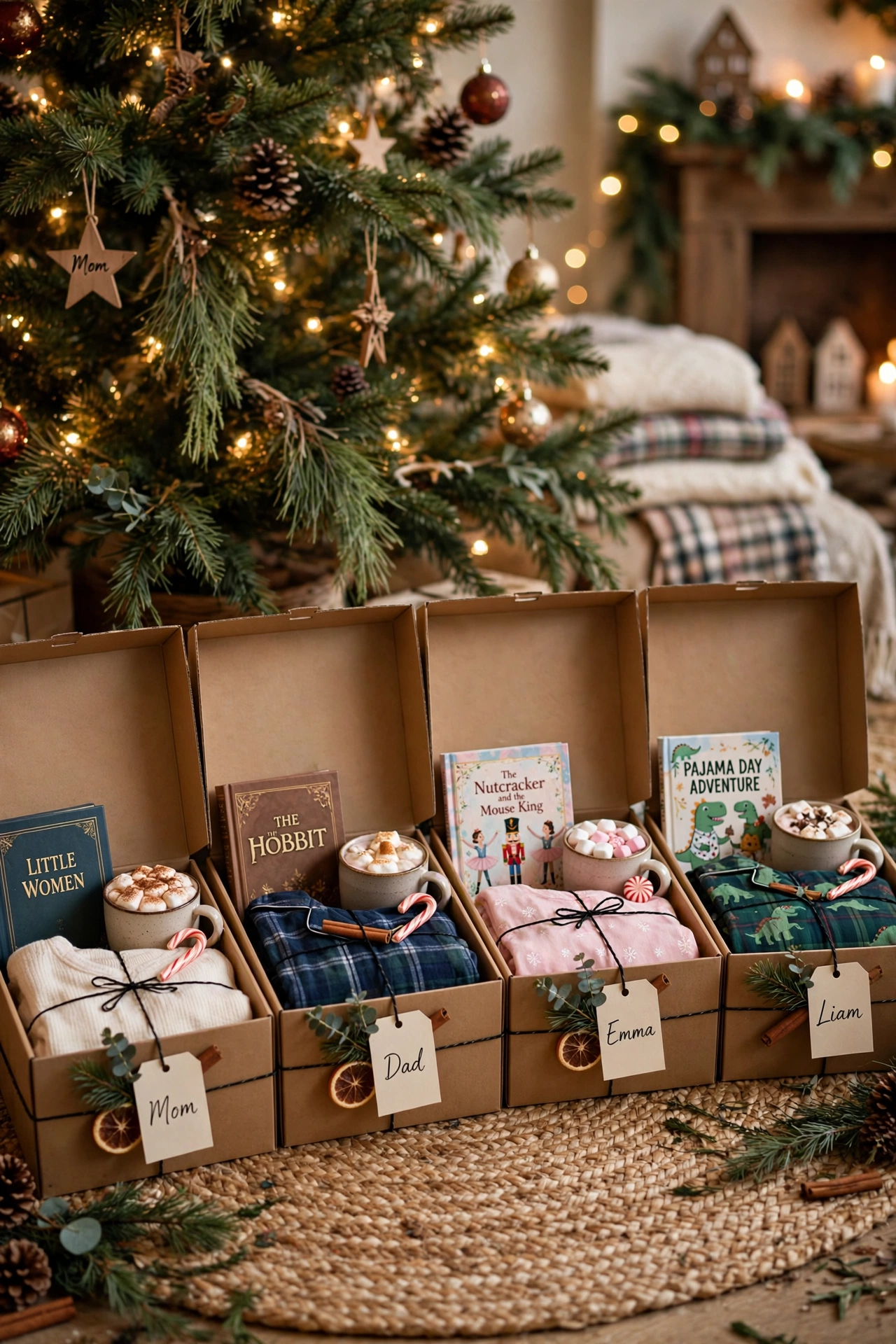
The Christmas Eve Box
Start the Christmas Eve box tradition: one box per person with pajamas, a book or movie, and hot chocolate, opened on Christmas Eve night. The matching pajamas photo on Christmas morning becomes the year’s card. Traditions are decor for the memory.
Try it: Use the same box design every year. The repeated box becomes part of the ritual’s visual identity.
38
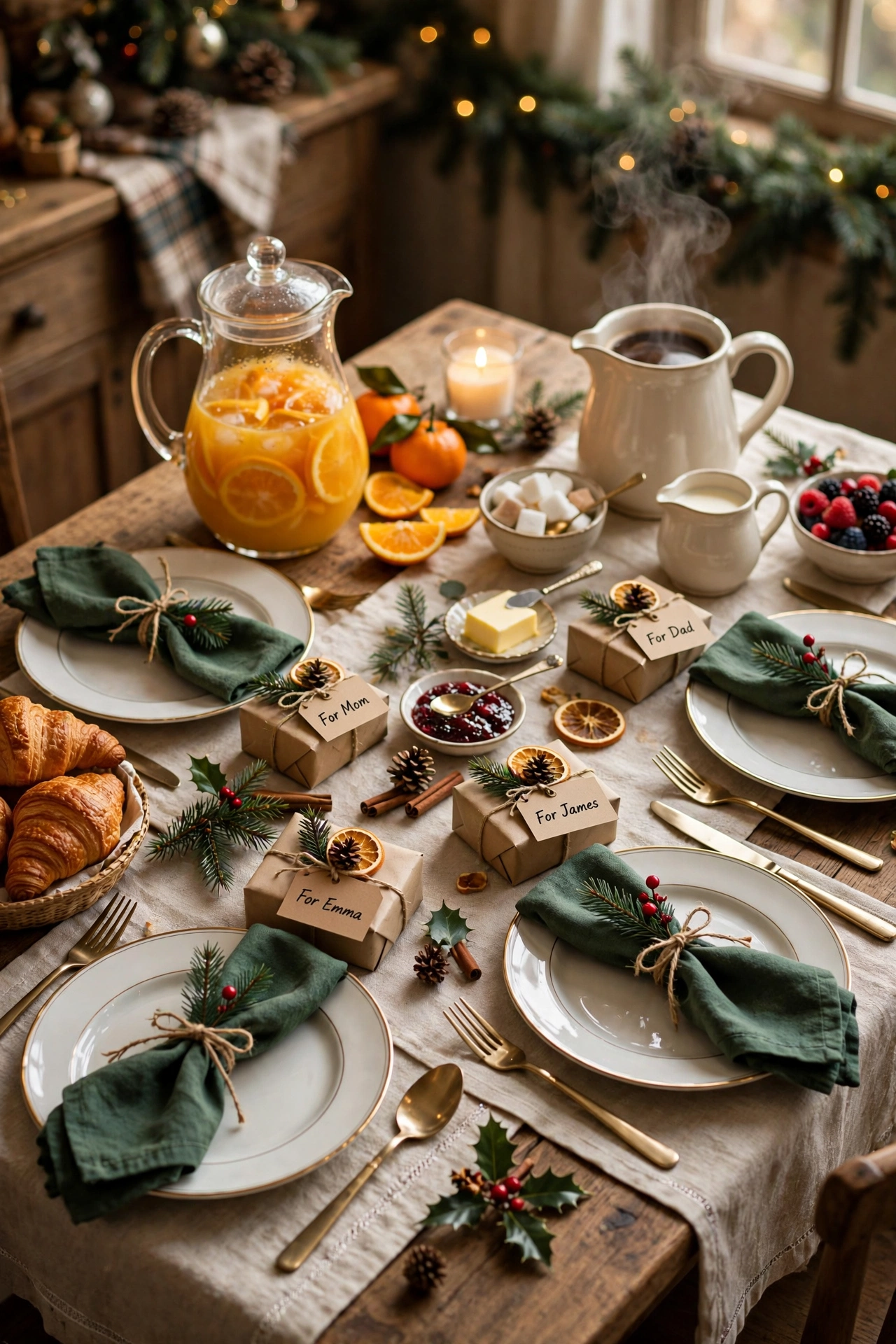
The Christmas Morning Table
Set the breakfast table on Christmas Eve night: the good plates, orange juice in a pitcher, the coffee ready to brew. Waking to a set table makes Christmas morning feel ceremonial instead of chaotic. It is the last decoration and the first tradition.
Try it: Put a small gift or note at each place. Christmas morning starts before the tree when the table is already celebrating.
Pro tip: Stand in your front doorway and look at the whole house at once. Traditional Christmas should read as one coherent story from the entry: the same palette, the same greenery, the same warmth in every sightline. The room that breaks the story is the room to fix.
Three rules of traditional Christmas
- Symmetry is the style: Traditional decor is symmetrical: pairs of lanterns, matched stockings, centered wreaths. Save asymmetry for modern styles; tradition is balanced. Browse BHG’s guide to traditional holiday decor.
- Natural materials first: Pine, wood, berries, wool, brass. Every synthetic element should be invisible (flameless candles) or honestly synthetic (tinsel). The base materials read as timeless.
- Restraint in novelty: One new trendy piece per year, maximum. Traditional style is a collection built over decades; a room full of this year’s trends is not traditional, it is just decorated.
After Christmas: the traditional takedown
- Twelfth Night: Traditional takedown is January 5th (Twelfth Night), not January 1st. The full twelve days of Christmas deserve their decorations. Keep your family’s Christmas traditions alive through all twelve days.
- Greenery out first: Fresh garland and wreaths come down first; they dry out and shed. Compost what you can.
- Inventory as you pack: Note what broke, what faded, and what you wished you had. January notes make next December’s shopping list.
More ideas you’ll love: vintage Christmas decor ideas, red and green Christmas decor ideas, Christmas decor ideas, and more Christmas ideas.
Questions readers ask
What are the traditional Christmas colors?
Red, green, and gold are the traditional Christmas colors, with white as the supporting neutral. Red represents warmth and holly berries, green represents everlasting life, and gold represents light and celebration.
How do I decorate traditional without it looking dated?
Keep the palette and symmetry traditional but update the textures: matte and velvet instead of all-shiny, fresh greenery instead of plastic, real candles where safe. Dated comes from shiny-everything and plastic-everything, not from tradition itself.
What is the most traditional Christmas decoration?
The evergreen tree with candles (now lights), the wreath on the door, and the nativity scene are the three oldest traditions. A home with those three, done well, is traditionally decorated no matter what else is added.
When do traditional decorations go up?
Advent Sunday (four Sundays before Christmas) is the traditional start, though the weekend after Thanksgiving is the modern American norm. Traditional takedown is Twelfth Night, January 5th.
Can traditional Christmas be minimalist?
Yes. A single perfect wreath, one candle per window, and a simply decorated tree is deeply traditional. The Shakers and colonial Americans did minimal Christmas beautifully; restraint is older than excess.
How do I mix traditional with my modern home?
Let the architecture stay modern and bring tradition in the textiles and greenery: plaid throws on a modern sofa, a traditional wreath on a minimalist door, classic red ornaments on a simple tree. Contrast between old decor and new rooms looks intentional.
What goes on a traditional Christmas tree?
Red and gold ornaments, tinsel or cranberry garland, an angel or star topper, and warm white lights. Wooden ornaments and clip-on candles add old-world authenticity. No theme beyond Christmas itself.
How do I store traditional decorations?
Wrap ornaments in acid-free tissue, coil lights around cardboard, store textiles washed and folded flat. Keep everything in a cool, dry indoor closet; attics and garages destroy finishes with heat and moisture swings.
People Also Ask
What is traditional Christmas decor style?
Traditional Christmas decor uses the classic red-green-gold palette, natural materials like pine and wood, symmetrical arrangements, and time-honored elements (wreaths, nativity, nutcrackers, plaid). It prioritizes warmth and familiarity over novelty.
Is red and green still the traditional Christmas palette?
Yes. Red and green have been the traditional Christmas colors since Victorian times and remain the defining palette. Current traditional styling favors deeper, richer shades (cranberry, forest green) over bright primaries.
What is the difference between traditional and vintage Christmas decor?
Traditional is the style (red-green-gold, symmetrical, classic elements); vintage is the age (actual old pieces). A brand-new red ornament is traditional but not vintage; a 1950s pink ornament is vintage but not traditional. They overlap beautifully but are not the same thing.
loved these ideas? ✿
Save this guide for later
Pin it to your board so it’s there when you’re ready to recreate it.

Curated by
Hey! I'm Sanaullah — visual curator and content creator. I search, curate, and test the best aesthetic ideas across Pinterest so you can easily transform your living space, style daily outfits, and try simple creative DIYs without the overwhelm.